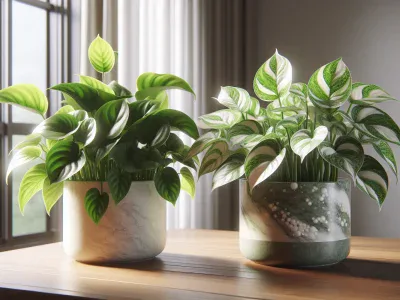
Two common vining houseplants look almost identical at a glance, but they behave and respond to care in distinct ways. Which one fits your light, time, and styling needs? This guide puts clear, practical differences first so you can spot, grow, and troubleshoot either plant with confidence. Expect vivid comparisons, named cultivars, and honest warnings about pests, root issues, and pets, so you’ll pick the right plant and keep it thriving.
Quick Comparison At A Glance
Fact: Pothos (Epipremnum aureum) and heartleaf philodendron (Philodendron hederaceum) are closely related but differ in leaf texture, petiole attachment, and care tolerance.
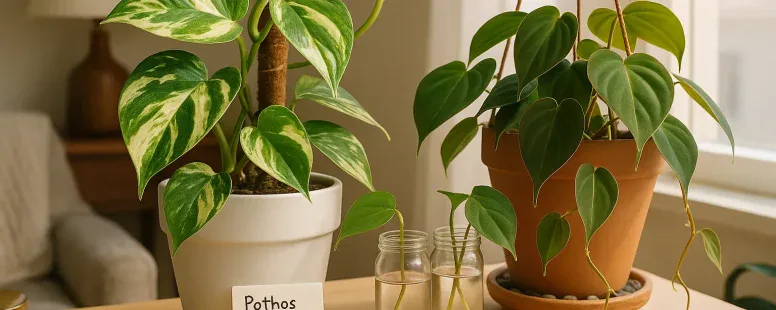
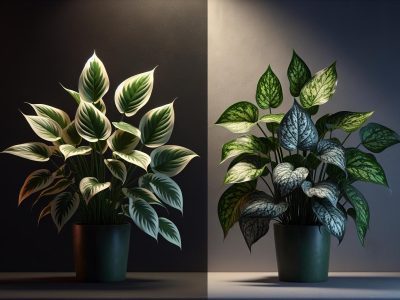
At a glance, Pothos usually has thicker, waxier leaves and a slightly stiffer vine. Heartleaf philodendron has thinner, more delicate leaves and a softer vine. Both climb or trail, both root readily in water, and both include popular cultivars: Golden Pothos, Marble Queen, and Neon (Pothos): Philodendron Brasil, Philodendron Micans, and the classic heartleaf (Philodendron hederaceum).
Use this quick map: choose pothos if you want tougher leaves and higher variegation options: choose heartleaf philodendron if you prefer a softer trailing habit and slightly more forgiving low-light performance. These are general rules, not absolutes, cultivar and microclimate matter.
How To Identify: Key Physical Differences
Fact: leaf attachment and surface texture are the fastest identifiers. Below you’ll find specific, visible traits to compare.
Leaf Shape, Size, And Texture
Pothos leaves often appear heart-shaped but they feel thicker and glossier. Golden Pothos and Marble Queen show pronounced variegation on that glossy surface. Philodendron heartleaf leaves are thinner, matte to semi-gloss, and often more uniformly colored or softly variegated (like Brasil). Leaf size varies by cultivar and light, large leaves generally mean brighter, indirect light.
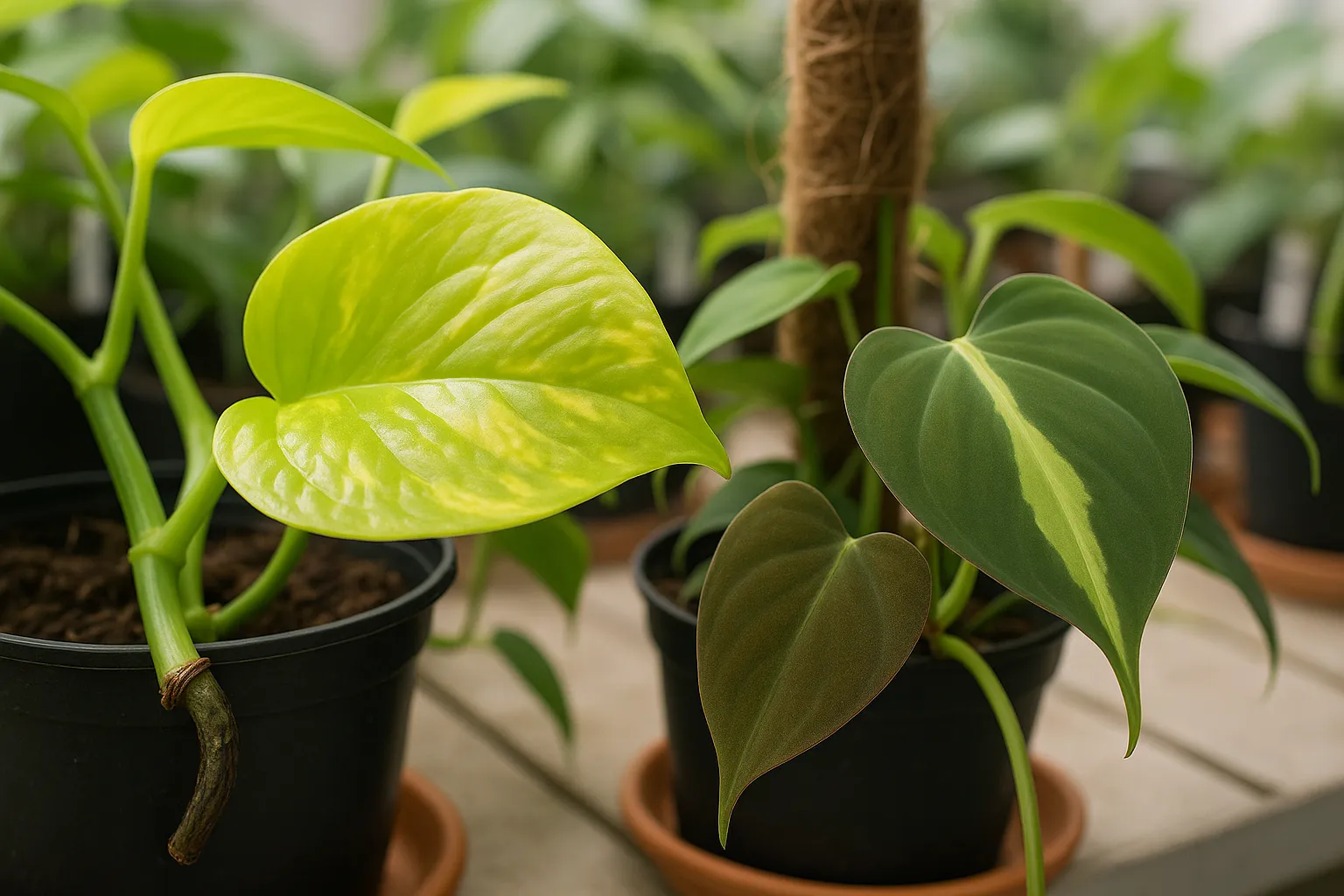
Example: a Neon Pothos leaf will look almost neon and waxy: a Philodendron Brasil leaf will be velvety with a pale stripe. These visual cues help you ID plants in a shop quickly.
Vine Structure, Roots, And Growth Habit
Pothos vines are chunkier and sometimes produce longer internodes under low light. Heartleaf philodendron vines tend to be finer and form denser trails. Both produce aerial roots: pothos aerial roots can appear thicker and darker. If you want to train a plant up a moss pole, both will climb, but pothos may grip more aggressively.
Real-life note: I once bought a plant labeled “pothos” that had thin, floppy stems, turns out it was a heartleaf philodendron. The stems betrayed it more than the leaves did.
Variegation, Cultivars, And Common Lookalikes
Fact: variegation patterns can mislead. Pothos tends to show high-contrast variegation (white, cream, yellow) while philodendron variegation is softer and often green-to-yellow striping.
Named cultivars to look for: Golden Pothos (yellow variegation), Marble Queen (white marbling), Neon Pothos (bright lime): Philodendron Brasil (lime stripe), Philodendron Micans (velvety bronze-green), and Heartleaf Philodendron (classic deep green).
Common lookalikes include Scindapsus pictus (silver variegation) and juvenile Monstera when leaves are small. When in doubt, check the petiole: pothos attaches leaves with a distinct pulvinus and slightly offset petiole: philodendron petioles often join closer to the leaf base. This detail helps you avoid wrong ID at the nursery.
Care Requirements: Similarities And Differences
Fact: both plants prefer bright, indirect light but pothos tolerates brighter spots and a bit more sun than heartleaf philodendron.
Light Preferences And Placement
Pothos: tolerates low light but variegated forms need brighter indirect light to keep the variegation. You can put pothos near an east or west window with a sheer curtain.
Philodendron: performs slightly better in lower light and keeps color without as much direct brightness. Place it in a north or indirectly lit east window for steady growth.
Tip: rotate pots every few weeks so vines grow evenly. If leaves stretch and lose color, increase light a notch.
Watering, Humidity, And Temperature Needs
Fact: both prefer to dry slightly between waterings: overwatering is the most common mistake.
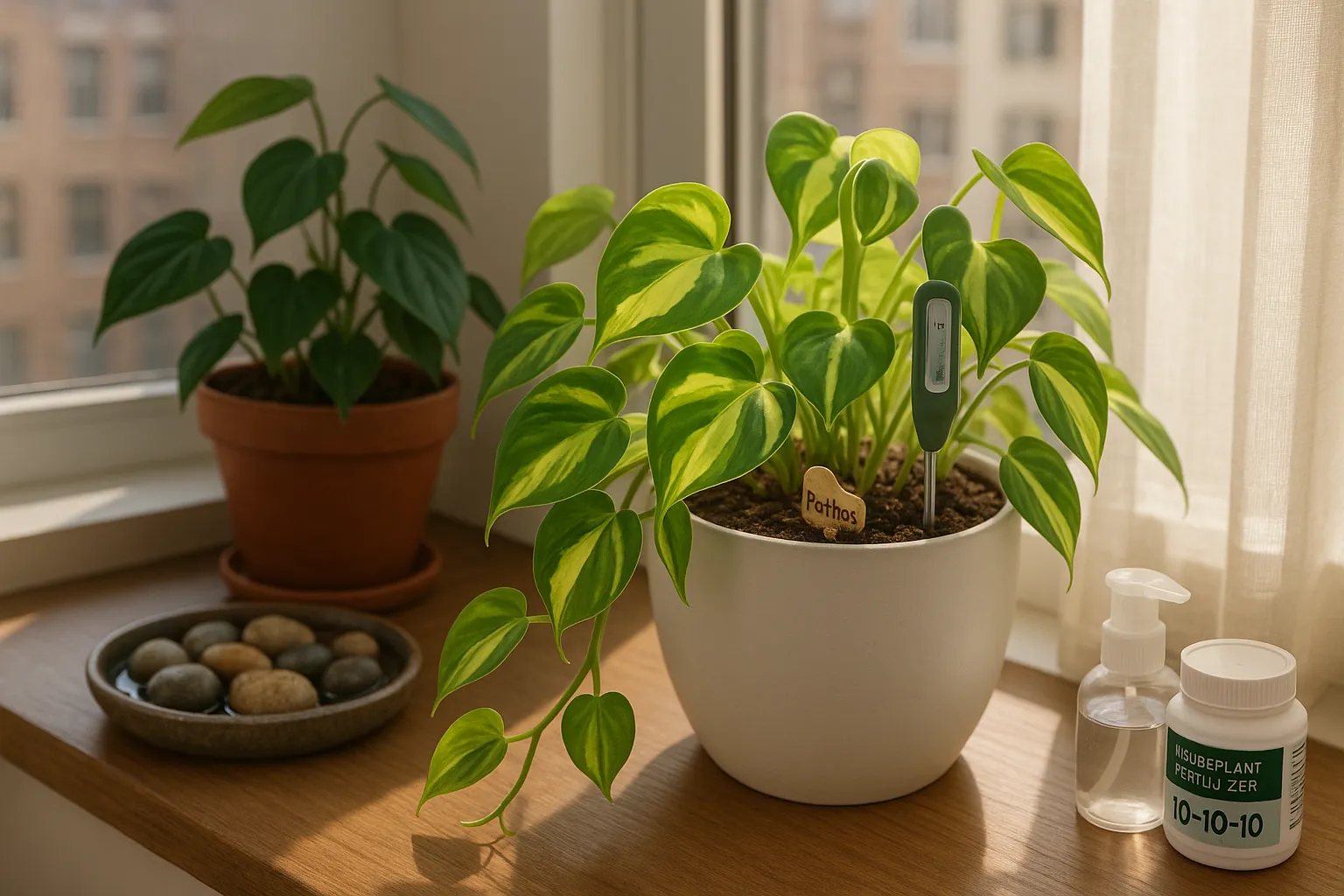
Watering guide: water when the top 1–2 inches of soil are dry. Pothos may tolerate a bit dryer cycles: philodendron prefers consistent but not soggy soil. Humidity: both like moderate humidity (40–60%). Micans and Brasil appreciate higher humidity: you can group plants or use a pebble tray. Temperature: keep both between 65–85°F: avoid drafts below 55°F.
Soil, Fertilizer, And Potting Considerations
Fact: well-draining, peat-based potting mix works for both.
Soil: use a mix with peat or coco coir plus perlite. Fertilizer: feed monthly in spring and summer with a balanced 10-10-10 or a diluted houseplant fertilizer. Pothos responds quickly to feeding with new growth: philodendron shows steadier, slower leaf development. Repot when roots crowd the pot (see repotting section).
Propagation, Training, And Pruning Techniques
Fact: both species are easy to propagate by stem cuttings: water propagation works well and fast.
Propagation Methods: Cuttings, Division, And Air Layering
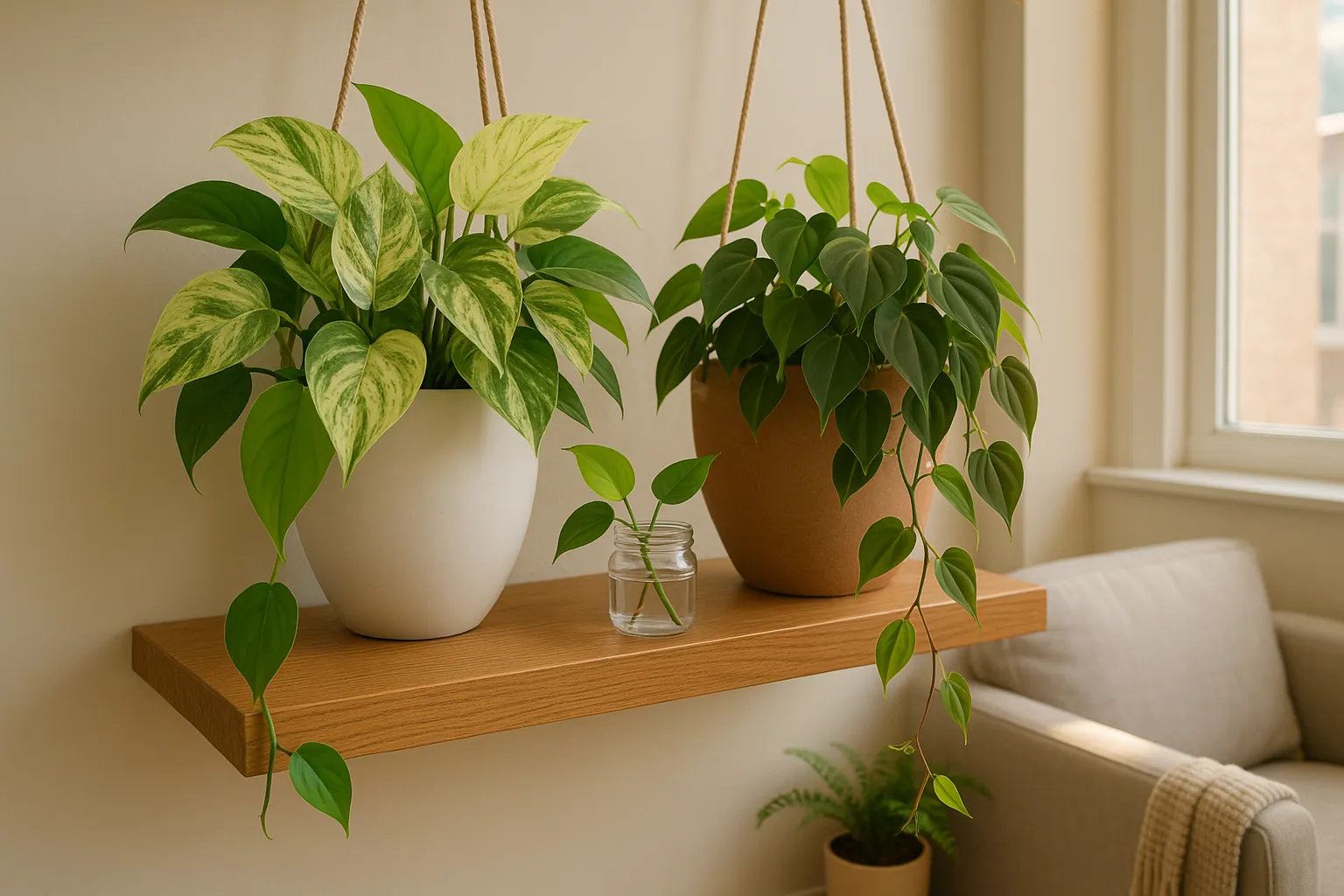
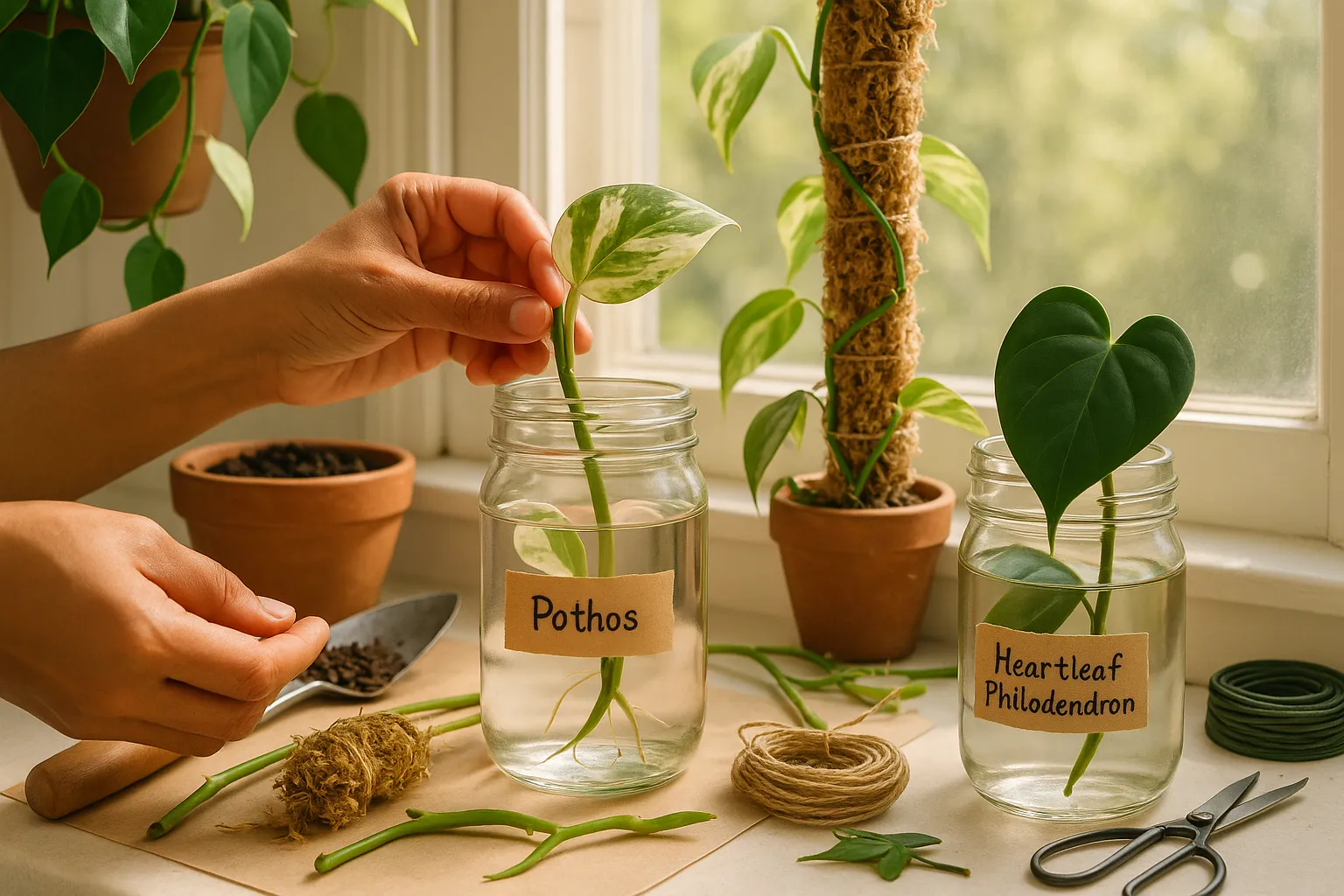
Cuttings: take 4–6 inch cuttings with at least one node. Submerge the node in water: roots appear in 2–4 weeks for pothos, sometimes a bit slower for philodendron. Division: divide mature clumps when repotting. Air layering: wound a vine, wrap sphagnum around the wound, and wait for roots, useful when you want a large, rooted section without cutting the main vine.
Real tip: label your jars. Variegated cuttings can revert if low light stresses them, so keep them bright while rooting.
Repotting Frequency And Root Management
Fact: repot every 12–24 months depending on growth rate.
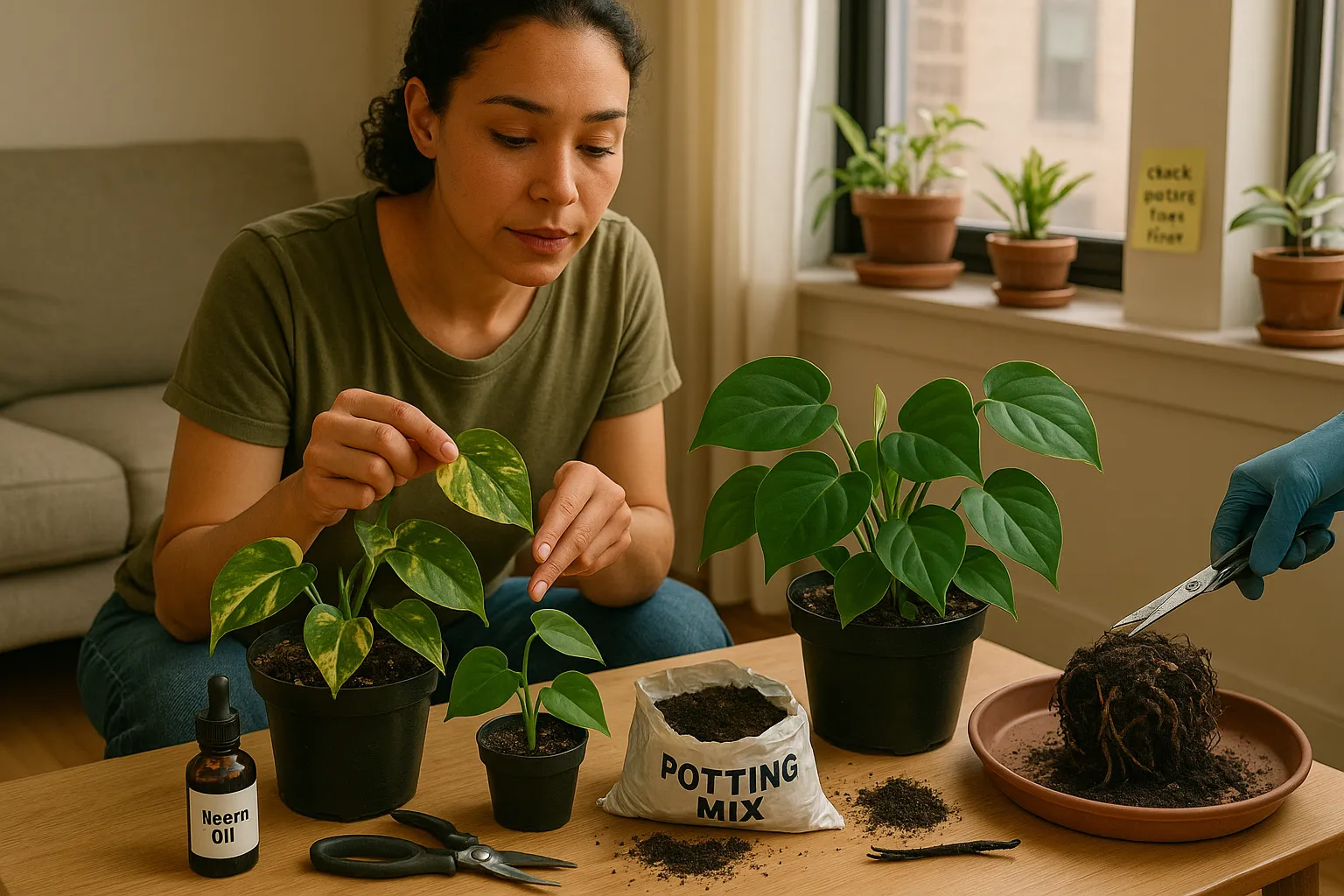
Pothos often needs repotting sooner if variegated cultivars grow fast. Philodendron may be happy slightly root-bound. Trim circling roots at repot time and refresh 30–40% of the potting mix. If roots are dense and pot-bound, step up one pot size only.
Training Vines: Stakes, Moss Poles, And Hanging Baskets
Fact: training method changes form and leaf size.
Use moss poles or stakes to encourage larger leaves and vertical growth. Hanging baskets keep the trailing look. For dramatic interior styling, train pothos up a pole to show variegation prominently: train philodendron in a hanging basket for soft draping. Secure vines gently with plant ties: don’t strangulate stems.
Common Problems And Troubleshooting
Fact: most issues trace back to water and light, check those first before reaching for pesticides or special additives.
Pests And How To Treat Them
Fact: common pests are spider mites, mealybugs, and scale.
Inspect undersides of leaves and leaf axils. Treat with insecticidal soap or neem oil, repeat every 7–10 days until gone. For heavy infestations, isolate the plant. Predatory insects like ladybugs work for some growers, but chemical-free sprays plus wiping leaves often solves light infestations.
Disease, Leaf Discoloration, And Nutrient Deficiencies
Fact: yellowing leaves often mean overwatering: pale new growth usually means low nitrogen or low light.
If older leaves yellow and drop, reduce watering and check root health. For pale new leaves, increase light a bit and add a balanced fertilizer monthly during the growth season. Brown leaf edges often point to low humidity or salt buildup: flush the soil every few months to remove salts.
Overwatering, Root Rot, And Recovery Steps
Fact: root rot shows as soft, brown roots and foul soil odor.
Recovery steps: remove the plant, trim black or mushy roots to healthy white tissue, let the root ball dry for a day, then repot into fresh, well-draining mix. Reduce watering frequency and improve drainage. You can salvage many plants if you act quickly: some stems root anew from healthy nodes if the main root system fails.
Which Plant Should You Choose? Practical Recommendations
Fact: choose pothos for resilience and bright variegation: choose heartleaf philodendron for softer trails and slightly better low-light performance.
Best Options For Beginners And Low-Light Rooms
For beginners: both are excellent. If your room gets very low light, pick a plain green heartleaf philodendron or Philodendron Micans. For bright but indirect windows and a forgiving plant, pick a variegated pothos like Marble Queen or Golden Pothos.
Aesthetic Considerations And Interior Styling Tips
Fact: form determines style: climb for drama, hang for softness.
Use pothos on a pole for vertical impact and bold leaves. Use heartleaf philodendron in hanging baskets or shelves for gentle drape. Mix them: a pothos on a shelf beside a trailing philodendron creates textural contrast, glossy vs. velvety.
Household Factors: Pets, Space, And Maintenance Commitment
Fact: both plants are toxic to cats and dogs (contain calcium oxalate crystals). Keep them out of reach or choose pet-safe alternatives if your pet chews plants.
Space and time: if you travel often, pothos tolerates drier conditions a bit better. If you want low maintenance but lush trailing, pick philodendron for slower, steadier growth. Both need monthly checks, light adjustment, and occasional pruning to remain tidy.
Call-to-action: pick one, learn its habits, and treat water and light as your two primary controls, do that and either plant will reward you with years of green.
To provide the best experiences, we use technologies like cookies to store and/or access device information. Consenting to these technologies will allow us to process data such as browsing behaviour or unique IDs on this site. Not consenting or withdrawing consent, may adversely affect certain features and functions.
Functional
Always active
The technical storage or access is strictly necessary for the legitimate purpose of enabling the use of a specific service explicitly requested by the subscriber or user, or for the sole purpose of carrying out the transmission of a communication over an electronic communications network.
Preferences
The technical storage or access is necessary for the legitimate purpose of storing preferences that are not requested by the subscriber or user.
Statistics
The technical storage or access that is used exclusively for statistical purposes.The technical storage or access that is used exclusively for anonymous statistical purposes. Without a subpoena, voluntary compliance on the part of your Internet Service Provider, or additional records from a third party, information stored or retrieved for this purpose alone cannot usually be used to identify you.
Marketing
The technical storage or access is required to create user profiles to send advertising, or to track the user on a website or across several websites for similar marketing purposes.