houseplants, few can rival the charm of pothos varieties like N’Joy and Pearls and Jade. Their cascading vines and variegated leaves make them a favorite for both beginners and seasoned plant enthusiasts. But what sets these two apart? At first glance, they might seem nearly identical, but subtle differences in their appearance and care needs reveal unique personalities.
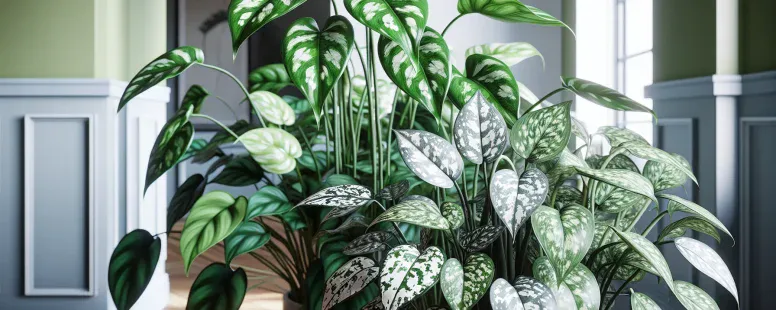
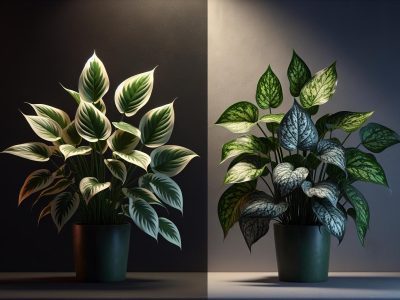
Picture the delicate interplay of green, white, and cream hues on their foliage—each pattern telling its own story. While N’Joy boasts bold contrasts with larger patches of white, Pearls and Jade offers a softer mosaic speckled with green flecks. These distinctions go beyond aesthetics; understanding them helps you choose the perfect match for your space or grow both harmoniously.
Overview Of Njoy And Pearls And Jade
N’Joy and Pearls and Jade are two distinct pothos varieties, each with unique foliage patterns that attract plant enthusiasts. Both belong to the Epipremnum aureum species but offer varying aesthetics and care needs. Recognizing these differences helps you choose the best fit for your space.
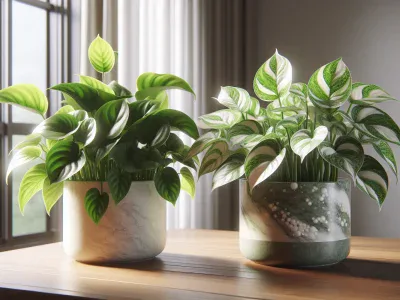
N’Joy showcases bold white variegation against green leaves, creating a striking contrast. Its clean, defined patches of white make it visually appealing in bright indoor settings. In comparison, Pearls and Jade exhibits a softer appearance with speckled green-and-white markings often accompanied by hints of cream or gray tones.
Growth habits differ slightly between the two. N’Joy grows more compactly due to its slower growth rate, making it ideal for limited spaces like shelves or desks. On the other hand, Pearls and Jade tend to spread out more quickly while maintaining their delicate leaf patterning.
Both plants thrive under similar conditions but display subtle differences in tolerance levels. N’Joy prefers consistent moisture without overwatering, while Pearls and Jade are slightly more forgiving if watering schedules vary occasionally.
Understanding these characteristics can enhance your ability to care for these plants effectively or combine them in mixed arrangements that highlight their contrasting features.
Appearance Differences
N’Joy and Pearls and Jade pothos exhibit distinct visual traits that set them apart. Their unique leaf characteristics make each variety appealing to different preferences.
Leaf Shape And Pattern
N’Joy features smaller, more oval leaves with defined edges. The white variegation often appears in large, irregular patches, creating bold contrast against the green portions. In comparison, Pearls and Jade has slightly larger leaves with a softer texture and rounded shape. Its variegation includes speckles or streaks of cream and gray dispersed across the surface, resulting in a more intricate pattern.
Both varieties share a vining growth habit but differ in density. N’Joy tends to grow compactly due to its slower pace, while Pearls and Jade produces longer vines that spread out more freely when given space.
Color Variations
The color palette of N’Joy is predominantly bright white paired with deep green. The sharp contrast between these colors gives it a striking appearance even from afar. On the other hand, Pearls and Jade combines shades of cream, light gray, dark green, and sometimes hints of yellow-green tones for a subtler overall look.
If you prefer plants that create bold statements with high-contrast variegation patterns, N’Joy fits well into modern decor themes. For those who enjoy softer hues blending seamlessly into natural settings or mixed arrangements, Pearls and Jade offers versatility with its nuanced coloration.
Growth And Care Requirements
Both N’Joy and Pearls and Jade share similarities in their care needs but differ slightly in growth patterns, making them suitable for varied indoor settings.
Light Preferences
N’Joy thrives under bright, indirect light to maintain its bold white variegation. Insufficient light causes fading of the vibrant contrast between green and white. Place it near east-facing windows or use sheer curtains to soften direct sunlight.
Pearls and Jade adapts more flexibly, tolerating medium light conditions without significant loss of its speckled variegation. But, brighter spots enhance its cream and gray tones better than dim areas.
Watering Needs
Maintaining consistent moisture is essential for N’Joy’s health, but overwatering leads to root rot easily due to its compact nature. Allow the top 1-2 inches of soil to dry out before watering again.
Pearls and Jade is less sensitive; occasional missed waterings won’t stress it as much thanks to its hardier tolerance levels. Still, avoid letting the soil completely dry out for extended periods—this can weaken leaf vibrancy over time.
Growth Speed
N’Joy exhibits a slow growth rate with compact vines ideally suited for small spaces like shelves or desktops where space limits sprawling plants.
Ideal Uses And Placement
N’Joy and Pearls and Jade excel in different decorative scenarios due to their unique growth habits and variegated foliage. Their adaptability makes them suitable for various environments.
Decorative Applications
Use N’Joy as a compact accent on shelves, desks, or small tables where its bold white-green contrast stands out. Its tidy growth pattern enhances minimalist designs. For example, placing it in a sleek ceramic pot can amplify its modern appeal.
Integrate Pearls and Jade into larger arrangements or let its vines drape from hanging baskets for a cascading effect. The cream, gray, and green hues blend well with natural decor themes. It complements rustic interiors when paired with wooden planters or terracotta pots.
Both varieties shine in mixed displays. Combine N’Joy’s striking leaves with Pearls and Jade’s softer tones to create visual depth.
Indoor Versus Outdoor Suitability
Grow both plants indoors under bright indirect light for optimal health. N’Joy flourishes in controlled spaces like offices due to its slower spread, while Pearls and Jade adapts better to medium-light areas such as living rooms or shaded corners.
Outdoors, these pothos varieties thrive only if temperatures remain above 60°F (15°C) year-round; otherwise, cold damage occurs quickly. Use them on covered patios or balconies during warm months but avoid direct sunlight that could scorch their leaves.
Select placement based on the plant’s tolerance levels—N’Joy suits consistent indoor conditions best, whereas Pearls and Jade accommodates occasional environmental fluctuations more easily.
Key Similarities Between Njoy And Pearls And Jade
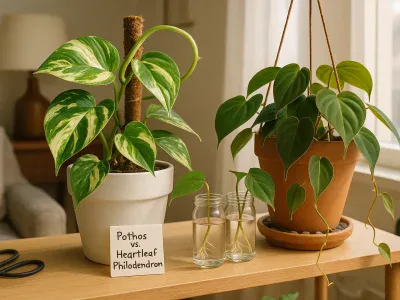
Both N’Joy and Pearls and Jade belong to the Epipremnum aureum species, sharing a vining growth habit. This makes them ideal for hanging baskets or climbing supports like trellises. Their adaptability to indoor environments allows you to use them as decor in various spaces.
These varieties thrive under bright, indirect light conditions but can also tolerate medium light. Although prolonged exposure to low light reduces variegation, their resilience ensures survival in less-than-ideal settings. You’ll find both plants suited for areas with filtered sunlight near windows.
Watering needs are similar between N’Joy and Pearls and Jade. Both prefer evenly moist soil but dislike overwatering, which leads to root rot. Allowing the top inch of soil to dry before watering again helps maintain healthy roots.
Temperature preferences overlap too, as neither plant tolerates cold drafts or temperatures below 60°F (15°C). Keep them indoors during colder months or position them in protected outdoor spots if your climate is warm year-round.
Pest resistance is another shared trait. While susceptible to common houseplant pests like spider mites or mealybugs, regular inspections and prompt treatment keep infestations under control.
Maintenance requirements align closely due to their slow-to-moderate growth rates. Pruning occasionally prevents leggy stems while encouraging fuller foliage. Using balanced liquid fertilizer monthly during active growth seasons boosts health without overwhelming either plant’s roots.
Their aesthetic appeal lies in their variegated leaves, offering unique patterns that enhance decorative arrangements equally well when planted individually or together in mixed displays.
Conclusion
Choosing between N’Joy and Pearls and Jade eventually comes down to your personal preferences and the space you’re decorating. Both offer stunning variegation and adaptability, but their unique growth habits and visual appeal make them stand out in different ways. Whether you prefer N’Joy’s bold contrast or Pearls and Jade’s delicate patterns, either plant can elevate your indoor greenery.
By understanding their subtle differences in care needs, lighting preferences, and watering tolerance, you’ll be better equipped to help them thrive. Consider combining both varieties for a dynamic display that highlights their contrasting features while adding depth to your decor.
To provide the best experiences, we use technologies like cookies to store and/or access device information. Consenting to these technologies will allow us to process data such as browsing behaviour or unique IDs on this site. Not consenting or withdrawing consent, may adversely affect certain features and functions.
Functional
Always active
The technical storage or access is strictly necessary for the legitimate purpose of enabling the use of a specific service explicitly requested by the subscriber or user, or for the sole purpose of carrying out the transmission of a communication over an electronic communications network.
Preferences
The technical storage or access is necessary for the legitimate purpose of storing preferences that are not requested by the subscriber or user.
Statistics
The technical storage or access that is used exclusively for statistical purposes.The technical storage or access that is used exclusively for anonymous statistical purposes. Without a subpoena, voluntary compliance on the part of your Internet Service Provider, or additional records from a third party, information stored or retrieved for this purpose alone cannot usually be used to identify you.
Marketing
The technical storage or access is required to create user profiles to send advertising, or to track the user on a website or across several websites for similar marketing purposes.