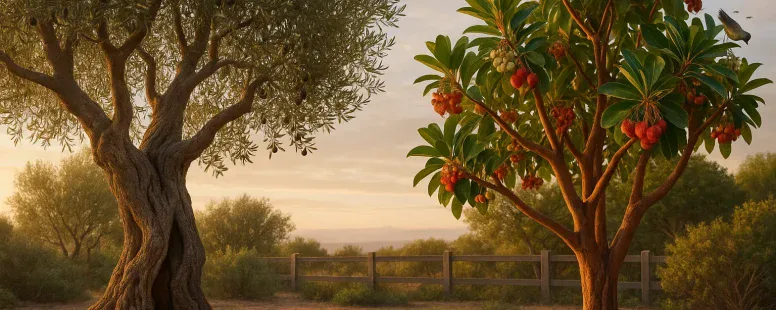
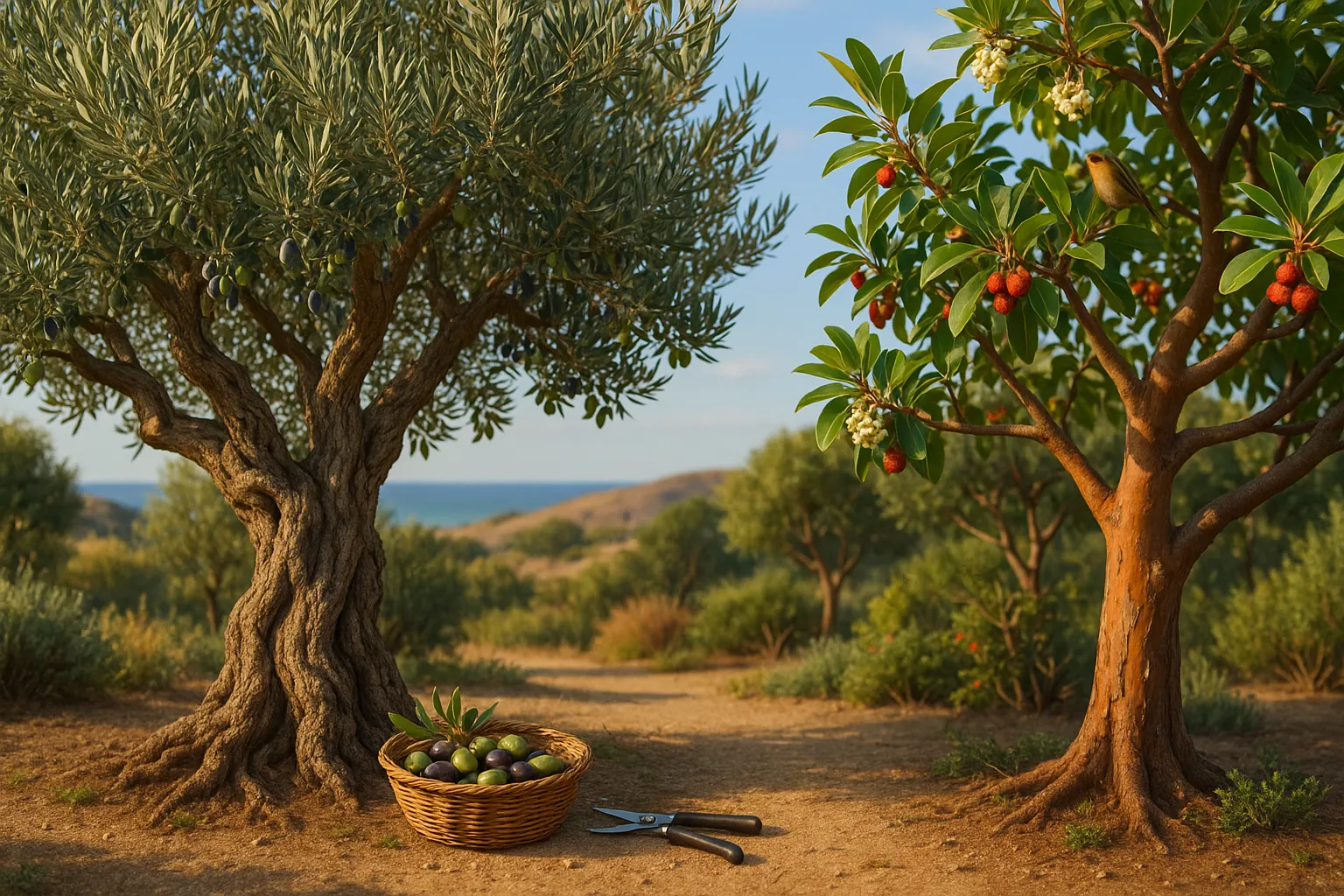
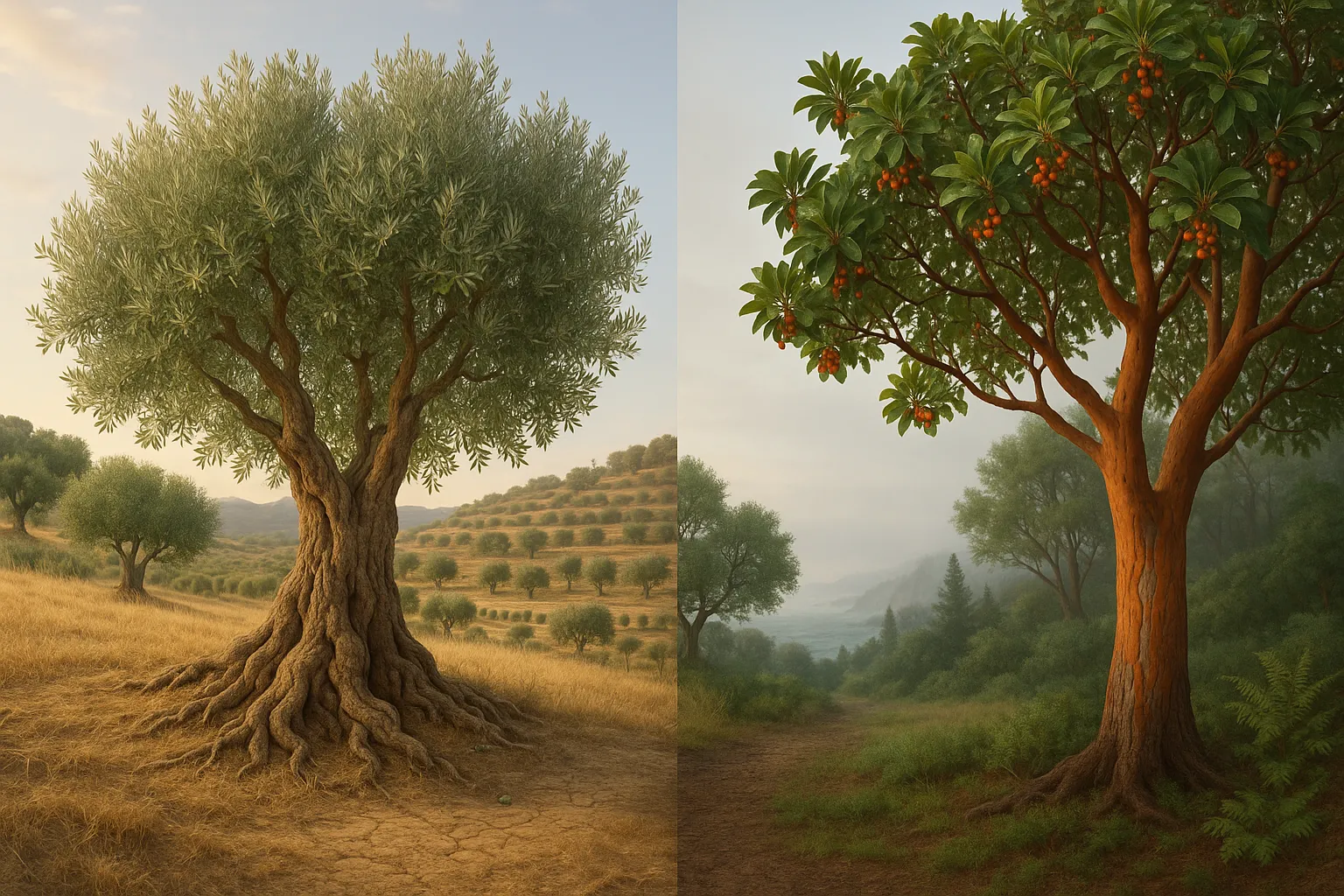
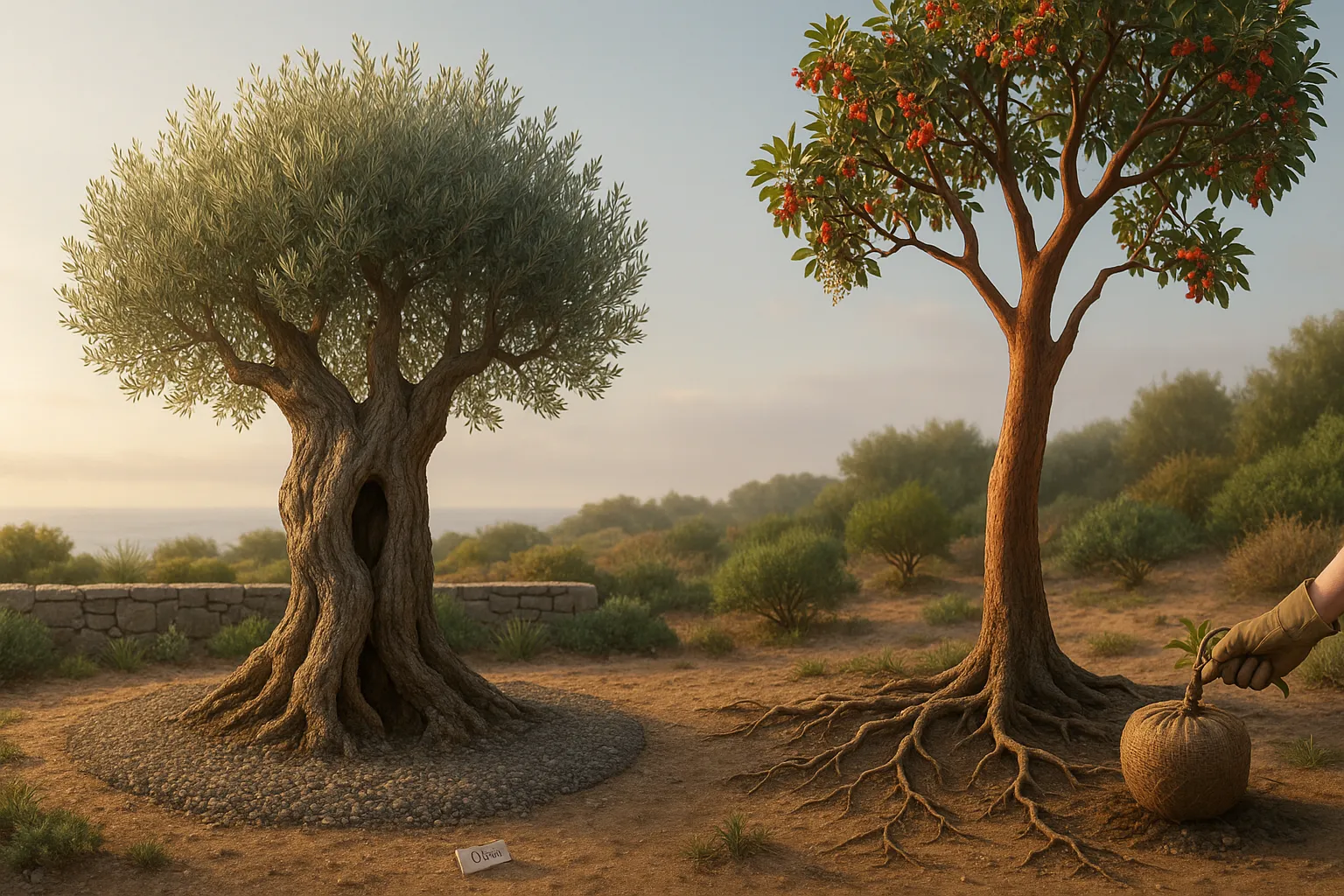
You will find clear contrasts between olive trees and arbutus the moment you study their leaves, fruit, and how they react to climate. Both trees bring Mediterranean flavor to gardens, but they serve very different roles: Olea europaea offers edible fruit and centuries of agricultural history, while Arbutus (notably Arbutus unedo and Arbutus menziesii) offers evergreen color, ornamental bark, and late-season blooms. This comparison peels back the visible traits and the hidden traits, root behavior, pollination habits, and resilience, so you can pick the right tree for your yard, orchard, or restoration project.
Quick Comparison At A Glance
Fact: Olive trees and arbutus differ in origin, fruit use, and growth habit.
At a glance: Olive trees (Olea europaea) are long-lived, slow-growing, and primarily cultivated for olives and oil. Arbutus species such as Arbutus unedo (strawberry tree) and Arbutus menziesii (Pacific madrone) are evergreen ornamentals: they produce edible but less commonly harvested fruit and are prized for their bark and seasonal flowers.
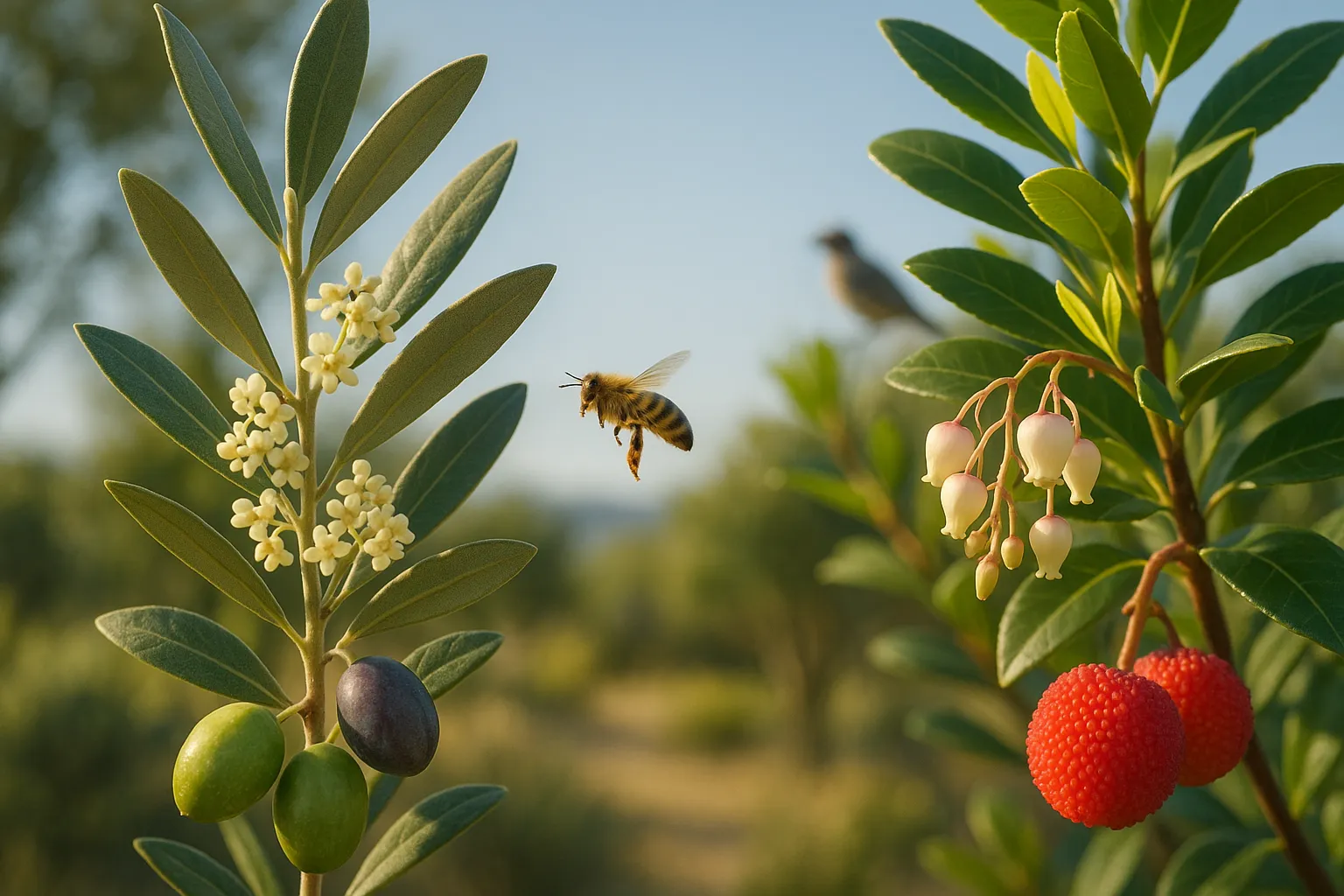
Leaves: Olive leaves are narrow and gray-green: arbutus leaves are broader and glossy.
Hardiness: Olives prefer Mediterranean climates (USDA zones 8–11 for many cultivars): some arbutus tolerate cooler, wetter coastal climates (Arbutus menziesii hardy to about zone 7).
Maintenance: Olives respond well to pruning and training for harvest: arbutus often resists heavy pruning and can suffer from root disturbance.
If you need a tree for fruit production, lean toward olives. If you want seasonal flowers, colorful bark, and wildlife value, arbutus may be the better pick.
Origins, Species, And Botanical Differences
Fact: Olive and arbutus belong to different families and reflect different evolutionary histories.
Native Range And Climate Adaptations
Olea europaea originates from the Mediterranean basin, Spain, Greece, Italy, and parts of North Africa. Cultivars have spread worldwide where summers are dry and winters are mild. Olive trees tolerate seasonal drought and heat: they evolved for hot, sunny hillsides.
Arbutus species come from two main regions: Arbutus unedo is native to the Mediterranean and western Europe: Arbutus menziesii is native to the Pacific coast of North America (British Columbia to California). Arbutus often handle coastal fog and winter rainfall better than olives, and some species resist salt spray.
Key Botanical Features: Genus, Growth Form, And Lifespan
Olea europaea (family Oleaceae) grows as a small tree or shrub with a gnarled trunk when mature. You should expect a multi-stemmed crown on older olives: they can live 500–1,500+ years under cultivation.
Arbutus (family Ericaceae) includes evergreen trees and shrubs. Arbutus unedo commonly forms a multi-stemmed shrub or small tree to 15–25 feet. Arbutus menziesii grows taller, often 50–100 feet in native stands. Lifespan for arbutus varies: some live several decades to a few centuries, but many are shorter-lived where fire, root disease, or drought occurs.
Growth Habit, Size, And Mature Shape
Fact: Growth habit guides how you’ll use the tree in the landscape.
Typical Growth Rate And Mature Dimensions
Olive trees grow slowly. Young plants may put on 6–12 inches of new growth per year, slowing as they age. Standard olive cultivars commonly reach 20–30 feet in height and spread, but commercial training keeps them shorter for harvest. Mature olives often develop a hollowed, sculptural trunk that becomes the focal point in a garden.
Arbutus growth rate is moderate to fast when conditions suit them. Arbutus unedo often reaches 15–25 feet with a rounded crown in 10–20 years. Arbutus menziesii can exceed 60 feet in coastal forests. You will see arbutus with open crowns and often leaning forms on windy bluffs.
Root Systems And Transplant Considerations
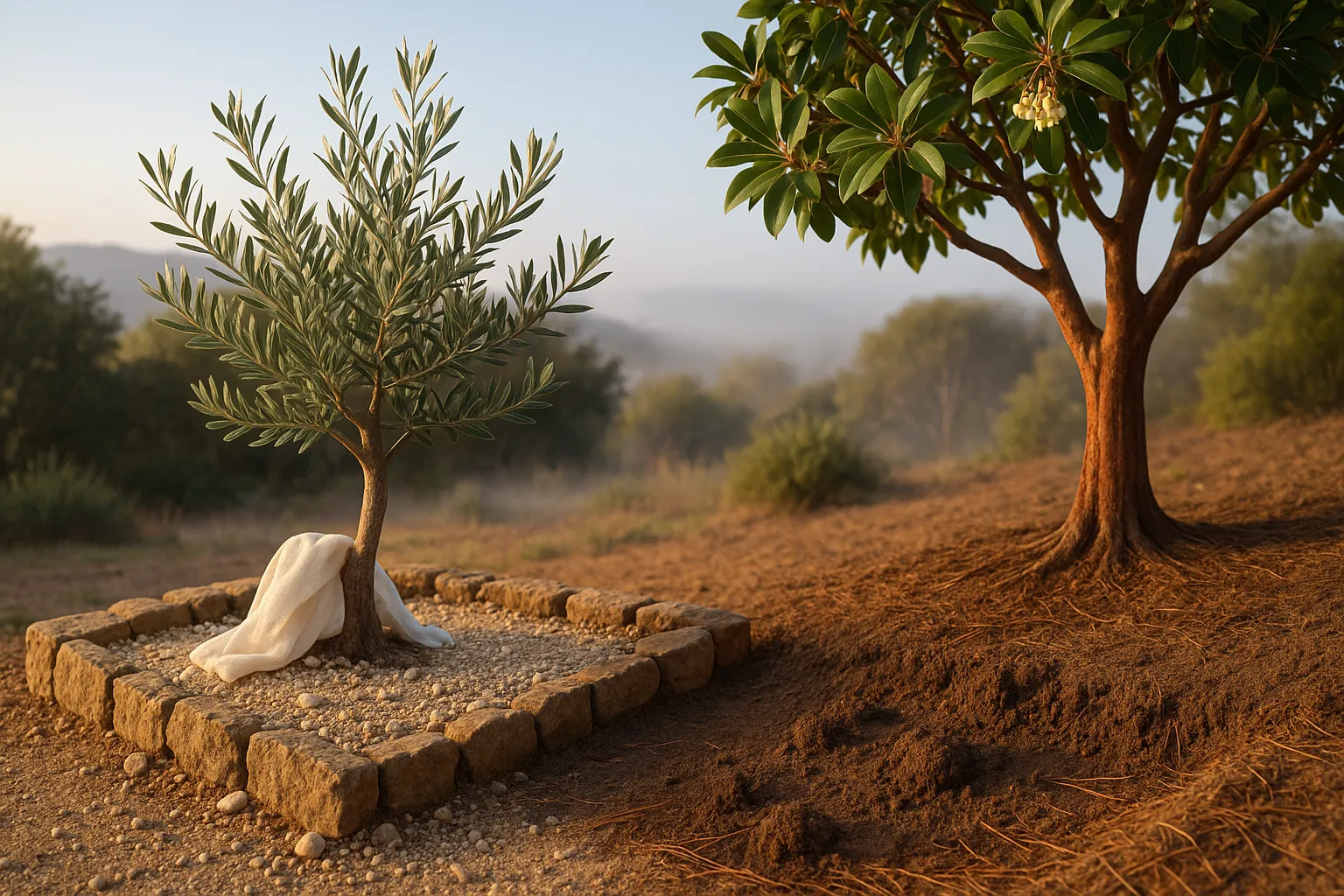
Olive root systems are somewhat deep and can tolerate poor soils if drainage is good. They resprout well from the base if top growth is damaged, which helps establishment after transplant. For long-term health, you must avoid waterlogged soil: olives dislike constant wet feet.
Arbutus have shallow, spreading roots that form strong mycorrhizal associations. They are sensitive to root disturbance and compaction. When you transplant arbutus, keep a large root ball and avoid planting too deep. On many sites, the biggest risk to arbutus is root rot from poor drainage.
Leaves, Flowers, And Fruit: What To Expect
Fact: Leaves, flowers, and fruit differ in form and function between the two.
Leaf Characteristics And Seasonal Behavior
Olive leaves are opposite, narrow, and gray-green with a silvery underside due to fine hairs. They often feel leathery and reduce water loss in hot conditions. Olives may show some leaf drop in extreme stress but remain semievergreen in mild climates.
Arbutus leaves are alternate, glossy, and broader. They remain green year-round and often show new growth in spring that contrasts with older, darker leaves. The glossy surface is more reflective and gives arbutus a different visual weight in the landscape.
Flowering Patterns And Pollination
Olives produce small, fragrant, creamy-white flowers in spring. Most commercial olives need cross-pollination from compatible cultivars: bees and wind both help transfer pollen. You should plant pollinizer cultivars like ‘Pendolino’ or ‘Frantoio’ alongside producers such as ‘Arbequina’ or ‘Manzanilla’ if you want reliable fruit set.
Arbutus flowers are urn-shaped or bell-like and bloom in late autumn to spring, depending on species. They attract bees and other pollinators in off-peak seasons, which gives wildlife an important food resource when few other flowers occur.
Fruit Types, Edibility, And Wildlife Value
Olive fruit is a drupe used for table olives and oil after curing or pressing. You can harvest olives in autumn: harvest timing influences flavor and oil quality. Arbutus fruit are berry-like, often called ‘strawberry tree’ fruit. They are edible raw but gritty and bland for many palates: they work well in jams, liqueurs, and fermented products. Birds heavily favor arbutus fruit and help disperse seeds.
Climate, Soil, And Site Requirements
Fact: Site selection determines success for both trees.
Cold Hardiness, Drought Tolerance, And Sun Exposure
Olives prefer full sun and warm summers. Most cultivars survive in USDA zones 8–11: some hardy selections tolerate zone 7 if winters are dry. You should protect young olives from late frost and severe freezes, which can kill buds and thin branches. Olives are drought-tolerant once established and handle summer heat well.
Arbutus species vary: Arbutus unedo tolerates mild coastal climates and some inland heat: Arbutus menziesii tolerates cooler coastal winters and summer dry spells when the fog belt supplies moisture. Arbutus generally prefer full sun to light shade and can be less drought-tolerant in inland, hot-summer sites unless given irrigation.
Soil Preferences, Drainage, And pH Considerations
Olives tolerate a wide range of soils but need excellent drainage and prefer neutral to slightly alkaline pH. They do well on rocky soils where other trees struggle.
Arbutus prefer well-drained, slightly acidic to neutral soils and often perform best where mycorrhizal fungi thrive. Heavy clay or compacted sites increase risk of root disease for arbutus. If your soil holds water, choose olives on raised beds or avoid planting arbutus.
Planting, Pruning, And Ongoing Care
Fact: Care differs: olives accept shaping: arbutus demand a lighter touch.
Establishment, Watering, And Fertilization Needs
Olive establishment needs deep watering less frequently. You should water thoroughly until roots expand, then taper irrigation to encourage drought hardiness. Fertilize olives lightly with balanced NPK in spring if growth is poor: excess nitrogen reduces fruit quality.
Arbutus establishment requires consistent moisture and minimal disturbance. You should water regularly the first two summers, then reduce frequency but maintain enough moisture to prevent stress. Fertilize sparingly: arbutus often rely on soil fungi for nutrients and overfertilization can harm them.
Pruning Goals, Timing, And Techniques
For olives, pruning goals include creating an open canopy for light penetration and shaping for harvest. Prune in late winter to remove dead wood and thin crowded branches. You can perform structural pruning on young trees to form a strong scaffold.
For arbutus, prune conservatively. Remove dead or crossing branches after flowering, but avoid heavy cuts into old wood because arbutus may not resprout vigorously. If you prune arbutus, use clean cuts and avoid injuring the trunk bark, which is a key ornamental feature.
Common Pests, Diseases, And Longevity
Fact: Olive and arbutus face distinct biological threats that affect lifespan.
Typical Pests And Disease Problems For Each Species
Olives commonly face olive fruit fly (Bactrocera oleae), scale insects, verticillium wilt in some soils, and peacock spot (a fungal leaf spot) in humid regions. You should monitor fruit fly with traps and use integrated pest management: sanitation, timely harvesting, and targeted treatments.
Arbutus are vulnerable to root rot caused by Phytophthora in poorly drained sites, and madrone canker/leaf blight affects Arbutus menziesii. Wood-boring insects and foliar pests occur but are usually secondary to stress. Maintaining good drainage and avoiding root damage reduces disease risk.
Expected Lifespan And Factors That Affect Longevity
Olive trees can live centuries when grown on suitable sites with proper care: cultivar choice and disease management affect commercial longevity. Arbutus life expectancy is shorter in urban or drought-prone sites: in native forests some individuals live a century or more, but many decline earlier from root disease, fire, or drought stress. Site, soil, and maintenance drive how long either tree will thrive.
Landscape Uses, Benefits, And Limitations
Fact: Use each tree where its strengths match your goals.
Ornamental, Culinary, And Ecological Uses
Olive trees give you edible fruit, oil, and dramatic trunk form, ideal for Mediterranean gardens, edible landscapes, and hedged orchards. They also tolerate pruning for topiary or espalier forms.
Arbutus give year-round leaves, spring or autumn flowers, attractive peeling bark (especially Arbutus menziesii), and fruit that supports birds in late seasons. Use arbutus for coastal gardens, wildlife corridors, and ornamental specimen planting.
Site Selection Tips: Choosing Between Olive And Arbutus
Choose olive if you want a productive tree for olives or oil and if your site has hot, dry summers and good drainage. Choose arbutus if you prioritize year-round foliage, seasonal flowers for pollinators, and bark interest, or if you garden in cooler coastal climates.
Practical tip: If you have a tight clay pocket with poor drainage, do not plant arbutus there. If your winters produce hard freezes below zone 7 regularly, avoid most olive cultivars unless you provide frost protection. Consider planting both species in separate micro-sites on larger properties to enjoy both culinary yields and ornamental value.
To provide the best experiences, we use technologies like cookies to store and/or access device information. Consenting to these technologies will allow us to process data such as browsing behaviour or unique IDs on this site. Not consenting or withdrawing consent, may adversely affect certain features and functions.
Functional
Always active
The technical storage or access is strictly necessary for the legitimate purpose of enabling the use of a specific service explicitly requested by the subscriber or user, or for the sole purpose of carrying out the transmission of a communication over an electronic communications network.
Preferences
The technical storage or access is necessary for the legitimate purpose of storing preferences that are not requested by the subscriber or user.
Statistics
The technical storage or access that is used exclusively for statistical purposes.The technical storage or access that is used exclusively for anonymous statistical purposes. Without a subpoena, voluntary compliance on the part of your Internet Service Provider, or additional records from a third party, information stored or retrieved for this purpose alone cannot usually be used to identify you.
Marketing
The technical storage or access is required to create user profiles to send advertising, or to track the user on a website or across several websites for similar marketing purposes.