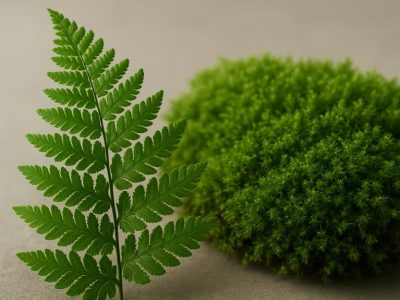
You can pick a plant that looks like a tiny tree on your desk or one that feels like a pocket-sized bonsai, both promise green calm, but they behave very differently. The Jade plant (Crassula ovata) and the Money Tree (Pachira aquatica) share popularity, thick leaves, and a reputation for bringing good vibes. Yet their care, size, and common problems diverge in ways that matter if you have limited light, pets, or a forgetful watering habit. This guide slices straight to what you need to know, visual cues, exact care steps, pest traps, and buying tips, so you choose the plant that fits your life and space.
At‑A‑Glance Comparison
Fact: Jade and Money Tree differ in leaf structure, stem type, and growth habit.
Quick Identification: Key Visual Differences
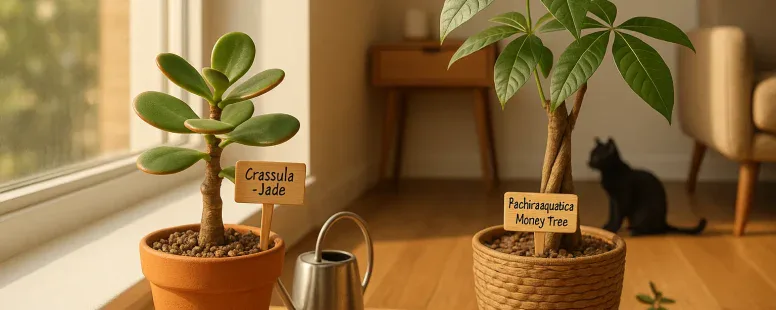
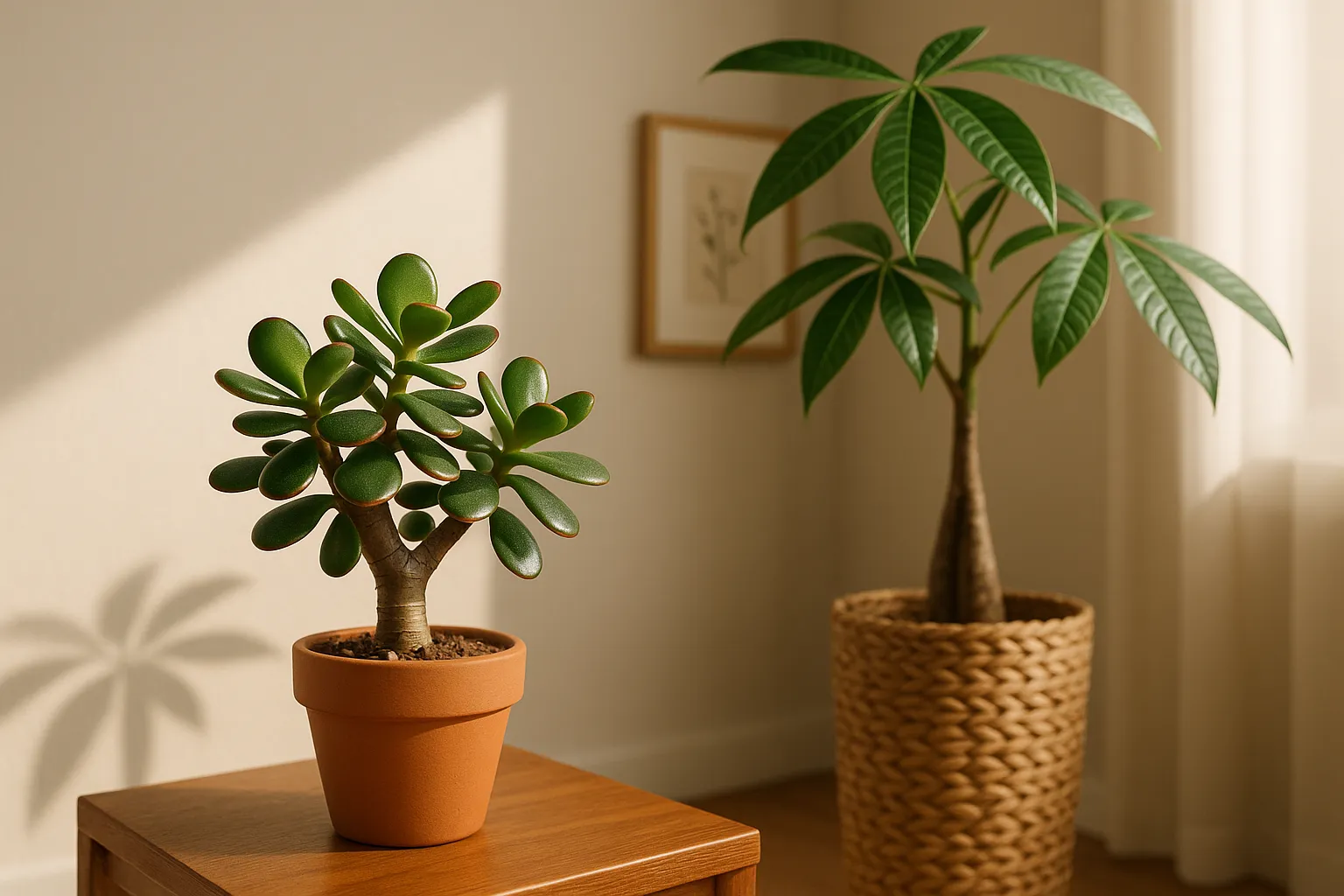
Jade plants (Crassula ovata) show thick, glossy, oval leaves that grow opposite along woody stems. Leaves often develop red margins in bright sun. The trunk is stout and succulent. Money Trees (Pachira aquatica) have compound leaves, five to seven narrow leaflets radiating from a central point, and a softer, non‑succulent trunk that is often braided in nursery specimens.
Look for these named entities when you shop: Crassula ovata = jade: Pachira aquatica = money tree. If you see fleshy leaves and a water‑filled trunk, you likely have a jade. If you see pinnate leaves and a braided trunk, you have a money tree.
Size, Growth Rate, And Lifespan Comparison
Fact: Money Trees grow taller and faster indoors: Jades are slower and more compact.
Jade grows slowly. Expect 2–3 feet indoors over many years if conditions are steady. It can live decades as a potted houseplant: some specimens survive 50+ years in stable homes. Money Trees can reach 6–8 feet indoors over time and grow faster under good light and humidity. Money Trees live 10–20 years indoors with good care, sometimes longer in ideal conditions.
Practical takeaway: Choose jade if you want a slow, sculptural plant you can move easily. Choose money tree if you want vertical presence and faster impact.
Detailed Care Requirements
Fact: Light, water, and soil are the decisive factors for both plants.
Light Needs
Jade: Prefers bright, direct light for several hours daily. South or west windows work best. Strong light gives that red leaf margin and compact growth.
Money Tree: Prefers bright, indirect light. Avoid prolonged harsh midday sun on the leaves: it can scorch the leaflets. A bright east window or filtered light near a south window is ideal.
If your apartment has only north windows, the money tree will cope better than a jade.
Watering And Soil Preferences
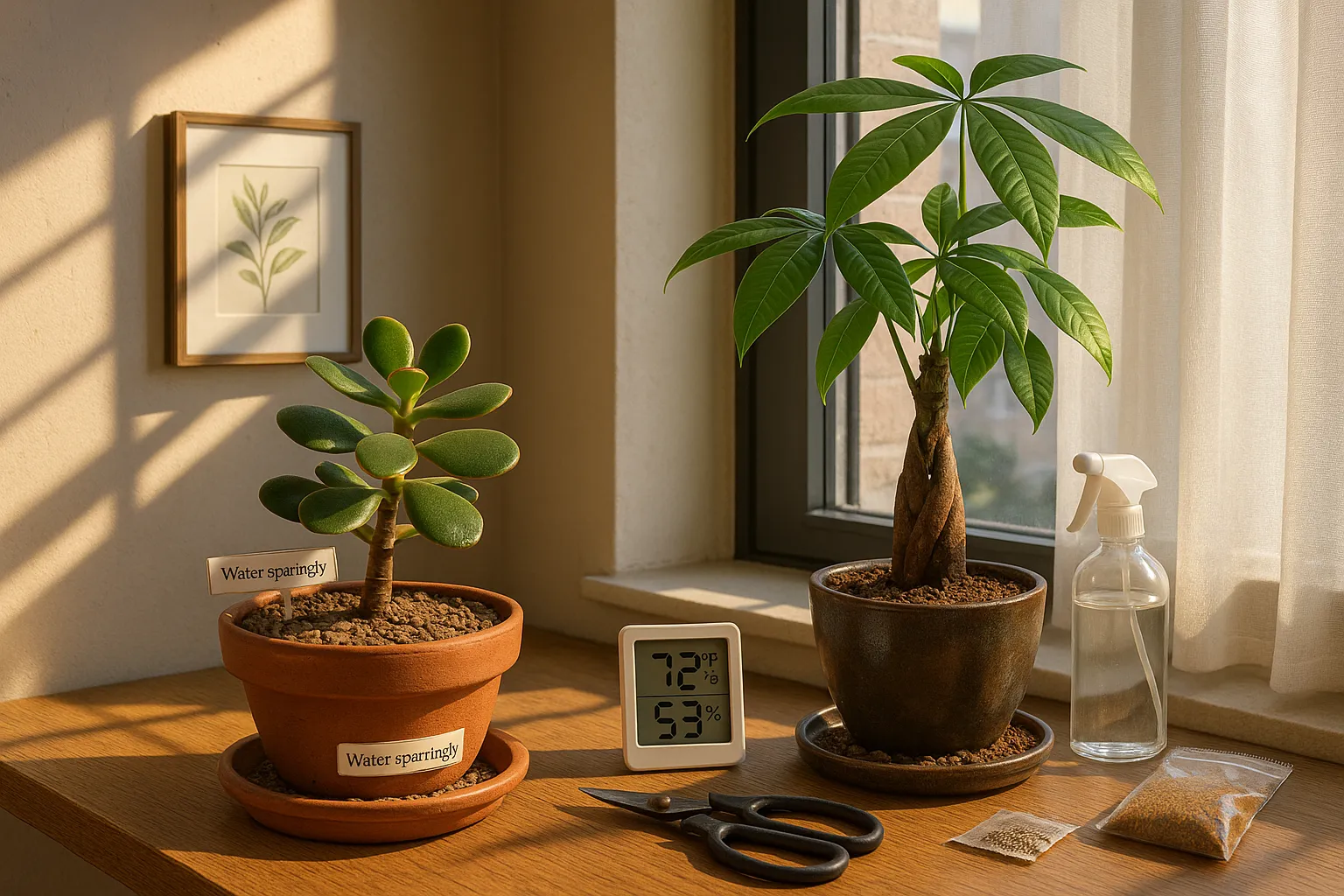
Jade: Use a fast‑draining succulent mix. Water deeply but infrequently. Let soil dry 1–2 inches down between waterings. Overwater will rot the roots quickly.
Money Tree: Use a well‑draining potting mix with some organic matter. Keep soil evenly moist but not waterlogged. Allow the top 1 inch to dry before you water again. Money trees tolerate slightly more moisture than jade.
Concrete rule: Jade stores water in leaves: money tree does not.
Temperature, Humidity, And Seasonal Care
Jade: Prefers 65–75°F (18–24°C) daytime, tolerates cooler nights but avoid below 50°F (10°C). Low humidity is fine.
Money Tree: Likes 65–75°F (18–24°C) and benefits from higher humidity (40–60%). Mist leaves or use a pebble tray in dry homes. Protect both from drafts and sudden temp swings.
Seasonal tip: Reduce watering in winter for both plants. Jade needs an actual dry rest: money tree wants slightly less water but not bone dry.
Fertilizing, Pruning, And Repotting Tips
Fact: Both plants respond to light feeding and occasional pruning.
Fertilize jade with a diluted balanced fertilizer during the growing season (spring–summer) once a month. Money trees appreciate a balanced houseplant feed every 4–6 weeks in spring and summer.
Prune jade to shape and encourage branching. Use clean tools to cut a stem just above a node. Prune money tree to maintain canopy shape: remove crossing or dead branches.
Repot jade every 2–3 years or when rootbound, using a slightly larger pot and fresh succulent mix. Repot money tree every 2–4 years into a pot 1–2 inches larger: avoid huge jumps in pot size that keep soil too wet.
Common Problems And Troubleshooting
Fact: Most issues trace back to water, light, or pests.
Pests And Diseases To Watch For
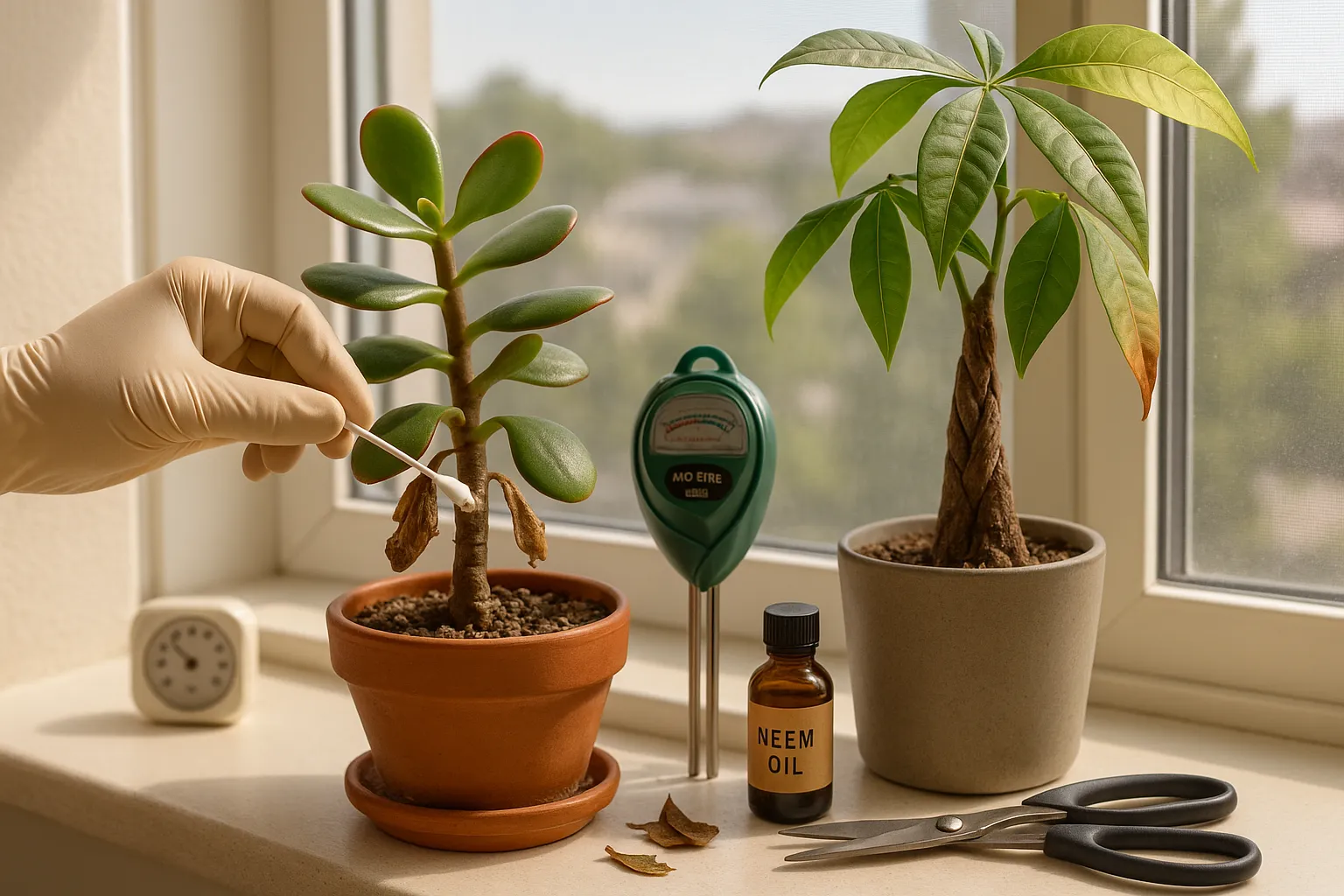
Jade: Watch for mealybugs, scale, and spider mites. Mealybugs hide in leaf axils and look like small cottony clusters. Treat with isopropyl alcohol on a cotton swab or an insecticidal soap.
Money Tree: Susceptible to spider mites and scale. Root rot can occur from overwatering. For pests use the same gentle soap or neem oil treatments recommended by the Royal Horticultural Society.
Symptoms Of Overwatering Vs. Underwatering
Fact: Overwatered leaves are soft and translucent: underwatered leaves wrinkle and fall off.
Overwatering signs: Yellowing leaves that are soft, mushy stems, wet soil, and a foul smell, this is root rot.
Underwatering signs: Dry, shriveled leaves on jade: brown crispy leaf tips on money tree and leaf drop on both.
Immediate fix: Stop watering, check roots, trim rotten roots, allow pot to dry, and repot in fresh mix if needed.
Leaf Discoloration, Drop, And Stress Signs
Fact: Leaf color changes tell you exactly what the plant needs.
Red margins on jade = good bright light. Pale or bleached leaves on both = too much direct sun (especially money tree). Brown tips on money tree = low humidity or fluoride in tap water. Sudden leaf drop often follows a move, shock, or rapid temp change.
Honest note: You will overwater once. I did, my jade lost half its roots. I cut the rot, let it callus, and it rebounded in months. Plants forgive but slowly.
Benefits, Uses, And Placement Ideas
Fact: Both plants improve mood and room aesthetics but suit different interiors.
Indoor Styling And Light Placement Suggestions
Jade: Works well on windowsills, desks, and shelves that get bright light. Use a terracotta pot for faster drying and a sculptural minimalist look.
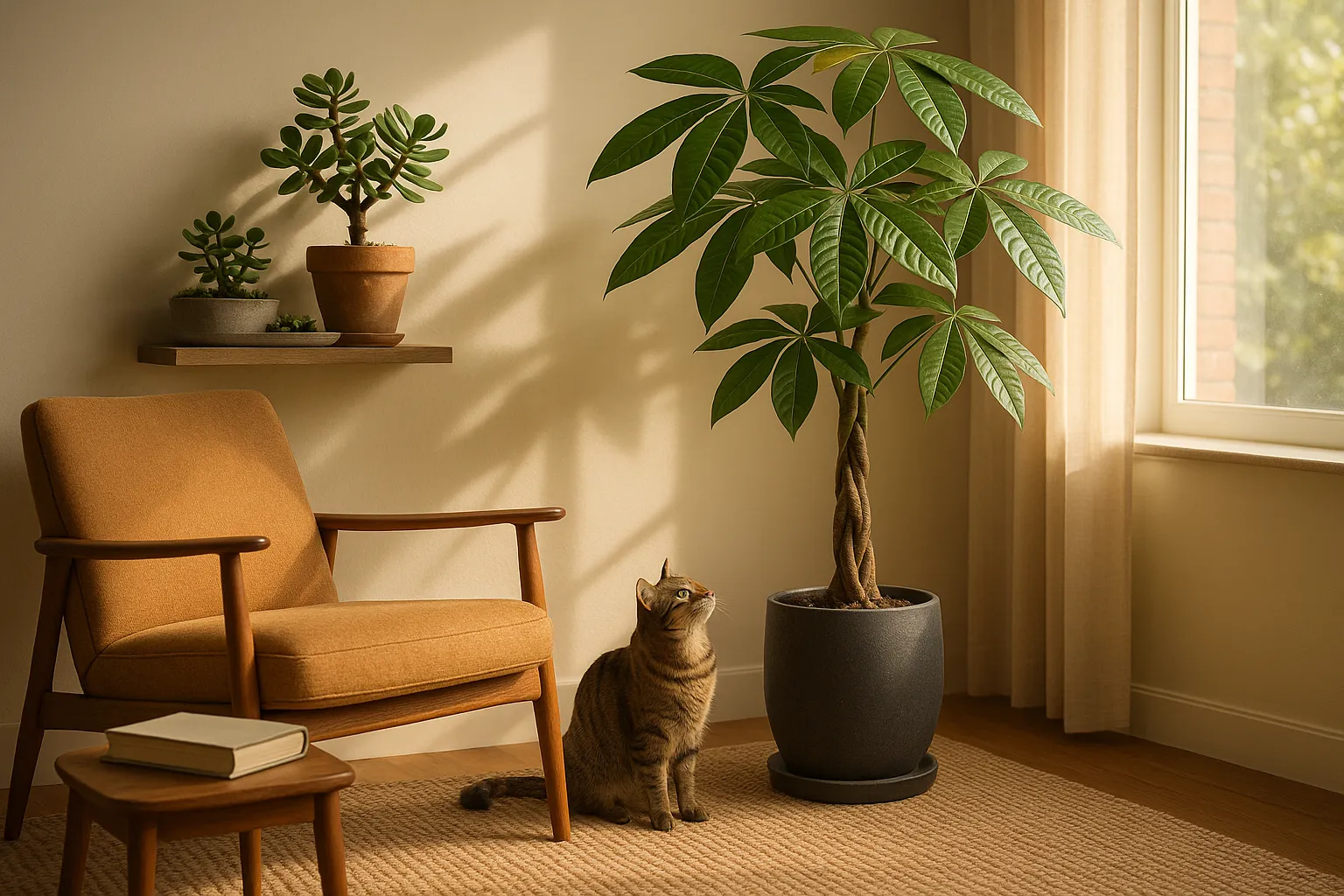
Money Tree: Makes a strong floor specimen in a decorative planter. Place near a bright window with filtered light. Its braided trunk reads like intentional decor and anchors living rooms and office corners.
Styling tip: Pair jade with other succulents in a shallow tray for a textured vignette. Place money tree beside a reading chair to create a cozy green nook.
Symbolism, Feng Shui, And Gift Considerations
Fact: People commonly gift both as symbols of prosperity.
Jade is often called the “money plant” in some cultures and symbolizes wealth and good fortune. Money tree carries a more explicit money symbolism because of its common name: braided trunks and five leaflets are considered lucky by some. If gifting, choose a healthy specimen and include care notes.
Pet Safety And Household Considerations
Fact: Jade is toxic to cats and dogs: money tree is considered non‑toxic.
The ASPCA lists Crassula (jade) as toxic, ingestion causes vomiting or depression in pets. Pachira aquatica (money tree) is generally non‑toxic per the ASPCA, making it safer for homes with curious pets. Always verify on the ASPCA site and keep any plant out of reach when unsure.
Choosing The Right Plant For Your Lifestyle
Fact: Your light, time, and space determine the better choice.
Best Options For Beginners Vs. Experienced Plant Owners
Jade: Best for owners who prefer low maintenance and minimal humidity care. Ideal for busy people who forget weekly watering.
Money Tree: Better for owners who can monitor humidity and provide steady light. Good if you want a larger statement plant and are willing to water moderately.
Beginner rule: If you have low light and pets, get a money tree: if you have strong light and want a tiny, sculptural plant, get a jade.
Water habits: Forget often? Pick jade. Water reliably? Money tree suits you.
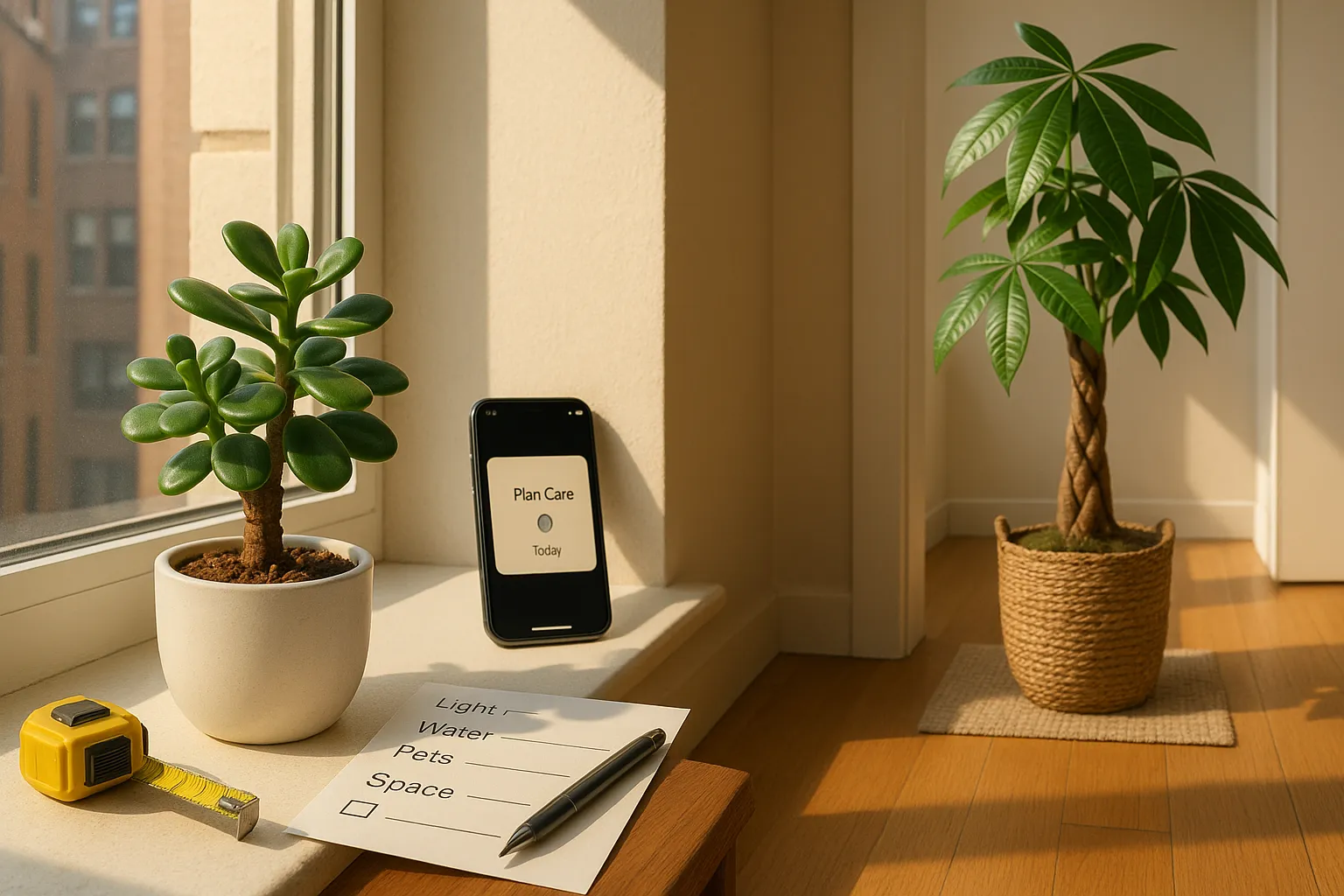
Pets at home: Yes? Prefer money tree. No? Either.
Space: Small shelf or desk? Jade. Floor or entryway? Money tree.
Use this checklist while shopping. Measure the spot first. Plants do better when expectations match reality.
Propagation And Buying Guide
Fact: Both plants propagate easily but with different methods and timelines.
How To Propagate Each Plant (Step‑By‑Step)
Jade (leaf or stem cuttings):
Cut a healthy stem or pluck a leaf with a clean snip.
Let the cutting callus for 2–3 days in dry shade.
Insert the callused end into a well‑draining succulent mix.
Water sparingly until roots form (2–6 weeks).
Move to bright light gradually.
Money Tree (stem cuttings):
Take a 6–8 inch stem cutting with several leaflets.
Trim lower leaves and dip the cut end in rooting hormone (optional).
Place cutting in water or a moist peat‑perlite mix.
Roots appear in 2–6 weeks.
Transplant to potting mix once roots are established.
What To Look For When Buying A Healthy Specimen
Fact: Healthy plants show firm stems, intact leaves, and clean soil.
Buying checklist: Avoid plants with soft, mushy stems (overwatered) or heavy leaf loss (stress). Check the undersides of leaves for mealybugs. For money trees, inspect the trunk braids for firmness and no rotting. Ask the nursery about watering history and potting mix. If the seller is a reputable local nursery or chain like Terrain or a botanical garden shop, you often get better provenance and care advice.
Final buying tip: Buy the plant that fits your light and routine, not the one you wish you could care for. You will both be happier that way.
To provide the best experiences, we use technologies like cookies to store and/or access device information. Consenting to these technologies will allow us to process data such as browsing behaviour or unique IDs on this site. Not consenting or withdrawing consent, may adversely affect certain features and functions.
Functional
Always active
The technical storage or access is strictly necessary for the legitimate purpose of enabling the use of a specific service explicitly requested by the subscriber or user, or for the sole purpose of carrying out the transmission of a communication over an electronic communications network.
Preferences
The technical storage or access is necessary for the legitimate purpose of storing preferences that are not requested by the subscriber or user.
Statistics
The technical storage or access that is used exclusively for statistical purposes.The technical storage or access that is used exclusively for anonymous statistical purposes. Without a subpoena, voluntary compliance on the part of your Internet Service Provider, or additional records from a third party, information stored or retrieved for this purpose alone cannot usually be used to identify you.
Marketing
The technical storage or access is required to create user profiles to send advertising, or to track the user on a website or across several websites for similar marketing purposes.