You can create an effective green screen with either Leylandii or Thuja Western Red Cedar, but they behave very differently once planted. One grows like a fast-moving wave across the garden: the other advances with steadier, more predictable steps. Which one suits your soil, fence line, and patience? In this guide you’ll get clear, practical comparisons, growth rates, appearance, care, pests, costs, legal headaches and a simple checklist to pick the right hedge for your site. Expect honest trade-offs, real-world tips, and a few warnings learned the hard way by gardeners and landscapers.
Quick Snapshot: Key Differences At A Glance
Fact: Leylandii grows much faster than Thuja Western Red Cedar, while Thuja offers warmer color and better recovery from hard pruning.
Leylandii (× Cupressocyparis leylandii): Extremely fast growth (up to 1–1.5 m/3–5 ft per year in ideal conditions). Dense dark-green foliage. Very common for quick hedging and tall screens. Lower initial cost, higher pruning demand. Susceptible to root competition and wind rock on exposed sites.
Thuja occidentalis ‘Smaragd’ or Thuja plicata (Western Red Cedar): Moderate growth (about 0.3–0.6 m/1–2 ft per year for many cultivars). Softer, lighter green to copper-red foliage (seasonal tones). Better tolerance of pruning into older wood for some species, more tolerant of poor soil drainage in certain cultivars. Often preferred for feature planting and wildlife value.
Quick practical takeaway: Choose Leylandii when you need a fast tall screen and you will commit to frequent pruning. Choose Thuja when you want lower-maintenance, nicer color and better long-term stability.
Head-To-Head: Growth Rate And Mature Size
Fact: Growth rate determines spacing, maintenance frequency, and the eventual cost of ownership.
Growth Rate
Leylandii is a rapid grower. In fertile, well-watered sites it can add 3–5 feet per year. Thuja Western Red Cedar grows more slowly, commonly adding 1–2 feet annually depending on cultivar and soil.
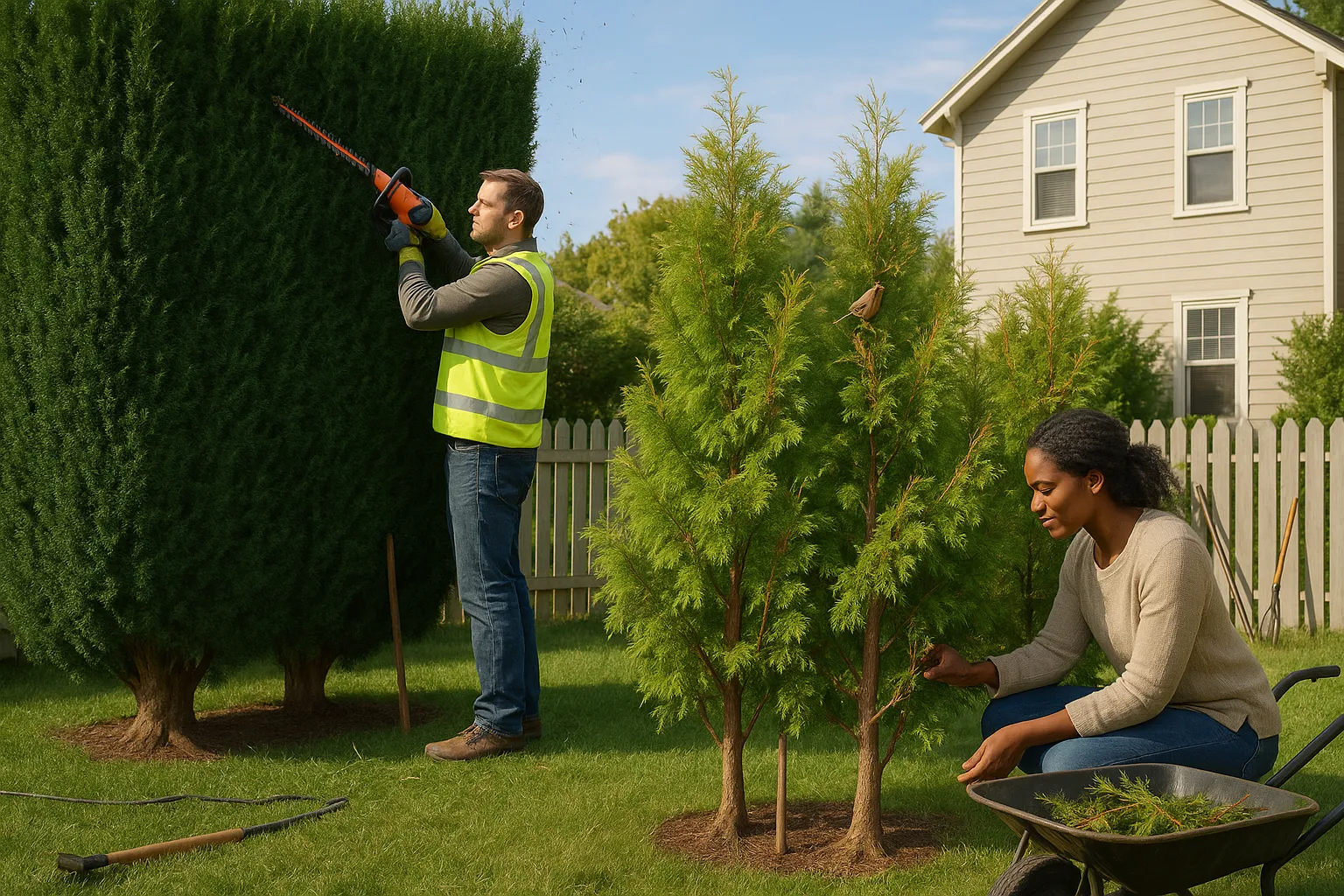
Example: A landscaper I worked with used 2-year-old Leylandii on a noise screen project: after three seasons the hedge was already 12 feet tall and needed twice-yearly trimming. A Thuja planting at the same site hit 7–8 feet and required less frequent shaping.
Mature Height, Width And Spacing Recommendations
Fact: Mature size guides spacing to avoid crowding and root competition.
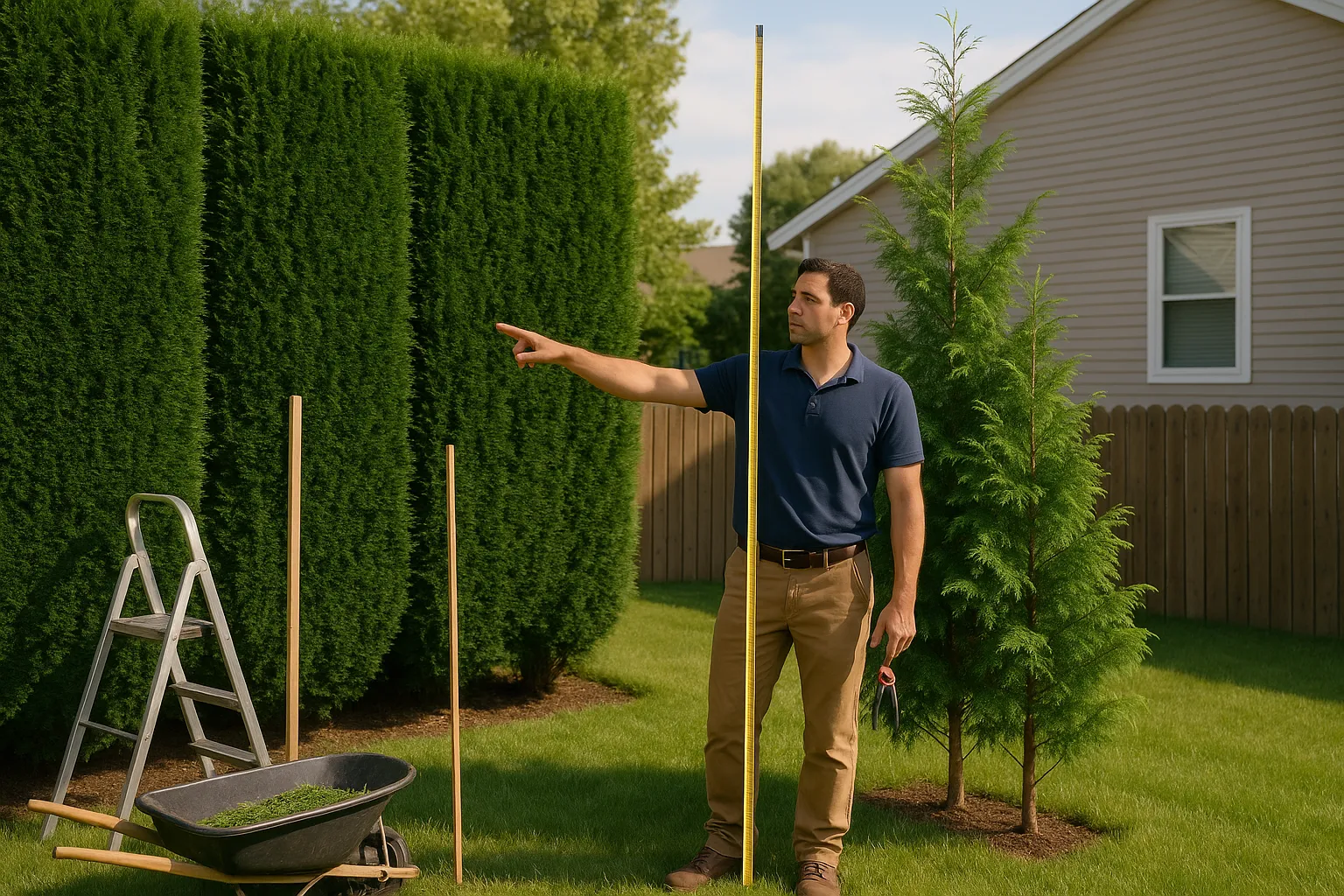
Leylandii: Mature heights commonly reach 40–60 ft if left unpruned: many home gardeners keep them 8–20 ft. Plant 1–2 m (3–6 ft) apart for a dense screen if you plan to prune regularly.
Thuja (Western Red Cedar): Mature heights vary widely by species/cultivar, 20–70 ft for full-grown trees, but hedging cultivars stay 8–20 ft more often. Space 1–2 m (3–6 ft) for hedges: give more room for specimen trees.
Spacing tip: For both species, allow at least half the expected mature width between plants to reduce long-term crown pressure and root crowding.
Appearance And Screening Qualities
Fact: Thuja offers richer seasonal color and softer texture: Leylandii gives a dense, compact, dark-green screen.
Foliage Color, Texture And Seasonal Change
Thuja Western Red Cedar shows warmer notes: bright green in spring, deepening to richer greens and often bronze-red in winter for some cultivars. Foliage is flat, fan-like and softer to the touch. Leylandii has fine, feathery foliage with a uniform dark green year-round: color change is less dramatic.
Density Of Screening And Sound/Privacy Performance
Fact: Leylandii provides an almost impenetrable visual screen faster: Thuja gives comparable privacy but usually slower and with a lighter texture.
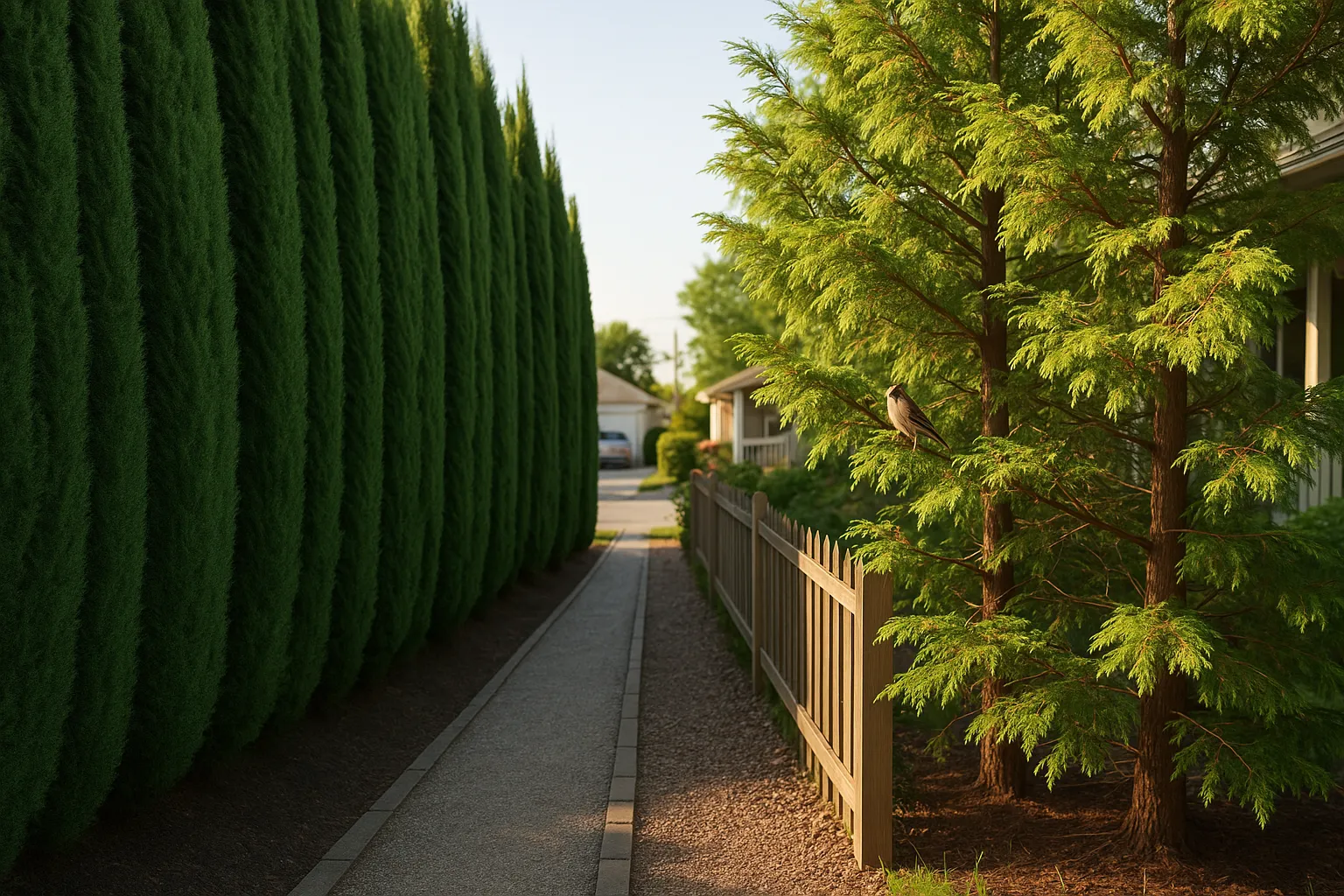
If your priority is immediate noise reduction and full privacy, Leylandii’s dense columnar growth blocks sightlines and dampens sound sooner. Thuja still screens well, but the softer crown may transmit slightly more light and sound: in exchange, it often looks more attractive up close and supports birds and insects better.
Care, Pruning And Maintenance Needs
Fact: Leylandii demands more frequent pruning: Thuja tolerates lighter, less frequent shaping and recovers better from hard cuts in many cases.
Watering, Feeding And Soil Preferences
Both plants prefer fertile, well-drained soil. Leylandii tolerates drier soils once established but benefits from regular watering in hot spells. Thuja likes consistent moisture and can handle slightly heavier soils, though poor drainage will cause issues for both.
Feeding: Apply a balanced slow-release fertilizer in spring for both species. Use mulch to conserve moisture and moderate root temperatures.
Pruning Frequency, Techniques And Recoverability
Leylandii: Prune 2–3 times per year during the growing season to keep shape and prevent woody interior growth. Leylandii does not regrow well from old wood, avoid cutting into bare wood.
Thuja: Prune once or twice a year for shape. Thuja can reshoot from older wood better than Leylandii in many cultivars, so you have more recovery options after heavy pruning.
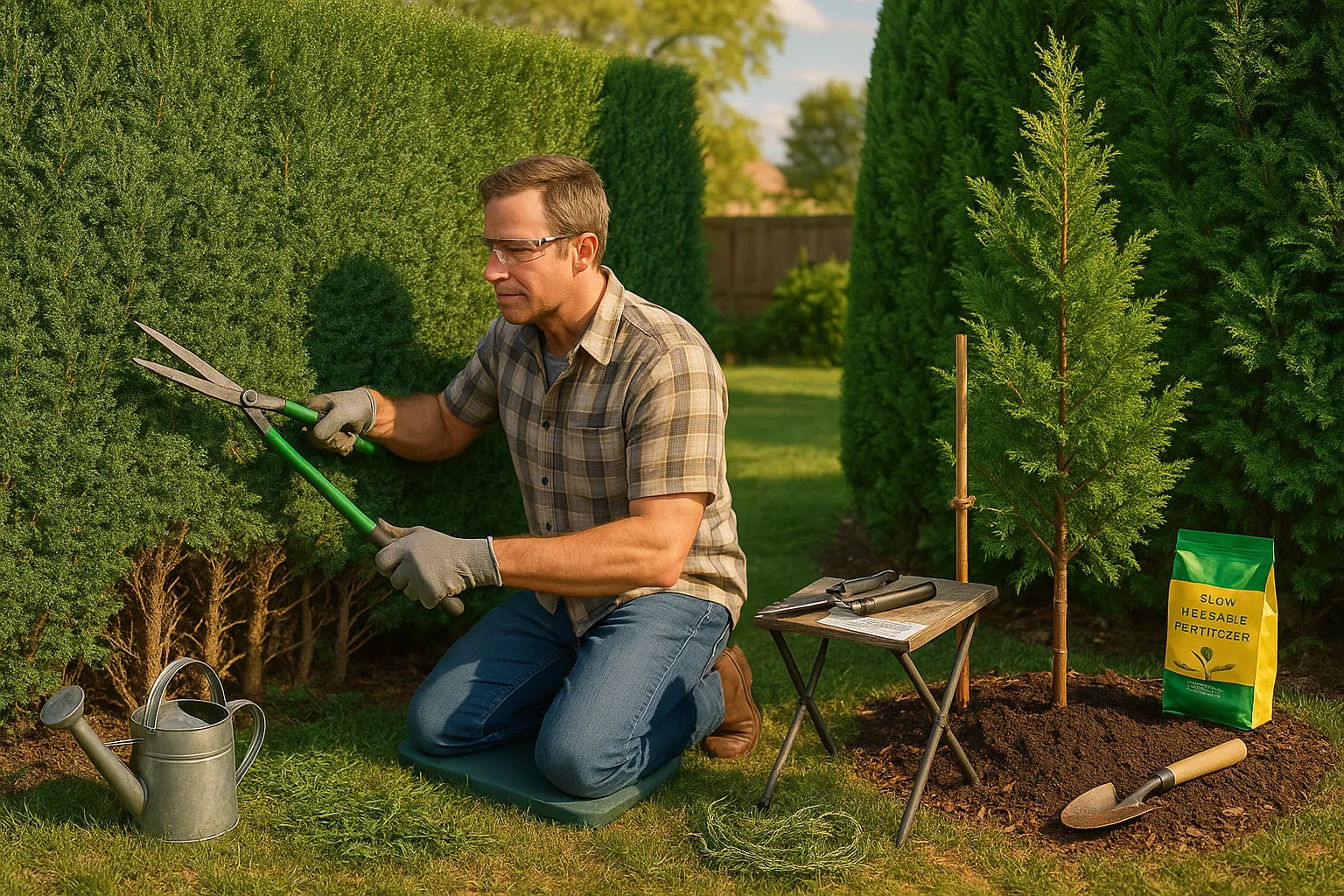
Technique note: Use sharp tools, cut to live green growth, and avoid excessive thinning of the hedge face. Wear eye protection, both species shed fine debris.
Planting And Early Establishment Tips
Fact: Early care sets long-term vigor and stability.
Plant in a prepared hole with loosened soil and compost. Stake young Leylandii in windy sites to prevent root rock. Water deeply for the first two summers. Remove competing weeds and grass for at least a year around the base to help roots establish.
Pests, Diseases And Longevity Considerations
Fact: Thuja and Leylandii face different pest pressures: root and fungal issues shorten lifespan more than age alone.
Common Pests And Diseases For Each Species
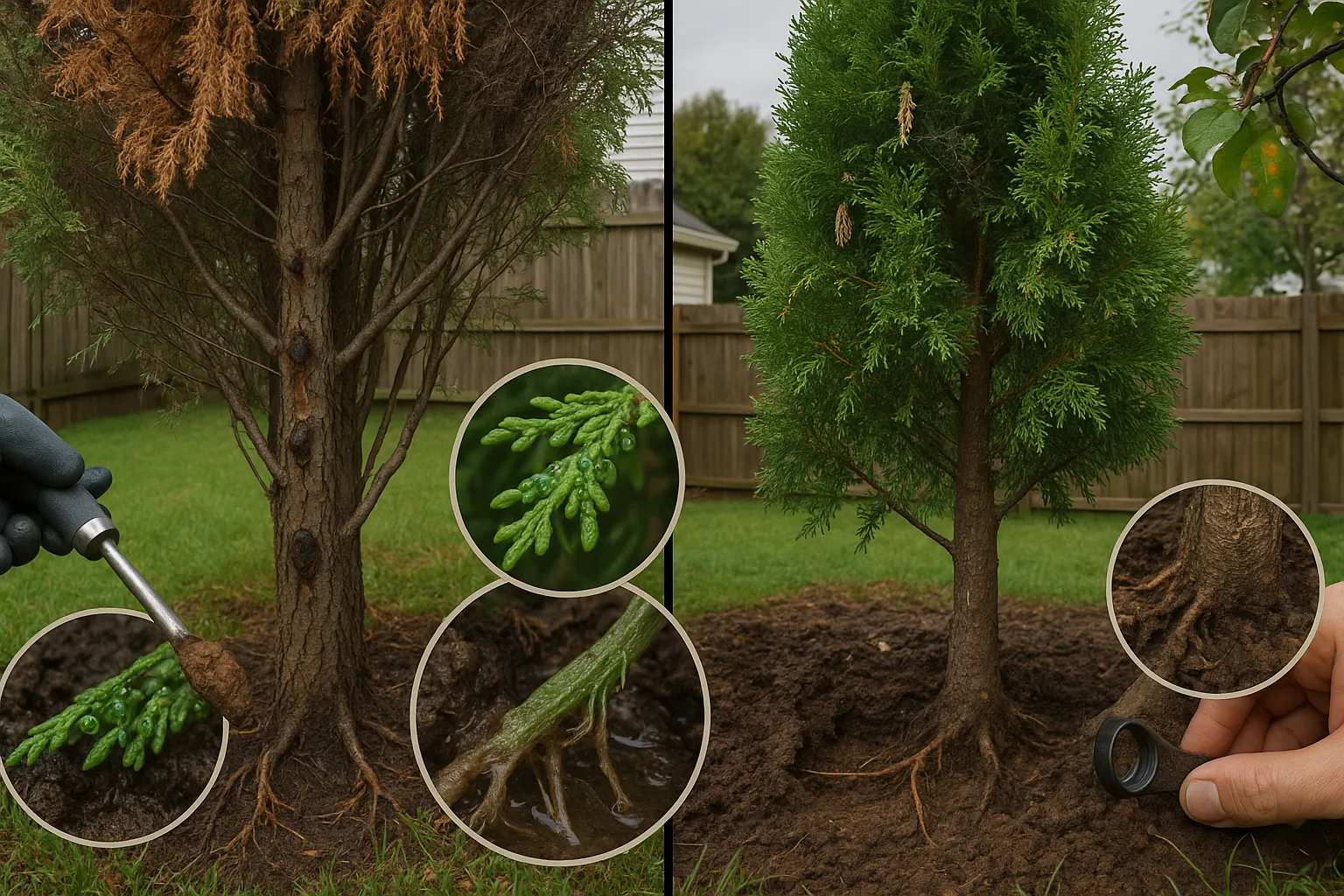
Leylandii: Vulnerable to cypress aphid, phytophthora root rot on poorly drained soils, and Seiridium canker under stress (leading to dieback). Leylandii can also suffer windburn on exposed sites.
Thuja Western Red Cedar: Susceptible to bagworms, spider mites in dry conditions, and root rot where drainage is poor. Thuja species can also host cedar-apple rust where apple trees are nearby.
Management: Inspect annually, treat pests early with targeted controls (RHS and local extension recommendations), improve drainage, and avoid over-crowding.
Typical Lifespan And Factors That Shorten It
Fact: Lifespan depends more on site and care than species genetics alone.
Leylandii: Can live 25–50+ years if well-managed: poor pruning, root compaction, or chronic wet feet shorten life.
Thuja (Western Red Cedar): Many live 50–100+ years in favorable conditions. Urban pollution, repeated root damage, and severe drought reduce lifespan.
Honest note: A once-neglected Leylandii can decline rapidly and require removal: Thuja may linger longer with patchy health but will still fail if roots are starved.
Suitability, Uses And Landscape Considerations
Fact: Choose species based on intended use: instant tall screen, formal hedge, windbreak, or specimen planting.
Best Uses (Hedges, Windbreaks, Screens, Specimen Trees)
Leylandii: Best for fast tall hedges, windbreaks and boundary screening where quick coverage is critical.
Thuja Western Red Cedar: Suits formal hedges, specimen plantings, and mixed native-style borders where color and wildlife value matter.
Site Suitability: Urban Gardens, Exposed Sites, Shade Tolerance
Fact: Thuja tolerates shade better: Leylandii prefers full sun. In exposed coastal sites, Thuja plicata performs better: Leylandii can suffer wind rock unless staked.
Urban gardens: Thuja is often the better choice for smaller gardens because of slower growth and nicer form. If you choose Leylandii in a small urban plot, plan for aggressive maintenance.
Pros And Cons Summary For Gardeners And Landscapers
Fact: Both species offer clear pros and cons: pick based on maintenance appetite and design goals.
Leylandii, Pros: Fast cover, cheaper initial cost, very dense. Cons: Frequent pruning, legal disputes, poor recovery from severe cutting.
Thuja, Pros: Better winter color, wildlife value, tolerates heavier pruning into older wood, generally longer-lived. Cons: Slower cover, higher per-plant cost for mature specimens.
Cost, Availability And Neighbor/Legal Issues To Know
Fact: Leylandii is usually cheaper and more widely available: legal disputes over height are common with both species.
Planting Costs, Long-Term Maintenance Costs And Availability
Initial cost: Leylandii saplings and container plants are widely sold at garden centers and online retailers (e.g., B&Q, Home Depot equivalents in your country) and are generally cheaper per unit. Thuja, especially larger specimens or named cultivars like ‘Excelsa’ or ‘Green Giant’ (a Thuja hybrid), costs more upfront.
Maintenance cost: Leylandii demands more frequent pruning labor or professional trimming, increasing long-term costs. Thuja has lower recurring pruning costs but sometimes higher replacement costs if you choose older stock.
Legal, Neighbor Disputes, And Local Regulations About Height
Fact: Many councils and local authorities have regulations on hedge height: disputes frequently arise when hedges block light or views.
Check local bylaws. In the UK, for example, the Anti-Social Behaviour, Crime and Policing Act can apply in severe disputes: many councils mediate hedge height conflicts. In the US, municipal codes often regulate obstructive planting near highways and property lines.
Neighbor diplomacy: Communicate plans before planting tall Leylandii. Offer to stagger planting or agree on a maximum height. Keep records of communication, this helps if disputes escalate. Legal action is expensive: compromise usually wins.
Decision Guide: How To Choose Between Leylandii And Thuja
Fact: Match the species to your priorities: speed and instant privacy vs. color, wildlife value and lower pruning demands.
Quick Checklist To Match Species To Your Site And Goals
Need privacy fast and you’re ready to prune often? Choose Leylandii.
Want a softer, more colorful hedge with lower annual pruning? Choose Thuja (Western Red Cedar).
Small urban garden, limited space, neighbor close by? Prefer Thuja.
Large boundary, noise/sight blocking, and willing to pay for pruning? Leylandii fits.
Poor drainage and shady spots? Lean toward Thuja, but improve drainage first.
Concern about legal disputes with neighbors over height? Pick lower-growing Thuja cultivars or agree on limits in writing.
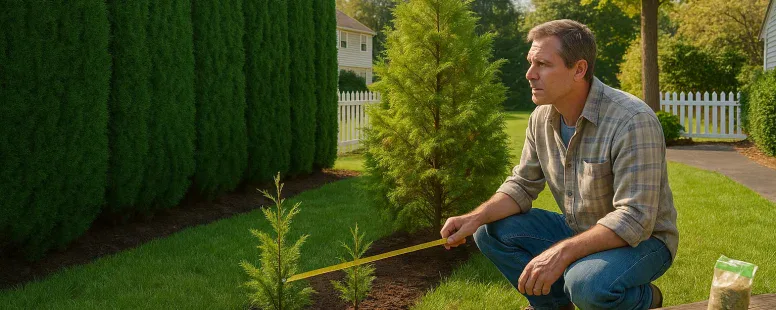
Practical next steps: Measure the space, check soil and exposure, estimate your yearly pruning time (or quote a contractor), and then choose. If you remain unsure, test with three specimen plants of each type in pots to observe growth and color for 12–18 months before committing to a full hedge.
Call-to-action: Take photos of your site, note sunlight hours and soil type, and consult a local nursery or the Royal Horticultural Society (RHS) guidance for cultivar-specific advice, you’ll make a better choice with local input and real observations.
To provide the best experiences, we use technologies like cookies to store and/or access device information. Consenting to these technologies will allow us to process data such as browsing behaviour or unique IDs on this site. Not consenting or withdrawing consent, may adversely affect certain features and functions.
Functional
Always active
The technical storage or access is strictly necessary for the legitimate purpose of enabling the use of a specific service explicitly requested by the subscriber or user, or for the sole purpose of carrying out the transmission of a communication over an electronic communications network.
Preferences
The technical storage or access is necessary for the legitimate purpose of storing preferences that are not requested by the subscriber or user.
Statistics
The technical storage or access that is used exclusively for statistical purposes.The technical storage or access that is used exclusively for anonymous statistical purposes. Without a subpoena, voluntary compliance on the part of your Internet Service Provider, or additional records from a third party, information stored or retrieved for this purpose alone cannot usually be used to identify you.
Marketing
The technical storage or access is required to create user profiles to send advertising, or to track the user on a website or across several websites for similar marketing purposes.