Amid shaded forest floors, lush green patches often blur together—ferns and mosses seem nearly identical at first glance. But look closer, and their secrets unfold like a delicate dance of nature’s architecture.
Their structures differ more than meets the eye, each with unique growth habits that shape their world. Recognizing these subtle distinctions can deepen your connection to the wild and even reveal hidden benefits; for instance, mosses act as natural water filters, quietly cleansing their surroundings.
So, what truly sets these verdant companions apart, and how can understanding them transform your outdoor adventures?
How Can You Tell Ferns From Mosses in the Wild?
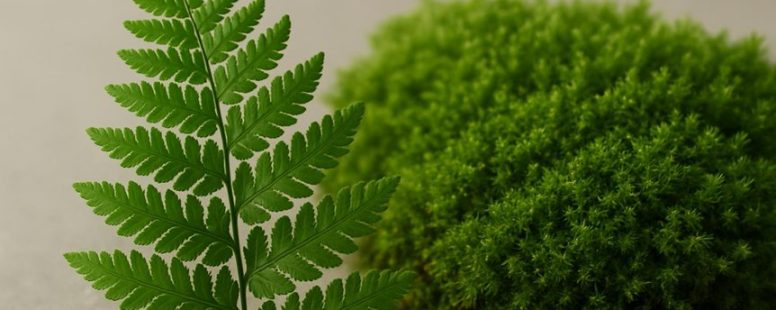
Ferns and mosses are both green plants you can find in the wild, but they look very different. Ferns are larger plants with well-formed leaves called fronds. These fronds are often divided into smaller parts, giving them a fern-like shape. Ferns also have stems and roots, which help them grow upright and tall. Mosses are much smaller and usually form thick mats or cushions on rocks or soil. They do not have true roots, only tiny structures called rhizoids that hold them down. Mosses also don’t have the vascular system that ferns have, so they stay close to the ground.
If you want to tell them apart in the wild, look at their size and shape. Ferns are bigger and have detailed, divided leaves. Mosses are tiny and form soft, fuzzy patches. Another way is to check the structure. Ferns have stems and roots, while mosses only cling with rhizoids and don’t have true roots or stems. Also, think about where you find them. Ferns like shaded, moist places and can grow quite tall. Mosses also like damp places but stay low and spread out.
Some people might say mosses are easier to spot because they’re so small, but that can be tricky if you are not careful. Ferns, on the other hand, can sometimes be mistaken for other plants with similar leaves. Remember, mosses do not have true roots or stems, so if you see a plant with these, it’s probably a fern. Keep in mind that in some environments, mosses and ferns grow close together, so it helps to look closely at their size and structure.
Knowing these differences can help you identify them better next time you’re outside. Both plants play important roles in nature. Ferns help prevent soil erosion and provide homes for small animals. Mosses help keep the soil moist and start new soil by breaking down rocks. So, next time you see a green patch, ask yourself: is it a fern with big fronds or a moss forming a soft carpet? This quick check can make you a better plant spotter.
Key Visual Differences Between Ferns and Mosses
Ferns and mosses are quite different in how they look and grow. Ferns have big, divided leaves called fronds that often look feathery. These fronds can be quite tall and stand upright. Mosses, on the other hand, have tiny leaf-like structures that form thick, green mats on rocks or soil. They don’t grow tall like ferns but spread out low and close to the surface.
If you want to tell the difference between them, look at their leaves and how they grow. Ferns have large, detailed leaves that are divided into smaller parts. Mosses have tiny, simple leaves that cover surfaces like a soft carpet. Also, notice how they grow. Ferns grow upward with their fronds reaching toward the sky, while mosses spread out flat across the ground or rocks.
Some people prefer ferns because they add height and a lush look to gardens. Others like mosses for their soft, green carpets that stay close to the ground. Keep in mind, mosses can grow in places where plants like ferns might not thrive, such as shady, damp spots. Both are interesting plants, but their different shapes and growth habits make them easy to tell apart.
Leaf Structure Variations
Fern leaves and moss leaves are different in how they look, and these differences help us tell them apart. Fern leaves are larger and are made up of many smaller leaflets, called fronds. They have a clear pattern of veins running through each leaflet, which helps carry nutrients. Ferns often look like big, feathered fans with lots of detail. Moss leaves, on the other hand, are tiny and grow very close together. They don’t have visible veins and look more uniform because their tissue is simple and undivided. Moss leaves are much smaller and form dense clusters. These differences in size, shape, and vein patterns make fern leaves more detailed and easy to recognize, while moss leaves are simpler and more compact. Knowing these visual clues can help you quickly identify whether a plant is a fern or moss.
Growth Patterns Differences
Fern and moss leaves grow in very different ways. Ferns grow upward with fronds that unfurl as they get older. These fronds create a layered, bushy look. Ferns produce new fronds from underground stems called rhizomes. This helps them grow quickly upward when conditions are good. Mosses, on the other hand, grow in thick mats that spread out across surfaces. They mainly grow sideways in a carpet-like shape. Moss spores don’t travel far, so moss slowly spreads out over time.
The texture of the leaves also makes a difference. Ferns have tough, leathery fronds that can handle more sun and wind. Moss leaves are soft and delicate, which makes them good for moist, shady places. These growth styles show how each plant takes over space. Ferns grow tall and upright, while mosses spread out flat and wide. Both ways work well, but they are very different in how they look and grow.
How Do Ferns and Mosses Reproduce Differently?
Ferns and mosses reproduce differently, even though both use spores. Ferns have a more complex process. They release spores from special structures called sporangia on their fronds. These spores grow into tiny plants called gametophytes, which then produce sex organs. After fertilization, a new fern plant grows from the gametophyte. This means the fern’s life cycle has two main stages: the large fern and the small gametophyte.
Mosses, on the other hand, produce spores in capsules on top of stalks. When the spores are mature, they are released gradually into the air. The spores land on the ground and grow into small moss plants called gametophytes. These moss gametophytes produce sex cells, and when they combine, they grow into new moss plants. Unlike ferns, mosses depend a lot on their tiny gametophyte stage.
These differences come from their different ways of evolving. Ferns are more advanced plants with bigger spores and more complex life cycles. Mosses are older, simpler plants that rely more on their small, green gametophytes.
In simple words, fern spores grow into tiny plants first, then make new ferns, while moss spores land on the ground and grow directly into moss plants. Both methods help these plants reproduce, but in ways that fit their size and environment.
Distinctive Features to Identify Ferns and Mosses
Ferns and mosses are different plants, and you can tell them apart by looking at their leaves and where they grow. Ferns have big, divided fronds that look like tiny trees, while mosses have small, simple leaves that are often just a few cells thick. If you want to identify them, look at their habitats too. Ferns like moist, shaded places such as forests or gardens, but mosses often grow on rocks, tree trunks, or in damp spots on the ground.
Another way to tell them apart is by how they reproduce. Ferns produce spores on the underside of their large fronds, which look like tiny dots. Mosses, on the other hand, have small capsules sitting on top of stalks that release spores.
Some people might wonder if mosses can grow where ferns grow or if ferns can survive in places mosses usually live. Both can grow in wet areas, but ferns usually need more shade and richer soil, while mosses are tougher and can grow on harder surfaces like rocks.
In short, if you see a plant with big, divided leaves in a shaded garden, it’s probably a fern. If it’s a tiny, green carpet on a rock or tree trunk, it’s likely moss. Knowing these differences can help you identify plants in nature or your backyard more easily.
Leaf Structure Differences
Ferns and mosses have different leaf structures, which is a key way to tell them apart. Fern leaves, called fronds, are larger and have many parts. They have a clear main vein called a midrib and smaller veins that branch out, helping to carry water and nutrients. This makes fern leaves look like a detailed network of lines. Ferns also have well-developed vascular tissue inside their leaves, which is important for transporting nutrients.
Moss leaves are much smaller and simpler. They are only a few cells thick and do not have true veins or midribs. Moss relies on diffusion, which means nutrients move slowly from cell to cell, instead of moving through a network of veins like in ferns.
If you look at a fern and a moss side by side, you will see that fern leaves are bigger and more divided, while moss leaves are tiny and plain. The presence of vascular tissue in ferns is a major difference that helps tell them apart from mosses. These differences are important for understanding how each plant grows and survives.
Growth Habitats Variations
Ferns and mosses grow in different habitats because they have unique ways of surviving. Ferns are best in shady, damp places with rich soil. Their roots work well in these areas because they form special partnerships with fungi. These fungi help ferns take in nutrients more easily, especially when the soil isn’t very rich. So, if you see ferns in a garden, they likely like moist, shaded spots with healthy soil.
Mosses are more flexible and can grow in many places. They can live on bare rocks or in acidic soils where few other plants can grow. Mosses absorb water and nutrients directly through their leaves, so they don’t need rich soil to survive. This means mosses can grow in tough places where soil is poor or absent, like on mountain cliffs or old bricks.
Both plants have different needs. Ferns prefer soil with good nutrients and moisture, while mosses can survive in harsher places with fewer nutrients. This makes each plant suited for different environments. If you want to grow either plant, it’s good to know where they thrive best. For example, ferns do better in shaded gardens with rich soil, while mosses can be found on rocks and old walls where soil is scarce.
In short, ferns and mosses have different habitats because of their special ways of getting food and water. Ferns need good soil and shade, while mosses can grow in tough, rocky spots. Both are amazing examples of how plants adapt to their surroundings.
Reproductive Features Distinction
Ferns and mosses reproduce using spores, but their ways of doing this are quite different. Ferns have special structures called sporangia, usually on the underside of their fronds. These sporangia release spores in a controlled way, often using wind to carry them far away. This helps ferns grow in new places far from where they started.
Mosses produce spores inside capsule-like structures on stalks called sporophytes. These capsules are attached to the moss plant and often release spores close to the parent moss. This means moss spores don’t travel as far as fern spores.
The way spores are released and how far they travel are key differences. Fern spores are large and windblown, helping them spread over long distances. Moss spores are released from capsules on stalks and usually stay near the original plant. Looking at these features can help tell ferns and mosses apart.
Some might wonder which method is better. Ferns’ long-distance spore dispersal can help them colonize new areas quickly. But mosses might have an advantage in moist environments where releasing spores close by helps them grow faster. Both ways have their strengths and limits depending on the place and conditions.
Where Do Ferns and Mosses Grow, and How Do Their Habitats Differ?
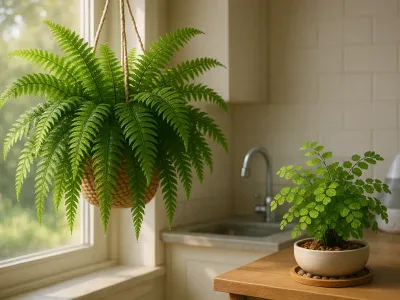
Ferns and mosses grow in moist places, but they prefer different kinds of habitats. Ferns are most often found in shaded, forested areas where they grow on the ground, rocks, or even on tree trunks. They like soil that is a little richer and drains well so water doesn’t stay around their roots. For example, you might see ferns in a shady part of a park or deep in a forest where they can spread out and get plenty of space.
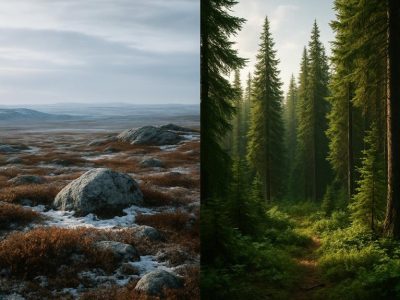
Mosses, on the other hand, grow in damp, shady spots like the floors of forests, along stream banks, or on rocky surfaces. They can handle more exposed places and often form thick mats that help keep moisture in. Mosses don’t need as much nutrients or space as ferns do. They can grow in tiny cracks on rocks or in areas where the soil is poor.
Some people might wonder why mosses can grow in tougher spots than ferns. It’s because mosses are better at holding onto moisture and don’t need deep soil to grow. Ferns need richer soil and more room to spread out their fronds. Both plants like shade and moisture, but their habitat choices show how they are adapted to different environments.
Why Do Ferns and Mosses Play Different Roles in Ecosystems?
Ferns and mosses play different roles in ecosystems because of how they are built and how they grow. Ferns have larger leaves and sometimes have medicinal properties. They provide shelter and food for insects and small animals, helping support many types of life. Ferns also help keep soil from washing away and help recycle nutrients in the ground. For example, in a forest, ferns can grow under trees, creating a shelter for bugs and birds.
Mosses are small plants that are very good at holding water. They create moist spots that help other plants, mosses, and tiny microorganisms grow. This helps prevent soil erosion, especially on hills or rocky places. Mosses can be seen covering rocks and logs, making those areas damp and inviting for small creatures.
Some people wonder which plant is more important. Ferns are helpful because they give shelter and have medicinal uses. Mosses are crucial because they keep the ground moist and stop soil from washing away. Both plants support different microhabitats, which means they help different tiny ecosystems survive.
Common Mistakes When Identifying Ferns and Mosses (And How to Avoid Them)
Ferns and mosses are easy to confuse because they often look alike at first glance. But understanding the key differences helps you tell them apart.
First, mosses are simple plants without vascular tissues. This means they do not have tubes to move water and nutrients. Ferns, on the other hand, are more complex. They have special tissues called vascular tissues that carry water and food through the plant. So, if you see a plant with tube-like structures running through its stems or leaves, it is likely a fern.
Second, mosses and ferns come from different parts of plant history. Mosses are bryophytes, plants that do not have roots or true leaves and are very old. Ferns are seedless vascular plants that are a bit more advanced. Recognizing that mosses grow as dense, cushiony mats while ferns develop large, divided fronds helps you tell them apart. For example, mosses often look like tiny green carpets, while ferns have broad, feathery leaves.
Third, look at their growth habits. Mosses tend to grow close to the ground in thick patches. Ferns grow taller with distinct leaves called fronds. If you see a plant with a clear leaf structure, it is probably a fern. Sometimes, mosses can be mistaken for fern gametophytes, which are early stages of fern life. But fern fronds are usually bigger and have a more complex leaf pattern.
To avoid mistakes, check for these features. Look for vascular tissues, leaf structure, and growth style. Relying only on how they look can mislead you because mosses and ferns can sometimes look similar. Remember, mosses are more like tiny green cushions, while ferns have true leaves and tubes that carry water. Using these clues will help you correctly identify them.
Quick Tips for Identifying Ferns Versus Mosses in Nature
Ferns and mosses are common plants you see in nature, but they look very different. Here are some simple ways to tell them apart.
Ferns are larger with divided leaves. They have big, feather-like fronds with visible veins, which help them do photosynthesis better. For example, a fern you find in the woods might have long, lacy leaves that look like giant feathers. Ferns are usually taller, growing several feet high, and their leaves are complex and divided into smaller parts.
Mosses are small and form carpets. They are tiny plants that grow close to the ground in dense mats. Their leaves are tiny and usually not vascular, meaning they don’t have tubes to carry water and nutrients like ferns do. Mosses look like soft green patches on rocks or soil. They are much shorter than ferns, often just a few inches tall.
Reproductive structures are different. Ferns produce spores on the underside of their fronds. If you look closely, you might see little brown spots called sori. Mosses produce spores in capsules on top of stalks that stick up from the plant. These capsules sometimes look like tiny umbrellas.
Where they grow also matters. Ferns like shaded, moist places such as forest floors or near waterfalls. They need more space and water. Mosses can grow almost anywhere, from rocks to tree trunks, and are good at holding moisture in dry or shady environments.
Two viewpoints to consider: Some people say mosses are better for soil protection because they cover ground and keep it from eroding. Others say ferns are more noticeable because they grow bigger and stand out in the landscape. However, remember that mosses can also survive in harsh conditions, and they might be overlooked because they are so small.
To provide the best experiences, we use technologies like cookies to store and/or access device information. Consenting to these technologies will allow us to process data such as browsing behaviour or unique IDs on this site. Not consenting or withdrawing consent, may adversely affect certain features and functions.
Functional
Always active
The technical storage or access is strictly necessary for the legitimate purpose of enabling the use of a specific service explicitly requested by the subscriber or user, or for the sole purpose of carrying out the transmission of a communication over an electronic communications network.
Preferences
The technical storage or access is necessary for the legitimate purpose of storing preferences that are not requested by the subscriber or user.
Statistics
The technical storage or access that is used exclusively for statistical purposes.The technical storage or access that is used exclusively for anonymous statistical purposes. Without a subpoena, voluntary compliance on the part of your Internet Service Provider, or additional records from a third party, information stored or retrieved for this purpose alone cannot usually be used to identify you.
Marketing
The technical storage or access is required to create user profiles to send advertising, or to track the user on a website or across several websites for similar marketing purposes.