Autumn Sown Vs. Spring Sown Broad Beans
You can time broad beans two clear ways: plant them in autumn or wait until spring. Each choice shapes cold survival, pests, and harvest timing. Picture a bed that greets you with early, hardy greenery after winter, or a bed that bursts into a reliable summer crop after a safe spring start. Both bring tasty, protein-rich beans, but they ask different things of your garden and your risk tolerance. This guide compares autumn sown vs. spring sown broad beans so you can pick the option that fits your climate, space, and schedule.
Key Differences At A Glance
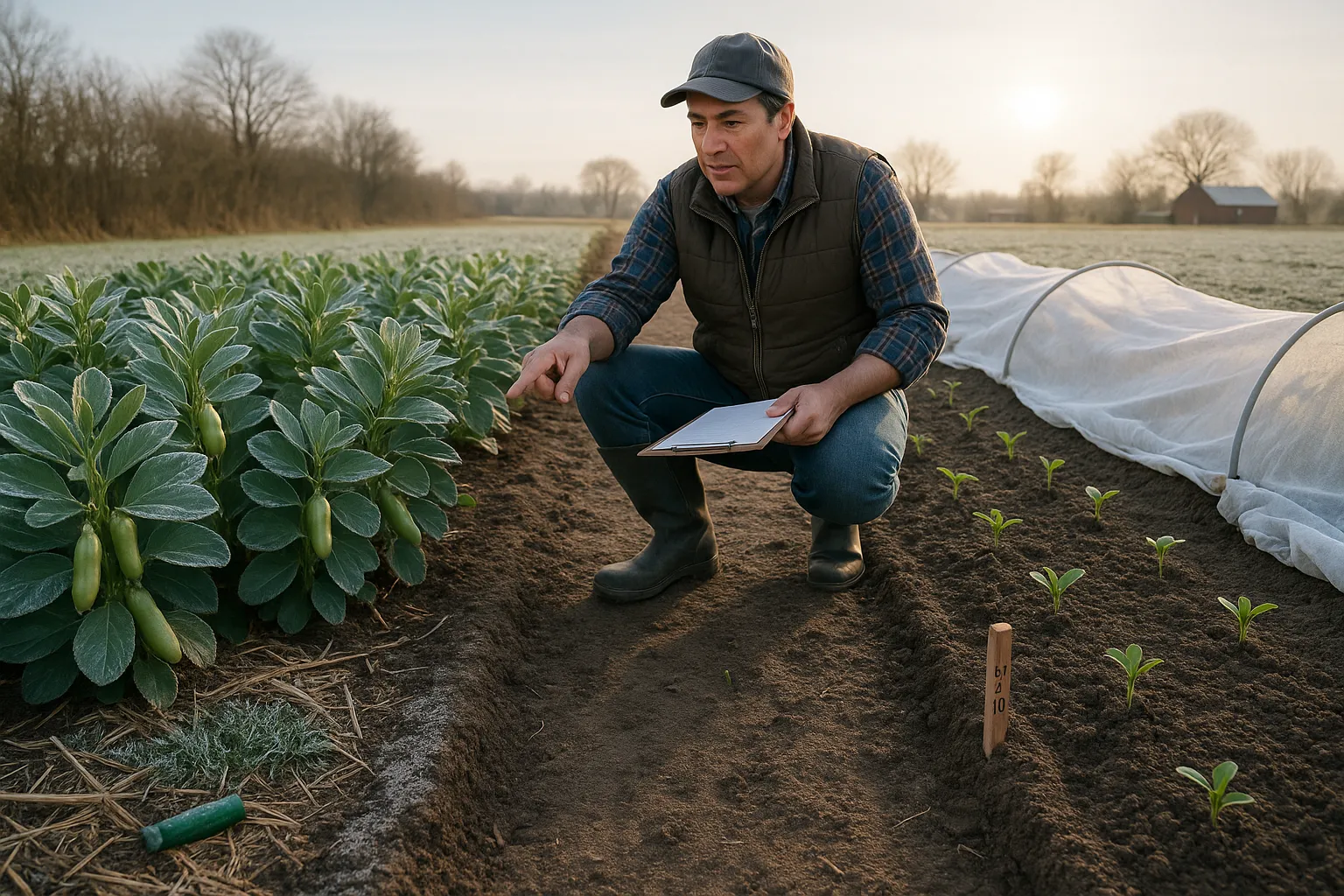
Fact: Autumn-sown broad beans generally give earlier yields and better winter vigour: spring-sown give safer germination and lower frost risk.
Climate, Cold Tolerance, And Regional Considerations
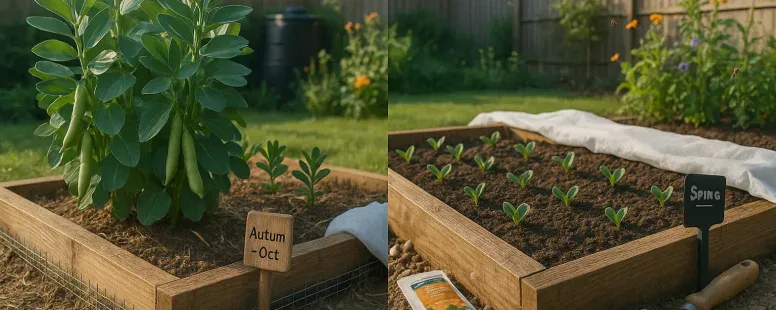
Autumn-sown beans tolerate cold by establishing roots before frost and then surviving as low rosettes. Spring-sown seedlings avoid winter exposure but face late-spring cold snaps. In mild-winter areas such as southern England, Ireland, or coastal Pacific Northwest, autumn sowing usually succeeds. In regions with hard freezes (midwestern US, inland Canada), spring sowing reduces loss risk. The Royal Horticultural Society and many university extension services recommend matching sowing time to your average last-frost date and winter severity.
Crop Timing, Yield Potential, And Risk Profile
Autumn sowing often produces earlier pods, sometimes weeks earlier than spring sowing, and can yield heavier because plants have a longer growing season. But autumn crops carry higher winterkill and slug pressure risk. Spring sowing gives steadier germination and lower overwinter mortality, but you trade off earliest harvest and sometimes total yield. Choose based on whether you value early beans more than the chance of crop loss.
When To Choose Autumn Sowing
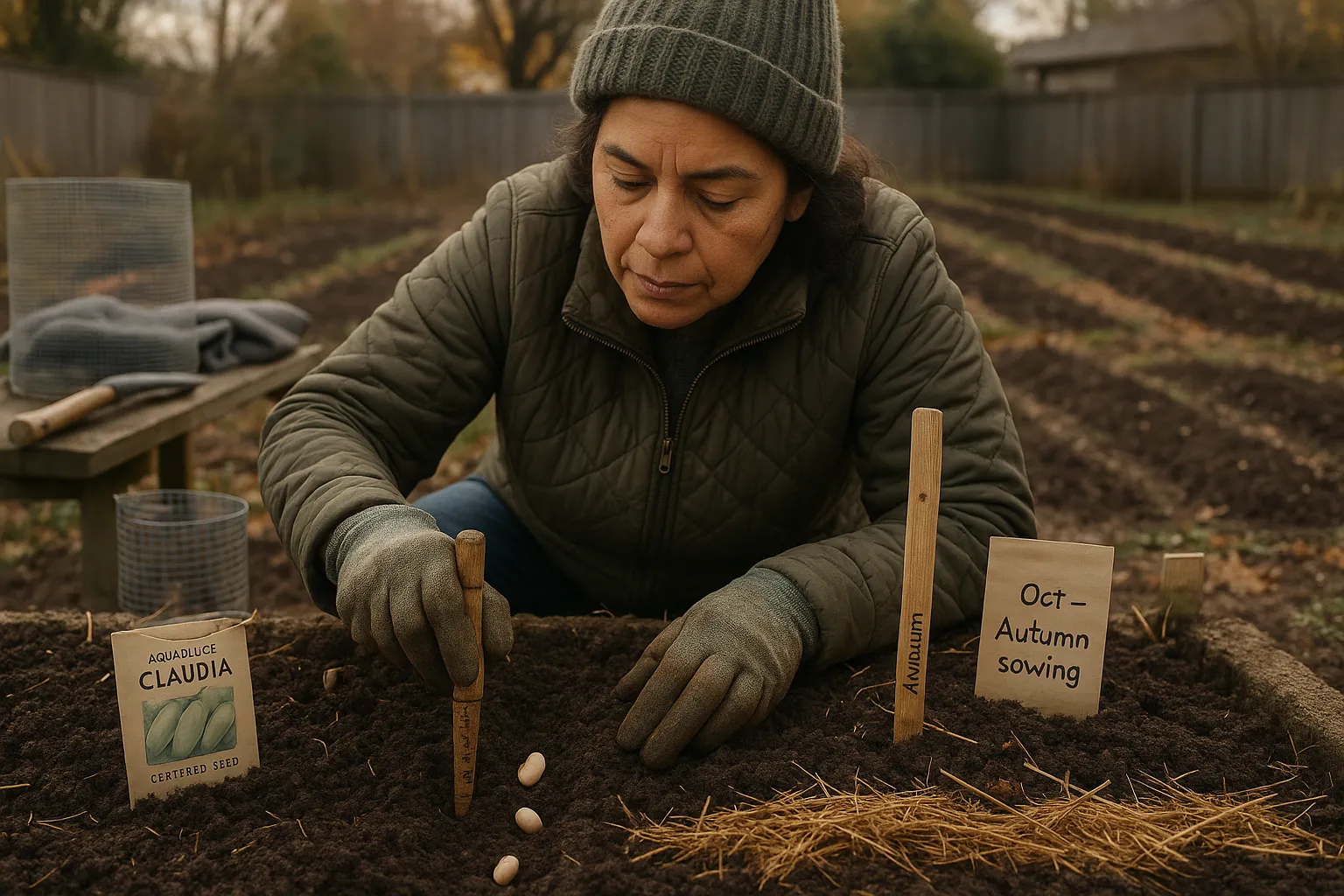
Fact: Choose autumn sowing when your winters are relatively mild and you want the earliest harvest possible.
Advantages And Disadvantages Of Autumn Sowing
Advantages: earlier harvest, larger plants by summer, and potential for higher yields. Disadvantages: risk of winter kill, greater slug and vole activity, and stronger need for site protection. You may also face more winter foliar disease if conditions stay wet all winter.
Best Varieties And Seed Selection For Autumn Sowing
Choose hardy varieties like ‘Aquadulce Claudia’, ‘Crimson Flowered’ (where available), or regionally recommended cultivars known for cold tolerance. Certified seed reduces disease risk. If you save seed, select pods from plants that survived winter: that’s local adaptation in action.
Site Preparation And Optimal Sowing Dates (Autumn)
Prepare a well-drained bed with compost worked in to 6–8 inches. Sow in late autumn after the soil cools but before a hard freeze, often October to early November in temperate zones. Place seed 5–7 cm deep and 20–30 cm apart in rows 40–50 cm apart. Use a slight ridge if your soil stays wet: waterlogged roots kill seedlings over winter.
Practical Autumn Sowing Technique Step‑By‑Step
- Test soil drainage: improve with grit or raised bed if needed.
- Mark rows and dig shallow trenches.
- Soak seed overnight for faster germination if soil is dry.
- Sow seed 5–7 cm deep, firm the soil gently.
- Mulch with a thin straw layer to reduce frost heave but avoid thick mulch that shelters slugs.
- Protect young plants with mesh against voles.
Warning: if you see lush growth before a harsh cold snap, consider a temporary fleece cover: I’ve lost plants to unexpected polar blasts, and that was painful.
When To Choose Spring Sowing
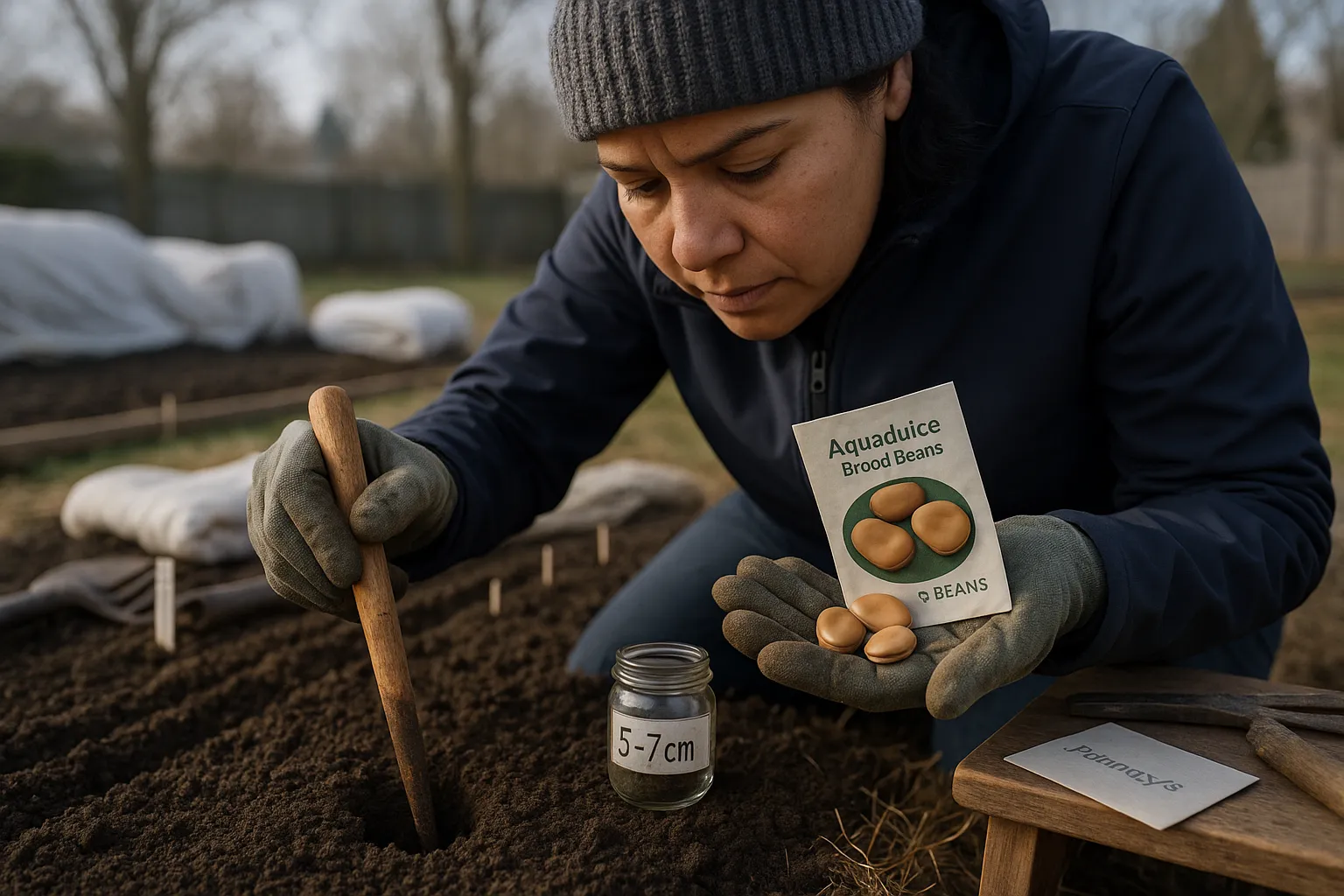
Fact: Choose spring sowing when your winters are severe or when you prefer predictable germination.
Advantages And Disadvantages Of Spring Sowing
Advantages: safer germination, lower winter mortality, and reduced early pest pressure. Disadvantages: later harvest, potentially smaller plants, and competition from spring weeds. Spring sowing is forgiving, good for beginners or high-altitude gardens.
Best Varieties And Seed Selection For Spring Sowing
Select spring-performing cultivars such as ‘Aquadulce’ types or local market garden favorites. Seek seed treated for seed-borne diseases if available or buy from reputable suppliers like Johnny’s Selected Seeds or Thompson & Morgan.
Site Preparation And Optimal Sowing Dates (Spring)
Work soil in late winter and weed thoroughly. Sow as soon as soil can be worked and is warming, typically when soil temperature reaches around 5–7°C (41–45°F). In most temperate areas that’s early spring, often March–April. Plant at the same depth and spacing as for autumn sowing, but expect slower initial growth.
Practical Spring Sowing Technique Step‑By‑Step
- Remove winter mulch and rake the bed clean.
- Sow seed 5–7 cm deep, firm soil to ensure soil-seed contact.
- Water in gently if soil is dry.
- Keep an eye for frost: have fleece ready for late cold snaps.
- Thin to the final spacing after seedlings reach true leaves.
Note: you will get fewer early pods, but your plants will be less stressed during establishment.
Care, Pest Pressure, And Disease Differences
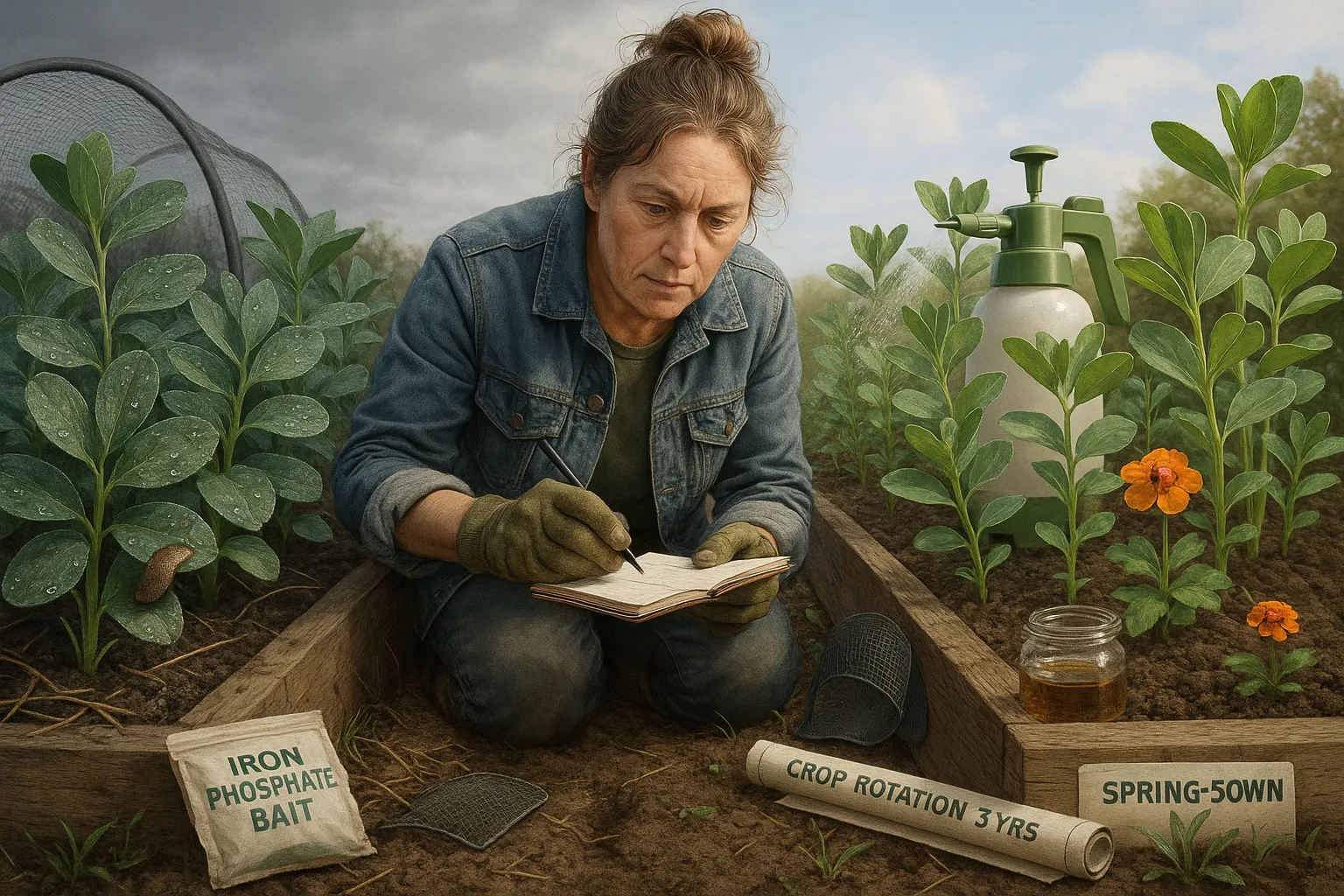
Fact: Pest and disease timing shifts with sowing time: autumn crops face slugs and winter fungal issues, spring crops face aphids and chocolate spot during rapid growth.
Common Pests And When They Matter Most (Autumn Vs. Spring)
Slugs and voles matter most for autumn-sown plants because young shoots emerge into wetter, colder conditions. Aphids and black bean aphid in particular strike in late spring on spring-sown crops. Pea and bean weevil can affect both, but timing differs by region, check local extension alerts.
Typical Diseases, Cold‑Related Issues, And Management Timing
Chocolate spot (Botrytis fabae) often attacks in cool, wet conditions, more likely on autumn-sown stands that remain lush through winter. Downy mildew and root rots are linked to poor drainage. Spring-sown crops can avoid the worst of fungal waves but may still contract diseases during a wet flowering period. Use crop rotation and good spacing to reduce disease.
Organic And Cultural Controls Specific To Each Sowing Time
Autumn controls: use raised beds, light straw mulch (sparingly), and mesh against rodents. Hand-pick slugs, or use beer traps and iron phosphate bait sparingly. For disease, avoid heavy nitrogen in autumn that encourages soft growth.
Spring controls: encourage predator insects by planting companion flowers and avoid excess fertilizer early. For aphids, hose them off or use soap sprays early: introduce beneficials like ladybeetles if possible. Rotate beans away from previous-year bean sites for at least three years.
Harvesting, Yield, And Bean Quality Comparison
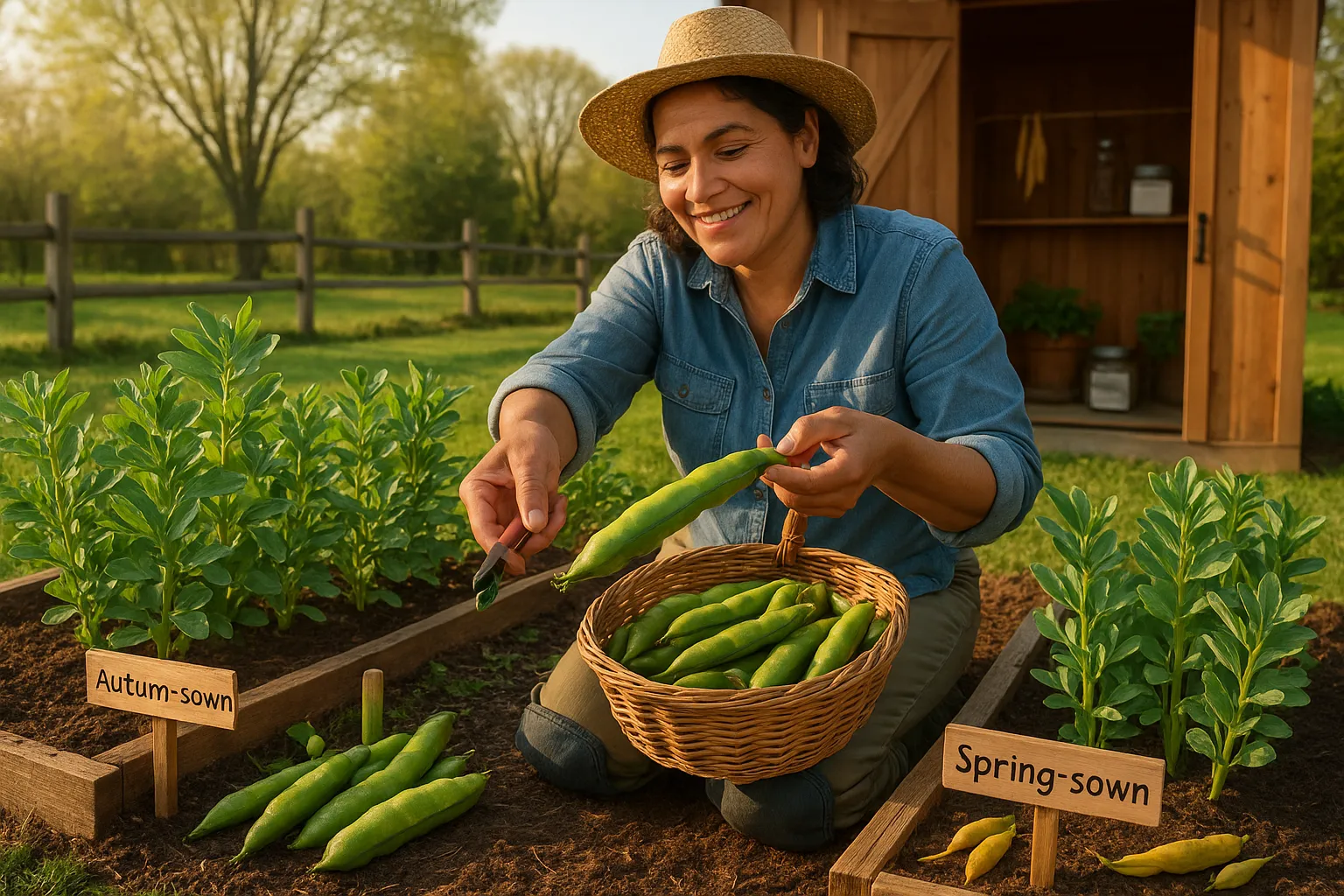
Fact: Autumn sowing generally shortens the harvest window and produces earlier, sometimes larger pods: spring sowing spreads harvest later and can produce consistent quality.
How Sowing Time Affects Harvest Window And Pod Quality
Autumn-sown crops often ripen earlier in late spring to early summer, giving you fresh beans when few other homegrown vegetables are ready. Pods can be large and well-filled. Spring-sown crops ripen later and sometimes give a steadier, longer harvest window through summer. Taste is similar if plants remain healthy: stress (drought, heat) reduces pod fill and quality.
Expected Yields, Frequency Of Crops, And Storage Considerations
Expect higher peak yields from autumn sowing in mild winters, but with higher variability. Spring sowing gives reliable, steady yields. For storage, pick when pods are mature but still green for fresh eating: for drying, allow pods to yellow and dry on the plant or harvest and finish in a warm, dry shed. Broad beans stored dry in cool, ventilated conditions keep well for months.
Practical hint: blanch and freeze fresh broad beans for winter: this preserves texture and flavor better than long cold storage.
Practical Decision Guide: Which Method Suits Your Garden
Fact: Match sowing time to your climate, space, and tolerance for risk: there’s no single right choice.
Quick Checklist By Climate, Space, And Risk Tolerance
- Mild winters: choose autumn sowing for early harvest and higher potential yield.
- Harsh winters: choose spring sowing for reliability.
- Small spaces/containers: spring sowing is safer because pots freeze faster.
- Want earliest beans for market or table: autumn sowing gives the edge.
Simple Seasonal Plan Examples (Temperate, Cool, And Mild Winters)
Temperate (southern UK, Pacific Northwest coast): sow some seed in October (autumn) and more in March (spring) for staggered harvests.
Cool (inland northern areas): skip autumn: sow in early April when soil warms.
Mild winter (ireland, coastal California): autumn sowing in November gives great early yields: follow with spring sowing as backup if you have space.
Troubleshooting Common Problems And Final Planting Recommendations
If seedlings fail after autumn sowing: assess drainage and vole damage: re-sow in spring and consider a raised bed. If pods are scanty: check pollination (poor weather reduces bees) and feed with a balanced fertilizer at flowering. If you face constant slug pressure, use barriers and choose spring sowing in problematic beds.
Final recommendation: try both methods on a small scale. You’ll learn local timing quickly. I tried only autumn sowing once and lost half my bed to voles, that taught me to split sowings next season: you will learn from your garden too.

- Mikrotik Product Comparison - October 20, 2026
- Fbm Competitors - October 19, 2026
- When Is Best for Pregnancy Test - October 18, 2026
by Ellie B, Site Owner / Publisher