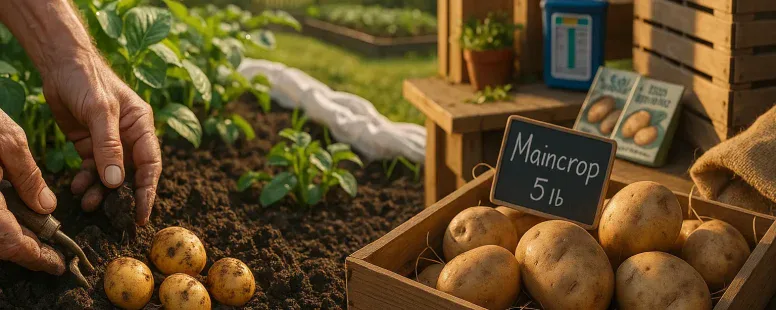
You can plan your potato harvest like a well-timed meal: quick, bright starters followed by a hearty main course. The choice between first earlies and maincrop is not just about time to table, it shapes your garden schedule, soil choices, pest risk, and what you’ll cook with those tubers. In one sentence: first earlies give you fast, tender spuds for summer salads: maincrop delivers bulk, storage-worthy potatoes for winter. Below you’ll find clear, practical contrasts and hands-on steps so you can pick the right crop for your space, taste, and market goals.
Key Differences At A Glance
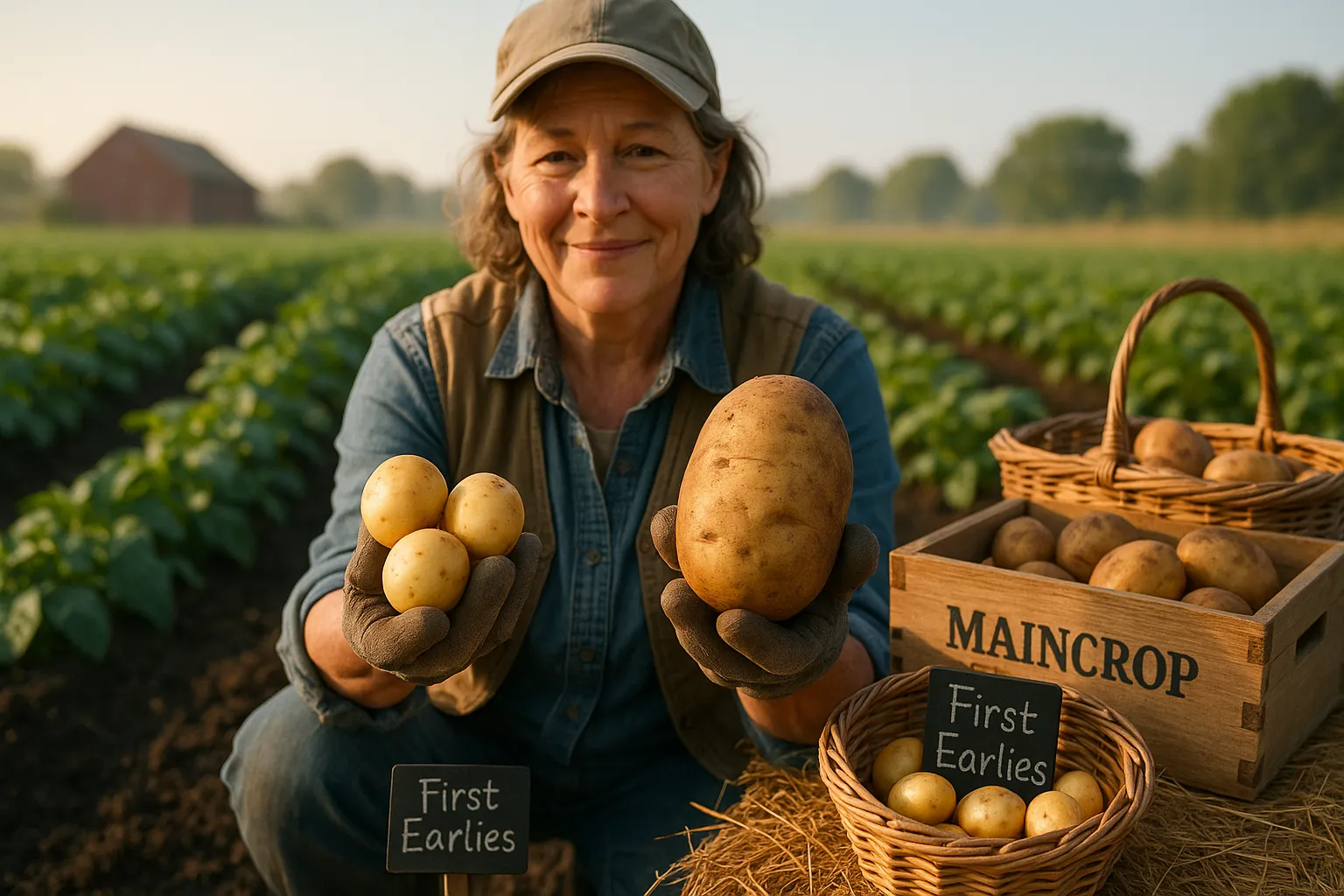
Fact: First earlies mature quickly and yield smaller tubers: maincrop matures slowly and yields larger, storable potatoes.
Maturity Timeframe
First earlies typically mature in 10–12 weeks from planting. Maincrop varieties often take 16–20 weeks. That simple timing difference affects when you plant, how you protect plants from frost, and when you can harvest for market or home use. If you plant a first early in March (protected seedbed), you can be digging new potatoes by June: a maincrop planted the same time won’t be ready until late summer or early autumn.
Tuber Size, Yield And Texture
First earlies produce small to medium tubers with thin skins and a delicate texture. Maincrop produces larger tubers with thicker skins and higher dry matter, that means more floury flesh and greater yield per plant. You can expect roughly 1–2 lb (0.5–1 kg) total per early plant and 3–6 lb (1.5–3 kg) per maincrop plant under good conditions. Yields vary by variety and care, .
Flavor, Culinary Uses And Market Value
First earlies taste fresh, sweet, and waxy: they sell well at farmers’ markets at a premium as “new potatoes.” Maincrop tastes richer and is better for roasting, mashing, and long-term sale. If you sell to restaurants or stores, maincrop gives you bulk and storage life: first earlies give you high early-season margins.
Growing Calendar And Timing
Fact: Planting windows differ, manage dates to reduce frost risk and stagger harvests for continuous supply.
When To Plant First Earlies Vs. Maincrop
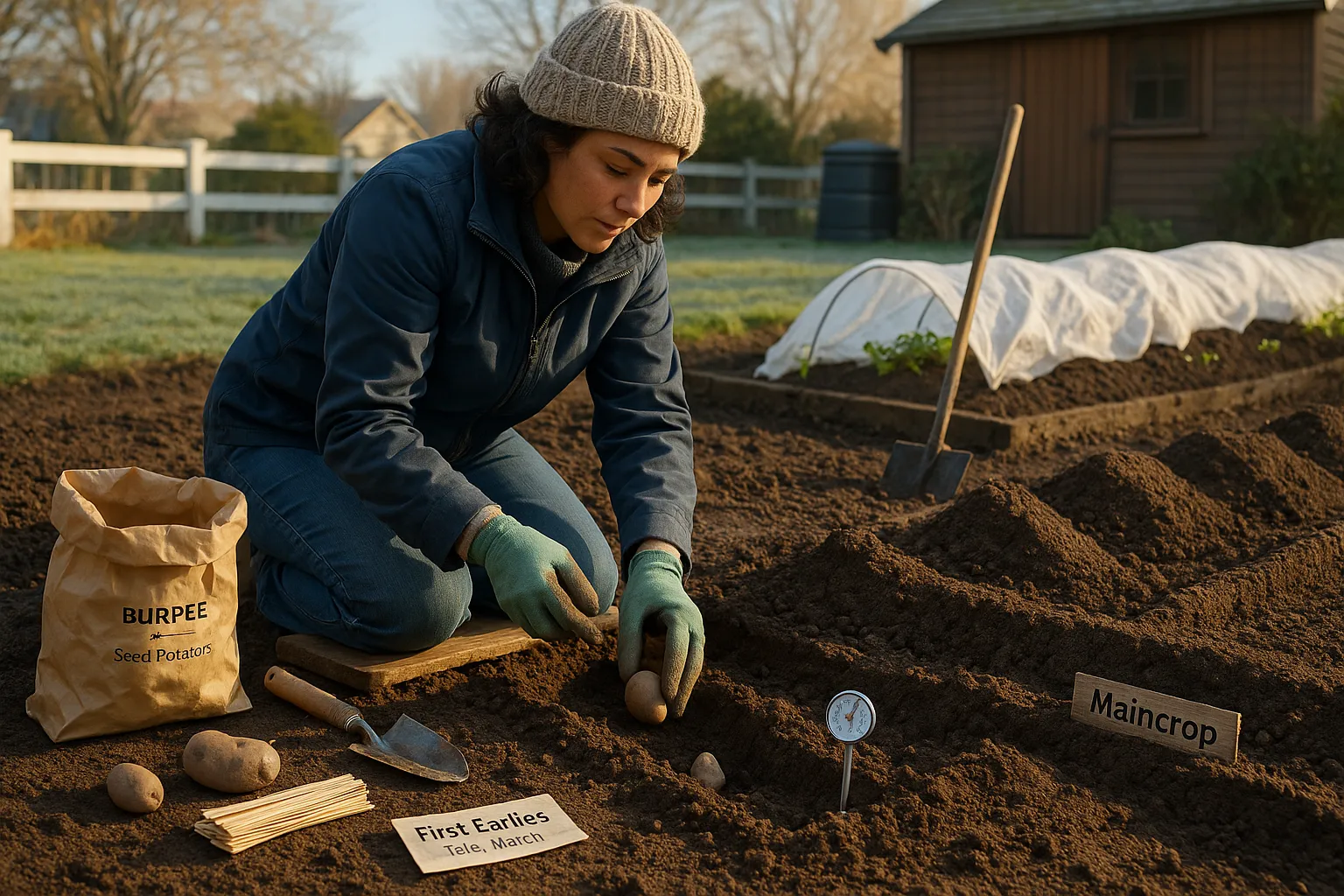
Plant first earlies as soon as soil reaches about 45°F (7°C) and is workable, often late March to April in temperate US zones. Maincrop can be planted at the same time but you may delay several weeks to avoid late blight pressure: planting maincrop in April–May is common. Seed potatoes from suppliers like McKenzie or Johnny’s Selected Seeds arrive in early spring: store them in cool light until planting.
Earthing Up, Frost Protection And Seasonal Care
Earthing up improves tuber formation and frost protection. You should earth up first earlies twice early in the season and maincrop three times as they grow taller. Use fleece for early-season frost: drape it when night temps dip below 32–36°F (0–2°C). Early earlies need less heavy protection overall because you lift them before high blight risk.
Recommended Crop Rotation And Successive Sowings
Rotate potatoes with legumes or brassicas on a 3-year cycle to cut disease carryover. For continuous supply, sow first earlies, then a second early batch two weeks later, then maincrop. This successive sowing approach spreads harvests and evens out labor and sales.
Varieties And Best Uses
Fact: Variety choice determines cooking use, yield, and disease resistance, match the variety to your purpose.
Popular First Early Varieties And Their Strengths
Charlotte: waxy, excellent for salads, good yields. Rocket: very early, reliable in cool soils. ‘Red Duke of York’: classic flavor, good for boiling. These varieties give you thin skins and bright flavor for early-season sales.
Popular Maincrop Varieties And Their Strengths
Maris Piper: high dry matter, great for chips and roasting. King Edward: classic roast potato with fluffy texture. Kestrel and Cara: reliable yields and decent blight tolerance. These varieties store well and suit processors and restaurants.
Which Varieties Work Best For Boiling, Roasting, Or Chips
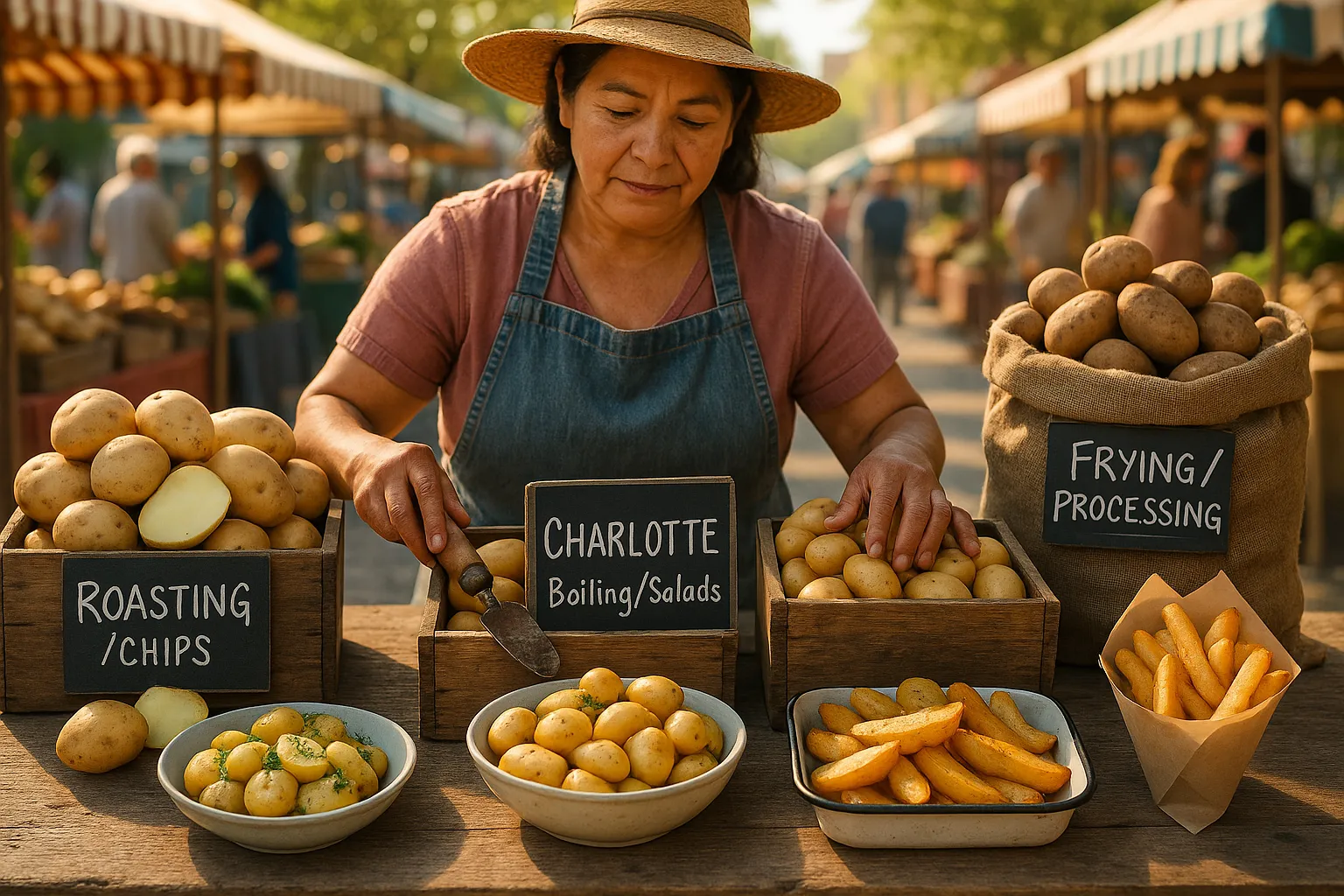
Boiling: Charlotte, Nicola, and Desiree (waxy, hold shape). Roasting: King Edward, Maris Piper (floury, crisp up). Chips/frying: Maris Piper, Russet Burbank (high dry matter). Choose based on texture: waxy for salads, floury for mash and roast.
Soil, Planting And Ongoing Care
Fact: Potatoes prefer loose, slightly acidic soil with good drainage and steady moisture.
Soil Preparation, pH And Drainage Needs
Aim for loam with pH 5.5–6.5. Add compost and avoid heavy clay unless you raise beds or incorporate coarse sand and organic matter. Good drainage prevents rot and scab. In heavy soils, plant on ridges or in mounded rows.
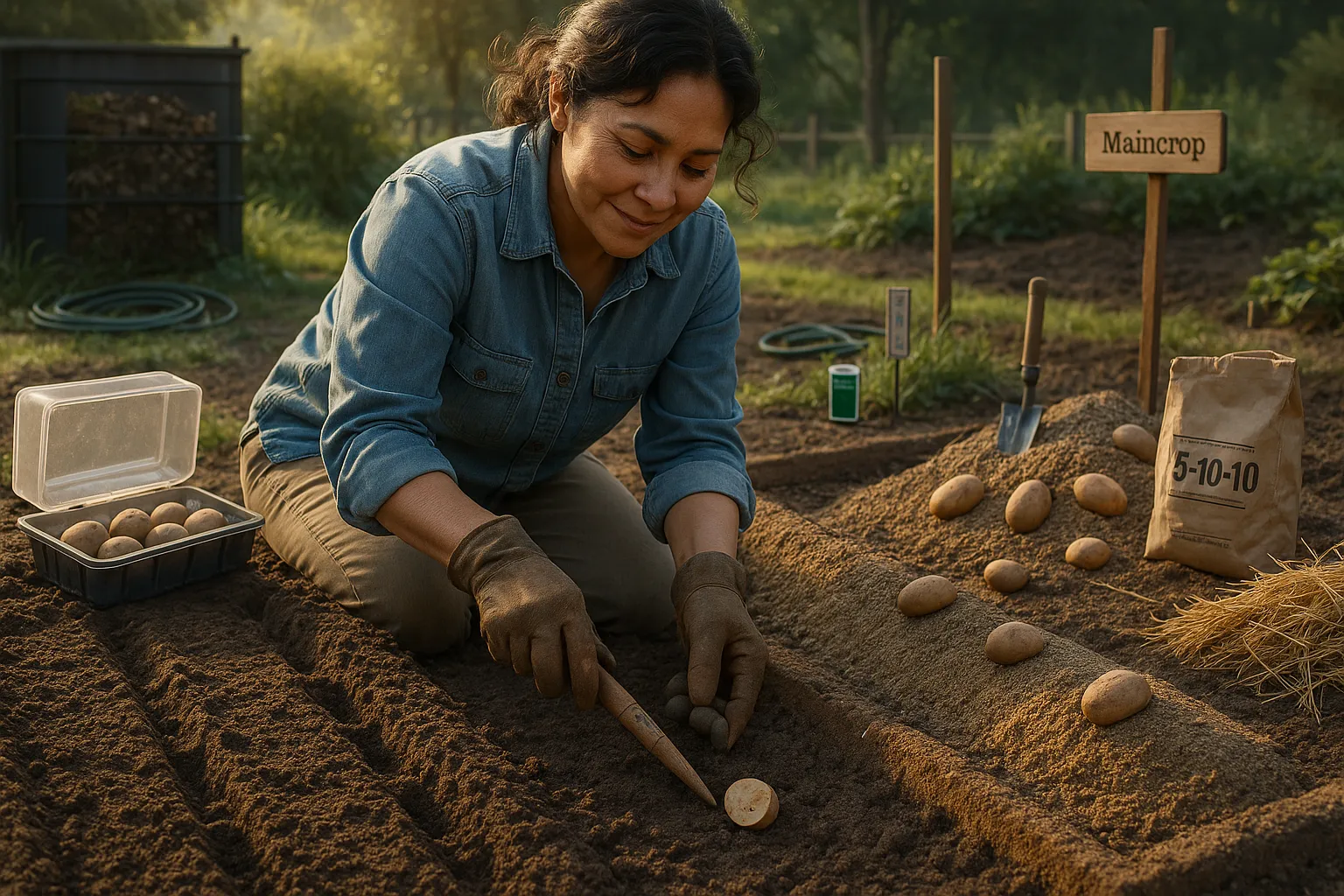
Planting Depth, Spacing And Seed Preparation
Cut seed potatoes into pieces with at least one eye per piece and let them heal 48 hours. Plant 3–4 inches (7–10 cm) deep for first earlies and 4–6 inches (10–15 cm) for maincrop. Space 10–12 inches (25–30 cm) apart in rows 30–36 inches (75–90 cm) apart. Chitting (pre-sprouting) speeds early earlies, keep seed in light at about 50–60°F (10–15°C) until shoots are 1–2 cm.
Nutrition, Watering And Mulching Practices
Feed at planting with balanced fertilizer (e.g., 5-10-10) and side-dress with nitrogen as rows grow. Maintain even moisture, inconsistent water causes scab and hollow heart. Mulch with straw to conserve moisture, reduce weeds, and keep tubers cleaner. First earlies accept lighter feeding than maincrop.
Harvesting, Storage And Expected Yields
Fact: Harvest timing differs, lift earlies young for tenderness: cure maincrop before long-term storage.
When And How To Lift First Earlies Vs. Maincrop
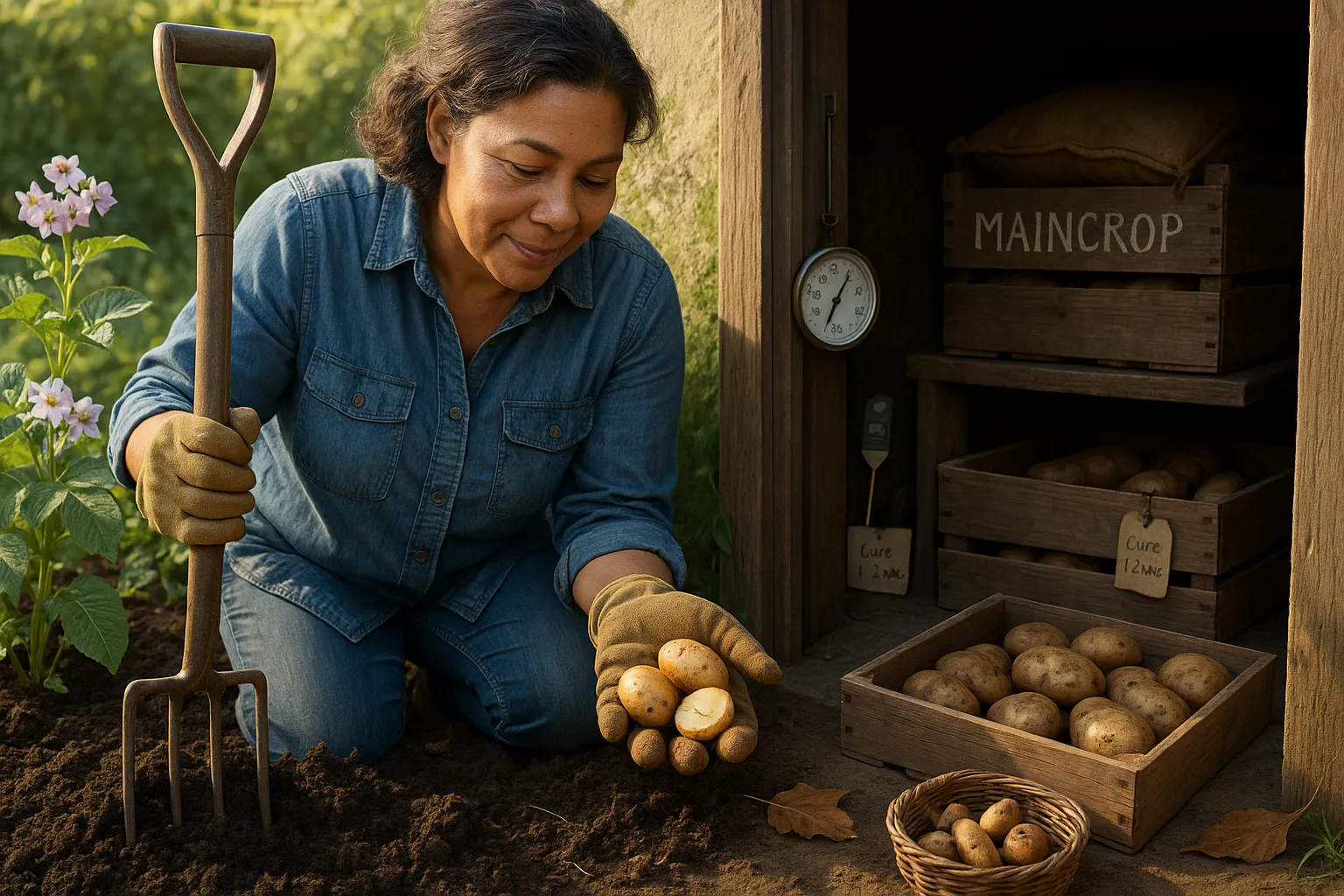
Lift first earlies when plants flower or 10–12 weeks after planting. Use a fork to gently lever soil and avoid bruising. For maincrop, wait until foliage dies back or blight removes tops: that signals skin set and readiness for storage.
Curing, Long-Term Storage Techniques And Troubleshooting
Cure maincrop for 1–2 weeks in the dark at 55–60°F (13–16°C) with high humidity to toughen skins. After curing, store at 45–50°F (7–10°C) in darkness to avoid sprouting and greening. Check monthly and remove soft or rotten tubers. If you see sprouting, cool the storage and ventilate: sprouted tubers have reduced quality.
Estimating And Improving Yield Per Plant/Bed
Estimate yields by variety averages: first earlies 1–2 lb/plant: maincrop 3–6 lb/plant. Improve yields by ensuring deep loose soil, consistent moisture, correct spacing, and timely feeding. Avoid late blight and manage pests to prevent yield loss.
Pests, Diseases And Risk Management
Fact: Different crop timings change disease and pest risk: earlies often escape late-season blight but face early pests.
Common Pests And How Risk Differs By Crop Type
Aphids, Colorado potato beetle, and wireworms attack both types. First earlies may suffer potato tuber moth in warmer regions. Maincrop faces higher late blight risk because it grows into wet late summer. Monitor regularly and remove affected foliage early.
Major Diseases (Blight, Scab, Wireworm) And Preventive Steps
Late blight (Phytophthora infestans) thrives in wet, cool weather. Use certified seed, avoid overhead watering, remove volunteer potatoes, and choose resistant varieties when possible. Common scab (Streptomyces scabies) increases in high pH soils: lower pH or use resistant cultivars. Wireworm damage links to grassland rotation: rotate away from pasture and use bait traps.
Integrated Pest Management And Resistant Varieties
Use IPM: rotate crops, encourage predators (ladybugs for aphids), apply biologicals (Beauveria bassiana for certain pests), and time sprays only when needed. Varieties like Sarpo Mira show blight resistance: consider them for maincrop if blight is recurring in your area.
Choosing The Right Crop For Your Garden Or Market
Fact: Choose based on space, purpose, timing, and how much risk you’ll accept.
Decision Factors: Space, Purpose, Timing And Risk Tolerance
If you have limited space and want quick returns, pick first earlies. If you want winter storage or to supply a restaurant, choose maincrop. If blight is common in your county, prioritize resistant maincrop varieties or shift planting dates to minimize risk.
Mixing Earlies And Maincrop For Continuous Supply
Plant a block of first earlies, a staggered second sowing, and plant maincrop later. This mix gives you new potatoes in summer and storage potatoes in fall. It evens labor peaks and steadies market supply if you sell locally.
Practical Planting Plans And Quick Checklist For Success
Plan: choose certified seed, prepare soil (pH 5.5–6.5), chit earlies, plant within recommended windows, earth up twice for earlies and thrice for maincrop, monitor pests, and cure maincrop before storage.
Quick Checklist
Buy certified seed (e.g., McKenzie, Agrico)
Test soil pH and amend
Chit first earlies 2–3 weeks before planting
Space and depth per variety
Mulch and water evenly
Lift earlies at flowering: cure maincrop
Store maincrop dark & cool
Call to action: choose one first early and one maincrop for your next season, follow the checklist above, and note results, then adjust variety and timing next year so your garden gives the harvest you want.
To provide the best experiences, we use technologies like cookies to store and/or access device information. Consenting to these technologies will allow us to process data such as browsing behaviour or unique IDs on this site. Not consenting or withdrawing consent, may adversely affect certain features and functions.
Functional
Always active
The technical storage or access is strictly necessary for the legitimate purpose of enabling the use of a specific service explicitly requested by the subscriber or user, or for the sole purpose of carrying out the transmission of a communication over an electronic communications network.
Preferences
The technical storage or access is necessary for the legitimate purpose of storing preferences that are not requested by the subscriber or user.
Statistics
The technical storage or access that is used exclusively for statistical purposes.The technical storage or access that is used exclusively for anonymous statistical purposes. Without a subpoena, voluntary compliance on the part of your Internet Service Provider, or additional records from a third party, information stored or retrieved for this purpose alone cannot usually be used to identify you.
Marketing
The technical storage or access is required to create user profiles to send advertising, or to track the user on a website or across several websites for similar marketing purposes.