You can grow winter-blooming color even when most perennials sleep. Cyclamen coum and Cyclamen hederifolium are two compact, tuberous cyclamens that bring pinks, whites, and marbled leaves to shady corners. The surprising benefit: they require less fuss than many spring bulbs and often naturalize into long-lived drifts. This comparison shows you which species fits your site, how to spot key differences, and practical steps to plant, propagate, and troubleshoot them, so your woodland edge or container looks reliably cheerful from late autumn through spring.
Quick Comparison At A Glance
Fact: Cyclamen coum blooms earlier and tolerates colder winters than Cyclamen hederifolium.
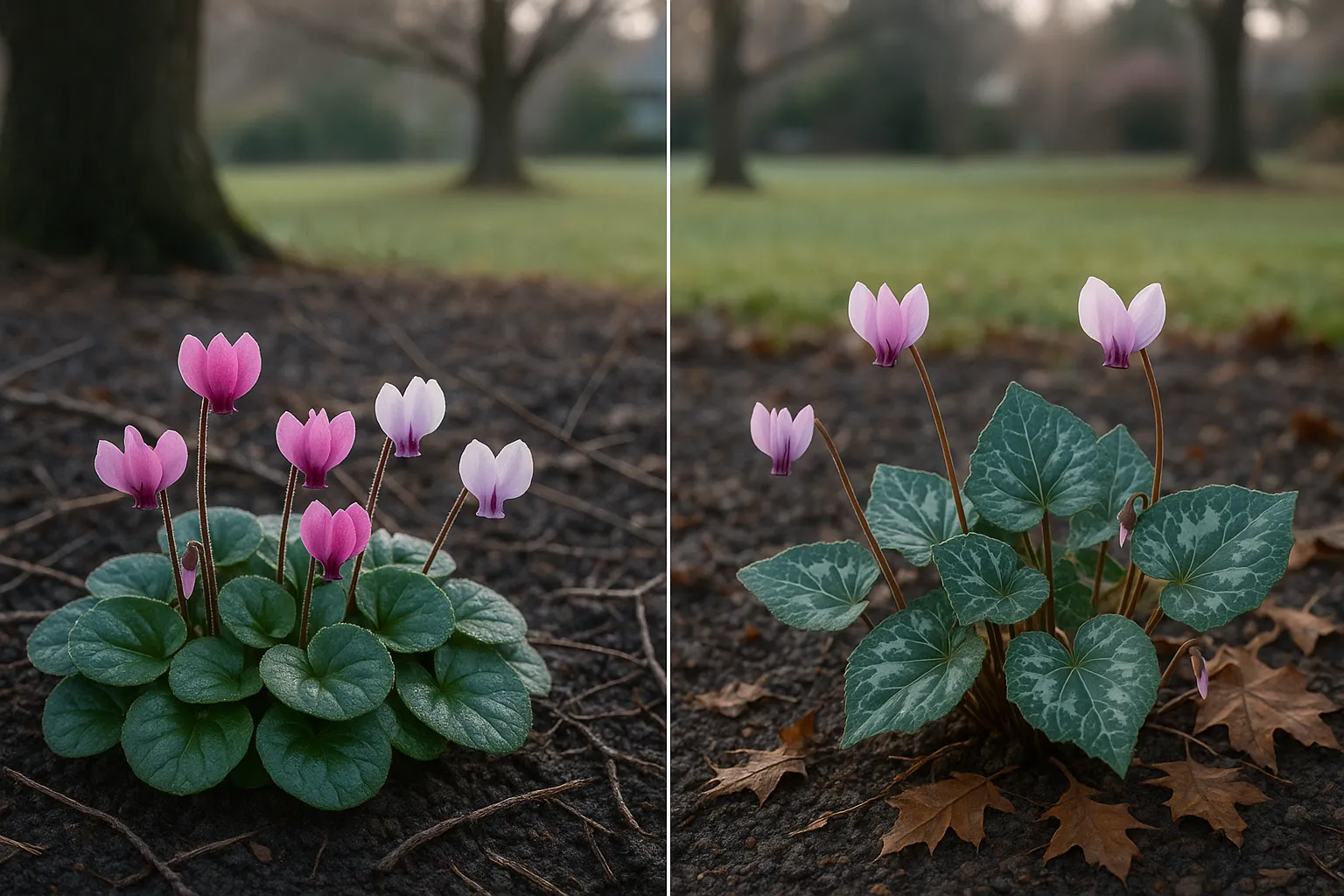
Cyclamen coum: Typically flowers from late winter into early spring (often December–March in mild climates). It holds compact, rounded leaves and shows a wide range of flower colors from deep rose to near-white. It tolerates USDA zones roughly 5–8, depending on microclimate, and often thrives in heavier soils.
Cyclamen hederifolium: Blooms in late summer to autumn and sometimes again in early spring where conditions are mild. Leaves often appear after flowering and display a classic ivy-like (hederifolium) shape with silvery marbling. Hardy to similar zones but prefers well-drained soil and a drier summer rest.
Quick tip: If you want winter flowers under trees, choose C. coum: if you prefer an autumn floral show and a later leaf display, choose C. hederifolium.
Key Identification Features
Fact: Leaves, flowers, and tubers give the clearest ID cues: start with the obvious trait and then inspect finish details.
Leaves: Shape, Color, And Pattern
Fact: C. coum leaves are rounder: C. hederifolium leaves are more lobed or ivy-shaped.
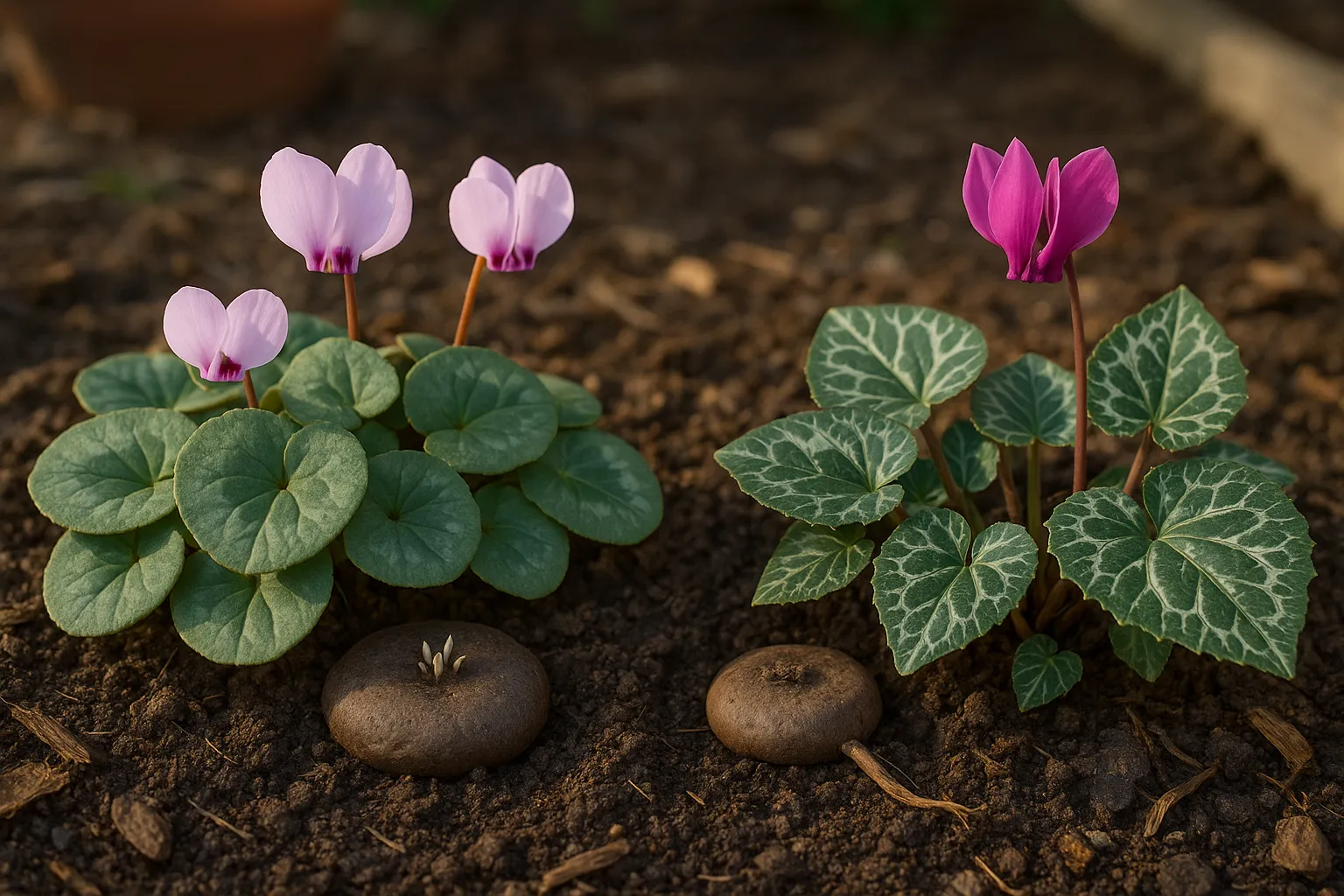
Cyclamen coum usually forms near-circular leaves with a somewhat scalloped edge. The upper surface often shows a darker central zone and lighter margins in shades of green or gray-green. Cyclamen hederifolium leaves more often show distinct lobes that echo ivy leaves: marbling tends to be sharper and more contrasted. Both species display a silver or gray pattern, but the pattern geometry helps you tell them apart at a glance.
Flowers: Timing, Shape, And Color Range
Fact: Flower timing differs: coum blooms in winter–early spring while hederifolium begins in late summer or autumn.
Coum flowers are typically bowl-shaped with petals that may curl back slightly: colors run from deep magenta to pale pink or white, often with a dark eye. Hederifolium flowers show a similar general shape but often open earlier in the fall and sometimes have a more pronounced reflex of the petals. Color ranges overlap, so use bloom date together with leaf form for reliable ID.
Tuber And Growth Form
Fact: Both species grow from rounded tubers, but C. hederifolium’s tubers often sit a bit closer to the soil surface and produce longer stolon-like roots.
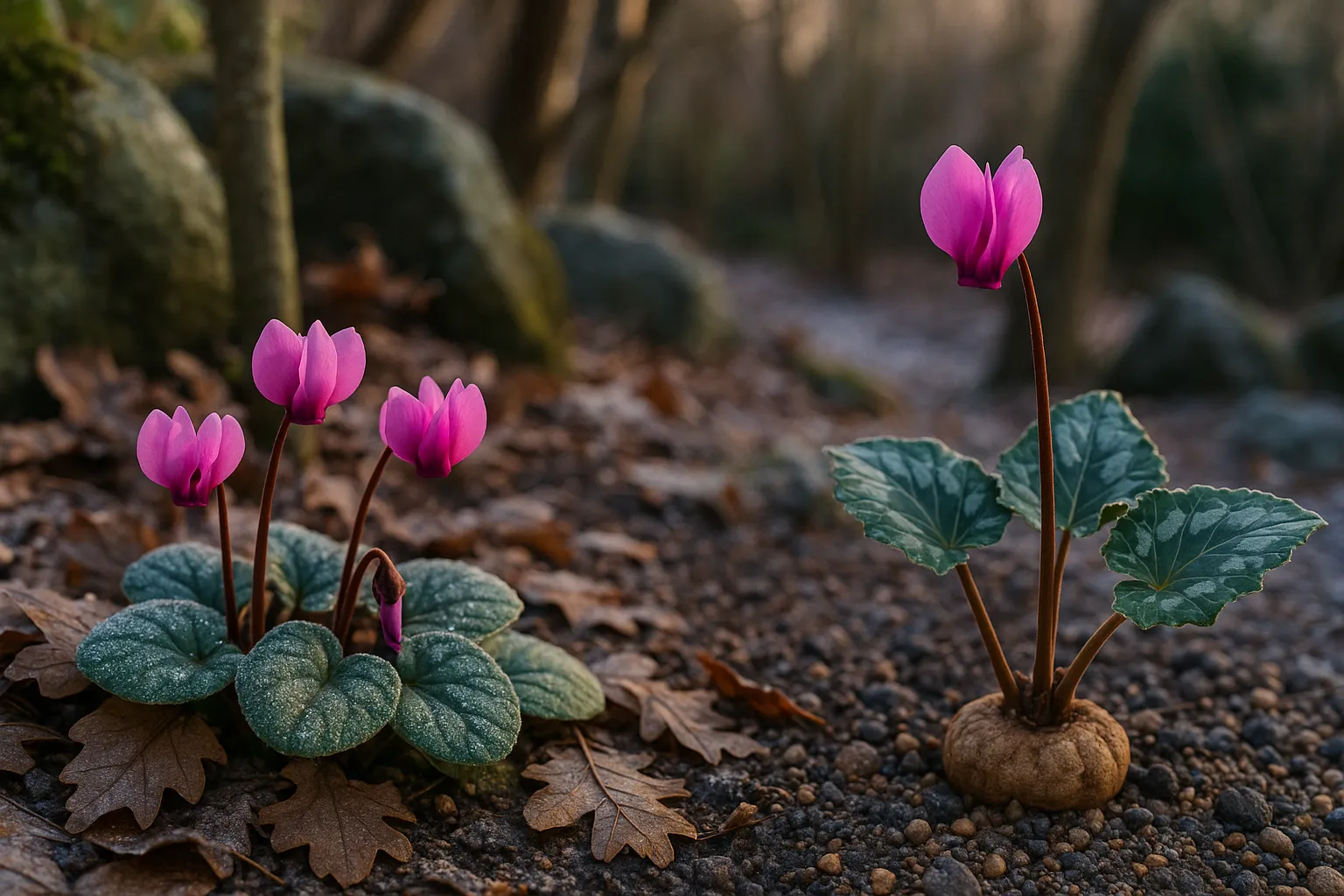
Coum tubers usually produce shoots from across the top surface, creating dense clusters over time. Hederifolium may produce thicker, more elongated roots and sometimes spreads slightly faster under ideal conditions. In the field, hederifolium often forms a looser patch: coum tends to make compact cushions.
Natural Range, Habitat, And Hardiness
Fact: Cyclamen coum originates from eastern Mediterranean mountain regions: C. hederifolium comes from southern Europe and the Balkans.
These species occupy woodland edges, rocky slopes, and scrub in their native ranges. Cyclamen coum grows at higher elevations where cold winters are common: that gives it superior frost tolerance in many gardens. Cyclamen hederifolium evolved in milder, often drier summer climates which explains its preference for a pronounced summer dormancy.
Seasonality And Dormancy Patterns
Fact: C. coum remains active through winter and goes dormant in late spring: C. hederifolium usually emerges in late summer, flowers in autumn, and then rests through summer heat.
You’ll see coum’s flowers when most plants are dormant, so they’re valuable for winter interest. Hederifolium times its leaves to the cooler, wetter part of the year in Mediterranean climates, which makes it ideal for drier garden sites that mimic that pattern.
Preferred Soil, Light, And Moisture Conditions
Fact: Both favor dappled shade and soils with good organic matter: drainage preferences differ slightly.
Cyclamen coum tolerates heavier soils and tolerates more winter moisture. Cyclamen hederifolium prefers well-drained soils and benefits from a dry, warm summer rest to avoid tuber rot. Both perform best in partial to full shade, under deciduous trees, shrub edges, or rock crevices where light filters through.
Planting, Propagation, And Establishment
Fact: Both species establish from tubers or seed, but seed-grown plants take several years to flower.
Planting Steps And Site Preparation
Fact: Plant tubers shallowly with the growing point just below the soil.
Choose a dappled-shade site with leaf mulch and protection from strong sun.
Improve soil with compost if drainage is poor (but keep moisture for C. coum).
Plant tubers 2–3 inches deep and 4–6 inches apart for single plants: leave room for expansion.
Water in gently and apply a light mulch to stabilize moisture and temperature.
Seed: Sow fresh seed in autumn in a shady, cold frame or seedbed: expect germination in a few weeks to months and flowering in 2–4 years. Division: Lift mature clumps during dormancy, tease tubers apart, and replant immediately. Division speeds the process but may stress plants if done repeatedly.
Care Routine: Watering, Feeding, And Mulch
Fact: Water lightly while dormant: give more consistent moisture during active growth.
Water: Keep soil barely moist during growth: reduce water sharply during summer dormancy for C. hederifolium to avoid rot. C. coum tolerates wetter winters but still needs dry periods in summer.
Feeding: A balanced slow-release fertilizer in early growth can help: avoid high-nitrogen feeds that encourage leggy growth.
Mulch: A thin leaf mulch simulates natural leaf litter and keeps tubers cool. Remove heavy mulch in spring to prevent excess damp.
Common Pests, Diseases, And Troubleshooting
Fact: Slugs, rodents, and fungal rot are the main problems you’ll face.
Slugs and snails eat young leaves and flowers, use physical barriers, beer traps, or copper tapes to protect plants. Rodents like mice and voles may dig up tubers: consider raised beds or wire mesh if you have persistent diggers.
Fungal rot appears when tubers stay wet for too long, especially in heavy soils or under impermeable mulch. Improve drainage, lift and inspect affected tubers, and discard badly rotted material. For fungal threats, avoid overhead watering and keep good air movement around plants.
If plants fail to flower, check light and crowding. Too much shade or heavy leaf litter can suppress blooms. Or you may have mis-timed watering, either overly wet in summer for hederifolium, or drought during active growth.
Landscaping Uses And Design Ideas
Fact: Cyclamen coum and hederifolium add seasonal interest to shade gardens, containers, and rockeries.
Container Planting, Rock Gardens, And Naturalizing
Fact: Both species work well in containers and rock crevices where drainage and protection can be controlled.
Plant tubs in gritty, humus-rich compost for containers: place them where you can enjoy winter or autumn flowers near paths. Rock gardens replicate the stony slopes they prefer. For naturalizing, scatter seed or set small clusters under deciduous shrubs, allow leaf litter to mimic their native leaf-litter beds.
Companion Plants And Pairing Tips
Fact: Pair cyclamens with spring bulbs and shade-loving perennials that complement their season.
For C. coum (winter flowers): Place near hellebores (Helleborus), snowdrops (Galanthus), or evergreen ferns for contrast.
For C. hederifolium (autumn flowers and later leaves): Pair with anemones, ferns, or Epimediums. Use dwarf shrubs like Mahonia or Sarcococca to frame displays. The goal: overlapping interest so your bed looks active across seasons.
How To Choose Between Cyclamen Coum And Cyclamen Hederifolium
Fact: Choose based on bloom season, soil moisture, and the look you want in each season.
Site-Based Recommendations And Tradeoffs
Fact: If you need frost-tolerant winter color and tolerate heavier soils, choose C. coum.
Choose C. coum when winters are cold, sites are wetter in winter, or you want winter blooms under trees. It tolerates shade and some winter wet.
Choose C. hederifolium when you have well-drained soil, want an autumn display, and can give plants a dry summer rest. It’s the better pick for gravelly soils and rock gardens.
Tradeoffs: Hederifolium may need slightly more careful summer dryness: coum can be less showy in leaf pattern but often flowers earlier and more reliably in cold winters.
Variety Suggestions For Specific Conditions
Fact: Different cultivars suit different looks, pick named varieties for consistent traits.
For cold gardens: Cyclamen coum ‘Album’ or C. coum subsp. coum forms often show reliable hardiness.
For decorative leaves: Cyclamen hederifolium ‘Silver Leaf’ selections and cultivars such as ‘Album’ or ‘Green White’ provide strong foliage contrast.
For containers or small spaces: Select smaller named cultivars of either species and keep them in leafy compost with good drainage.
Practical encouragement: Try both species in small test patches if you can. You’ll learn your soil’s quirks quickly and find the species that settles best, plus, you get two seasons of cyclamen charm rather than one. Good luck: you’ll be rewarded with repeated, low-key color and interesting foliage for years.
To provide the best experiences, we use technologies like cookies to store and/or access device information. Consenting to these technologies will allow us to process data such as browsing behaviour or unique IDs on this site. Not consenting or withdrawing consent, may adversely affect certain features and functions.
Functional
Always active
The technical storage or access is strictly necessary for the legitimate purpose of enabling the use of a specific service explicitly requested by the subscriber or user, or for the sole purpose of carrying out the transmission of a communication over an electronic communications network.
Preferences
The technical storage or access is necessary for the legitimate purpose of storing preferences that are not requested by the subscriber or user.
Statistics
The technical storage or access that is used exclusively for statistical purposes.The technical storage or access that is used exclusively for anonymous statistical purposes. Without a subpoena, voluntary compliance on the part of your Internet Service Provider, or additional records from a third party, information stored or retrieved for this purpose alone cannot usually be used to identify you.
Marketing
The technical storage or access is required to create user profiles to send advertising, or to track the user on a website or across several websites for similar marketing purposes.