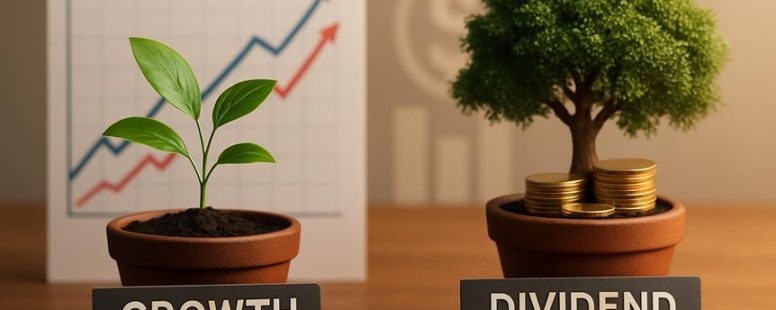
When I first dipped my toes into investing, I faced a dizzying crossroads—should I chase the thrill of soaring growth stocks or settle for the steady hum of dividend payers?
Each path offers a different flavor of reward and risk, like choosing between a roller coaster ride or a calm boat cruise. Understanding these tradeoffs is more than just financial jargon; it’s the key to making your money work like a well-oiled machine.
Surprisingly, dividend stocks can sometimes act as a financial safety net, providing income even when markets wobble.
Let’s explore these options and find out which route aligns best with your dreams.
What Are Growth Stocks and How Do They Work?
Growth stocks are shares of companies expected to grow faster than the overall stock market. These companies usually reinvest their profits into expanding instead of paying dividends to shareholders. For example, tech companies like Apple or Tesla often fall into this category because they are growing quickly.
Growth stocks work by increasing in value as the company gets bigger. If a company like Netflix keeps adding more subscribers, its stock price might go up a lot. Investors buy these stocks hoping that as the company grows, their investment will grow too. But growth stocks can be very volatile. Their prices can swing up and down quickly, especially if the company’s growth slows down or if the market changes.
Some people prefer growth stocks because they see them as ways to make a lot of money over time. Others worry because these stocks can also lose value fast. For example, during the dot-com bubble in 2000, many tech stocks lost huge amounts of money when the market crashed.
If you want to invest in growth stocks, here are some steps to follow: first, look for companies that are expanding fast, especially in areas like technology, renewable energy, or healthcare. Next, check their financial health and how much they are reinvesting in growth. Then, decide how much risk you’re willing to take because these stocks can be unpredictable. Finally, keep an eye on market trends and be ready to sell if the stock drops too much.
Some people say growth stocks are the best way to build wealth because they can increase in value quickly. But others warn they are risky and can lead to big losses. It’s important to understand that not all growth stocks will succeed, and some may drop in value after you buy them.
How Do Dividend Stocks Provide Consistent Income?
Dividend stocks are a type of investment that pay you regular cash. Unlike growth stocks, which focus on increasing their value over time, dividend stocks give you steady income each year. This makes them good for people who want predictable money from their investments.
What makes dividend stocks reliable is how companies keep paying dividends. Companies that pay dividends regularly usually have steady cash flow and good financial health. They can afford to share profits with investors without risking their business. When I pick dividend stocks, I look for companies that have a history of paying or raising dividends. This shows they are committed to giving investors a stable income.
Dividend stocks are especially helpful when the stock market is uncertain. They can provide a cushion against losses because you get paid even if the stock price drops. Some well-known companies like Coca-Cola and Johnson & Johnson have long histories of paying dividends. But, keep in mind, not all dividend stocks are safe. Some companies cut or stop dividends if they face financial trouble. So, it’s smart to check their financial health before investing.
There are two ways to see dividend stocks. Some investors think they are safe and want steady income. Others worry that focusing only on dividends might mean missing out on faster growth from other stocks. Also, dividends are taxed, which can reduce your overall return. If a company stops paying dividends, you might lose your income stream.
In the end, dividend stocks can be a good choice if you want regular cash flow and less risk. But they are not perfect, and you should research carefully. Some companies may cut dividends in tough times, and taxes can eat into your earnings. So, think about your financial goals and risk level before investing in dividend stocks.
Risk and Volatility: Growth vs. Dividend Stocks
Growth stocks and dividend stocks act very differently when it comes to risk and how much their prices change. Growth stocks usually go up and down a lot more, which means they are riskier but can also give bigger rewards. These are stocks from companies like Tesla or Amazon that grow quickly. If you buy a growth stock, you might see big gains, but you could also lose a lot if the company doesn’t do well.
Dividend stocks are different. They usually stay more steady and don’t jump around as much. These stocks come from well-established companies like Coca-Cola or Johnson & Johnson that pay regular dividends, or small payments, to shareholders. Because they don’t move as much, they are considered safer, but they might not grow as fast.
Some people like growth stocks because they want big gains, but they need to be ready for big drops too. Others prefer dividend stocks because they give steady income and are less risky. But remember, no stock is completely safe. Even dividend stocks can fall if the company struggles.
Volatility Patterns Explained
Volatility is how much a stock’s price goes up and down. Knowing how growth and dividend stocks behave differently helps you decide where to invest. Growth stocks tend to have bigger price swings and react more strongly to market changes. For example, tech companies like Apple or Tesla often see big jumps or drops based on news or investor feelings. Dividend stocks, like those from Coca-Cola or utility companies, usually stay steadier because they pay regular dividends and have steady earnings.
Growth stocks respond more to how investors feel or to economic news. If people get excited or worried, their prices can change quickly. Dividend stocks are less affected by these feelings. Instead, they tend to move in line with other defensive stocks when the market is shaky.
Understanding these patterns can help you see how each stock reacts during tough times or when opportunities come up. Growth stocks might fall more during a market dip, but they can also rise faster when things improve. Dividend stocks might not jump as much but can offer some safety with their regular payouts.
Some people prefer growth stocks because they hope for big gains, but they need to be ready for big drops too. Others like dividend stocks for their steadiness, but they might miss out on quick gains. Knowing these risks helps you pick the right mix for your comfort with ups and downs. Just remember, no stock is completely safe, and all investments come with some risk.
Risk Profiles Compared
Stocks can be different when it comes to risk. Growth stocks and dividend stocks each have their own risks, and knowing these can help you pick better investments.
Growth stocks are stocks of companies that are expected to grow fast, like tech firms. But because they grow quickly, their prices can go up and down a lot. That means they are more risky. If the market or economy drops, growth stocks can lose a lot of value quickly. They usually need investors to be comfortable with taking bigger risks and willing to wait many years for the company to grow.
Dividend stocks are stocks of companies that pay part of their profits to shareholders regularly. These stocks tend to be steadier. They can give you income even if the stock price drops. During tough times, dividend stocks can help protect your investment from big losses. They are often better for people who want less risk and more stability.
Some investors mix both types of stocks in their portfolio. This can help balance the risk and give chances for growth while keeping some safe income. But remember, no investment is completely safe. Growth stocks can drop fast, and dividend stocks might not grow as much. It’s good to know your own comfort with risk and your goals before choosing.
In short, growth stocks are more risky but can give bigger gains. Dividend stocks are safer and can provide steady income. Thinking about what you want and how much risk you can handle will help you decide which to buy.
Which Growth or Dividend Stock Fits Your Investment Goals?
What is the best stock for your goals: growth or dividend?
The answer depends on what you want from your investments. Growth stocks are good if you want your money to grow faster over time. They reinvest profits to expand, which can boost your portfolio’s value. But they can be risky and may go up and down a lot. Companies like Apple or Tesla are examples. If you don’t mind some ups and downs and are looking for bigger gains over many years, growth stocks might fit you.
Dividend stocks are better if you want steady income and less risk. These companies pay regular dividends, which can give you income even if the stock price doesn’t move much. For example, utility companies or large banks often pay dividends. If you need regular cash or want stability in your investments, dividend stocks could be a good choice.
Here are some things to think about before choosing: How long do you want to keep your money invested? Do you need income now, or are you saving for the future? How much risk are you comfortable with?
Some people mix both types to balance growth and income. But be careful—growth stocks can fall sharply, and dividend stocks might not grow as fast. No stock is perfect, so make sure you understand what each offers and what you need most.
In the end, matching your investment goals with the right type of stock means knowing what you want and being ready for the risks involved.
Tax Implications for Growth and Dividend Stocks
When you pick between growth and dividend stocks, it’s good to know how taxes affect your money. Growth stocks usually let you wait until you sell before paying taxes. Dividend stocks, on the other hand, might give you smaller payouts every year, but those payouts are taxed right away. Understanding these tax rules can help you keep more of your profits.
For example, imagine you bought a growth stock like Amazon. You might not pay taxes until you sell, which means your money can grow without taxes getting in the way. But with dividend stocks like Coca-Cola, you get regular payments that are taxed each year, even if you don’t cash them out.
Some people prefer growth stocks because they can grow a lot over time without taxes eating into their gains. Others like dividend stocks because they get income every year, even if the stock price doesn’t go up much.
However, be careful. Sometimes taxes on dividends can take a chunk of your earnings, and if growth stocks aren’t doing well, your money might stay stuck. It’s a good idea to know your tax rates and how they work before choosing.
In the end, both types have pros and cons. Growth stocks might give bigger profits later, but you pay taxes when you sell. Dividend stocks give regular income, but taxes can cut into those payouts yearly. Knowing these differences helps you decide what’s best for your money.
Tax Treatment Differences
Tax treatment is a key factor when choosing between growth stocks and dividend stocks because it affects how much money you keep. Here is what you need to know:
First, dividend stocks pay you dividends each year. These dividends are taxed either as ordinary income or as qualified dividends, which often have lower tax rates. This means you might owe taxes on the dividends you receive each year, reducing your overall returns. For example, a company like Coca-Cola pays dividends regularly, and shareholders pay taxes on those dividends.
Second, growth stocks usually do not pay dividends. Instead, they increase in value over time. You only pay taxes when you sell the stock and realize a profit. These are called capital gains. If you hold a stock for more than a year, you get a lower tax rate on your gains. But if you sell sooner, the gains are taxed at higher rates. Think of growth stocks like planting a seed and waiting for it to grow before you harvest; you don’t pay taxes until you pick it.
Third, qualified dividends normally get taxed at lower rates than regular income. This can make dividend stocks more attractive if you want some income and lower taxes. But remember, the tax rates depend on your income level and the type of dividend.
Fourth, tax laws on capital gains depend on how long you keep a growth stock. Long-term gains, from stocks held more than a year, usually get better tax rates. Short-term gains, from stocks held less than a year, are taxed as ordinary income. So, if you want tax savings, holding stocks longer can help.
Finally, tax-loss harvesting is a strategy where you sell stocks at a loss to offset gains and reduce taxes. This can work differently with dividend and growth stocks. With dividend stocks, you might have fewer opportunities since they pay regular income, but with growth stocks, you might sell some at a loss to balance your taxes.
Knowing these differences can help you decide how to build your portfolio. Do you prefer steady income or growth? Remember, taxes can eat away at your gains, so plan accordingly. But be aware, tax laws change, and strategies like tax-loss harvesting have limits. Always check with a tax advisor before making big moves.
Impact on After-Tax Returns
The main fact is that taxes change how much money you keep from your investments. Growth stocks and dividend stocks are different in how they affect your after-tax returns.
Dividend stocks pay out money regularly. You pay taxes on these dividends every year. This can cut into your gains because you owe taxes even if you don’t sell the stocks. Companies like Coca-Cola or Johnson & Johnson often pay dividends. If you want steady income from your investments, dividends are good, but taxes eat into your earnings.
Growth stocks, like Apple or Amazon, usually don’t pay dividends right away. Instead, they grow in value. You only pay taxes when you sell the stock and make a profit. This means your money can stay invested longer and grow more because you avoid taxes while the stock increases in value. But if the stock drops or you need cash, you might lose the tax benefit.
Some people prefer growth stocks because they can delay paying taxes and let their investments grow faster. Others like dividend stocks for regular income, even if taxes take a chunk out. Both options have pros and cons, but knowing how taxes work helps you decide what fits your goals.
For example, if you plan to retire soon, dividend stocks might give you regular income, but you should think about taxes. If you want your money to grow big over time, growth stocks could work better because taxes are postponed.
How Market Timing Affects Stock Choices
Market timing is when you decide the best moment to buy or sell stocks. It’s important because stock prices change a lot with the economy and investor feelings. Some stocks go up quickly, while others, like dividend stocks, are safer to hold during uncertain times. Knowing when to act can help you make better choices and avoid big losses.
Here are some simple steps to improve your timing:
Watch economic indicators like employment rates or inflation reports. These give early clues about how the market might move.
Check the mood of investors. If most are feeling confident, stocks might be ready to rise. If they are worried, it might be better to wait.
Use technical analysis tools like charts to find good entry points or when to sell. For example, a stock might be ready to jump if it breaks through a certain price level.
Think about the seasons. Stocks sometimes move differently during certain parts of the year. For example, holiday shopping season can boost retail stocks.
Know your own comfort with risk. If you’re unsure or easily stressed, it might be better to wait for clearer signals.
Some people swear by market timing, claiming it can boost their returns. Others say it’s too hard to get right consistently because markets are unpredictable. For example, even experts often get caught off guard by sudden drops or jumps. If you try to time the market, remember that no method is perfect and sometimes you might miss out on gains or face losses.
Imagine you’re trying to catch a wave. Sometimes, you see a big swell coming and surf just right. Other times, the wave crashes before you can jump on. That’s how market timing works — it can work great, but it can also fail. Be careful, and don’t rely only on timing to build your investments.
Dividend Stocks and Steady Income
Dividend stocks are shares of companies that pay you part of their profits regularly. They are a good way to get steady income because you receive cash payments, called dividends, often every three months.
To decide if a dividend stock is good, look at the dividend yield. This tells you how much money you can expect to earn compared to the stock’s price. For example, if a stock costs $100 and pays a $4 dividend each year, the yield is 4 percent. Higher yields can mean more income, but sometimes they also mean the company might be struggling. So, it’s smart to compare yields across similar stocks.
Another important thing is to check if the dividends are likely to stay stable over time. Some companies keep their dividends steady or even increase them, which is a good sign. But others might cut them if their profits fall. For example, utility companies like Duke Energy often pay regular dividends because they make consistent money. On the other hand, tech companies like Apple might pay less or no dividends at all because they prefer to reinvest profits into growth.
There are two sides to consider. Some investors love dividend stocks because they give regular income and can help during retirement. But others warn that relying only on dividends can be risky. If a company cuts its dividends, your income drops. Plus, stock prices can go down, so you might lose money if you need to sell.
So, if you are thinking about buying dividend stocks, check the dividend yield and the company’s stability. Don’t just chase the highest yield. Ask yourself if the company can keep paying those dividends. Sometimes, a lower but steady yield is safer than a high yield that might disappear.
In the end, dividend stocks can be a good way to build steady income, but they are not foolproof. Make sure to do your homework and remember that all investments carry some risk.
Consistent Cash Flow
Reliable Cash Flow from Investments
Dividend stocks are a good way to get steady income from your investments. These stocks pay out part of their earnings regularly, which helps you know when to expect money. Unlike growth stocks, which reinvest profits to grow the company’s value, dividend stocks focus on giving investors income.
To find stocks that provide consistent cash flow, look for these qualities:
Companies with steady sales and earnings
A good history of paying dividends each year
Low payout ratios, meaning they don’t pay out all their earnings, so they can keep paying dividends
Businesses in sectors that are less affected by the economy, like utilities or consumer staples
Companies that are open about their finances and report clearly
Some people prefer dividend stocks because they offer predictable income, like getting a regular paycheck. Others worry that if a company faces trouble, they might cut or stop dividends. So, it’s wise to check a company’s financial health and payout history.
For example, well-known companies like Procter & Gamble or Johnson & Johnson have paid steady dividends for many years. But, even with these checks, no investment is risk-free. Market changes or company problems can still affect your income.
In the end, dividend stocks can be a helpful part of your investment plan. But remember, diversifying your investments and doing research can help protect you from surprises. Always keep a close eye on your stocks and stay informed, so you can adjust if needed.
Dividend Yield Importance
Dividend yield is a key number for investors looking for steady income from stocks. It tells you how much cash you get back for each dollar you invest. For example, if a stock pays a dividend of 3 dollars on a 100-dollar investment, the yield is 3 percent. This number helps you compare different stocks and see which ones pay reliable dividends that can grow over time. Some companies, like Coca-Cola or Johnson & Johnson, are known for steady dividends that increase each year.
But there are two sides to consider. On one hand, a high yield may mean more income now, but it could also be a sign of trouble. If a company’s dividend suddenly drops or gets cut, your income will shrink. So, it’s good to look for stocks with a history of increasing dividends, not just high yields. On the other hand, focusing only on yield might make you miss out on growth stocks that reinvest profits instead of paying dividends.
Another way to boost income is dividend reinvestment. This means automatically using your dividends to buy more shares. Over time, this can grow your investment faster because you earn more dividends on more shares. It’s like planting a tree that keeps growing and giving you more fruit.
For anyone wanting regular income, understanding dividend yield is crucial. It helps decide which stocks give dependable cash flow. But remember, high yield alone doesn’t guarantee safety. You should also check the company’s financial health and dividend history. Ignoring yield can mean missing an important part of building income from stocks. Always do your homework before putting your money into any dividend stock.
Income Stability Factors
Income stability means having a reliable flow of money from your investments. While high dividend yields look good, they don’t always mean your income is safe. Sometimes, companies pay big dividends but can cut them later. To keep your income steady, you need to look beyond just the payout amount.
Here are some key things to check for steady income from dividend stocks:
Does the company pay dividends consistently over many years? A long track record shows they can be dependable.
Does the company generate enough cash to support dividend payments? Strong cash flow means less chance of cuts.
Is the payout ratio low? A low payout ratio shows the company has room to increase dividends or stay steady if earnings dip.
Is the industry stable? Companies in steady industries like utilities tend to have less earnings swings.
Do the company leaders care about maintaining dividends? Management that commits to payments is a good sign.
Some people might think chasing high dividends is best, but if those dividends are not reliable, your income could become unpredictable when you need it most. Others might say it’s better to focus on companies with a history of steady payments, even if the yields are lower.
Be aware that even the most stable-looking companies can face problems. Market crashes or sudden shocks can still impact dividend payments. So, it’s smart not to put all your money in one stock or rely only on dividends. Diversification and careful research are your best tools for income stability.
In the end, finding stocks that pay dependable dividends is about understanding the company’s health and industry. It’s not just about the payout but knowing you can count on that income for years to come.
Long-Term Gains From Growth Stocks
The main benefit is that your money can grow faster through compounding. For example, if you earn 10 percent each year, your investment will be larger each year because you earn returns on your initial money and on previous gains. This can turn a small investment into a big one over decades.
Unlike dividend stocks, which pay you money regularly, growth stocks focus on increasing in value. If you want to build wealth, growth stocks can be a good choice. But you need to be patient. The stock market can go up and down in the short term. If you sell too early, you might miss the big gains.
Some people worry that growth stocks are risky. They can drop a lot if the company struggles or if the market turns bad. It’s smart to diversify and not put all your money into just growth stocks. Also, it takes time to see big results, so don’t expect quick riches.
Imagine planting a seed. Growth stocks are like planting a tree and waiting years for it to grow tall. If you water it regularly and stay patient, someday it might give you plenty of shade and fruit. But if you dig it up or panic and sell, you’ll miss the chance for it to grow.
Balancing Growth and Dividend Stocks in Your Portfolio
Knowing the difference between growth and dividend stocks can help you build a better investment plan. Growth stocks are companies that are expected to grow quickly, like Tesla or Apple. They can give you big profits in the long run. But they also come with more risk, because their prices can go up and down a lot.
Dividend stocks are companies that pay regular money to shareholders, like Coca-Cola or Johnson & Johnson. These stocks give you steady income and can help keep your investment safe during market ups and downs.
If you want to balance growth and income, here are some clear steps to follow:
First, figure out how much risk you are comfortable with. Do you want to take big chances for big gains, or prefer safer investments?
Next, decide how much of your money should go into dividend stocks. For example, if you want steady income, put more into these.
Then, invest some of your money in growth stocks to try for higher profits over time.
It’s smart to check your investments every now and then. Rebalance your portfolio by adjusting how much you put into each type of stock.
Finally, spread your investments across different companies and sectors. This helps protect you if one stock drops in value.
Some people say focusing only on growth stocks can lead to big wins. But others warn that it’s risky because prices can fall sharply. On the other hand, dividend stocks are safer, but they may not grow as quickly.
Common Mistakes When Choosing Between Growth and Dividend Stocks
Choosing between growth stocks and dividend stocks can be confusing. Here is what you need to know.
Growth stocks are shares in companies that are expected to grow faster than the market. These stocks usually don’t pay much in dividends. Instead, investors hope to make money when the stock price goes up. Examples include tech giants like Apple or Amazon.
Dividend stocks are shares in companies that pay regular dividends or payouts to shareholders. These can be good for steady income. Examples include Coca-Cola or utility companies.
Many investors get stuck because they don’t know their goals or how much risk they can handle. Some chase quick gains, buying growth stocks when the market looks hot. Others want steady income and pick dividend stocks without thinking about how risky they are.
Another mistake is not researching enough. It’s smart to understand a company’s financial health before buying its stock. Ignoring this can lead to big losses. Also, some investors put too much money into just one type of stock. This can make their overall investments very risky.
To avoid trouble, start by knowing what you want from your investments. Do you want quick growth or steady income? Be honest about how much risk you can handle. A good plan is to balance growth and dividends based on your timeline and comfort. This helps keep your investments safe and steady.
To provide the best experiences, we use technologies like cookies to store and/or access device information. Consenting to these technologies will allow us to process data such as browsing behaviour or unique IDs on this site. Not consenting or withdrawing consent, may adversely affect certain features and functions.
Functional
Always active
The technical storage or access is strictly necessary for the legitimate purpose of enabling the use of a specific service explicitly requested by the subscriber or user, or for the sole purpose of carrying out the transmission of a communication over an electronic communications network.
Preferences
The technical storage or access is necessary for the legitimate purpose of storing preferences that are not requested by the subscriber or user.
Statistics
The technical storage or access that is used exclusively for statistical purposes.The technical storage or access that is used exclusively for anonymous statistical purposes. Without a subpoena, voluntary compliance on the part of your Internet Service Provider, or additional records from a third party, information stored or retrieved for this purpose alone cannot usually be used to identify you.
Marketing
The technical storage or access is required to create user profiles to send advertising, or to track the user on a website or across several websites for similar marketing purposes.