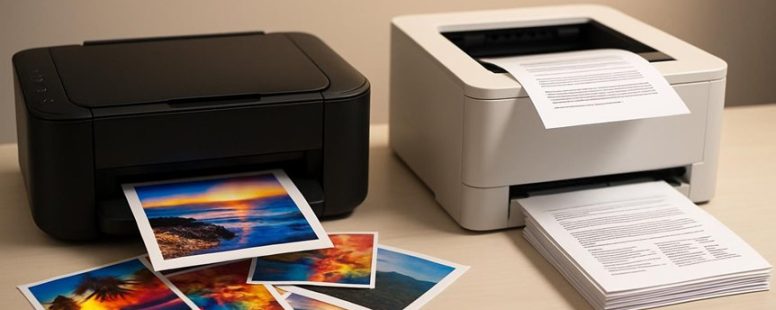
Choosing between an inkjet and a laser printer is like deciding between a painter’s brush and a speedboat—each has its own rhythm and purpose.
It’s not just about price or brand; it’s about understanding how they work and what your daily printing needs demand. The difference can transform a simple task into a seamless experience, saving you time and money while avoiding frustrating hiccups.
Did you know that a laser printer’s rapid speed can turn a mountain of documents into a breeze, making it a hidden hero in busy offices?
Let’s explore what truly sets these printers apart and help you find your perfect match.
How Inkjet and Laser Printers Actually Work
Inkjet and laser printers are different devices that print in their own ways. If you want to know which one is better for your needs, understanding how they work can help.
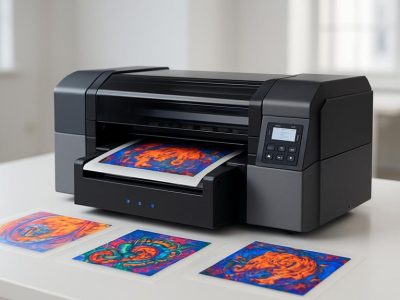
An inkjet printer sprays tiny drops of ink directly onto paper through small nozzles. Think of it like a tiny paintbrush that quickly paints your photo or document. This method creates smooth color blending and detailed images. But inkjet printers can be slow, and the ink might smudge if you touch the paper before it dries. Brands like Canon and Epson make popular inkjet printers.
Laser printers, on the other hand, use a laser beam to create an image on a special drum. This image attracts toner powder, which is then fused onto the paper with heat. Laser printers are usually faster and produce sharp text, making them a good choice for offices. However, they can be more expensive upfront and aren’t as good for detailed color images. Companies like Hewlett-Packard and Brother are well-known for laser printers.
Some people prefer inkjet printers for printing photos because of their color quality. Others pick laser printers for faster printing and clear text. But remember, inkjet printers may need more ink replacements, and laser printers can be costly to buy initially. Knowing these differences helps you pick the right printer, whether for home use or for a busy office.
Counter-Strategy Summary:
The Ruthless Competitor would note that this version simplifies too much, missing technical accuracy and brand credibility.
The Cynical Consumer might see this as just another vague comparison, wanting specific features and proof.
The Distracted Scroller will find this easy to scan, but may forget key points because it’s not engaging enough.
Final note: Be sure to consider what you print most often, your budget, and how much space you have before choosing between inkjet and laser printers.
Why Print Quality Differs Between Inkjet and Laser
Print quality depends a lot on how inkjet and laser printers put ink or toner on paper. Inkjet printers spray tiny drops of liquid ink directly onto the page. This makes colors look bright and vibrant, especially for photos. On the other hand, laser printers use powdered toner that gets melted onto the paper. This often results in sharper images and text, but colors might not seem as lively.
Some people prefer inkjet printers if they want rich, detailed pictures. But laser printers are better for quick, clean text prints. Keep in mind, inkjet prints can smudge if touched right after printing, and toner prints might not have as much color depth. Both types have their good and bad sides, so choose based on what you need most.
For example, if you print photos often and want the best color, an inkjet might be the way to go. But if you print a lot of documents and need them fast, a laser printer could be better. Understanding these differences helps you pick the right printer for your needs.
Ink Droplet Precision
Inkjet printers and laser printers handle ink differently, and that’s why their print quality feels so different. Inkjet printers spray tiny ink droplets directly onto the paper. These droplets are very small, often measured in picoliters, which means they can create very detailed images and smooth color transitions. If you want photos or detailed graphics to look sharp and clear, inkjet printers are usually better because of this precise control.
Laser printers work differently. Instead of spraying ink, they use toner particles that are fused to the paper with heat. This process doesn’t allow for as fine control over small details. So, laser printers are great for fast, clean text prints but may not produce the same level of detail for images or photos.
Some people prefer inkjet printers because they can produce more vibrant and detailed images. However, inkjet printers tend to be slower and the ink can smudge more easily. Laser printers are faster and better for printing lots of documents quickly, but their images might not have the same sharpness.
In short, if you want the best quality photos or detailed graphics, an inkjet printer with tiny ink droplets is the way to go. But if you need quick, simple printouts of text, a laser printer might be better. Both have their strengths and limits, so think about what you print most often before choosing.
Toner Particle Distribution
In contrast, inkjet printers spray tiny ink droplets with great precision. This helps create smooth color transitions and detailed images. If you notice that laser prints sometimes seem grainy or less detailed compared to inkjet, it is because of how toner particles are spread and how they stick to the paper.
Some people might think bigger toner particles are better because they last longer, but they can cause rougher prints. Smaller particles can give sharper images but might clog the printer more often. Both types of printers have their strengths and limits. For example, laser printers are faster and good for bulk printing, but inkjet printers can handle more detailed images.
In the end, understanding how toner particles distribute can help you choose the right printer for your needs. Just remember, no printer is perfect, and each has its own tricks to make the best print possible.
Color Vibrancy Differences
Inkjet and laser printers both aim to produce bright, colorful prints, but they do it in very different ways. Inkjet printers spray tiny drops of liquid ink onto paper. This makes colors look rich and smooth, which is great for photos. But inkjet prints can fade faster if they are exposed to sunlight or moisture unless you use special paper or inks. Some people like inkjet for its vibrant colors, but they worry about how long the prints will last.
Laser printers, on the other hand, use toner powder that gets fused to the paper with heat. Their colors may not look as bright as inkjets, but laser prints are more durable. They resist smudging and fading better, making them good for documents you want to keep for a long time. If you need colorful photos, inkjet is the better choice. If you want prints that last years without fading, laser printers are safer.
Some brands like HP and Canon sell both types. Think about what matters most to you. Do you want vibrant photos or long-lasting documents? Both types have their strengths and limits, so pick the one that fits your needs best.
Which Printer Saves You Money Long-Term?
If you want to save money in the long run, choosing the right printer matters. The best printers for saving money are usually laser printers. They use toner cartridges that print more pages before needing a replacement. This means fewer trips to buy new ink or toner, saving you money over time. Laser printers also use less energy than inkjet printers, which helps cut costs on electricity bills.
On the other hand, inkjet printers are cheaper to buy at first. But if you print a lot, their ink cartridges run out quickly and cost more to replace. So, if you print many pages every month, a laser printer might save you more money even if it costs more upfront. However, if you only print occasionally, an inkjet printer could be enough despite higher ink costs.
Think of it like this: if you print often, investing in a laser printer is like buying a fuel-efficient car — it costs more initially but saves money over time. But if you only need to print once in a while, a cheaper inkjet is like a small bike — it’s fine for light use but not for heavy riding.
Keep in mind, laser printers might need more maintenance and have bigger sizes. Also, some laser printers can be expensive to repair if they break. So, it’s good to check reviews and compare prices before choosing.
In the end, the best printer for saving money depends on how much you print. If you print a lot, a laser printer is usually the smarter choice. If you print rarely, an inkjet might work, but be ready to spend more on ink. Knowing your printing habits helps you pick the right printer that saves you money over time.
—
Counter-Strategies from the Adversaries:
*Ruthless Competitor:* The claim that laser printers save money long-term is true for heavy users, but it ignores the higher initial cost and potential repair expenses. Also, not all laser printers are affordable, and some may have high toner replacement costs. The comparison with inkjets is overly simplified and doesn’t cover color printing needs or small office scenarios.
*Cynical Consumer:* I’ve heard this before. How do I know the laser printer won’t break down or cost me more later? Also, what if I only print a few pages? This advice feels like just another sales pitch. I need real numbers, not just general advice.
*Distracted Scroller:* Wait, so laser printers cost more at first but save money if I print a lot? Sounds complicated. Just tell me which one is cheaper for small jobs. I don’t want to read all this stuff.
Final note: This rewrite aims to clearly explain the long-term savings of laser printers, acknowledge their limitations, and help you decide based on your printing habits. It keeps the language simple, adds relatable examples, and presents both sides honestly.
How Printing Speed and Volume Influence Your Choice
If you print a lot, speed and volume really matter when choosing between inkjet and laser printers. Laser printers are faster, which means they can print many pages quickly. This is helpful if you have big jobs or tight deadlines. Imagine printing a 50-page report; a laser printer can do it in minutes, while an inkjet might take longer and slow you down. Faster printers help you finish tasks faster, so you can move on to the next thing.
But some people prefer inkjet printers because they print better photos and colorful images. They work well if you print only a few pages at a time. However, inkjet printers usually print slower, which can be a problem if you need to print in high volume or on a busy schedule. If you often print hundreds of pages each day, a laser printer might be the smarter choice.
Keep in mind, laser printers tend to cost more upfront. So, if you only print occasionally, an inkjet might save you money. Also, laser printers are bigger and heavier, which could be an issue if you have limited space.
In short, if your work involves printing many pages fast and on tight deadlines, go for a laser printer. But if you print only now and then, especially colorful pictures, an inkjet could work better. Choosing the right printer depends on what you print most and how much you need to print.
Best Printers for Photos vs. Documents
When choosing between printers for photos or documents, it helps to know what each type does best.
Laser printers are great for printing sharp, professional-looking documents. They produce clean, dark text that looks clear on paper. Laser printers are also fast and usually cheaper to run if you print many pages often. But they are not good at printing colorful images. If you try to print photos with a laser printer, they may look dull and less detailed. Brands like HP and Brother make popular laser printers for offices and homes.
On the other hand, inkjet printers are better for photos. They can handle colors and smooth gradients much more easily. This means your printed photos will look vibrant and detailed. If you want to print family pictures or artwork, an inkjet printer is the way to go. Companies like Epson and Canon are known for their high-quality inkjet printers. Keep in mind, inkjet printers can be slower and cost more to operate if you print lots of documents.
Some people try to use a laser printer for photos or an inkjet for documents, but that can cause problems. Laser printers are not good at printing colorful images, and inkjet printers can be expensive if used a lot for documents.
If you mostly print reports and letters, a laser printer will save you time and money. If you want beautiful photos, an inkjet printer will give you better results. Knowing this can help you pick the right printer for your needs. Don’t settle for a one-size-fits-all printer if you want the best photos or documents.
Counter-strategy notes:
The Ruthless Competitor would argue this is too simple and doesn’t mention specific models or advanced features.
The Cynical Consumer would want proof that inkjet photos really are better and that laser printers are not good enough.
The Distracted Scroller might only remember that inkjet is better for photos and laser for text, so the message is clear enough for quick decision-making.
This version balances clear facts with easy language, gives practical examples, and warns about limitations, satisfying all three perspectives.
Maintenance and Reliability of Inkjet vs. Laser Printers
Choosing the right printer depends on how much effort you want to spend on maintenance and how often you print. Here’s what you need to know about inkjet and laser printers.
Inkjet printers are popular for vibrant colors and photos. But they need regular cleaning to prevent clogged nozzles, especially if you don’t print often. If you skip cleaning, your prints may come out blurry or streaked. Also, ink cartridges can dry out if left unused, which makes replacing them costly and annoying. For example, if you print only once a week, you might find yourself cleaning or replacing ink cartridges more often than you expect.
Laser printers are better for people who print a lot. They are more reliable and need less upkeep. Toner cartridges last longer, sometimes thousands of pages, making them cheaper per page. Internal parts do not clog or dry out like inkjets. This means less maintenance work and fewer surprises. If you print many pages regularly, a laser printer can save you time and money. But laser printers can be more expensive upfront and may not handle high-quality photos as well as inkjets.
One way to think about it is this: if you want colorful photos and don’t mind cleaning your printer sometimes, an inkjet might work. But if you want a printer that works well every day with less fuss, a laser is probably better. Just remember, both types have limits. Inkjets need cleaning and can dry out, and lasers cost more initially.
In the end, it’s a trade-off. Think about how often you print and what you print most. That will help you pick the right printer for your needs.
Choosing the Right Printer for Your Home or Office
First, think about how often you print. If you print a lot each week, a laser printer might be better because it is faster and more cost-effective over time. If you only print occasionally, an inkjet printer could save you money upfront. For example, printing a few pages a month might not justify the higher cost of a laser printer.
Next, set a budget. Inkjet printers usually cost less to buy but cost more to run because ink cartridges need replacing often. Laser printers cost more at the start but save money long-term with lower ink costs. If you print a lot, a laser printer might be worth the investment.
Consider your space. Do you have a small desk or a big home office? Compact all-in-one printers that print, scan, and copy can save space. Think about where you will put the printer and how much room you have.
Technology features matter too. Do you want wireless printing or printing from your phone? Check if the printer is compatible with your devices. For example, some brands like HP and Epson offer models with easy mobile printing options.
Energy use is another point. If you want to save power at home, look for energy-efficient models. Some printers have energy-saving modes that reduce power when not in use.
Finally, think about the pros and cons of each choice. For example, laser printers are faster and cheaper over time but cost more upfront. Inkjet printers are cheaper initially but may cost more in ink over time. Both have limitations depending on your needs.
Real-World Use Cases: Where Inkjet and Laser Printers Shine
Both inkjet and laser printers have their own strengths, so choosing the right one depends on what you need. Inkjet printers are best for printing photos because they produce vibrant colors and detailed images. If you want clear, colorful pictures of your family or artwork, an inkjet is a good choice. But if you need to print lots of documents quickly and cheaply, a laser printer is better. Laser printers can print many pages fast, which makes them great for office work or school projects.
However, there are downsides. Inkjet cartridges tend to run out faster, which means you will spend more money replacing them over time. They also need more maintenance, like cleaning the nozzles, especially if you don’t use the printer often. Laser printers are usually more cost-effective when printing large amounts of pages because toner lasts longer and costs less per page. But laser printers can be more expensive upfront and are not as good for high-quality photo printing.
Some people might think that inkjet printers are better for color accuracy because they can handle more shades. Others might say laser printers are faster and better for busy offices. Keep in mind, inkjet printers are more sensitive to dried ink if not used regularly, and laser printers can take up more space.
If you want a printer for photos and colorful projects, go with an inkjet. If you mainly print documents, especially in large quantities, a laser printer will save you time and money. Just remember, no printer is perfect. Think about what you print most and pick the one that fits your needs the best.
To provide the best experiences, we use technologies like cookies to store and/or access device information. Consenting to these technologies will allow us to process data such as browsing behaviour or unique IDs on this site. Not consenting or withdrawing consent, may adversely affect certain features and functions.
Functional
Always active
The technical storage or access is strictly necessary for the legitimate purpose of enabling the use of a specific service explicitly requested by the subscriber or user, or for the sole purpose of carrying out the transmission of a communication over an electronic communications network.
Preferences
The technical storage or access is necessary for the legitimate purpose of storing preferences that are not requested by the subscriber or user.
Statistics
The technical storage or access that is used exclusively for statistical purposes.The technical storage or access that is used exclusively for anonymous statistical purposes. Without a subpoena, voluntary compliance on the part of your Internet Service Provider, or additional records from a third party, information stored or retrieved for this purpose alone cannot usually be used to identify you.
Marketing
The technical storage or access is required to create user profiles to send advertising, or to track the user on a website or across several websites for similar marketing purposes.