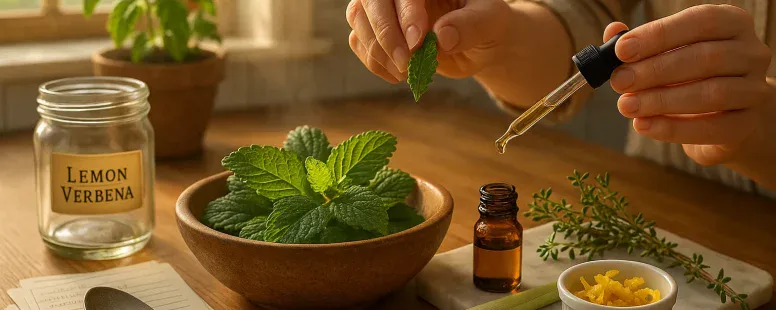
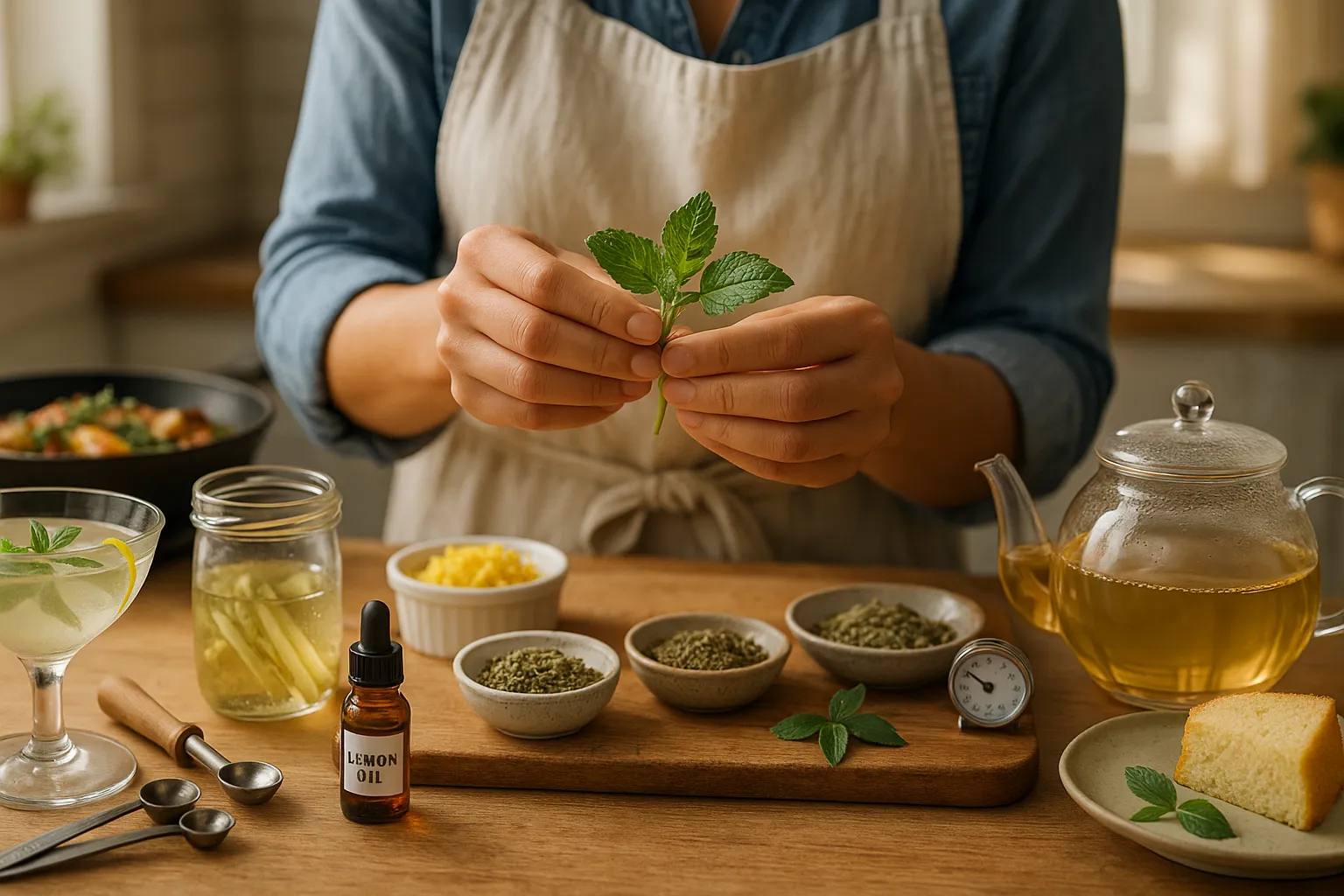
Lemon verbena has a bright, floral citrus note that can lift tea, desserts, and sauces, but it’s not always on hand. If you’ve ever reached for its pale green leaves and found an empty jar or an out-of-season plant, you need clear alternatives that give the same lemony lift without wrecking your recipe. This guide helps you choose the best alternative to lemon verbena for any dish or drink. You’ll learn quick swaps, flavor trade-offs, and practical tips for growing, storing, and using substitutes so your final plate or cup still sings with fresh lemon character.
Quick Recommendation: When To Use Which Substitute
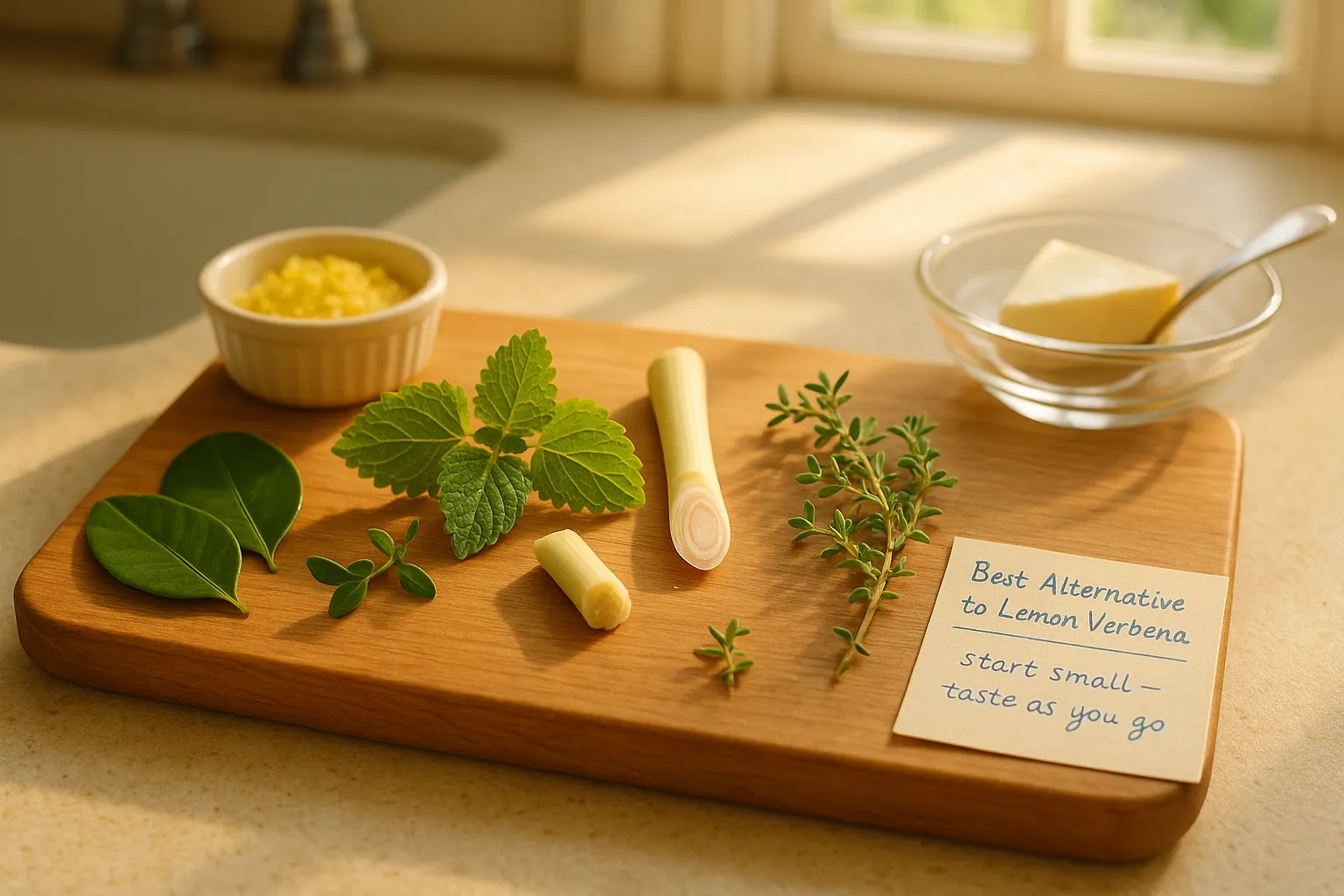
Fact: The best substitute depends on intensity and the role lemon verbena plays in your recipe. Use lemon balm for subtle herbal lemon notes in salads or light teas. Use lemongrass when you want bright citrus punch in broths or curries. Use lemon thyme for roasted meats or pan sauces where leaf texture and heat stability matter.
Start by asking two simple questions: does the recipe rely on delicate leaf aroma or assertive citrus? And will the ingredient be cooked long or added at the end? Answer those and you’ll usually pick the right swap. For quick tea, choose lemon balm or true verbena. For hearty stews or Thai soups, pick lemongrass or kaffir lime leaves. For baking, citrus zest or oils mimic lemon verbena’s citrus without adding extra moisture.
Vulnerable moment: I once ruined a panna cotta by using too much lemongrass instead of lemon verbena, the result was sharp and grassy. You’ll want to start with smaller amounts and taste as you go: that mistake saved me a lot of wasted cream later.
Flavor, Aroma, And Culinary Role Compared
Insight: Lemon verbena offers a delicate, floral lemon scent rather than pure sourness. Its leaves smell of lemon oil with gentle floral top notes. Compare that to citrus zest which gives bright acidity, and lemongrass which gives intense, grassy citrus.
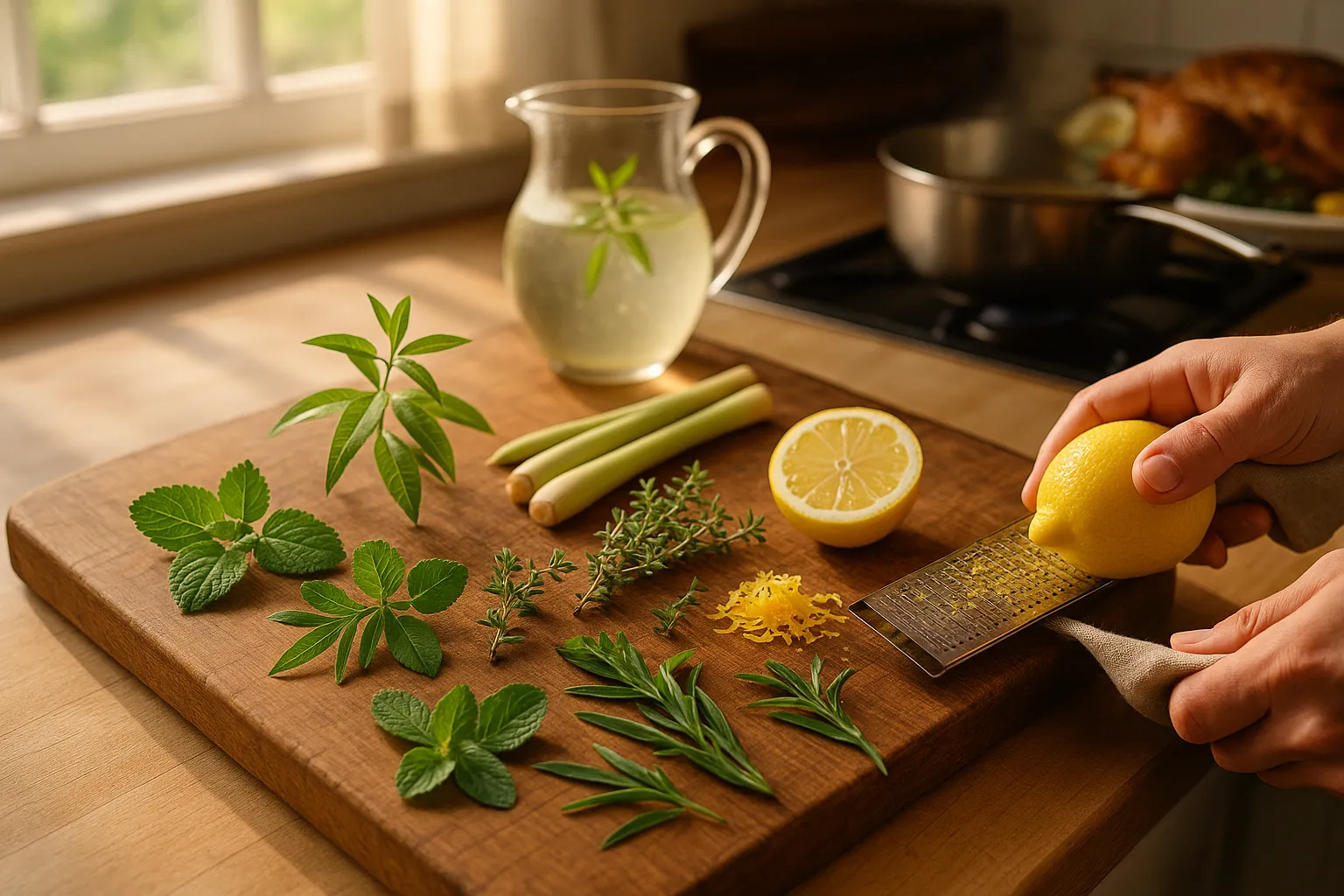
Lemon balm (Melissa officinalis) provides a mild, sweet lemon scent with minty undertones. It works where you need aroma without sharp acidity, think chilled infusions, salads, and light sauces. Lemongrass (Cymbopogon citratus) brings strong citrus and astringency: it stands up to long cooking and high heat, making it ideal for broths and marinades. Lemon thyme (Thymus × citriodorus) mixes savory thyme notes with lemon, great for roast chicken or vegetables where you want herb structure.
True verbena species (Verbena officinalis and Aloysia species) vary: Aloysia citrodora is the classic lemon verbena: other verbenas can be less lemony. Citrus zest and oils supply concentrated lemon compounds (limonene, citral) and no leaf texture, excellent for baked goods and finishing sauces. Mint and tarragon offer different green notes but can work as quick stand-ins in a pinch.
Practical note: When you replace lemon verbena, match the aroma intensity and the function (infusion vs structural herb) rather than the exact taste. That keeps the dish balanced.
Top Alternatives And How They Compare
Lemon verbena has several good alternatives: each brings unique traits. Below you’ll see quick comparisons and when each shines.
Lemon Balm, Mild, Herbaceous Lemon Note
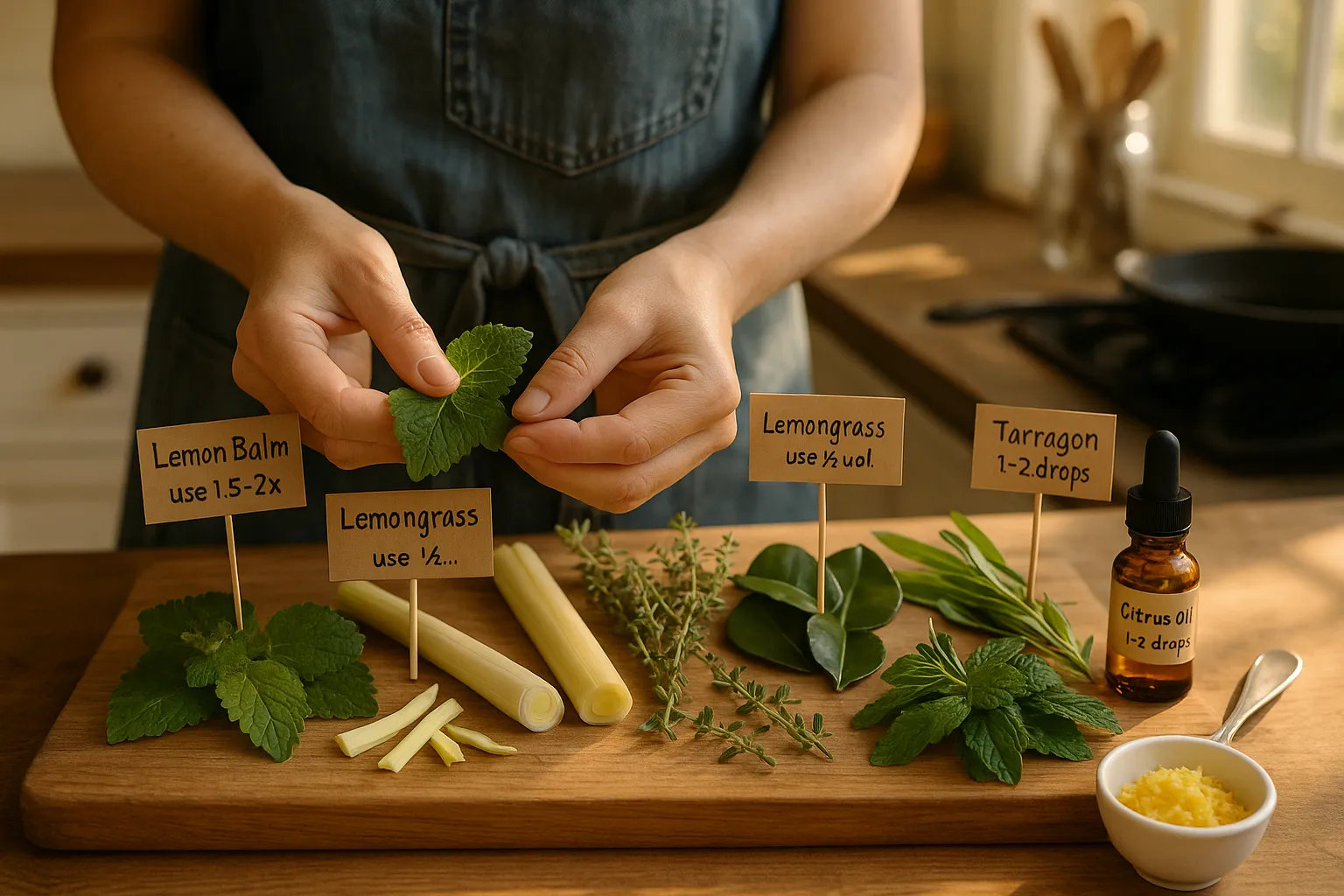
Fact: Lemon balm gives soft lemon aroma and mild mint undertones. Use it in teas, salads, and cold desserts. It bruises easily, releasing aroma with gentle crushing. Substitute amount: use 1.5–2x fresh lemon balm by volume when replacing lemon verbena because it’s milder. Don’t overcook or it will lose brightness.
Lemongrass, Intense Citrus And Brightness
Fact: Lemongrass delivers bold citrus and withstands heat. Use stalks in soups, curries, and marinades. Trim and bruise the stalk to release oils, or thinly slice the tender inner stalk for sautés. Substitute amount: use about half the volume of chopped lemongrass compared to lemon verbena: it’s stronger. Warning: it can become fibrous if not thinly sliced.
Lemon Thyme, Savory-Citrus For Cooking
Fact: Lemon thyme combines thyme’s savory backbone with lemon notes. Use in roasting, pan sauces, and compound butters. It holds up to heat and gives leaf structure. Substitute amount: one-to-one by sprig, but strip leaves from woody stems.
True Verbena (Verbena Officinalis) And Other Verbenas
Fact: Some verbenas are true lemon verbena relatives and offer similar aromas. Aloysia citrodora is the classic: Verbena officinalis has a lighter lemon scent. If you can source Aloysia, it’s the closest match. Substitute amount: one-to-one fresh leaves.
Citrus Zest And Citrus Oils, Pure Lemon Lift
Fact: Zest and oils give concentrated lemon compounds without herb texture. Use for baking, custards, glazes, and finishing. Substitute amount: 1 teaspoon lemon zest ≈ 1 tablespoon chopped lemon verbena leaves in aroma. Citrus oil is potent: a drop or two is often enough. Be careful: oils affect mouthfeel and can taste artificial if overused.
Other Quick Options (Mint, Kaffir Lime Leaves, Tarragon)
Fact: Mint gives coolness, kaffir lime leaves give floral-citrus depth, and tarragon adds anise-like citrus hints. Use them for specific cuisines: kaffir for Thai, tarragon for French sauces, mint for Middle Eastern salads. Substitute amount: adjust conservatively, these are distinct flavors, so start small.
How To Substitute In Different Recipes
Fact: Adjust quantity and prep based on cooking method. Solid swaps depend on whether you steep, bake, cook, or muddle.
Tea And Infusions: Strength And Steeping Times
Use lemon balm or true verbena for teas. Steep fresh leaves 4–6 minutes in just-off-boil water. Dried herbs steep longer and are less aromatic: use 1 teaspoon dried per cup. For lemongrass tea, bruise stalks and simmer 5–10 minutes to extract oils. Taste early: you can always steep longer.
Baked Goods And Desserts: Fresh Vs. Dried And Quantity Adjustments
Use zest or oil for the brightest lemon note in cakes, custards, and sorbets. Fresh lemon balm works for chiffon cakes and light creams: fold in leaves near the end to avoid wilting. Replace 1 tablespoon fresh verbena with 1 teaspoon lemon zest or a single drop of lemon oil. If using dried herbs, increase quantity but expect a muted aroma.
Savory Dishes And Sauces: Balancing Herbaceousness And Acidity
For pan sauces and roasts, use lemon thyme or crushed lemon balm leaves. Add lemony herbs midway through cooking so they keep aroma. Use lemongrass in braises and soups early so its oils infuse the broth. Balance with acid (vinegar or a squeeze of lemon) if the substitute lacks bright acidity.
Cocktails And Drinks: Using Zest, Oils, Or Fresh Leaves
Muddle lemon balm or bruise verbena leaves gently for cocktails. Use lemon zest or a kaffir lime leaf for strong citrus aroma in stirred drinks. Citrus oil needs only a tiny swipe on the rim or a drop into a drink: don’t overdo it. Always taste, alcohol amplifies citrus compounds.
Growing, Availability, And Sourcing Tips
Fact: Many substitutes are easy to grow or widely available year-round. Choose based on climate and pantry needs.
Growing Considerations: Climate, Ease Of Cultivation, And Harvesting
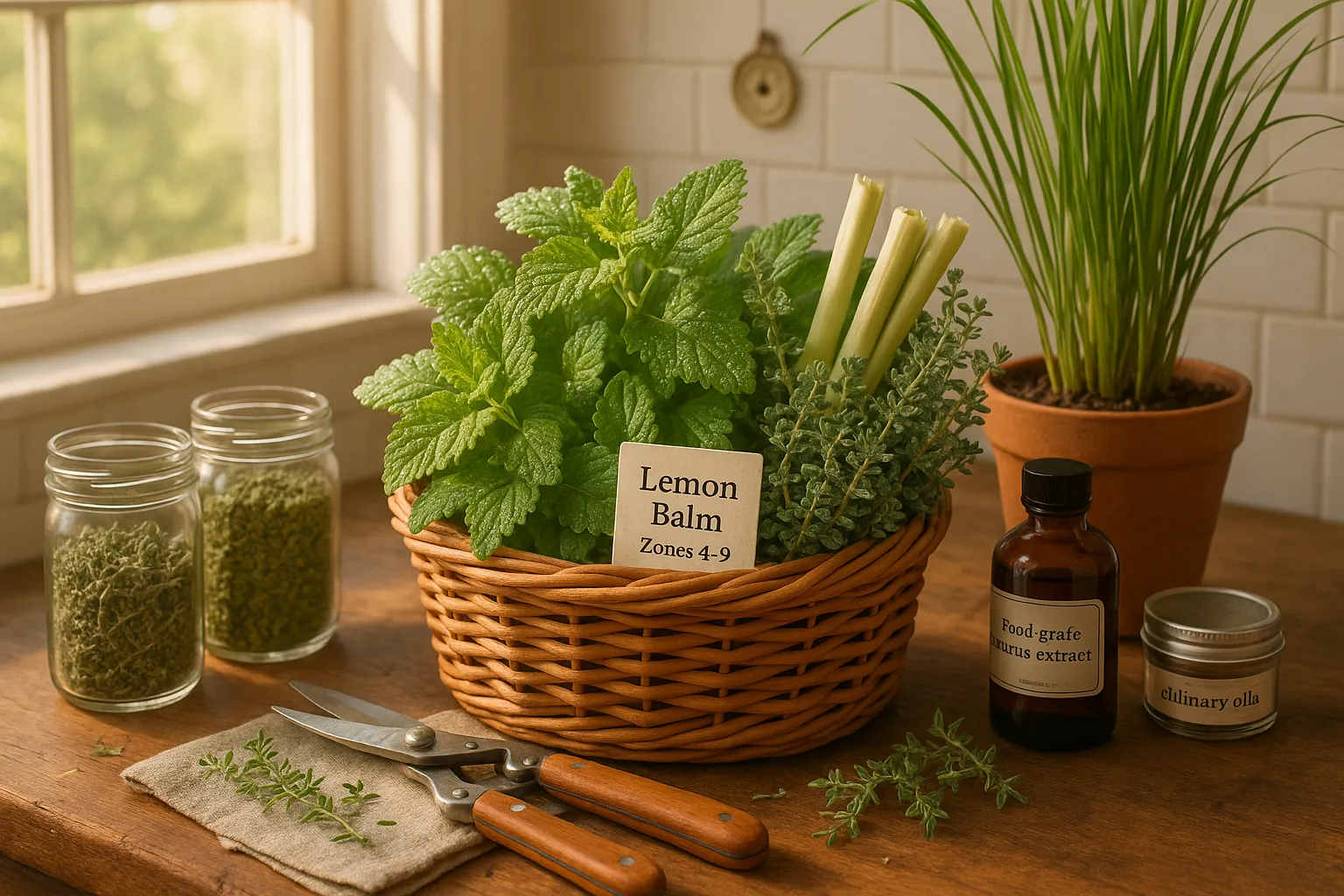
Lemon balm grows well in USDA zones 4–9 and tolerates partial shade: it spreads fast. Lemongrass prefers warm climates (zones 9–11) and can be grown in pots in cooler zones and overwintered indoors. Lemon thyme thrives in sunny, well-drained soil and is drought tolerant. Aloysia citrodora (lemon verbena) prefers warm, sheltered sites and may need protection in cold zones. Harvest in the morning after dew dries for best oil content.
Buying Fresh Vs. Dried Vs. Extracts: What To Look For
Fresh leaves give the best aroma. Look for vibrant color and no wilting. Dried herbs should smell bright: avoid powders with little scent. For citrus oils and extracts, choose food-grade brands like Nielsen-Massey or La Tourangelle for predictable quality. If you buy lemongrass, check for firm stalks with pale inner cores, that indicates tenderness.
Choosing The Right Substitute: Practical Decision Guide
Fact: Match the substitute to intensity, texture, and cooking method for consistent results.
Match Based On Desired Intensity, Texture, And Cooking Method
If you need delicate aroma and leaf texture, pick lemon balm or true verbena. If you need bold citrus that handles heat, pick lemongrass or zest. For savory structure, pick lemon thyme. Always scale amounts: start with 50–75% of the volume when switching to a stronger herb, and increase if needed.
Dietary Restrictions, Allergies, And Flavor Pairings To Consider
Fact: Check for herbal allergies and flavor conflicts. People with mint-family sensitivities may react to lemon balm and verbena. Tarragon has mild anticoagulant compounds: consult a doctor if you use blood-thinning medication regularly. Pairings: lemon thyme pairs well with chicken and roasted root vegetables: lemongrass pairs with coconut milk and fish: citrus zest brightens chocolate and berries.
Vulnerable moment: I once recommended tarragon to a friend without checking meds, it made them nervous because they were on warfarin. Now I always ask about dietary restrictions before suggesting swaps.
Storage, Preparation, And Flavor Preservation Tips
Fact: Proper storage preserves oils and aroma. Treat lemony herbs like delicate produce.
Best Practices For Storing Fresh Leaves And Dried Herbs
Store fresh leaves in the fridge wrapped in a damp paper towel inside an airtight container: they last 5–10 days. For longer storage, freeze chopped leaves in oil or water in ice cube trays. Dried herbs should be stored in airtight, dark containers away from heat: use within 6–12 months for best flavor. Citrus zest freezes well in small bags and retains aroma for months.
Preparing Herbs To Maximize Lemon Flavor (Bruising, Chopping, Heating)
Bruise leaves or stalks to release essential oils before steeping or cooking, don’t pulverize unless you want vegetal bitterness. Chop leaves right before use to protect aroma. Add delicate herbs at the end of cooking: add lemongrass early so its oils infuse. For drinks, gently slap leaves between your hands to wake the oils without tearing them too much.
Final practical tip: taste as you go and adjust. Your palate will tell you if the substitute needs more acid, herbs, or time to infuse.
To provide the best experiences, we use technologies like cookies to store and/or access device information. Consenting to these technologies will allow us to process data such as browsing behaviour or unique IDs on this site. Not consenting or withdrawing consent, may adversely affect certain features and functions.
Functional
Always active
The technical storage or access is strictly necessary for the legitimate purpose of enabling the use of a specific service explicitly requested by the subscriber or user, or for the sole purpose of carrying out the transmission of a communication over an electronic communications network.
Preferences
The technical storage or access is necessary for the legitimate purpose of storing preferences that are not requested by the subscriber or user.
Statistics
The technical storage or access that is used exclusively for statistical purposes.The technical storage or access that is used exclusively for anonymous statistical purposes. Without a subpoena, voluntary compliance on the part of your Internet Service Provider, or additional records from a third party, information stored or retrieved for this purpose alone cannot usually be used to identify you.
Marketing
The technical storage or access is required to create user profiles to send advertising, or to track the user on a website or across several websites for similar marketing purposes.