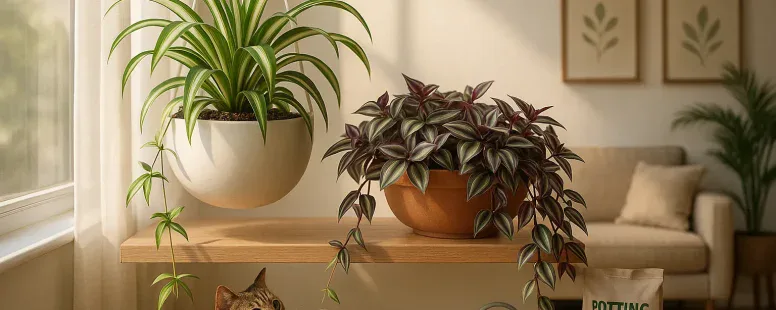
You can tell a room’s mood by the plants on its shelves. Spider plant vs. Tradescantia is a common choice, both add motion and color, but they behave very differently. The spider plant (Chlorophytum comosum) gives arching, grass-like leaves and baby plantlets that spill from hanging baskets. Tradescantia (often Tradescantia zebrina or Tradescantia pallida) offers fast, trailing vines with bold stripes, purples, or deep greens. Choosing between them affects how much light you need, how often you water, and whether a curious cat will nibble. Read on to learn clear, practical differences so you pick the plant that fits your light, time, and style.
Quick Identification And Key Differences
Fact: Spider plant and Tradescantia are easy to tell apart by leaf shape, pattern, and growth form.
Appearance And Popular Varieties
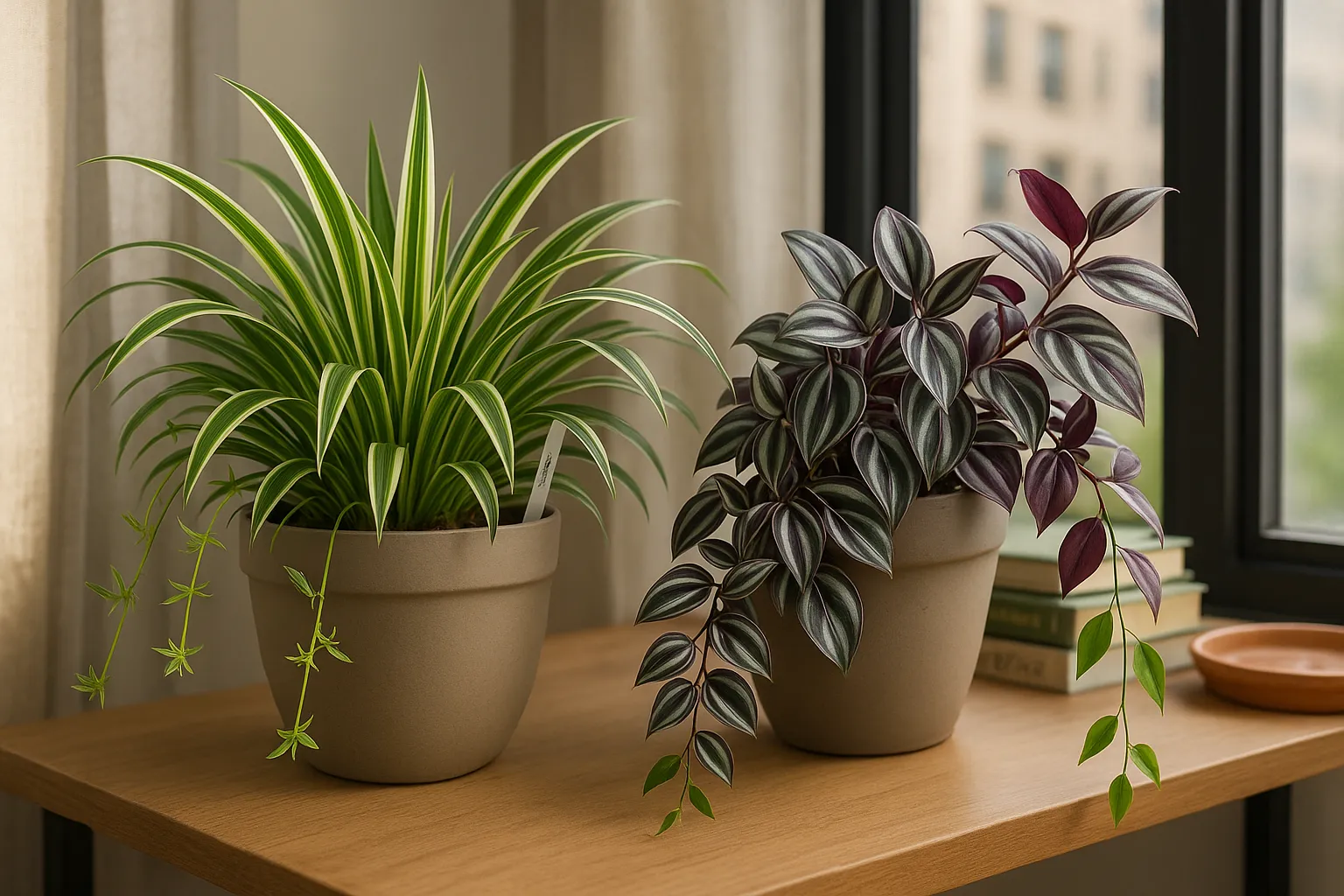
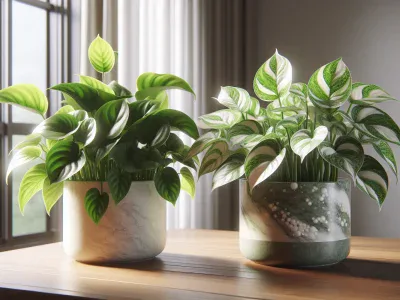
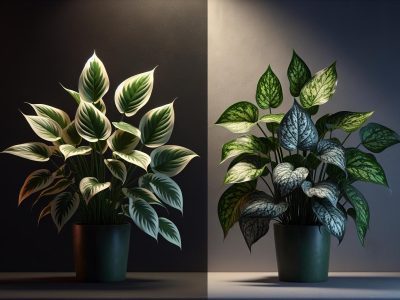
The spider plant has long, linear leaves that arch from a central crown. Common varieties include ‘Vittatum’ (white stripe down the center) and ‘Variegatum’ (white margins). Spiderettes, small plantlets on thin stems, are a hallmark. Tradescantia shows much more color variety. Tradescantia zebrina has silver-striped leaves with purple undersides: Tradescantia pallida has solid purple leaves: Tradescantia fluminensis is often plain green and invasive outdoors in some states like Florida and Hawaii. Both genera include named cultivars sold by Home Depot, The Sill, and local nurseries.
Natural Growth Habit And Size
Fact: Spider plants form clumps that send out long arching stems: Tradescantia produces trailing vines that scramble or hang. Spider plants typically reach 12–24 inches across and may send runners several feet long indoors via plantlets. Tradescantia vines can trail many feet if left unpruned: indoors they usually fill a 12–36 inch pot quickly. Spider plant growth centers on a crown: Tradescantia grows from nodes along stems. This difference affects how you place and contain them, spider plants like a defined pot, while Tradescantia will spill over edges and cascade.
Care Requirements Compared
Fact: Light level and watering are the biggest care differences, Tradescantia prefers brighter light than many spider plant forms.
Light Needs
Spider plants tolerate low to bright indirect light: they thrive in bright, indirect conditions but will survive in low light near east- or north-facing windows. Tradescantia prefers bright, indirect to direct morning light to keep leaf color vivid: zebrina loses its stripe contrast in dim rooms. If your living room gets intense afternoon sun through west windows, put Tradescantia where it gets filtered rays: spider plants will handle that location only if the sun is indirect or diffused.
Watering And Soil Preferences
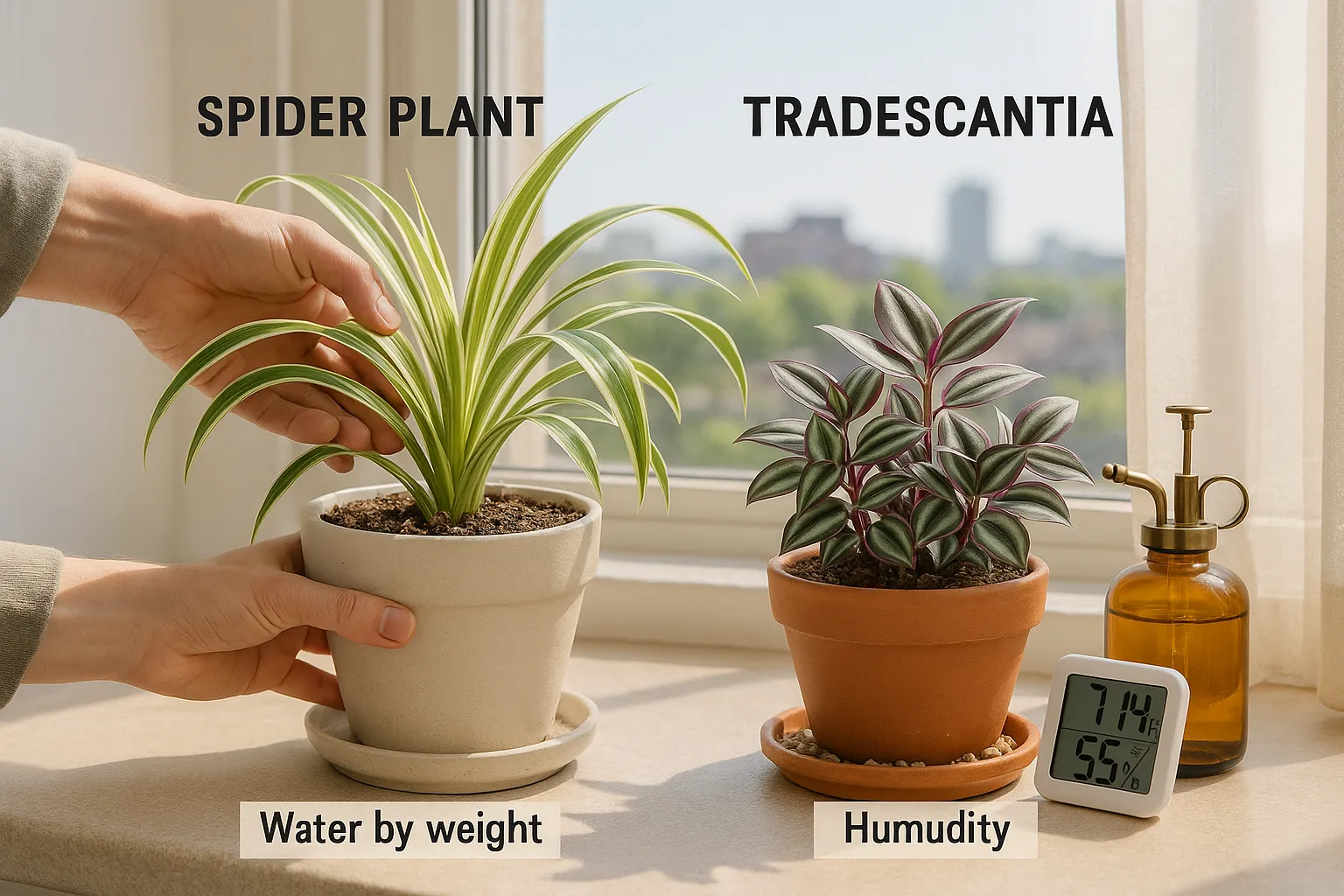
Spider plants prefer evenly moist soil but tolerate brief drying: they suffer if soil stays waterlogged. Use a well-draining potting mix with perlite or orchid bark. Tradescantia likes consistently moist soil but is more forgiving of light drying between waterings: overwatering leads to root rot. For both, a pot with drainage holes and a saucer you empty helps prevent standing water. You should water by feel and weight, lift the pot: if it’s light, water.
Temperature And Humidity Tolerance
Spider plants tolerate typical indoor temperatures (55–80°F) and tolerate lower humidity. Tradescantia prefers warmer temps (60–85°F) and higher humidity to keep leaves lush: low humidity causes leaf edges to brown. If you run dry heat in winter, mist Tradescantia or set its pot on a pebble tray with water. Spider plants will usually survive apartment heating without fuss.
Fertilizing And Repotting Frequency
Spider plants benefit from light feeding during the growing season, balanced houseplant fertilizer once a month. Tradescantia responds quickly to fertilizer and will grow more intensely: feed every 3–4 weeks when actively growing. Repot spider plants every 1–2 years to refresh soil and divide crowded crowns. Tradescantia can stay in the same pot longer, but expect to repot or prune annually if roots begin to circle. Overfertilizing either plant causes leaf tip burn.
Propagation, Growth Rate, And Container Behavior
Fact: Both plants are easy to propagate, but they use different structures, spider plants send out baby plantlets: Tradescantia roots from stem nodes.
Common Propagation Methods
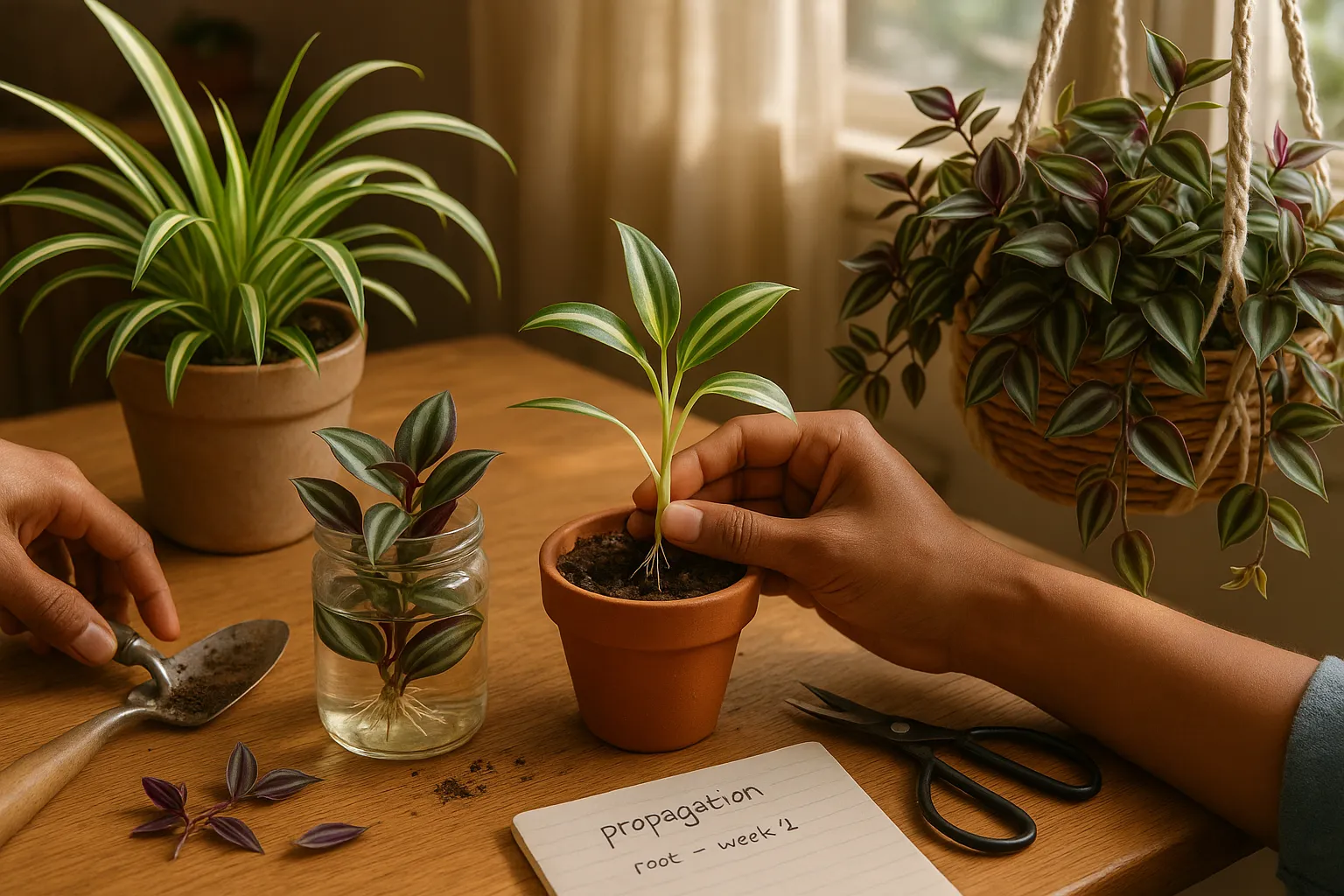
For spider plant: cut plantlets from the mother plant and place them in water or directly into potting mix: they root fast. You can also divide the crown at repotting. For Tradescantia: take 3–4 inch stem cuttings, strip the lower leaves, and root them in water or damp soil: root nodes develop in a week or two. Tradescantia cuttings often root faster than spider plantlets, and you can fill a basket quickly.
Typical Growth Rate And Space Considerations
Tradescantia tends to grow faster and will occupy horizontal or vertical space quickly: expect visible change within weeks. Spider plants grow steadily: they establish a fuller crown over months and send out occasional long runners. If you want immediate color and a fast spillover, choose Tradescantia. If you prefer a predictable clump that slowly fills out, choose spider plant. Keep in mind Tradescantia can become leggy without pruning: spider plants may crowd their pot sooner.
Training, Pruning, And Managing Runners/Vines
Fact: Pruning controls both plants but you must use different techniques. Pinch back Tradescantia stems regularly to encourage branching and prevent legginess: you can weave vines along a trellis or train them up a macramé hanger. Remove spiderette runners by cutting the stolon close to the mother to keep a tidy crown, or pot the plantlet to start a new plant. Both plants tolerate hard pruning: pruning stimulates fresh growth. If you let either get too dense, you risk poor airflow and increased pests.
Benefits, Drawbacks, And Safety Considerations
Fact: Both plants offer decorative value and modest air-quality benefits, but they differ in toxicity and maintenance trade-offs.
Air-Quality Claims And Practical Benefits
Spider plants feature in NASA’s 1980s clean-air studies for removing formaldehyde in sealed test chambers: in real homes the effect is small but positive. Tradescantia offers similar small benefits and contributes humidity by transpiration. The main benefit of both is psychological: they reduce perceived stress and add color to indoor spaces. If your goal is measurable VOC reduction, invest in multiple plants and active ventilation rather than rely on a single pot.
Pet And Child Safety (Toxicity Overview)
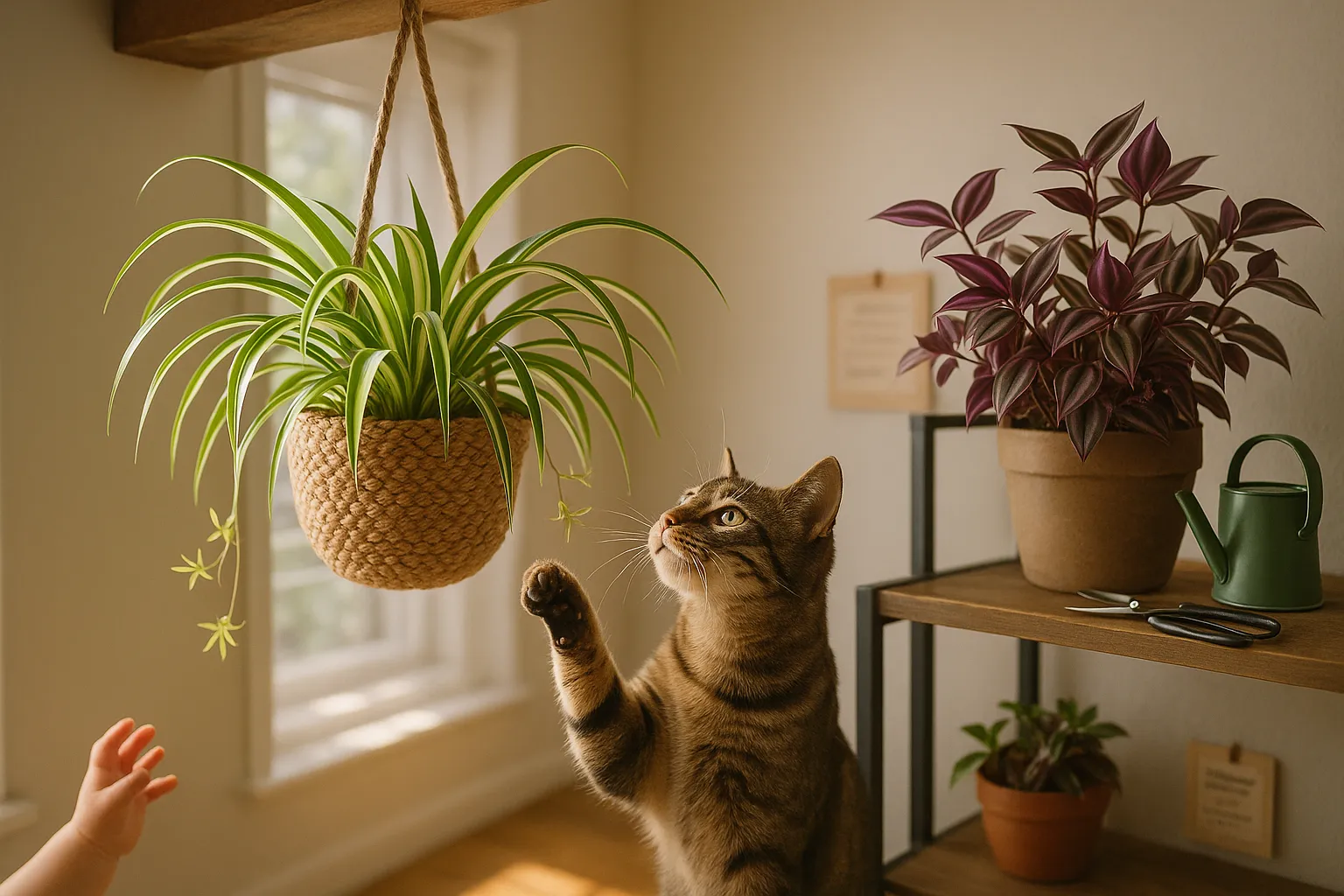
Fact: Spider plant is considered non-toxic to humans, but the ASPCA lists it as mildly toxic to cats and dogs, ingestion can cause vomiting or drooling. Tradescantia zebrina can cause skin irritation and contact dermatitis in some people, and is mildly toxic to pets: Tradescantia pallida contains compounds that may upset stomachs. If you have a curious cat or toddler, place either plant out of reach or choose a proven non-toxic species like Boston fern or Parlor palm. I once had a cat chew a spiderette and vomit for hours: after that I hung plants higher, lesson learned.
Maintenance Challenges And Longevity
Fact: Tradescantia needs more pruning and attention to light to keep color: spider plants need division and tip-trimming over years. Spider plants can live many years with simple care: they tolerate neglect better. Tradescantia will reward regular trimming and bright light with vibrant color, but will decline quickly in poor light or if allowed to stay waterlogged. Expect to replace or rejuvenate a neglected Tradescantia sooner than a forgiving spider plant.
Placement, Styling, And Design Uses
Fact: Use spider plants where you want soft, arching texture: use Tradescantia where you want bold color and fast spillover.
Best Indoor And Outdoor Locations
Spider plants do well in bedrooms, kitchens, and offices with indirect light: they also tolerate bright covered porches in USDA zones 9–11. Tradescantia thrives on bright windowsills, sunrooms, and protected outdoor areas in warm climates. Avoid direct hot midday sun for either plant unless filtered. If you live in Seattle or Portland, spider plants cope with low light better: if you live in Phoenix or Miami, Tradescantia will scorch unless shaded.
Design Ideas: Hanging, Shelves, Mixed Containers
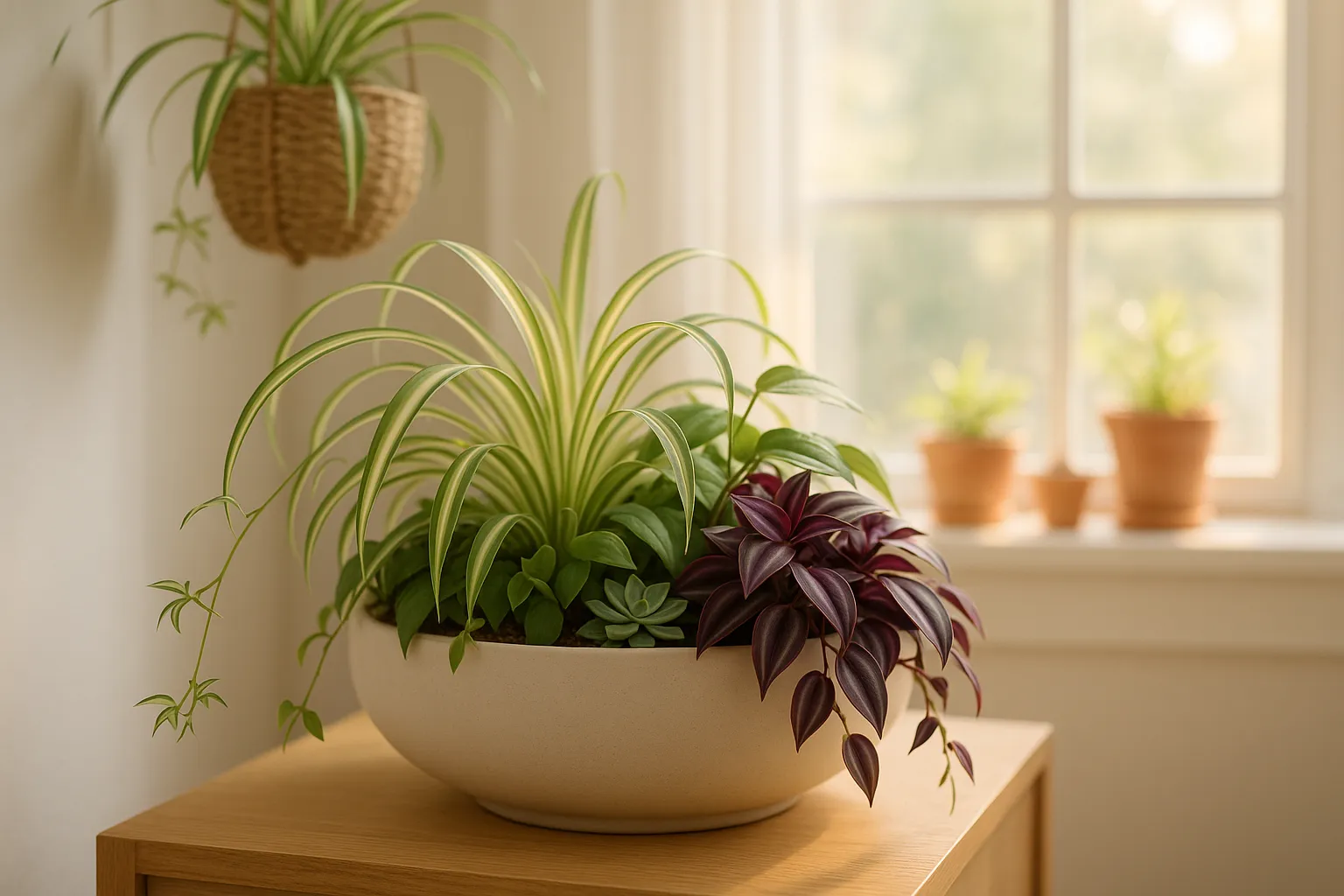
A spider plant looks classic in a hanging basket or pedestal pot, let the plantlets tumble down. Tradescantia makes a bold statement in a mixed container with succulents or pothos, or as a trailing element in a layered window display. Combine a spider plant and a Tradescantia in a large container if your goal is contrast: the spider’s pale arching leaves offset Tradescantia’s rich purples. Use neutral ceramic pots from brands like West Elm or simple terra-cotta for a modern look.
Choosing Based On Light, Space, And Aesthetic Goals
Fact: Match plant choice to your room’s conditions. Choose spider plant if you want low-to-medium light tolerance and low fuss. Choose Tradescantia if you have bright light, want quick color, and enjoy regular pruning. If you want both, place Tradescantia near the brightest window and spider plant in a shadier corner: they’ll complement each other visually and in care rhythm.
Troubleshooting Common Problems
Fact: Most problems trace to light, water, or pests: diagnose those first.
Pests, Diseases, And Nutrient Deficiencies
Spider plants and Tradescantia attract spider mites, aphids, and mealybugs. Spider mites appear when air is dry: look for fine webbing and stippled leaves. Treat infestations with insecticidal soap or neem oil and increase humidity. Root rot shows when soil stays soggy, pull the plant, trim black roots, repot in fresh mix. Yellowing leaves on spider plants often indicate overwatering or salt build-up: flush the soil. Pale or leggy Tradescantia signals insufficient light.
Leaf Discoloration, Browning Tips, And Wilting Causes
Fact: Brown tips on spider plants often come from fluoride or salts in tap water or low humidity: use filtered water or flush soil monthly. Browning on Tradescantia leaf edges usually comes from inconsistent watering or low humidity. Wilting occurs when roots are compromised, check drainage and root health. If lower leaves drop on Tradescantia, prune stems back to a leaf node to encourage new shoots.
Simple Recovery Steps And When To Replace A Plant
Fact: You can often save a struggling plant with pruning, fresh soil, and correct light. For both plants: trim dead foliage, repot into fresh well-draining mix, and set a consistent water schedule. Use biological controls or insecticidal soap for pests. Replace a plant when >60% of foliage is dead, when root rot has left few healthy roots, or when repeated treatments fail. Sometimes starting fresh with new cuttings is faster and less frustrating than nursing a severely decline pot, save the color, or simply start anew.
To provide the best experiences, we use technologies like cookies to store and/or access device information. Consenting to these technologies will allow us to process data such as browsing behaviour or unique IDs on this site. Not consenting or withdrawing consent, may adversely affect certain features and functions.
Functional
Always active
The technical storage or access is strictly necessary for the legitimate purpose of enabling the use of a specific service explicitly requested by the subscriber or user, or for the sole purpose of carrying out the transmission of a communication over an electronic communications network.
Preferences
The technical storage or access is necessary for the legitimate purpose of storing preferences that are not requested by the subscriber or user.
Statistics
The technical storage or access that is used exclusively for statistical purposes.The technical storage or access that is used exclusively for anonymous statistical purposes. Without a subpoena, voluntary compliance on the part of your Internet Service Provider, or additional records from a third party, information stored or retrieved for this purpose alone cannot usually be used to identify you.
Marketing
The technical storage or access is required to create user profiles to send advertising, or to track the user on a website or across several websites for similar marketing purposes.