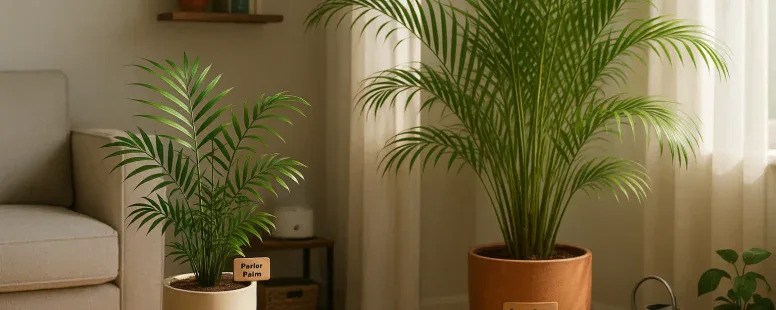
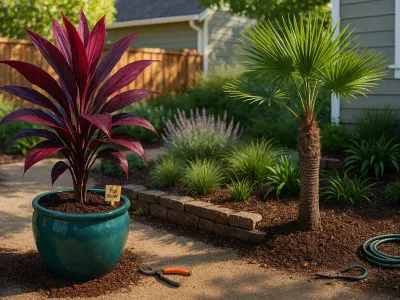
You can create a green corner that calms a room, but the palm you pick decides how much time and space that corner will demand. Parlor palm (Chamaedorea elegans) and Areca palm (Dypsis lutescens) are two of the most popular indoor palms. Both bring arching fronds and a tropical mood, yet they differ in size, light needs, and maintenance. In this guide you’ll get a direct comparison so you can choose the palm that fits your light, schedule, and style. Expect practical tips, honest pitfalls, and real-life trade-offs that most care guides leave out.
At a Glance: Quick Comparison
Key fact: Parlor palms stay compact and forgiving: Areca palms grow taller and demand brighter light.
Key Differences: Size, Light, And Care
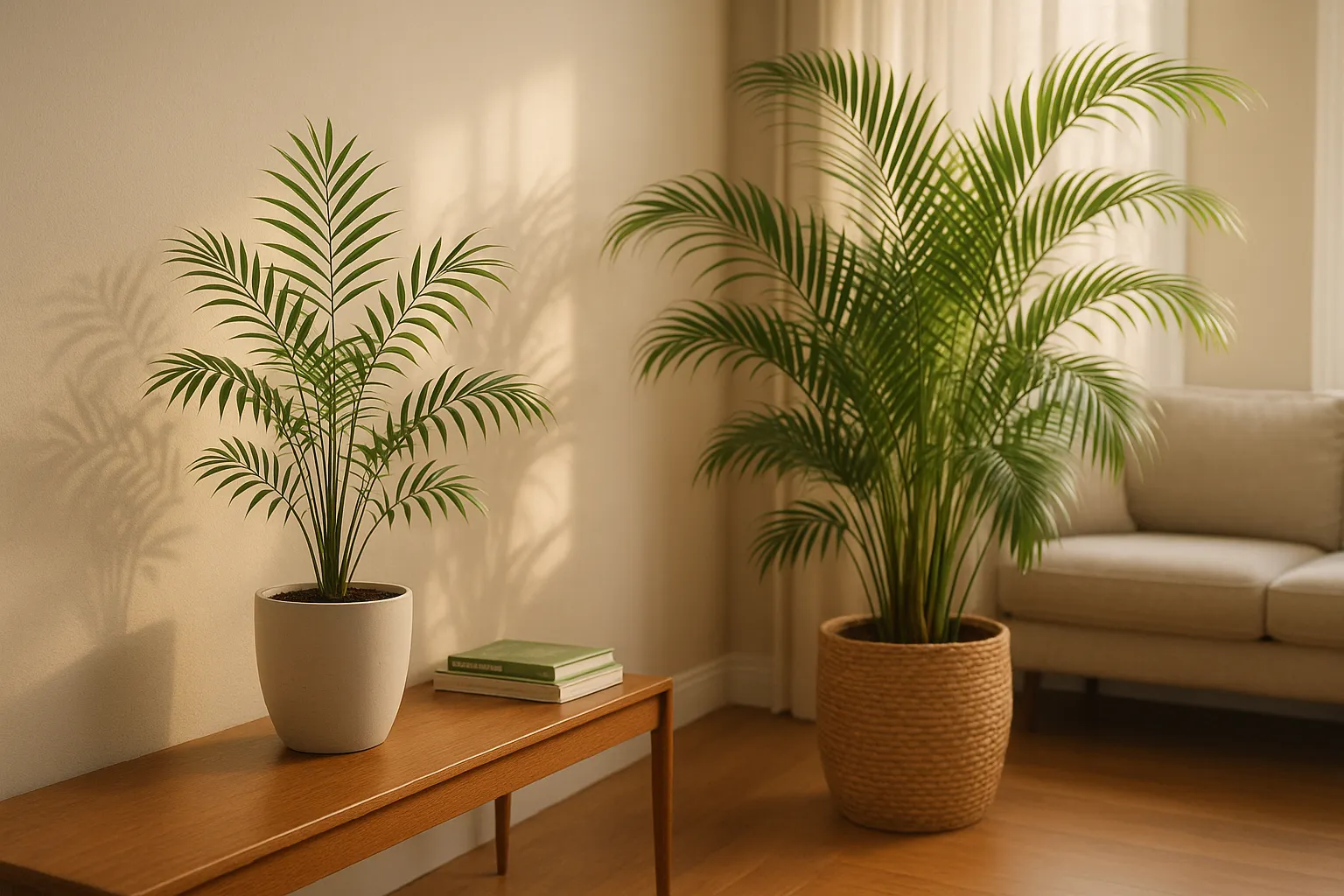
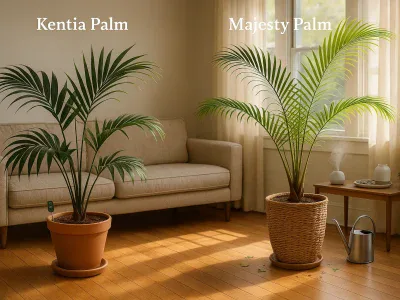
Parlor palm suits small spaces. It reaches 2–4 feet indoors and tolerates low light. Areca palm grows 6–10+ feet indoors with multiple stems and a fuller canopy: it prefers bright, indirect light. Parlor palm needs less frequent watering and lower fertilizer input. Areca needs more regular water, higher humidity, and monthly feeding during the growing season.
Growth Rate And Mature Size
Parlor palm grows slowly. Expect modest seasonal growth and occasional new shoots from the base. Areca palm grows moderately fast when conditions are right, good light and humidity speed growth. If you want an indoor statement plant within a couple of years, Areca will deliver: if you want slow, steady presence, pick Parlor.
Climate And Hardiness Zones
Parlor palm is hardy to about USDA zone 10–12 and tolerates indoor temperature swings better. Areca palm tolerates zones 10–11 outdoors and prefers stable warmth and humidity. Both are primarily indoor plants outside those zones, but Areca will suffer if you keep it too cool or in dry winter air.
Appearance And Growth Habit
Key fact: Parlor palm is slender and graceful: Areca is feathery and fountain-like.
Parlor Palm (Chamaedorea Elegans): Form And Foliage
Chamaedorea elegans has thin cane-like stems and pinnate fronds with many narrow leaflets. The leaves present a delicate, lacy texture that suits refined interiors and small shelves. You’ll notice new fronds unfurl slowly and the plant often produces a tidy clump rather than a wide spread. Named entities: Chamaedorea elegans, florist suppliers such as Costa Farms often sell small specimens.
Areca Palm (Dypsis Lutescens): Form And Foliage
Dypsis lutescens forms multiple stems from the base and creates a palm cluster that reads like an indoor mini grove. Its leaflets are broader than Parlor’s and the fronds arch outward, producing a soft, feathery screen. Areca’s fuller silhouette works well as a room divider or statement plant in living rooms. Note: some stores label it “butterfly palm.”
Indoor Versus Outdoor Use
Fact: Both species can live outdoors in frost-free climates, but require different placements. Outdoors, plant Areca in partial shade with filtered light, and Parlor in dappled shade. Indoors, place Areca near east or west windows: put Parlor away from direct sun, even in low-light corners. If you keep Areca too deep in a room without bright light, it will thin and leggy.
Light, Watering, And Humidity Needs
Key fact: Light largely determines which palm will thrive in your home.
Light Requirements: Shade Tolerance Vs. Bright Indirect Light
Parlor palm tolerates low light and shaded rooms. Put it where you have only a north window or filtered light through curtains. Areca needs bright, indirect light: place it within a few feet of a bright window but out of harsh midday sun. If you try to force Areca into low light it will lose lower leaves and thin out.
Watering Frequency And Signs Of Over/Underwatering
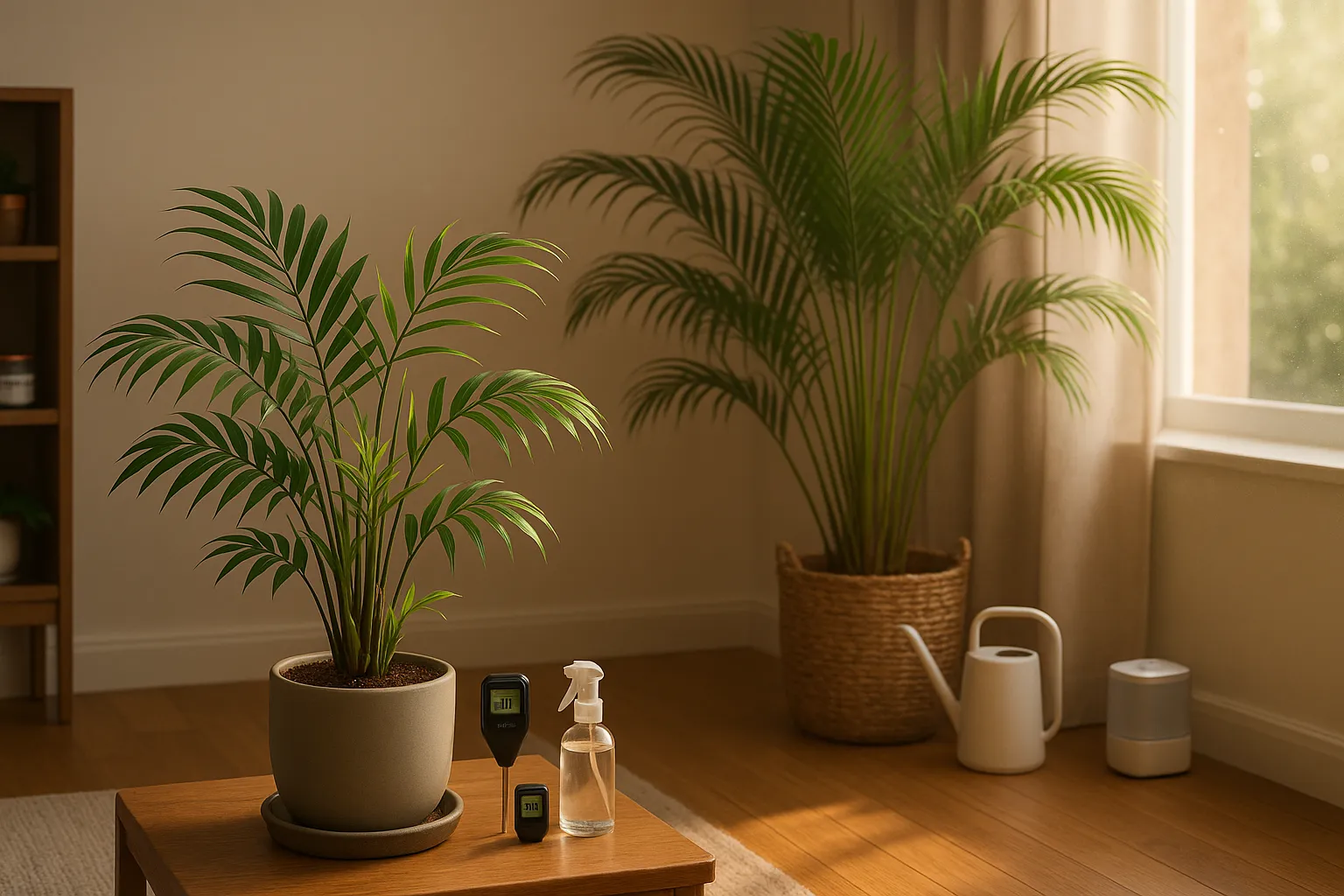
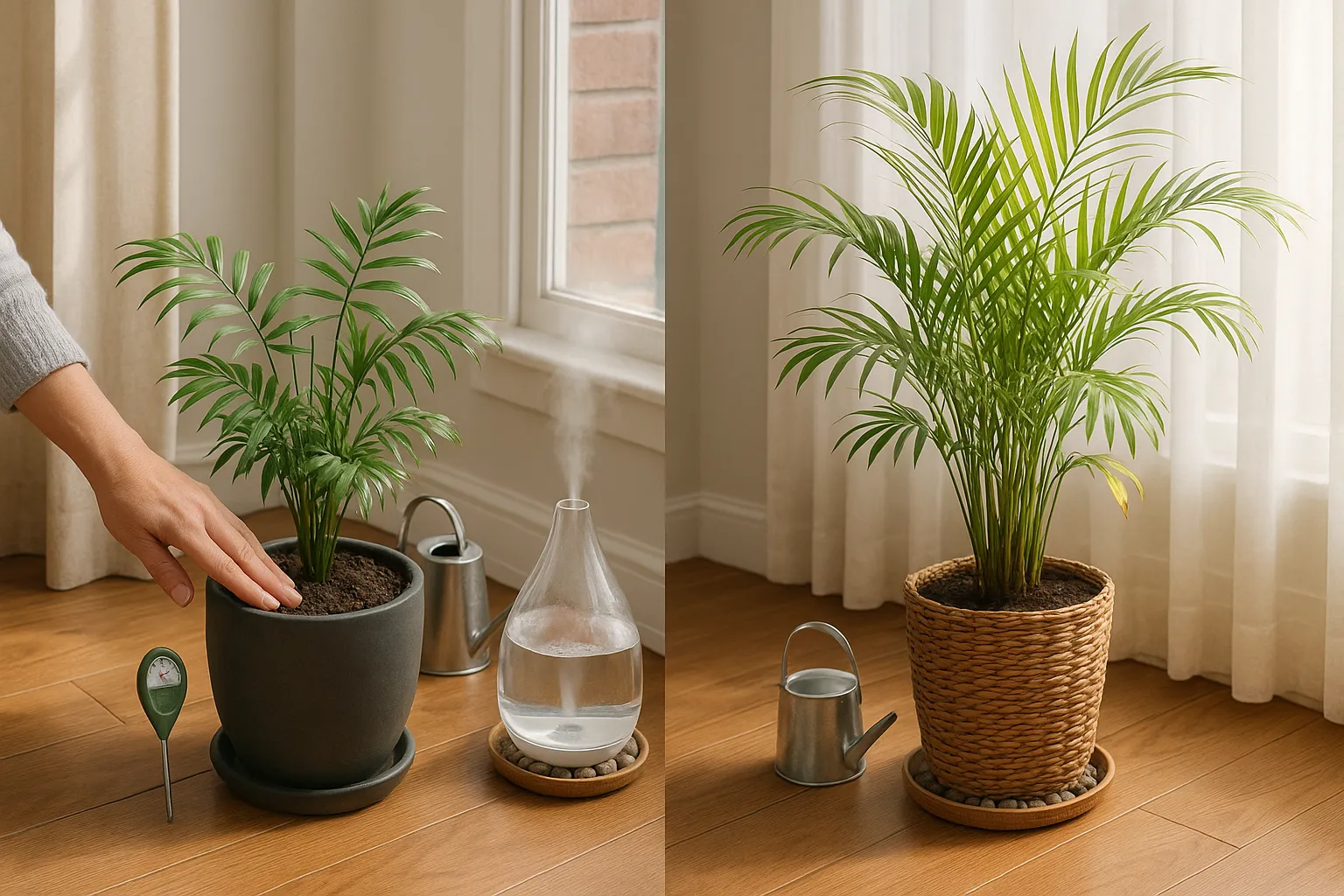
Parlor palm likes evenly moist soil but can survive occasional drying. Water when the top inch of soil feels dry. Overwatered parlor palms develop yellowing and root rot: underwatered ones show brown tips and drooping fronds.
Areca needs more frequent watering. Keep the soil slightly moist during spring and summer: reduce frequency in winter. Signs of overwatering in Areca include soft, yellowing fronds and a sour smell from the pot. Signs of underwatering include brown tips, leaf curling, and slowed growth.
Humidity And Temperature Preferences
Parlor palm tolerates average home humidity (30–50%) but prefers 50%+. Areca prefers higher humidity (50–70%) and warmer rooms (65–75°F). Use a humidifier, pebble tray, or regular misting for Areca in dry homes. Both dislike cold drafts: avoid temperatures below 55°F for either species.
Soil, Fertilizing, Repotting, And Propagation
Key fact: Both palms prefer well-draining, loamy soil and benefit from periodic feeding.
Recommended Soil Mix And Drainage
Use a chunky, fast-draining mix for both palms. Blend potting soil with perlite or orchid bark and a little peat or coco coir. Good drainage prevents root rot. For Areca, increase organic matter slightly to retain moisture without sogginess: for Parlor, lean toward lighter mixes that dry a bit quicker.
Fertilizing Schedule And Nutrient Needs
Feed both palms during the growing season (spring–early fall). Use a balanced, water-soluble fertilizer at half the label strength every 4–6 weeks. Areca responds well to regular feeding and iron supplements if it shows yellowing between veins. Parlor is less hungry: overfertilizing can burn roots.
Repotting Tips And Propagation Methods
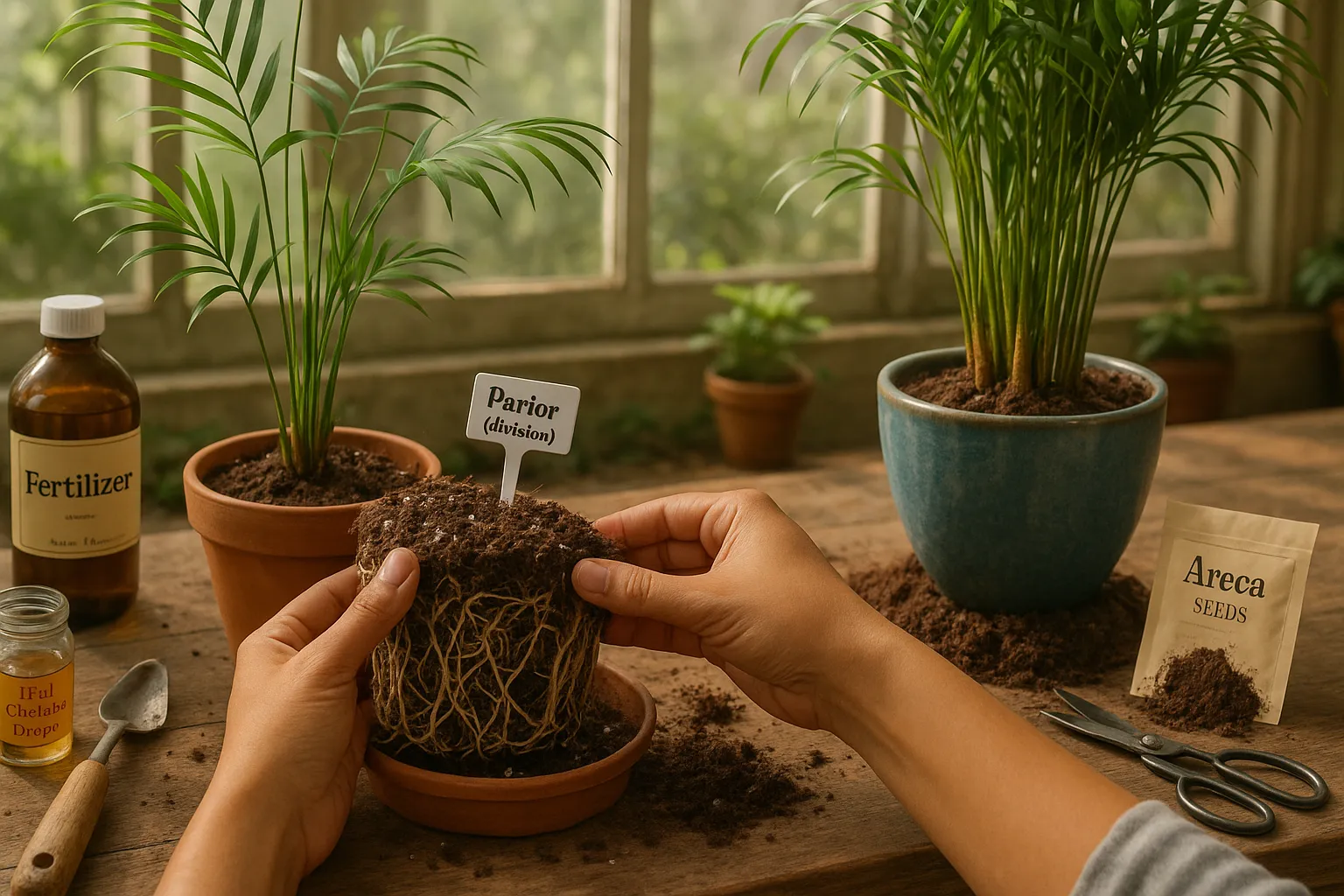
Repot when roots circle the pot or growth slows, usually every 2–3 years for Areca, 3–5 years for Parlor. Choose a pot one size up to avoid excess soil that holds water. Propagate Parlor by division at repotting: it often forms clumps that separate cleanly. Propagate Areca from seed or by dividing mature clumps, division is slower and more involved. Named entities: look for seeds from specialist nurseries like Logee’s if you choose seeding.
Common Problems, Pests, And Troubleshooting
Key fact: Leaf yellowing and brown tips are the most common complaints, with different causes.
Leaf Yellowing, Browning Tips, And Root Issues
Yellowing at the base often means natural aging or mild overwatering: test soil moisture and reduce watering if it’s soggy. Browning tips commonly mean low humidity, fluoride or salt buildup from tap water, or underwatering. Flush the pot with clean water to remove salts and trim affected tips. Root rot shows soft, brown roots and a foul odor: remove the plant, trim rotten roots, and repot in fresh mix.
Pests To Watch For And Safe Treatment Options
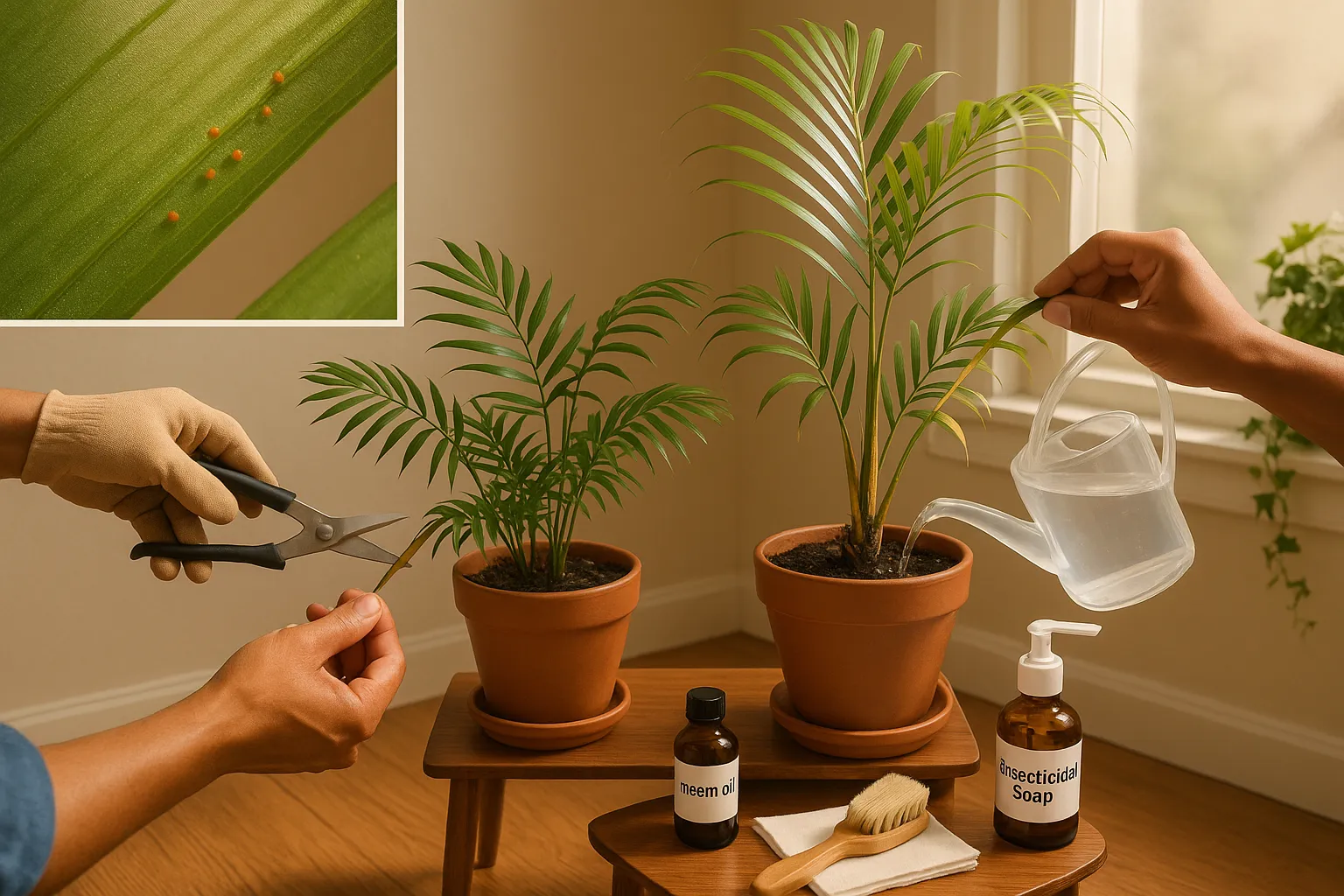
Watch for spider mites, scale, and mealybugs on both palms. Spider mites thrive in dry homes and cause stippling on leaves. Treat pests with insecticidal soap, neem oil, or horticultural oil: isolate the plant to stop spread. For heavy infestations, use systemic insecticides sparingly and follow label instructions. Always test a treatment on one leaf first to check for sensitivity.
Practical Considerations: Placement, Maintenance, And Cost
Key fact: Your space and budget usually decide which palm makes sense more than aesthetics alone.
Space Requirements And Aesthetic Uses
Parlor palm fits shelves, bathrooms, and small apartments because of its compact growth. It complements mid-century and minimalist interiors with its fine texture. Areca suits larger rooms, open-plan spaces, and foyers. It works well as a living screen or to soften a corner beside furniture.
Maintenance Time, Lifespan, And Purchase Cost Comparison
Parlor palm needs low weekly attention, occasional watering, light feeding, and dusting. Lifespan indoors can reach decades with care. Initial cost is usually lower: small Parlor specimens often sell for $10–$30 at garden centers.
Areca requires more regular watering, humidity attention, and occasional pruning. With proper care it can live many years and become a focal point. Areca plants start higher in price, expect $30–$150 depending on size and nursery. Factor in the cost of a humidifier or grow light if your home is dry or dim.
How To Choose: Best Palm For Different Lifestyles And Spaces
Key fact: Match the palm to your light, time, and household needs rather than impulse.
Best Picks For Low-Light Apartments, Family Homes, And Offices
Low-light apartments: Parlor palm. It tolerates shade, low maintenance, and pet-safe traits (generally non-toxic to cats and dogs according to ASPCA listings).
Family homes with kids and pets: Parlor often wins because it’s slow-growing and fits small spaces. But Areca can work if you place it out of reach: it provides a lush barrier and more privacy.
Offices and bright lobbies: Areca palm makes a strong visual impact in large offices and high-ceiling spaces. It improves air movement and gives a fresh, tropical feel when you have reliable light.
Final Decision Checklist: Questions To Ask Before Buying
How much light does the spot get (north, east, window distance)?
How much space will the plant have in 2–5 years?
How often will you remember to water and mist?
Do you need a pet-safe plant or an allergy-friendly choice?
Are you willing to invest in a humidifier or grow light if needed?
Answer those and choose Parlor if you need a tolerant, compact palm: choose Areca if you want a dramatic, taller palm and you can meet its light and humidity needs. Remember: a healthy plant reflects your habits, not Instagram trends, pick the one you’ll care for so it thrive.
To provide the best experiences, we use technologies like cookies to store and/or access device information. Consenting to these technologies will allow us to process data such as browsing behaviour or unique IDs on this site. Not consenting or withdrawing consent, may adversely affect certain features and functions.
Functional
Always active
The technical storage or access is strictly necessary for the legitimate purpose of enabling the use of a specific service explicitly requested by the subscriber or user, or for the sole purpose of carrying out the transmission of a communication over an electronic communications network.
Preferences
The technical storage or access is necessary for the legitimate purpose of storing preferences that are not requested by the subscriber or user.
Statistics
The technical storage or access that is used exclusively for statistical purposes.The technical storage or access that is used exclusively for anonymous statistical purposes. Without a subpoena, voluntary compliance on the part of your Internet Service Provider, or additional records from a third party, information stored or retrieved for this purpose alone cannot usually be used to identify you.
Marketing
The technical storage or access is required to create user profiles to send advertising, or to track the user on a website or across several websites for similar marketing purposes.