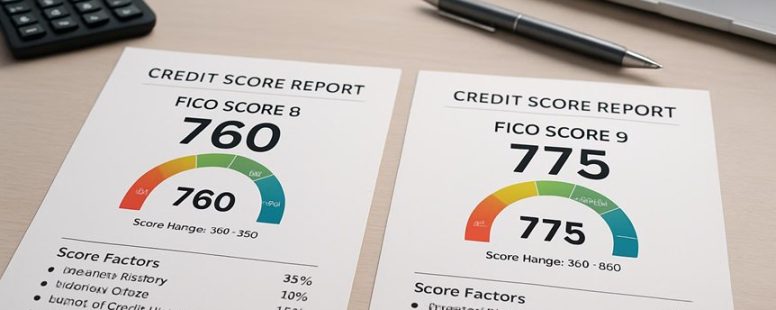
Navigating credit scores can feel like wandering through a dense forest where a tiny misstep can lead you astray.
FICO Score 8 and FICO Score 9 often tell completely different stories about the same credit history, like reading two maps of the same terrain.
Imagine discovering that a small detail—such as how late payments or medical debts are handled—could tip the scales in your favor.
Surprisingly, understanding these subtle differences might unlock better loan rates and even save you money.
It’s a game of inches, and knowing the terrain could make all the difference.
What Are FICO Score 8 and FICO Score 9?
FICO Score 8 and FICO Score 9 are two versions of credit scores used by lenders to decide if you are a good borrower. The main difference is how they look at certain types of credit and how accurate they are in predicting risk.
FICO Score 8 has been the most common score for many years. It looks at your overall credit history, payment habits, and how much debt you owe. Lenders use it to decide if they will give you a loan or credit card and what interest rate to charge. It’s a simple score that most banks trust because it has worked well for years.
FICO Score 9 is newer. It was made to fix some problems with Score 8. For example, Score 9 treats rental and utility payments differently, and it ignores paid collections that are old. This can make your score better if you have certain types of negative marks. But not all lenders use Score 9 yet. Some still prefer Score 8 because it’s more proven.
Both scores are important. Your credit score can affect what kind of loans you get, what interest rates you pay, and even if you get approved at all. It’s smart to know that your score might be different depending on which version a lender checks. If you want the best chance at good rates, check your credit reports and try to improve your credit habits, no matter which score version is used.
In short, FICO Score 8 is the older, widely accepted standard, while FICO Score 9 is newer and aims to be more accurate in some areas. Knowing the differences can help you understand your credit better and make smarter money choices.
FICO Score 8 vs. 9: How Credit History Is Calculated
FICO Score 8 and 9 both look at your credit history to decide your risk, but they do it differently. FICO 9 gives more credit to how well you manage your debts, like paying on time and keeping low balances. It’s better at telling the difference between types of debt, which can make a big difference in your score. For example, if you always pay your credit cards on time but have some student loans, FICO 9 might see your behavior more clearly. It is also more forgiving if you have certain debts that you pay responsibly. This means that if you’ve been good at managing your debts, FICO 9 might show a higher score than FICO 8.
Understanding these differences helps you see that your credit history is not just a list of numbers. It’s a story about how you handle your debts. A good story with responsible debt management can boost your score, especially with FICO 9’s new way of scoring. But remember, both scores look at similar things like payment history and balances. Still, FICO 9 can be more fair to people with certain types of debt or who have made mistakes in the past.
Some critics say FICO 9 might give too much credit for good behavior, making scores higher than they should be. Others worry it might overlook risks in some debt types. So, while FICO 9 is better in some ways, it still isn’t perfect. It’s smart to check both scores and understand what they look at. That way, you can better control your credit story and improve your chances of getting good loans or credit cards.
Why Medical Debt Affects FICO 8 and 9 Differently
For example, if you owe a hospital $500 and pay it off, your FICO 8 score might stay lower because it still sees the unpaid debt. But with FICO 9, once the bill is paid, it no longer affects your score.
Some people think paying debts quickly can improve their score, but others worry that small unpaid medical bills might not matter much if they are paid later. It’s also good to know that some credit cards or lenders look at both scores and may weigh debts differently.
Medical Debt Impact Variation
Medical debt can hit when you least expect it, and it can hurt your credit scores differently depending on the scoring model used. Here’s what you need to know.
FICO Score 8 treats medical collections like any other debt. If you have unpaid medical bills that get sent to collections, your score can drop a lot. This can worry lenders because it looks like you might not pay your bills on time. For example, if you miss a medical payment and it goes to collections, FICO 8 might see it as a big red flag.
FICO Score 9, however, gives medical debt less weight. It treats recent medical collections differently and doesn’t lower your score as much. So if you have recent medical bills sent to collections, FICO 9 may keep your score higher. This can be helpful if you recently had surgery or emergency care. But remember, FICO 9 is not used everywhere yet, so some lenders still look at FICO 8 scores.
Understanding this difference can help you decide how to handle medical debt. If you see your credit report and notice recent medical collections, FICO 9 might still show you in a good light. But if a lender uses FICO 8, that medical debt might hurt your chances of getting a loan or credit card.
In short, medical debt impacts credit scores differently depending on the scoring model. Knowing which model a lender uses can help you better protect your credit. Always check your credit reports regularly and pay your bills on time to keep your scores healthy.
Reporting Differences Explained
Medical debt affects FICO 8 and FICO 9 scores differently because of how each model looks at those debts. FICO 9 ignores paid medical bills, meaning if you’ve paid your medical debt, it won’t hurt your score. But FICO 8 still considers paid medical debts, which can lower your score even after you’ve paid them off.
This difference happens because FICO 9 believes medical debts don’t show how responsible someone really is. Medical bills can be delayed or paid off later, so ignoring paid medical debt helps give a fairer picture of your credit. On the other hand, FICO 8 treats medical debt like other debts, so it might still impact your score even if you’ve paid it.
Some people might see their scores go up with FICO 9 after paying medical bills, while FICO 8 scores stay lower. This can mean lenders see different scores depending on which model they use.
There are two sides to this. Some say ignoring paid medical debt is fair because it doesn’t always reflect a person’s credit habits. Others worry that ignoring medical debt might hide real financial problems.
If you want to improve your credit, it helps to understand how these models work. For example, paying off medical debt might boost your FICO 9 score but not change your FICO 8 score much. Just keep in mind that different lenders may use different scoring models, so your score can look different depending on who checks it.
How FICO 8 and 9 Handle Late Payments and Collections
First, both models consider late payments and collections. But FICO 8 tends to punish small mistakes more harshly. If you miss a payment by a few days, your score might drop more with FICO 8. FICO 9 is more forgiving. It treats small late payments less seriously, so your score might stay higher after minor slips.
The biggest difference is how they treat collections. FICO 8 counts all collections the same, no matter how small or large. Even a small unpaid bill can hurt your score a lot. FICO 9 ignores collections that you have paid off. It only considers unpaid collections, and it weighs them based on how much you owe. This means paying off collections can help your score more with FICO 9.
Imagine someone missed a few payments but paid everything off later. FICO 9 might see that as less bad because it ignores paid collections. But FICO 8 still counts those unpaid collections, hurting the score.
Some people think FICO 9 is better because it gives more credit to people who clean up their debts. But others worry it might hide ongoing problems since paid collections don’t matter. Also, not all lenders use FICO 9 yet.
If you want the best chance to improve your score, understanding these differences can help. For example, paying off collections might help more with FICO 9. But if you have small late payments, FICO 8 might penalize you more. Knowing which model your lender uses can make a difference.
Why Rental Payments Matter More in FICO Score 9
Rental payments now matter more in FICO Score 9. If you pay your rent on time, it can help improve your credit score. Unlike FICO Score 8, which often ignores rent payments, FICO 9 includes rental history if your landlord or a third-party service reports it. This means consistent on-time rent payments can boost your score and show lenders that you’re responsible with money beyond credit cards and loans.
For example, if you’ve been struggling with credit, paying rent on time could be a way to build or rebuild your score. It turns your everyday rent payments into a credit-building tool. But remember, not all landlords report rental payments, so it’s smart to ask if they do. If they do, your good rent history could directly raise your FICO 9 score.
Some people might worry that paying rent won’t matter unless it’s reported, or that it won’t make much difference. Others may worry that late rent payments could hurt their score instead. The truth is, if rental data is included and you pay on time, it can help, but missed payments can also damage your score. So, it’s best to stay consistent.
In the end, paying rent on time is a simple way to improve your credit score if it’s reported. It’s not a magic fix, but for many people, it’s a useful step in showing lenders they’re trustworthy. Just ask your landlord or rent reporting service if they report rental payments, and make paying on time a priority. It’s a way to turn your rent into a credit asset and improve your financial future.
When Lenders Choose FICO 8 or FICO 9
When lenders choose between FICO 8 and FICO 9 scores, they do it based on what works best for their needs. The key difference is how each score treats certain debts and payments.
Some lenders prefer FICO 8 because it’s more widely accepted and has been used for years. It works well for traditional credit profiles. Other lenders like FICO 9 because it better considers rental payments and medical debt. This can make a big difference if you have paid rent on time or have medical bills.
Lenders also pick their scoring method based on the type of loan they offer. For example, a bank giving out personal loans might prefer FICO 9 because it sees rental payments. A car dealer might stick with FICO 8 if it’s easier to compare many scores.
Regulations and investor rules can also play a role. Some lenders are required to use certain scoring models to stay compliant or to meet investor standards.
Knowing which score a lender might use can help you prepare. If you pay rent on time or have medical debt, FICO 9 might show you in a better light. But sometimes, sticking with FICO 8 is safer because it’s more common.
In the end, both scores are used in different situations. So, it’s good to understand how each one works, and that lenders pick based on their goals and rules.
How FICO 8 and 9 Differences Influence Loan Approvals and Rates
FICO 8 and FICO 9 are two different scoring models lenders use to decide if you qualify for a loan and what interest rate they give you. The main difference is how they treat certain debts and credit factors. FICO 9 tends to give higher scores for people with medical debts that they’ve paid off and for those who have a few late payments but otherwise good credit. Because of this, using FICO 9 may help some people get approved easier and qualify for lower rates.
For example, if you have a medical bill that’s paid off, FICO 8 might count it as a negative factor, lowering your score. But FICO 9 ignores paid medical debts, which can boost your score. This can help if you want to get a better loan deal. On the other hand, some lenders still use FICO 8, so knowing which model they use is helpful.
Some people think switching from FICO 8 to FICO 9 is a simple fix. But it’s not always that easy. Not all lenders use FICO 9 yet, and your credit reports might show different scores. Also, your credit habits still matter. Paying bills on time and keeping balances low are good moves whether you have FICO 8 or 9.
Impact On Interest Rates
Understanding how FICO scores affect your interest rates is key when you’re getting a loan. FICO 8 and FICO 9 are two scoring models lenders use to decide how risky you are. They can give different scores for the same person, which means your interest rate might change depending on which model is used.
Here’s what you need to know:
First, FICO 9 often scores medical debt less harshly. If you paid off a big medical bill, FICO 9 might give you a higher score, which can lead to lower interest rates. On the other hand, FICO 8 tends to penalize older collections more. If you have unpaid or old debts, it might hurt your score more with FICO 8, making your interest rates higher.
Second, lenders using FICO 9 might give better rates to people with mixed credit histories. That means if you have different types of credit, FICO 9 could help you get a lower rate. But if a lender still uses FICO 8, your interest rate might stay high even if your credit behavior is good.
Finally, knowing which scoring model a lender uses can save you money. For example, if you know they use FICO 9, you might be able to get a better rate by paying off certain debts or waiting a little longer. But if they use FICO 8, those same steps might not help as much.
In short, understanding the difference between FICO 8 and FICO 9 can help you get the best interest rate possible. It’s a small detail that can make a big difference in how much you pay over time. Always ask your lender which score they use before applying for a loan.
Loan Approval Variances
Knowing which FICO score a lender uses can make a big difference in whether you get approved for a loan. FICO 8 and FICO 9 are different versions of credit scores, and lenders may prefer one over the other. FICO 9 is usually more forgiving about medical debts and unpaid collections. That means if your credit report shows those items, FICO 9 might give you a better chance of approval. FICO 8 might see the same debts as a problem. So, understanding which score a lender pulls can help you know if you are more likely to get approved. Sometimes, you might get approved with FICO 9 but not with FICO 8. Being aware of these differences can make your loan process smoother. Just remember, interest rates are not the only thing to consider—your credit score version also matters.
Credit Utilization Differences
When you want to improve your credit score, it helps to know how FICO 8 and FICO 9 look at your credit use. Both scores care about how much of your credit you use, but they do it differently. Understanding this can help you get better loans and lower rates.
Here’s what you need to know:
First, FICO 8 penalizes high balances on individual credit cards more than FICO 9. If one card has a lot of debt, FICO 8 sees that as a problem. FICO 9, on the other hand, looks at all your credit accounts together. So, if you have one card with a high balance but low balances on others, FICO 9 might give you a better score.
Second, because FICO 9 considers your total credit use across all accounts, it might give you a higher score if your balances are spread out. That means you don’t have to worry as much if one card is high, as long as your overall use is low.
Third, these differences can matter. For example, if you apply for a loan, FICO 9 might help you get better interest rates if your overall credit use is good, even if one card is high. But, if a lender uses FICO 8, they might see the high balance on one card as a red flag.
Some people think this means you should pay down all your credit cards equally. Others worry that focusing only on total use might hide problems on individual cards. Both views have pros and cons.
A quick warning: not all lenders use FICO 9 or FICO 8. Some still stick with older scores or different models. So, knowing how your scores work is just one piece of the puzzle.
In the end, understanding how these scores treat your credit use can help you get better loans and save money. But, always check what scoring model your lender uses before you assume your score is high enough.
To provide the best experiences, we use technologies like cookies to store and/or access device information. Consenting to these technologies will allow us to process data such as browsing behaviour or unique IDs on this site. Not consenting or withdrawing consent, may adversely affect certain features and functions.
Functional
Always active
The technical storage or access is strictly necessary for the legitimate purpose of enabling the use of a specific service explicitly requested by the subscriber or user, or for the sole purpose of carrying out the transmission of a communication over an electronic communications network.
Preferences
The technical storage or access is necessary for the legitimate purpose of storing preferences that are not requested by the subscriber or user.
Statistics
The technical storage or access that is used exclusively for statistical purposes.The technical storage or access that is used exclusively for anonymous statistical purposes. Without a subpoena, voluntary compliance on the part of your Internet Service Provider, or additional records from a third party, information stored or retrieved for this purpose alone cannot usually be used to identify you.
Marketing
The technical storage or access is required to create user profiles to send advertising, or to track the user on a website or across several websites for similar marketing purposes.