Cordyline vs. Trachycarpus
Cordyline and Trachycarpus look like tropical cousins, but they serve different roles in a garden. One offers dramatic foliage and color: the other gives you a palm-like trunk that survives colder winters. Which one fits your yard depends on climate, maintenance willingness, and design goals. Read on to see clear, practical differences, hands-on planting steps, and real-world design ideas that help you choose the right plant and keep it thriving.
Quick Overview: What Each Genus Is Best Known For
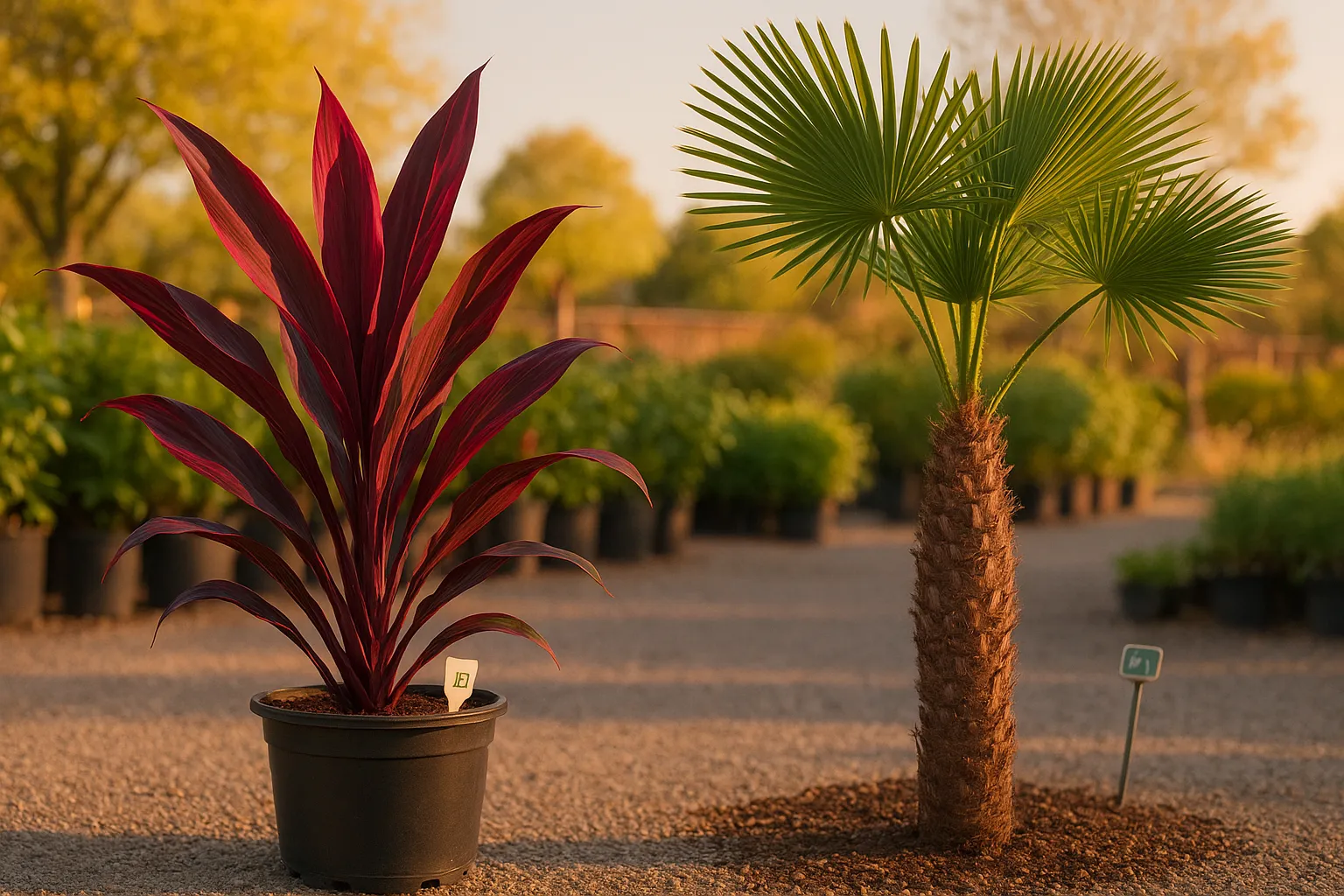
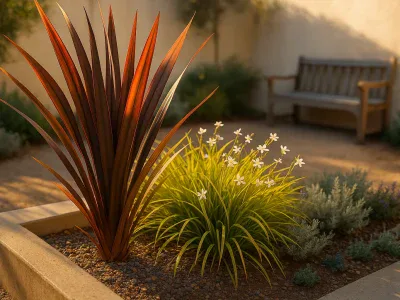
Cordyline: Fact, Cordyline (for example Cordyline terminalis and Cordyline australis) is best known for bold, colorful leaves and dramatic architectural form. These species produce strap-like leaves in greens, reds, and variegated mixes. Nurseries like Monrovia and Ball often sell cultivars such as ‘Red Sister’ or ‘Purple Sensation’. Cordylines thrive as focal plants, container specimens, or accent drifts.
Trachycarpus: Fact, Trachycarpus (notably Trachycarpus fortunei) is best known for cold-tolerant, fan-leaf palms with fibrous trunks. It gives a classic palm silhouette to temperate gardens and tolerates USDA zones 7–11 (often down to zone 6 with protection). You’ll find it sold as “Windmill Palm” at independent nurseries and larger garden centers.
Semantic entities added: Cordyline terminalis, Cordyline australis, Trachycarpus fortunei, Monrovia, Ball Horticultural, USDA zone 6, USDA zone 7.
Side‑By‑Side Comparison: Key Differences At A Glance
Appearance And Growth Habit
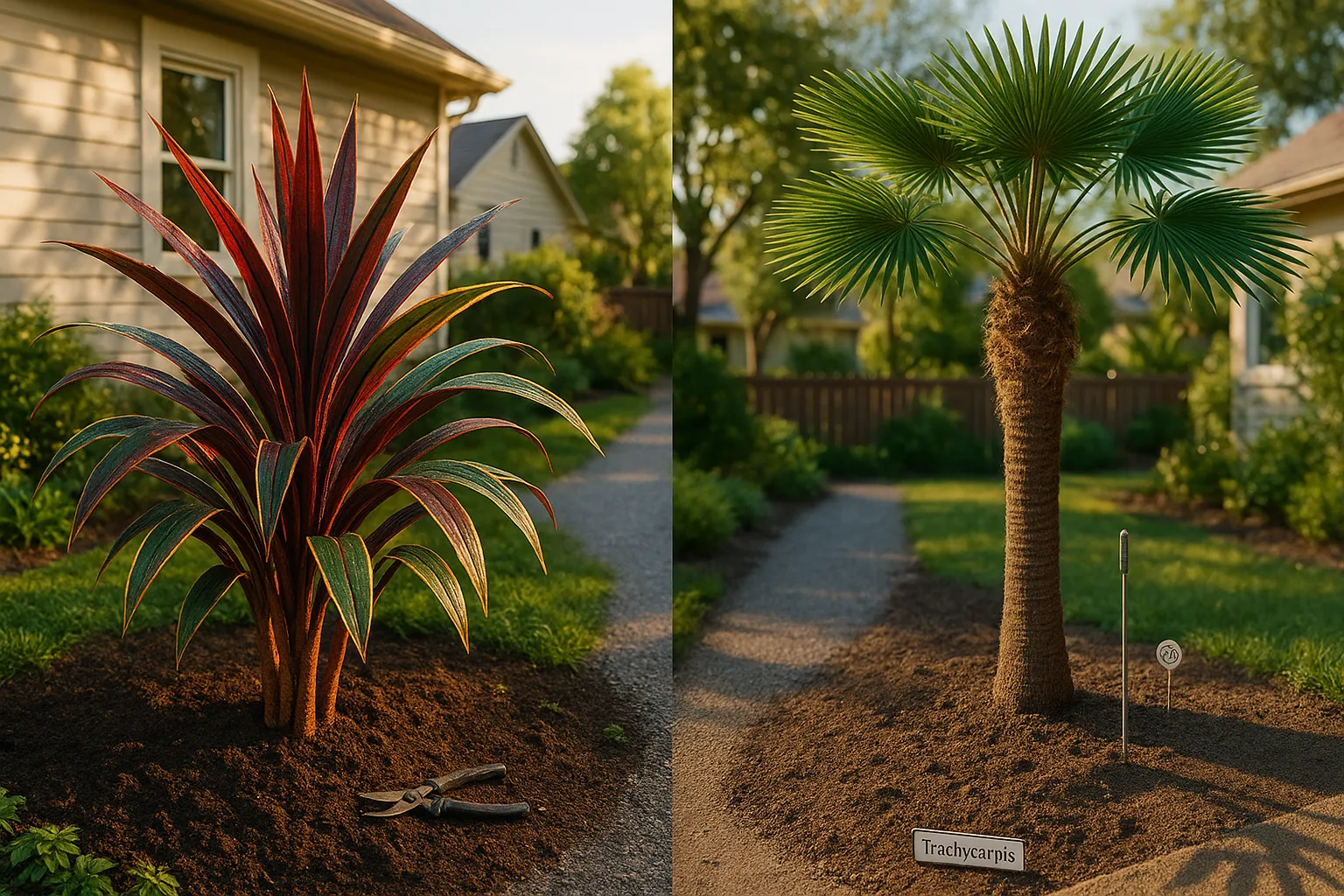
Fact, Cordylines are broad-leaved, multi-stemmed or single-trunk perennials: Trachycarpus are single-trunk fan palms. Cordyline leaves are long, sword-shaped, and often colored: Trachycarpus leaves are palmate, stiff, and green. Cordylines give vertical, leafy drama: Trachycarpus gives a slim, tree-like presence with a rough, hairy trunk.
Cold Hardiness And Climate Tolerance
Fact, Trachycarpus fortunei tolerates colder climates than most cordylines. Trachycarpus survives temps into the low teens Fahrenheit (about -10°C) in many cases. Cordylines usually handle down to about 25–30°F (-4 to -1°C), though some C. australis cultivars push a bit lower. You should match species to your local USDA zone and microclimate.
Light, Soil, And Water Requirements
Fact, Cordylines prefer bright light to partial sun and richer, well-draining soil: Trachycarpus tolerates part shade and poorer soils. Cordylines need consistent moisture but not waterlogged roots: Trachycarpus handles occasional drought once established. Both dislike heavy, poorly drained clay unless you amend it.
Size, Growth Rate, And Lifespan
Fact, Cordylines often grow 3–15 ft depending on species and cultivar and show faster top growth: Trachycarpus grows slowly to 30–40 ft over many decades. Cordylines can mature in 3–7 years to garden size: Trachycarpus takes longer, often several decades to reach full height.
Maintenance Needs And Common Pests/Diseases
Fact, Cordylines need more routine care and are prone to scale, mealybugs, and leaf spot: Trachycarpus has fewer pests but can suffer bud rot and root issues in poor drainage. Cordylines require occasional pruning for dead leaves and topping for shape: Trachycarpus needs minimal pruning besides removing dead fronds.
Choosing The Right Plant For Your Garden
Match Plant To Climate Zone And Microclimate
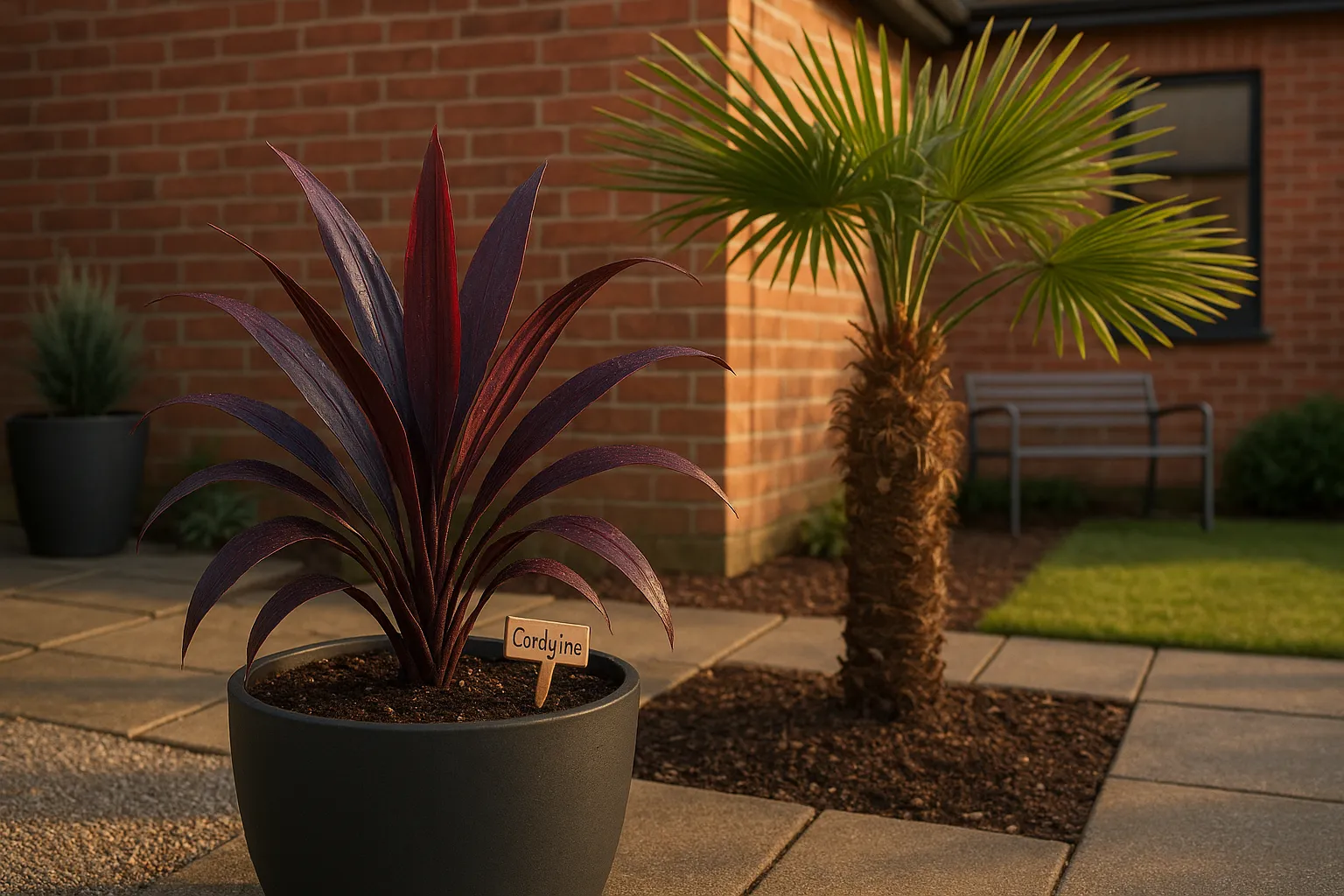
Fact, Match your plant to your hardiness zone first. If you live in USDA zone 6–7, choose Trachycarpus fortunei or sheltered microclimates for cordylines with winter protection. In zones 9–11, Cordyline terminalis gives more color options and will survive outdoors year-round. Consider south-facing walls, heat islands, and frost pockets when you select placement.
Landscape Uses And Design Considerations
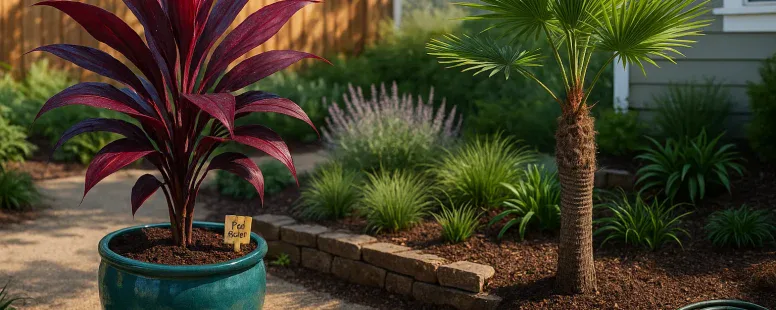
Fact, Use cordylines as colorful focal points, container accents, or repeating vertical elements. Use Trachycarpus for a subtle, structural palm statement or as a windbreak-friendly tree. For a contemporary garden, combine purple Cordyline ‘Red Sister’ with Trachycarpus trunks to add contrast in texture and tone. Be mindful of scale, Trachycarpus eventually outgrows small courtyards.
Container Growing Versus In‑Ground Planting
Fact, Cordylines adapt well to containers: Trachycarpus can be container-grown when young but prefers in-ground planting for long-term health. If you keep cordylines in pots, pick a 15–20 gallon size for mature specimens and use a well-draining mix. For Trachycarpus grown in containers, plan to transition to the ground within 3–5 years unless you accept slow growth and frequent root pruning.
Practical Planting And Care Guide (Compare Step‑By‑Step)
Planting Best Practices And Soil Preparation
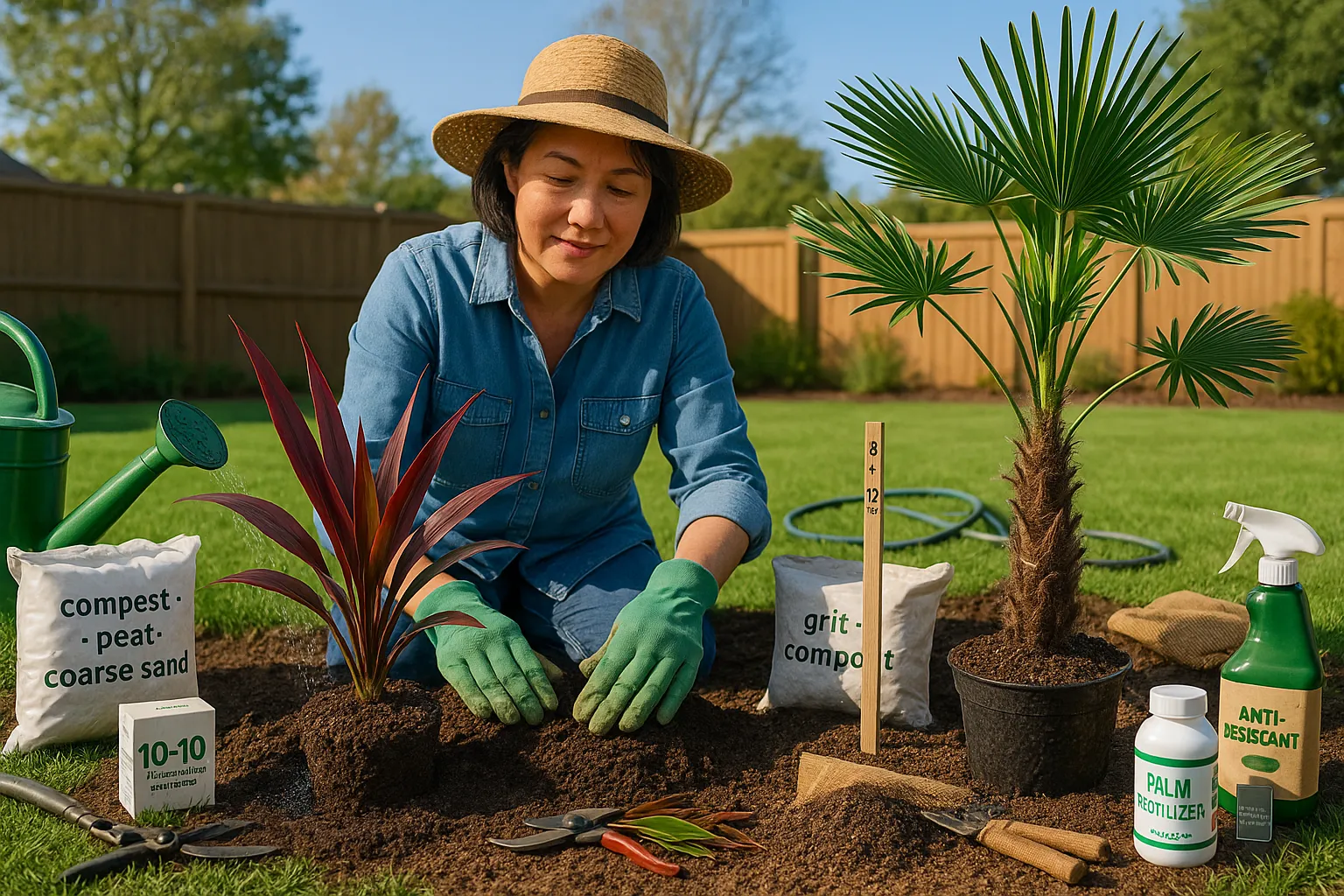
Fact, Both plants need well-draining soil but different prep. For cordylines, add compost, peat, and coarse sand to create a loose, fertile mix. For Trachycarpus, amend heavy clay with grit and compost to improve drainage. Plant at the same depth the rootball sat in its pot. Space cordylines 3–6 ft apart: give Trachycarpus 8–12 ft or more for trunk development.
Watering, Fertilizing, And Mulching Tips
Fact, Water cordylines regularly during the growing season: keep soil moist but not soggy. Water Trachycarpus deeply and less often once established. Use a balanced slow-release fertilizer (10-10-10) in spring for cordylines: Trachycarpus benefits from a palm-specific fertilizer that includes magnesium and manganese. Mulch both species to 2–3 inches, but keep mulch away from trunks to prevent rot.
Pruning, Winter Protection, And Seasonal Care
Fact, Prune cordylines to remove dead leaves and maintain shape: you can cut stems to train form. For Trachycarpus, remove only fully dead fronds to protect the bud. In cold zones, wrap young cordylines with frost cloth and insulate container roots: for Trachycarpus, apply burlap windbreaks or anti-desiccant sprays in severe freezes. Always protect the crown, if it freezes, the plant may not recover.
Propagation, Availability, And Cost Considerations
How To Propagate Cordyline And Trachycarpus
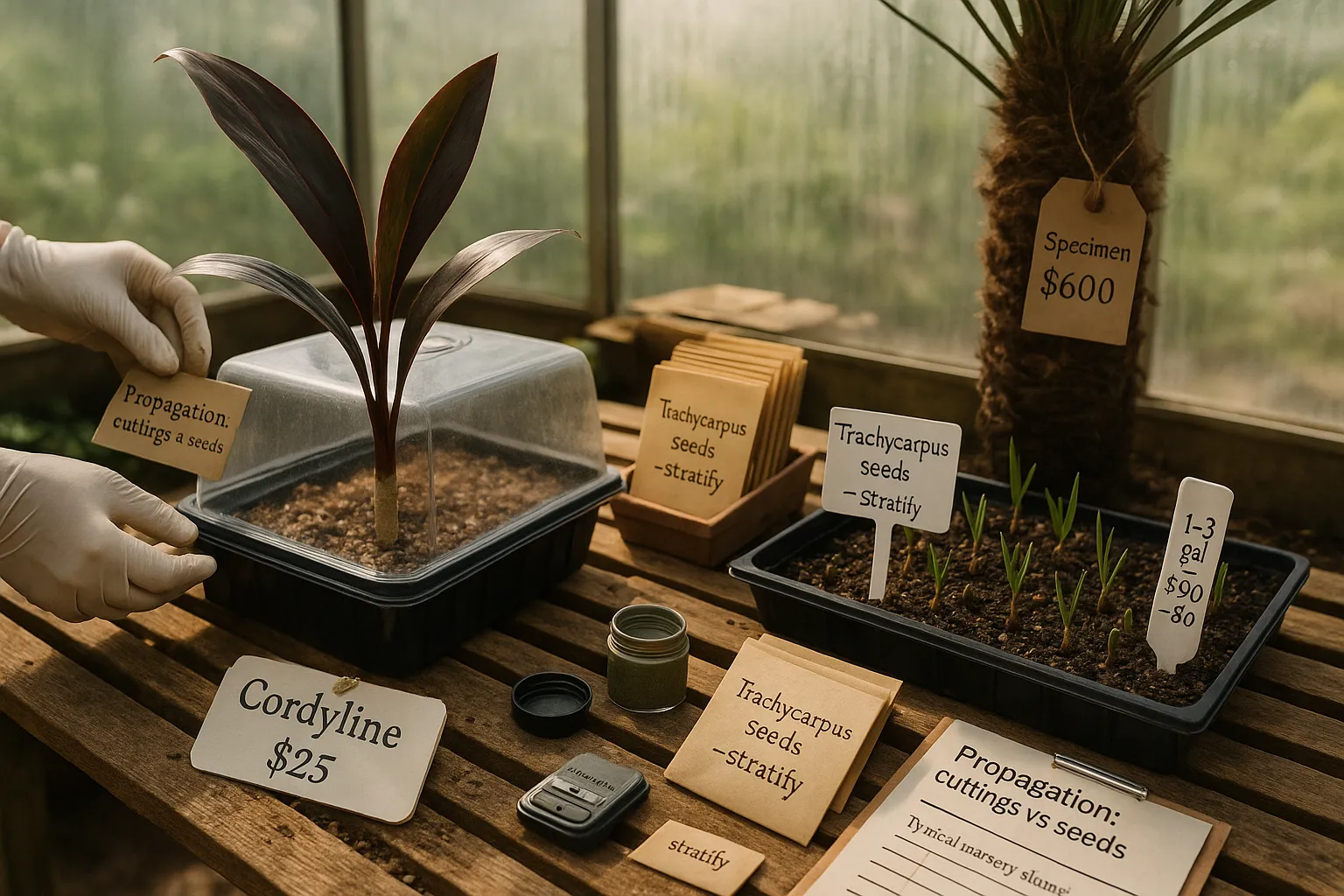
Fact, Cordylines propagate easily from stem cuttings and suckers. Take a 6–8 inch cutting, let callus for a day, and root in coarse mix under high humidity. Trachycarpus propagates from seed: seeds require stratification and patience. Seed-grown Trachycarpus is slow but cost-effective.
Nursery Availability, Typical Prices, And Sizing
Fact, Cordylines are widely available at garden centers and online retailers: small potted plants often cost $20–$60, while large specimen pots or mature trunks cost $100–$400. Trachycarpus availability varies: young 1–3 gallon palms run $30–$80, but large specimens with well-developed trunks can exceed $500–$1,000. Check local nurseries like Plant Delights or independent palm specialists for better selection and cold-hardy cultivars.
Common Problems And Troubleshooting (Quick Fixes)
Identifying Nutrient Deficiencies And Leaf Damage
Fact, Yellowing leaves on cordylines often signal nitrogen or iron deficiency: apply a balanced fertilizer and chelated iron if needed. Brown tips on Trachycarpus leaves usually indicate cold damage or salt stress. Test soil pH if you see persistent chlorosis: Trachycarpus prefers slightly acidic to neutral soils.
Dealing With Pests, Fungal Issues, And Cold Injury
Fact, Manage scale and mealybugs on cordylines with insecticidal soap or horticultural oil: systemic treatments help severe infestations. For fungal leaf spots, remove affected leaves and improve air circulation. Cold injury needs assessment, cut away dead tissue after frost and wait for new growth: don’t remove the crown prematurely. Severe trunk rot requires excavation and sometimes removal to prevent spread.
Design Inspiration: Pairing And Placement Ideas
Companion Plants For Cordyline Versus Trachycarpus
Fact, Pair cordylines with low shrubs and perennials that highlight leaf color: for example Arctostaphylos (manzanita), Agapanthus, or Heuchera. Pair Trachycarpus with Mediterranean and temperate plants such as Lavandula, Salvia, and ornamental grasses. For coastal sites, choose salt-tolerant companions like Phormium, Echium, or native grasses.
Sample Planting Schemes For Different Styles (Tropical, Formal, Coastal)
Fact, Tropical: Place purple Cordyline ‘Red Sister’ in front of a mass planting of Musa (banana) or Canna, and add a Trachycarpus at the rear for a palm accent. Formal: Use clipped boxwood parterres with evenly spaced, single-trunk cordylines or a row of young Trachycarpus for a classical avenue. Coastal: Mix Cordyline australis with Phormium tenax and low succulents: use Trachycarpus as a wind-tolerant focal point on a dune-edge planting.
Final practical note: choose based on climate first, then on color and form. If you want quick color and container versatility choose Cordyline. If you want cold tolerance and a palm presence choose Trachycarpus. Both will reward good siting and proper care, but they demand different patience levels and protection strategies.

- Vitamix Product Comparison: Which Blender Should You Buy? - September 15, 2026
- MGS6 Competitors: Top Stealth & Action Games - September 15, 2026
- HBM Competitors in High-Bandwidth Memory Tech - September 15, 2026
by Ellie B, Site Owner / Publisher