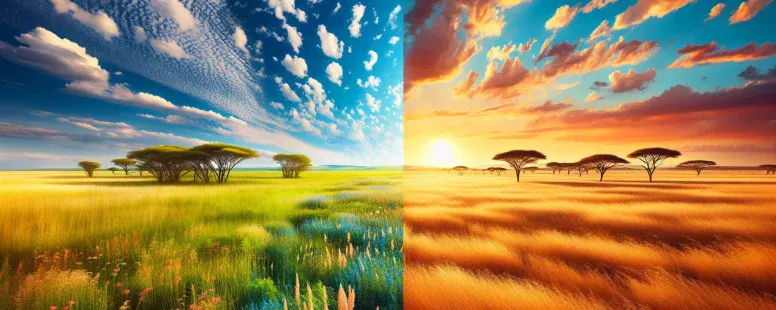
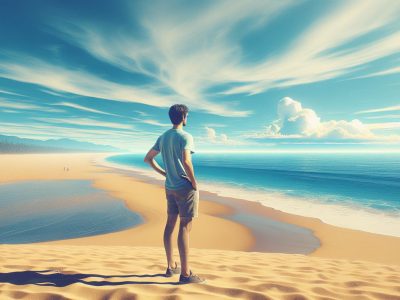
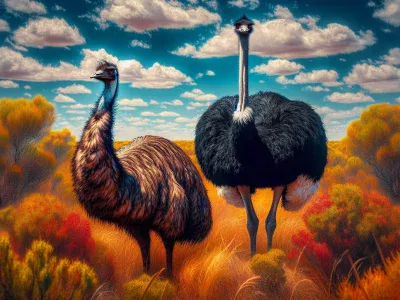
When you gaze upon vast expanses of natural land, it’s easy to feel a deep connection to Earth’s beauty. Among the world’s iconic ecosystems, the savanna and grassland stand out as rich environments, each equipped with unique features and characteristics. But, distinguishing between them often brings questions about their climates, vegetation, and roles in the broader ecological system. Let’s explore these biomes in depth to uncover their nuances and significance.
Characteristics of Savannas
Climate and Weather Patterns
Savannas often exhibit a unique climate marked by distinct wet and dry seasons, receiving moderate rainfall and experiencing warmer average temperatures. During the dry season, these regions can become arid, leading to challenges for both flora and fauna.
Flora and Fauna in Savannas
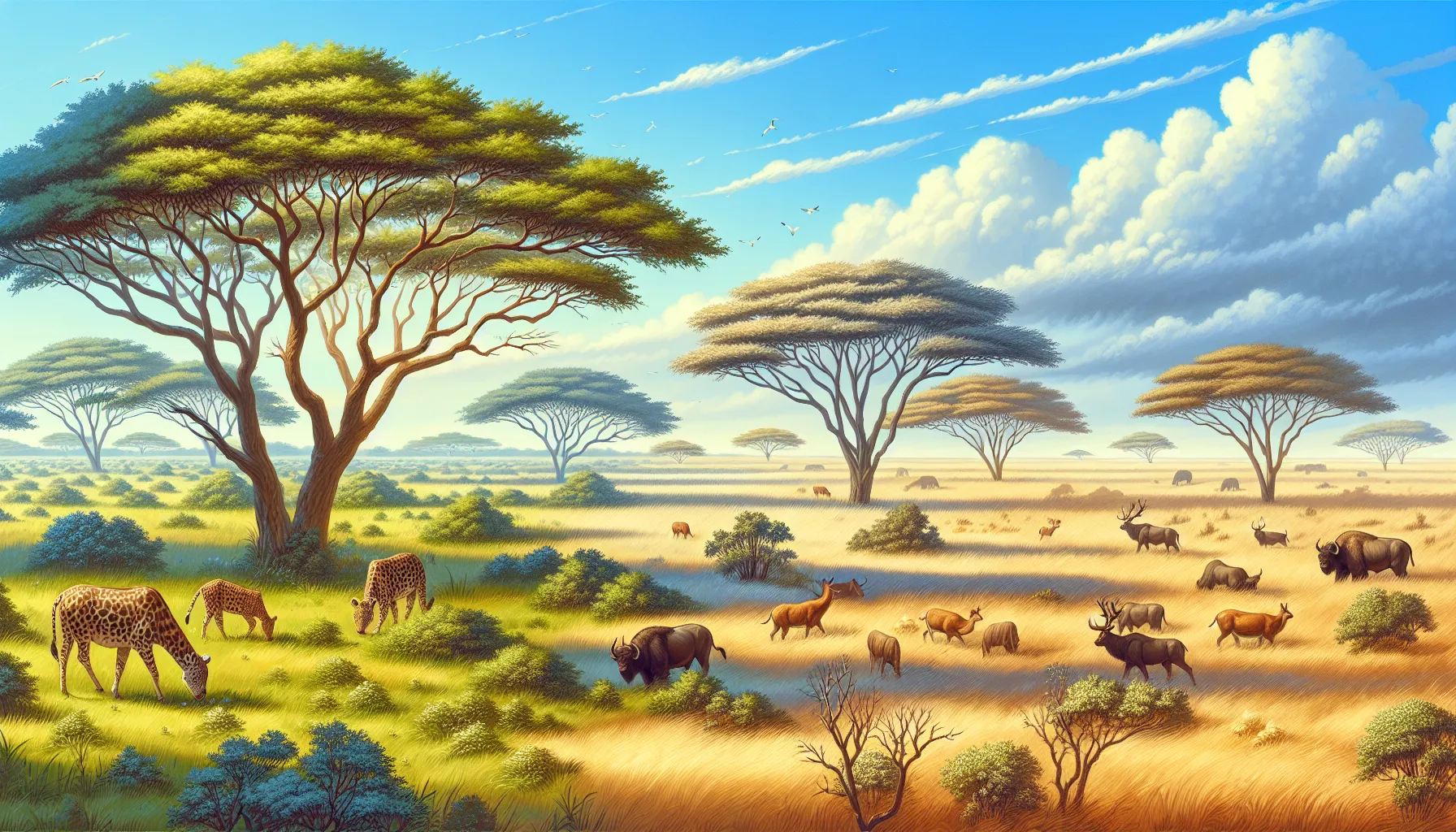
The vegetation in savannas typically includes a mix of grasses and scattered trees or shrubs. Wildlife such as elephants, lions, and gazelles characterize this biome, each playing a key role in the ecosystem’s balance.
Geographic Distribution
Savannas predominantly occur in regions like Africa, South America, and parts of Australia, each showcasing varied adaptations among species thriving in these environments.
Characteristics of Grasslands
Climate and Weather Patterns
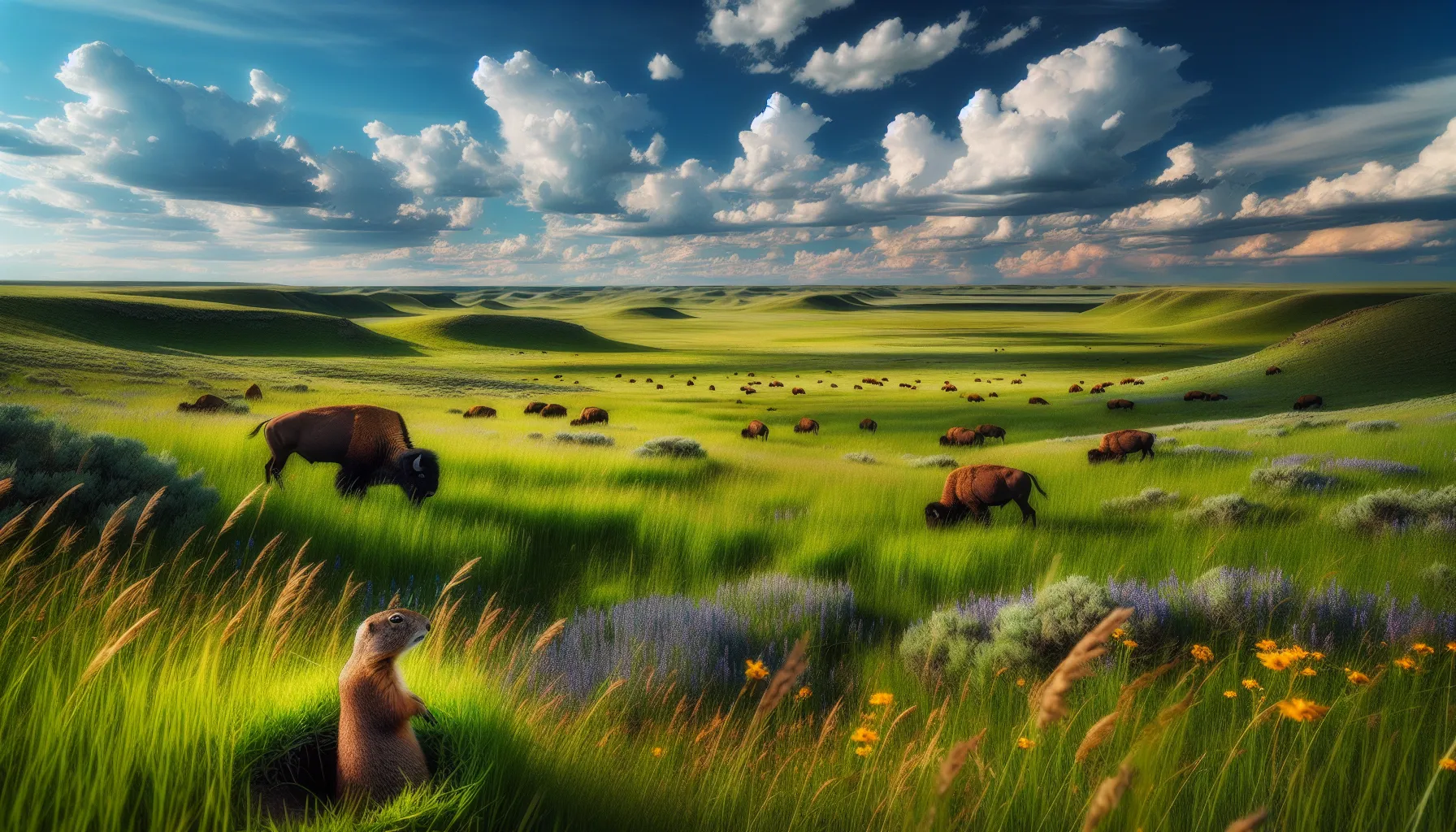
Grasslands generally maintain a temperate climate with sporadic rainfall, leading to conditions less extreme compared to savannas. These areas can support grasses but not the densely scattered trees found in other biomes.
Flora and Fauna in Grasslands
Grasslands are dominated by types of grasses suited to the area’s conditions. Grazing animals such as bison and antelope, along with burrowing species like prairie dogs, contribute significantly to the ecosystem.
Types of Grasslands
Grasslands can be categorized into two types: temperate grasslands, which experience seasonal variations, and tropical grasslands which share traits with savannas yet maintain their unique distinctions.
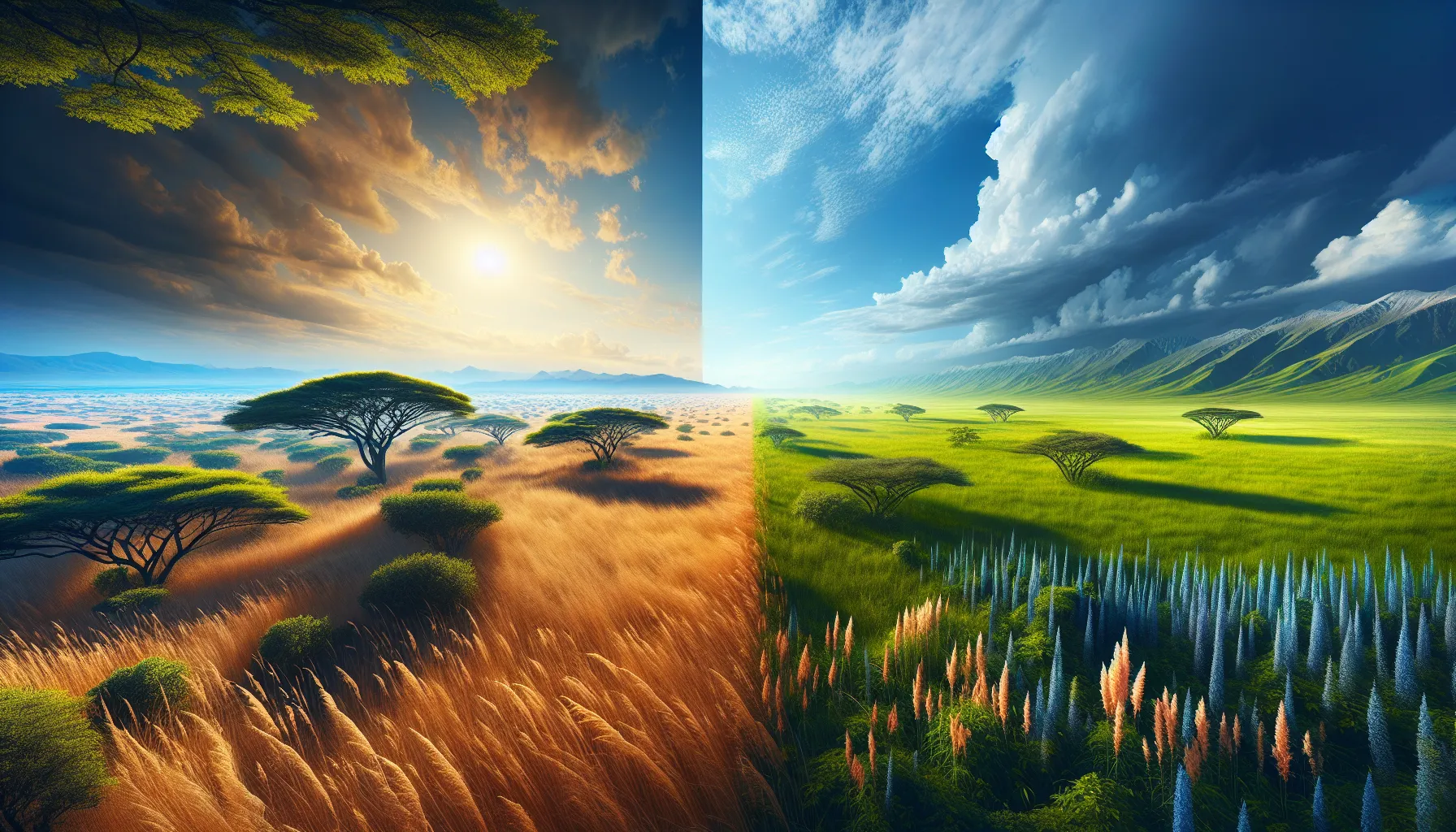
Comparative Analysis: Savanna vs. Grassland
Climate Differences
One notable difference lies in rainfall patterns: savannas generally receive more precipitation compared to grasslands. This influences their respective vegetation.
Vegetation and Biodiversity
While both biomes showcase an abundance of grasses, savannas also support trees, leading to a different biodiversity profile. Grasslands, but, tend to focus on herbaceous plants adapted to dryer conditions.
Geographic and Global Impact
The location and geographical influence of these biomes differ, with savannas shaping tropical belts and grasslands affecting temperate zones, directly impacting global weather systems and ecosystems.
To provide the best experiences, we use technologies like cookies to store and/or access device information. Consenting to these technologies will allow us to process data such as browsing behaviour or unique IDs on this site. Not consenting or withdrawing consent, may adversely affect certain features and functions.
Functional
Always active
The technical storage or access is strictly necessary for the legitimate purpose of enabling the use of a specific service explicitly requested by the subscriber or user, or for the sole purpose of carrying out the transmission of a communication over an electronic communications network.
Preferences
The technical storage or access is necessary for the legitimate purpose of storing preferences that are not requested by the subscriber or user.
Statistics
The technical storage or access that is used exclusively for statistical purposes.The technical storage or access that is used exclusively for anonymous statistical purposes. Without a subpoena, voluntary compliance on the part of your Internet Service Provider, or additional records from a third party, information stored or retrieved for this purpose alone cannot usually be used to identify you.
Marketing
The technical storage or access is required to create user profiles to send advertising, or to track the user on a website or across several websites for similar marketing purposes.