Imagine you’re at a gourmet restaurant, savoring a dish that comes with a creamy, flavorful dip. You might wonder, is this aioli or just fancy mayo? While both are beloved condiments, their origins and ingredients set them apart in surprising ways.
Aioli, with its Mediterranean roots, brings a burst of garlic and olive oil, creating a rich, aromatic experience. Mayo, on the other hand, is a versatile staple made from eggs, oil, and vinegar or lemon juice, offering a smoother, more neutral taste. Understanding these differences not only enhances your culinary knowledge but also elevates your dining experiences. Immerse to discover what makes each sauce unique and how to use them to their fullest potential.
Origins and History
Ever wondered where these yummy sauces come from Aioli has its roots in the Mediterranean, specifically in regions like Provence in France and Catalonia in Spain. Imagine walking along sun-drenched coastlines, olive trees swaying in the breeze. That’s where aioli likely began its flavorful journey.
Mayonnaise, on the other hand, probably hails from a different era and locale. It suggests origins in 18th-century France, possibly from the town of Mahón in Minorca, which was under French control. Some folks argue it was invented to celebrate a French victory, kinda makes you think how culinary traditions intertwine with history, right?
But let’s be real, historical culinary accuracy can be tricky. While aioli’s garlic and olive oil combo paints a pretty clear picture, mayonnaise’s eggy, lemony origin might seem a bit muddled. Over the years, the methods and recipes evolved, influenced by regional preferences and ingredient availability, adding more layers to their rich history.
Ingredients and Preparation
Understand the core ingredients and traditional preparation methods of aioli and mayo to get the best out of these sauces. Let’s jump in, shall we?
Core Ingredients of Aioli
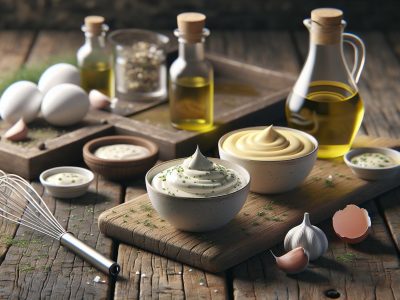
Aioli typically includes garlic, olive oil, and sometimes egg yolk for a creamier texture. The garlic packs a pungent punch, making aioli stand out in flavor. Olive oil forms the base, giving it a rich texture and deep flavor notes. If eggs be used, it lends creaminess and helps emulsify the mixture.
Core Ingredients of Mayo
Mayo’s core ingredients are eggs, oil, and an acid like vinegar or lemon juice. The eggs act as the emulsifying agent, holding together the oil and acid. The oil creates a smooth, spreadable texture, and the acid adds a tangy edge. Unlike aioli, garlic is generally not a key player here, so mayo’s flavor profile tends to be milder.
Traditional Preparation Methods
Aioli’s traditional preparation involves crushing garlic with a mortar and pestle until smooth, then slowly adding olive oil while continuing to mix. If you use egg yolk, it’s added at the beginning. This method emulsifies the oil and garlic, creating a thick paste. It’s labor-intensive but rewards with a robust flavor.
Making mayo usually starts by whisking eggs and acid together before slowly incorporating the oil. A steady hand is crucial to prevent splitting, which can be trickier than it sounds. Modern methods often use blenders or food processors to speed up this process and ensure consistency.
Bold flavors for aioli, subtle nuances for mayo. Both add a unique punch to your culinary creations.
Flavor Profiles
Understanding the unique flavor profiles of aioli and mayo helps elevate your culinary experience.
Taste of Aioli
Aioli packs a punch with its robust garlic flavor and rich olive oil base. This Mediterranean gem often feels like a trip to the coast in every bite. You might find hints of lemon or herbs, adding another layer to its complexities. Some even say it dances on your palate with a bit of a spicy kick, especially if more garlic is used. Next time you dip your fries in aioli, feel the boldness that’s probably unlike any regular condiment you’ve tried before.
Taste of Mayo
Mayo, on the other hand, is the smooth operator of the condiment world. It’s creamy, subtle, and a bit tangy thanks to the vinegar or lemon juice. Think of it as the neutral player in a dish, enhancing flavors without overpowering them. Your classic sandwich or potato salad most likely relies on mayo for that perfect balance of taste and texture. It’s not flashy, but that’s what makes it so versatile, adapting to nearly any flavor profile you throw at it.
By recognizing these differences, you can make informed choices in your kitchen, creating dishes that echo the distinct essence of either aioli or mayo.
Nutritional Comparison
So, you’re wondering how aioli and mayo stack up nutritionally, huh? Well, let’s jump into it.
Calories and Fats
Aioli and mayo both pack quite a punch in the calorie department. A tablespoon of aioli contains roughly 90 calories while mayo has about 94 calories per tablespoon. Aioli is often made with olive oil, making it a bit richer in monounsaturated fats, which are considered heart-healthy. Mayonnaise, on the other hand, is usually made with vegetable oils like soybean or canola oil and can vary in its fat composition.
Cholesterol and Sodium
Next up, cholesterol and sodium content. Both aioli and mayo contains cholesterol due to the use of egg yolks. Mayonnaise might have slightly more cholesterol, but the difference is usually not significant enough to be a deal-breaker. On the sodium front, mayo often has more sodium. Commercially prepared mayo can have around 100 mg of sodium per tablespoon, whereas aioli, especially if homemade, usually has less sodium.
Protein and Carbohydrates
Neither aioli nor mayo contributes much in the way of protein or carbohydrates. Each has less than 1 gram of protein and very negligible carbs per serving. So, if you are looking for a protein punch, you might wanna skip these two.
Vitamins and Minerals
Aioli might have a slight edge in vitamins, thanks to olive oil. You can get a bit of vitamin E and K. Mayo, depending on the oil used, might also provide these vitamins but typically at lower levels.
Potential Additives and Preservatives
Depending on how they’re prepared, both condiments may contain additives or preservatives. Store-bought mayo often contains preservatives to extend shelf life. Aioli, if made from scratch, tends be more natural but that’s not a hard rule.
Feel free to weigh these facts next time you’re reaching for the jar in the fridge.
Culinary Uses
Understanding the diverse uses of aioli and mayo can elevate your culinary creations to new heights. Let’s explore how these condiments shine in various dishes.
Aioli in Dishes
Aioli’s bold flavors make it a standout in many dishes. Ever tried aioli with seafood? It’s a classic Mediterranean pairing. Imagine dipping crispy calamari or grilled shrimp into a garlicky, rich aioli—it’s pure bliss. Aioli also does wonders drizzled over roasted vegetables or spread on a sandwich, giving a gourmet twist to everyday meals. Got a plate of fries? Skip the ketchup and go for aioli, and you might never look back.
Mayo in Dishes
Mayonnaise probably found its way onto your burger or sandwich, but its uses go far beyond that. Mayo is the backbone of many dressings and dips. Take coleslaw for instance—mayo provides the creamy base that brings all the crunchy cabbage and carrots together. How about deviled eggs? Mayo makes the filling irresistibly smooth. Potato salads, macaroni salads, and even cakes might rely on mayo to keep them moist and balanced. It’s this versatility that makes mayo a kitchen essential.
By leveraging the strengths of both aioli and mayo, you can create dishes that are not only flavorful but memorable. So next time you reach for a condiment, think about the unique characters of aioli and mayo and how they can elevate your dish.
Conclusion
Understanding the differences between aioli and mayonnaise can significantly enhance your culinary skills. Each condiment brings its unique flavors and history to the table. Aioli’s bold garlic and olive oil profile offers a Mediterranean touch, perfect for seafood and roasted vegetables. Meanwhile, mayonnaise’s creamy and subtle taste complements a wide range of dishes like salads and dips.
By recognizing these distinctions, you can make informed choices that elevate your cooking. Whether you prefer the robust flavors of aioli or the smooth, tangy essence of mayonnaise, both condiments have their place in a well-rounded kitchen. Embrace their unique qualities and enjoy the delicious possibilities they bring to your meals.
To provide the best experiences, we use technologies like cookies to store and/or access device information. Consenting to these technologies will allow us to process data such as browsing behaviour or unique IDs on this site. Not consenting or withdrawing consent, may adversely affect certain features and functions.
Functional
Always active
The technical storage or access is strictly necessary for the legitimate purpose of enabling the use of a specific service explicitly requested by the subscriber or user, or for the sole purpose of carrying out the transmission of a communication over an electronic communications network.
Preferences
The technical storage or access is necessary for the legitimate purpose of storing preferences that are not requested by the subscriber or user.
Statistics
The technical storage or access that is used exclusively for statistical purposes.The technical storage or access that is used exclusively for anonymous statistical purposes. Without a subpoena, voluntary compliance on the part of your Internet Service Provider, or additional records from a third party, information stored or retrieved for this purpose alone cannot usually be used to identify you.
Marketing
The technical storage or access is required to create user profiles to send advertising, or to track the user on a website or across several websites for similar marketing purposes.