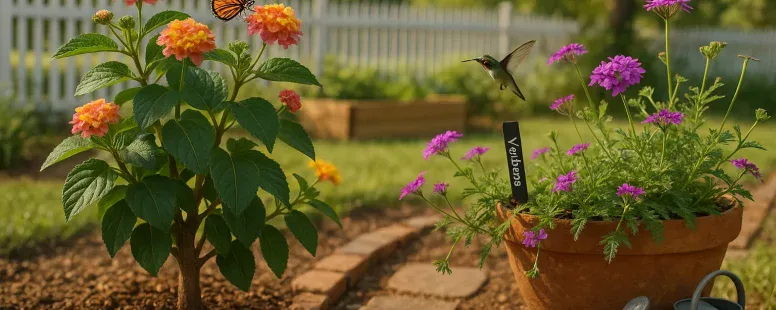
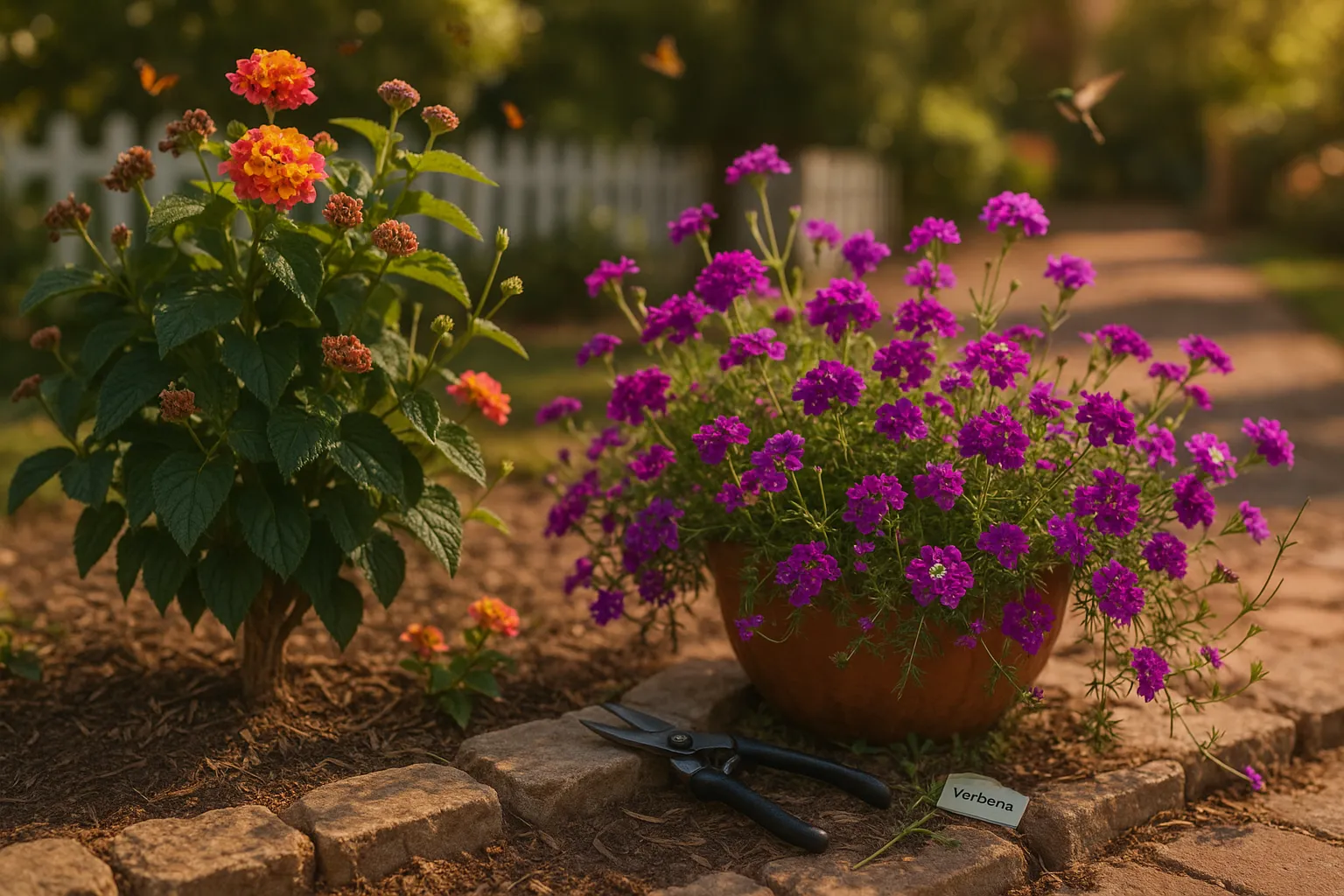
Lantana vs. Verbena is a question many gardeners ask when they want long-lasting color with low fuss. Both genera give bright summer blooms and pollinator value, but they differ in hardiness, habit, and care. Picture a sun-scorched border where color holds for months, or a hanging basket that refuses to flop, which plant will deliver? This piece compares Lantana and Verbena side-by-side so you can pick the right plant for your climate, maintenance tolerance, and design goals.
At-A-Glance Comparison
Fact: Lantana tends to be shrubbier and hotter-tolerant: Verbena tends to trail and tolerate cooler nights.
Quick Profile: Growth Habit, Size, And Form
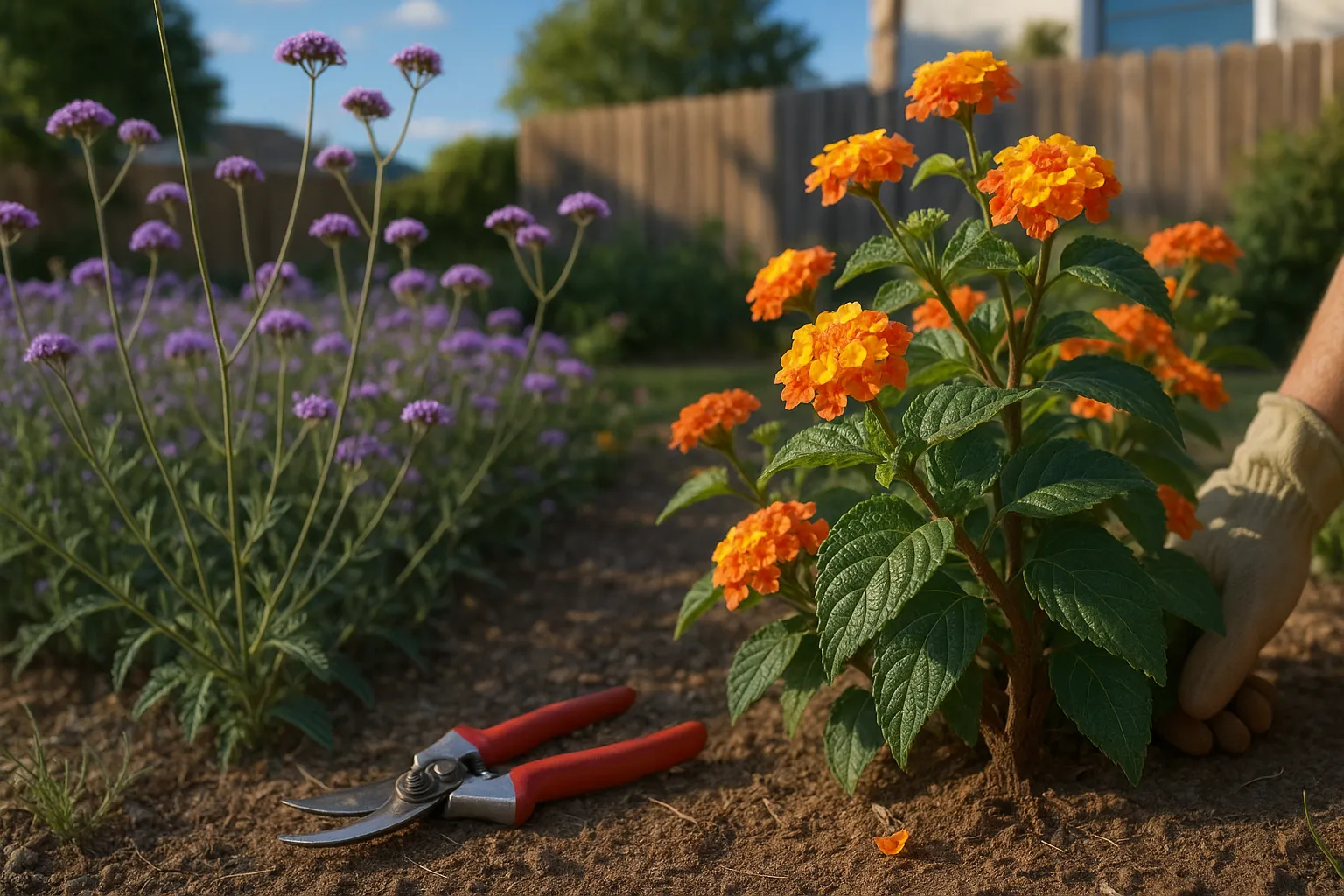
Lantana plants usually grow as woody shrubs or subshrubs. They reach 1–6 feet tall depending on species and cultivar (Lantana camara and L. montevidensis are common). Verbena (especially Verbena bonariensis and V. x hybrida) grows as upright clumps or trailing mats: heights run from 6 inches (groundcover types) to 4 feet (tall verbenas). You can expect Lantana to hold shape without much staking. Verbena will either sprawl or make tall airy stems.
Bloom Times, Flower Types, And Color Range
Lantana blooms from late spring through frost in warm areas. Its flower clusters show multicolored “eye” clusters, oranges, yellows, reds, and pinks often blend on one head. Verbena blooms from late spring into fall and offers tight clusters of flat-faced flowers in purple, magenta, white, and blue. Verbena often reblooms quickly after deadheading: lantana reblooms with light pruning.
Hardiness, Climate Preferences, And Lifespan
Lantana camara is hardy to around USDA zone 8 in many cultivars: some species are treated as tender perennials in colder zones. Verbena ranges widely: trailing verbenas are often annuals in cool climates, while species like V. bonariensis are hardy to zone 7. Lantana survives heat and humidity better: verbena prefers cooler nights and good air flow. Both can live multiple seasons where zones allow, but lantana can become woody and long-lived.
General Care Level And Maintenance Needs
Lantana requires less water once established and tolerates poor soils: it benefits from occasional pruning to avoid legginess. Verbena needs regular deadheading or cutting back to maintain bloom and reduce mildew risk. If you want low-maintenance color, lantana is usually easier. If you want airy, long-flowering displays and don’t mind regular trimming, verbena rewards you.
Common Landscape Uses And Ecological Value
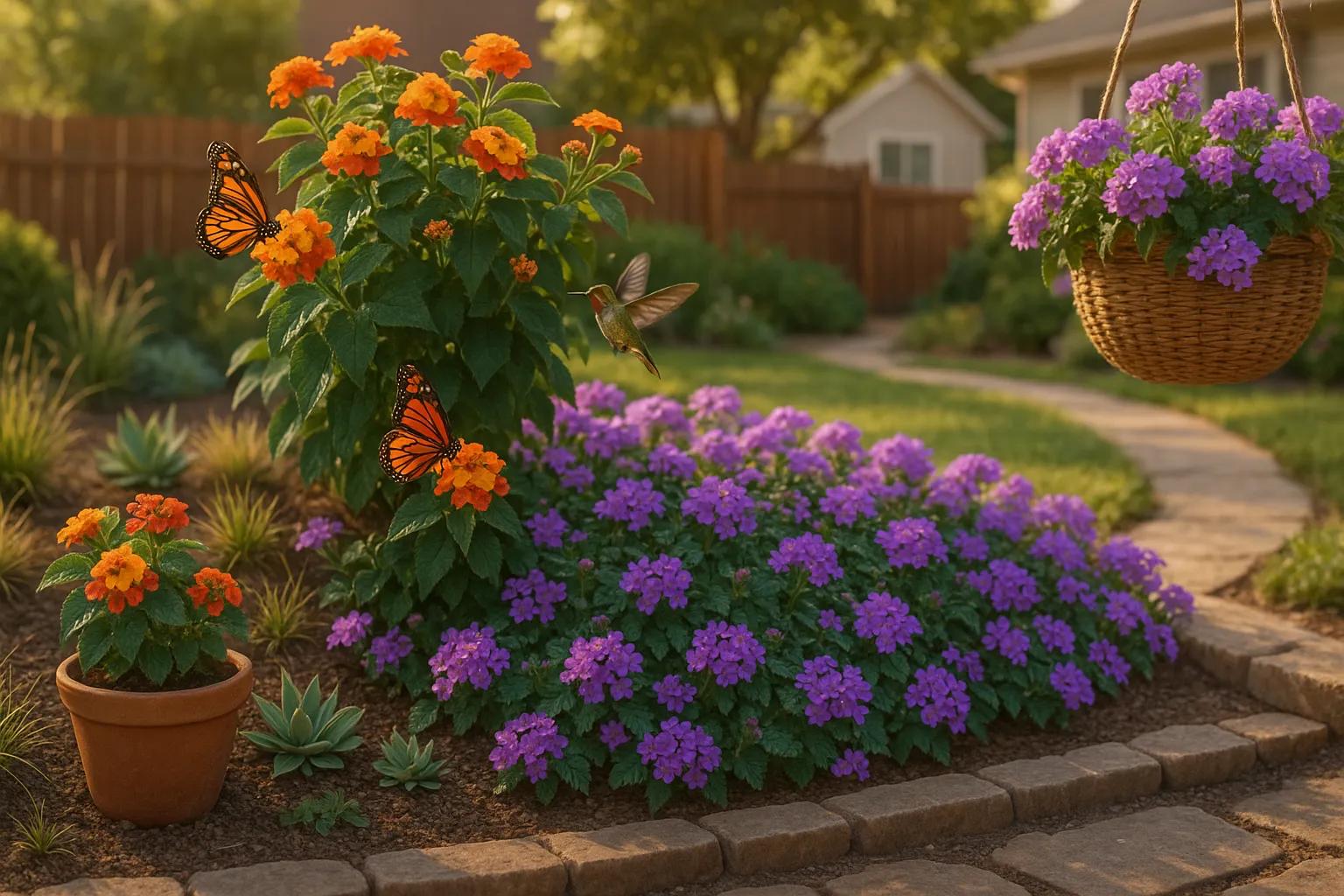
Both plants attract butterflies, bees, and hummingbirds. Lantana is often used as a shrub border, specimen, or drought-tolerant mass planting. Verbena works well in hanging baskets, cottage garden mixes, and pollinator patches. Lantana can provide cover and structure: verbena supplies nectar-rich flats that pollinators love.
Botanical And Physical Differences
Fact: Lantana belongs to the Verbenaceae family like verbena, but they diverge at the genus level with different growth forms and leaf chemistry.
Taxonomy And Species Overview
Lantana is a genus of about 150 species: Lantana camara is the widely grown ornamental. Verbena includes about 250 species: gardeners know Verbena bonariensis, Verbena rigida, and hybrid bedding verbenas. Both are in the Verbenaceae family, but you should treat them as separate horticultural groups because their habits and breeding differ.
Stem, Leaf, And Flower Morphology
Lantana stems often become woody and square-ish: leaves are coarse, opposite, and aromatic when crushed. Flowers form dense umbels with tubular corollas. Verbena stems are usually more delicate, square or round, and sometimes hairy: leaves vary from lacy to coarse. Verbena flower heads are flat-topped clusters on long peduncles. These structural differences change pruning and propagation strategies.
Growth Rate, Habit, And Seasonal Behavior
Lantana grows fast in heat and forms a stable shrub within a season. It can become leggy if not pruned. Verbena establishes quickly too but often stays looser or spreads as a mat. Verbena can go semi-dormant in extreme heat or heavy humidity. Lantana tolerates drought stress better and keeps producing when soils dry.
Growing Conditions And Care (Side‑By‑Side Guidance)
Fact: Both genera prefer sun, but soil, water, and pruning routines differ in important ways.
Soil, Light, And Site Selection
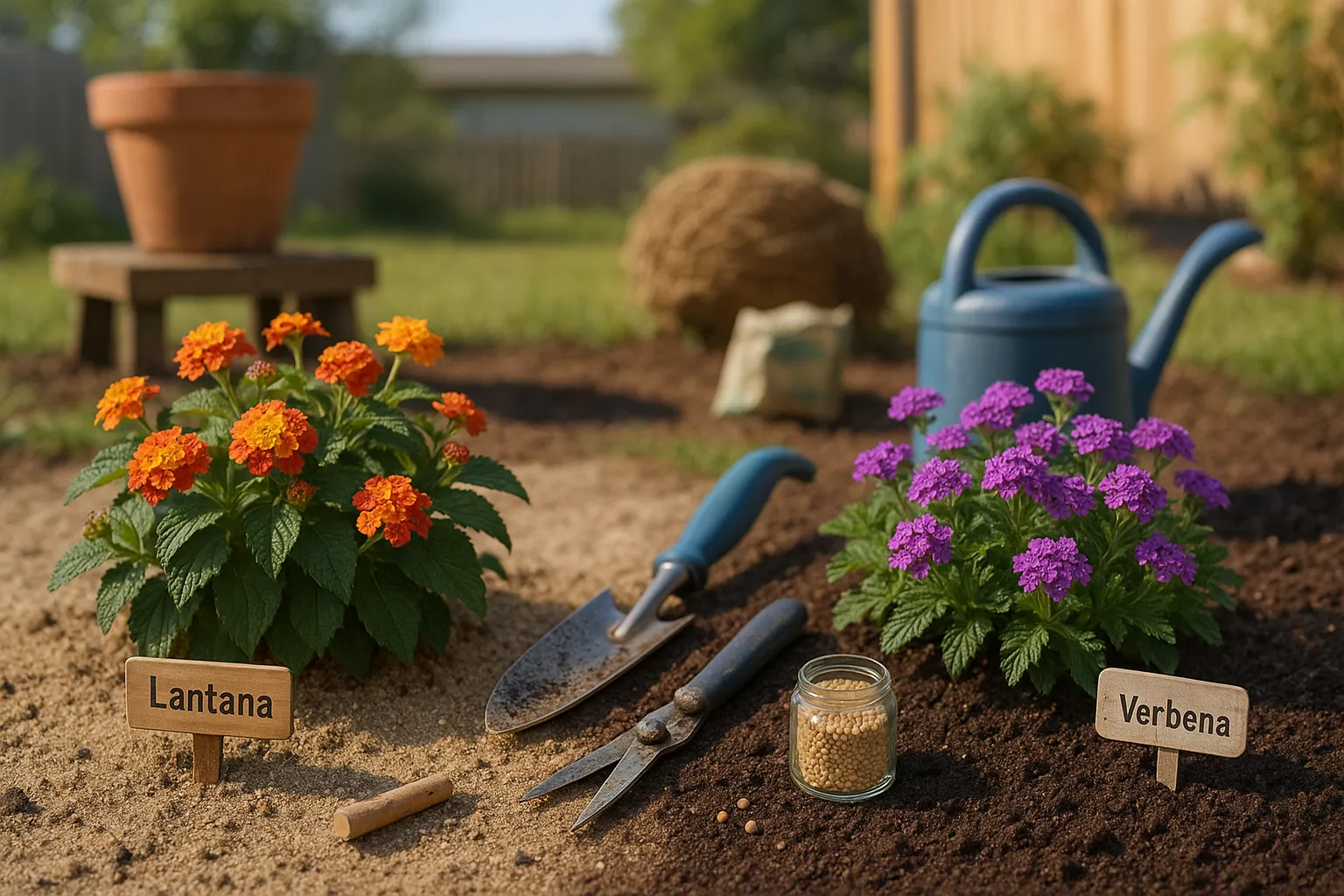
Plant lantana in full sun with well-drained soil: it tolerates poor sandy soils and coastal conditions. Plant verbena in full sun as well, but give it slightly richer soil with good drainage and air flow to reduce mildew. If you have heavy clay, amend with compost and grit for both. In hot inland gardens, choose lantana for heat tolerance: in cooler coastal gardens, verbena often looks fresher.
Watering, Fertilization, And Feeding Schedule
Lantana: water deeply but infrequently after establishment. Feed lightly with a balanced slow-release fertilizer in spring. Verbena: water regularly during bloom but avoid water on foliage to reduce fungal disease. Feed verbena every 4–6 weeks with a low-nitrogen fertilizer to encourage flowers over foliage. Overfeeding either plant produces leaf growth at the expense of blooms.
Pruning, Deadheading, And Winter Care
Lantana: prune back hard in early spring where frost is mild: in warm climates, pinch tips to shape. Deadheading is optional because lantana self-prunes by shedding old flowers, but light shearing promotes denser growth. Verbena: deadhead spent clusters frequently or cut plants back by one-third midseason to renew bloom. In zones below your plant’s hardiness, lift containers or treat as annuals: mulch woody lantana heavily if you expect a brief freeze.
Propagation Methods (Seeds, Cuttings, Division)
Lantana roots from semi-ripe cuttings and layers easily: seeds spread but cultivars may not breed true. Verbena propagates well from softwood cuttings and seed (hybrids may need cuttings to keep traits). For fast establishment, take 3–4″ cuttings from healthy growth for both plants in spring. Division works for clump-forming verbenas but not for woody lantana.
Landscape Uses, Design Tips, And Companion Plants
Fact: Use lantana for structure and heat banks: use verbena for motion, drape, and pollinator pockets.
Containers, Hanging Baskets, And Small‑Space Uses
Verbena excels in hanging baskets and small containers because trailing cultivars flow over edges without becoming woody. Lantana can work in containers, but choose dwarf cultivars and prune to keep size in check. For a mixed container, pair lantana with drought-tolerant succulents or ornamental grasses: pair verbena with lobelia, calibrachoa, or geranium for continuous bloom.
Borders, Mass Plantings, And Groundcover Options
Lantana makes a durable border or heat-tolerant mass planting. Use it where you want long color and low water. Verbena works well as a groundcover alternative (trailing verbenas) and in mass for pollinator gardens. Combine lantana and verbena in layered beds: lantana in the back, verbena spilling in front.
Attracting Pollinators And Wildlife Considerations
Both plants draw butterflies strongly: lantana attracts swallowtails and monarchs, and verbena draws long-tongued bees and hummingbirds. Be cautious: in some regions Lantana camara is invasive (Australia, parts of Africa), and you should avoid planting invasive cultivars near wildlands. Use native alternatives where possible and check local extension guidance.
Pests, Diseases, And Safety Considerations
Fact: Both plants face aphids and powdery mildew, but lantana is less disease-prone: but it is toxic if ingested.
Common Pests And Disease Issues For Each Genus
Lantana: common pests include whiteflies, scale, and spider mites in hot dry conditions. Disease pressure is usually low, though root rot can occur in poorly drained soils. Verbena: watch for powdery mildew, downy mildew, and botrytis in humid climates. Both can get aphids. Use regular inspection and early treatment to prevent outbreaks.
Toxicity And Safety Around Children And Pets
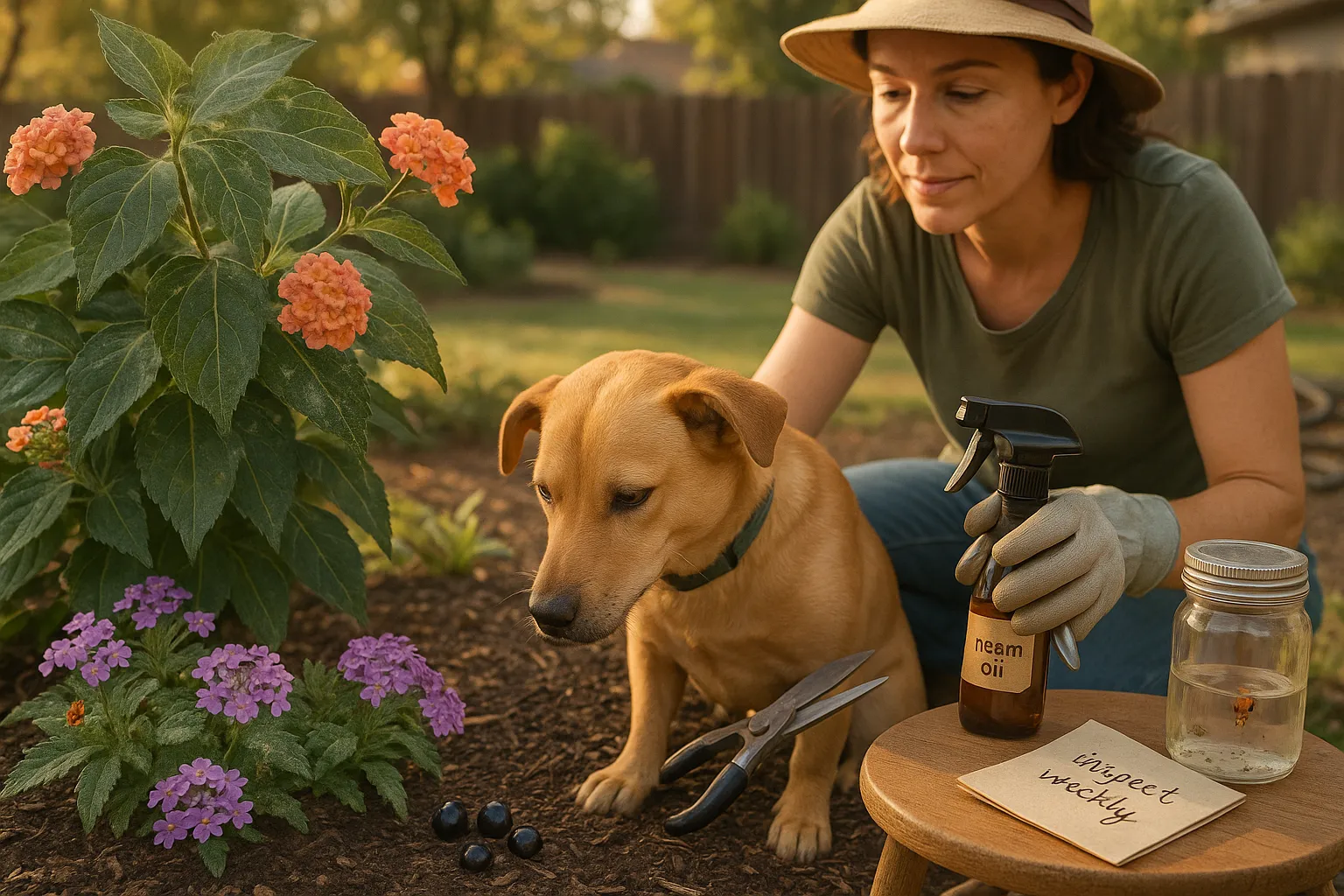
Lantana contains pentacyclic triterpenoids and can be toxic to dogs, cats, and children if eaten: it can cause vomiting and lethargy. Verbena species are generally less toxic, though some varieties can cause mild stomach upset in pets. Keep both out of reach if you have curious pets, and remove fallen fruit from lantana which may tempt animals.
Integrated Pest Management And Preventive Care
Start with cultural controls: good air flow, proper spacing, and clean pruning. Use insecticidal soaps for aphids and neem oil for scale: apply fungicides only when cultural changes fail. Encourage predators, lady beetles, lacewings, for aphid control. Rotate planting sites and avoid overhead irrigation to reduce fungal disease. Be honest: you will sometimes lose plants to weather or bugs: learn from that and adjust.
How To Choose Between Lantana And Verbena
Fact: Choose lantana for heat, drought, and low-care shrubs: choose verbena for trailing forms, cooler nights, and frequent reblooming.
Selecting Based On Climate Zone And Hardiness Needs
If you garden in USDA zone 9 or warmer, lantana will thrive and often act as a perennial shrub. In zones 7–8, choose cold-hardy verbena species like V. bonariensis or treat lantana as an annual. For coastal gardens with cool nights, verbena usually performs better. Check your local extension (for example, University of California Agriculture and Natural Resources or your state extension) for region-specific advice.
Choosing For Maintenance Level, Bloom Length, And Form
Pick lantana if you want long stretches of color with minimal deadheading. Pick verbena if you want delicate stems, frequent cutting back, and abundant reblooming. If you like to deadhead and sculpt plants, verbena gives you more control. If you want ‘set it and forget it’ summer color, lantana fits that bill.
Buying Checklist: What To Look For At The Nursery
Look for healthy, well-branched plants with no wilt, no yellowing leaves, and no sticky residue (a sign of sap-sucking insects). For lantana, choose cultivars labeled heat-tolerant or zone-hardy. For verbena, check for mildew-free foliage and firm rootballs. Ask nursery staff about cultivar habits (Proven Winners and Ball Horticultural selections often indicate habit and hardiness). Buy smaller plants you can shape: large, stretched plants often translate to months of corrective pruning.
To provide the best experiences, we use technologies like cookies to store and/or access device information. Consenting to these technologies will allow us to process data such as browsing behaviour or unique IDs on this site. Not consenting or withdrawing consent, may adversely affect certain features and functions.
Functional
Always active
The technical storage or access is strictly necessary for the legitimate purpose of enabling the use of a specific service explicitly requested by the subscriber or user, or for the sole purpose of carrying out the transmission of a communication over an electronic communications network.
Preferences
The technical storage or access is necessary for the legitimate purpose of storing preferences that are not requested by the subscriber or user.
Statistics
The technical storage or access that is used exclusively for statistical purposes.The technical storage or access that is used exclusively for anonymous statistical purposes. Without a subpoena, voluntary compliance on the part of your Internet Service Provider, or additional records from a third party, information stored or retrieved for this purpose alone cannot usually be used to identify you.
Marketing
The technical storage or access is required to create user profiles to send advertising, or to track the user on a website or across several websites for similar marketing purposes.