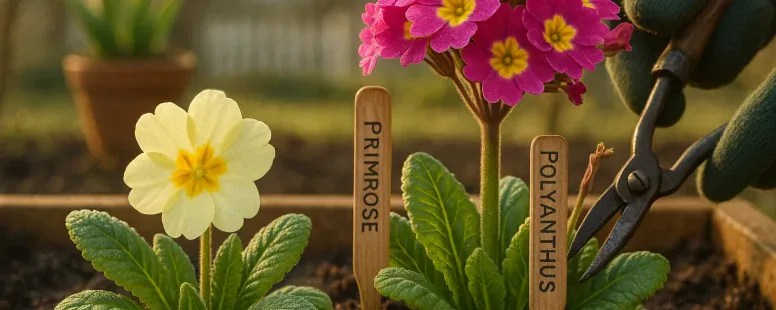
Primrose vs. Polyanthus is a question many gardeners face when early spring color matters most. Bright faces cluster at ground level, soft fragrance lifts on cold air, and you stand before beds that promise color long before roses or peonies wake up. These two related plants look similar at a glance, but they offer different bloom habits, hardiness, and design uses that can change how you plan beds, containers, and seasonal displays. Read on to learn clear, usable distinctions, and surprising benefits, so you can choose the right one for your site and style.
Quick Botanical Overview: What Each Plant Is
Taxonomy and Origins
Fact: Both primrose and polyanthus belong to the Primula genus. Primula vulgaris is the classic wild primrose native to Europe: Polyanthus are hybrids derived mainly from Primula elatior and related species. The Primula genus sits in the Primulaceae family. Primroses (P. vulgaris) evolved in woodlands and meadows: polyanthus hybrids were created by Victorian breeders seeking larger flower heads and broader color ranges.
Common Names and Species Covered By These Terms
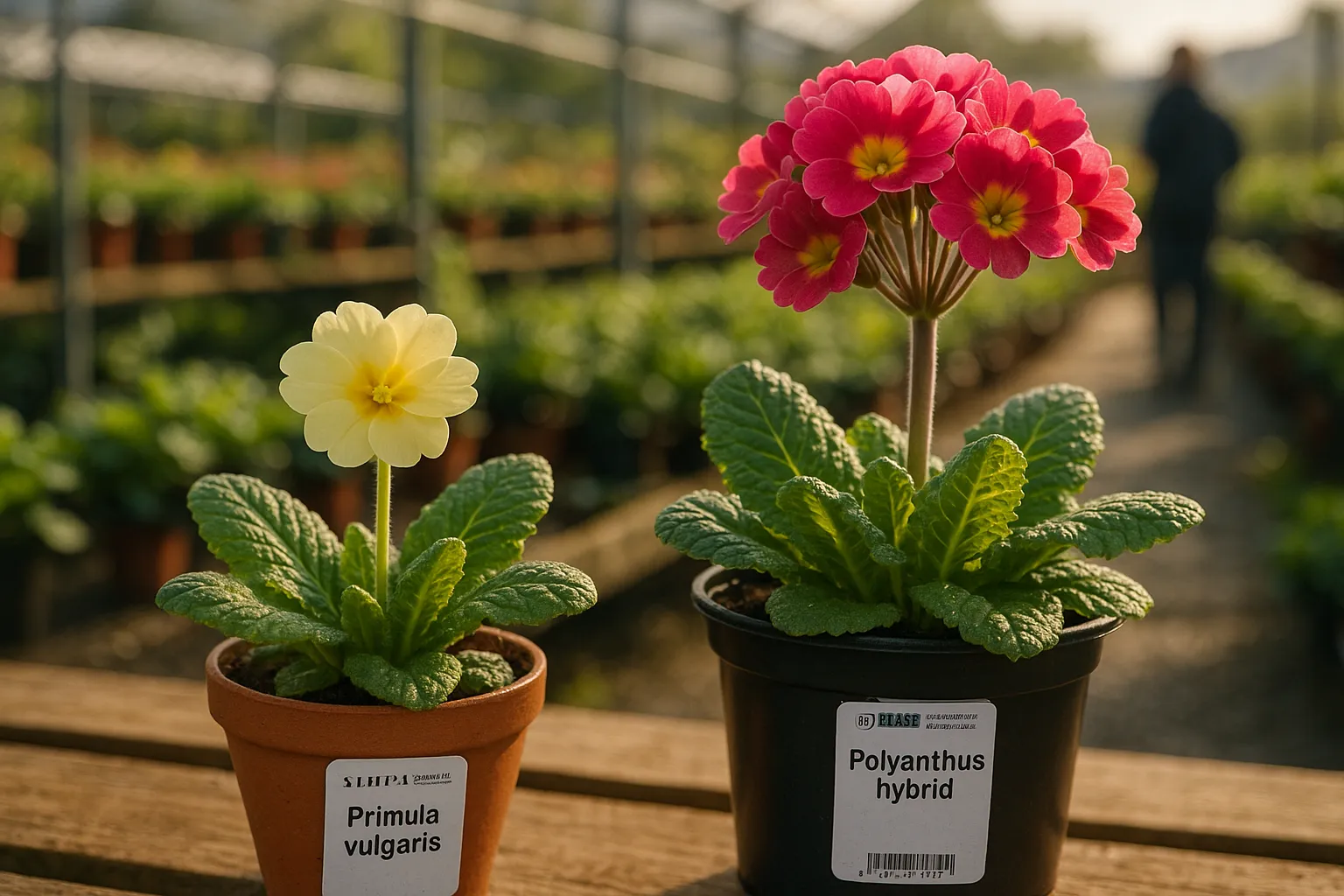
Fact: Common names overlap, and that causes confusion at nurseries. You’ll see labels that say “English primrose,” “primula,” or “polyanthus.” Generally, when a plant has single, solitary flowers on short stems it’s called a primrose. When you see clusters of many flowers on a stalk, growers usually call it polyanthus. Species and common-name examples include Primula vulgaris (common primrose), Primula elatior (oxlip), and the many hybrid groups marketed as Polyanthus or Polyantha hybrids.
Key Genetic and Breeding Differences
Fact: Polyanthus are hybrids bred for larger floriferous displays and wider color choices. Breeders crossed species like P. elatior and other Primula relatives to emphasize multi-flowered umbels and continuous bloom. Primula vulgaris retains more wild-type genetics: single blooms, stronger scent, and sometimes greater shyness about heavy sun or drought. Commercial series from brands like Thompson & Morgan and Burpee tend to list parentage: check labels for “Polyanthus hybrid” or species names if you want a specific genetic background.
Visual Comparison: Appearance and Varieties
Flower Form, Color Range, and Blooming Habit
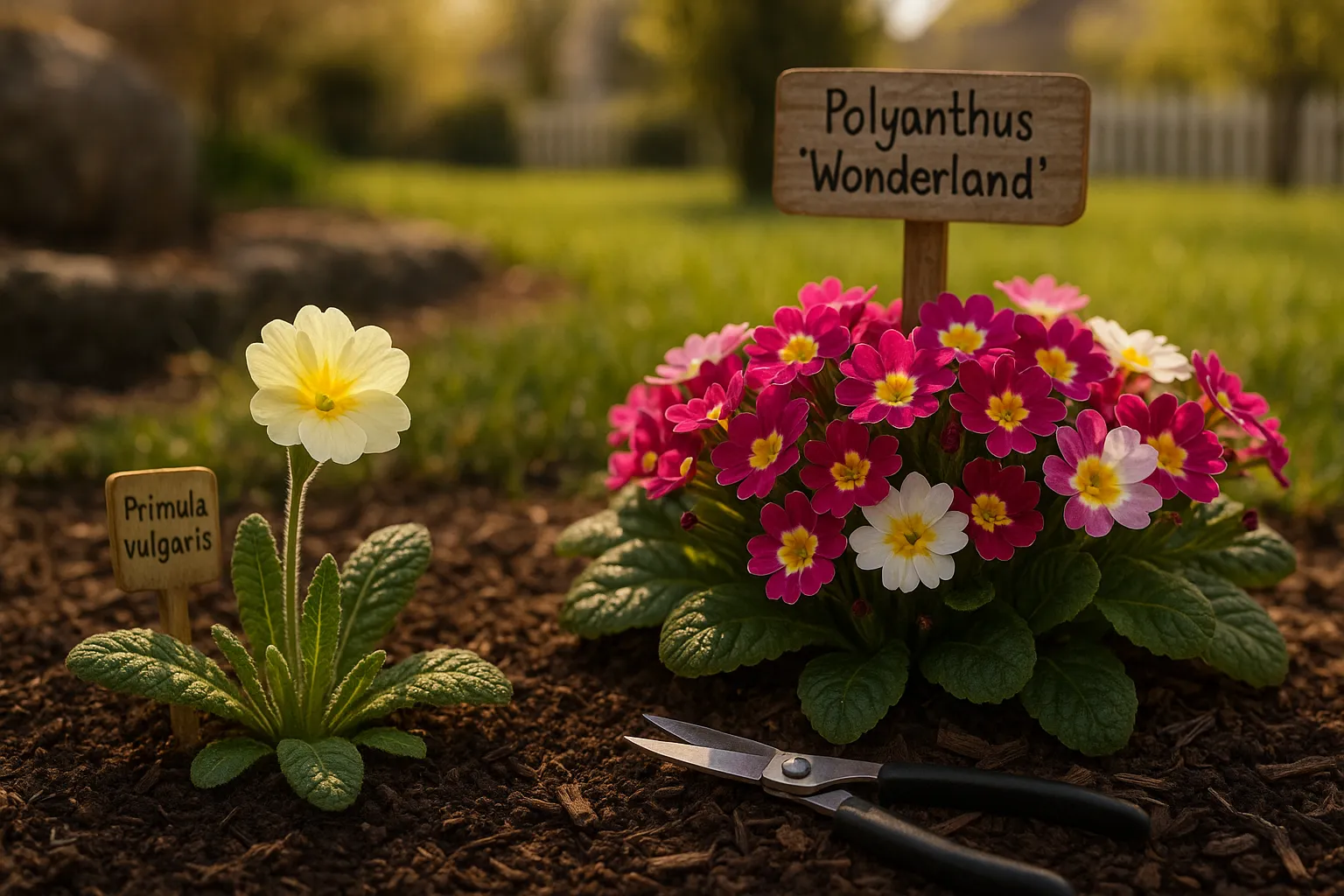
Fact: Polyanthus produce clusters: primrose usually has solitary blooms. Polyanthus show many small flowers in umbels that create a dense, carpeted look. Primroses show a single larger flower at the crown. Color ranges overlap, whites, pinks, yellows, reds, and bi-colors, but polyanthus hybrids often deliver more saturated and novel hues because of selective breeding. Blooming habit differs: primroses typically open earlier and may hold scent: polyanthus keeps a longer, showier display if you deadhead spent flowers.
Leaf, Growth Habit, and Size Differences
Fact: Leaves of primrose and polyanthus share a rosette form but differ in texture and robustness. Primula vulgaris leaves are often narrower and hairy with a strong midrib. Polyanthus leaves are broader, glossier, and sometimes more substantial under bright light. Mature size varies: most garden primroses sit 4–6 inches tall: polyanthus can reach 6–10 inches including flower stems. Growth habit affects use, primroses tuck into rock crevices neatly while polyanthus makes a fuller carpet.
Popular Cultivars and Series To Know
Fact: Several named series dominate garden centers. Look for Polyanthus series such as ‘Wonderland’, ‘Sunrise’, and brands like Gardeners’ World and Westland lines. For primroses, classic varieties include P. vulgaris cultivars and the alpine primulas sold as Primula vialii or Primula japonica relatives. The Royal Horticultural Society (RHS) often lists award-winning cultivars: check RHS plant finder for specifics and performance notes.
Growing Conditions: Soil, Light, and Climate Needs
Preferred Soil Types, pH, and Drainage
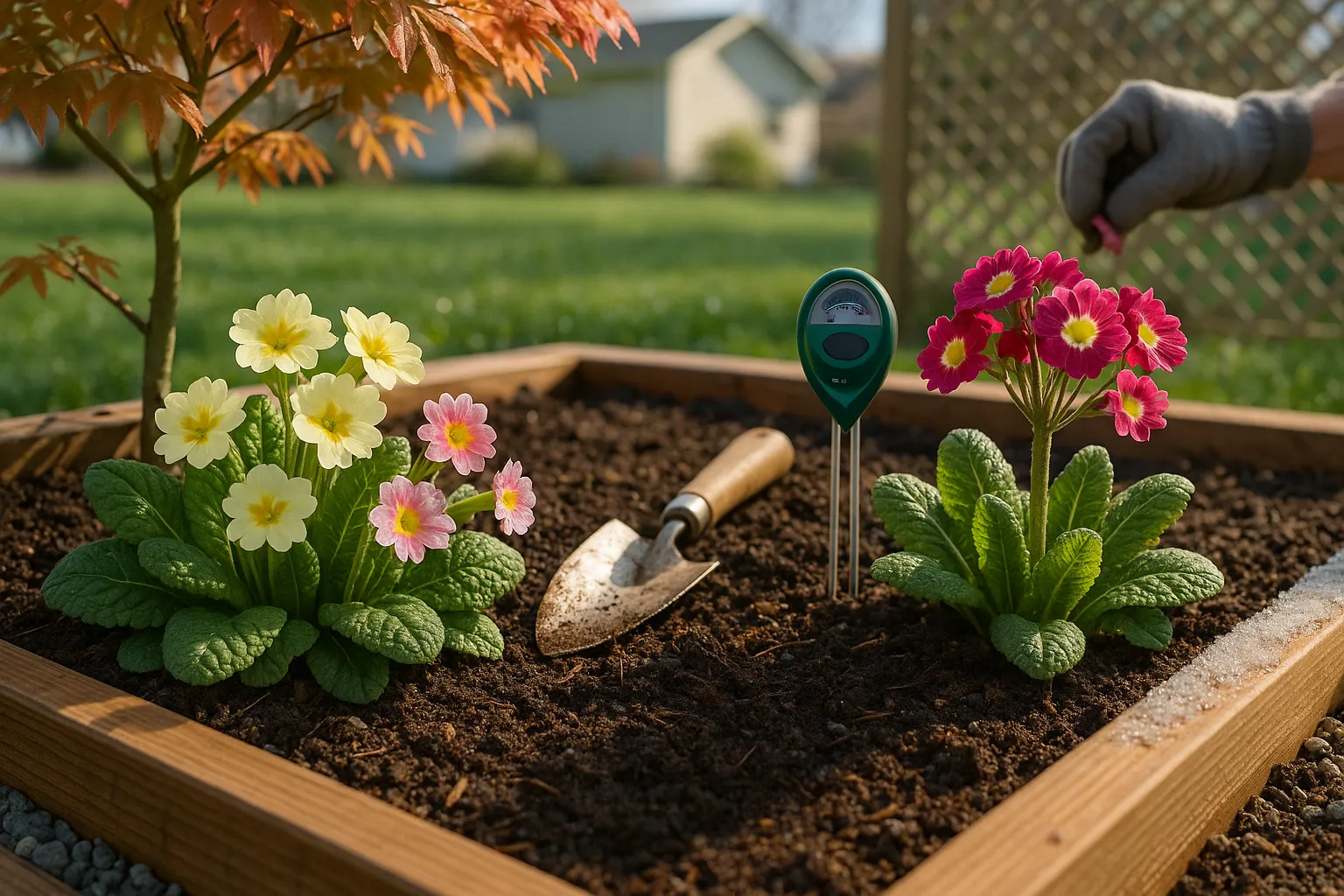
Fact: Both prefer neutral to slightly acidic, well-drained soils rich in organic matter. Aim for pH 6.0–7.0. You’ll improve performance with added compost or leaf mold. Heavy clay can work if you raise beds and improve drainage. Avoid permanently waterlogged ground: crown rot becomes a real risk when soil stays soggy through cool weather.
Light Exposure and Temperature Tolerance
Fact: You should give them dappled shade to morning sun for best results. Primrose tolerates deeper shade than many polyanthus varieties. Polyanthus handle brighter conditions but will benefit from protection during hot afternoon sun. Both prefer cool temperatures: they shine in spring and slow down when summer heat arrives. They tolerate light frost and some snow cover, that can protect buds.
Hardiness Zones and Seasonal Behavior
Fact: Most garden primulas perform well in USDA zones 4–8. Some alpine primulas extend to zone 3, while tender varieties need protection in zone 9+ during summer heat. Primroses often flower in late winter to early spring: polyanthus can extend into late spring if you remove spent blooms and keep soil moist.
Care and Maintenance: Planting, Watering, and Feeding
Planting Tips and Potting Considerations
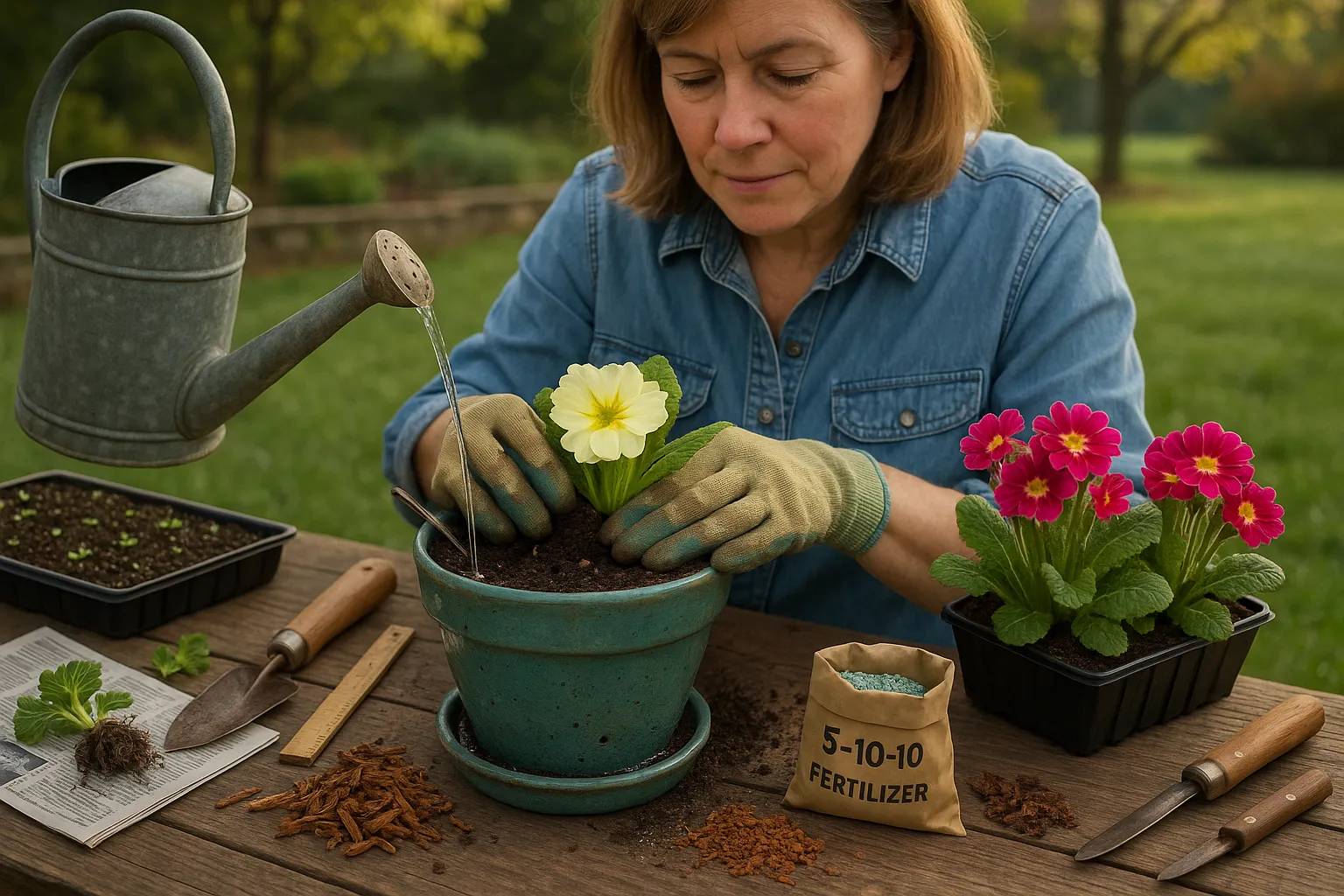
Fact: Plant at crown level: do not bury the crown. Space plants 6–10 inches apart depending on size. Use a potting mix with good drainage and compost if you grow in containers. When potting, choose a ceramic or plastic container with drainage holes and a saucer to protect surfaces, but remove standing water promptly. If you’re planting in the ground, plant after the last hard frost in cool regions or in fall in milder areas.
Watering, Fertilization, and Mulching Best Practices
Fact: Keep soil evenly moist during active growth. Water at the root zone to avoid wet foliage whenever possible. Feed with a balanced, low-nitrogen fertilizer (e.g., 5-10-10) at the start of the season and again mid-bloom. Mulch lightly with shredded bark or leaf mold to keep roots cool and conserve moisture, but keep mulch away from the crown to prevent rot.
Propagation: Seed, Division, and Cuttings
Fact: You can propagate both from seed, division, or, less commonly, cuttings. Seed gives you variety but takes longer to flower. Sow primrose seed on the surface of a moist mix and keep cool for good germination. Division works best in late summer or early autumn for established clumps: separate rosettes with roots intact. Some polyanthus roots respond to leaf cuttings or root cuttings, but division is faster for reliable results.
Landscape Uses and Design Ideas
Border, Rock Garden, and Container Applications
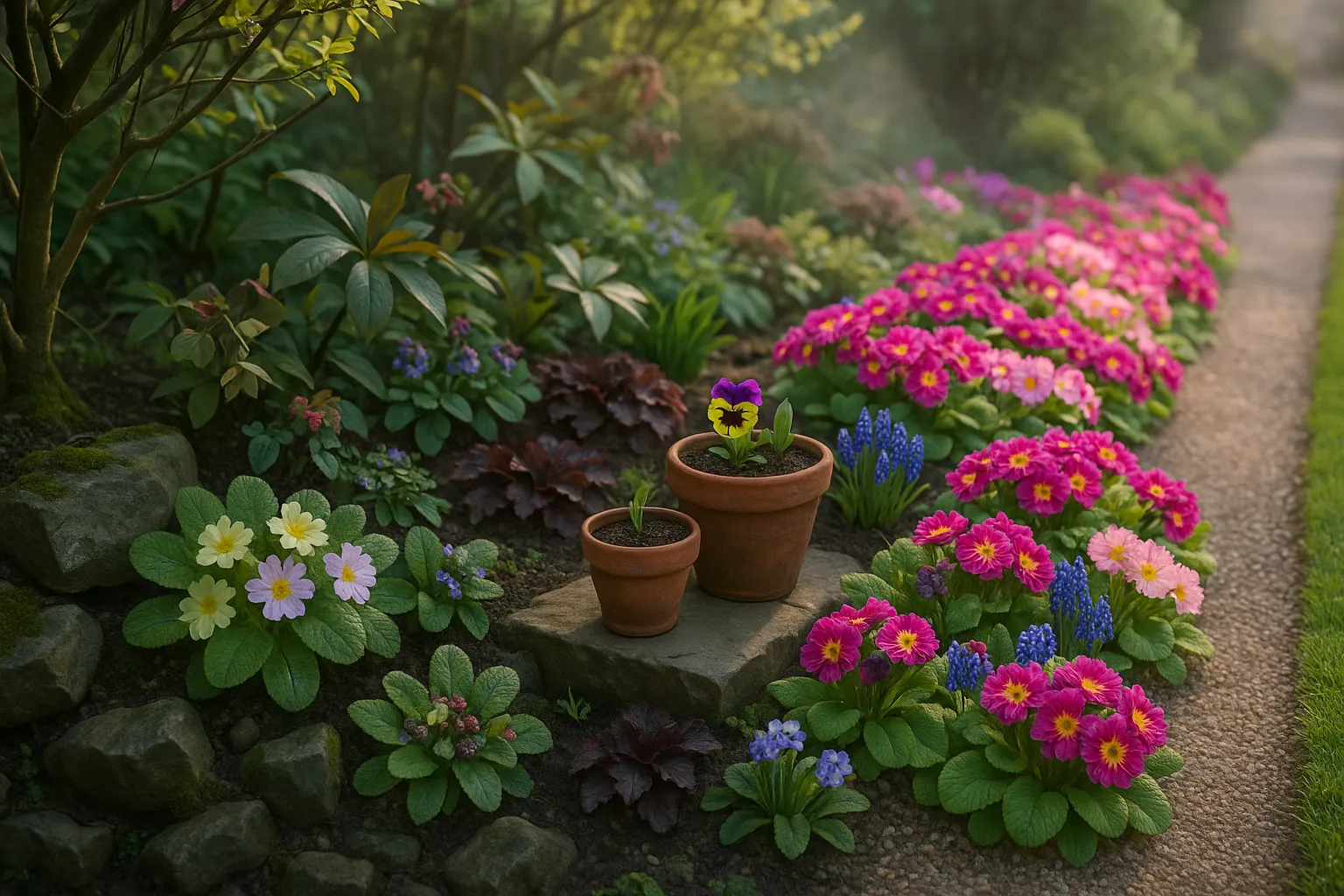
Fact: Primrose suits rock gardens and shaded edges: polyanthus shines in bright borders and mass plantings. Use primroses where the soil stays cool, under deciduous shrubs or near streams. Plant polyanthus en masse at front-of-border to create a colorful spring carpet. Both are excellent in containers: combine them with pansies or early bulbs (tulips, dwarf daffodils) for layered spring interest.
Companion Plants and Color Combinations
Fact: Choose companions that like cool soil and early season light. Pair either with Helleborus, Pulmonaria, and Heuchera for texture contrast. For color, match primrose yellow with deep blues (Viola) or pair polyanthus pinks with blue grape hyacinths for a painterly effect. Avoid pairing them with summer heat lovers like lantana in the same micro-site unless you plan seasonal rotation.
Seasonal Displays and Extending Bloom Time
Fact: Deadhead regularly to prolong bloom and remove fading umbels on polyanthus. Plant successive batches in early fall and mid-winter (mild climates) to stagger bloom into spring. Move containers to cooler spots during warm spells to extend flowering. You can also cut some flower stems for indoor vases: that encourages more blooms outdoors.
Common Problems and Troubleshooting
Pests to Watch For and Organic Controls
Fact: Slugs and snails love primula foliage and flowers. Use iron phosphate baits, copper barriers, or hand-pick at night. Aphids may appear on flower stems: blast them off with a jet of water or use insecticidal soap. Caterpillars sometimes eat leaves, floating row covers can protect young plants.
Diseases, Symptoms, and Treatment Options
Fact: Crown rot and botrytis are the main disease threats in wet, cool conditions. Symptoms include yellowing leaves, mushy crowns, or gray fuzzy mold. Improve drainage, remove infected plants, and avoid overhead watering. Fungicides labeled for gray mold can help in severe cases: otherwise, good sanitation and airflow prevent most outbreaks.
When One Type Performs Better Than The Other
Choosing Based On Site Conditions and Maintenance Level
Fact: Choose primrose for deep shade and low-maintenance corners: choose polyanthus for vivid spring color and higher visual impact. If your site stays cool and shaded, primrose will hold leaves longer and need less grooming. If you want a showy front-of-border display and you will deadhead, polyanthus rewards your effort with a longer, denser bloom.
Selecting For Aesthetic Goals and Bloom Timing
Fact: Select primrose for subtle, single-flower charm and scent: select polyanthus for massed color and variety. For very early bloom choose primrose varieties labeled “early”: for extended mid-spring color choose polyanthus series marketed for repeat flowering. Combine both in beds to get scent and show at once.
Sourcing Plants and What To Look For At The Nursery
Fact: Inspect crowns and roots before buying. Look for firm crowns, bright leaves, and no mushy bases. Ask staff for the plant’s proper name: “Primula vulgaris” versus “Polyanthus hybrid.” Brands like Burpee and Thompson & Morgan will label series and hardiness: local nurseries often carry region-tested cultivars recommended by extension services. Buy healthy plugs in autumn for fall planting or in late winter for early spring displays.
To provide the best experiences, we use technologies like cookies to store and/or access device information. Consenting to these technologies will allow us to process data such as browsing behaviour or unique IDs on this site. Not consenting or withdrawing consent, may adversely affect certain features and functions.
Functional
Always active
The technical storage or access is strictly necessary for the legitimate purpose of enabling the use of a specific service explicitly requested by the subscriber or user, or for the sole purpose of carrying out the transmission of a communication over an electronic communications network.
Preferences
The technical storage or access is necessary for the legitimate purpose of storing preferences that are not requested by the subscriber or user.
Statistics
The technical storage or access that is used exclusively for statistical purposes.The technical storage or access that is used exclusively for anonymous statistical purposes. Without a subpoena, voluntary compliance on the part of your Internet Service Provider, or additional records from a third party, information stored or retrieved for this purpose alone cannot usually be used to identify you.
Marketing
The technical storage or access is required to create user profiles to send advertising, or to track the user on a website or across several websites for similar marketing purposes.