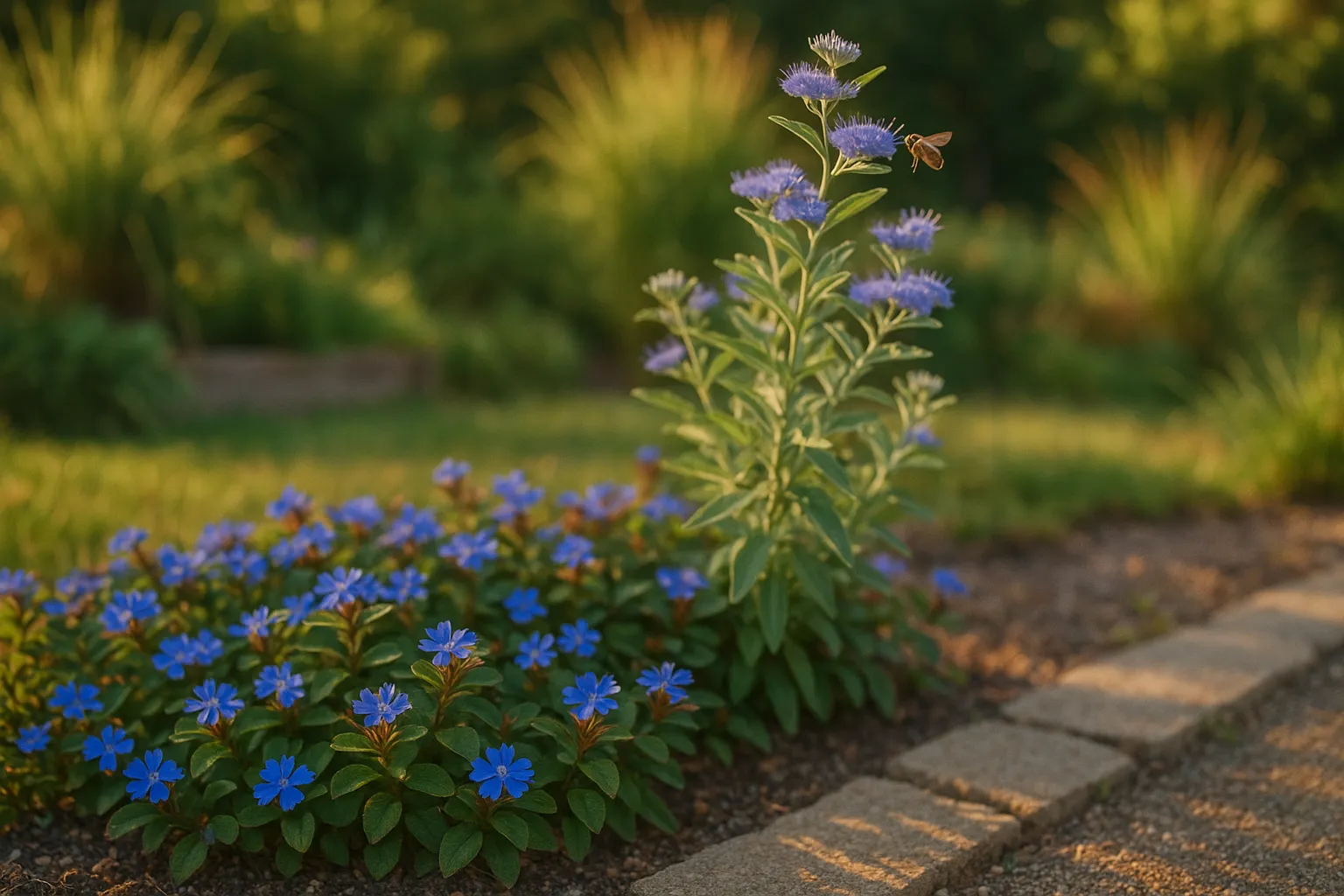
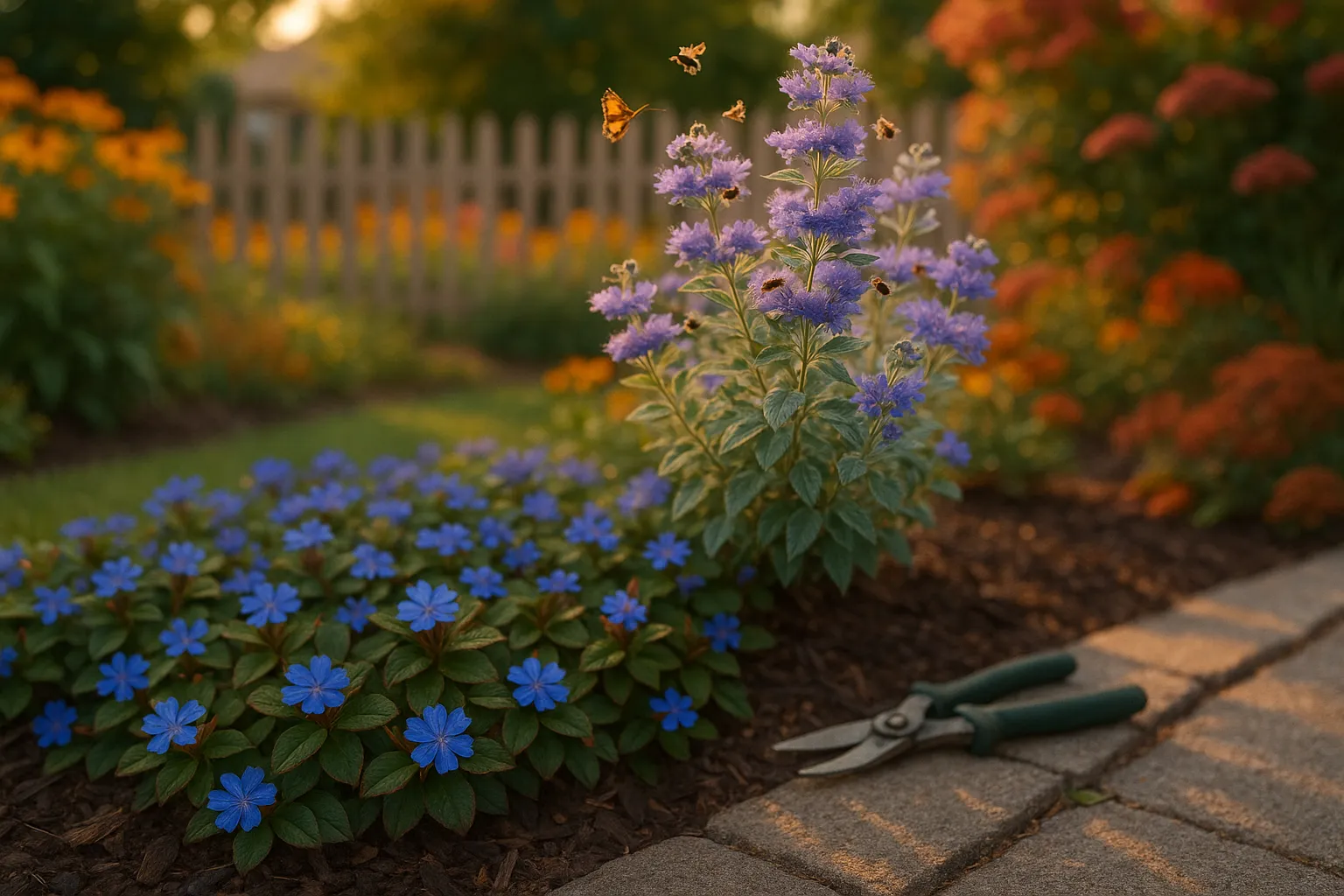
You can get a late-summer surge of bright blue blossoms without much fuss, but which plant will deliver the look and the resilience your garden needs? Ceratostigma and Caryopteris both produce striking blue flowers, yet they differ in habit, hardiness, and maintenance. This comparison will place clear, practical facts first so you can choose quickly: Ceratostigma (plumbago family) often forms low mats or compact shrubs with brilliant autumn foliage, while Caryopteris (the so-called bluebeard) makes airy, aromatic shrubs that attract pollinators. Expect sensory detail: Ceratostigma’s blossoms sit low like a cobalt groundcover: Caryopteris lifts silvery foliage and buzzing bees on late-season stems. Read on for botany, care, landscape uses, and the exact cultivars to try, plus honest pitfalls gardeners often miss.
Quick Comparison At A Glance
Fact: Ceratostigma and Caryopteris both bloom in late summer and fall, but they suit different garden roles.
Ceratostigma (example: Ceratostigma plumbaginoides): low, spreading habit: hardy to roughly USDA zones 5–8: groundcover or edging use: leaves often turn red or bronze in fall: small deep-blue flowers.
Caryopteris (example: Caryopteris x clandonensis): upright, mounded shrub: hardy to roughly USDA zones 5–9 depending on cultivar: coarse-textured silver-green foliage: fragrant leaves: sky- to periwinkle-blue flowers in late summer.
Quick decision cues:
Need a low carpet that hides soil and forms autumn color? Pick Ceratostigma.
Want a taller, airy shrub to attract bees and provide structure? Pick Caryopteris.
This quick summary gives you the top-level differences before details that follow. If you want a single sentence: Ceratostigma hugs the ground and lights up fall, Caryopteris stands up and hums with pollinators.
Botany, Appearance, and Seasonal Interest
Fact: The two genera belong to different families and show distinct growth architecture.
Flowers: Color, Timing, And Fragrance
Ceratostigma flowers appear as clusters of intense cobalt-blue blooms from late summer into early fall. The scent is faint to nil: the visual pop is the main draw. Caryopteris flowers typically sit in terminal clusters and range from sky-blue to violet-blue: they often have a light honey scent that attracts bees and butterflies. Flower timing overlaps, both peak late summer, but Caryopteris can keep producing until frost if you deadhead lightly.
Foliage, Habit, And Mature Size
Ceratostigma plumbaginoides forms a low mat 6–12 inches high and spreads 1–3 feet. Ceratostigma will sometimes act like a semi-evergreen in mild winters. Caryopteris species form mounds or small shrubs 2–4 feet high and wide. Caryopteris offers silvery, aromatic foliage (a named entity here: Caryopteris x clandonensis), which contrasts well with warm-toned companions.
Hardiness And Lifespan Differences
Ceratostigma often tolerates zone 5 cold when mulched: some species prefer slightly warmer sites. Caryopteris hardiness varies by cultivar: many handle zone 5, but some are zone 6–9. Both are typically short-lived compared with woody shrubs: expect 6–12 years for Caryopteris without renewal pruning, and several years of vigorous groundcover from Ceratostigma before thinning is needed. The Royal Horticultural Society lists both as garden-worthy with cultivar-specific notes, so check cultivar hardiness before planting.
Growing Conditions, Care, and Maintenance
Fact: Both plants prefer well-drained soil and full sun for best flowering.
Sunlight, Soil Preferences, And Drainage
Ceratostigma thrives in full sun to part shade: it tolerates average, even poor soils, provided drainage is good. Caryopteris demands full sun for the most blooms and compact form: in shade it becomes leggy and floppy. Both dislike waterlogged soil, root rot is a real risk in heavy clay without raised beds or improved drainage.
Watering, Fertilizing, And Winter Care
Water both regularly in the first season to establish roots. After established, Ceratostigma needs moderate moisture: Caryopteris tolerates some drought once mature. Fertilize lightly in spring with a balanced slow-release feed: too much nitrogen makes Caryopteris floppy and reduces flowers. In colder zones, add winter mulch around Ceratostigma crowns: for Caryopteris, cut back hard in late winter and remove winter debris to reduce rot.
Pruning, Renewal, And Common Maintenance Tasks
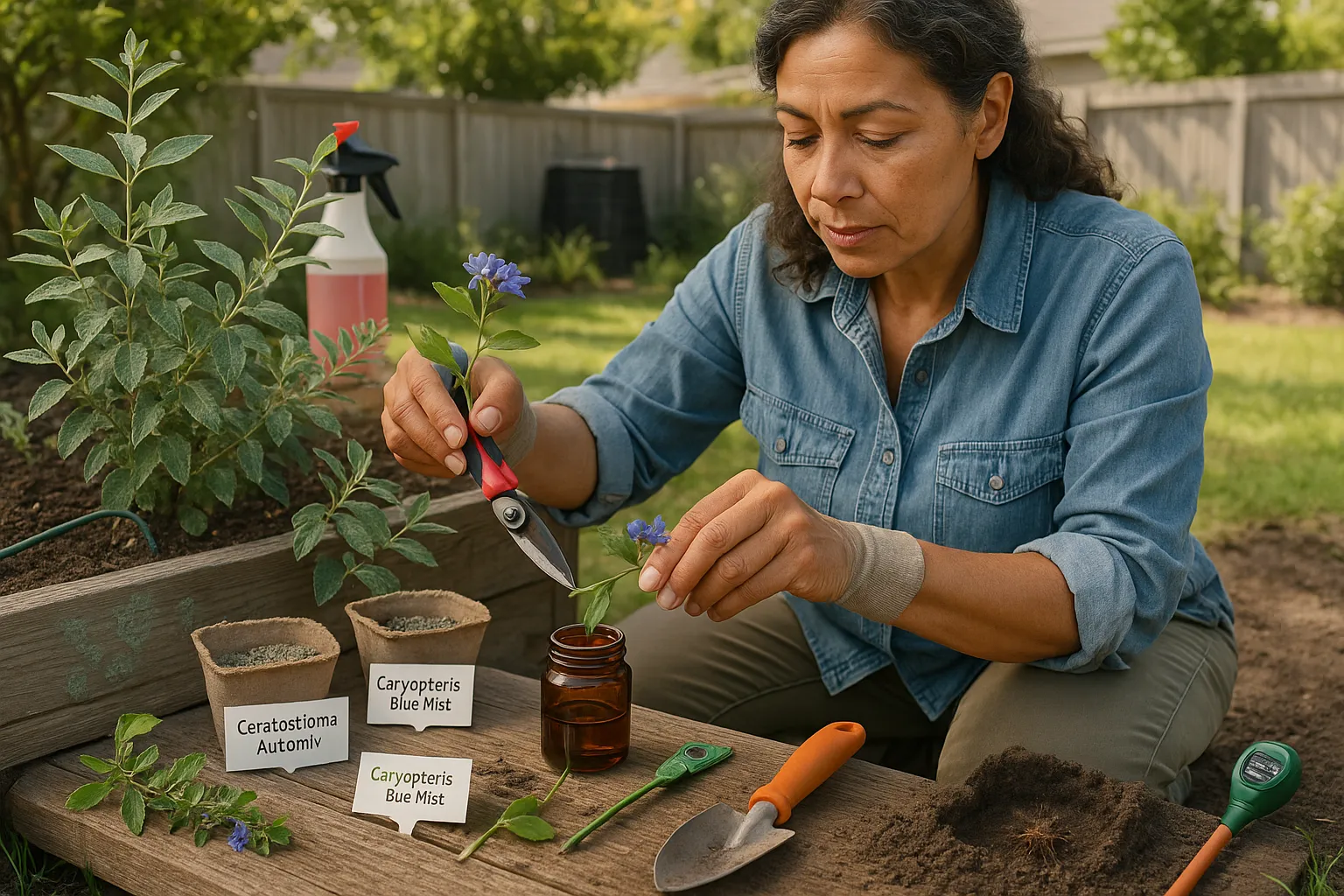
Ceratostigma needs only minimal pruning: trim after bloom to control spread and remove old stems. Caryopteris benefits from harder pruning in early spring to a few inches above the ground to encourage bushy renewal. Both may need division or replacement every several years: don’t be surprised if older Caryopteris plants look tired, renewal pruning or planting fresh starts often restores vigor. A practical tip: label your plants with cultivar names (for example, Ceratostigma ‘Lily’ or Caryopteris ‘Longwood Blue’) so you track performance.
Landscape Uses, Design Ideas, And Companions
Fact: Use each plant where its habit enhances the design: low cover or border versus mid-border, pollinator focal point.
Best Planting Locations And Styles (Borders, Containers, Masses)
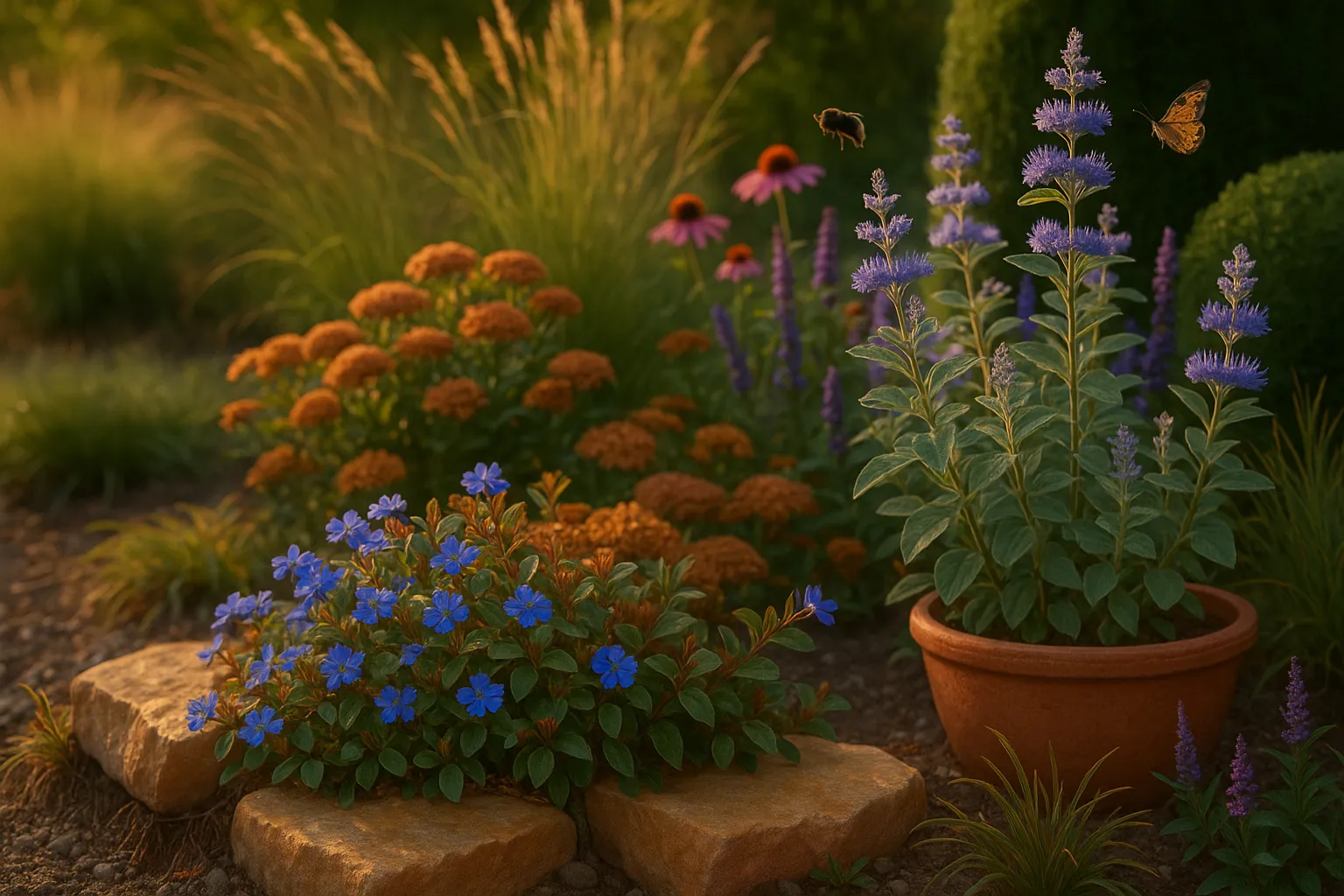
Plant Ceratostigma at the front of borders, on slopes for erosion control, or in rock gardens where its low mounding shows off fall color. It also works in containers when kept trimmed. Caryopteris suits mid-border positions, cottage gardens, and pollinator beds: it reads well in mixed perennial masses and informal hedges. Mass Caryopteris for strong late-summer color and texture contrast against grasses.
Companion Plants And Seasonal Combinations
Pair Ceratostigma with warm-toned mums, sedum ‘Autumn Joy’, or ornamental grasses that rise behind the low blue flowers. Pair Caryopteris with coneflowers (Echinacea), Salvia, and late-summer asters to build a pollinator-friendly border. Use structural evergreens (Juniperus or Buxus) behind both to anchor winter skeletons. These combinations create sequential interest and support bees and butterflies through late season.
Propagation, Common Problems, And Disease/Pest Management
Fact: Both propagate readily from cuttings: seed and division are also options depending on the genus.
How To Propagate: Seed, Cuttings, And Division
Ceratostigma: divide in spring or take semi-ripe cuttings in summer. Seeds will produce true to species but cultivars may not come true. Caryopteris: softwood or semi-ripe cuttings root easily in late spring or early summer: division is possible but less common because root disturbance can stress the plant. Label propagated material with the parent cultivar name.
Major Pests, Diseases, And Troubleshooting Tips
Both suffer few serious pests. Caryopteris may attract spider mites in hot dry spells: treat with increased water or insecticidal soap. Ceratostigma can be susceptible to crown rot in poorly drained sites: lift and replant in raised beds if drainage is the issue. Watch for powdery mildew on Caryopteris in humid climates: ensure air flow and avoid overhead watering. If plants decline, check soil pH and compaction, and confirm winter dieback vs disease before replacing, sometimes it’s simply age or poor siting.
Top Cultivars And Varieties To Consider
Fact: Certain named cultivars deliver reliably better performance for gardens and containers.
Recommended Ceratostigma Cultivars
Ceratostigma plumbaginoides: the standard choice for groundcover with reliable blue flowers and fall color.
Ceratostigma willmottianum: a taller species that forms a small shrub and brings larger leaves and rich autumn tones.
These cultivars are widely available at garden centers and recommended by plant societies for their garden performance.
Recommended Caryopteris Cultivars
Caryopteris x clandonensis ‘Worcester Gold’: notable for its golden foliage and blue flowers, useful in contrast plantings.
Caryopteris ‘Longwood Blue’: a compact, floriferous selection with strong blue blooms.
Caryopteris ‘Heavenly Blue’ (or similar selections): referred to often by nurseries for pollinator gardens.
Choose cultivars suited to your USDA zone and observe local trial results when possible: regional performance varies.
Choosing Between Ceratostigma And Caryopteris: Practical Decision Guide
Fact: Your site conditions and design goals should decide which genus to plant.
Climate: If you face harsh winters and want groundcover, verify Ceratostigma cultivar hardiness for your zone. For milder winters and pollinator focus, Caryopteris often thrives.
Soil: For heavy, wet soils favor neither, improve drainage or select raised beds. For sandy or loamy soils both will do fine.
Space: Use Ceratostigma where height is limited: use Caryopteris where 2–4 feet of structure is desired.
Aesthetic And Maintenance Considerations
If you want low-maintenance, ground-hugging color that also gives fall foliage, Ceratostigma is your pick. If you want seasonal scent, bee activity, and vertical texture, choose Caryopteris. Maintenance differs: minimal trimming vs. annual hard pruning.
Final Planting And Care Checklist To Get Started
Confirm cultivar hardiness for your USDA zone (check USDA and RHS guidance).
Plant in full sun for best bloom (Caryopteris requires it more than Ceratostigma).
Improve drainage with compost or raised beds if soil is heavy.
Water regularly during the first season: then reduce frequency.
Prune Caryopteris in early spring: trim Ceratostigma after bloom.
Monitor for root rot and spider mites: act early.
Use these steps and you’ll pick the right blue-flowering shrub for your garden and get it off to a strong start. Try one of each in different beds to compare side-by-side, you’ll learn fast which suits your microclimate and style.
To provide the best experiences, we use technologies like cookies to store and/or access device information. Consenting to these technologies will allow us to process data such as browsing behaviour or unique IDs on this site. Not consenting or withdrawing consent, may adversely affect certain features and functions.
Functional
Always active
The technical storage or access is strictly necessary for the legitimate purpose of enabling the use of a specific service explicitly requested by the subscriber or user, or for the sole purpose of carrying out the transmission of a communication over an electronic communications network.
Preferences
The technical storage or access is necessary for the legitimate purpose of storing preferences that are not requested by the subscriber or user.
Statistics
The technical storage or access that is used exclusively for statistical purposes.The technical storage or access that is used exclusively for anonymous statistical purposes. Without a subpoena, voluntary compliance on the part of your Internet Service Provider, or additional records from a third party, information stored or retrieved for this purpose alone cannot usually be used to identify you.
Marketing
The technical storage or access is required to create user profiles to send advertising, or to track the user on a website or across several websites for similar marketing purposes.