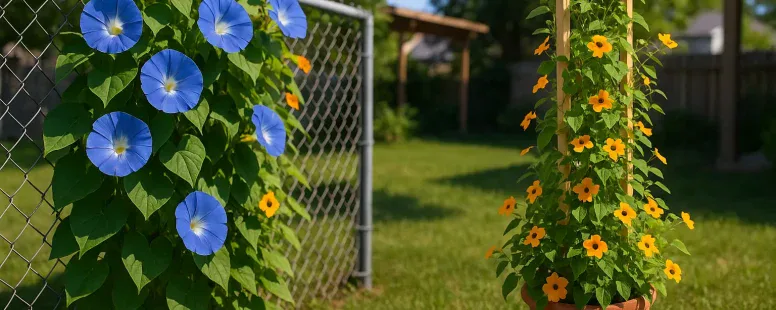
Morning Glory vs. Black-Eyed Susan Vine
Both vines climb quickly and deliver big summer color, but they behave very differently in your garden. Which one fits your goals, fast, annual spectacle or more controlled, sometimes perennial charm? This article compares Morning Glory vs. Black-Eyed Susan Vine so you can choose with confidence. You’ll get clear facts first, then practical guidance: how they look, how they grow, what problems they attract, and where each makes the most impact. Expect vivid examples, honest trade-offs, and a few real-world tips learned from trial and error in small urban yards and larger suburban plots.
Quick Comparison Snapshot
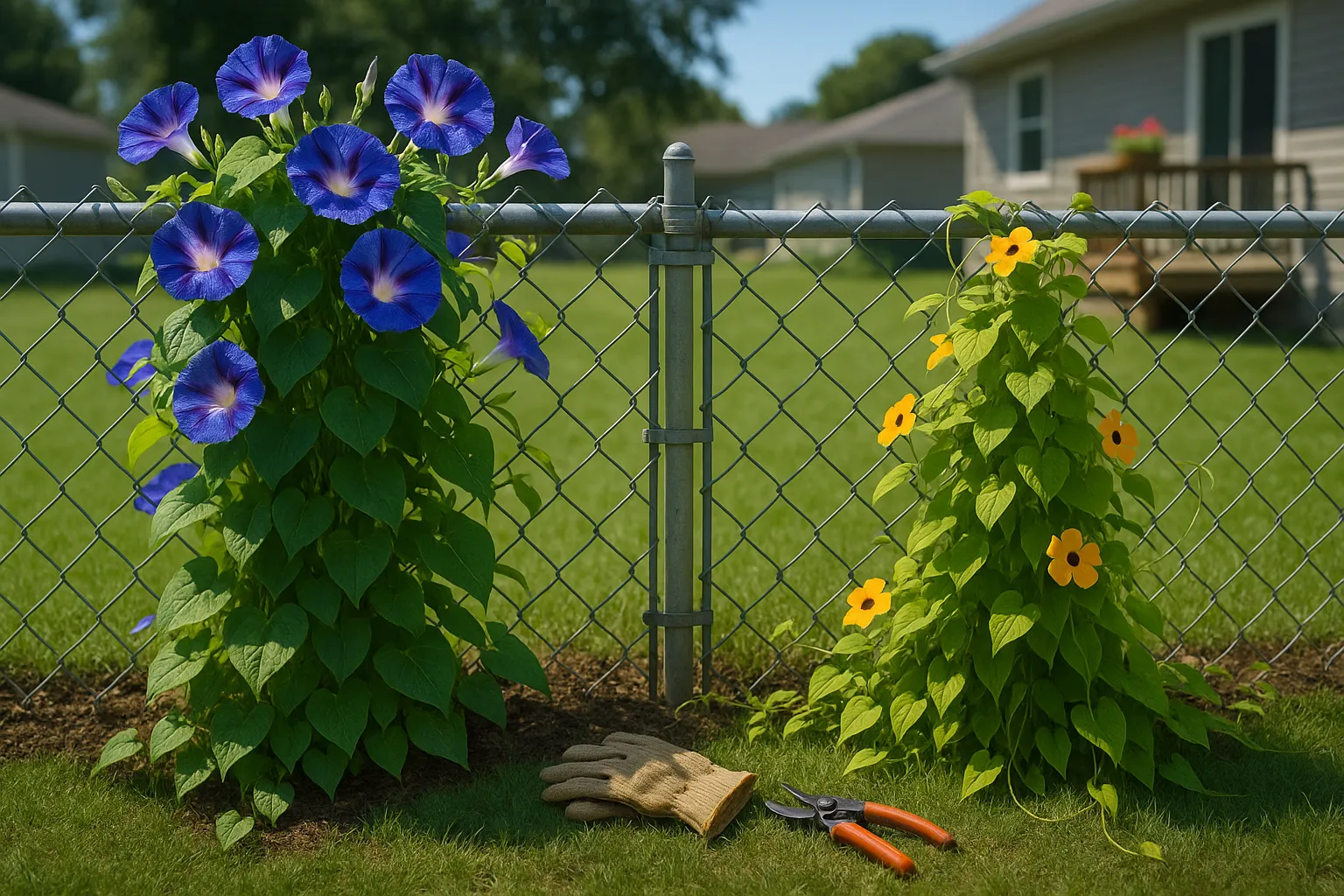
Fact: Morning glory (Ipomoea spp.) is usually an annual with explosive morning blooms: Black-eyed Susan vine (Thunbergia alata) often acts like a tender perennial in warm areas but is grown as an annual in cool climates.
At a glance:
- Growth habit: Morning glory climbs vigorously with twining stems: black-eyed Susan vine climbs but can also sprawl or trail.
- Bloom timing: Morning glories open early and fade by afternoon: black-eyed Susans open later and often last longer through the day.
- Hardiness: Morning glory tolerates cooler nights better: Thunbergia prefers warm, frost-free conditions.
- Maintenance: Morning glories self-seed heavily: black-eyed Susans require gentler pruning and may need overwintering indoors in zone 7 and colder.
Use this snapshot to decide quickly. If you want instant, low-cost coverage and don’t mind volunteers next year, pick morning glory. If you prefer day-long blooms, softer foliage, and a slightly more manageable spread, choose black-eyed Susan vine.
Real-world note: I once planted Morning Glory on a chain-link fence and by July it shaded the back yard. The neighbors loved the color, but the seedlings returned for years without asking.
Appearance And Growth Habit
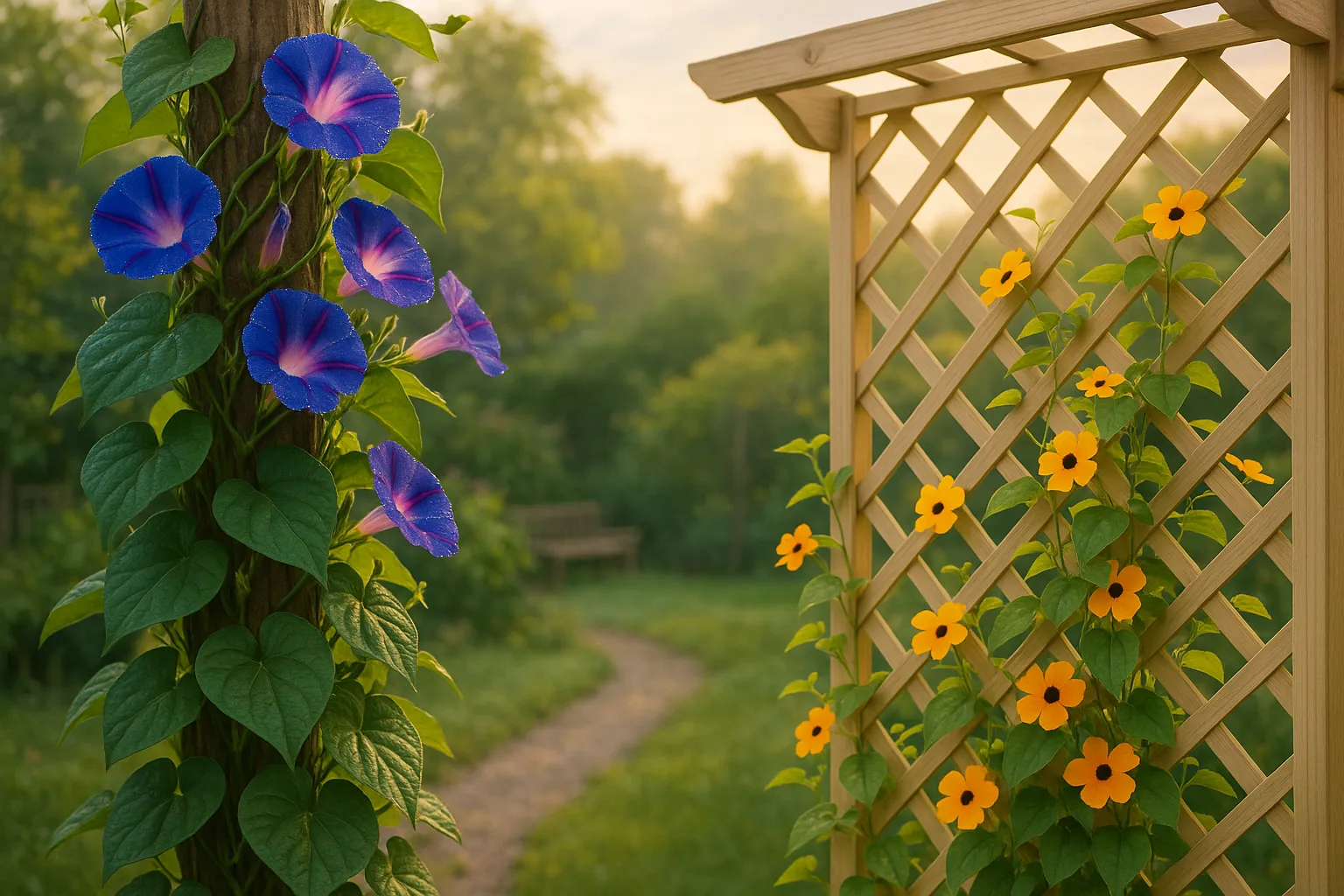
Fact: The two vines contrast strongly in leaf shape, flower form, and mature size, see the breakdown below.
Leaf Shape, Texture, And Vigor
Morning glory: Leaves are typically heart-shaped, 3–6 inches wide, with a smooth texture and a more robust, leathery feel. The vine shows raw vigor: stems twine tightly around supports and suck up water fast.
Black-eyed Susan vine: Leaves are ovate to triangular, usually smaller and softer. Texture feels thinner and more delicate. The plant grows with a looser habit, it will scramble or trail as well as climb, so you get a softer silhouette on trellises.
Practical tip: If you want dense green privacy fast, morning glory’s larger leaves fill gaps quicker. If you want a lighter curtain that lets dappled light through, Thunbergia gives a more delicate screen.
Flower Form, Color, And Bloom Timing
Morning glory: Flowers are trumpet-shaped, vivid blues, purples, pinks, and whites. They open at dawn and often close by late afternoon. The display is spectacular each morning but brief every day.
Black-eyed Susan vine: Flowers are flat-faced, often orange, yellow, or cream, with a dark central eye. They open later and often remain open longer during the day. The effect across daylight hours feels steadier.
Anecdote: I learned to water black-eyed Susan vine in late afternoon to keep petals fresh for evening guests: morning glory asked for an early soaking instead.
Mature Size, Growth Rate, And Climbing Behavior
Morning glory: Can reach 10–15 feet in one season on sturdy supports. Growth rate: very fast. Climbs by twining, needs something to wrap around.
Black-eyed Susan vine: Typically reaches 6–10 feet if trained, slower and less aggressive. It scrambles and can be trained on a trellis or left to spill from a container.
If you have a delicate pergola, pick Thunbergia to avoid weight stress. If you need a rapid green wall, morning glory will do the heavy lifting.
Planting Requirements And Care
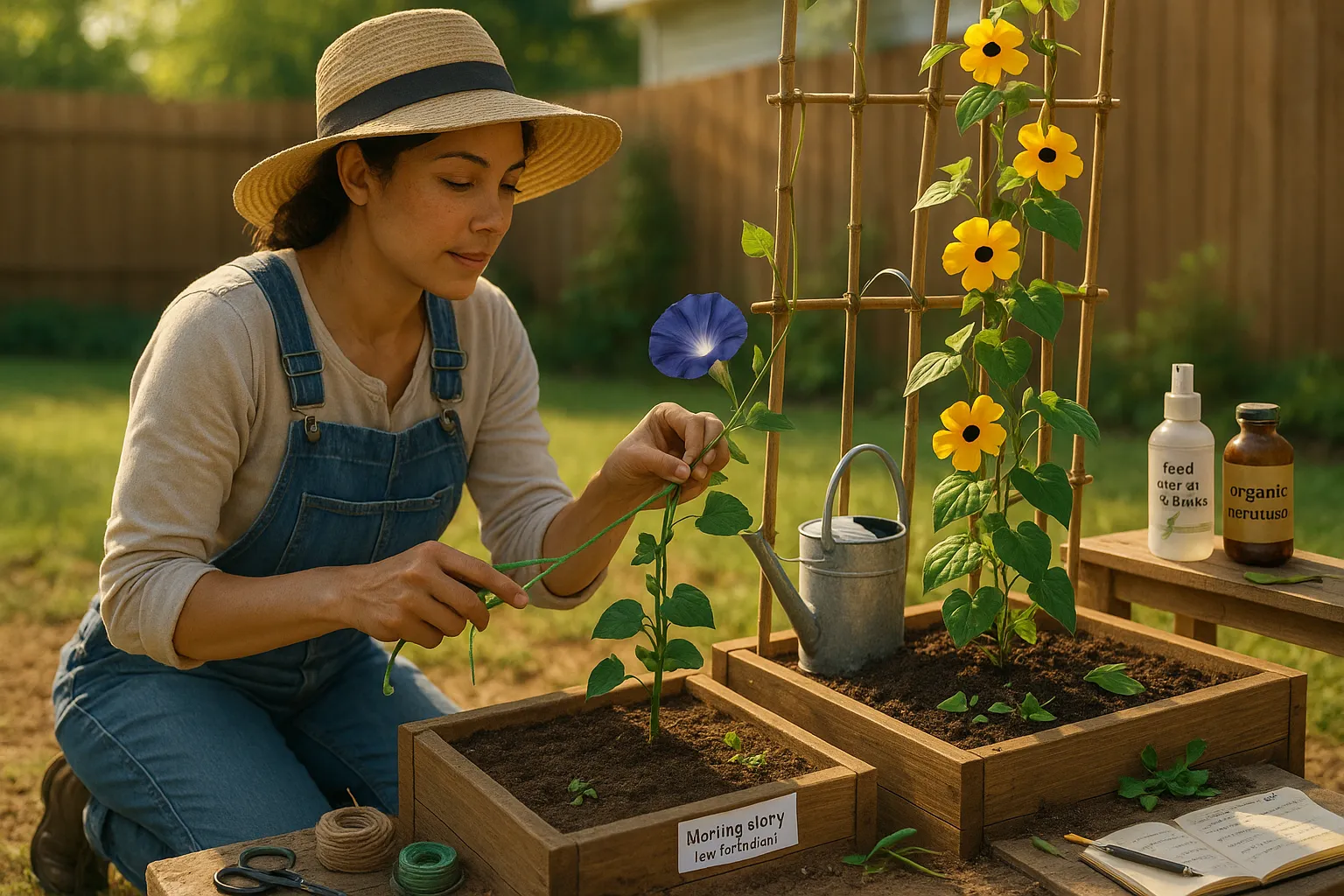
Fact: Both vines prefer full sun to part shade, but soil fertility and watering needs differ enough to change how you care for them.
Light, Soil, And Water Needs
Morning glory: Prefers full sun and tolerates poorer soils. Use well-drained soil. Water moderately: overwatering reduces flowering. Fertile soil speeds growth but can mean more leaves and fewer blooms.
Black-eyed Susan vine: Prefers full sun to light shade and richer soil with good drainage. It likes consistent moisture: dry spells reduce flowering quickly.
Tip: Use a balanced potting mix for containers: add compost to garden beds. If you have heavy clay, plant on a berm or use raised beds to prevent root rot in Thunbergia.
Fertilizing, Pruning, And Training On Supports
Fact: Neither vine is high-maintenance, but feeding and training change bloom quality.
- Morning glory: Minimal feeding. A low-nitrogen fertilizer helps promote flowers over foliage. Train by tying young shoots to supports: they will twine upward.
- Black-eyed Susan vine: Benefits from regular, light feeding, liquid fertilizer every 4–6 weeks during the season. Prune to shape and remove spent stems: this encourages new blooms.
Training note: Use twine or soft plant ties. Avoid wire ties that can cut stems as they thicken.
Propagation And Lifecycle (Annual vs. Perennial Behavior)
Fact: Morning glory commonly behaves as an annual in most regions, but some species are perennial in frost-free zones: black-eyed Susan vine is tender perennial in zones 9–11 and annual elsewhere.
Propagation: Both propagate easily from seed. Thunbergia can also root from cuttings. Morning glory self-seeds prolifically: if you don’t want volunteers, deadhead or remove seedpods.
Honest moment: I let a patch of morning glory go one season because I liked the color: the next spring I had thirty new plants. That was delightful, until it wasn’t.
Climate, Hardiness, And Seasonality
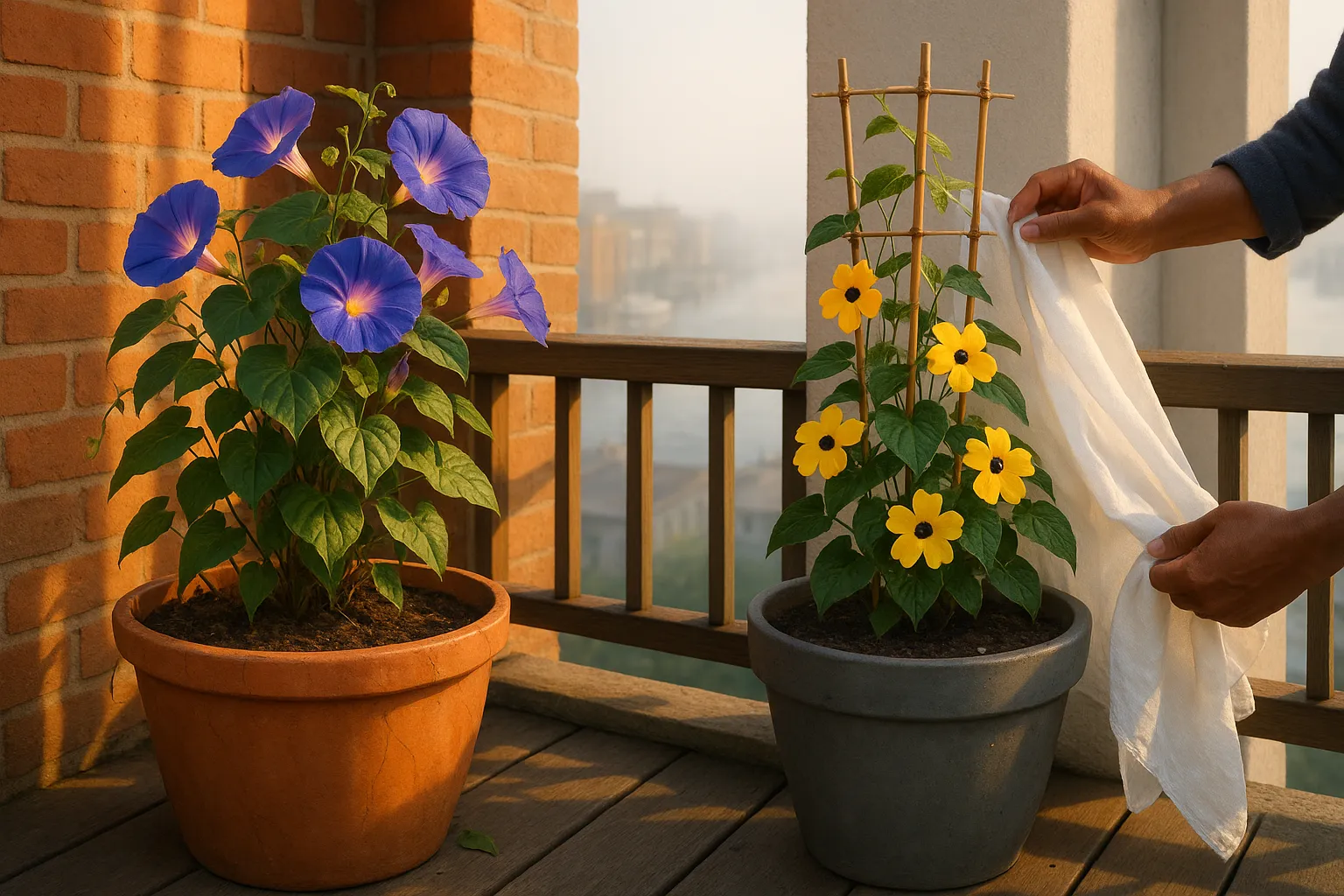
Fact: USDA zones and frost tolerance are the main limits: pick the vine that suits your local winter severity.
USDA Zones, Frost Tolerance, And Container Growing
Morning glory: Hardy roughly in USDA zones 5–11 as an annual: some species persist in warmer zones. Frost kills the above-ground growth, but seeds survive in soil.
Black-eyed Susan vine: Best in USDA zones 9–11 as a perennial. In zones 7–8 you can grow it in containers and bring it indoors before frost.
Container tip: Both vines do well in large containers. Use a 15–20 gallon pot for vigorous growth and ensure good drainage. Move containers to a protected spot before first hard frost if you want to overwinter Thunbergia indoors.
Performance In Different Climates And Microclimates
Fact: Microclimates, like heat-reflecting walls or cool, shaded courtyards, change vine performance.
- Hot, dry sites: Morning glory tolerates heat and brief drought better than Thunbergia.
- Humid, shaded sites: Black-eyed Susan vine tolerates partial shade but suffers in poorly drained sites.
Example: In a coastal city where fog cools evenings, Thunbergia maintained blooms longer than morning glory, which needed those sunny mornings to shine.
Pests, Diseases, And Common Problems
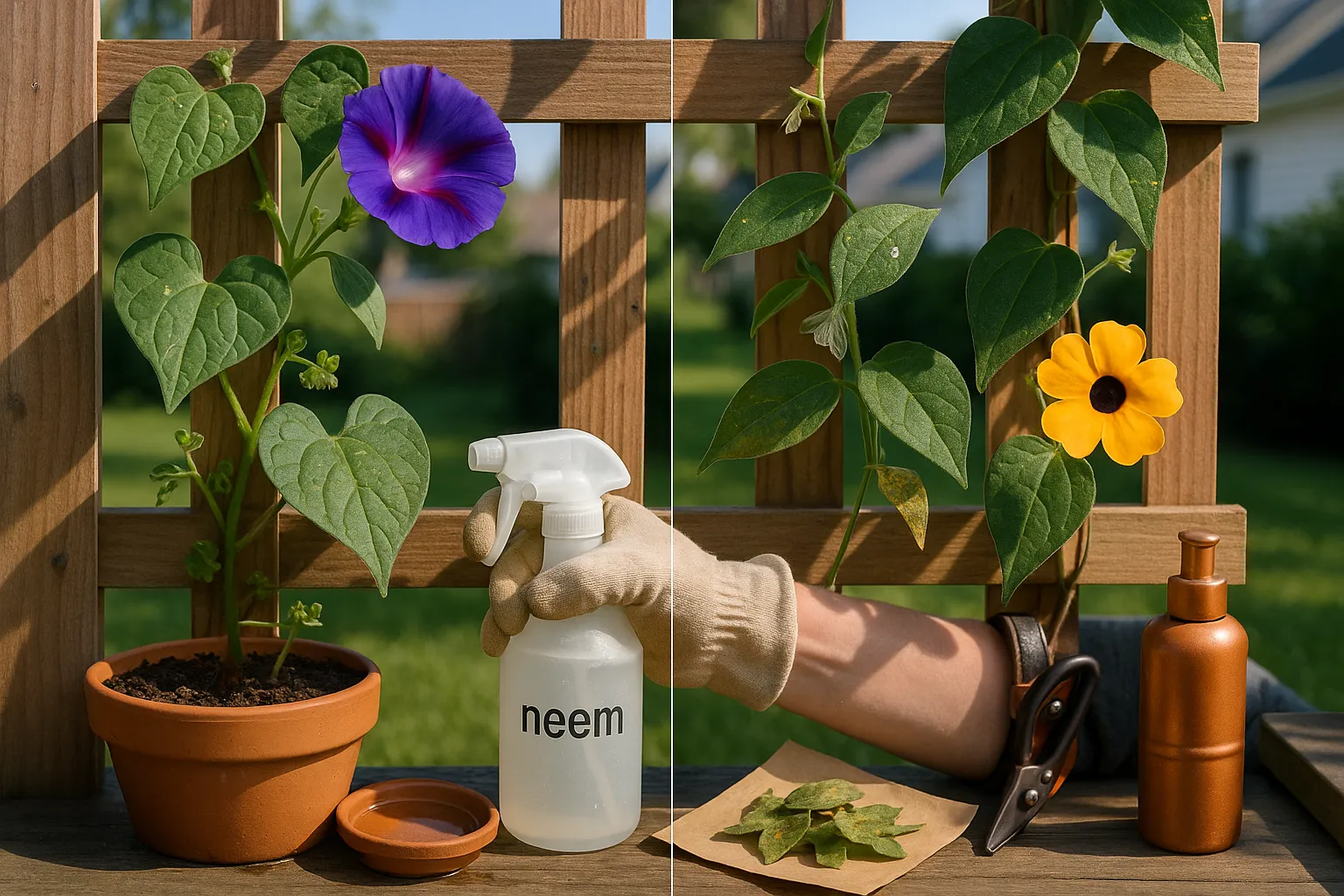
Fact: Each vine has a predictable set of pests and diseases: you can avoid most problems with good cultural care.
Typical Pests And Diseases For Each Vine
Morning glory: Susceptible to leaf miners, aphids, and fungal leaf spots in wet conditions. Powdery mildew appears in poor air circulation.
Black-eyed Susan vine: Attracts whiteflies, spider mites, and sometimes thrips. Overwatering leads to root rot and crown issues.
Prevention, Organic Controls, And Troubleshooting
Fact: Prevention beats cure, proper spacing, airflow, and watering routines cut problems dramatically.
- Cultural controls: Water at the soil, not on leaves. Provide good air flow by pruning. Avoid overhead watering late in the day.
- Organic controls: Use insecticidal soap or neem oil for aphids, whiteflies, and mites. For fungal issues, remove affected leaves and apply copper or sulfur fungicides if needed.
Troubleshooting tip: If blooms decline suddenly, check soil moisture and look for root-bound containers. Many flowering issues trace back to inconsistent watering or too-rich fertilizer.
Landscape Uses And Design Ideas
Fact: Both vines fit specific design roles, one for bold, quick coverage: the other for softer, mixed planting schemes.
Best Uses, Fences, Arbors, Containers, And Groundcover
Morning glory: Best for quick fence coverage, screening chain-link, and adding color to fences and trellises. It’s also excellent as temporary summer shade on pergolas.
Black-eyed Susan vine: Works well on arbors where you want softer drape, in containers that spill over patios, and as edging where it can trail. It’s friendlier in mixed containers with annuals and small shrubs.
Design note: Use morning glory for vertical drama: use Thunbergia for layered, cottage-style plantings.
Companion Plants And Color Combinations
Fact: Companion plants either support the vine visually or help its growth conditions.
- For morning glory: Pair with sun-loving perennials like Echinacea, Salvia, or ornamental grasses to offset the trumpet blooms.
- For black-eyed Susan vine: Pair with impatiens, coleus, or trailing lantana in containers for varied texture and extended color.
Color idea: Blue morning glory and yellow coreopsis create a striking complementary palette. Orange Thunbergia with purple petunias yields a warm, inviting container.
Choosing The Right Vine For Your Garden
Fact: Your climate, desired maintenance level, and design goals determine which vine fits best.
Pros And Cons Side-By-Side
Morning glory, Pros: Rapid coverage, bold morning display, low initial cost (seeds), drought tolerant. Cons: Aggressive reseeding, brief daily bloom window, can be invasive in some areas.
Black-eyed Susan vine, Pros: Longer-lasting blooms through the day, softer foliage, good in containers, less likely to self-seed. Cons: Tender to frost, needs more consistent moisture and lighter feeding.
Decision Guide: Match Plant Traits To Garden Goals
Fact: Match simple traits to what you want.
- Want privacy fast, minimal fuss, and lots of morning color? Choose morning glory. Deadhead if you don’t want volunteers.
- Want gentler texture, day-long color, and container versatility? Choose black-eyed Susan vine and plan to protect it from frost.
Practical checklist for you:
- Zone 8 or colder and don’t want to overwinter plants: morning glory is easier.
- Container gardener who likes mixed pots and seasonal swapping: Thunbergia fits better.
- Concerned about invasiveness: avoid unchecked morning glory in natural areas and check local regulations.
Vulnerable reveal: I once lost a half-grown Thunbergia to a late frost because I waited too long to move a container indoors. That taught me to mark the first hard frost date on my calendar and not rely on memory.

- Software Development Models Comparison: SDLC Frameworks - October 23, 2026
- WxWidgets Alternatives for Cross-Platform GUI Development - October 22, 2026
- Best Tpu - October 21, 2026
by Ellie B, Site Owner / Publisher