You can change the face of a garden simply by choosing what you plant in the front rows. Some gardeners favor ornamental herbs for scent, texture, and year-round structure. Others pick traditional bedding plants for bold seasonal color and instant curb appeal. This article compares both choices side by side so you can decide what fits your taste, time, and site. Expect clear examples, real trade-offs, and practical steps you can use this weekend to reshape a bed or pot.
What Each Approach Means And When Gardeners Use Them
Fact: Ornamental herb beds emphasize foliage, scent, and multiuse, while traditional bedding focuses on blooms and seasonal color.
Defining Ornamental Herb Beds
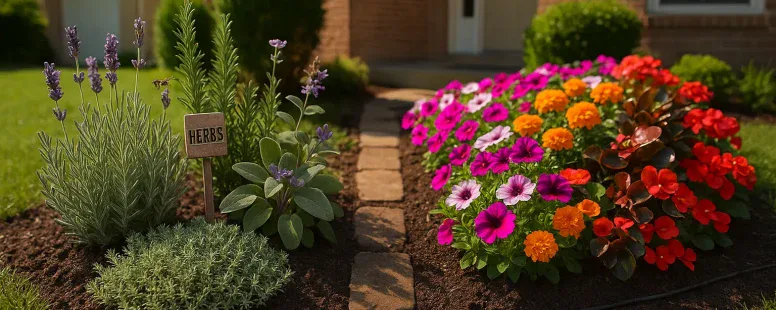
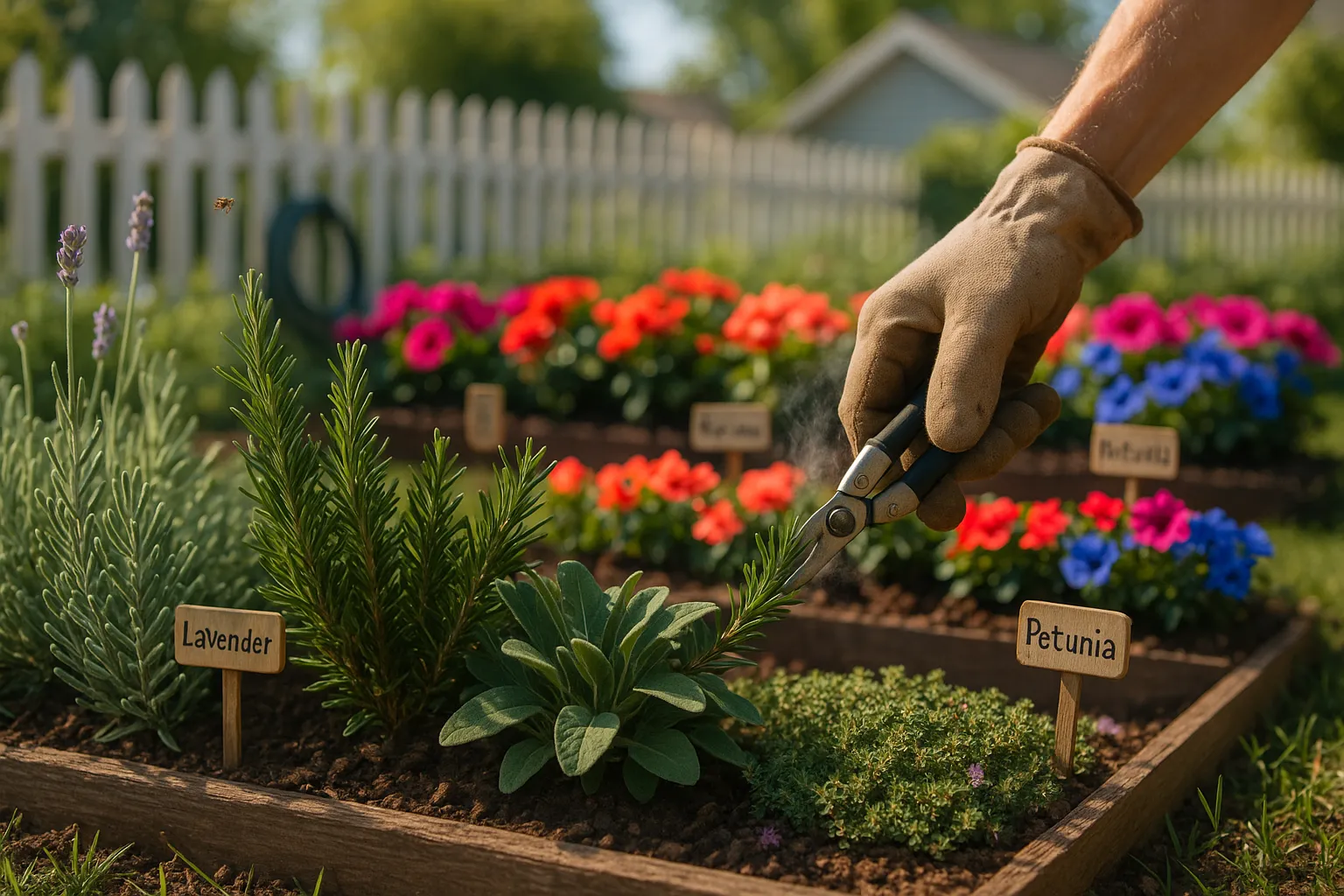
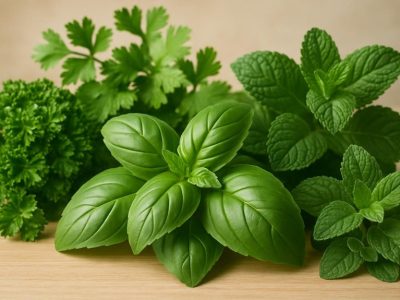
Ornamental herb beds center on plants grown mainly for leaves, fragrance, and culinary or medicinal use. Examples include Lavandula angustifolia (English lavender), Rosmarinus officinalis (rosemary), Salvia officinalis (sage), and Thymus vulgaris (thyme). You choose herbs for texture, aromatic layers, and foraging value. Designers often plant them in long drifts, mixed borders, or formal knot beds. People use herbs when they want low-water options, pollinator support, and multi-season interest. Many herb species also tolerate pruning and lend themselves to repeat harvests.
Defining Traditional Bedding Plants
Fact: Traditional bedding plants deliver high-impact color during a defined season.
Traditional bedding plants are annuals or tender perennials grown mainly for flower display. Think Petunia, Begonia (Begonia ×semperflorens-cultorum), Impatiens walleriana, and Lobelia erinus. Nurseries sell them in flats for quick planting. You plant bedding when you want dramatic color sequences, spring pansies, summer petunias, fall mums. Gardeners rely on them for instant gratification, predictable bloom cycles, and wide color ranges. Beds are often rotated each season to refresh color and design.
Comparing Visual Impact And Seasonal Interest
Fact: Herbs give layered texture and subtle scent: bedding plants give loud, focused color.
Color, Texture, And Form Differences
Ornamental herbs give you varied leaf colors, silver-gray lavender, glossy green rosemary, purple-leaf sage, and architectural form. Their textures range from feathery fennel to leathery rosemary. Bedding plants emphasize flower mass: a block of petunias creates a single visual note. Use herbs where you want repeated motifs and more restrained palettes. Use bedding where you want a color billboard.
Seasonal Performance And Bloom Timing
Ornamental herbs often offer extended seasons. Lavender blooms in mid to late summer and keeps form into fall: thyme flowers in late spring and again after trimming. Many herbs hold foliage through mild winters (USDA Hardiness Zones 7–9 for common rosemary). Bedding plants usually peak quickly: petunias and impatiens flower all summer but die back in frost. Your choice depends on whether you prefer long-running subtlety or intense but time-limited displays.
Design Flexibility And Styling Options
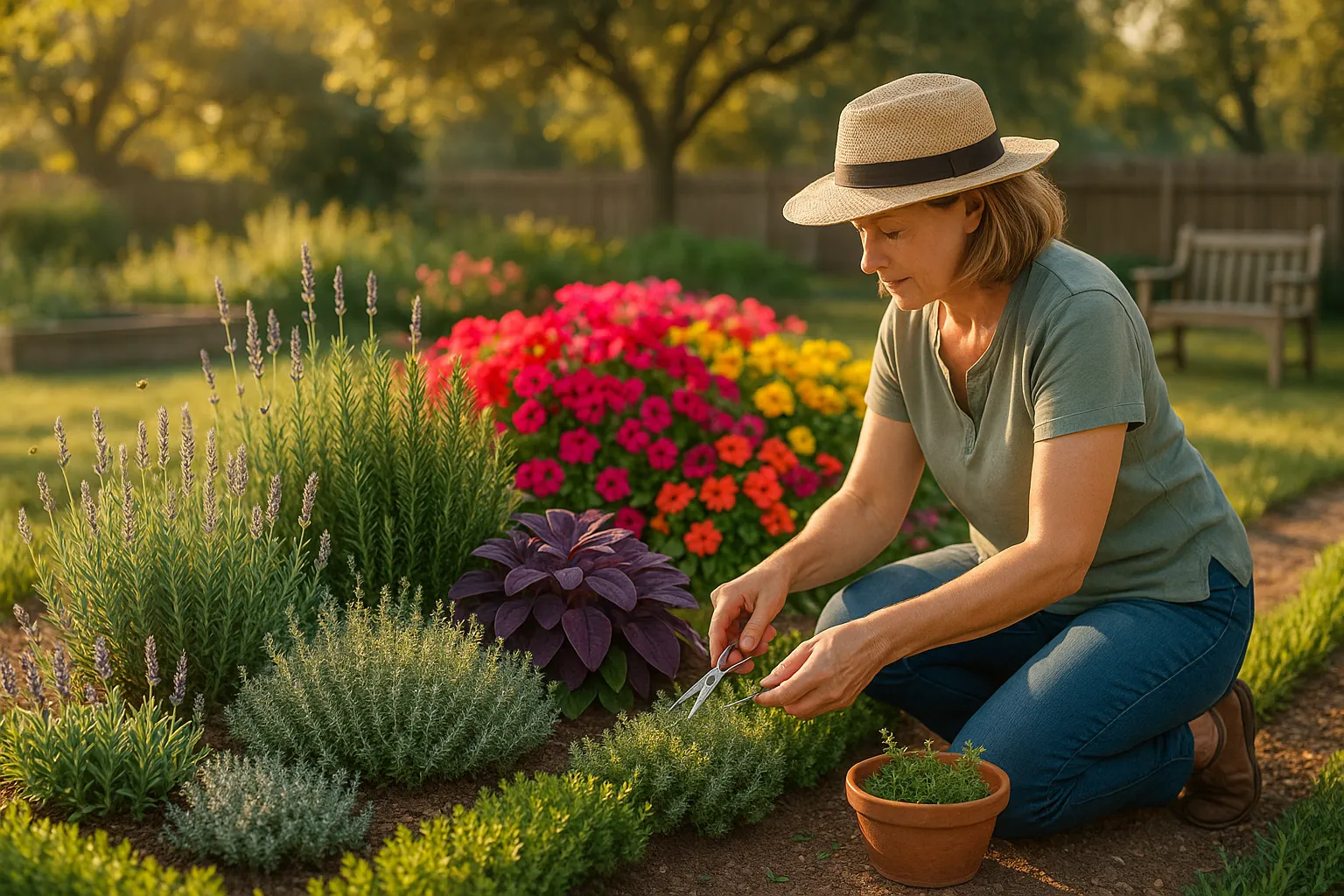
Herbs are flexible: they work for hedging, container edges, or mixed beds. You can clip herbs into shapes, weave them into edible borders, or let them naturalize. Bedding plants are flexible too, but they require seasonal replanting if you want continuous color. Combine approaches: use a low herb edge (thyme or santolina) with seasonal bedding inside for vivid centers and year-round structure.
Practical Considerations: Maintenance, Climate, And Soil
Fact: Maintenance differs: herbs often need pruning and less fertilizer: bedding plants need frequent watering and deadheading.
Watering, Fertilizing, And Pruning Needs
Ornamental herbs usually need less fertilizer. Many prefer lean soil and will rot in wet conditions. You water herbs deeply but less often, encouraging root depth. Prune herbs seasonally to maintain shape and encourage new growth. Bedding plants need regular feeding and consistent moisture. You deadhead spent flowers to keep blooms coming. If you dislike routine tasks, herbs reduce weekly chores but add seasonal pruning.
Pest, Disease, And Wildlife Interactions
Herbs attract pollinators like bees and butterflies, Lavandula and Salvia are notable. They also repel some pests: rosemary oil deters certain beetles. But herbs can suffer from root rot in heavy soils and from fungal leaf spots in humid climates. Bedding plants attract aphids, slugs, and fungal issues in crowded beds. Wildlife interacts differently: deer may browse tender bedding more often than aromatic rosemary, though hungry deer will eat many things. Consider local pests: check extension service notes (for example your state extension or the Royal Horticultural Society for UK guidance) before finalizing species.
Hardiness, Microclimates, And Soil Requirements
Herbs like thyme and oregano tolerate poor, well-drained soils and sun. Rosemary survives winter only in warm microclimates (Zones 8–10) unless protected. Bedding plants vary: some annuals tolerate cooler nights (pansies), others need warm temperatures (zinnias). Match plant to site: document your USDA Hardiness Zone and observe microclimates, sunny south walls, frost pockets, and wind corridors, to decide which approach will thrive.
Plant Selection, Layout, And Companion Planting
Fact: Choose plants for purpose, edible and structural herbs versus colorful, fast-blooming bedding.
Each plant brings a named benefit: pollinator visits, drought tolerance, or cut-flower potential.
Reliable Traditional Bedding Plants And Uses
Petunia: mass flower power and color range.
Begonia: shade-tolerant bedding with glossy leaves.
Impatiens: bright color in shade, but watch downy mildew in some varieties.
Marigold (Tagetes): pest-deterring properties and strong color.
Use bedding for seasonal themes, container splashes, and planted drifts that visually read from a distance.
Layout Strategies: Mixed Beds, Drifts, And Edging
Start with purpose: if you want year-round structure, place shrubs and herbs as anchors. Plant bedding in inner zones for seasonal pops. Use drifts of one species to create rhythm: break that rhythm with a block of contrasting herbs for texture. Edge beds with low thyme or oregano to frame paths and soften hard edges. Try a small test bed first to study growth habits before scaling up, this reduces disappointment and cost.
Cost, Labor, And Environmental Impact
Fact: Upfront costs for herbs can be higher, but long-term labor and replacement costs for bedding usually make bedding more expensive over several years.
Initial And Ongoing Cost Comparison
Herbs often cost more per plant at planting time because you buy larger, established specimens for structure. But, many herbs are perennial or self-seeding, which lowers replacement costs. Bedding plants are cheap by the flat, but you replant them every season and pay for soil amendments, fertilizers, and irrigation. Do the math: over three years herbs often become cheaper if you sacrifice some instant color.
Biodiversity, Pollinators, And Ecological Benefits
Ornamental herbs generally support higher biodiversity. Lavender fields host bees: nepeta brings cats, bees, and hoverflies. Herbs provide nectar across seasons, improving pollinator resilience. Bedding plants can support pollinators too, but many hybrid bedding varieties produce less nectar. If your goal is habitat, favor herbs and nectar-rich perennials, or pick certified pollinator-friendly bedding varieties. Small choices, selecting single-flower petunias over double-flower cultivars, can make a measurable difference for visiting insects.
Making The Right Choice For Your Garden Goals
Fact: Match choice to purpose: pick herbs for utility and habitat, pick bedding for immediate color and theme control.
Assessing Purpose: Aesthetics, Utility, Or Habitat
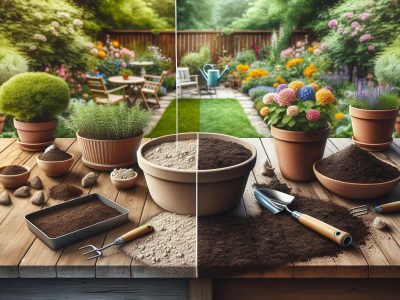
Decide your top priority. If you want fragrance, edible leaves, and insect habitat, choose ornamental herbs. If you want a bold color scheme that changes every season, choose traditional bedding. If you want both, plan for hybrids: herbs as a frame, bedding as seasonal highlights. List your needs: curb appeal, low water, cut flowers, pollinator habitat, or low maintenance.
Stepwise Plan To Transition Or Combine Approaches
Audit: mark sun, shade, soil type, and microclimates in your garden.
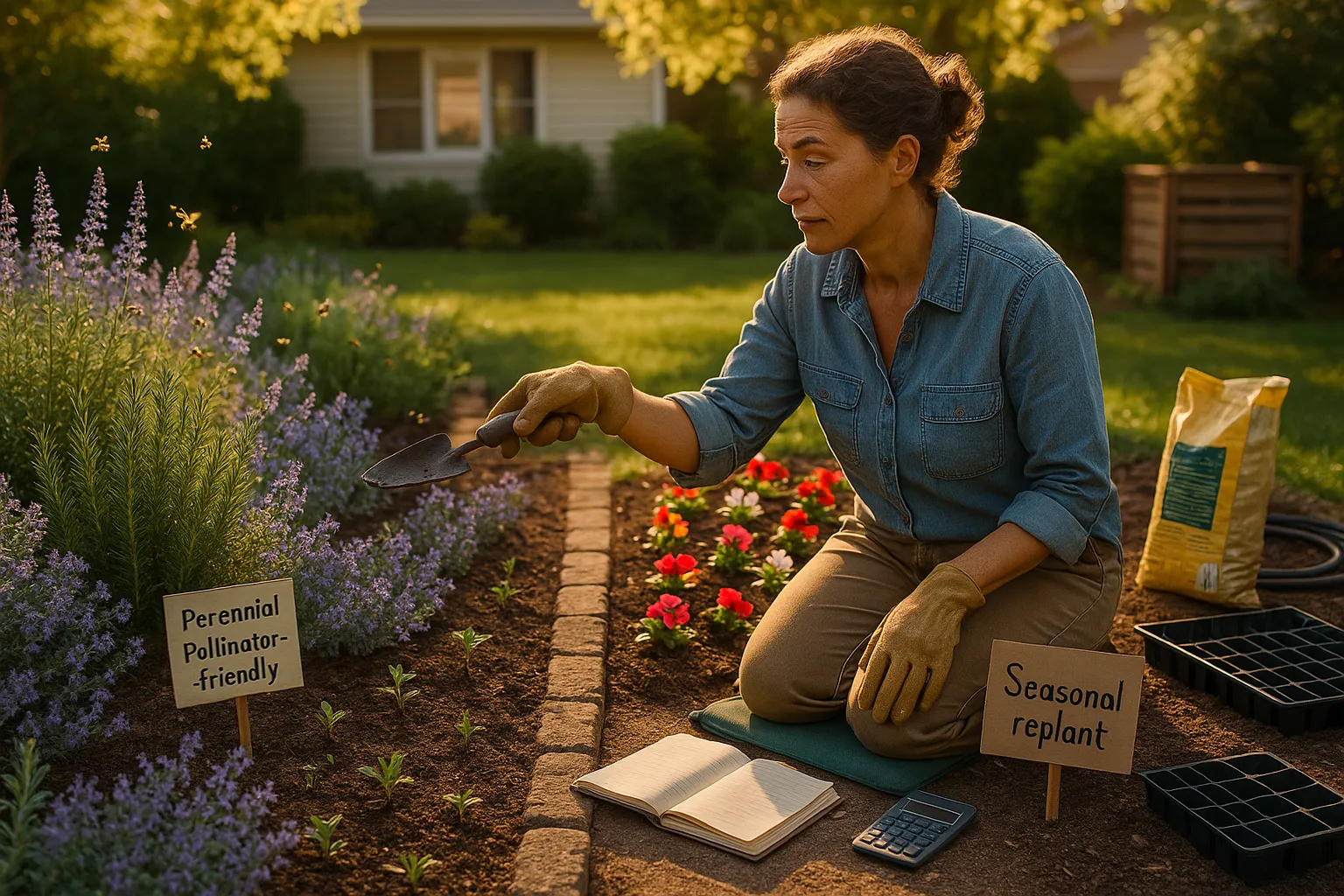
Test: plant a 4×4 foot trial bed, half herbs, half bedding, to watch growth and maintenance needs for one season.
Phase: replace a quarter of a bed per season to spread cost and labor.
Observe and adjust: note pests, bloom timing, and irrigation demand. Repeat pruning and replacement as needed. This stepwise plan reduces risk and builds your confidence.
Quick Decision Checklist For Gardeners
Do you prefer scent and harvest? Choose herbs.
Do you want instant, bold color? Choose bedding.
Want both? Combine herbs for structure and bedding for seasonal color.
Is water limited? Favor drought-tolerant herbs.
Do you want to support pollinators? Bias toward nectar-rich herbs and single-flower bedding varieties.
Budget short-term vs long-term: herbs cost more up front: bedding costs more over time.
If you follow this checklist you’ll make a clear call, and you can start this weekend. Try swapping just one border and observe, gardening teaches fast, but it also rewards patience.
To provide the best experiences, we use technologies like cookies to store and/or access device information. Consenting to these technologies will allow us to process data such as browsing behaviour or unique IDs on this site. Not consenting or withdrawing consent, may adversely affect certain features and functions.
Functional
Always active
The technical storage or access is strictly necessary for the legitimate purpose of enabling the use of a specific service explicitly requested by the subscriber or user, or for the sole purpose of carrying out the transmission of a communication over an electronic communications network.
Preferences
The technical storage or access is necessary for the legitimate purpose of storing preferences that are not requested by the subscriber or user.
Statistics
The technical storage or access that is used exclusively for statistical purposes.The technical storage or access that is used exclusively for anonymous statistical purposes. Without a subpoena, voluntary compliance on the part of your Internet Service Provider, or additional records from a third party, information stored or retrieved for this purpose alone cannot usually be used to identify you.
Marketing
The technical storage or access is required to create user profiles to send advertising, or to track the user on a website or across several websites for similar marketing purposes.