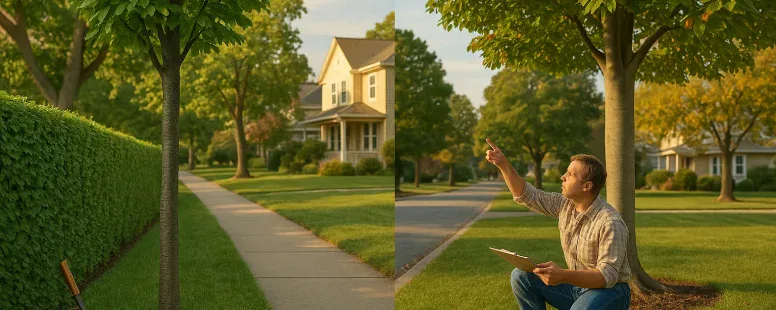
Hornbeam vs. Beech is a common choice homeowners and landscape pros face when they want a durable, attractive shade tree with year-round presence. Both trees share a classic, formal look, crisp leaves, strong trunks, and good pruning response, yet they offer different strengths: hornbeam brings toughness and tolerance, while beech delivers deep summer shade, glossy leaves, and dramatic winter structure. Which one suits your yard depends on soil, space, maintenance appetite, and what seasonal display you want. This guide gives clear, actionable comparisons and planting advice so you can pick the right tree for your site.
Quick Comparison At A Glance
Fact: Hornbeam and beech differ most in leaf texture, shade density, and soil tolerance.
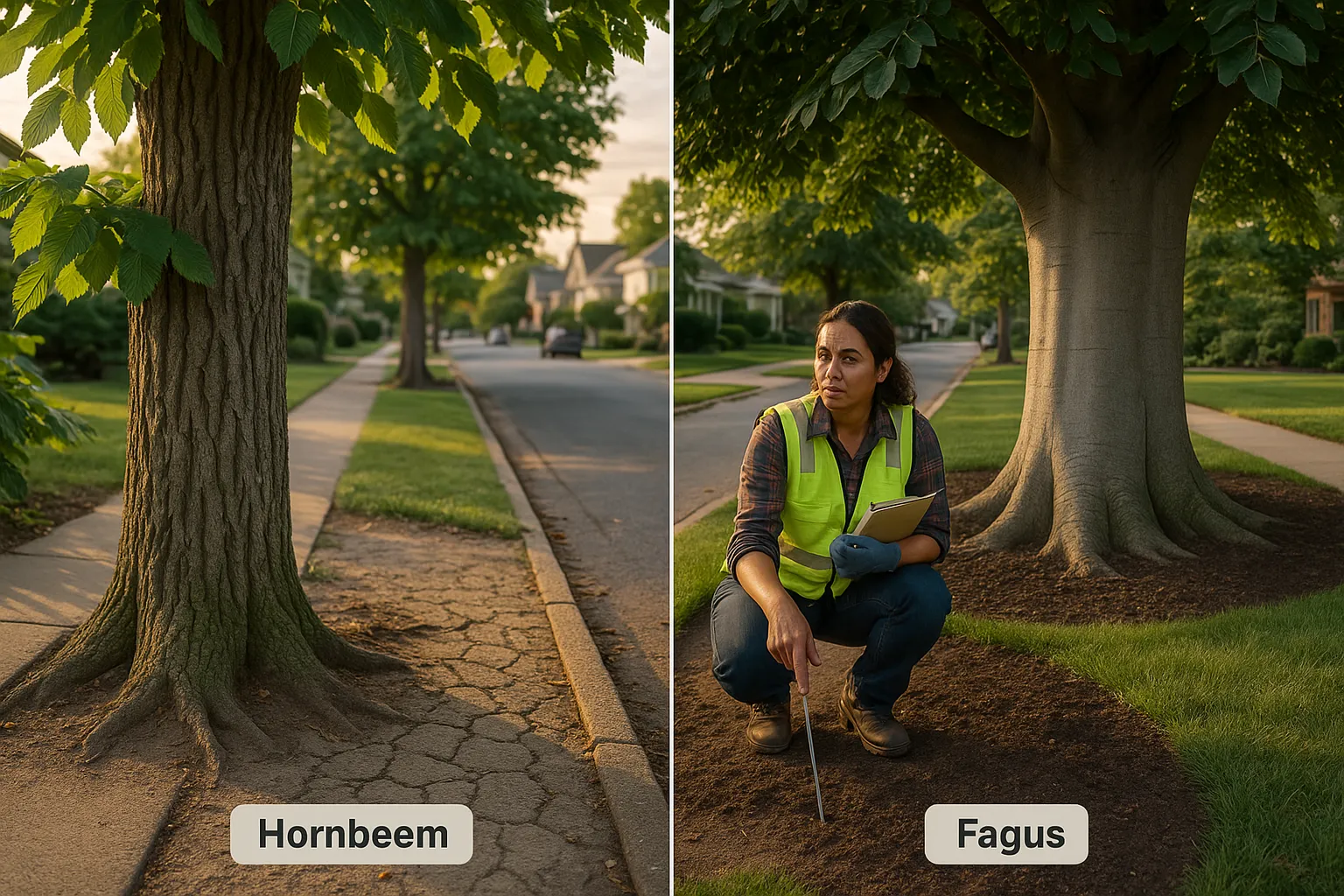
Hornbeam (Carpinus betulus / Carpinus caroliniana), Dense, fluted trunk: serrated, tough leaves: tolerates clay and compacted soils: slower to large size: excellent for urban streets.
Beech (Fagus sylvatica / Fagus grandifolia), Smooth gray bark: glossy, thinner leaves that form a dense canopy: prefers well-drained, loamy soils: often grows taller and broader: prized as a specimen.
Quick pick for you: choose hornbeam if you need durability and soil flexibility. Choose beech if you want dramatic form, deep summer shade, and a stately specimen.
Why this matters: your site’s soil, space, and maintenance choices will affect long-term health. The wrong pick leads to more pruning, stress, or early removal.
Identification And Key Physical Characteristics
Fact: You can reliably tell these trees apart by looking at leaves, bark, and overall form before they reach full size.
Leaves And Foliage
Fact: Beech leaves are thinner and glossier than hornbeam leaves.
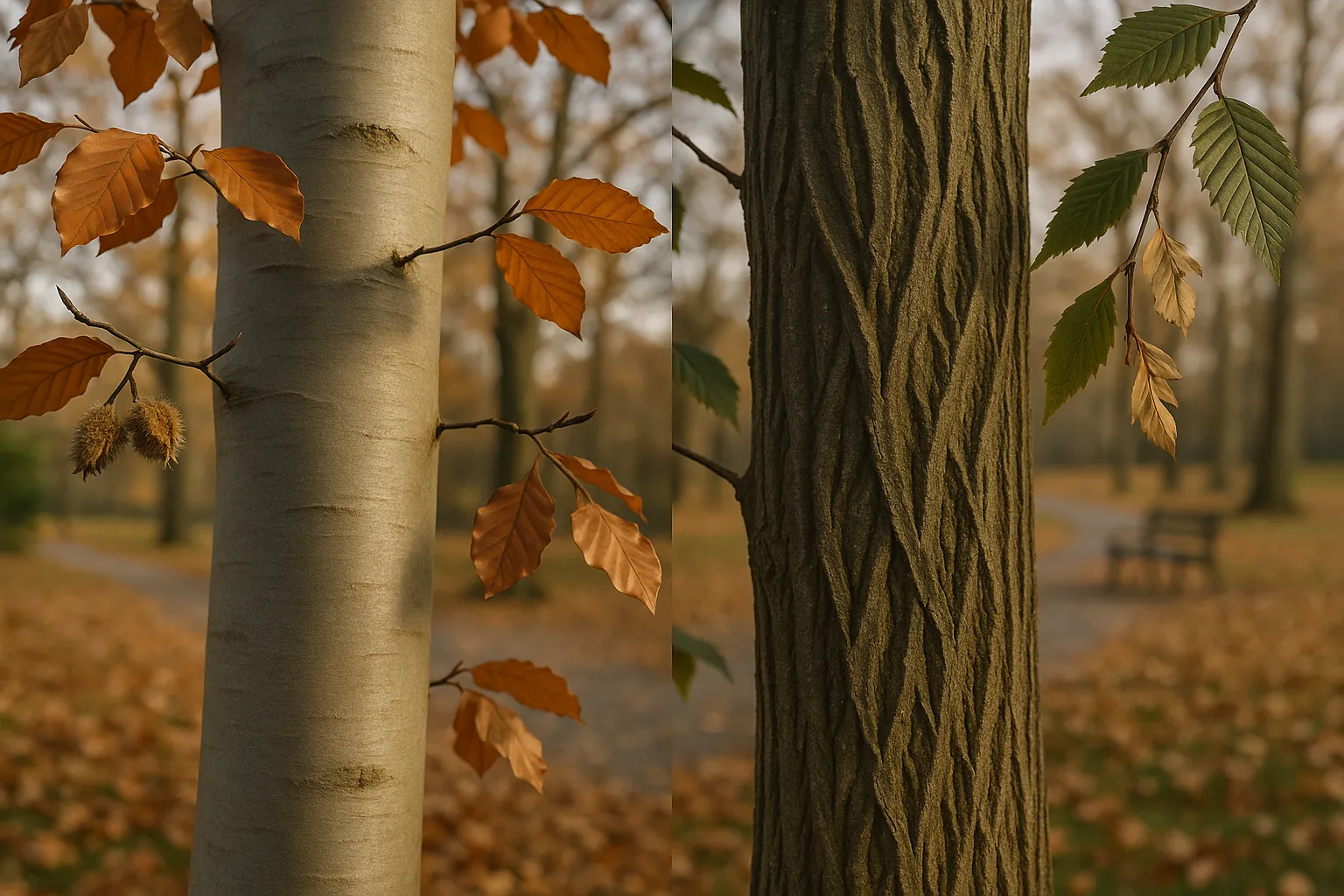
Beech leaves (Fagus sylvatica, F. grandifolia) are typically oval with smooth margins or slightly wavy edges and a shiny surface. They often hold late into fall and even winter as brown, coppery leaves on many cultivars, this gives beech hedges and specimens winter interest. Hornbeam leaves (Carpinus species) are more strongly serrated, feel firmer, and have obvious parallel veins. Hornbeam’s foliage often presents a fine, textured look in contrast to beech’s broad, smooth planes.
Bark And Trunk
Fact: Bark texture is a fast ID: beech has smooth, pale gray bark: hornbeam has fluted, muscle-like bark.
Beech trunks are smooth and often used as a canvas for carvings historically: they stand out in winter. Hornbeam bark is ridged and sinewy, it can look like compressed muscle or braids. That texture gives hornbeam extra resistance to minor impacts and vandalism in public plantings.
Size, Form, And Lifespan
Fact: Beeches generally reach larger mature sizes and live longer in ideal sites.
European beech often attains 50–80 ft with a broad crown: American beech can be similar but often less massive in urban conditions. Hornbeam tends to be 30–50 ft, sometimes smaller in restrictive soils. Both live many decades: beech can exceed 200 years in good conditions, hornbeam commonly reaches 100+ years.
Flowers, Fruit, And Seasonal Interest
Fact: Both are wind-pollinated and have low ornamental flowers, but seed structures differ.
Beech produces small catkins and triangular beechnuts enclosed in spiny cupules, these feed wildlife like jays and squirrels. Hornbeam produces catkins too, and its seeds sit in leafy bracts that can persist on the tree, adding textural winter interest. In fall, beech often shows a richer copper leaf color: hornbeam tends to yellow-brown. Both can hold dead leaves into winter, which some gardeners like for privacy.
Growth Rate, Soil Preferences, And Hardiness
Fact: Growth rate and soil tolerance determine where each tree will thrive without constant intervention.
Light, Water, And Nutrient Needs
Fact: Both prefer full sun to partial shade but differ in water and nutrient tolerance.
Beech likes consistent moisture and richer soils: it will show stress with drought or poor fertility. Hornbeam tolerates fluctuating moisture and lower fertility better. If your yard dries in summer, hornbeam will cope better. If you give regular water and fertilizer, beech rewards you with denser growth and better leaf color.
Tolerance To Soil Types And pH
Fact: Hornbeam tolerates heavier clay and compacted soils: beech prefers well-drained, slightly acidic to neutral loams.
Hornbeam succeeds in urban environments where compaction and poor drainage are common. Beech does best in garden beds and parks with deep, friable soils. Both accept a pH range near neutral, but beech can be picky on heavy alkaline soils.
Cold Hardiness And Climate Zones
Fact: Both genera include species adapted to a range of USDA zones: match species to your zone.
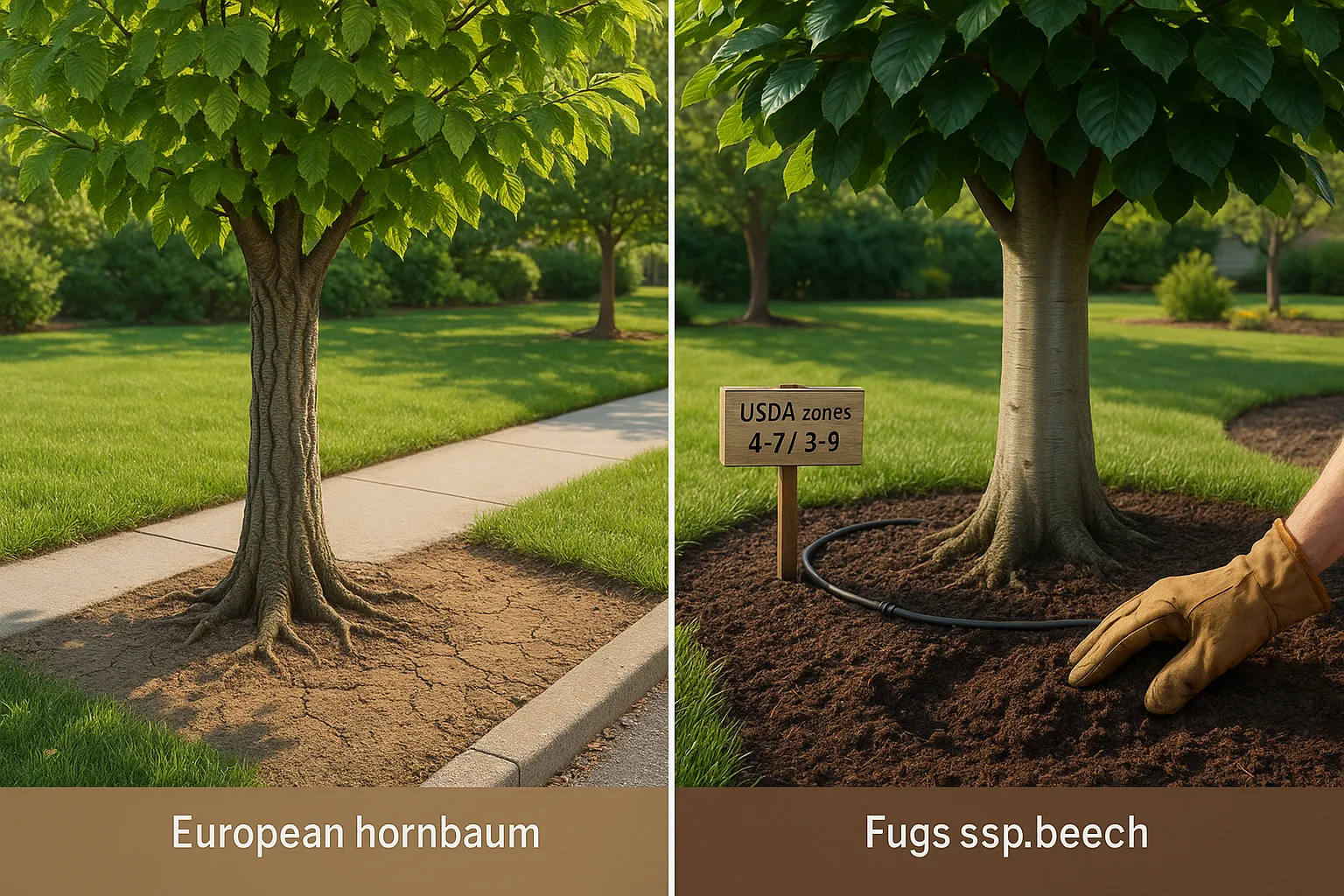
European hornbeam (Carpinus betulus) is hardy roughly to USDA zone 4–7: American hornbeam (Carpinus caroliniana) fits zones 3–9 depending on provenance. European beech (Fagus sylvatica) usually suits zones 4–7: American beech (F. grandifolia) fits zones 3–9 but is less tolerant of heat. Check local provenance: a tree from Minnesota will perform better in cold than one from southern nurseries.
Planting, Pruning, And Maintenance
Fact: Proper site selection and first three years of care shape long-term form and health.
Site Selection And Planting Steps
Fact: Pick a roomy site with good future canopy clearance and plant at the correct depth.
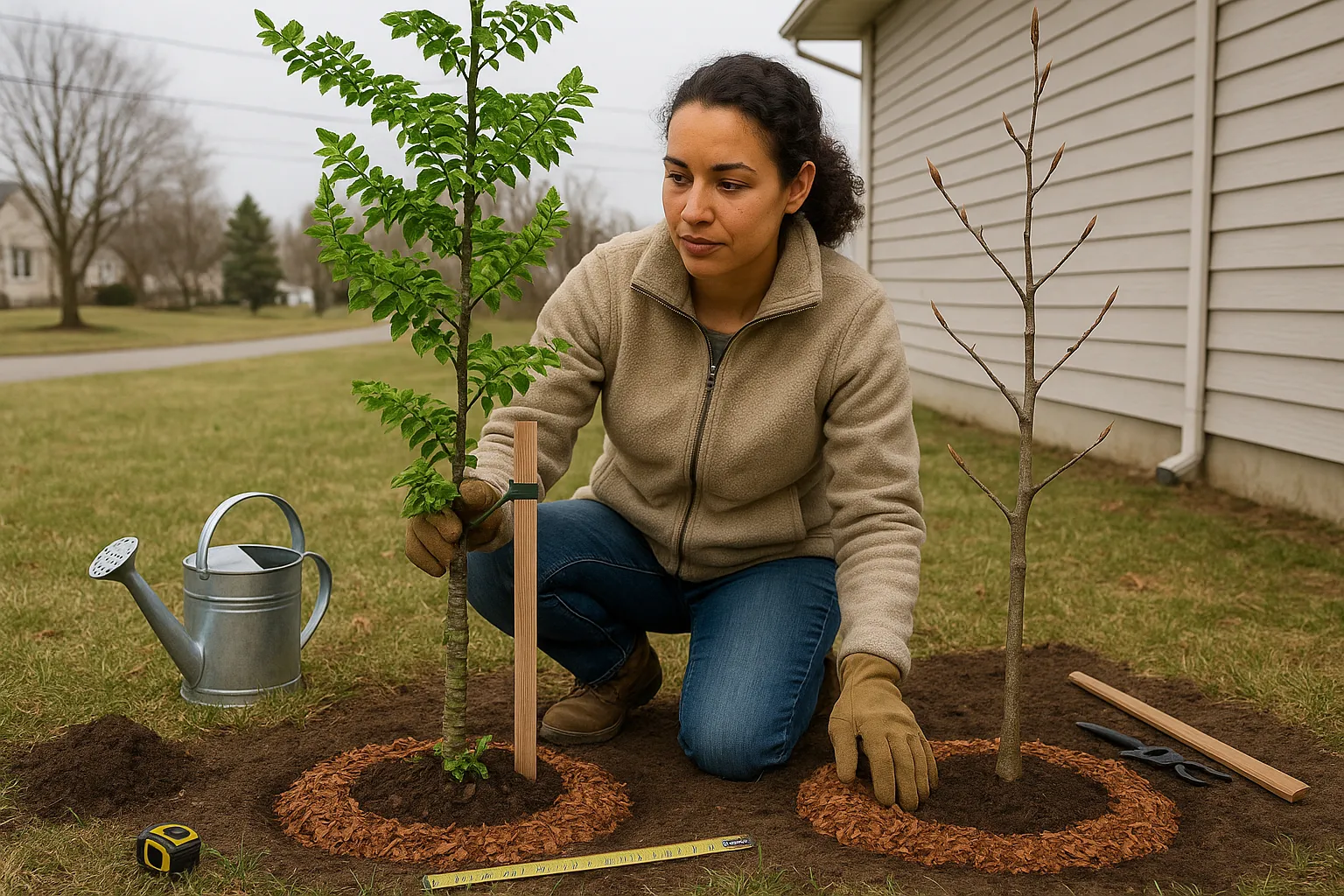
Choose a site clear of buildings and utilities: consider mature spread.
Dig a hole twice as wide as the root ball but no deeper.
Place the tree so the root flare sits at or slightly above grade: backfill with native soil, firm gently.
Mulch 2–4 inches, keeping mulch off the trunk.
Stake only if the tree is unstable: remove stakes after one growing season.
For beech, avoid hot, reflected surfaces: for hornbeam, avoid sites with standing water for extended periods, though short-term wetness is tolerated.
Pruning Techniques And Timing
Fact: Prune in late winter for structure: light summer pruning refines shape.
Remove crossing branches, suckers, and any narrow crotches that could form included bark. Be conservative with beech, heavy pruning can stress it. Hornbeam accepts heading and can be trained into formal shapes, hedges, and pleached forms with annual or biennial pruning.
Long-Term Care And Maintenance Schedule
Fact: Monitor for drought, compaction, and root damage: water deeply in dry spells for first 3–5 years.
Year 1–3: Weekly deep water during dry periods: monthly inspections.
Year 4–10: Prune every 2–4 years for structure: fertilize only if soil test shows deficiency.
Mature trees: Inspect annually. Both species respond poorly to root disturbance, so avoid severe grade changes near trunks.
Landscape Uses, Design Considerations, And Benefits
Fact: Each species fills distinct roles: hornbeam for urban structure and hedging, beech for specimen and deep canopy shade.
Shade, Street, And Specimen Uses
Fact: Use beech as a focal specimen and hornbeam along streets or tight spaces.
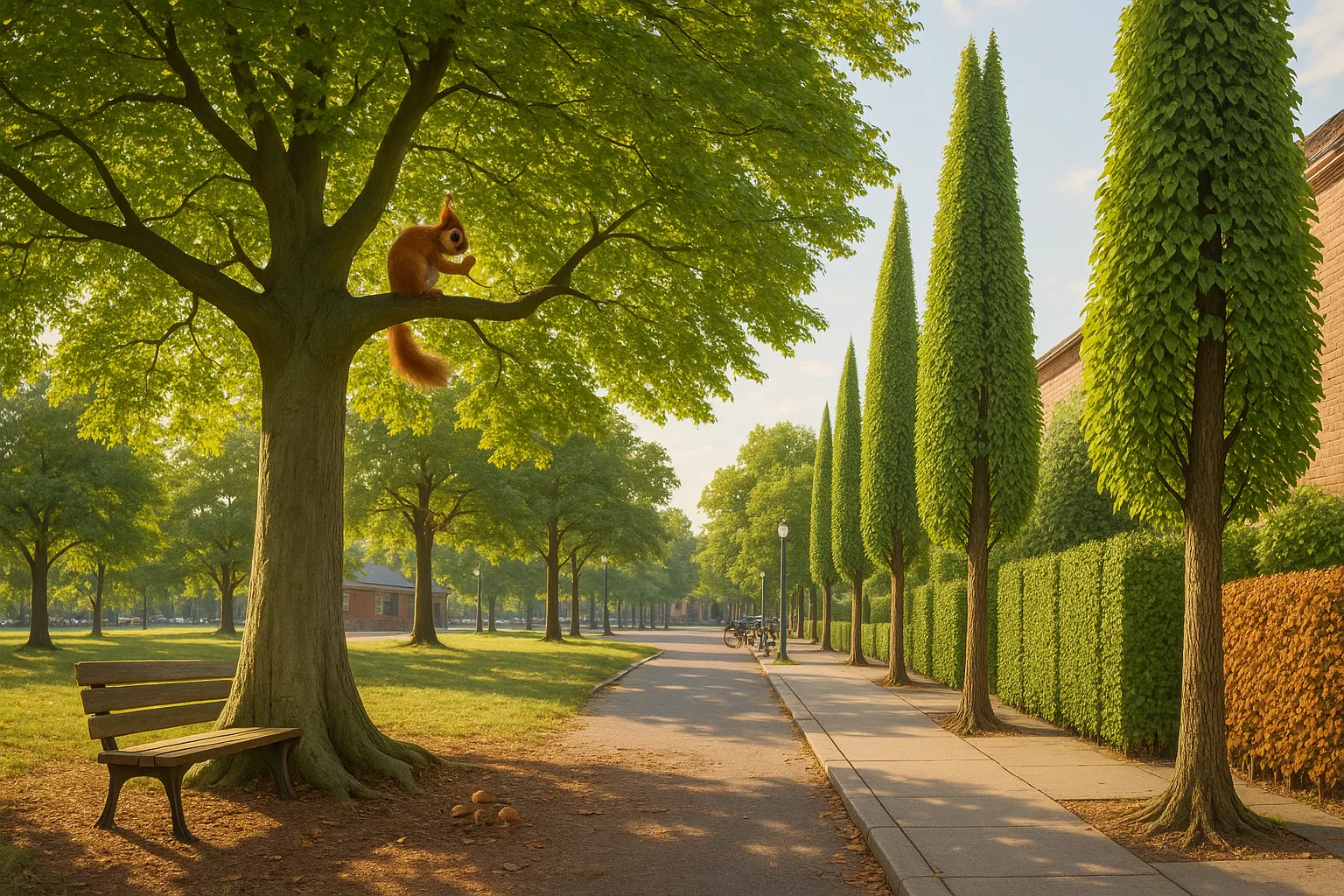
Beech’s broad crown creates deep shade and a dramatic silhouette. Plant a beech where you want a centerpiece or a long-term park tree. Hornbeam’s narrow form and tolerance make it ideal for streets, small yards, and planting buffers near sidewalks.
Hedging, Screening, And Formal Uses
Fact: Hornbeam is more commonly used for hedges: beech works in formal hedging but needs more care.
Hornbeam tolerates clipping and can form dense, neat hedges (Carpinus betulus ‘Fastigiata’ and pleached allees are popular). Beech hedges (Fagus sylvatica) are gorgeous, they hold brown leaves for winter screening, but they need deeper soil and steady moisture to stay healthy.
Wildlife Value And Ecological Benefits
Fact: Both feed wildlife, but their contributions differ by seed type and leaf persistence.
Beech nuts feed birds and mammals: dense beech stands support forest-floor fungi and shade-adapted understory. Hornbeam seeds are eaten too and its textured bark gives crevices for insects and moss. Both improve air quality, store carbon, and cool urban heat islands.
Common Problems, Pests, And Diseases
Fact: Knowing typical pests and diseases helps you spot trouble early and act before irreversible damage.
Typical Pests And How To Recognize Them
Fact: Beech can attract beech scale and thrips: hornbeam is prone to leaf miners and cankerworms.
Look for: discoloration, stippling, premature leaf drop, or clusters of small insects on bark. Beech scale (often linked to beech bark disease complex) appears as white, woolly deposits on branches. Hornbeam leaf miners create blotchy, mined leaf tissue in summer.
Common Diseases And Prevention Tips
Fact: Root rot and fungal leaf spots appear under poor drainage or high humidity.
Prevent disease by planting at proper depth, ensuring good drainage, and avoiding overhead watering in humid seasons. Sanitation matters: remove fallen diseased leaves and dead wood. For beech bark disease, monitor for scale insects and consult extension recommendations.
When To Call An Arborist
Fact: Call an ISA-certified arborist for large limb failures, suspected root disease, or if trunk damage appears.
If the tree leans suddenly, shows large cankers, or major branch dieback occurs, get a professional evaluation. Large pruning cuts and hazard reduction are best handled by pros to protect you and the tree.
Practical Buying Guide: Selecting The Right Species And Cultivar
Fact: Choose species and specimen based on site, maintenance capacity, and desired form.
Nursery Selection And What To Look For In A Specimen
Fact: Buy a tree with a healthy root system, a clear trunk flare, and no major wounds.
Check nursery tags for species (Carpinus betulus, C. caroliniana, Fagus sylvatica, F. grandifolia) and zone recommendations. Look for a straight trunk, no girdling roots, and even branching. Avoid container-bound roots or trees with deep root circling. Ask the nursery about provenance: local sources often perform better in your climate.
Matching Species To Site And Maintenance Capacity
Fact: Match the tree’s tolerance to your site and how much care you’ll provide.
Low maintenance, compact or urban sites: plant hornbeam (Carpinus).
High-impact specimen, park setting, or when you can supply steady moisture: plant beech (Fagus).
If you want a hedge or formal clipped line, hornbeam asks less intensive soil preparation. If you want a stately, long-lived specimen with rich summer shade, beech will reward careful siting and watering.
Practical tip: plant one or two smaller specimens first to test site conditions before committing to large specimen plantings.
To provide the best experiences, we use technologies like cookies to store and/or access device information. Consenting to these technologies will allow us to process data such as browsing behaviour or unique IDs on this site. Not consenting or withdrawing consent, may adversely affect certain features and functions.
Functional
Always active
The technical storage or access is strictly necessary for the legitimate purpose of enabling the use of a specific service explicitly requested by the subscriber or user, or for the sole purpose of carrying out the transmission of a communication over an electronic communications network.
Preferences
The technical storage or access is necessary for the legitimate purpose of storing preferences that are not requested by the subscriber or user.
Statistics
The technical storage or access that is used exclusively for statistical purposes.The technical storage or access that is used exclusively for anonymous statistical purposes. Without a subpoena, voluntary compliance on the part of your Internet Service Provider, or additional records from a third party, information stored or retrieved for this purpose alone cannot usually be used to identify you.
Marketing
The technical storage or access is required to create user profiles to send advertising, or to track the user on a website or across several websites for similar marketing purposes.