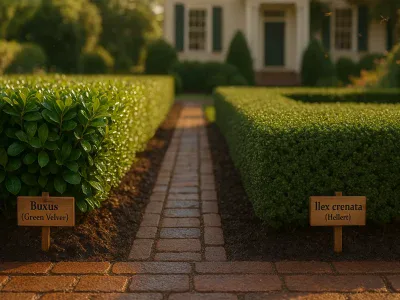
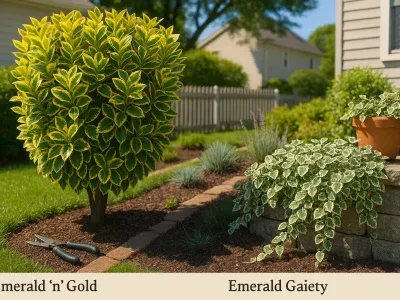
If your boxwood hedges keep thinning, dying back from boxwood blight, or simply require a haircut you dread, you’re not alone. Finding the Best Alternative to Box Topiary can transform a high‑maintenance chore into a design asset that suits your climate, time, and aesthetic. Picture firm geometric forms that still feel alive, or a maintenance-free silhouette that reads as garden architecture. This guide gives clear, practical options, evergreen, deciduous, and even non‑plant solutions, so you can pick an option that keeps form, reduces work, and often improves pest and disease resilience.
Why Choose An Alternative To Box Topiary
Fact: boxwood (Buxus spp.) is prized for its small leaves and tight growth, but it faces serious threats like boxwood blight and the box tree moth. You should consider alternatives when boxwood loses vigor, attracts pests, or demands constant pruning. Alternatives lower your risk, cut maintenance time, or give new seasonal interest.
Boxwood problems are well documented by institutions such as the Royal Horticultural Society and the USDA. In warmer, wetter summers the fungal diseases spread fast. If your garden sits in USDA zones 7–9 and you see black streaks or defoliation, an alternative will often be the smarter long‑term choice. Alternatives can also change the garden’s voice: evergreens keep year‑round structure, deciduous plants add seasonal color, and non‑plant elements reduce upkeep to near zero.
Think about three priorities before you switch: how much time you want to spend pruning, whether winter structure matters, and how much change in texture or color you’ll accept. Answer those and you’ll quickly narrow the best choices for your site.
Low‑Maintenance Evergreen Alternatives
Fact: several evergreen species give the boxed form you like with less disease pressure or slower growth, reducing annual pruning.
Dwarf Yew (Taxus), Profile And Uses
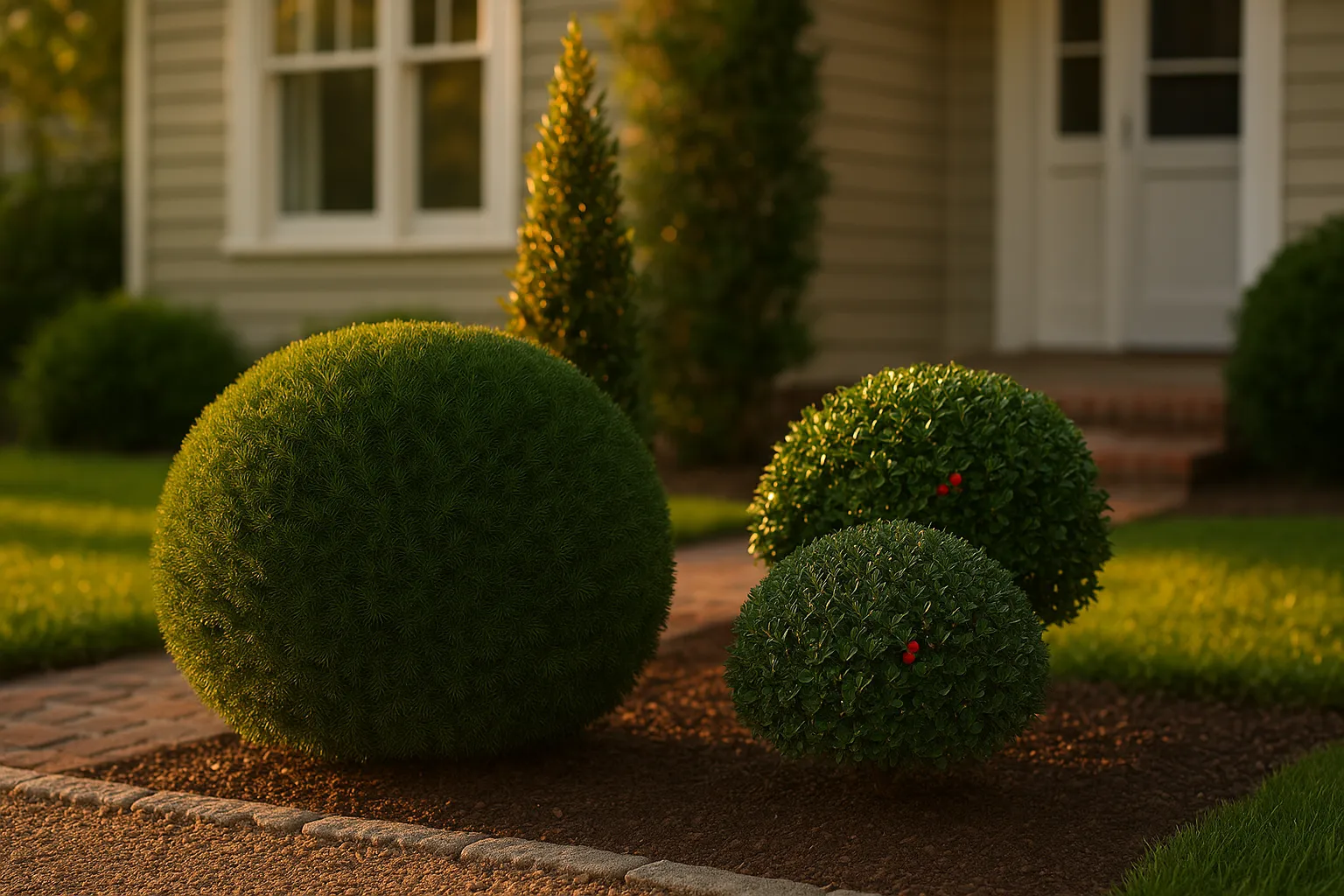
Dwarf yews (Taxus baccata ‘Repandens’, ‘Thedonensis’) keep dense, dark foliage and tolerate heavy pruning. They resist many fungal diseases that hit boxwood. Use them for clipped balls, low hedges, and formal paterae. Yews handle shade better than many evergreens and respond well to hard pruning after cold damage, they often resprout from old wood. Plant in well‑drained soil and expect slow to moderate growth: that means fewer trims per year.
Dwarf Holly (Ilex), Profile And Uses
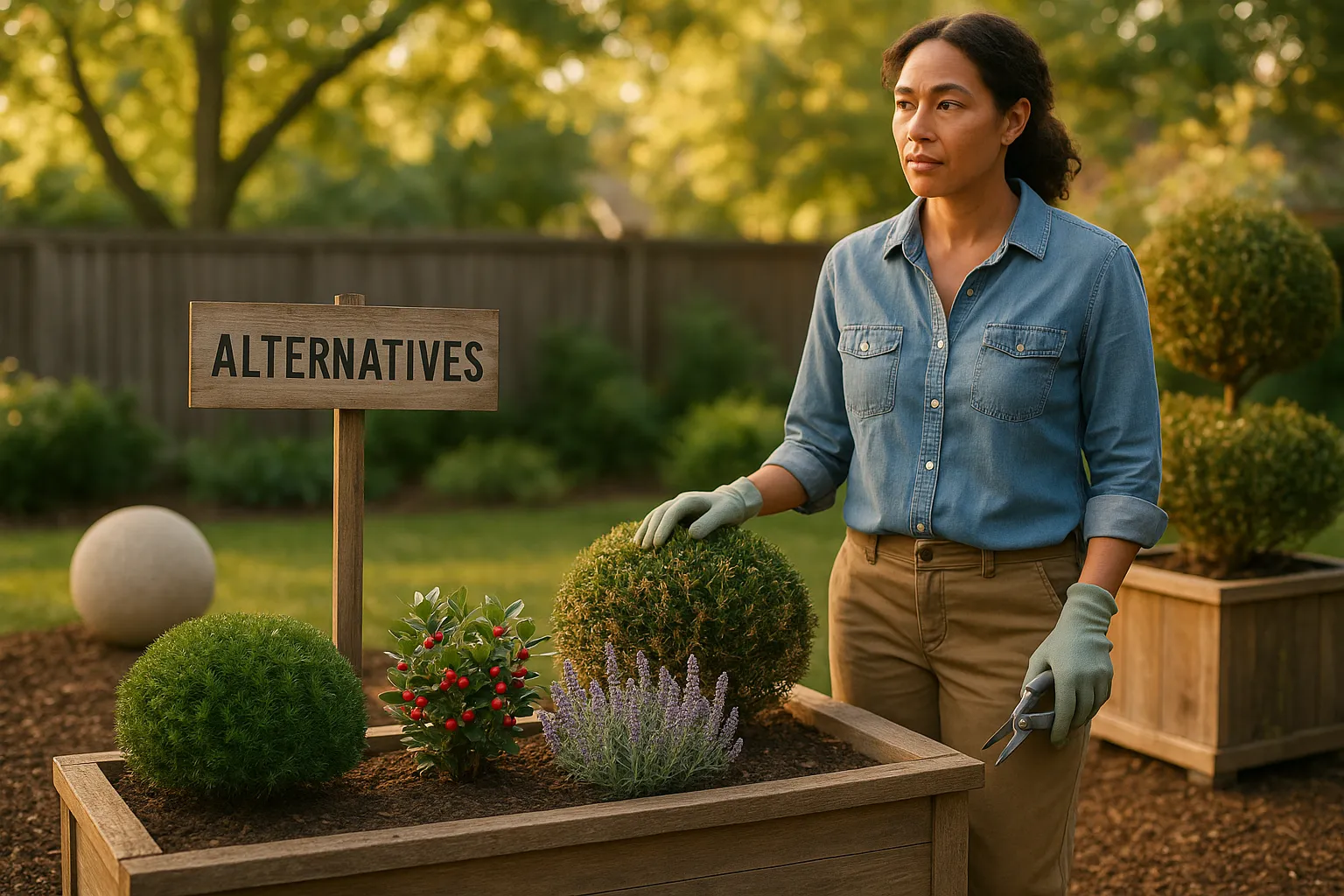
Dwarf hollies (Ilex crenata, Ilex ‘Sky Pencil’ for narrow accents) mimic boxwood leaf size and texture. Ilex crenata ‘Sky Pencil’ and ‘Convexa’ give a boxy look with better pest resistance in many regions. They also add berries when male and female plants are paired, giving seasonal interest that boxwood lacks. Hollies prefer slightly acidic soil. They tolerate sun to part shade and hold shape when lightly clipped twice a year.
Privet And Japanese Euonymus, Profile And Uses
Privet (Ligustrum) and Japanese euonymus (Euonymus japonicus) are faster growers and may need more pruning early on, but they’re disease‑tolerant and shape well. Use privet when you want cheaper hedging material that fills quickly. Euonymus ‘Microphyllus’ offers small leaves similar to boxwood and holds clipped forms. Both species can be trained into tight hedges or topiary shapes if you commit to an initial pruning cycle.
Each evergreen alternative trades different things: yew buys you slow growth and resilience, holly adds seasonal berries, and privet/euonymus give speed and economy.
Deciduous Alternatives For Seasonal Interest
Fact: deciduous plants can replace box topiary when you want pronounced seasonal change and sculptural winter structure.
Hornbeam And Beech Espaliers, Profile And Uses
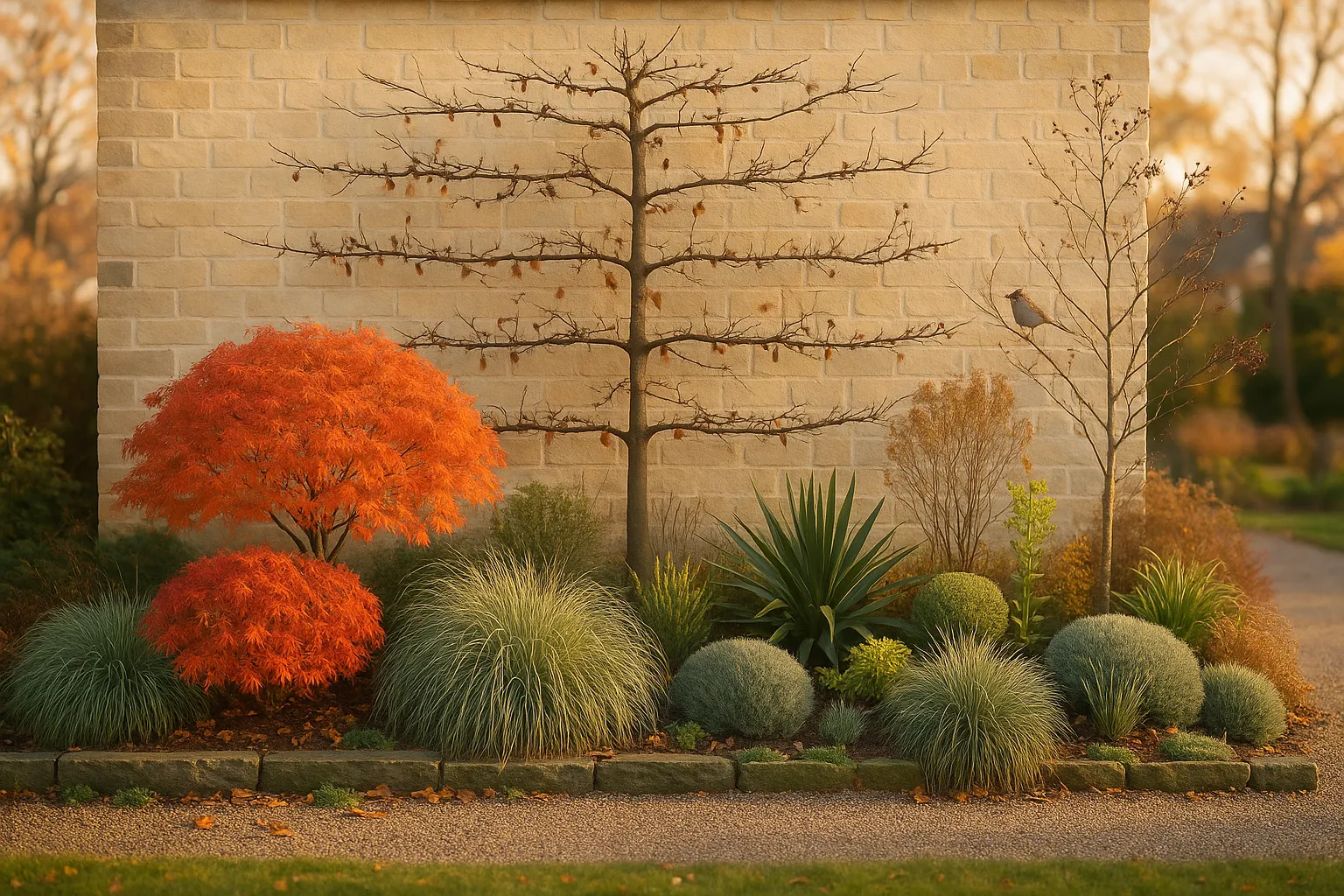
Hornbeam (Carpinus betulus) and beech (Fagus sylvatica) take pruning well and keep a structured form when trained as espaliers or clipped screens. In winter their twiggy skeletons read like sculpture: in spring they leaf out with fresh color. Hornbeam holds dead leaves through winter in some cultivars, adding more year‑round interest. Use them where you value silhouette over evergreen foliage.
Dwarf Maples And Serviceberry, Profile And Uses
Dwarf maples (Acer palmatum varieties) and serviceberry (Amelanchier) are excellent where fall color or spring blossoms matter. They don’t give the tight box look, but with careful pruning you can craft controlled, architectural shapes. Serviceberry offers flowers, berries for birds, and multi‑season value. Dwarf maples provide fine textured leaves and brilliant autumn color: they perform best in part shade.
Clipped Grasses And Perennial Sculptures, Profile And Uses
Clipped ornamental grasses (e.g., miscanthus, carex varieties) and perennial clumps can be sheared into soft mounds that echo topiary form without woody structure. Combine them with sculptural perennials like Euphorbia and Yucca for year‑round architectural rhythm. These options reduce pruning fuss and add motion, grasses catch wind and light in ways boxwood never will.
Deciduous alternatives give you dynamic gardens that change through the seasons. They may need different winter planning, but they reward with color, flowers, and wildlife value.
Non‑Plant And Structural Alternatives
Fact: non‑plant solutions replicate the visual role of box topiary with minimal horticultural upkeep.
High‑Quality Artificial Topiary, Pros And Cons
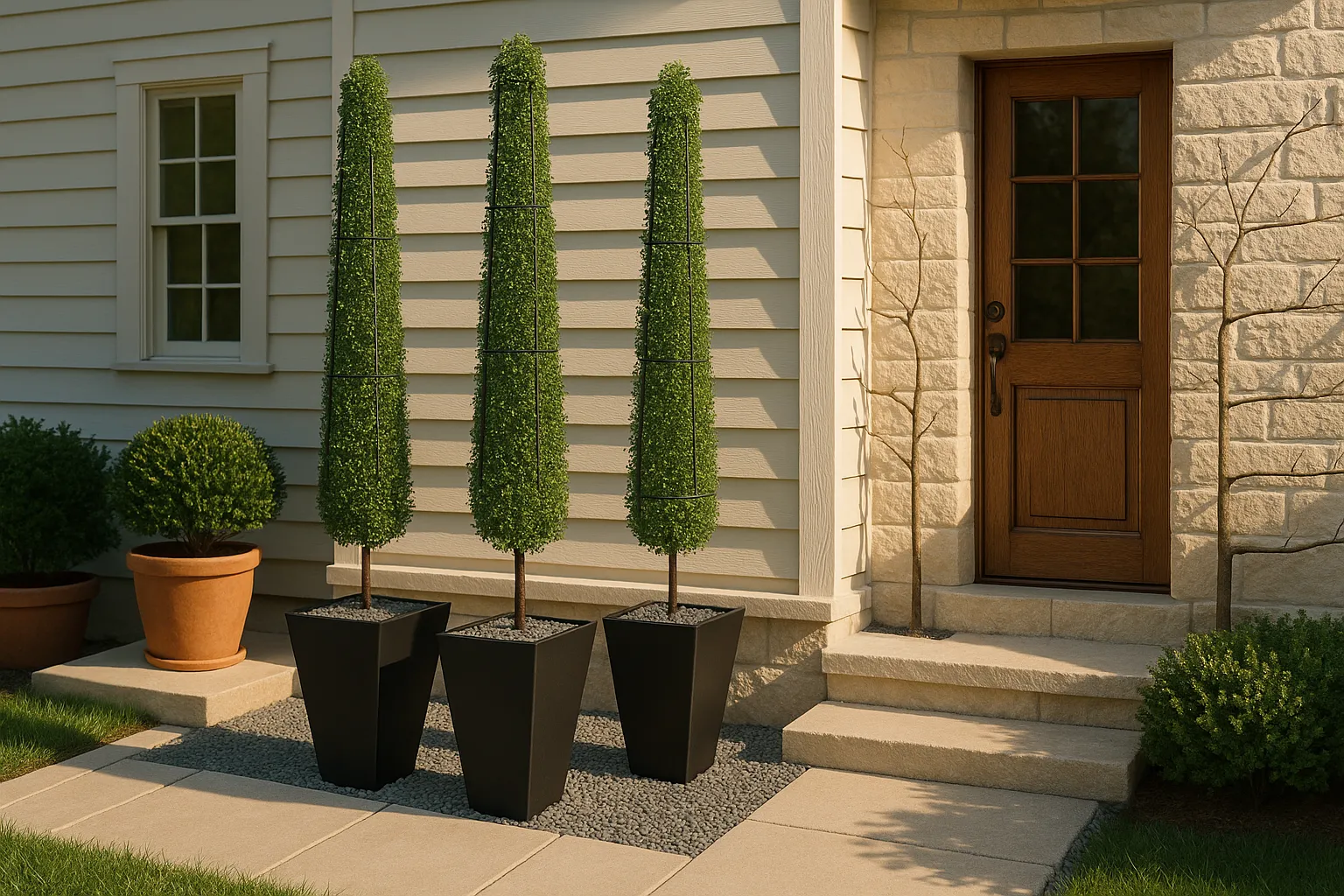
Artificial topiary now uses UV‑stable materials and realistic textures. The pro: no pruning, no pests, and consistent shape year round. The con: it lacks scent, seasonal change, and can appear artificial in close inspection. Use artificial topiary in formal entrances, commercial sites, or shaded areas where live plants fail. Choose weatherproof, brand‑name products (e.g., manufacturers like Boxwoodart or Cheshunt) and invest in UV‑protected versions to avoid rapid fading.
Metal, Wood, And Living Frames, Designs And Durability
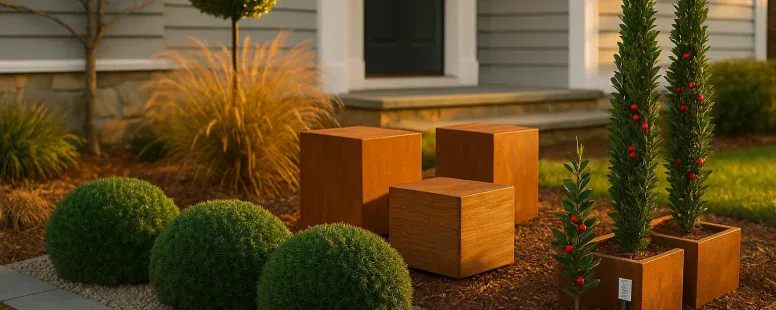
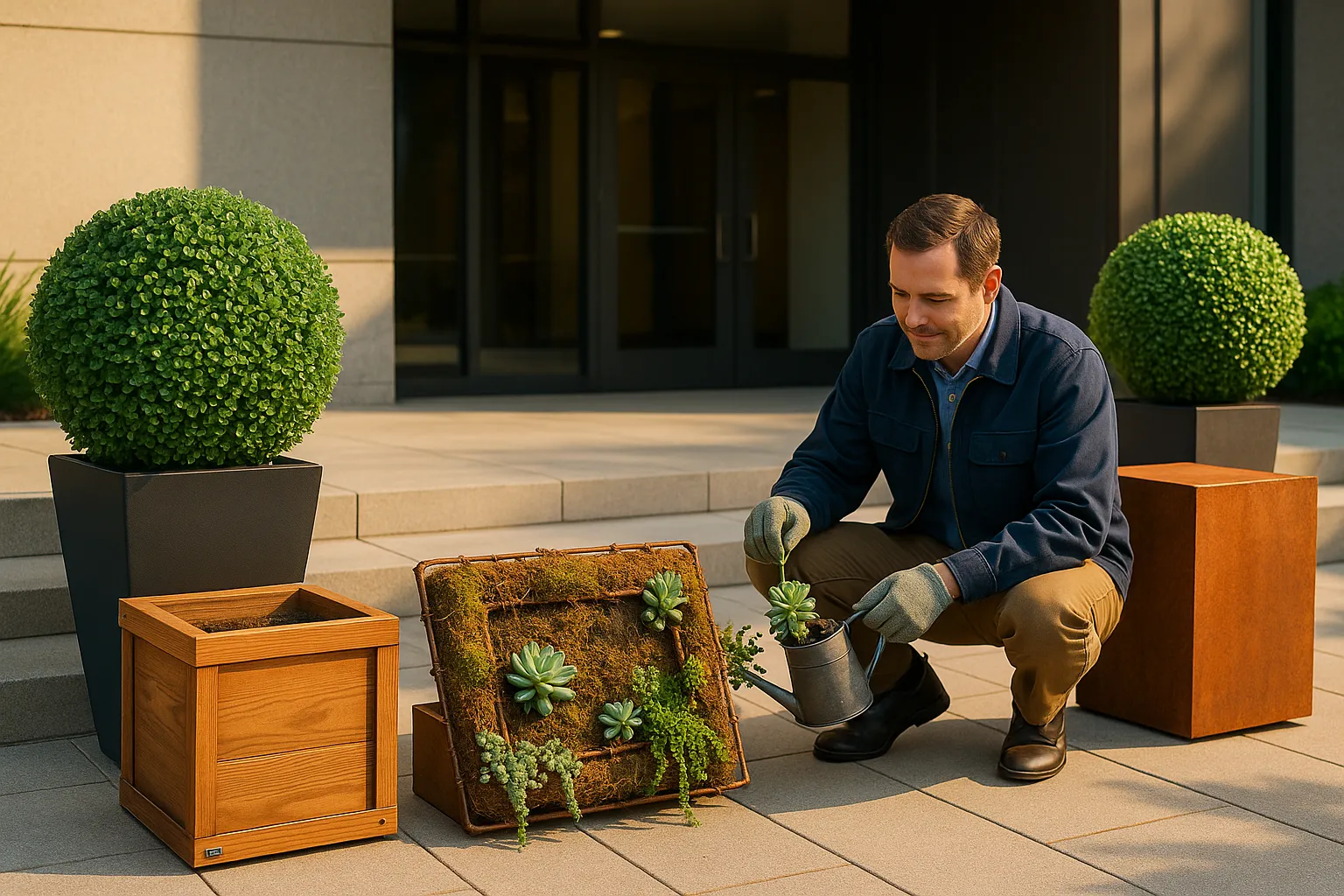
Metal frames, corten steel cubes, and wooden boxes create the same geometry as boxwood but emphasize structure over foliage. Living frames, wire forms filled with sphagnum and planted with moss or succulents, give a hybrid solution: low water and striking form. Metal and wood last decades if treated: living frames need occasional replanting but far less pruning than boxwood. These choices allow you to introduce light, shadow, and industrial texture to balance softer planting elsewhere.
Design, Placement, And Visual Impact Tips
Fact: scale and repetition determine whether an alternative reads as intentional or accidental.
Choosing The Right Scale, Shape, And Repeat Pattern
Start by matching the scale of the alternative to your architecture. Large homes suit taller forms: small cottages need lower, tighter elements. Repeat a simple shape (cube, sphere, column) at least three times to create rhythm. Use odd numbers for more natural balance. When you change material, switching from boxwood to metal frames, keep scale consistent so the garden still feels unified.
Combining Alternatives With Hardscape And Containers
Place alternatives near paths, steps, and entryways to frame movement. Use containers for hollies or dwarf yews if soil drainage is poor. Pair metal frames with gravel or pavers to give a modern contrast. Combine deciduous espaliers with stone walls where their branching lines echo masonry joints. The right placement amplifies visual impact while hiding compromises, like an artificial topiary that’s only obvious up close.
Good placement reduces maintenance too: containers allow control of soil and watering: hardscaping minimizes weed pressure and root competition.
Care, Maintenance, And Longevity Compared To Boxwood
Fact: many alternatives require less frequent pruning or different seasonal work compared with boxwood, and some live longer under stress.
Pruning Frequency, Winter Care, And Pest Resistance
Dwarf yew and holly typically need pruning once or twice a year, versus boxwood’s three to four light trims. Privet needs more frequent early pruning but slows after establishment. Deciduous espaliers need major pruning in late winter and minor summer shaping. Artificial options require no pruning: metal and wood need occasional cleaning and rust treatment. Most alternatives show better resistance to boxwood‑specific pests like box tree moth and blight, though they have their own pest profiles (e.g., yew can suffer from scale, privet gets leaf spot).
Watering, Fertilizing, And Expected Lifespan
Watering needs depend on species and soil. Yew and holly prefer moderate moisture: euonymus and privet tolerate dryer soils once established. Deciduous trees require more irrigation the first 2–3 years. Fertilize lightly in early spring with a balanced slow‑release feed for woody shrubs. Artificial topiary lasts 5–15 years depending on material and UV exposure: metal and treated wood can last decades. Live alternatives often outlive stressed boxwood in marginal sites because they face fewer lethal pathogens.
Plan for replacement intervals: faster growers like privet may need early thinning, while yews and hollies reward patience with decades of service.
How To Choose The Best Alternative For Your Garden
Fact: choose the best alternative by matching plant traits to your climate, soil, budget, and aesthetic goals.
Assessing Climate, Soil, Budget, And Desired Look
List your hard constraints: USDA zone, sun exposure, soil pH, and water access. If you face wet winters and box blight, favor species with fungal tolerance like Taxus or Ilex. If budget limits you, privet gives quick cover at low cost: if you want lifetime sculptures, invest in metal frames. Decide whether you want evergreen structure or seasonal change, this determines the single biggest design choice.
Where To Buy And What To Ask Nursery Or Designer
Buy from reputable nurseries (e.g., local independent growers, Arboretum plant sales, or trusted retail chains with good warranties). Ask about cultivar resistance (for example, Taxus ‘Repandens’ versus standard yew), rootball size, and any treatment history (fungicides, transplanting). If hiring a designer, request examples of previous installations and a maintenance plan. Try small test plantings before you commit to long runs of a single species.
Honest mistakes happen, maybe a drought kills your first hedge or a species grows faster than you expected. Keep records: note planting dates, irrigation patterns, and pruning events. That data will tell you what to change next season, and it will help you settle on the Best Alternative to Box Topiary for your garden.
To provide the best experiences, we use technologies like cookies to store and/or access device information. Consenting to these technologies will allow us to process data such as browsing behaviour or unique IDs on this site. Not consenting or withdrawing consent, may adversely affect certain features and functions.
Functional
Always active
The technical storage or access is strictly necessary for the legitimate purpose of enabling the use of a specific service explicitly requested by the subscriber or user, or for the sole purpose of carrying out the transmission of a communication over an electronic communications network.
Preferences
The technical storage or access is necessary for the legitimate purpose of storing preferences that are not requested by the subscriber or user.
Statistics
The technical storage or access that is used exclusively for statistical purposes.The technical storage or access that is used exclusively for anonymous statistical purposes. Without a subpoena, voluntary compliance on the part of your Internet Service Provider, or additional records from a third party, information stored or retrieved for this purpose alone cannot usually be used to identify you.
Marketing
The technical storage or access is required to create user profiles to send advertising, or to track the user on a website or across several websites for similar marketing purposes.