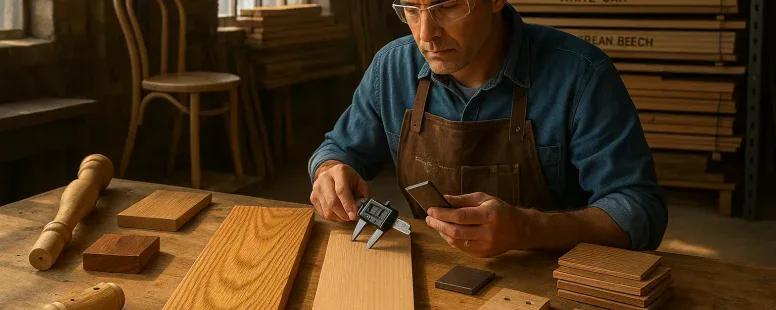
Oak and beech are two of the most common hardwoods you’ll encounter when planning furniture, flooring, or millwork. One offers bold grain and long-term durability: the other gives a tight, uniform look and excellent machining properties. Which one suits your needs depends on how you weigh appearance, wear resistance, workability, and environmental impact. Below you’ll find a focused, practical comparison that pulls clear answers first, then explains the reasons with real examples and sourcing tips.
Quick Overview: Species, Varieties, And Typical Uses
Fact: Oak (Quercus spp.) and beech (Fagus sylvatica and Fagus grandifolia) are distinct species with different grain, hardness, and regional sources.
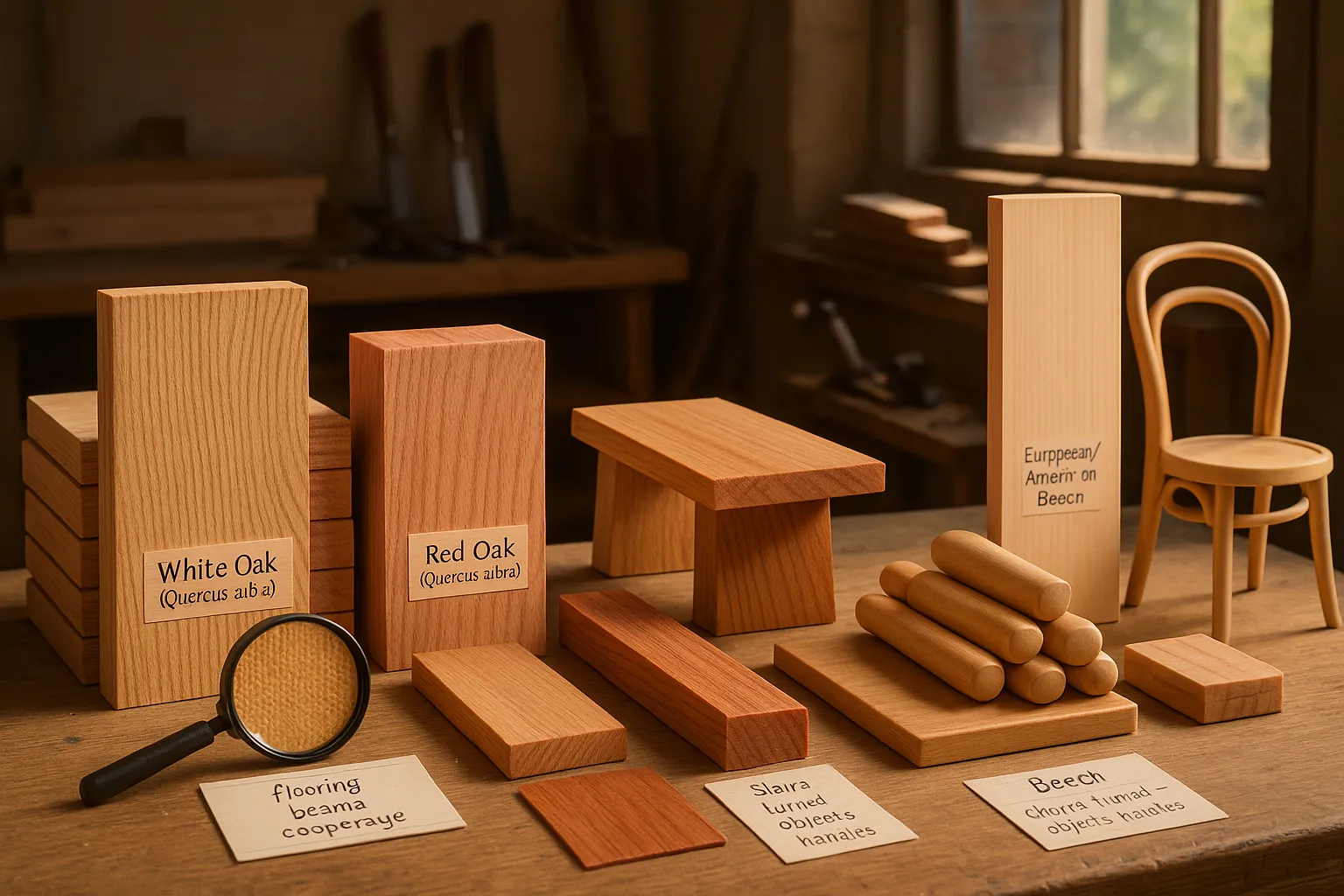
Oak includes major varieties such as white oak (Quercus alba) and red/European oak (Quercus robur and Quercus rubra). White oak resists moisture better because of its closed, tylosed pores: it’s common in boatbuilding, outdoor joinery, and high-end flooring. Red oak has stronger pinkish tones and open pores: you’ll see it in traditional American furniture and staircases.
Beech generally refers to European beech (Fagus sylvatica) and American beech (Fagus grandifolia). Beech has a fine, even texture and straight grain. It’s popular for chairs, bentwood pieces, tool handles, and kitchenware. Beech is widely used by manufacturers such as Thonet-inspired furniture makers and mid-range cabinet producers because it machines consistently.
Note: Availability depends on your region. In Europe, beech is abundant: in North America oak dominates sawmill output.
Appearance And Aesthetic Differences
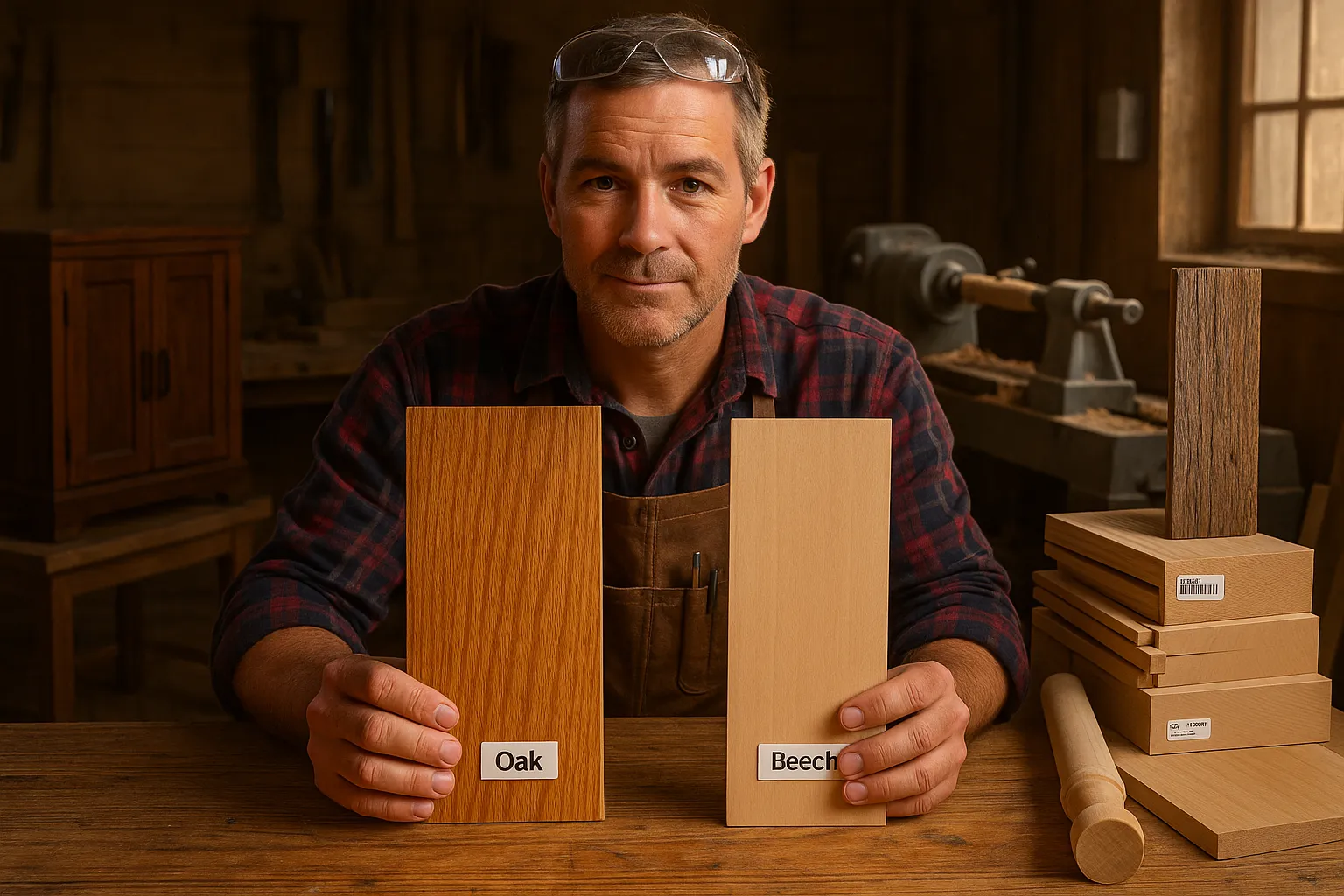
Fact: Oak shows pronounced rays and open pores: beech offers a uniform, pale canvas.
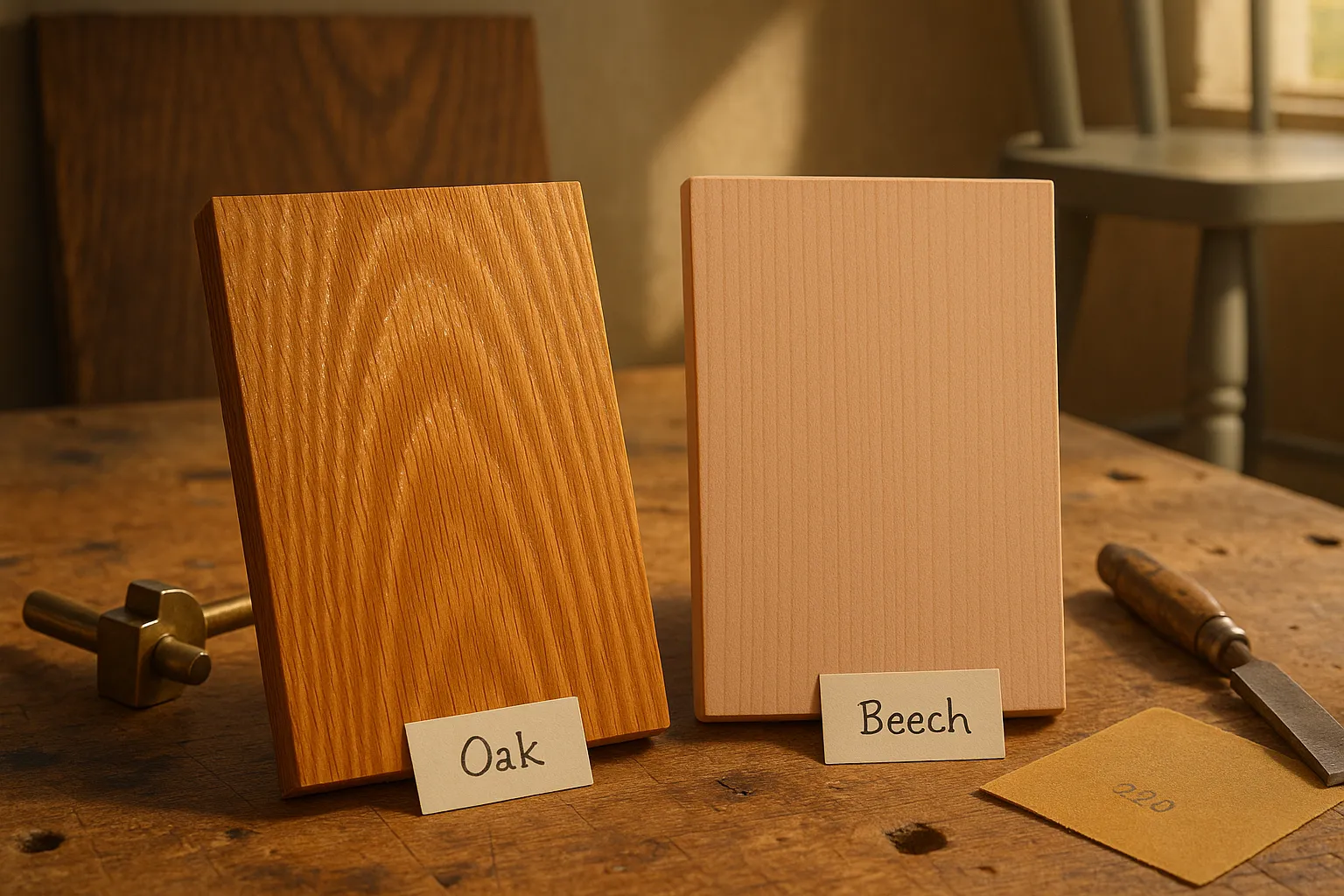
Oak’s visual signature is its cathedral grain and visible rays, those long, shimmering lines you see on quartersawn white oak. That texture catches light and gives a room character. Oak ranges from pale straw to warm amber or brown, and quartersawn white oak produces a flake or medullary ray figure prized by designers.
Beech looks simpler. You get straight, close grain with minimal figure. The color sits in a pale pink-beige zone that darkens slightly with age. For clean, minimalist furniture or painted pieces, beech is ideal because the grain won’t compete with color or form.
Practical tip: If you want a rustic, showy tabletop, choose oak. If you want a painted chair or precision-turned legs, pick beech. Mix and match, oak frames with beech slats, can balance warmth and restraint.
Physical Properties And Durability
Fact: Oak is generally harder and more decay-resistant than beech: beech is dense and stiff but less rot-resistant.
Hardness, Density, And Wear Resistance
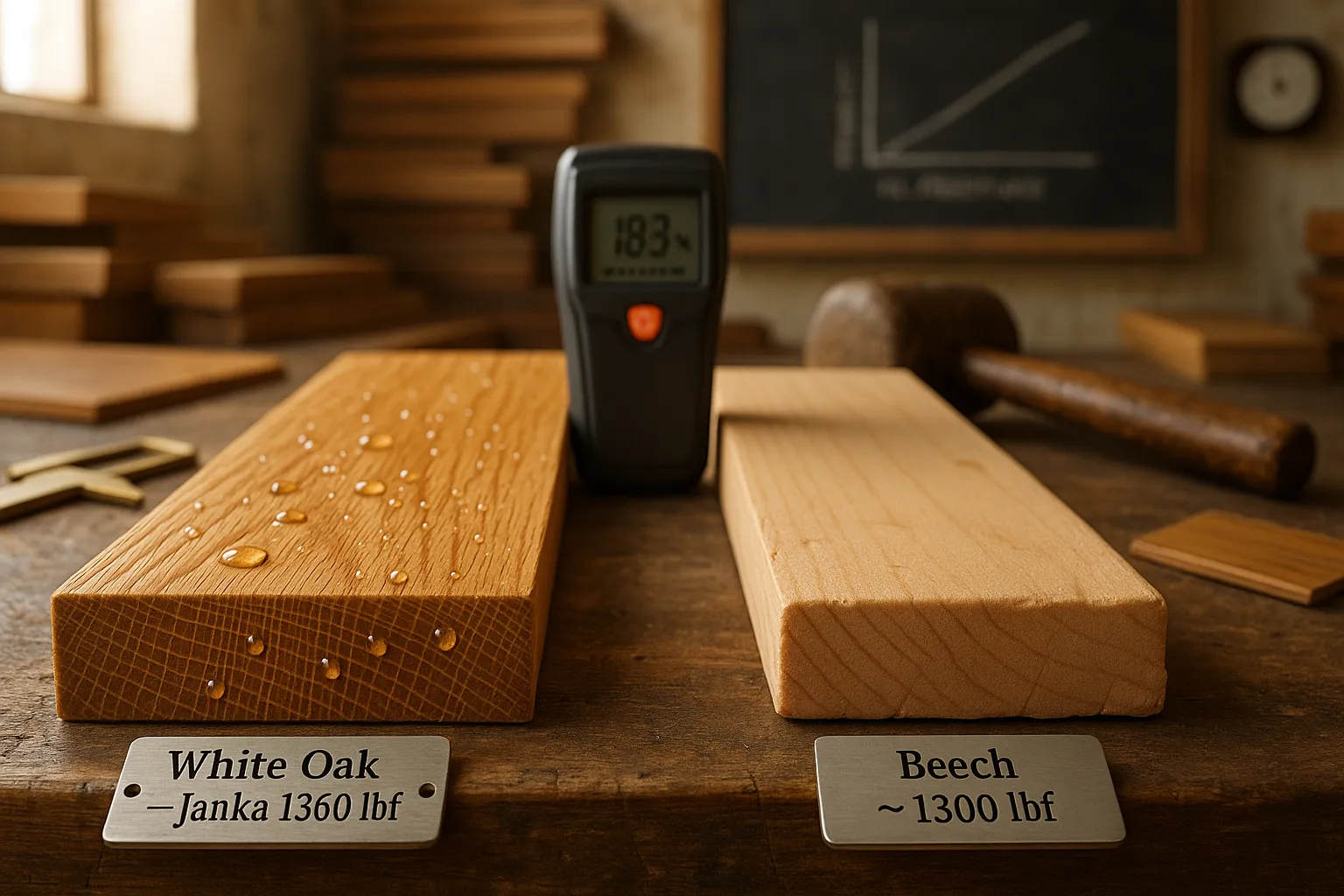
Oak scores higher on common hardness scales. On the Janka scale, white oak sits around 1360 lbf and red oak about 1290 lbf. European beech comes in around 1300 lbf, close to red oak, but beech’s wear pattern differs: it resists denting well but can show edge wear faster in heavy traffic.
For flooring: oak will often outlast beech in high-traffic installations because of its pore structure and natural tannins that resist decay. Beech can perform well if finished and maintained, but it will show scuffs sooner in commercial settings.
Stability, Moisture Response, And Lifespan
Oak is more dimensionally stable in humid or wet conditions, white oak especially, because tyloses limit capillary water movement. That’s why cooperage and exterior use favor white oak. Beech absorbs moisture more readily and can warp or cup if not kiln-dried and acclimated properly.
Lifespan depends on environment and maintenance. A well-finished oak floor can last a century in a home: beech furniture will last decades but needs drier indoor conditions. In short: choose oak where moisture and long-term wear are concerns: choose beech for dry interior pieces where machinability matters.
Workability, Joinery, And Finishing
Fact: Beech is easier to machine and bend: oak requires attention to grain and filling for smooth finishes.
Cutting, Sanding, And Gluing Characteristics
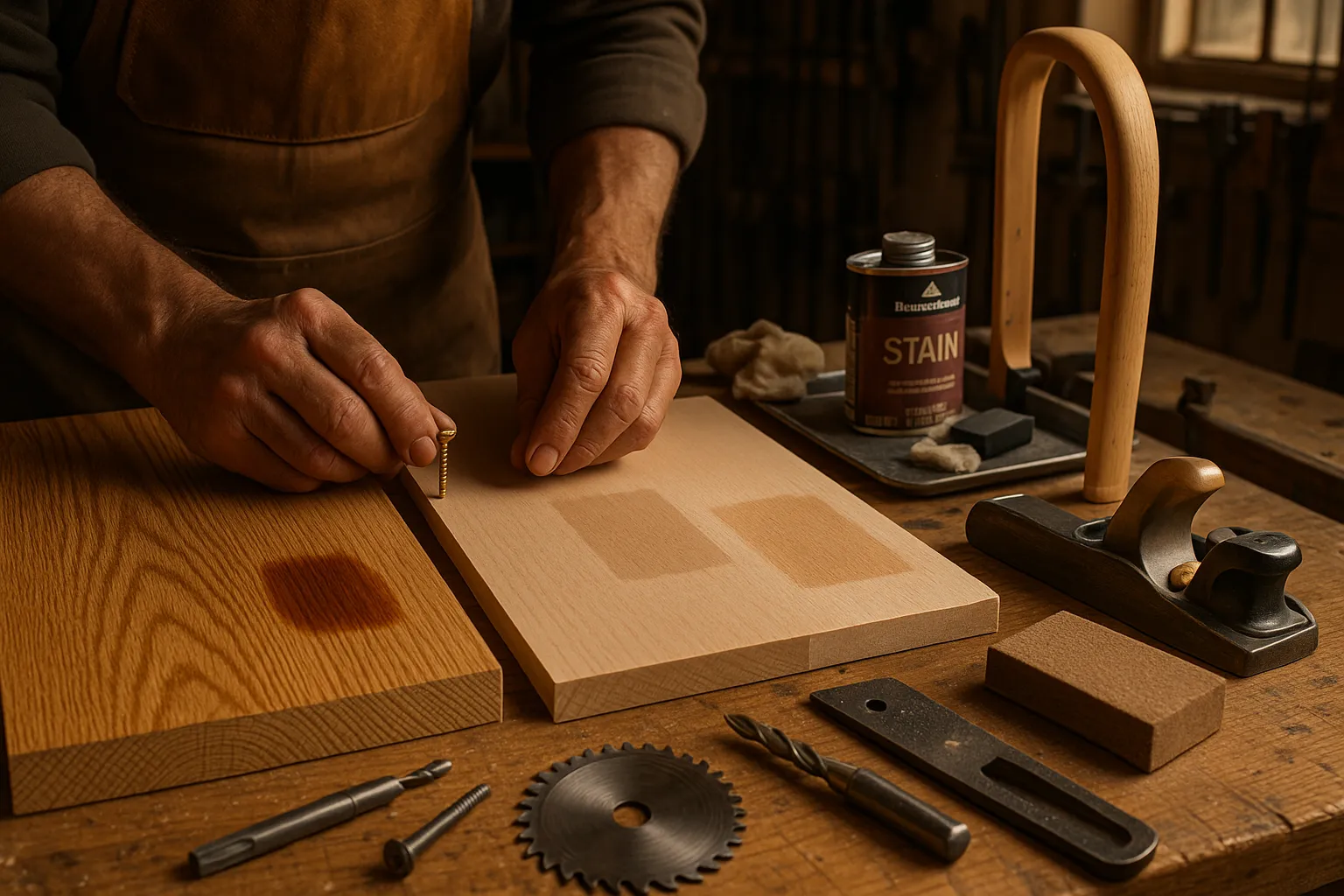
Beech machines cleanly. It sands to a smooth surface, accepts steam bending well (used in bentwood chairs), and holds screws without splitting if predrilled. But, beech can sometimes bruise under high-speed cutters: sharp tools matter.
Oak’s open pores produce more tear-out on crossgrain cuts: use a sharp blade and climb-cut where needed for a clean edge. Oak glues well, but its high tannin content can interfere with some dye-based stains. Predrilling for screws and using pilot holes helps avoid splitting.
Finishes, Staining, And Color Changes Over Time
Beech takes paint and clear finishes evenly: it may look slightly blotchy with some stains, so use a pre-stain conditioner. Oak accepts stain beautifully, enhancing its grain. Over time, both woods darken: beech gains warm pink tones: oak deepens toward honey and amber. If you want a pale, stable color, consider whitewashed or bleached finishes, but test first, because oak’s open pores absorb finishes differently than beech.
Product example: Benjamin Moore stains and Danish oil formulas behave differently on oak versus beech: always trial on scrap.
Common Uses And Performance In Applications
Fact: Oak is preferred for flooring and exterior‑adjacent uses: beech excels in turned components and painted furniture.
Furniture And Cabinetry
Beech gives consistent results for chairs, stools, and mass-produced case goods. IKEA and similar manufacturers often use beech or beech plywood for consistent grain and bending. Oak appears in high-end solid wood furniture where visible grain is a selling point. If you want visible dovetails and joinery that impress, oak shows details well.
Flooring And High‑Traffic Installations
Oak is the safer choice for floors. It takes heavy finishes, sands well, and hides small scratches with its grain. Beech can work as flooring in residential settings, but commercial use will require frequent maintenance: expect more visible wear in entryways.
Millwork, Turning, And Outdoor Use Considerations
For turned items like chair legs and tool handles, beech is often the go-to: it cuts smoothly on a lathe and holds shape. For exterior millwork or anything exposed to moisture, choose white oak or consider treated alternatives. Beech will degrade faster outdoors unless sealed and kept dry.
Cost, Availability, And Sourcing Considerations
Fact: Local supply dictates price: oak is broadly available and often pricier in quarter-sawn grades: beech is economical where native.
In North America, red and white oak are common and competitively priced. Quarter-sawn white oak commands a premium because milling yields are lower and the medullary ray figure is sought after. European oak and European beech prices vary across markets, beeches are abundant in central Europe and often cheaper there.
Sourcing tips:
Shop local mills for offcuts and better pricing. Independent hardwood suppliers often sell kiln-dried beech at lower cost than big-box stores.
Compare board grade and cut: flatsawn oak is less expensive than quartersawn.
If you need a consistent paint-grade, engineered beech plywood reduces cost and waste.
Remember: allow for waste and subsurface defects when ordering: buy 10–20% extra for complex projects.
Sustainability, Certifications, And Environmental Impact
Fact: Both species can be sustainable when sourced with certifications like FSC: regional forestry practices matter.
Seek FSC (Forest Stewardship Council) or PEFC certification when you care about sustainable harvesting. European beech is often harvested from well-managed forests and shows strong regional certification programs. Oak, especially old-growth or slow-grown varieties, can be more sensitive: don’t buy reclaimed oak assuming it’s always greener, verify its origin.
Carbon and longevity: oak’s long lifespan makes it climate-smart if it stays in use for decades. Beech’s fast growth in managed forests can be positive, but short service life (in poor conditions) reduces lifecycle benefits. Also consider reclaimed oak or certified reclaimed beech to reduce impact.
Policy note: Some regions restrict beech export: check local regulations if importing. And always ask suppliers for chain-of-custody documentation if sustainability is a priority.
How To Choose Between Oak And Beech For Your Project
Fact: Match the wood to the core functional need, moisture and wear? Choose oak. Precision shaping and painted/turned work? Choose beech.
Step-by-step decision guide:
Define exposure. If the piece faces moisture, outdoor use, or high foot traffic, favor white oak or engineered oak flooring. If the piece stays indoors and you need clean lines, consider beech.
Decide on finish. For natural stained finishes that emphasize grain, choose oak. For painted or laminated surfaces, choose beech or beech plywood.
Consider joinery and production method. If you will steam-bend or mass-produce turned parts, pick beech. If you handcraft visible dovetails and want a showy surface, pick oak.
Check budget and source. Seek quarter-sawn oak for decorative surfaces if budget allows. Use locally abundant beech to lower cost and shipping footprint.
Test before committing. Buy small quantities and run finish tests, glue tests, and color trials under the lighting where the piece will live.
A practical example: For a kitchen island top that will see heavy use, choose white oak with a hard oil finish. For a set of dining chairs with slender legs and painted seats, choose beech and prime before painting.
Warning: Don’t skip acclimation. Both species will move when moisture changes: kiln-dried and acclimated stock reduces cracks and gaps. Also: if you’re unsure, ask your supplier for shop-grade samples, it’s worth the test. Good luck, pick the wood that solves the problem you have, not the one that simply looks prettier on a mood board.
To provide the best experiences, we use technologies like cookies to store and/or access device information. Consenting to these technologies will allow us to process data such as browsing behaviour or unique IDs on this site. Not consenting or withdrawing consent, may adversely affect certain features and functions.
Functional
Always active
The technical storage or access is strictly necessary for the legitimate purpose of enabling the use of a specific service explicitly requested by the subscriber or user, or for the sole purpose of carrying out the transmission of a communication over an electronic communications network.
Preferences
The technical storage or access is necessary for the legitimate purpose of storing preferences that are not requested by the subscriber or user.
Statistics
The technical storage or access that is used exclusively for statistical purposes.The technical storage or access that is used exclusively for anonymous statistical purposes. Without a subpoena, voluntary compliance on the part of your Internet Service Provider, or additional records from a third party, information stored or retrieved for this purpose alone cannot usually be used to identify you.
Marketing
The technical storage or access is required to create user profiles to send advertising, or to track the user on a website or across several websites for similar marketing purposes.