Honeycrisp Vs. Cosmic Crisp: Which Apple Is Right For You?
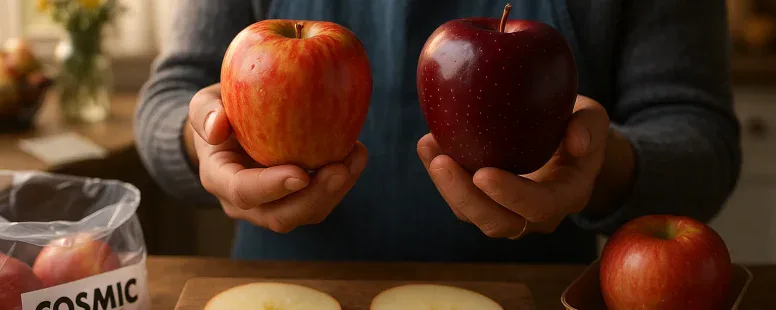
You hold two apples in your hands and wonder which one will make your morning better. One feels like a fireworks crackle when you bite it: the other offers a long, snappy chew that stays juicy for minutes. Honeycrisp and Cosmic Crisp each promise a great apple experience, but they arrive from different histories, breeders, and intentions. This article compares flavor, texture, appearance, growing history, storage, cooking uses, price, and shopping tips so you can pick the apple that matches your taste and purpose.
Quick Comparison At A Glance
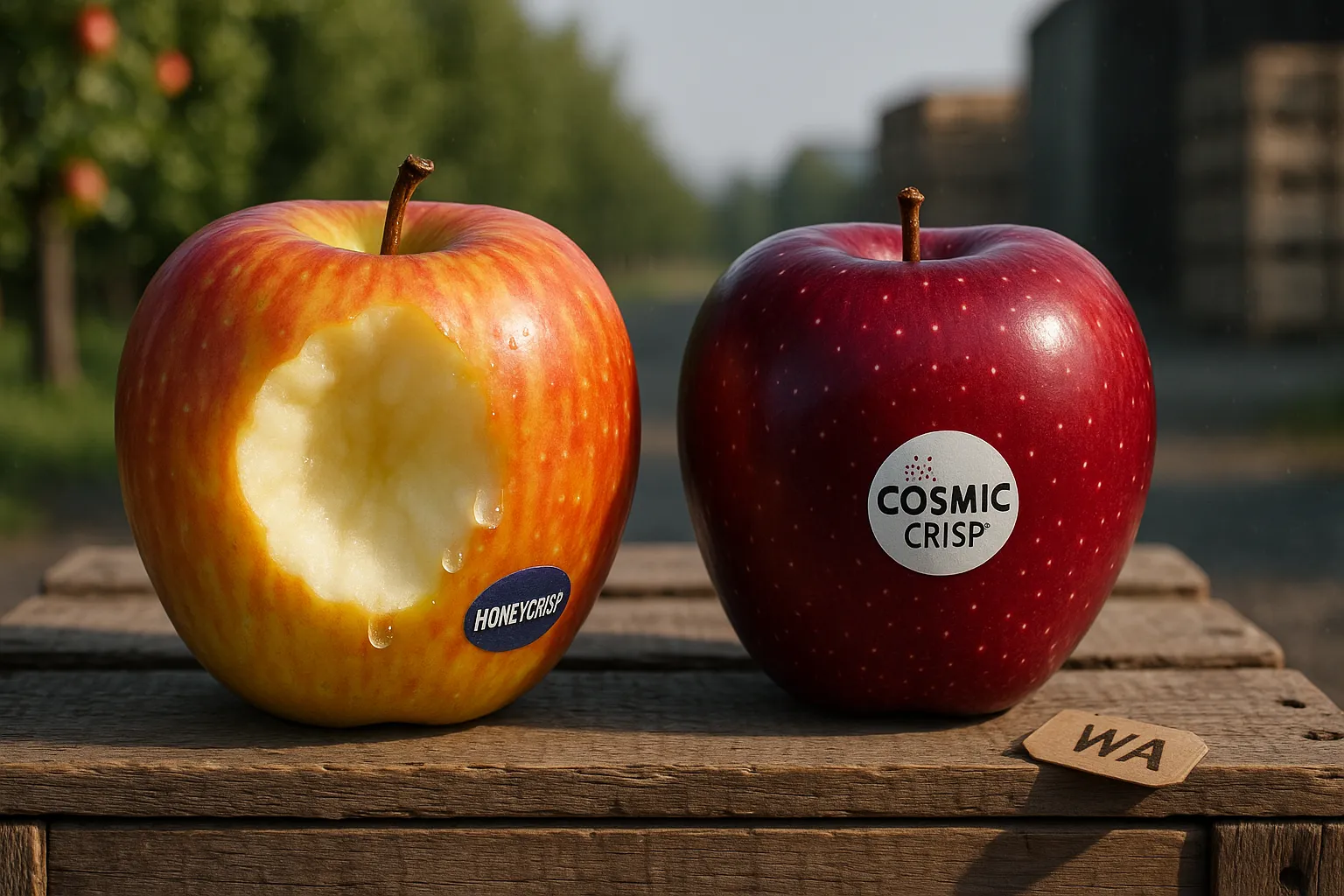
Fact: Honeycrisp and Cosmic Crisp target different strengths, immediate eating pleasure versus long-term firmness and storage.
Honeycrisp (University of Minnesota) offers explosive crispness and bright, juicy sweetness. Cosmic Crisp (bred at Washington State University, cultivar name ‘WA 38’) emphasizes shelf life, balanced sweet-tart flavor, and consistent texture after months in storage.
If you want an apple that gives a dramatic first bite and vivid aroma, choose Honeycrisp. If you want an apple that stays crisp in your fruit bowl for weeks and ships well across the country, choose Cosmic Crisp.
Key semantic entities: Honeycrisp, Cosmic Crisp, University of Minnesota, Washington State University, WA 38, Washington Growers.
Follow-up: Later sections explain flavor nuances, storage science, and how price and availability affect your choice.
Flavor, Texture, And Eating Experience
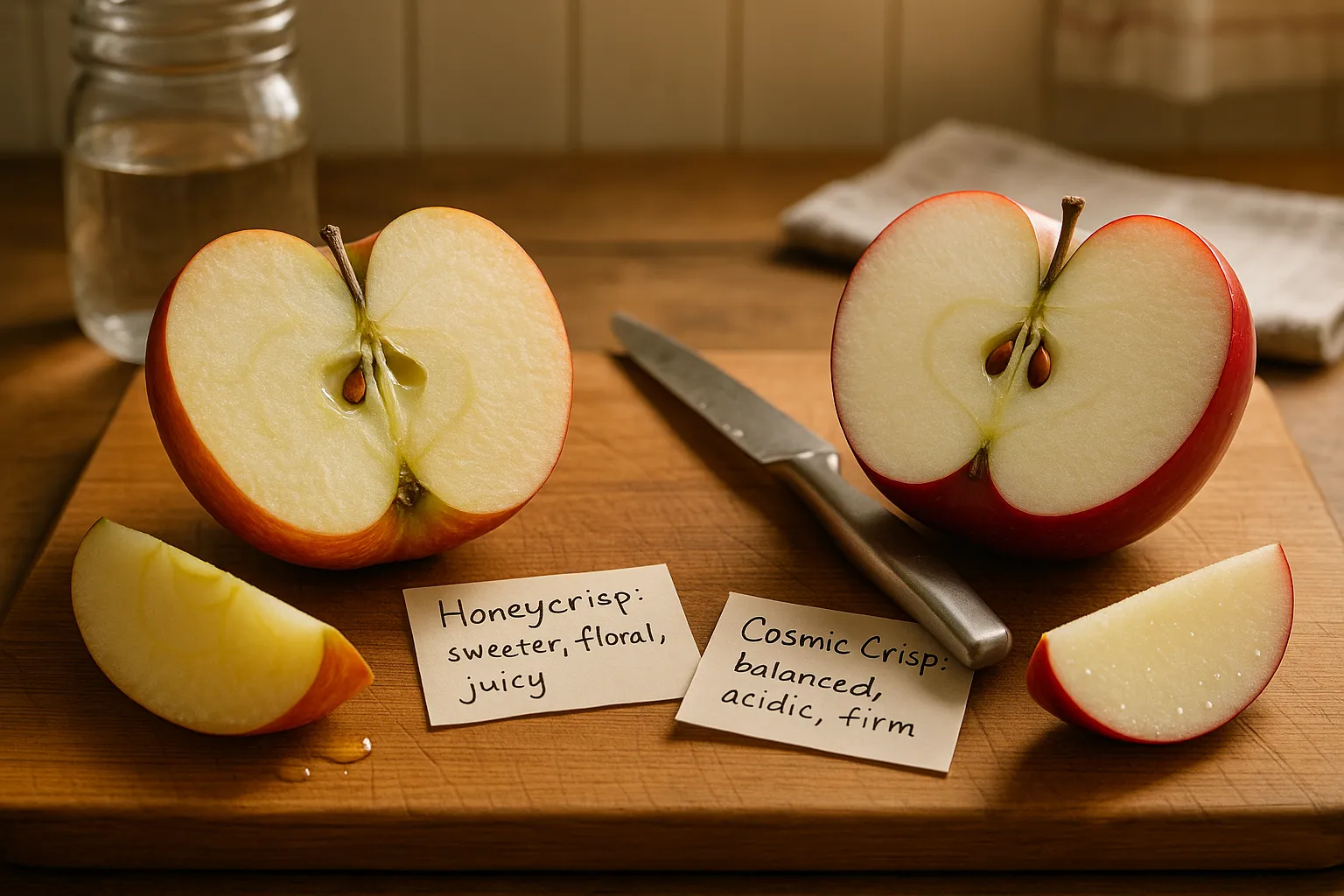
Fact: Both apples taste great, but they deliver that pleasure in different ways. Below you get clear comparisons and sensory guides so you can match them to your palate.
Flavor Profile And Sweetness Levels
Fact: Honeycrisp tends to read sweeter and more floral: Cosmic Crisp sits more balanced with noticeable acidity.
Honeycrisp often shows ripe pear, honey, and subtle floral notes. Its sugar-acid ratio leans higher, so you perceive more sweetness. Cosmic Crisp offers apple-forward flavor with bright acidity that keeps the taste lively across bites. Many tasters call Cosmic Crisp “balanced”, it doesn’t fatigue your palate quickly.
Example: If you like Pink Lady or Fuji for their crisp sweetness, you’ll probably favor Honeycrisp for snacking. If you like Gala but want more structure and acidity, Cosmic Crisp may win you over.
Texture, Crispness, And Juiciness
Fact: Honeycrisp has an airy, cell-separated texture that bursts with juice: Cosmic Crisp gives a dense, sustained crunch.
Honeycrisp tissue has larger air spaces between cells. That structure causes the clean, popping snap and quick flood of juice. Cosmic Crisp cells are tighter: your bite meets resistance and then a steady release of juice. Cosmic Crisp tends to feel firmer even after weeks in storage.
Practical taste test: Slice both apples and let them sit 15 minutes. Honeycrisp softens faster and releases aroma: Cosmic Crisp keeps crunch and structure far longer. This matters when you plan to buy a bag and eat it over many days.
Appearance, Size, And Shelf Appeal
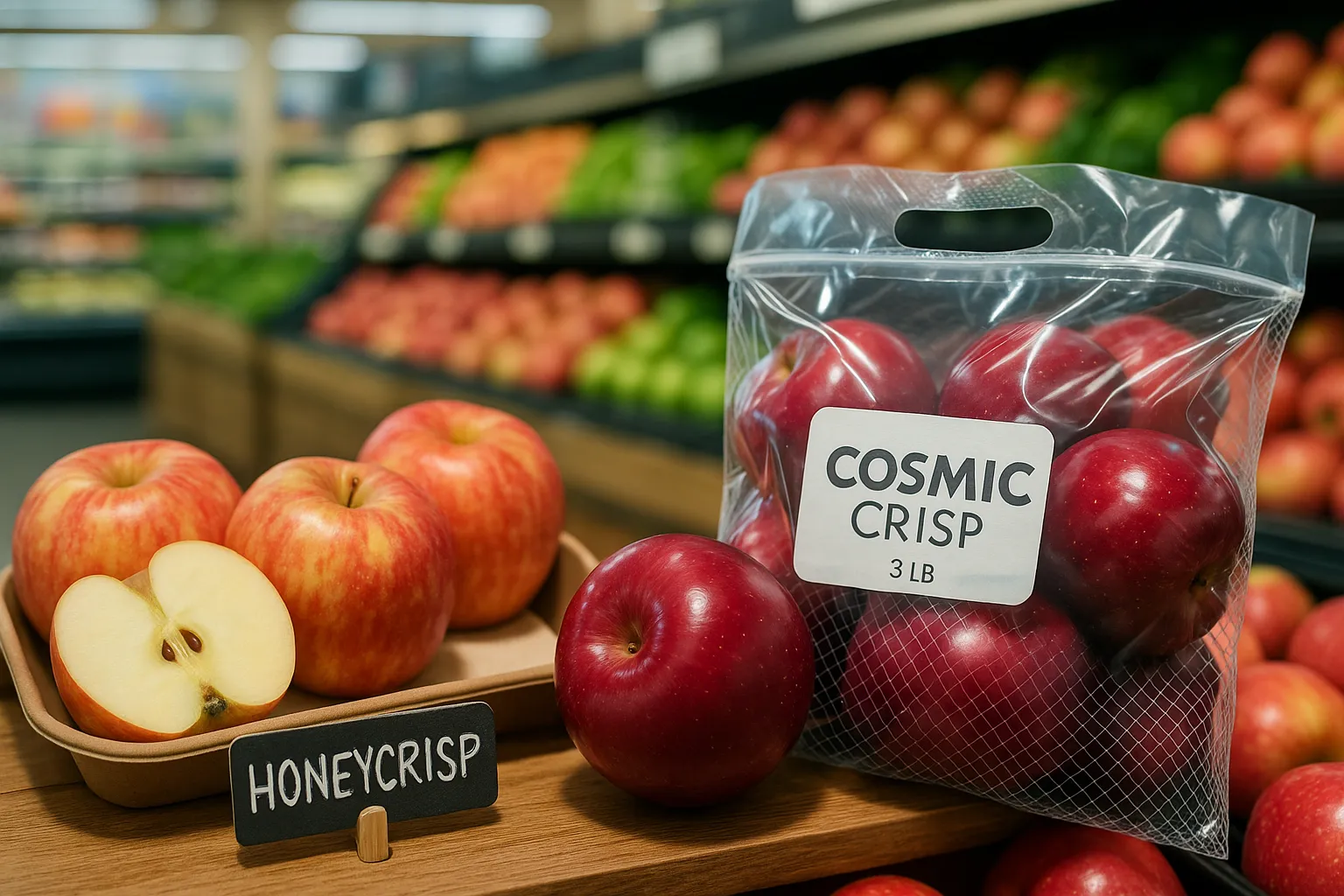
Fact: Visual cues help you choose ripe, quality fruit: Honeycrisp and Cosmic Crisp look different at a glance.
Color, Shape, And Visual Differences
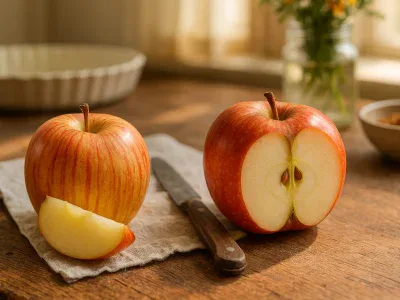
Fact: Honeycrisp shows a mottled red over yellow ground and often has irregular speckling: Cosmic Crisp tends to be uniform dark red with small, light lenticels that look like tiny stars.
Honeycrisp apple shape varies: some are a bit squat and saucer-like. Cosmic Crisp usually rounds out more uniformly and often appears glossier in retail bins. Because of the small lenticels on Cosmic Crisp, some sellers brand them as “cosmic” with tiny white dots, which helps shoppers recognize the variety.
Typical Size And Packaging Considerations
Fact: Honeycrisp ranges medium to large: Cosmic Crisp often runs medium-large and is commonly sold in bulk 3–8 lb bags for longer storage.
Retailers pack Honeycrisp in smaller, premium trays or loose bins to emphasize immediate-eating quality. Cosmic Crisp often ships in controlled-atmosphere cartons and appears in supermarkets as bags or single fruit to support its storage claims. If you want single apples for lunch, both work. If you buy in bulk for pantry storage, Cosmic Crisp usually offers better post-purchase appearance retention.
Growing, Origin, And Seasonality
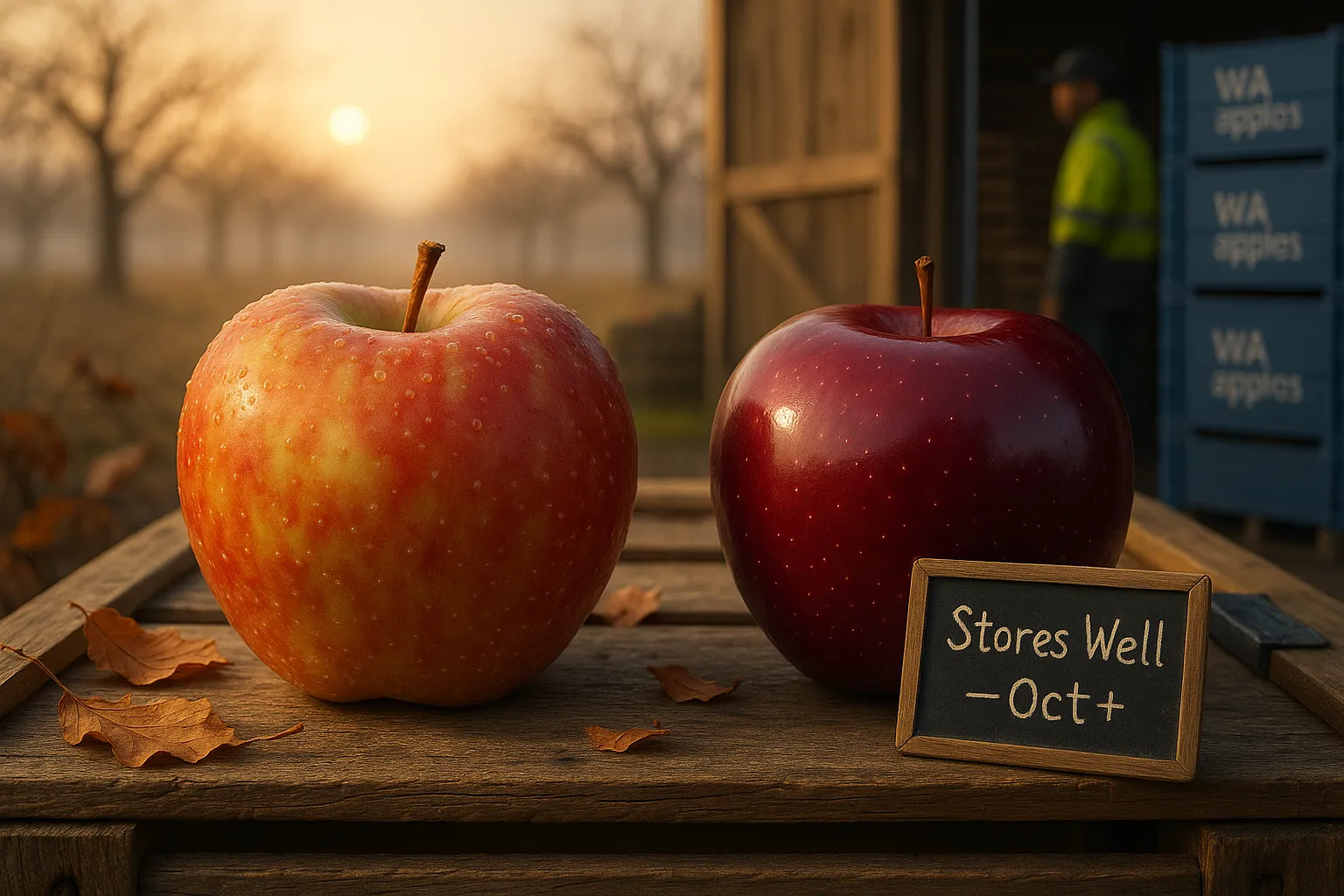
Fact: Honeycrisp and Cosmic Crisp come from two different breeding programs with distinct goals.
History And Breeding Background
Fact: Honeycrisp was developed at the University of Minnesota in the 1960s and released in 1991: Cosmic Crisp was developed at Washington State University and released commercially in 2019.
Honeycrisp resulted from a goal to improve cold-hardiness and texture for northern climates. The University of Minnesota bred it to perform in cold winters and still deliver flavor and crispness. Cosmic Crisp (WA 38) came from WSU with a program focused on shelf life, shipping durability, and consistent quality for large-scale markets. Washington apple growers, the Washington State Department of Agriculture, and licensing partners helped bring Cosmic Crisp to supermarkets quickly.
Named entities: University of Minnesota, Washington State University, Washington Apple Commission.
Harvest Times And Availability Throughout The Year
Fact: Honeycrisp harvest peaks earlier in the fall: Cosmic Crisp harvest comes slightly later and stores longer for off-season sales.
Honeycrisp season typically runs from late August through October depending on region. Because Honeycrisp doesn’t store as long, supply dips after early winter. Cosmic Crisp harvest generally occurs in October, but the variety was bred for long controlled-atmosphere storage, so retailers offer Cosmic Crisp from fall well into spring and sometimes summer.
Follow-up: If you want apples in March, you’re more likely to find Cosmic Crisp: in September, both are common but Honeycrisp may be at peak freshness.
Storage, Shelf Life, And Best Uses For Cooking
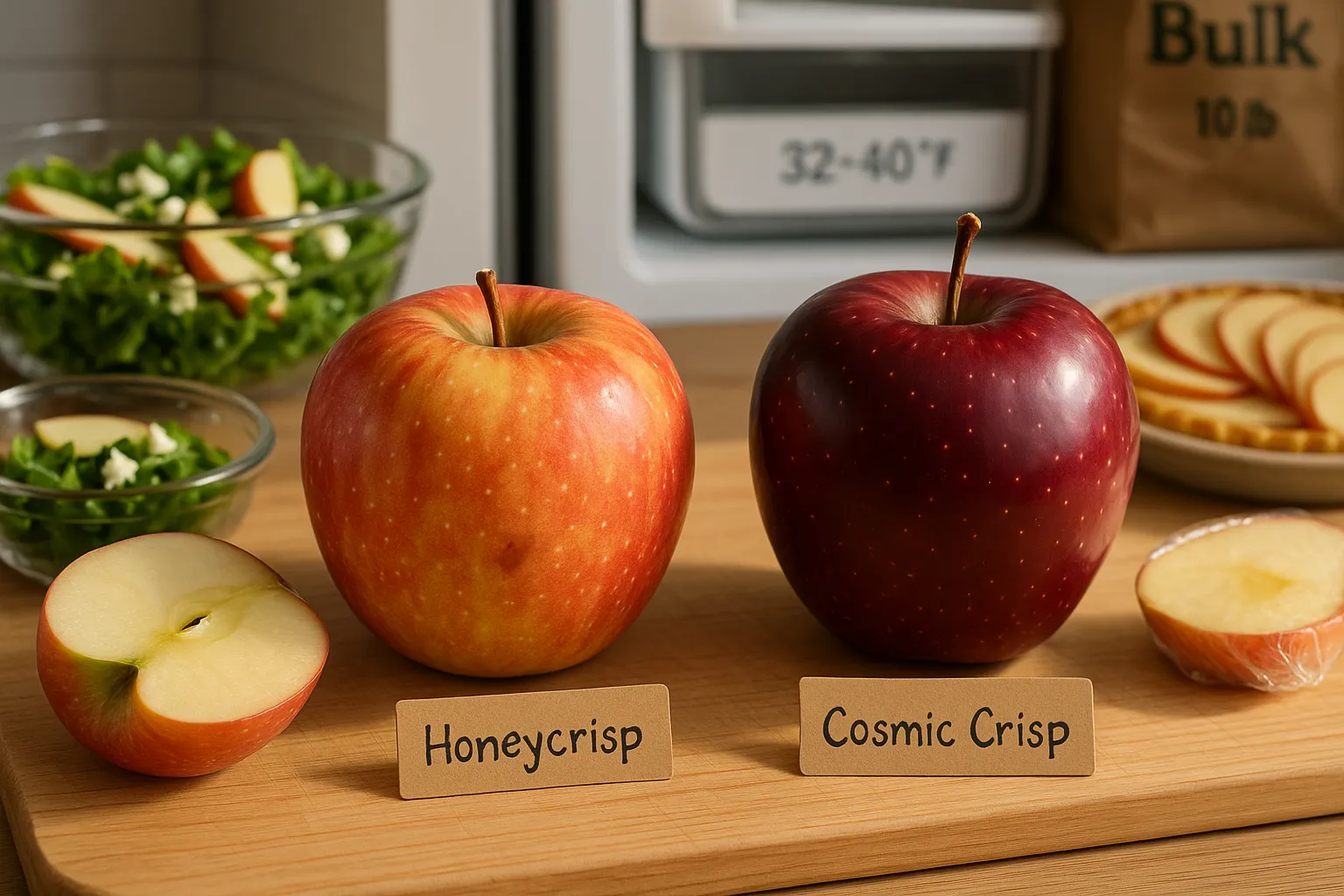
Fact: Cosmic Crisp outperforms Honeycrisp for long storage: Honeycrisp excels for immediate eating and quick-cook uses.
How Long Each Variety Keeps And Storage Tips
Fact: Cosmic Crisp can keep 6–12 months in ideal controlled-atmosphere storage: Honeycrisp keeps best for 2–4 months under home refrigeration.
Store both apples in your crisper drawer at about 32–40°F with high humidity. Keep apples away from strong-smelling foods, apples absorb odors. For Honeycrisp, try to eat within a month or two for peak texture and aroma. Cosmic Crisp tolerates longer storage: if you buy a 10-lb bag, you can expect good firmness after several months if you refrigerate.
Practical tip: Wrap bruised or cut pieces in plastic wrap: whole apples last longer in single layers.
Best Culinary Uses: Eating Raw, Baking, Sauces, And Salads
Fact: Use Honeycrisp for fresh eating and salads: use Cosmic Crisp when you need structure for baking and slicing that holds up.
Honeycrisp makes salads sing, the sweet, juicy bite brightens mixed greens and cheese. It also works for quick-and-easy pies where you want a tender crumb, though it breaks down faster. Cosmic Crisp keeps shape in tarts and pies, so your slices will hold their form. For applesauce, both work but Honeycrisp yields a sweeter sauce. For roasting with pork or adding to a slaw, choose Honeycrisp for brightness or Cosmic Crisp when you want firm texture.
Price, Market Availability, And Where To Buy
Fact: Price varies by season, demand, and shipping costs: Honeycrisp often commands a premium at peak demand while Cosmic Crisp stabilizes prices due to volume and storage.
Typical Price Differences And What Affects Cost
Fact: Honeycrisp often costs more per pound at harvest peaks because it’s highly sought: Cosmic Crisp prices can be lower per unit when sold in bulk bags.
Price drivers include crop yield, weather impacts, transportation, and licensing or trademark controls. Honeycrisp crop size fluctuates more, which drives brief price spikes during shortages. Cosmic Crisp benefits from commercial contracts and large-volume plantings in Washington, which tend to moderate price swings.
Example: In fall, you may see Honeycrisp priced 10–30% higher per pound than Cosmic Crisp: in winter, Cosmic Crisp in bags can be better value.
Buying Tips: How To Choose Ripe, High-Quality Fruit
Fact: Choose apples that are firm, free of soft spots, and have intact skin: aroma and weight signal freshness.
Squeeze gently, firmness matters. Smell near the stem: a fresh, sweet aroma signals ripeness. Avoid apples with large blemishes or mushy patches. For long-term storage, pick Cosmic Crisp specimens with tight skin and no surface punctures. For immediate eating, select Honeycrisp that yield slightly to pressure but stay snappy.
Which Apple Should You Choose — Practical Recommendations
Fact: Choose based on purpose, snacking, baking, gifting, or storage, and on your taste preference for sweet versus balanced acidity.
Picking By Purpose: Snacking, Baking, And Gifting
Fact: For pure snacking, pick Honeycrisp: for long-term baking and bulk storage, pick Cosmic Crisp.
If you value the first bite above all, buy Honeycrisp. It delivers aroma, immediate juice, and a memorable snap. If you pack lunches, host events weeks after purchase, or bake pies that must hold shape, pick Cosmic Crisp. For gifting during holidays, consider presentation: Cosmic Crisp’s deep red color and durable skin travel well: high-grade Honeycrisp in small boxes reads as premium and indulgent.
Sustainability, Grower Considerations, And Future Trends
Fact: Cosmic Crisp supports larger commercial orchards in Washington: Honeycrisp remains widely grown across the U.S., with regional variations.
Cosmic Crisp plantings expanded rapidly after release because it helps reduce waste from bruising and spoilage in the supply chain. That can improve grower margins and reduce thrown-out fruit. Honeycrisp orchards remain common in Minnesota, New York, Michigan, and parts of Washington: growers prize it for consumer demand even though variable yields.
Future trend: Expect more Cosmic Crisp in winter shelves and steady Honeycrisp spots in fall markets. Growers may experiment with rootstocks and orchard practices to improve both flavor and sustainability.
Call-to-action: Try both varieties side-by-side this season. Take notes on sweetness, firmness, and how each holds up in your recipes, you’ll quickly know which one fits your routine best. (And yes, you can keep a small fridge bag of Cosmic Crisp for months: it will still crunch.)

- Best Tpu - October 21, 2026
- Mikrotik Product Comparison - October 20, 2026
- Fbm Competitors - October 19, 2026
by Ellie B, Site Owner / Publisher