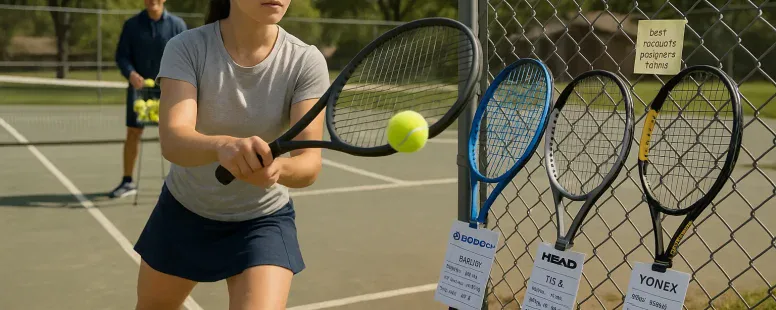
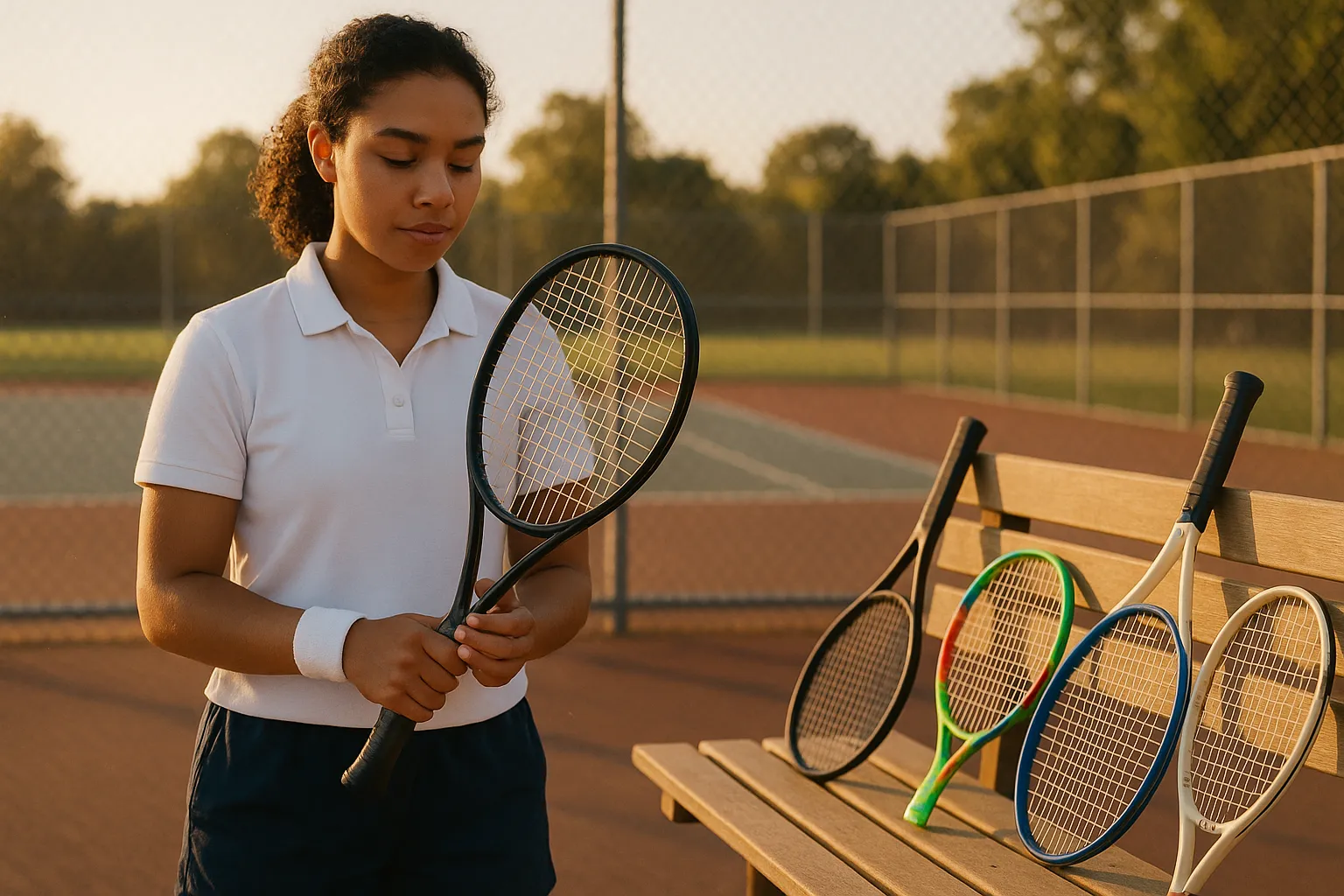
The right racquet can turn awkward slices into playable shots and make the first weeks of tennis feel less like a struggle and more like progress. If you’re starting out, picking a racquet is not just about looks, it shapes how you learn technique, how quickly you improve, and how comfortable your wrist and elbow feel after a session. This guide cuts through marketing noise to show you the best racquets for beginner tennis, why each spec matters, and how to test and upgrade as your skills grow. Expect clear, actionable advice, practical picks, and honest trade-offs so you can buy once and play smarter.
Why Choosing The Right Racquet Matters For Beginners
Fact: A beginner racquet reduces physical strain and accelerates learning. When you use a racquet that fits your size, strength, and swing speed, you get more consistent contact and better ball trajectory. That steadier feedback helps you build correct timing and stroke mechanics.
Beginners often make two mistakes: picking a heavy, control-oriented racquet thinking it’s “better,” or choosing a toy-like frame that feels light but offers no margin for error. The right choice sits between those extremes. It gives you forgiveness, a larger sweet spot and easy power, while not masking technique flaws.
Named brands such as Wilson, Babolat, Head, and Yonex produce very different beginner models. Wilson’s Clash lines favor comfort, Babolat’s Boost series delivers simple power, and Head’s Ti.S series gives durability and a user-friendly head size. Knowing this helps you match a racquet to how you learn: do you need raw power, comfort, or control practice?
Practical benefit: the right racquet lowers injury risk. Beginners who use undersized grips or very stiff frames report wrist and elbow soreness. Choose a forgiving frame and the correct grip and you’ll practice longer, faster. This is crucial: improvement comes from repetitions, not from flashy gear.
Key Racquet Specs Beginners Should Prioritize
Fact: Head size, weight, balance, and grip size are the primary specs that shape playability. Start here when you shop.
Head size, measured in square inches, determines the sweet spot. Beginners should favor mid-plus to oversize heads (100–110 sq in). That gives you forgiveness on off-center hits.
Weight, lighter frames (9.5–11.5 oz unstrung) are easier to swing and maneuver. Heavier frames add stability but demand more strength. If you lack experience or shoulder strength, pick lighter.
Balance, head-heavy frames add power but reduce maneuverability at the net. Even or slightly head-light balance helps you learn control and react faster on volleys.
Grip size, pick the correct circumference to avoid wrist compensation and injury. Most adult beginners use between 4 1/8″ and 4 1/2″. Measure by holding the racquet and checking finger space between palm and fingers.
String pattern and tension, an open string pattern (fewer mains/crosses) adds spin and bite: a dense pattern offers control and string longevity. Beginners usually prefer a balanced pattern and moderate tension (50–58 lbs) to maximize comfort and power.
Frame stiffness, more flexible frames dampen shock and spare your arm. Look for a flex rating under ~65 (on typical manufacturer scales) if you have any elbow pain history.
These specs are your checklist. Start by narrowing to head size and weight, then refine balance and grip.
Top Beginner Racquets To Consider (Tested Options)
Fact: Several models consistently perform well for beginners across brands. Below are tested picks that balance power, comfort, and value.
Beginner Pick: Wilson Clash 100 (or Clash 108 for extra forgiveness). This frame offers low vibration, a flexible feel, and a comfortable string bed. It helps you learn spin and feel while avoiding arm soreness.
Intermediate-Friendly Pick: Babolat Boost Drive or Pure Drive Lite. These give you slightly more stability and power without becoming unforgiving. They work if you expect to improve quickly.
Budget Pick: Head Ti.S6 (vintage-style but often reissued) or Prince Textreme Warrior 100L. These frames give oversize head sizes and low price points while staying playable. You sacrifice refinement but gain accessible power.
Junior/Youth Pick: Wilson Burn 19/25 or Babolat Nadal Junior series. These are scaled for young players and built to withstand growth and stringing cycles.
Why these? Because they hit the core beginner needs: light swing weight, oversize sweet spot, and durable construction. Try models from each brand to see which grip feel and stringbed you prefer.
Real-life note: a friend of mine started with a Head Ti.S6 and improved faster than teammates who used heavy rackets. She reported less wrist fatigue and more weekly practice: that mattered more than a few extra grams of stability.
How To Test A Racquet In-Store Or On-Court Before Buying
Fact: Demoing is the only reliable way to know if a racquet suits you. Always test before you buy.
How to read a demo label: look for swing weight, head size, strung weight, and balance. These numbers tell you how the racquet will feel in play. Swing weight predicts how heavy it feels when you swing: a lower number is easier for beginners.
Simple drills to evaluate power, control, and comfort: ask for three balls each at forehand, backhand, and volley. Hit consistent crosscourt rallies, then step in and attack short balls. Note where you miss: long, short, or wide.
Playtest checklist: check comfort (no sting in the arm), spin potential (does the ball bite the stringbed), and maneuverability (can you volley quickly). If the racquet makes your serves feel flat or you can’t control depth, move to a different head size or string tension.
Also test low volleys and quick reaction shots. Many beginners choose a racquet that feels great on full swings but is sluggish at the net. Try a few swings behind the baseline and at net to sense balance differences.
If buying online, read swing weight and user reviews, and choose sellers with a demo or return policy. A 30-day on-court return window is ideal.
Sizing, Weight, And Grip Guide For New Players
Fact: Proper sizing prevents injury and speeds skill acquisition. Get it right before you train heavily.
Grip size and how to measure it correctly: hold the racquet in your dominant hand with your palm along the handle. There should be a finger’s width of space between your ring finger and palm. Use a ruler or a cheap gauge at shops. Too small a grip forces you to squeeze: too large reduces wrist motion and causes shoulder strain.
Choosing grip size for comfort and injury prevention: if you’re between sizes, choose the smaller and add an overgrip. Overgrips let you fine-tune size and offer more tack and sweat control.
Frame weight and balance: finding the right feel means testing. Beginners often start with 9.8–10.8 oz unstrung and an even balance. As you get stronger pick frames slightly heavier to gain stability.
Recommended string types and when to restring: start with a multifilament or synthetic gut string for comfort and power. Restring every 3–6 months with regular play: restring sooner if you notice loss of tension or fraying. If you develop control and want spin, consider polyester strings later but be warned, they’re harsher on the arm so gradually transition.
Budget Considerations And Where To Save Vs. Invest
Fact: You should invest in lessons before upgrading expensive gear. The most important early spend is coaching, not the racquet’s top-end model. A midprice beginner racquet plus 6–10 hours of lessons beats an expensive frame and no instruction.
When to spend more: rackets, strings, or lessons, prioritize lessons first, then strings, then premium racquets. Strings change play more than a small frame tweak. If you have limited funds, buy a solid, value-friendly racquet and invest extra in ball machine time or coaching.
Budget pick: best value new player racquet under midprice, look for last year’s model. Retailers and brand outlets often sell previous iterations (like earlier Wilson or Head lines) with modern playability at a discount.
Signs it’s time to move to a more advanced racquet: you consistently hit deep, heavy shots with control: you experience no arm discomfort: you’re practicing multiple times weekly. Those signal you can handle a stiffer frame, smaller head, and higher string tension for greater control.
Steps To Upgrade Your Racquet As Your Game Improves
Fact: Upgrade in small, targeted steps. Don’t leap from a forgiving oversize to a stiff, small-head pro frame in one go.
Step 1: Stabilize your swing. Move to a racquet with similar head size but slightly more weight or less flex. This improves depth and reduces wild shots.
Step 2: Adjust string type and tension. Move from multifilament to a more control-oriented string and increase tension by 2–4 lbs. This gives better feedback and bite on the ball.
Step 3: Fine-tune grip and balance. Add lead tape to the hoop for stability or switch to a leather grip for better feedback as you develop touch.
Step 4: Test intermediate frames. Demo models labeled as “player” or “club” frames. These will have smaller head sizes (95–100 sq in), higher swing weight, and more torsional stability.
Signs it’s time to move to a more advanced racquet: you notice a lack of control with your current racquet at baseline, you can generate your own power reliably, and you don’t feel arm discomfort after long sessions.
H3: Head Size: Power Versus Control Explained
Fact: Larger heads give power, smaller heads give control. A 110 sq in head will help launch the ball: a 98–100 sq in head lets you place it. Beginners should start larger, then shrink head size as accuracy improves.
H3: String Pattern And Tension: What Beginners Need To Know
Fact: Open patterns enhance spin: dense patterns add durability and control. Start at moderate tension and adjust by feel. If shots sail, lower tension: if you lack depth, raise it slightly.
H3: Frame Weight And Balance: Finding The Right Feel
Fact: Heavier frames are stable, lighter frames are maneuverable. Increase weight gradually as your fitness and technique develop. Test responses at net and baseline before committing.
H3: Grip Size And How To Measure It Correctly
Fact: Correct grip prevents injury. Measure with a finger-gap test or a ruler. When in doubt, go smaller and add overgrip: you can’t reliably reduce an oversized grip without professional work.
H3: Beginner Pick: Lightweight Oversize For Easier Power
Fact: Oversize, light frames give instant forgiveness. Try models 100–108 sq in with sub-11 oz weight for fast learning and less fatigue.
Fact: Look for 98–100 sq in heads with slightly higher swing weight. These give a bridge between power and control for improving players.
H3: Budget Pick: Best Value New Player Racquet Under Midprice
Fact: Last-season models or entry-level lines from major brands deliver good value. Check clearance racks and certified-refurbished demo frames.
H3: Junior/Youth Pick: Safe Options For Growing Players
Fact: Youth racquets scale by age/height. Choose length and weight appropriate for the child’s size and strength: too long a racquet ruins technique.
H3: How To Read A Demo Label: What Specs To Try First
Fact: Start with swing weight and strung weight on the label. If the swing weight is low, you’ll likely prefer it if you lack fast arm motion.
H3: Simple Drills To Evaluate Power, Control, And Comfort
Fact: Use crosscourt rallies, target serves, and quick volley exchanges. Track miss patterns and pain signals: these tell you what to change.
H3: Playtest Checklist: Comfort, Spin, And Maneuverability
Fact: Rate each demo on a 1–5 scale for those three criteria. If comfort is below 3, discard, elbow pain is non-negotiable.
H3: Choosing Grip Size For Comfort And Injury Prevention
Fact: A proper grip size reduces risk of tennis elbow and blisters. Re-check grip after adding overgrips or leather wraps: size changes fast.
H3: Recommended String Types And When To Restring
Fact: Synthetic gut or multifilament suits beginners. Restring when tension drops or every 3–6 months with regular play. If you string often, shop for bulk string deals.
H3: When To Spend More: Rackets, Strings, Or Lessons
Fact: Spend on lessons first, strings second, then a pricier racquet. Coaching improves your stroke far more than a marginal racket upgrade.
H3: Signs It’s Time To Move To A More Advanced Racquet
Fact: You’re hitting consistent targets, serving effectively, and feel little arm discomfort. Those are the cues to step up your gear.
To provide the best experiences, we use technologies like cookies to store and/or access device information. Consenting to these technologies will allow us to process data such as browsing behaviour or unique IDs on this site. Not consenting or withdrawing consent, may adversely affect certain features and functions.
Functional
Always active
The technical storage or access is strictly necessary for the legitimate purpose of enabling the use of a specific service explicitly requested by the subscriber or user, or for the sole purpose of carrying out the transmission of a communication over an electronic communications network.
Preferences
The technical storage or access is necessary for the legitimate purpose of storing preferences that are not requested by the subscriber or user.
Statistics
The technical storage or access that is used exclusively for statistical purposes.The technical storage or access that is used exclusively for anonymous statistical purposes. Without a subpoena, voluntary compliance on the part of your Internet Service Provider, or additional records from a third party, information stored or retrieved for this purpose alone cannot usually be used to identify you.
Marketing
The technical storage or access is required to create user profiles to send advertising, or to track the user on a website or across several websites for similar marketing purposes.