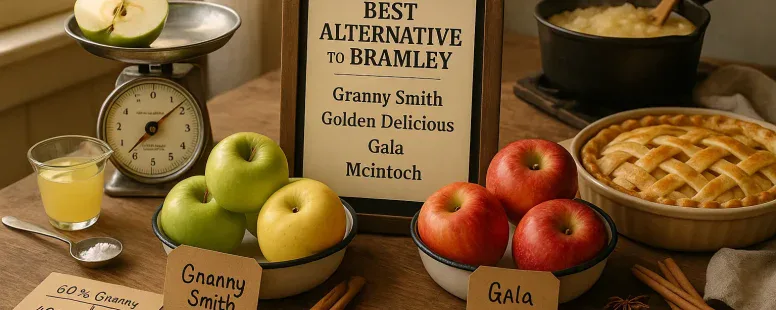
You want the sharp, saucy punch of a Bramley apple but you don’t have one on hand. The good news: you can reproduce most of Bramley’s acidity, texture, and cooking behavior with other apples or simple blends. This guide shows which apples work, why they work, and exactly how to adjust your recipes so your pie, sauce, or roast still sings. By the end you’ll know the best alternative to Bramley for each dish, plus practical ratios, temperature tweaks, and a few honest pitfalls to avoid.
Why You Might Substitute Bramley Apples
Fact: Bramley is prized for high acidity, large size, and a firm flesh that breaks down into a fluffy, tart sauce when cooked. Bramley apples (a British cultivar widely sold under the name Bramley Seedling) deliver a bright, lemony tang that balances sugar and fat in baked goods. You might substitute Bramley for three main reasons: availability, taste preference, or cost.
Availability, Bramleys are common in the UK but less so in the US and some other markets. If you live in the US, Canada, or parts of Europe you may find Granny Smith or Honeycrisp easier to buy year-round.
Taste preference, Some people find Bramley too sharp raw. You may prefer a gentler tang or a sweeter finish and so look for a milder substitute.
Cost, Bramleys are large and often sold at premium prices in specialty shops. Using a mix of cheaper apples can match the function without the bill.
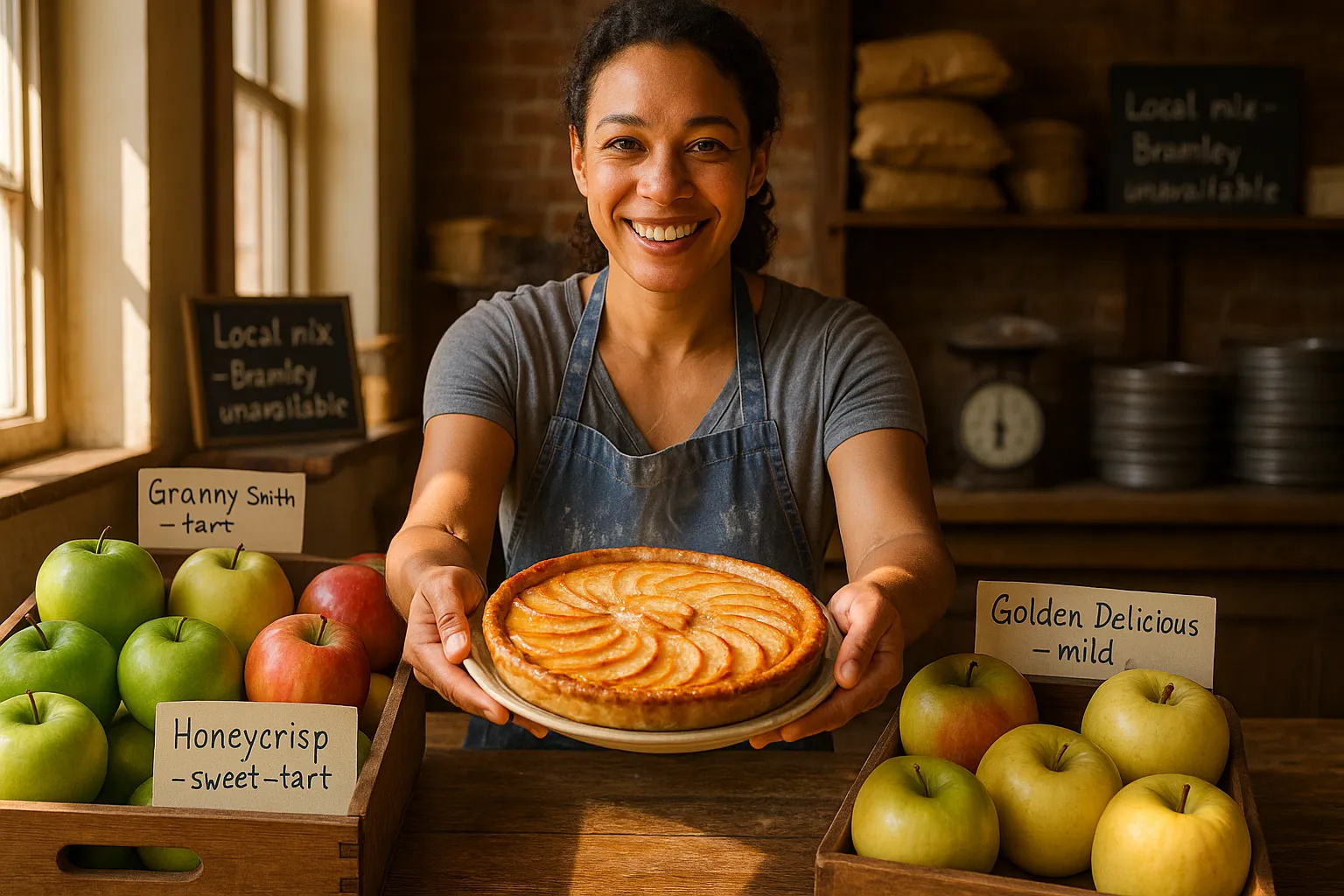
Real-world example: a small bakery in Portland switched from imported Bramleys to a local mix of Granny Smith and Golden Delicious for their apple tarts. They kept the tartness but cut costs by 30%, and customers hardly noticed.
What Makes A Good Bramley Replacement
Insight: A good replacement mimics Bramley’s acidity, firmness, and how it breaks down when cooked. Use these criteria when you choose:
Acidity: Bramley sits high on the acid scale. Apples like Granny Smith match that sharp profile.
Firmness and breakdown: Bramley softens but becomes pulpy and fluffy rather than stringy. You want apples that either hold shape (for slices) or disintegrate cleanly (for sauce).
Sugar balance: Bramley is tart: you often need to add sugar if a substitute is sweeter.
Aroma and flavor notes: Bramley has a green, citrus edge. Varieties with floral or spicy notes (Cox’s, Jonathan) can enhance complexity.
Size and yield: Bramley are large: if you substitute with smaller apples, buy more or adjust weight measures.
Named entities: Bramley Seedling, Granny Smith (Dougherty, originally from Australia/US market), Golden Delicious (Starkbro’s cultivar), Cox’s Orange Pippin, Jonathan and McIntosh.
Quick rule: If you need tartness and breakdown, pick a green apple or build a blend that adds acidity.
Top Single-Apple Substitutes And When To Use Them
Fact: No single apple matches Bramley perfectly, but several come close depending on the dish. Below are practical choices and when to use each.
Granny Smith, The Most Common Swap
Granny Smith gives the acidity and firm flesh you need. Use it in pies, tarts, and sauces when you want clear tartness and defined slices. It holds shape under heat but will break down if cooked long. Many US recipes list Granny Smith as the default for baking.
When to use: Classic apple pie, lattice tarts, and any recipe where tartness should cut through sugar or butter.
Pitfall: If your recipe calls for Bramley’s soft, fluffy sauce, you’ll need longer cooking or partial mashing: otherwise slices stay crisp.
Golden Delicious, Milder And Sweeter Option
Golden Delicious is sweet, thin-skinned, and cooks to a soft, smooth texture. It lacks Bramley’s acid but gives a gentle sweetness and a smooth puree.
When to use: Sauces for children, sweet crumbles, and recipes where too much tartness would overwhelm delicate spices like cardamom.
Adjustments: Add lemon juice or a crisp green apple to bring acidity back.
Cox’s Orange Pippin Or Gala, For Balanced Flavor And Texture
Cox’s and Gala give a balanced sweet-tart profile and a nuanced aroma. Cox’s has complex flavors, pear, orange, and spice, that mimic some of Bramley’s depth after cooking. Gala is milder but maintains a pleasant texture.
When to use: Upscale tarts, pastries where aroma matters, and mixed-apple crumbles.
Note: Cox’s often costs more and can be hard to find in some supermarkets such as Whole Foods or local farmers’ markets.
Jonathan/McIntosh, For Sauce With Pronounced Aroma
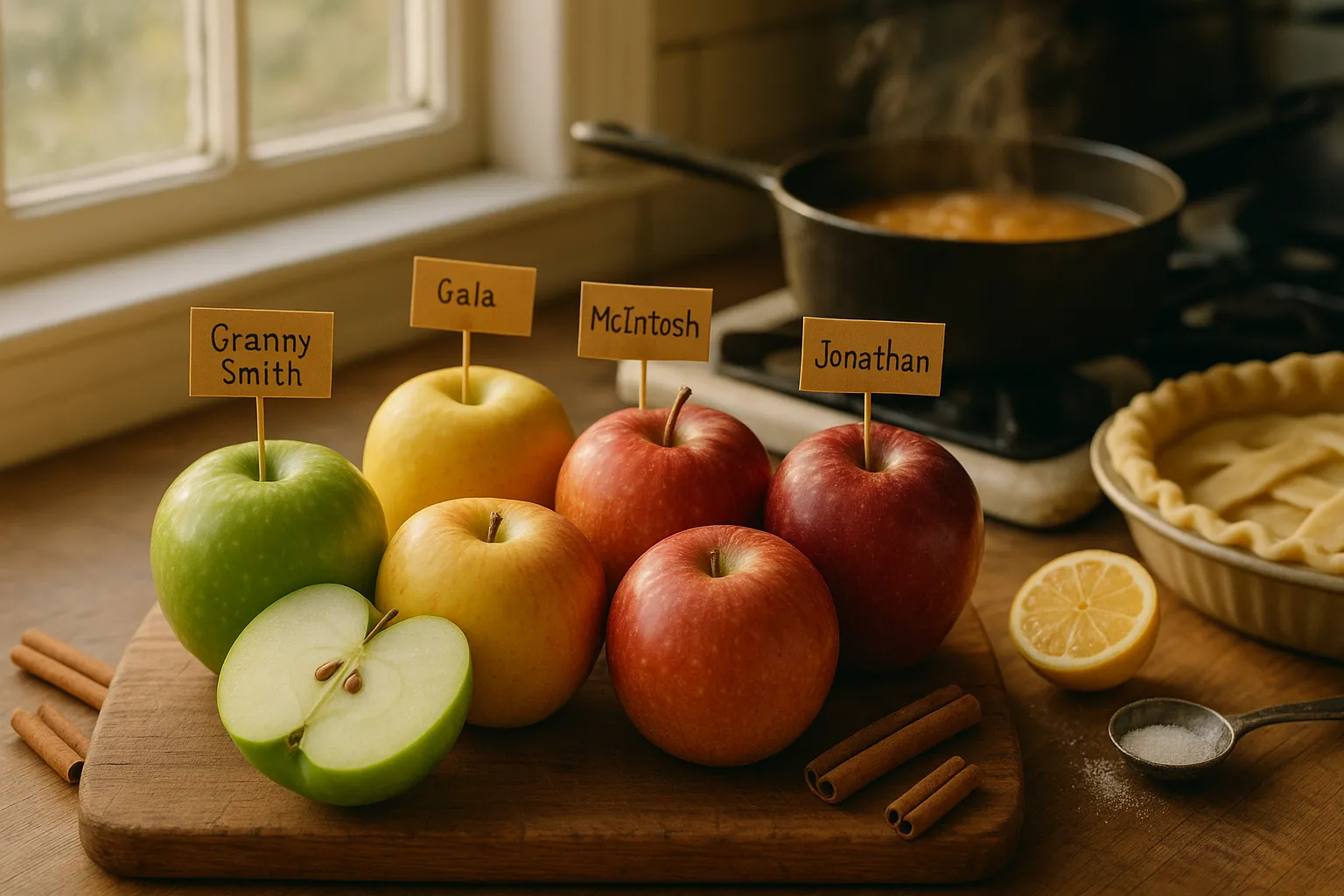
Jonathan and McIntosh give an aromatic lift: they break down into a fragrant, pulpy sauce. McIntosh is softer and cooks quickly: Jonathan holds a bit more structure and gives a bright, wine‑like tang.
When to use: Apple sauce, chutneys, and recipes where aroma should stand out. Combine with a firmer apple if you need slices.
Real example: A restaurant chef blends 60% McIntosh with 40% Granny Smith to create a sauce that’s both aromatic and tart, ideal for pork dishes.
Using Apple Blends To Mimic Bramley
Answer: Blends often outperform single varieties because they let you fine-tune acidity, sweetness, and texture. A smart mix recreates Bramley’s profile.
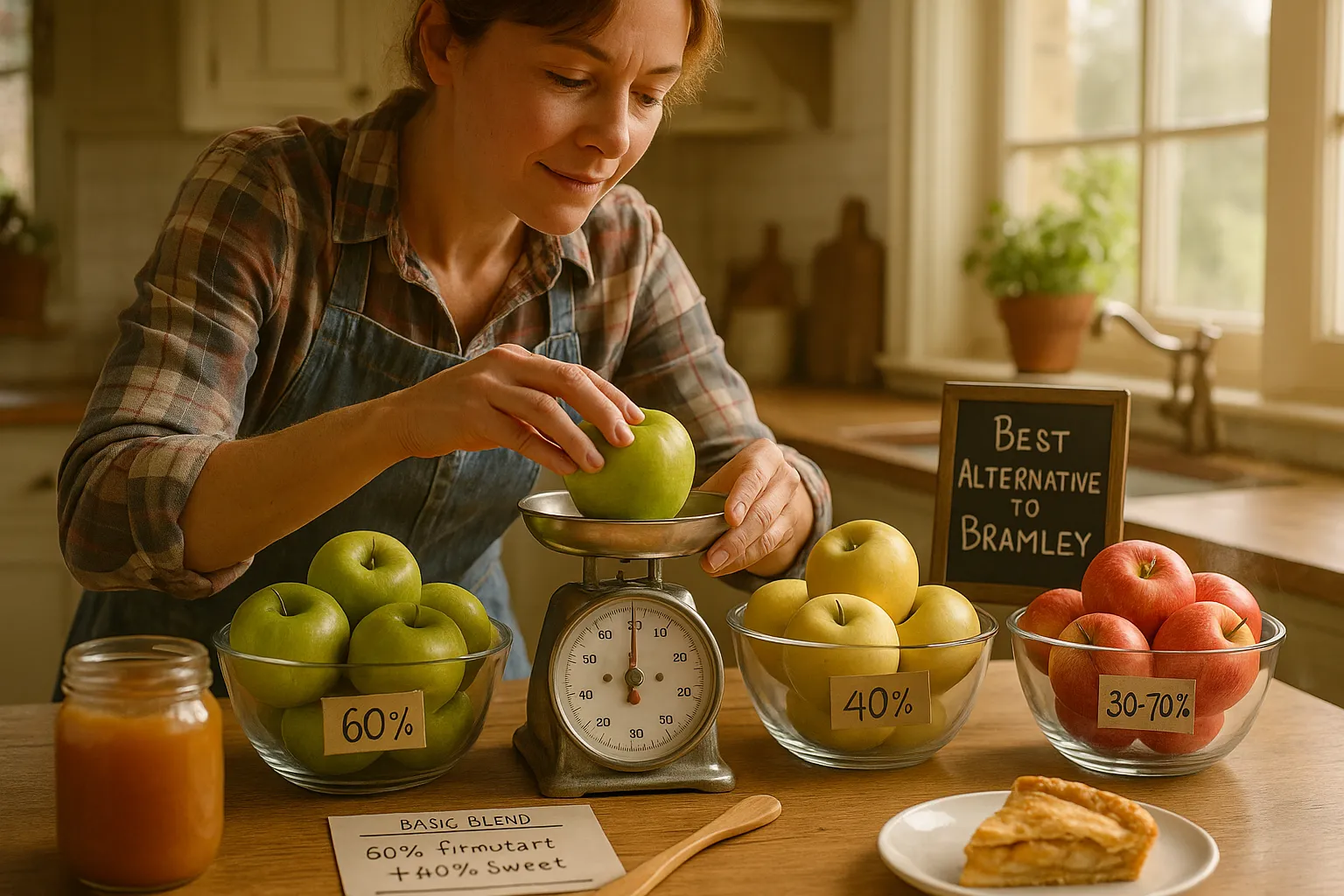
Basic blend formula: 60% firm/tart apple + 40% sweet/mild apple. For example: 60% Granny Smith + 40% Golden Delicious.
Why it works: The tart apple supplies acid and structure while the sweet apple softens and adds body. This mirrors Bramley’s balance of tartness and fluffy softness.
Example blends:
Sauce (bright and fluffy): 50% McIntosh + 50% Golden Delicious.
Pie (slices with tartness): 70% Granny Smith + 30% Cox’s Orange Pippin.
Roast (holds shape, caramelizes): 60% Jonathan + 40% Gala.
Tip: Weigh apples if you can. Bramley recipes often list weight (grams or ounces): matching weight yields consistent results.
Anecdote: I once needed Bramley for a family dinner and used 2 parts Granny Smith, 1 part Golden. The sauce came out tangy, smooth, and nobody guessed the switch.
How To Adjust Recipes When Using Alternatives
Insight: Start by matching three variables, sweetness, acidity, and texture, then tweak cooking time and thickeners. Below are practical steps.
Sweetness, Acidity, And Sugar Adjustment Tips
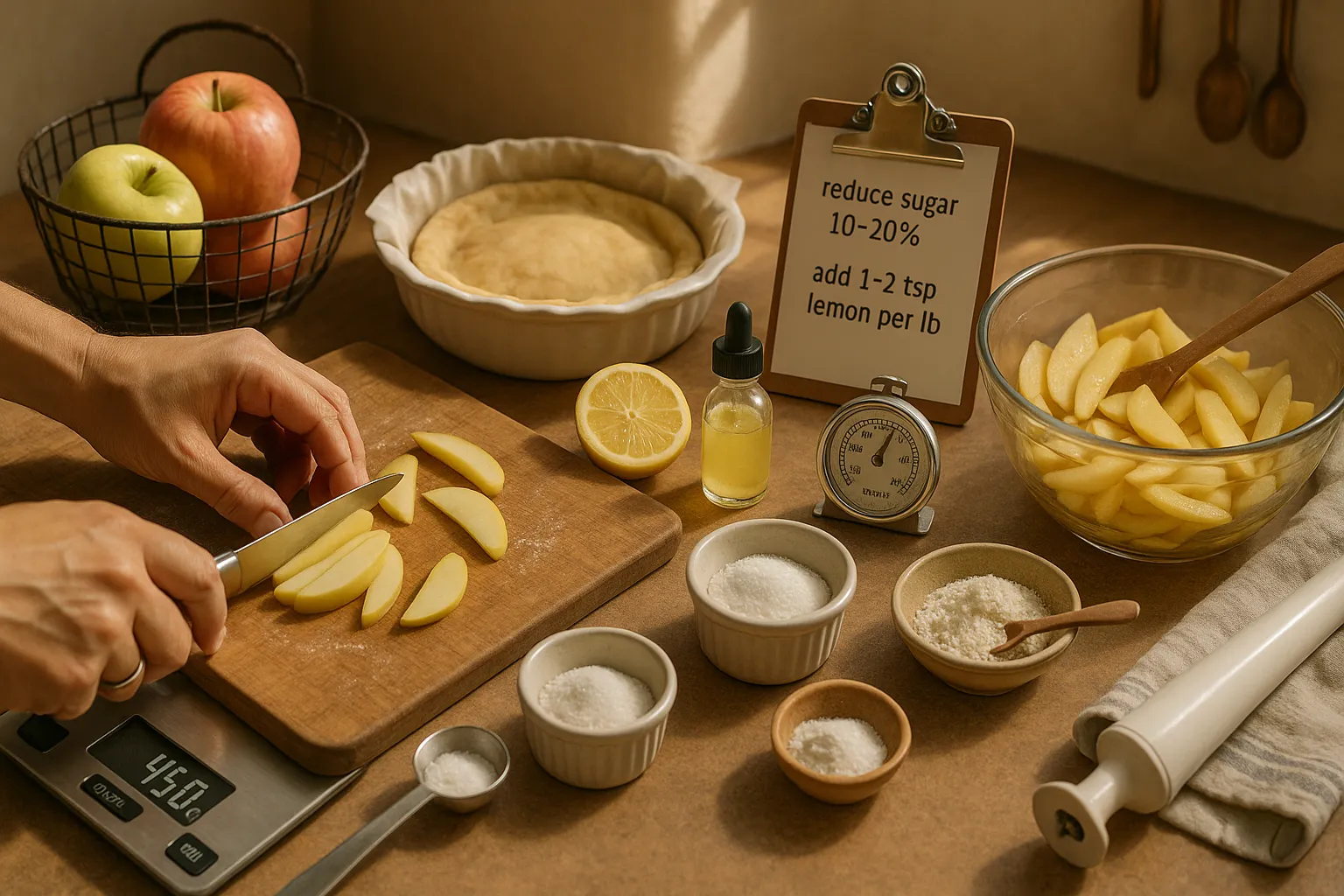
Start point: Taste your raw apple mix. If it tastes too sweet for the recipe, add 1–2 tsp lemon juice per pound (450 g) of apples. If it tastes flat or too tart, add 1–2 tbsp sugar or honey per pound.
Measure sugar by weight where possible. For pies, reduce sugar by 10–20% when you use sweet apples like Golden Delicious or Fuji.
Example: A pie recipe that calls for 150 g sugar with Bramley might need only 120 g with Golden Delicious.
Texture And Breakdown: Cooking Time And Prepping Tricks
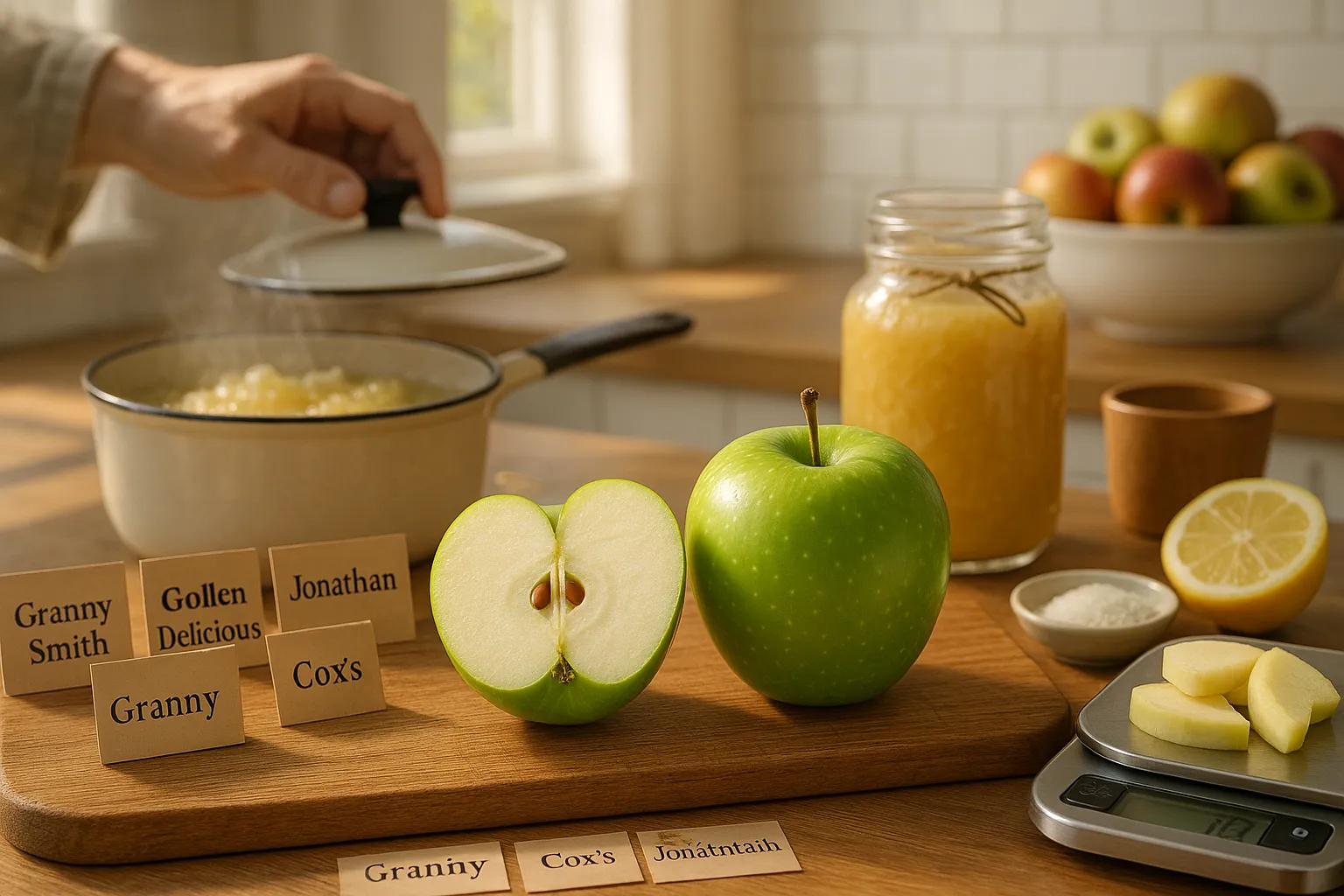
If you want sauce, chop apples smaller and cook at low heat with a lid to encourage breakdown. Use a potato masher or an immersion blender for consistency.
For slices: Choose firmer apples and par‑bake filling (blind baking) if you want the pastry crisp before the apples soften.
Practical trick: Toss apple slices in 1–2 tsp lemon juice to slow browning and keep edges crisp.
Thickening, Liquid, And Oven Temperature Modifications
Thickeners: Bramley often needs less thickener because it makes a pulpy sauce. With substitutes, add 1–2 tsp of cornstarch or 1 tbsp flour per 500 g apples if juices seem thin.
Liquid: Reduce added water by 10–15% when using sweet apples: they release more juice. For roasts, a splash of cider or white wine replaces some water and adds acidity.
Oven temp: For pies, keep 375–400°F (190–205°C). If your apples are softer, shorten bake time by 5–10 minutes to avoid a soggy base.
Best Alternatives By Recipe Type (Pie, Sauce, Crumble, Roast)
Fact: Different recipes need different apple behavior. Pick the substitute based on what the dish requires.
Pie: Use Granny Smith or a blend (70% Granny Smith + 30% Cox’s). These keep defined slices and provide tartness to balance pastry and sugar.
Sauce: Use McIntosh, Jonathan, or a 50/50 mix with Golden Delicious. These break down quickly into a smooth, fragrant sauce.
Crumble: Use Bramley-like acidity plus some sweetness. Try a mix of Granny Smith and Gala (60/40). The tart apple keeps the crumble from tasting cloying.
Roast: Use firmer apples that caramelize, such as Jonathan, Pink Lady, or Gala. They hold shape and brown well next to meats.
Example pairing: Roast pork with Jonathan apples and a splash of apple cider, aroma and texture combine to make a bright, savory glaze.
Warning: Don’t use Honeycrisp alone for pies: it can stay too firm and release too much juice, making the filling runny unless you adjust thickening.
Practical Substitution Ratios And Quick Reference Guide
Answer: Use weight-based swaps where possible. Below are quick rules and ratios to keep in your kitchen file.
Basic conversion (by weight):
1 Bramley apple ≈ 8–10 oz (225–280 g). If your recipe lists apples by count, replace each Bramley with 2 medium apples if they’re smaller.
Single-variety swaps:
Granny Smith: 1:1 by weight. Increase cook time if you want a saucy texture.
Golden Delicious: 1:1 by weight. Reduce added sugar by 10–20%.
McIntosh/Jonathan: 1:1 by weight. Expect quicker breakdown.
Blend recipes:
Sauce: 50% McIntosh + 50% Golden Delicious (by weight).
Pie: 70% Granny Smith + 30% Cox’s or Gala.
Roast: 60% Jonathan + 40% Gala.
Thickener quick rule: If filling looks watery after initial bake, mix 1 tbsp cornstarch with 2 tbsp cold water and stir into hot filling: bake 10 more minutes.
Cheat sheet (one-line): For tart + break down = Granny Smith or 60/40 Granny/Golden: for smooth sweet sauce = McIntosh + Golden: for roast = Jonathan or Pink Lady.
Choosing Local And Seasonal Options
Fact: Local, seasonal apples often give better flavor and value than imported Bramleys. Choose apples that ripen in your region for peak taste.
How to pick: Visit farmers’ markets (for example, Union Square Greenmarket in NYC or Pike Place Market in Seattle) and ask the grower which varieties are best for cooking. Named entities like Bob’s Red Mill or King Arthur Flour list recipe tips that pair well with local apples.
Seasonal guide (Northern Hemisphere):
Early season (August–September): Gala, Early McIntosh, good for roasting and fresh uses.
Mid-season (September–October): Granny Smith, Jonathan, best for pies and baking.
Late season (October–November): Cox’s, Bramley (UK), deep flavor, ideal for sauces.
Sustainability and taste: Local apples save transport energy and taste fresher. They also let you experiment, try a single-variety tart from a nearby orchard and compare it to a Bramley recipe.
Final prompt to act: Next time a recipe asks for Bramley, pick one of the swaps above, note weight not count, and adjust sugar and cook time. Try a blend once, you’ll learn how small changes shape big results. Good luck.
To provide the best experiences, we use technologies like cookies to store and/or access device information. Consenting to these technologies will allow us to process data such as browsing behaviour or unique IDs on this site. Not consenting or withdrawing consent, may adversely affect certain features and functions.
Functional
Always active
The technical storage or access is strictly necessary for the legitimate purpose of enabling the use of a specific service explicitly requested by the subscriber or user, or for the sole purpose of carrying out the transmission of a communication over an electronic communications network.
Preferences
The technical storage or access is necessary for the legitimate purpose of storing preferences that are not requested by the subscriber or user.
Statistics
The technical storage or access that is used exclusively for statistical purposes.The technical storage or access that is used exclusively for anonymous statistical purposes. Without a subpoena, voluntary compliance on the part of your Internet Service Provider, or additional records from a third party, information stored or retrieved for this purpose alone cannot usually be used to identify you.
Marketing
The technical storage or access is required to create user profiles to send advertising, or to track the user on a website or across several websites for similar marketing purposes.