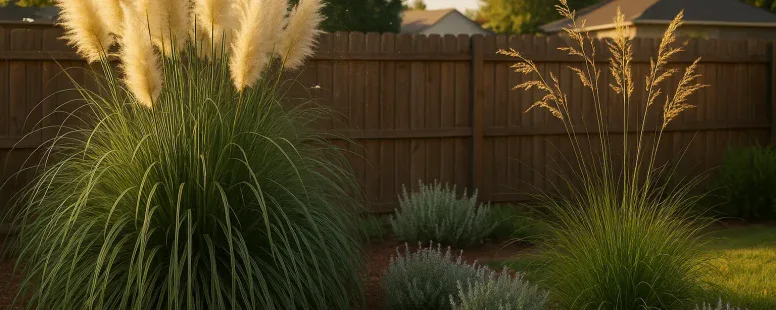
Pampas grass and Stipa gigantea look similar from a distance, but they behave very differently in gardens. You can get tall, dramatic plumes from both, yet one is often pushy and invasive while the other is a well-mannered performer in many temperate yards. This piece compares Pampas grass (Cortaderia selloana and related species) with Stipa gigantea (also known as Nassella gigantea or giant feather grass) so you can pick the right tall ornamental grass for your climate, maintenance tolerance, and design goals. Expect clear, practical advice and honest warnings drawn from USDA guidelines, RHS notes, and field experience, so you avoid costly mistakes and plant with confidence.
Quick Comparison Table: Key Differences At A Glance
Fact: Pampas grass tends to be larger and more invasive: Stipa gigantea is generally slimmer and more garden-friendly.
Common name: Pampas grass vs. Stipa gigantea (giant feather grass).
Plume type: Pampas has dense, cottony plumes: Stipa has airy, feathery panicles.
USDA hardiness: Pampas varies by cultivar (often hardy to zone 7-10): Stipa generally hardy zones 6-9.
Invasiveness: Pampas is invasive in many regions (California, Australia): Stipa less invasive but can self-seed.
Maintenance: Pampas needs heavy pruning and careful disposal of clippings: Stipa needs lighter pruning and occasional division.
Best use: Massive screens and statement plants (Pampas): architectural, textural accents and meadow mixes (Stipa).
Use this table as a quick filter. If you want a low-maintenance, textural accent, Stipa usually fits. If you want a tall privacy screen and handle aggressive care, Pampas may suit you.
Appearance And Size
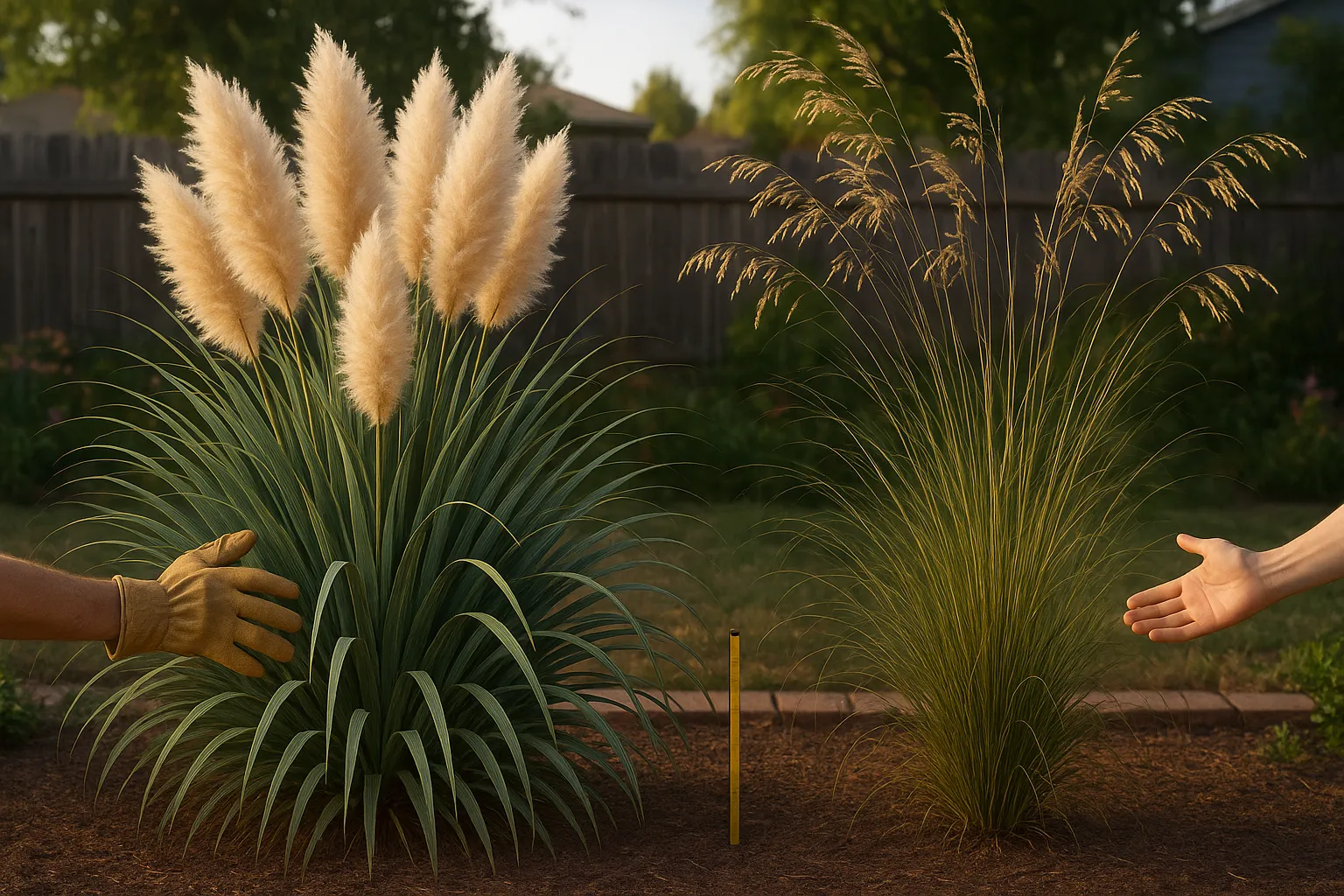
Fact: Pampas is broad and dense: Stipa is narrow and airy.
Physical Characteristics
Pampas grass forms broad, arching clumps with rigid, blade-like leaves edged with fine teeth. The leaves are coarse: they can cut your hand if you grab them. Stipa gigantea makes a softer, fountain-like clump with narrow, wiry leaves that feel almost hairlike. The overall silhouette of Stipa is lighter.
Flowering Time And Plume Differences
Pampas usually blooms in late summer to fall with large, dense plumes that can be white, cream, or pink. The plumes are heavy and hold their shape. Stipa flowers in mid to late summer and produces upright, feathery panicles that sway and shimmer: they age to a warm oat color and become semi-translucent in sunlight.
Growth Rate, Mature Size, And Lifespan
Pampas grows fast and reaches full size within a few years: mature clumps can live decades unless removed. Stipa grows more slowly but can live many years too: it often needs division every 5–8 years to stay vigorous. If you want rapid screening choose Pampas: if you prefer steady, graceful spread choose Stipa.
Climate, Hardiness, And Soil Preferences
Fact: Both prefer sun, but Stipa tolerates colder winters and lean soils better.
USDA Hardiness And Temperature Tolerance
Pampas (Cortaderia selloana) cultivars vary: some are rated down to USDA zone 7, while others need milder winters (zones 8–10). Cold-sensitive Pampas cultivars will suffer foliage dieback below about 10°F. Stipa gigantea typically survives in zones 6–9: it tolerates brief freezes and cold winters better than many Pampas types.
Soil Types, Drainage, And Sun Exposure
Both grasses prefer full sun and well-drained soil. Pampas tolerates richer soils and coastal conditions better than Stipa, which prefers lean, gritty soils. Avoid heavy clay without drainage for either one: root rot can occur if water stands.
Water Needs And Drought Tolerance
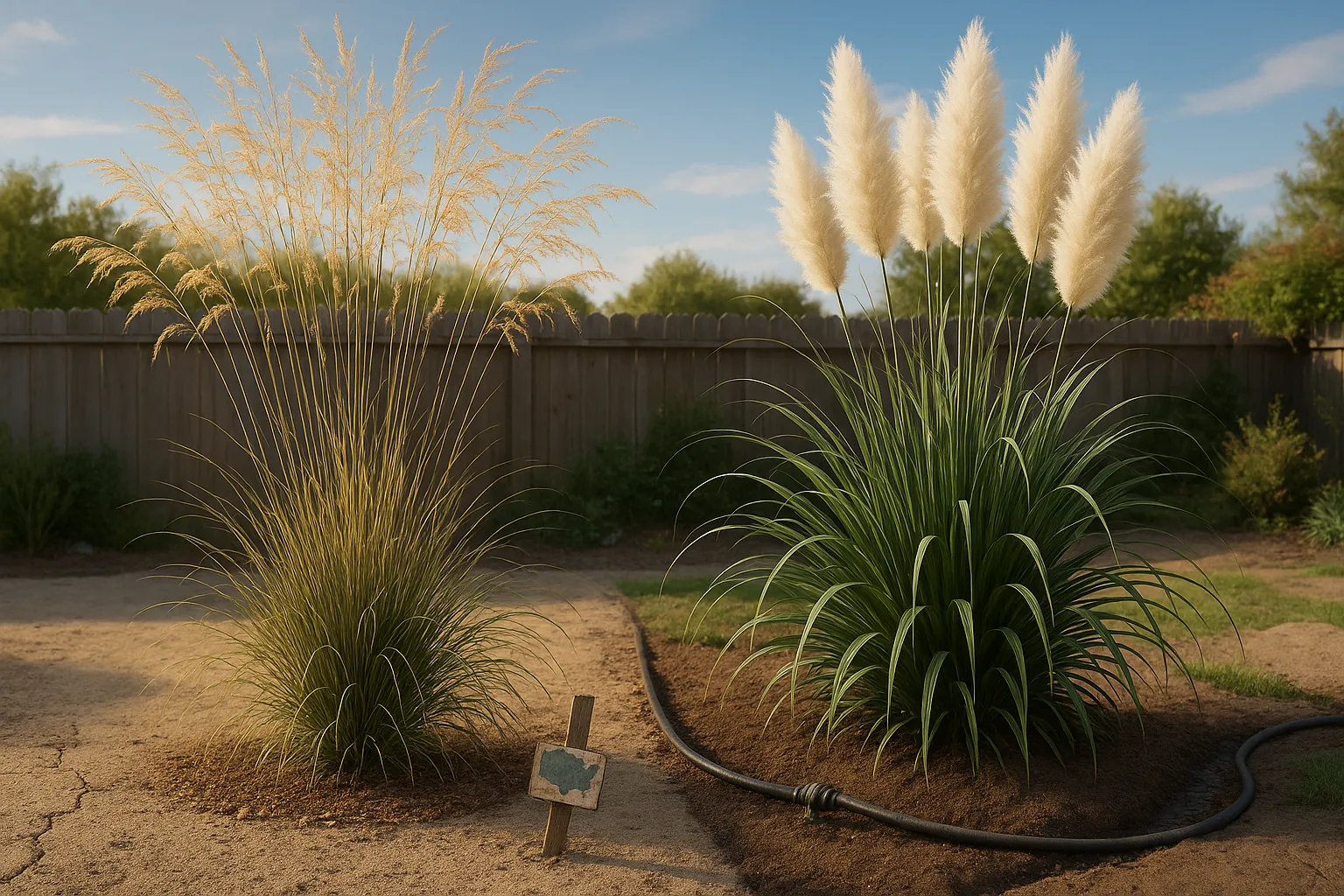
Fact: Stipa is more drought-tolerant once established. Pampas needs regular water to establish and will tolerate drought later but rewards occasional irrigation. Stipa will thrive on summer dryness and is a good choice for xeriscaping.
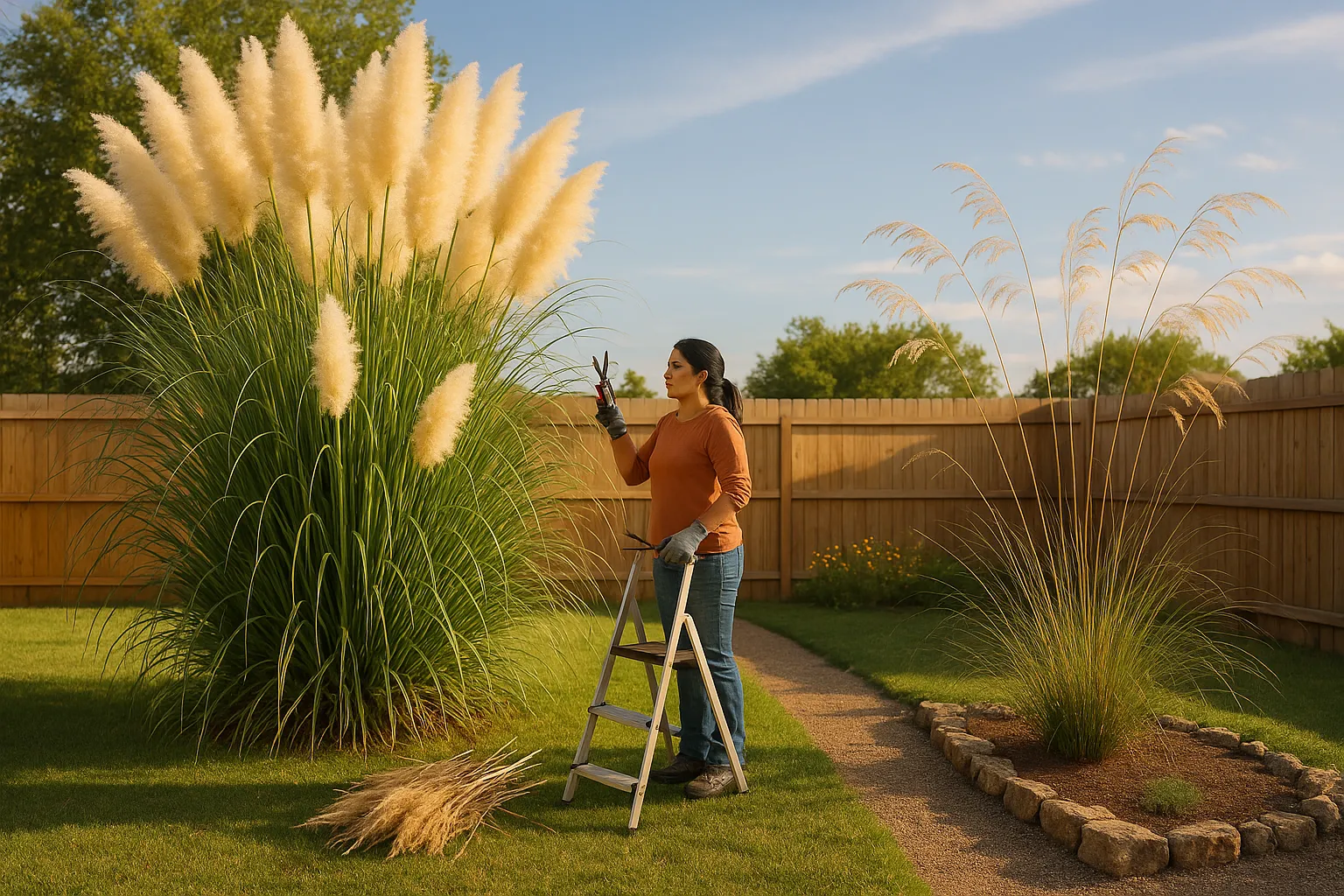
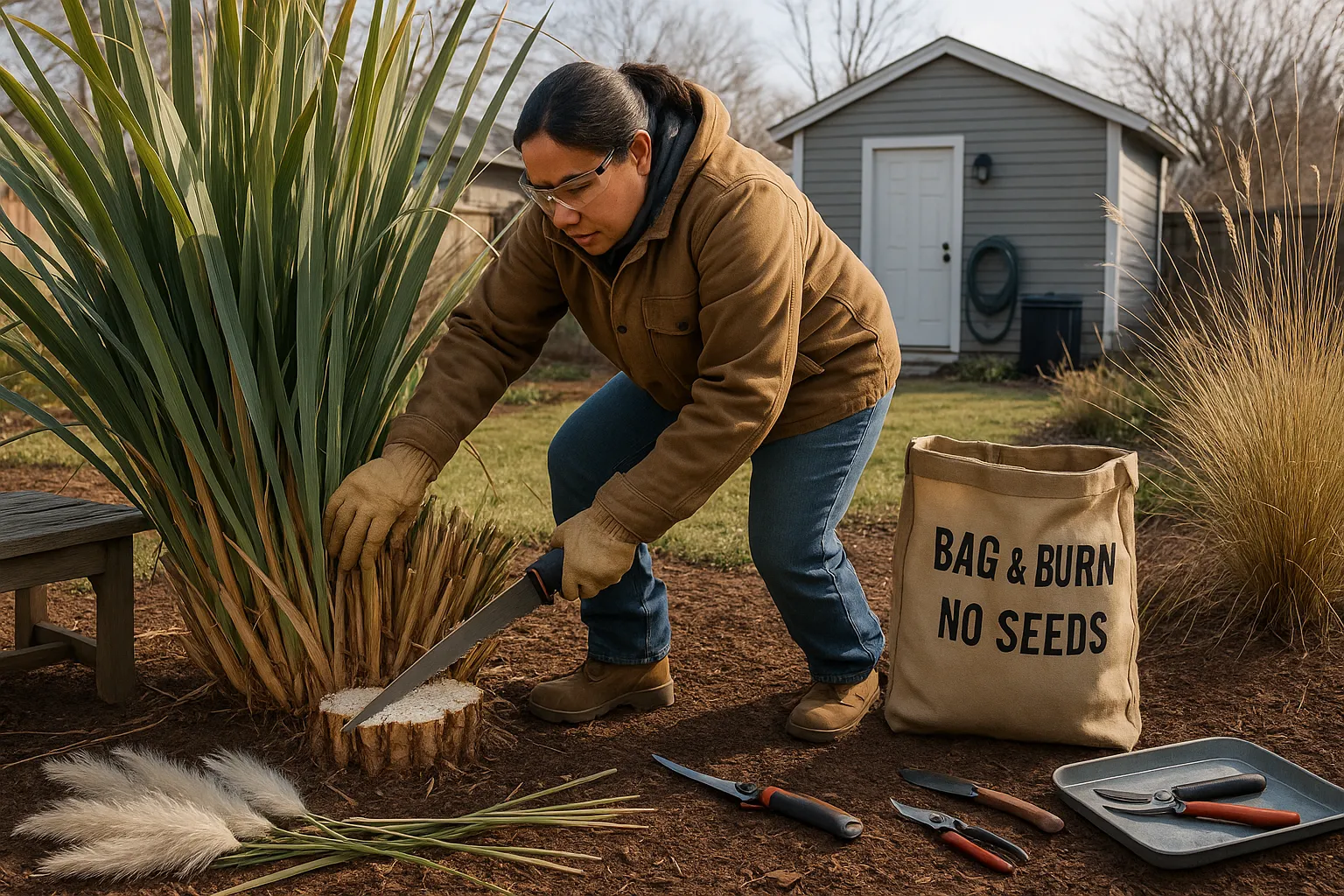
For Pampas you must cut the clump to about 6–12 inches above the ground in late winter to early spring before new growth starts. Wear gloves and protective clothing: the leaves are sharp. Remove seed heads if you want to limit spread. With Stipa, cut back dead foliage to the crown in late winter: you can leave the dried plumes for winter interest and remove them in spring.
Fertilizing, Division, And Propagation Methods
Both respond to a light, balanced fertilizer in spring. Pampas may benefit from more nitrogen in rich soils to sustain large growth: Stipa prefers lean soils, so avoid heavy feeding. Divide Pampas clumps only when necessary (very large or declining plants), using a saw or heavy spade. Stipa divides easily in spring: divide every 5–8 years to renew vigor. Propagate both by seed, Pampas seeds are plentiful and spread easily: Stipa seed can be slower and needs cold stratification in some climates.
Pests, Diseases, And Problem Prevention
Fact: Neither has major pest problems, but both can suffer fungal issues in wet climates. Keep good air flow and avoid overhead irrigation. Watch for rust and leaf spot on heavily watered Pampas in humid areas. Clean tools and burn or bag clippings in regions where Pampas is invasive: do not compost seeds.
Invasiveness, Legal Restrictions, And Ethical Planting
Fact: Pampas is listed as invasive in many regions: check local regulations before planting.
Invasive Potential And Regional Considerations
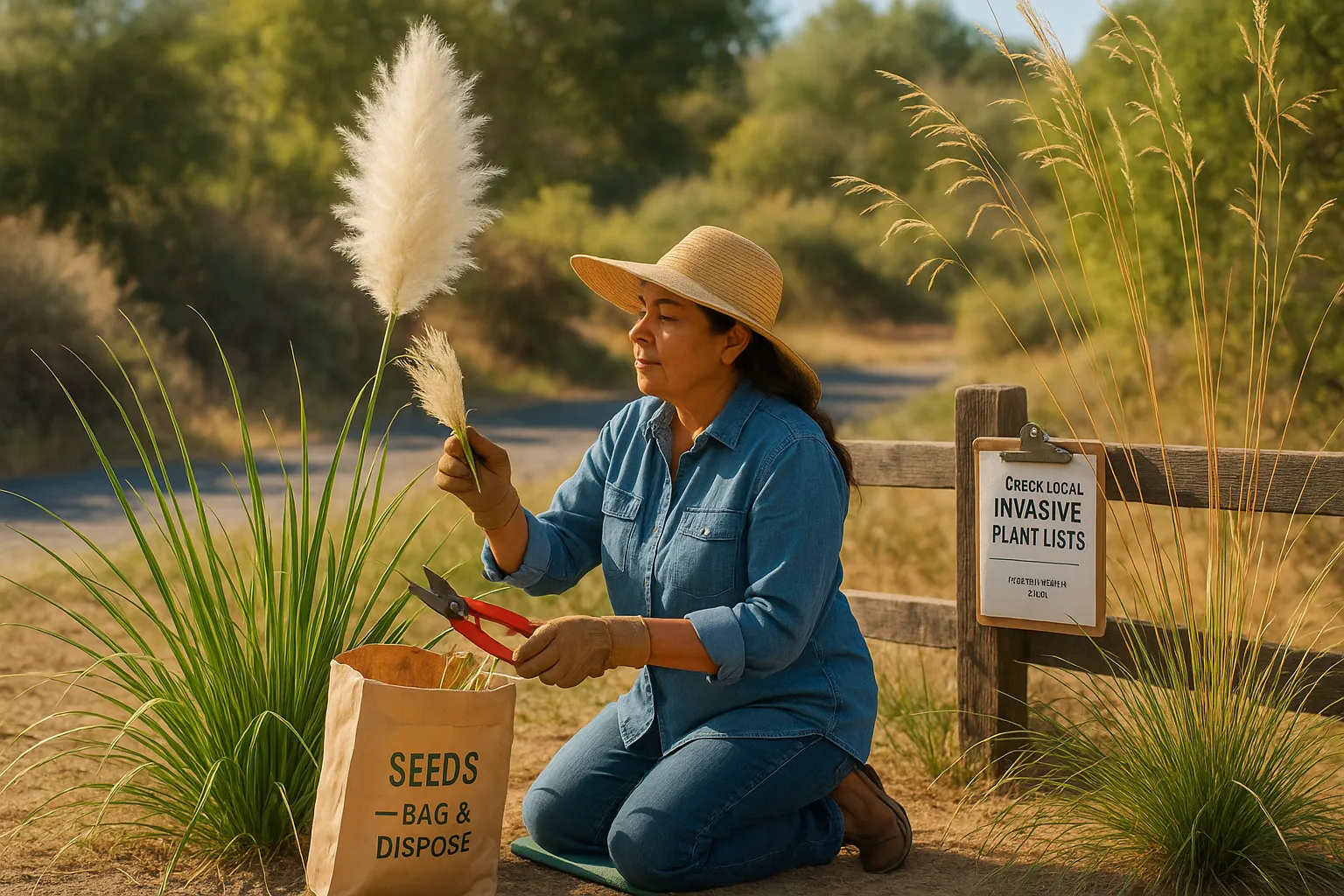
Pampas (Cortaderia selloana) is on invasive plant lists in California, Oregon, New Zealand, and parts of Australia. Seeds travel on wind and can establish on roadsides and wildlands. Agencies such as Cal-IPC and local extension services often advise against planting it. Stipa gigantea can self-seed in gardens but rarely forms the dense infestations that Pampas does. Still, check state and county lists, some forms of Cortaderia hybrids are regulated.
Responsible Alternatives And Management Strategies
If you like the look but worry about invasiveness, choose sterile cultivars (some Cortaderia hybrids are low-seed) or plant Stipa gigantea, Miscanthus sinensis ‘Morning Light’, or Pennisetum ‘Hameln’ for similar texture. If you keep Pampas, remove seed heads before they release seeds and bag clippings. Use physical barriers and monitor adjacent wildland. Report wild escapes to local authorities.
Landscape Uses, Design Ideas, And Practical Tips
Fact: Use Pampas for bold screening and Stipa for motion and texture.
Best Uses In Garden Design And Screening
Pampas excels as a tall privacy screen or statement focal point near driveways and large beds. Plant it where you can access it for heavy pruning and where seeds won’t blow into wild areas. Stipa works well at the front of a border, in massed drifts, or at the edge of a meadow planting. Stipa adds movement and a soft edge to paths.
Planting Combinations, Containers, And Cut-Flower Use
Pair Pampas with large shrubs like Photinia or Olea to balance scale. Stipa blends nicely with Mediterranean plants such as Lavandula, Salvia, and Artemisia. Both grasses make good dried flowers: Pampas plumes create dramatic bouquets for interiors (handle with care, plumes drop fluff). Stipa plumes are excellent in smaller arrangements and last well when dried. You can grow Stipa in large containers: Pampas needs more root space and rarely thrives as a container specimen.
Buying Guide: What To Look For When Purchasing
Fact: Buy disease-free, well-rooted plants and check for local restrictions before purchase.
Selecting Healthy Specimens And Nursery Tips
Inspect the crown for rot and the rootball for fibrous roots. For Pampas, choose cultivars labeled sterile if seed spread worries you, ask nurseries like Monrovia or local garden centers about seedless types. For Stipa, pick clumps with fresh green growth and minimal dead centers. Avoid plants sold with seed heads in regions that restrict sale.
Cost, Availability, And Shipping Considerations
Pampas plants or liners are widely available but may be restricted from shipment into some states. Prices vary widely: small liners start low, but mature specimens for instant screening can be expensive. Stipa is common at independent nurseries and online sellers: it ships well and costs less as a mature accent. When ordering online, confirm the seller follows state quarantine rules, and choose bare-root or well-potted stock to reduce transplant shock.
To provide the best experiences, we use technologies like cookies to store and/or access device information. Consenting to these technologies will allow us to process data such as browsing behaviour or unique IDs on this site. Not consenting or withdrawing consent, may adversely affect certain features and functions.
Functional
Always active
The technical storage or access is strictly necessary for the legitimate purpose of enabling the use of a specific service explicitly requested by the subscriber or user, or for the sole purpose of carrying out the transmission of a communication over an electronic communications network.
Preferences
The technical storage or access is necessary for the legitimate purpose of storing preferences that are not requested by the subscriber or user.
Statistics
The technical storage or access that is used exclusively for statistical purposes.The technical storage or access that is used exclusively for anonymous statistical purposes. Without a subpoena, voluntary compliance on the part of your Internet Service Provider, or additional records from a third party, information stored or retrieved for this purpose alone cannot usually be used to identify you.
Marketing
The technical storage or access is required to create user profiles to send advertising, or to track the user on a website or across several websites for similar marketing purposes.