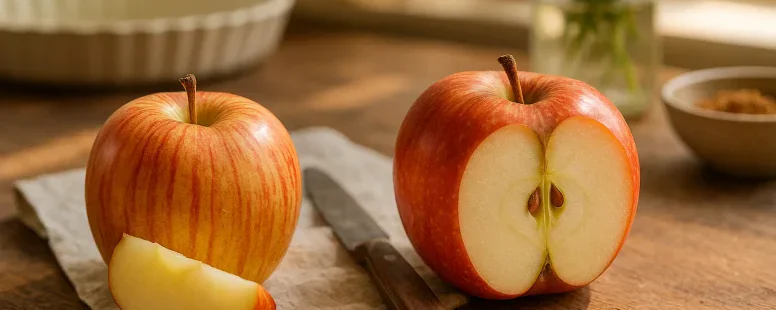
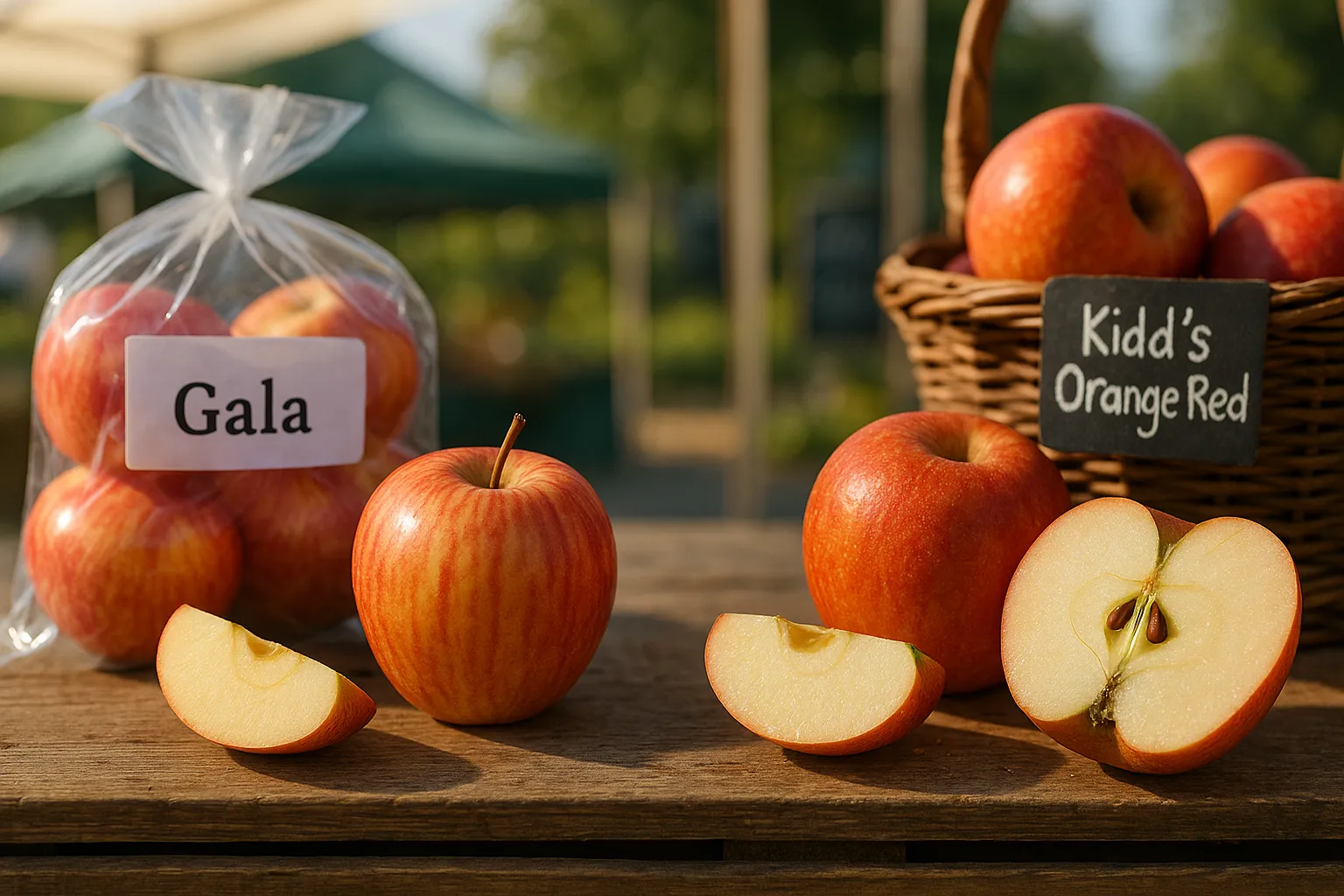
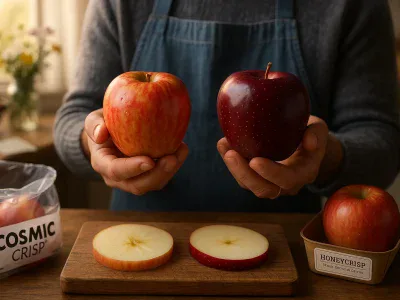
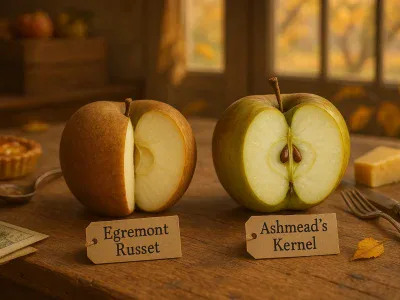
Gala and Kidd’s Orange Red are two apples that look friendly at first glance but behave very differently when you bite in. One offers predictable sweetness and thin, crisp flesh you can reach for daily: the other brings a firmer bite, a citrus-tinged tang, and a heritage story that surprises many. If you care about texture, cooking performance, or what to plant in your backyard, this comparison will save you time and a few bad pies. Read on to learn which apple suits your palate, pantry, and patch.
At-A-Glance Comparison: Key Differences And Similarities
Fact: Gala is sweeter and milder, while Kidd’s Orange Red is firmer with more complex acidity.
Gala is the go-to supermarket apple for easy snacking. It has consistent sweetness, thin skin, and a small to medium size. Kidd’s Orange Red (sometimes written Kidd’s Orange Red) is a heritage cultivar from New Zealand, known for its orange-red flush, strong aromatic notes, and pronounced acidity that balances sweetness.
Similarities: both are dessert apples suited to fresh eating and light cooking. Both trees produce moderately sized fruit and prefer temperate climates. You’ll often see Gala sold as single-variety bags: Kidd’s Orange Red appears more in farmers’ markets and specialty orchards.
Quick specs to remember:
Flavor: Gala = sweet: Kidd’s = sweet-tart with orange notes.
Texture: Gala = tender-crisp: Kidd’s = firm, dense.
Best uses: Gala = raw, salads, quick snacks: Kidd’s = baking, cider, eating when you want more flavor depth.
If you need a simple snack apple, choose Gala. If you want an apple that stands up to cooking and has personality, try Kidd’s Orange Red.
Appearance, Flavor, And Texture Compared
Fact: Kidd’s Orange Red shows stronger color and aroma: Gala shows milder color and aroma.
Gala apples wear a yellow-gold base with red striping. They look polished and familiar, a safe buy. Kidd’s Orange Red usually shows a deep orange-red flush over a yellow-green ground and often has more russeting near the stem. The color hints at the aromatic oils the fruit carries, you can smell Kidd’s across the counter.
Flavor Profile Breakdown
Fact: Gala tastes simply sweet: Kidd’s tastes layered with citrus and spice.
Gala delivers straightforward sugar notes and low acidity. This makes it easy for people who prefer the sweet side. Kidd’s Orange Red gives you an upfront sweetness, quickly followed by bright acidity and a citrus or orange-peel hint: some eaters detect floral or tea-like undertones.
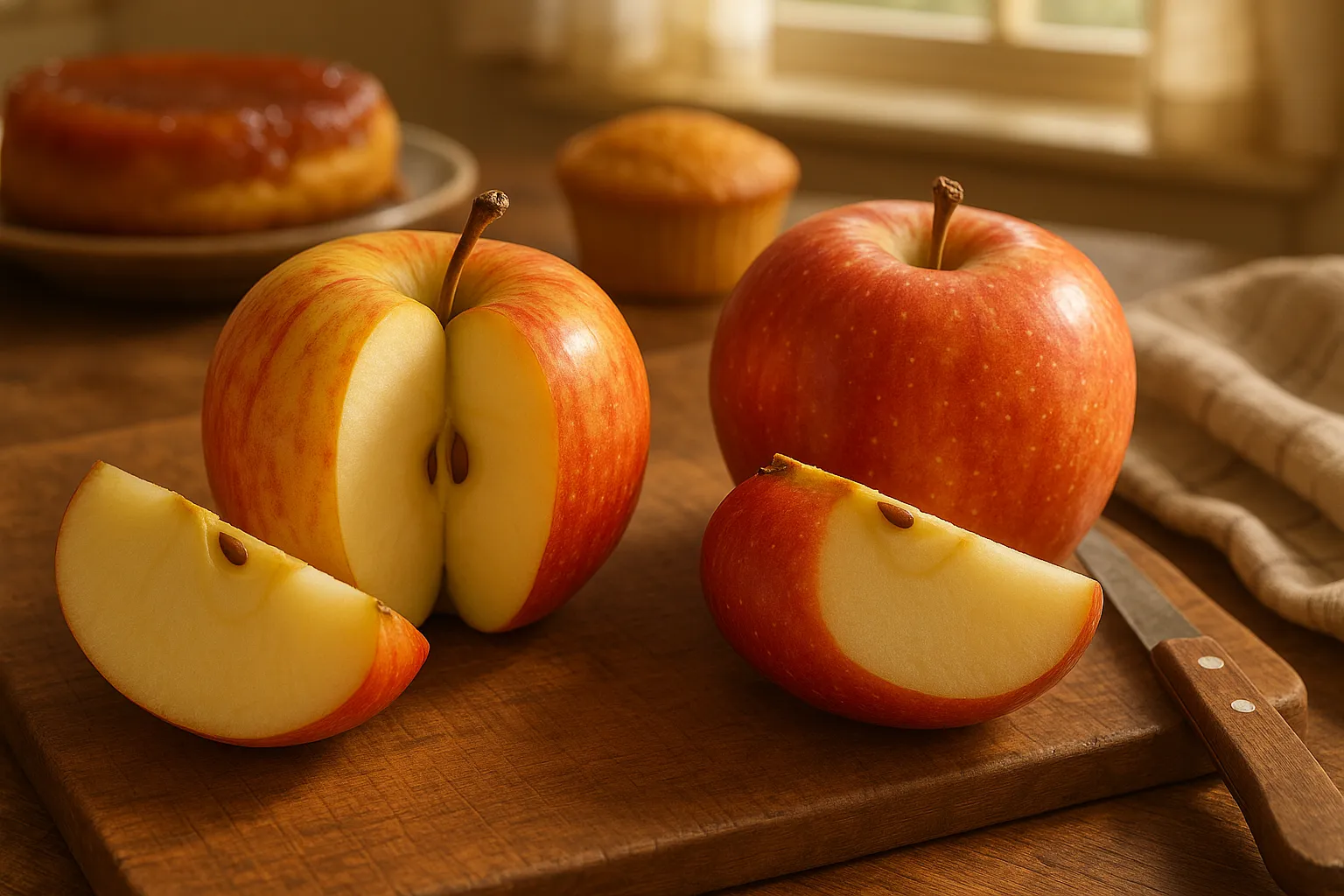
Real-life example: a baker I know uses Gala for quick muffins because the mild flavor blends with vanilla. She reaches for Kidd’s when she wants a tart edge in a tarte tatin, the acid lifts the caramel.
Texture, Crispness, And Mouthfeel
Fact: Gala has thinner flesh that breaks easily: Kidd’s has firmer, denser flesh that holds shape.
Gala’s flesh is tender and juicy with a delicate snap. It softens faster in storage. Kidd’s flesh is dense and crisp longer: it keeps its crunch after roasting or baking. For raw eating, both are pleasant: for cooking, Kidd’s structure resists turning to mush.
Reader tip: try a slice of each at room temperature. Note the juice release and how the skin separates from the bite, Kidd’s will stay toothsome longer.
Harvest Season, Storage Life, And Availability
Fact: Gala harvests earlier and is widely available year-round: Kidd’s Orange Red harvests later and is rarer in mainstream stores.
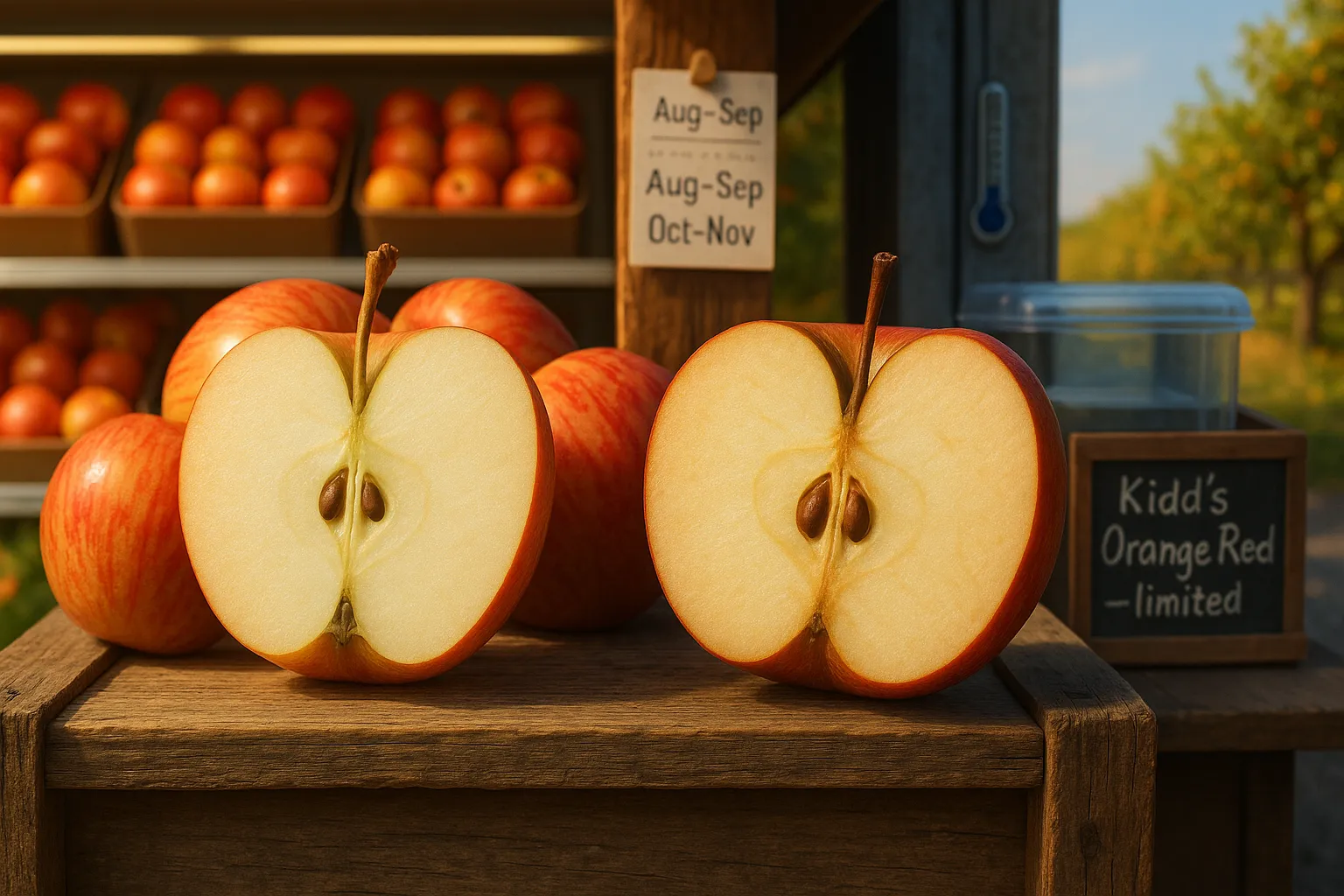
Gala typically reaches harvest from late summer into early fall (often August–September in the Northern Hemisphere). High commercial plantings and good storage practices mean you’ll find Gala in markets most of the year. Kidd’s Orange Red usually matures a bit later, often mid-to-late fall, depending on location.
Storage life: Gala stores well for several months under controlled atmosphere but will lose crispness faster than some firmer varieties. Kidd’s keeps its texture and aromatic character longer when stored cool: it benefits from cold storage around 30–34°F with high humidity.
Availability: Gala is ubiquitous. Kidd’s Orange Red is less common: find it at specialty growers, farmer markets, or through heritage fruit nurseries. If you want fresh-picked Kidd’s, check regional orchards or apple festivals, many small growers preserve older cultivars.
Practical note: buy Gala if you want predictable supermarket access. Choose Kidd’s if you value seasonal flavor and are willing to hunt for it.
Best Culinary Uses And Pairings
Fact: Use Gala for raw dishes and Kidd’s for recipes that need flavor lift.
Both apples have roles. Matching an apple to a recipe will change the result.
Fresh Eating And Salads
Fact: Gala blends into salads: Kidd’s adds bright contrast.
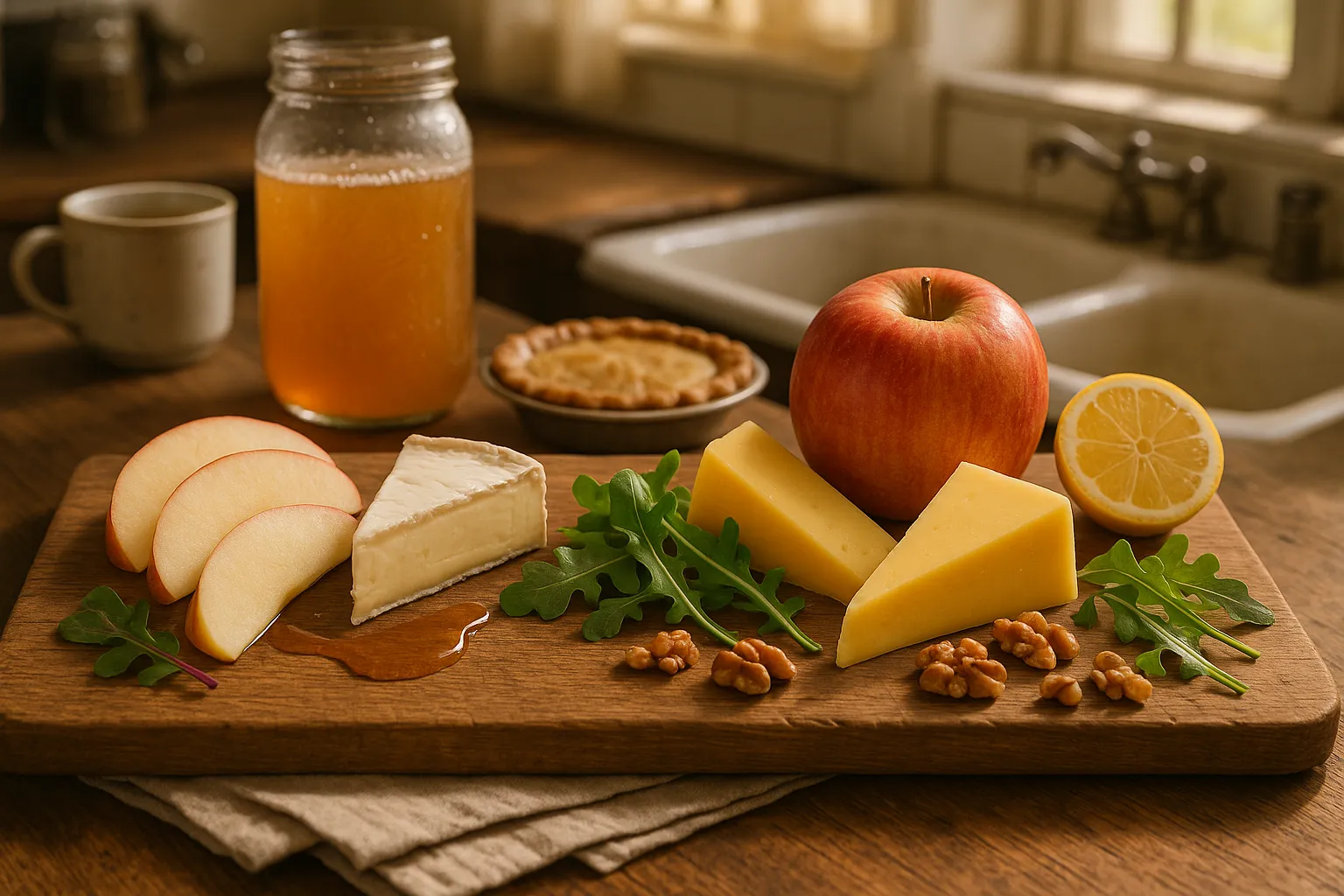
Gala’s mild sweetness works well in green salads and fruit bowls where you want cohesion. Pair Gala with soft cheeses like brie or mild goat cheese, prosciutto, or honey. Kidd’s brings acidity that cuts fatty ingredients: pair it with sharp cheddar, arugula, walnuts, and a lemony vinaigrette. Try thin slices of Kidd’s with fennel for a crisp, aromatic salad.
Baking, Cooking, And Cider
Fact: Kidd’s holds up better for baking and yields a more interesting cider: Gala is best for quick breads and raw applications.
For pies and tarts, Kidd’s firmness prevents a soggy filling and its acidity balances sugar. It browns and caramelizes well. Gala works nicely in muffins, quick breads, and sauces where you want melt-in-mouth texture. For cider or small-batch perry blends, Kidd’s aromatic profile contributes complexity: some craft cidermakers seek heritage apples like Kidd’s to add character.
Warning: if you rely on a soft texture for a recipe (like applesauce), Gala will reduce into a smoother puree than Kidd’s.
Growing Requirements And Orchard Considerations
Fact: Gala is widely planted and adaptable: Kidd’s Orange Red prefers cooler climates and careful site choice.
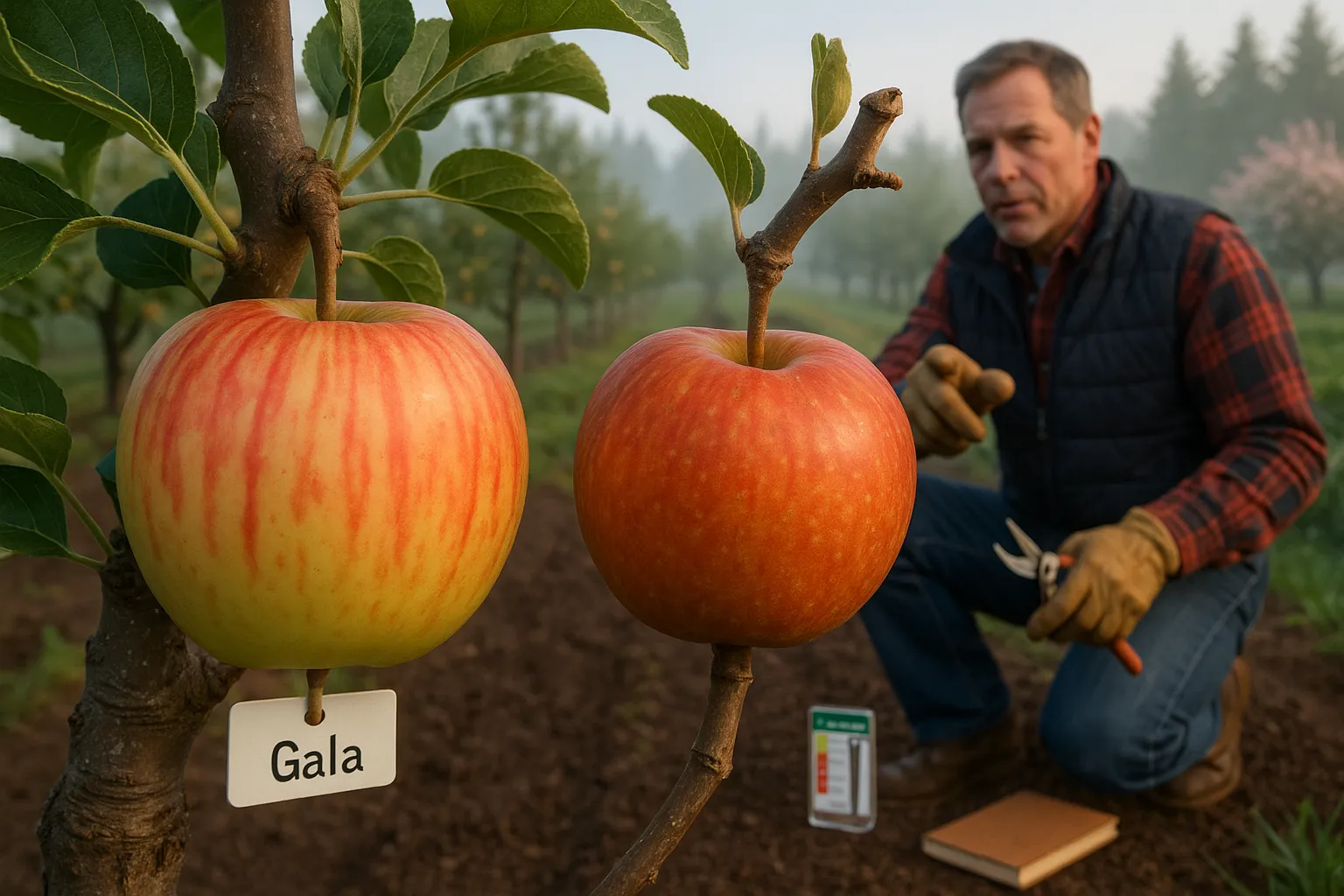
Both cultivars thrive in temperate regions, but their orchard needs differ. Gala’s commercial success comes from reliable yields and adaptable growth habits: it tolerates a range of soils. Kidd’s Orange Red, as a heritage cultivar, often rewards growers with excellent flavor but requires more attentive management to reach peak quality.
Tree Vigor, Chill Hours, And Soil Preferences
Fact: Gala trees show moderate vigor and medium chill requirements: Kidd’s can be moderately vigorous with moderate-to-high chill needs.
Gala grows on standard rootstocks with moderate vigor. It needs typical apple chill hours (often 500–800 hours depending on the strain). Kidd’s may require slightly higher chill accumulation in some regions to produce consistent fruit quality. Both prefer well-drained loam but will suffer in heavy, poorly drained clay.
Practical soil tip: ensure good drainage, add organic matter, and test pH. Aim for slightly acidic soil around pH 6.0–6.8 for either tree.
Pollination, Disease Resistance, And Pests
Fact: Both varieties benefit from cross-pollination: disease resistance varies by rootstock and local strains.
Neither Gala nor Kidd’s is fully self-fertile. Provide pollinators like Honeycrisp, Granny Smith, or a crabapple to increase set and consistency. Gala has variable resistance to scab and fire blight depending on the strain: Kidd’s pedigree gives it decent disease tolerance but not immunity. Monitor for codling moth, apple maggot, and aphids in both orchards.
Honest grower note: you’ll need an integrated pest management plan, pruning, timely sprays, and monitoring. Heritage cultivars like Kidd’s sometimes need more pruning attention to control vigor and fruit load.
How To Choose Between Gala And Kidd’s Orange Red
Fact: Choose Gala for convenience and soft-sweet eating: choose Kidd’s for flavor depth and culinary resilience.
Decide by thinking about three things: how you eat apples, where you live, and whether you plan to grow them.
If you snack raw, pack lunches, or buy from supermarkets regularly, Gala fits. If you bake, craft cider, or crave distinctive aroma and tartness, pick Kidd’s.
Buying And Storage Tips For Consumers
Fact: Store Gala cool and use sooner: store Kidd’s colder for longer crispness.
Buy Gala for steady, everyday use. Keep Gala in the crisper drawer and eat within a few weeks for best texture. Buy Kidd’s at harvest if possible: store it at 30–34°F and high humidity to preserve firmness and aroma. Avoid storing apples near ethylene-sensitive produce you don’t want ripened quickly.
Shopping tip: smell the stem end. Kidd’s often gives a citrusy perfume: Gala smells milder.
Planting And Care Recommendations For Home Growers
Fact: Plant Gala for reliable fruit: plant Kidd’s for superior flavor but expect slightly more care.
For either tree:
Choose full sun and well-drained soil.
Space trees to allow air circulation and light.
Provide a compatible pollinator within 50 feet.
If you want low-maintenance, choose Gala on a semi-dwarf rootstock. If you want a flavorful project and live where chill hours are adequate, select Kidd’s and be ready to prune, thin fruit, and watch pests. A local extension service or nursery can tell you which strains and rootstocks suit your county best.
Final nudge: taste both before committing to a planting. Your climate and palate will tell the truth more than any label.
To provide the best experiences, we use technologies like cookies to store and/or access device information. Consenting to these technologies will allow us to process data such as browsing behaviour or unique IDs on this site. Not consenting or withdrawing consent, may adversely affect certain features and functions.
Functional
Always active
The technical storage or access is strictly necessary for the legitimate purpose of enabling the use of a specific service explicitly requested by the subscriber or user, or for the sole purpose of carrying out the transmission of a communication over an electronic communications network.
Preferences
The technical storage or access is necessary for the legitimate purpose of storing preferences that are not requested by the subscriber or user.
Statistics
The technical storage or access that is used exclusively for statistical purposes.The technical storage or access that is used exclusively for anonymous statistical purposes. Without a subpoena, voluntary compliance on the part of your Internet Service Provider, or additional records from a third party, information stored or retrieved for this purpose alone cannot usually be used to identify you.
Marketing
The technical storage or access is required to create user profiles to send advertising, or to track the user on a website or across several websites for similar marketing purposes.