You want an apple that tells a story when you bite it, not just sweetness but history, texture, and a personality that lingers. Egremont Russet and Ashmead’s Kernel are two English heritage apples that deliver distinct experiences: one comforts with nutty sweetness and rough, russeted skin: the other surprises with electric acidity and a complex, almost wine-like finish. Each variety suits different uses, gardens, and palates. This guide gives you clear facts first, then context, so you can pick the apple that fits your taste, your kitchen, and your orchard plans.
Origins, History, And Heritage Significance
Fact: Egremont Russet and Ashmead’s Kernel are both 18th–19th century English cultivars with distinct origin stories and long heritage value.
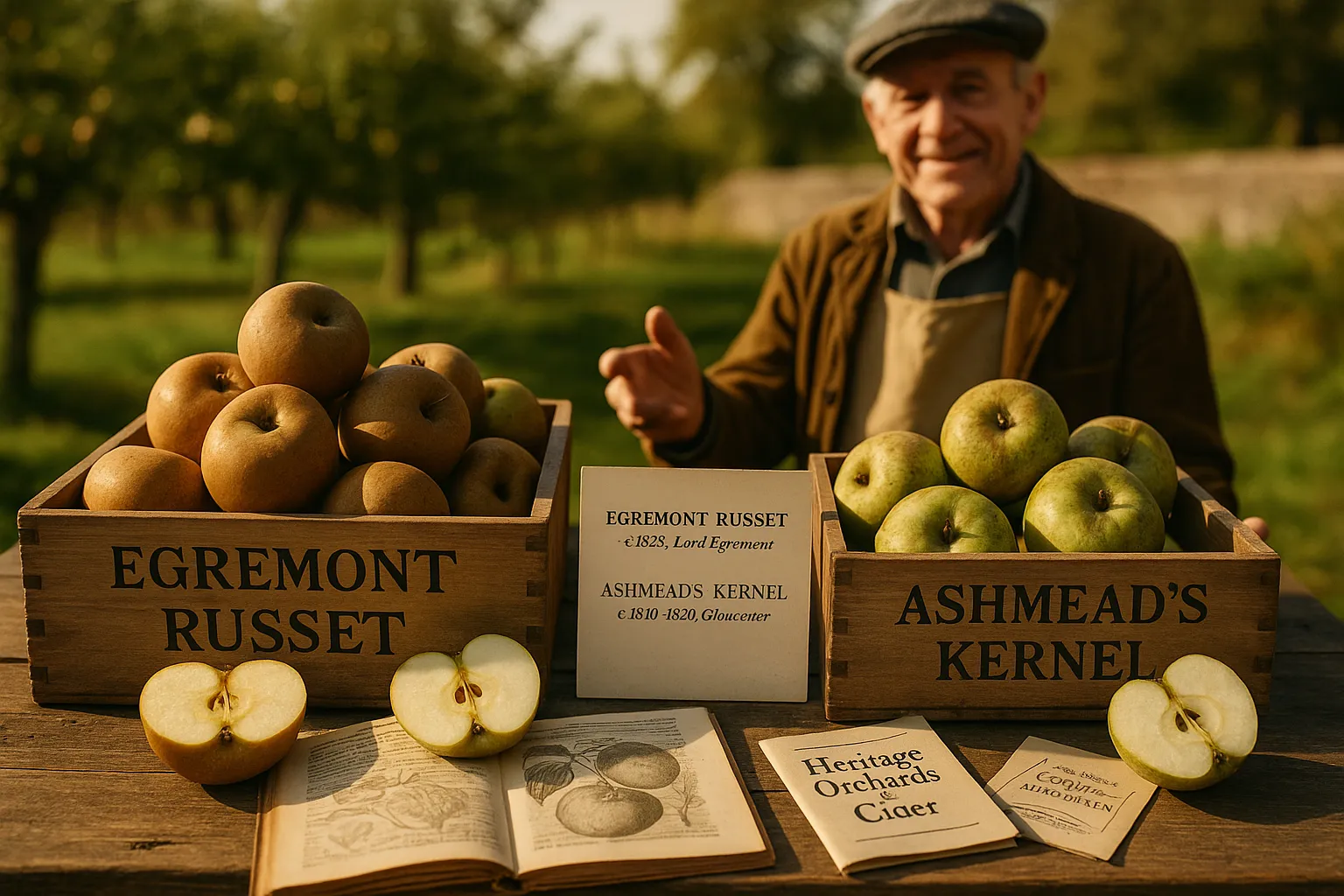
Egremont Russet originated around 1825 and is often credited to Lord Egremont of Petworth, West Sussex. The variety rose to popularity in Victorian markets and is recorded in the National Fruit Collection at Brogdale. Ashmead’s Kernel dates to about 1810–1830 and is associated with Gloucester: it appears in old pomological books and in lists compiled by the Royal Horticultural Society.
These apples shaped regional cider and table-apple preferences in England. Egremont Russet became a market favorite because people liked its sweet, nutty flesh and rugged skin, it transported well. Ashmead’s Kernel gained a cult following among connoisseurs and chefs for its sharp, aromatic flavor that speaks like a small-batch cider.
Cultural note: both cultivars appear in heritage orchards, small farms, and specialty markets. You’ll also find them at events hosted by the Soil Association and at organic growers like those in Herefordshire and Somerset. Their heritage status makes them popular with preservers, local food movements, and farmers who value genetic diversity.
Botanical And Tree Characteristics
Fact: The trees differ in growth habit and bloom timing: these differences affect pollination and pruning choices.
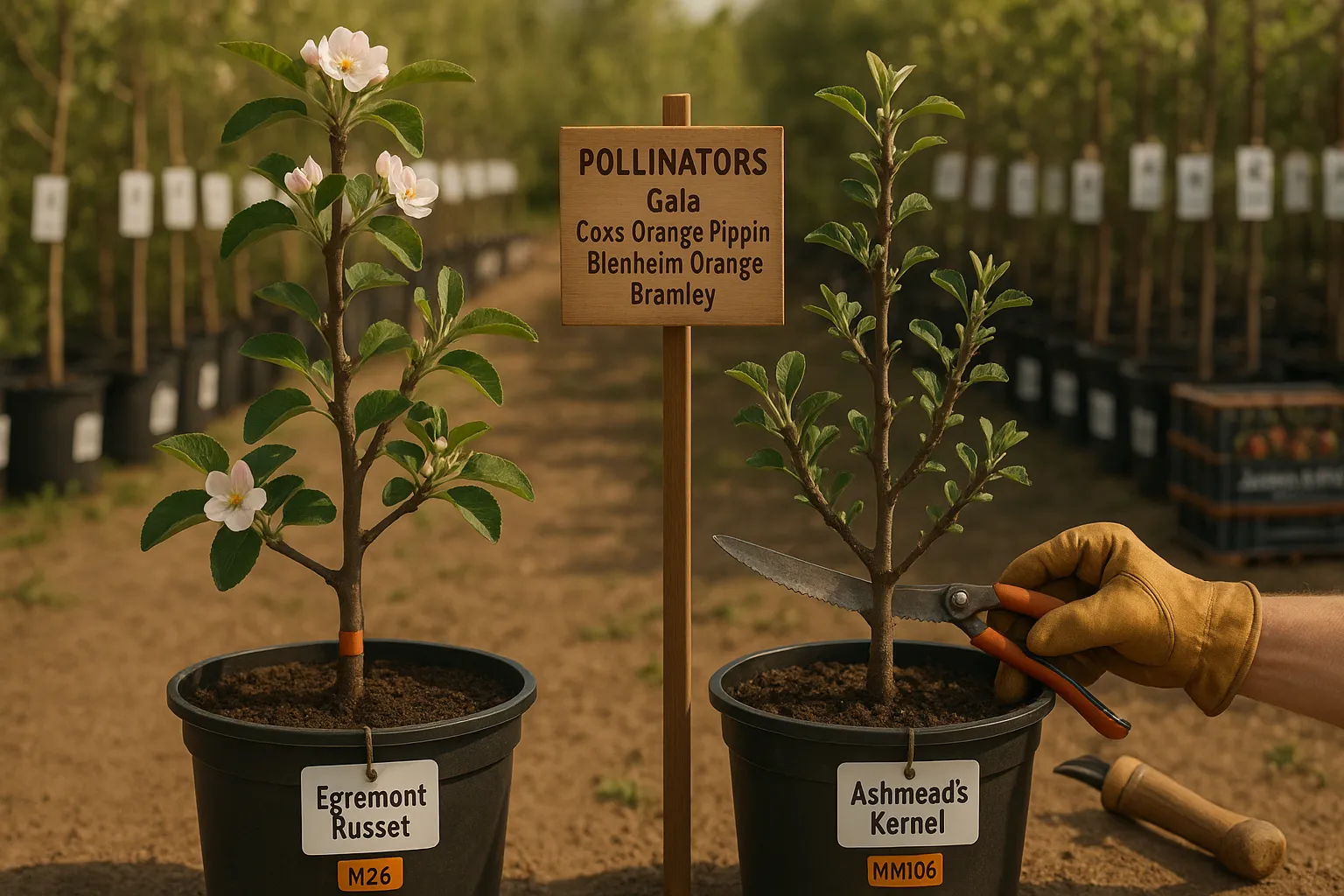
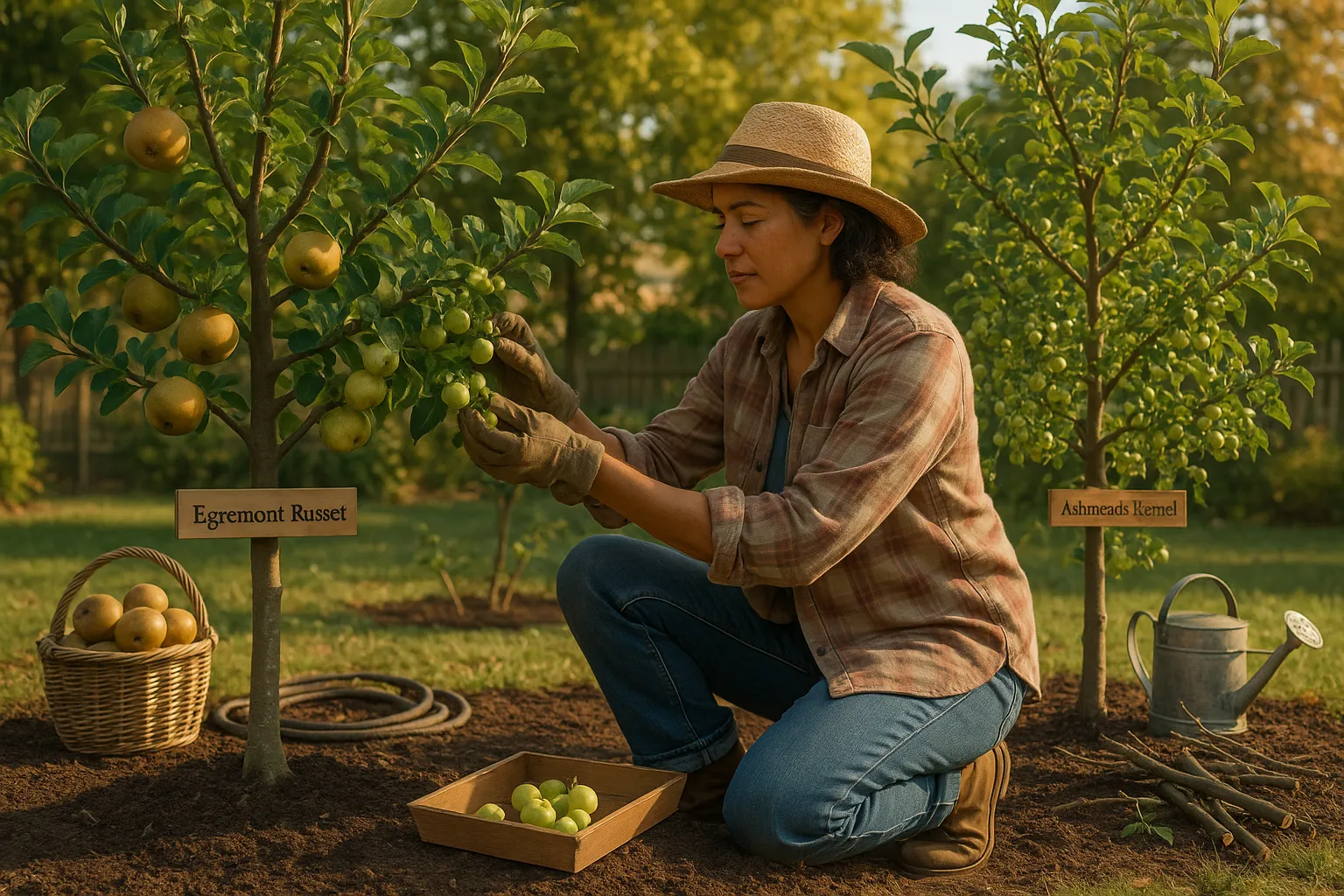
Egremont Russet: The tree grows moderately vigorous with a somewhat upright habit. It flowers in midseason, so you need compatible pollinators that flower near the same time, Cox’s Orange Pippin, Worcester Pearmain, or Gala can work. Leaves are medium-sized and the tree tolerates pruning well, making it manageable for home gardeners.
Ashmead’s Kernel: The tree is moderately vigorous too but tends to produce denser fruiting spurs and can be a bit more erratic in cropping (alternate bearing occurs). It flowers slightly earlier to midseason and often benefits from cross-pollination with similar-timed varieties such as Blenheim Orange or Bramley.
Rootstock and training: Both varieties graft easily onto rootstocks like M26, M9 (for smaller trees), or MM106 (for larger, more vigorous trees). If you buy trees from suppliers like Jackson & Perkins or local nurseries, confirm rootstock and age, younger trees on dwarfing rootstocks bear fruit sooner, but they need more winter protection.
Vulnerable moment: many growers plant these without planning pollinators and then wonder why they get few apples. Don’t do that, plan two or three compatible varieties in your orchard.
Appearance, Texture, And Flavor Profile
Fact: Egremont Russet is sweet and nutty with rough skin: Ashmead’s Kernel is sharp, aromatic, and often described as ‘pear-drop’ or ‘cider-like.’
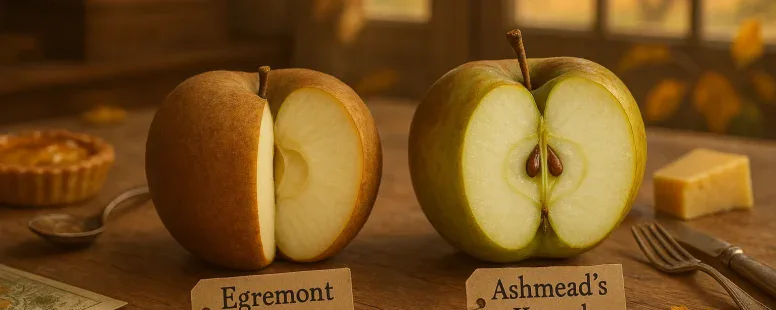
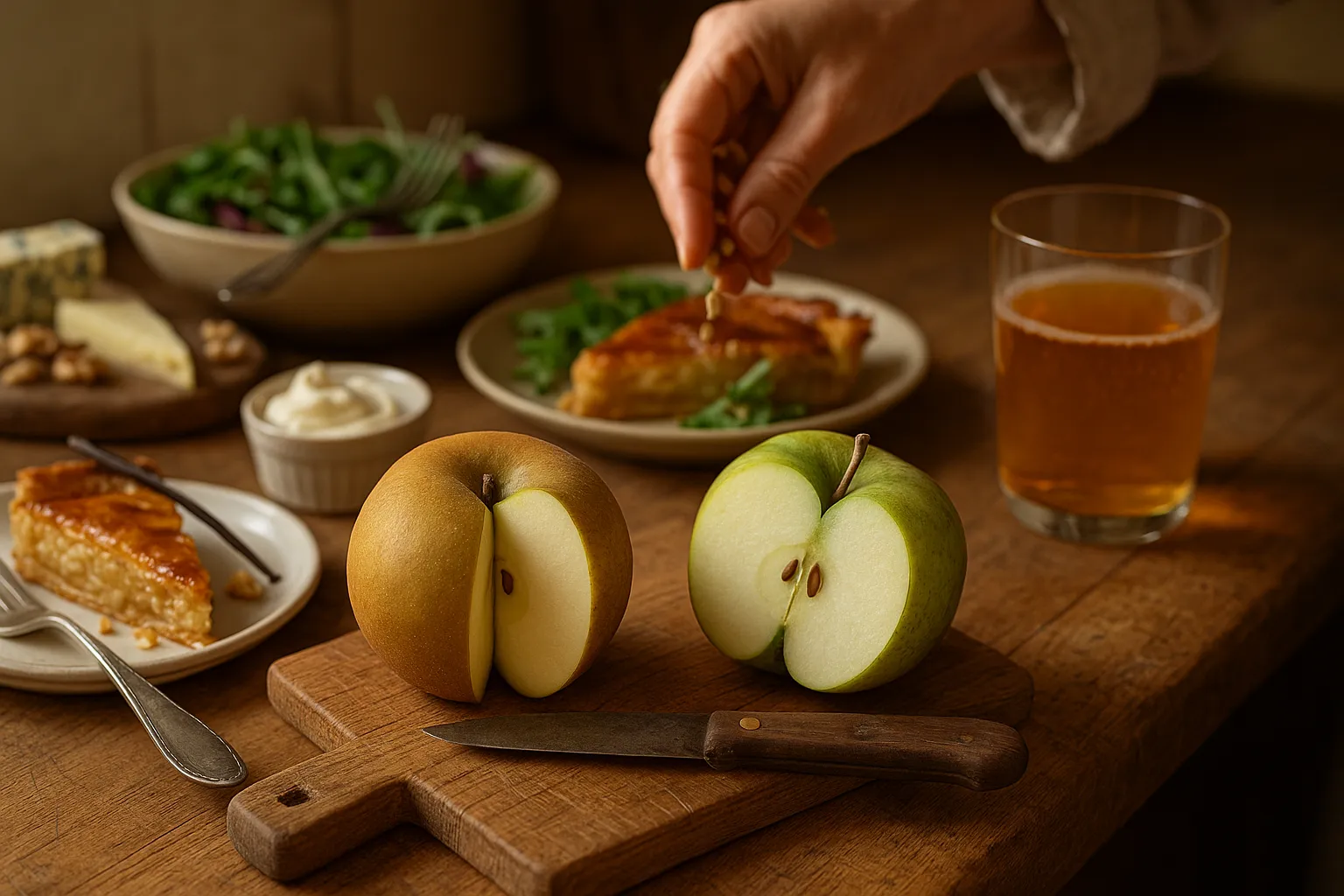
Egremont Russet appearance: Small to medium-sized with dense russeting over most of the skin. Color ranges from yellow-brown to gold beneath the russet. The flesh is firm, fine-grained, and cream-colored. Texture gives a dry, slightly gritty mouthfeel that russet fans expect. Flavor notes: honey, walnut, and light citrus. The finish is rounded and sweet rather than tart.
Ashmead’s Kernel appearance: Medium to small, sometimes with greenish or bronze skin and partial russeting around the stem. Flesh is dense and crisp but more juicy than Egremont. Flavor notes: sharp apple acid, green tea, quince, and a floral perfume. The finish can linger with tannins and an almost mineral quality.
Taste and SVO clarity: If you prefer mellow sweetness, you choose Egremont Russet. If you like bright acid and complex aroma, you choose Ashmead’s Kernel.
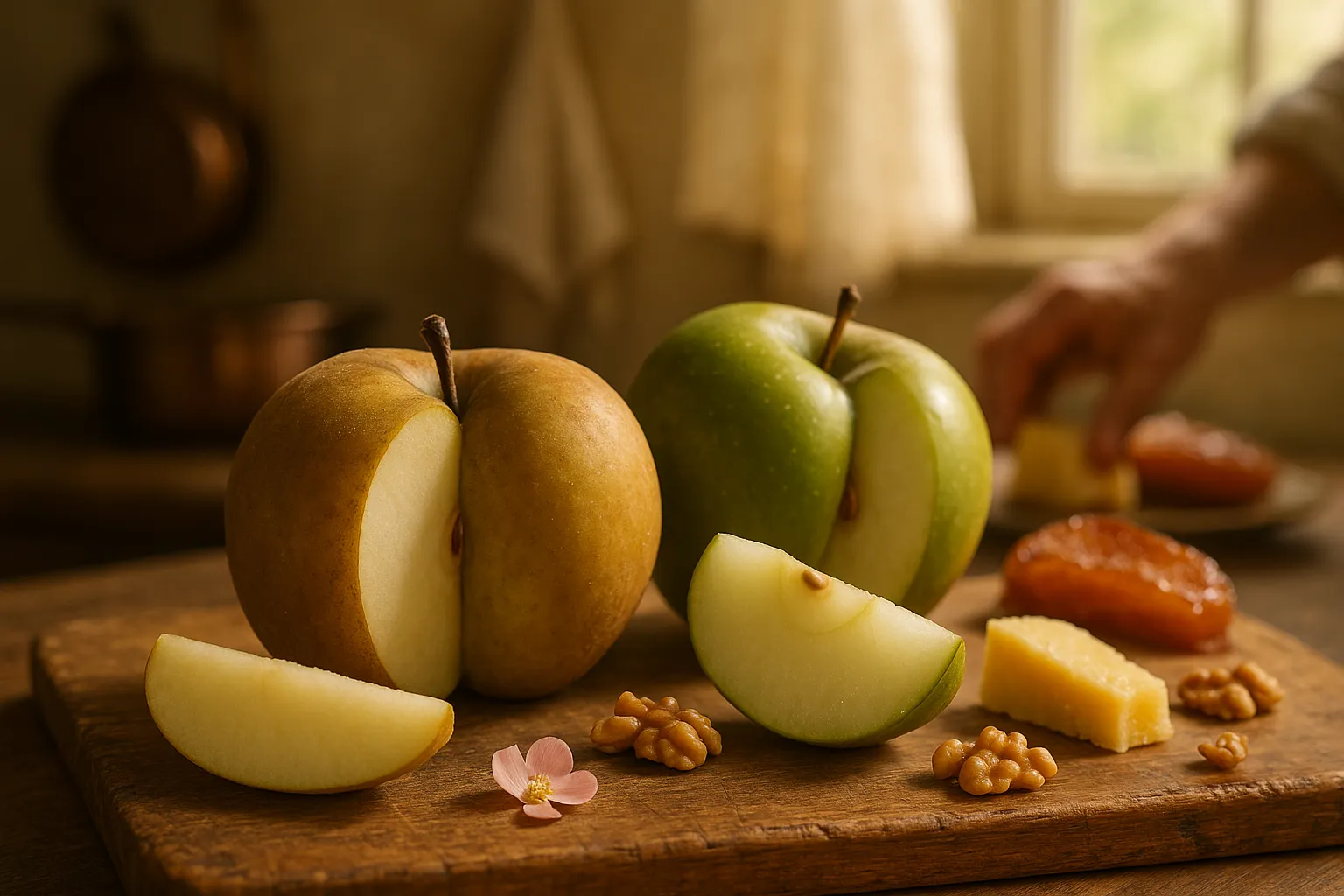
Tasting anecdote: A chef friend served thin slices of Ashmead’s with aged cheddar: the apple’s acid cut the fat and brightened the cheese. Another friend used Egremont in a tarte tatin, the caramelization amplified its honeyed notes.
Culinary Uses And Best Applications
Fact: Egremont Russet excels as an eating apple and in baked desserts: Ashmead’s Kernel shines in salads, cheese plates, and specialty ciders.
Egremont Russet in the kitchen: Use it raw for an everyday snack, in tarts where you want subtle sweetness, or in slow-baked dishes where it keeps shape and adds a caramel flavor. It pairs well with cream, vanilla, and nuts. Bakers at English tea rooms often prefer it for rustic puddings.
Ashmead’s Kernel in the kitchen: Use it where acid and aroma matter. It brightens salads with bitter greens, pairs with sharp cheeses (Stilton, aged Cheddar), and makes interesting single-varietal ciders. Chefs recommend mixing Ashmead’s with sweeter apples for balanced compotes and chutneys.
Practical tip: For pies, mix Ashmead’s Kernel (for edge and tang) with a sweeter apple like Egremont or Golden Delicious to avoid a floppy filling. For cider, small-scale producers in Herefordshire combine Ashmead’s Kernel for acidity and tannic structure with Somerset bittersweet varieties.
Growing Conditions, Care, And Productivity
Fact: Both varieties prefer temperate climates, well-drained soil, and regular pruning: productivity differs with site and care.
Site and soil: Plant in full sun with soil that drains: avoid waterlogged sites. Egremont Russet tolerates slightly poorer soils but both perform best in fertile loam.
Pruning and training: Use open-center or spindle training. Prune each winter to remove crossing branches and encourage light into the canopy. Ashmead’s benefits from thinning because it can set dense crops that cause small fruit or biennial bearing.
Feeding and irrigation: Apply balanced fertilizer in early spring: mulch with compost to retain moisture. Young trees need regular watering in dry spells to establish roots.
Productivity: Egremont Russet is reliably productive once established and stores well. Ashmead’s can be erratic: it may crop heavily one year and lightly the next without thinning and good care.
Honest warning: Expect some trial-and-error. I planted Ashmead’s and learned the hard way, without regular thinning I had tiny apples and a tired tree the following year.
Storage, Shelf Life, And Seasonal Availability
Fact: Egremont Russet stores longer than many dessert apples: Ashmead’s keeps well too but with different ideal conditions.
Egremont Russet storage: Stores 3–6 months under cool (0–4°C) and humid conditions. The dense flesh resists mealiness, so it remains pleasant into winter. The apple often improves in flavor after a few weeks in storage as sugars concentrate.
Ashmead’s Kernel storage: Stores 2–4 months under similar cool, humid conditions. Because it is higher in acid, it keeps its bright flavor longer, but prolonged storage can soften its aromatic punch.
Seasonal availability: In the UK and similar climates, both ripen in mid-to-late season, typically September to October. In markets, you’ll find them fresh in autumn and from heritage producers through early winter. Specialty stores and farmer’s markets often sell them later because small producers use cellars or controlled-atmosphere storage.
Pest, Disease Susceptibility, And Common Problems
Fact: Both varieties are vulnerable to common apple issues like apple scab and canker: susceptibility and management differ.
Common pests and diseases: Apple scab (Venturia inaequalis), powdery mildew, canker (Nectria), and codling moth are concerns. Ashmead’s Kernel can show susceptibility to scab and fire blight in certain regions: Egremont Russet often displays russeting that masks scab symptoms, but it is not immune.
Management practices: Use integrated pest management: choose resistant rootstocks, maintain airflow with pruning, remove mummified fruit in fall, and install pheromone traps for codling moth. Organic sprays like neem and Bacillus thuringiensis (Bt) work against some pests: sulfur and copper sprays reduce scab and mildew risk but follow local guidelines.
Practical note: If you live in a wet region (Pacific Northwest, western UK), plan for more scab pressure: regular sanitation and resistant pollinators help. One small-scale grower in Gloucestershire switched to staggered spray windows and halved scab losses in two seasons.
How To Choose Between Them: Side-By-Side Comparison
Fact: Choose Egremont Russet for mellow sweetness, rugged storage, and easy dessert use: choose Ashmead’s Kernel for acidity, aromatic complexity, and culinary flair.
Taste Comparison: What To Expect When Tasting Side By Side
Fact: Side-by-side tasting highlights sweetness vs. acidity and textured flesh differences.
When you bite both at once, you’ll notice Egremont’s gentle honeyed profile first: it soothes the palate. Ashmead’s hits with a bright acid spike, then unfolds floral and tannic notes. Texturally, Egremont feels denser and slightly gritty: Ashmead’s feels crisper and juicier. If you like apples that pair with cheese or enliven salads, you will favor Ashmead’s. If you want an apple that mellows and pairs with baking and tea, you will favor Egremont.
Practical Selection Guide: Tree Buyers, Home Gardeners, And Cooks
Fact: Your choice depends on usage, garden space, and patience for care.
If you are a home gardener with limited space and you want reliable dessert apples that store well, buy Egremont Russet grafted to M26 or MM106. If you’re a cook, baker, or small cidermaker who values flavor complexity and you can manage thinning, buy Ashmead’s Kernel. For markets or small orchards, plant both: their flowering times overlap enough for cross-pollination and their tastes complement each other in mixed produce boxes.
Buying tip: Purchase from reputable nurseries such as the Royal Horticultural Society’s list or local heritage-apple suppliers. Ask about rootstock, graft union age, and virus-free certification.
Final nudge: Try both if you can. Taste them raw, cook with them, and note how each one changes when baked or stored. Your preferences will reveal themselves within a few plates or pies, and you’ll know which one you’ll want more of next season.
To provide the best experiences, we use technologies like cookies to store and/or access device information. Consenting to these technologies will allow us to process data such as browsing behaviour or unique IDs on this site. Not consenting or withdrawing consent, may adversely affect certain features and functions.
Functional
Always active
The technical storage or access is strictly necessary for the legitimate purpose of enabling the use of a specific service explicitly requested by the subscriber or user, or for the sole purpose of carrying out the transmission of a communication over an electronic communications network.
Preferences
The technical storage or access is necessary for the legitimate purpose of storing preferences that are not requested by the subscriber or user.
Statistics
The technical storage or access that is used exclusively for statistical purposes.The technical storage or access that is used exclusively for anonymous statistical purposes. Without a subpoena, voluntary compliance on the part of your Internet Service Provider, or additional records from a third party, information stored or retrieved for this purpose alone cannot usually be used to identify you.
Marketing
The technical storage or access is required to create user profiles to send advertising, or to track the user on a website or across several websites for similar marketing purposes.