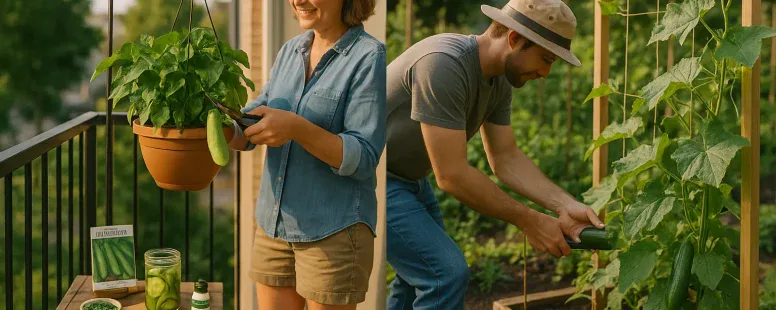
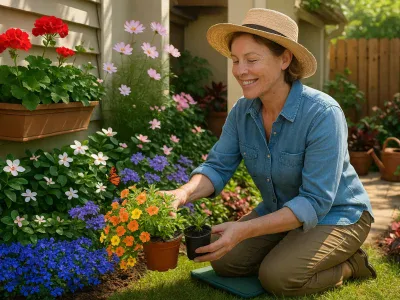
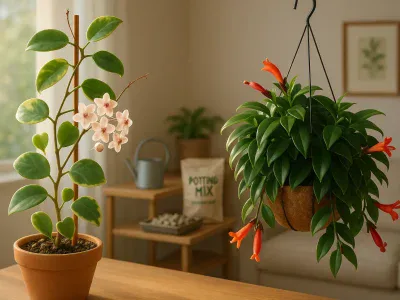
Hanging basket cucumbers and vining cucumbers share one goal: fresh, crunchy fruit from your garden. But they ask for different habits, space, and care. Picture stepping out to your balcony, plucking a tender, curved cucumber from a basket that swings slightly in the breeze, versus bending to cut a long, glossy cucumber from a sprawling ground vine in a backyard bed. Both deliver cucumbers, yet they differ in plant habit, yield patterns, and the rhythm of care. You’ll learn surprising advantages, like how baskets reduce soil pests and how vines often produce more fruit per plant, so you can choose the right type for your space, cooking style, and patience level.
How Hanging Basket And Vining Cucumbers Differ
Fact: Hanging basket cucumbers grow compactly and produce shorter fruits: vining types sprawl and yield longer cukes.
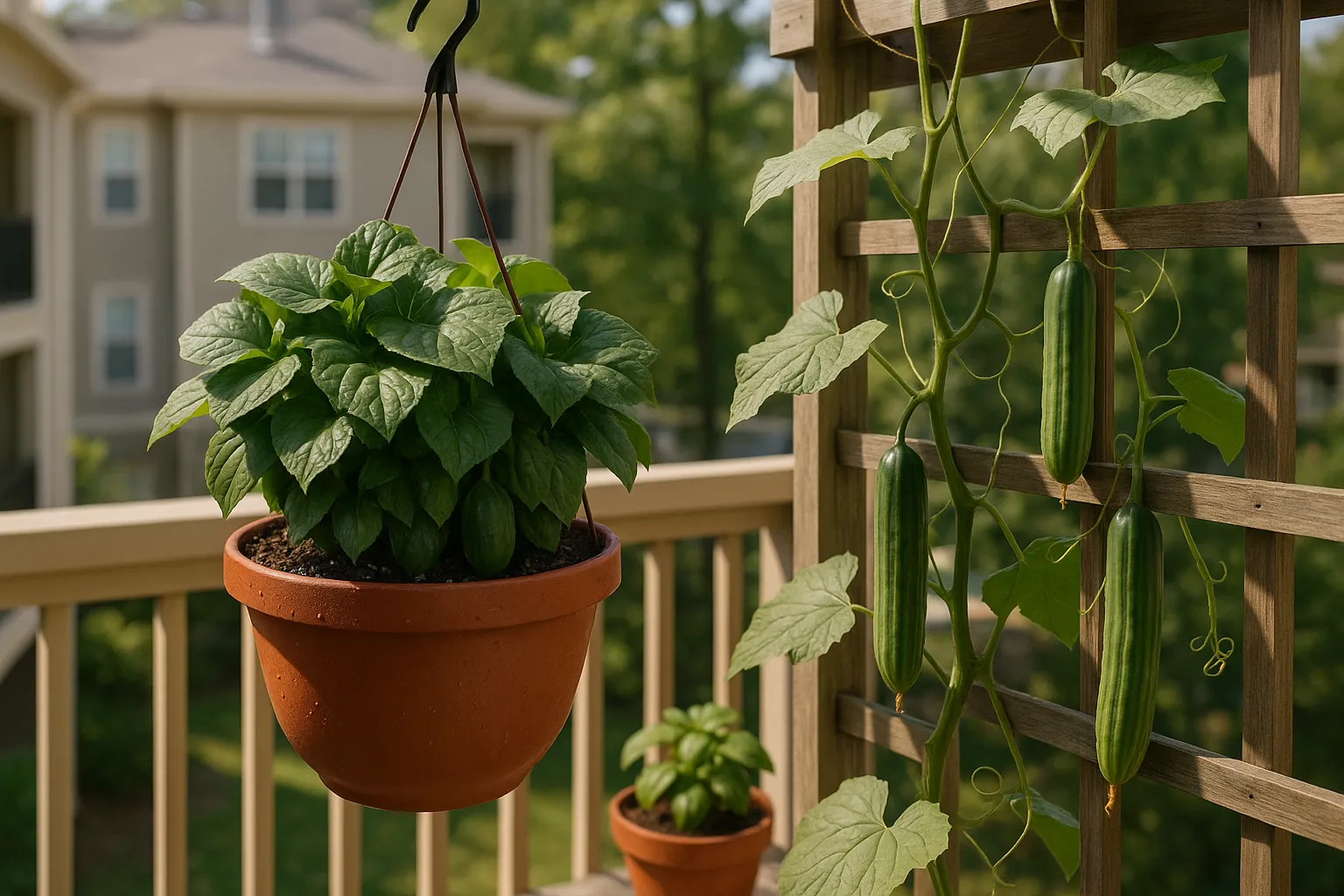
Hanging basket varieties (often called bush or patio cucumbers) have a compressed growth habit. They stay small, set flowers quickly, and send fruit within reach of a hanging pot. Vining types, such as ‘Marketmore 76’ or ‘Straight Eight’, produce long lateral stems that climb or run across the ground.
You’ll notice structural differences first: basket plants have shorter internodes and thicker, more distinct nodes: vines have long internodes and a network of tendrils for climbing. Sensory detail: a basket plant feels denser when you lift its pot: a vine plant feels lighter but wider when you pull a stem.
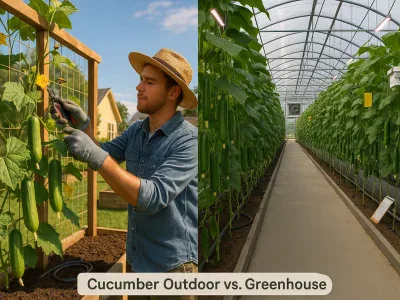
Why that matters: basket plants fit patios, containers, and small balconies. Vines favor full beds, trellises, and larger containers with support. Pollination, airflow, and sunlight exposure will vary, and those differences change fruit set and disease pressure.
Choosing The Right Variety: Traits And Popular Cultivars
Fact: Choose varieties by space, fruit length, taste, and disease resistance.
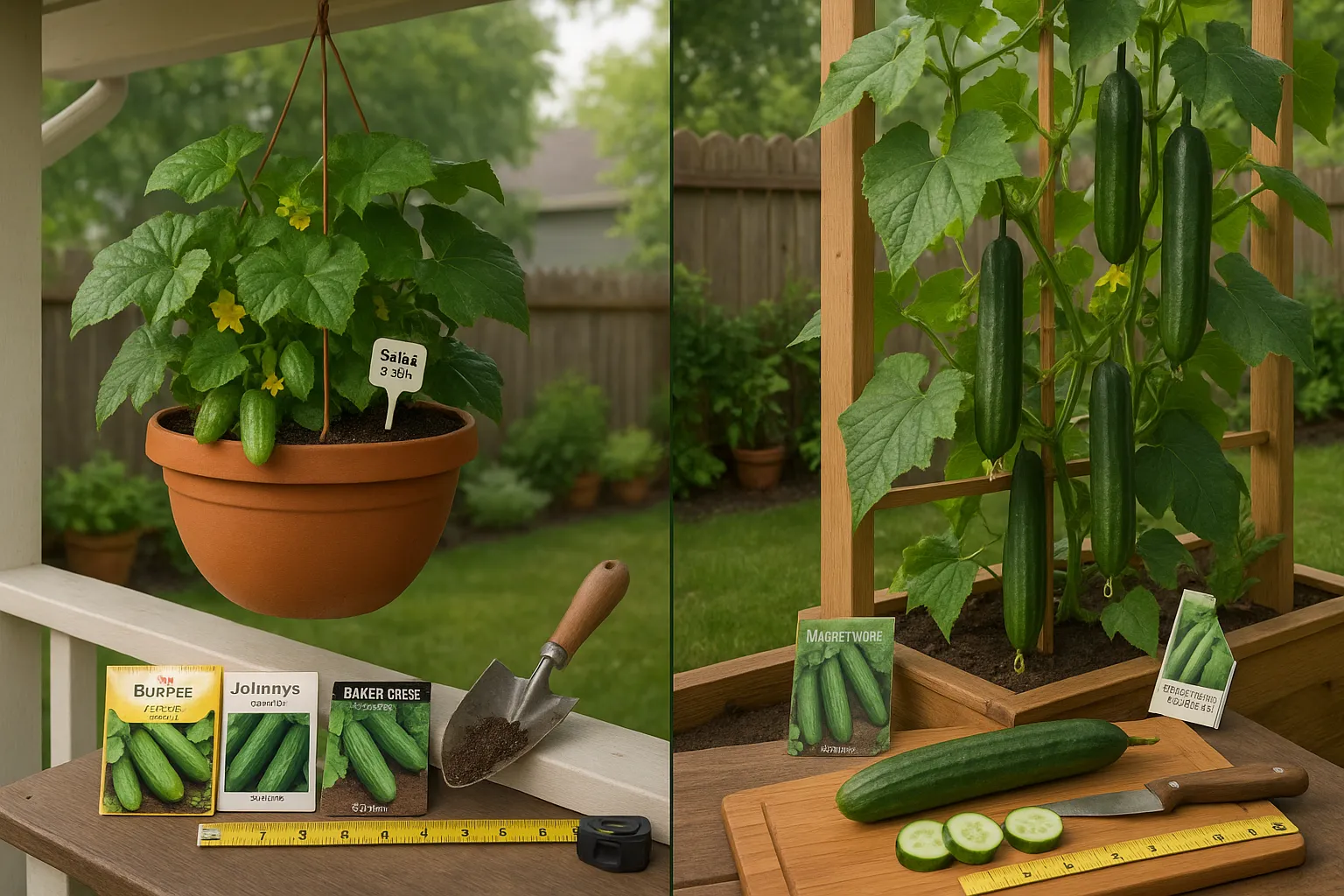
Ask yourself what you cook and how much room you have. If you want small slicing cukes for salads and jars, pick a bush-type like ‘Burpee Patio Hybrid’ or ‘Salad Bush’ by Botanical Interests. If you want long slicing cucumbers for sandwiches, ‘Poinsett 76’ and ‘Tasty Green’ are common vine choices. Pick pickling cukes such as ‘Boston Pickling’ for canning, many pickling types are vining.
Trait checklist you should use: plant habit (bush vs. vine), days to maturity, disease resistance (e.g., CMV, powdery mildew, downy mildew), and fruit length. Brands and seed companies matter: Burpee, Johnny’s Selected Seeds, and Baker Creek list clear habit notes and resistance codes on packets.
Real example: a friend in Portland used ‘Salad Bush’ in a 12-inch hanging pot and harvested small sweet cucumbers at six weeks. They saved space and nearly eliminated slugs. Another neighbor planted ‘Marketmore’ on a 6-foot trellis and harvested a steady stream of 10- to 12-inch slicers all summer.
Planting, Containers, And Support Needs
Fact: Hanging baskets need sturdier containers and well-balanced soil: vining types need support and room to sprawl or climb.
Planting window: start cucumbers when soil warms above 60°F. Direct-seed into containers or beds after last frost, or start indoors 2–3 weeks earlier. Use high-quality seed mixes from companies like Johnny’s for reliable germination.
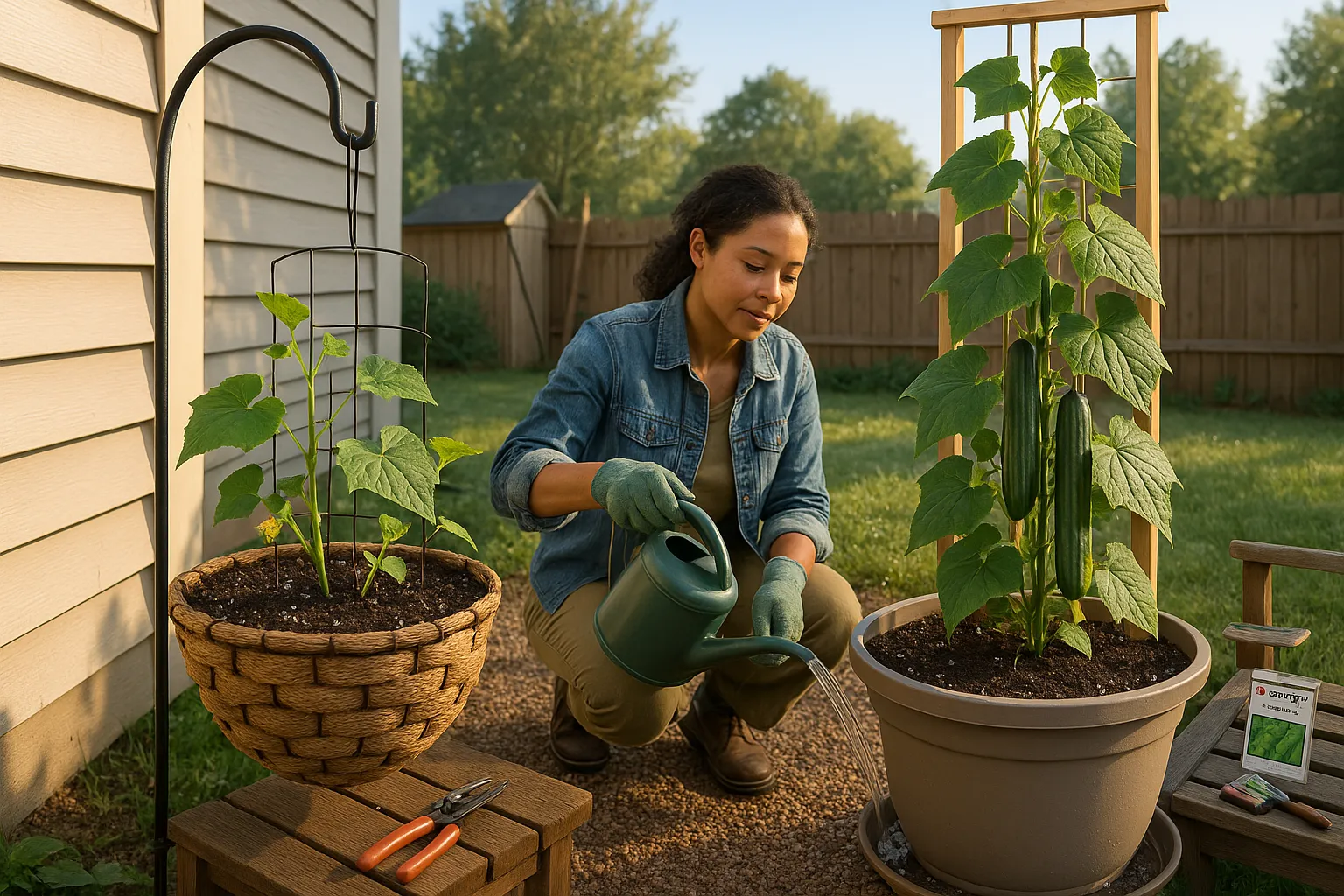
Decide container size by type. Do not skimp: basket cucumbers need at least 10–12 inches diameter for one plant: compact varieties can survive in 8-inch pots but yield suffers. Vining cucumbers need larger containers (18–24 inches) plus a trellis. Use lightweight, well-draining potting mixes and add slow-release fertilizer at planting.
Timing: transplant in the morning or late afternoon to reduce shock. Water deeply after planting.
Daily Care: Watering, Feeding, Light And Pruning
Fact: Cucumbers demand steady moisture, regular feeding, and six to eight hours of sun.
Water: keep soil evenly moist: cucumbers do not like drought. Water at the root zone to avoid wetting leaves. Feed: apply a balanced fertilizer (10-10-10) every 3–4 weeks or use a water-soluble feed once a week during heavy fruiting. Light: give full sun when possible. Prune: remove yellow leaves and pinch side shoots on baskets to focus energy on fruit. On vines, thin crowded stems and train main leaders up the trellis.
Soil, Container Size, And Drainage Requirements
Fact: Cucumbers need loose, fertile soil with good drainage and pH 6.0–7.0.
Use a mix of peat or coir, compost, and perlite for containers. Ensure multiple drainage holes and a saucer that drains or you’ll invite root rot. Add 10–20% compost for microbial life. You can test pH with a simple kit and adjust with lime or sulfur.
Support Options For Vining Versus Basket Plants
Fact: Vining cucumbers perform best on vertical supports: hanging basket cucumbers do fine with minimal support.
Vines: use 6–8 foot trellises, A-frames, or string systems. Trellising improves airflow and keeps fruit cleaner. Basket plants: simple mesh cages within the pot or short stakes prevent stems from snapping during wind. You can also hang baskets close to a wall for shelter. Use clear named tools: Tumble-Trap trellises or T-posts for beds, and Shepherd’s hooks for hanging pots.
Yield, Fruit Quality, And Harvesting Techniques
Fact: Vining types typically yield more total weight: baskets give earlier, easy-to-pick fruit.
Yield: vines produce more fruit per plant because they have more leaf area and flowering nodes. Baskets often give a concentrated burst early, then taper. Fruit quality: baskets often produce tender-skinned, thin-skinned cucumbers suited to fresh eating. Vines produce a range, from bitter-free slicers to firm picklers.
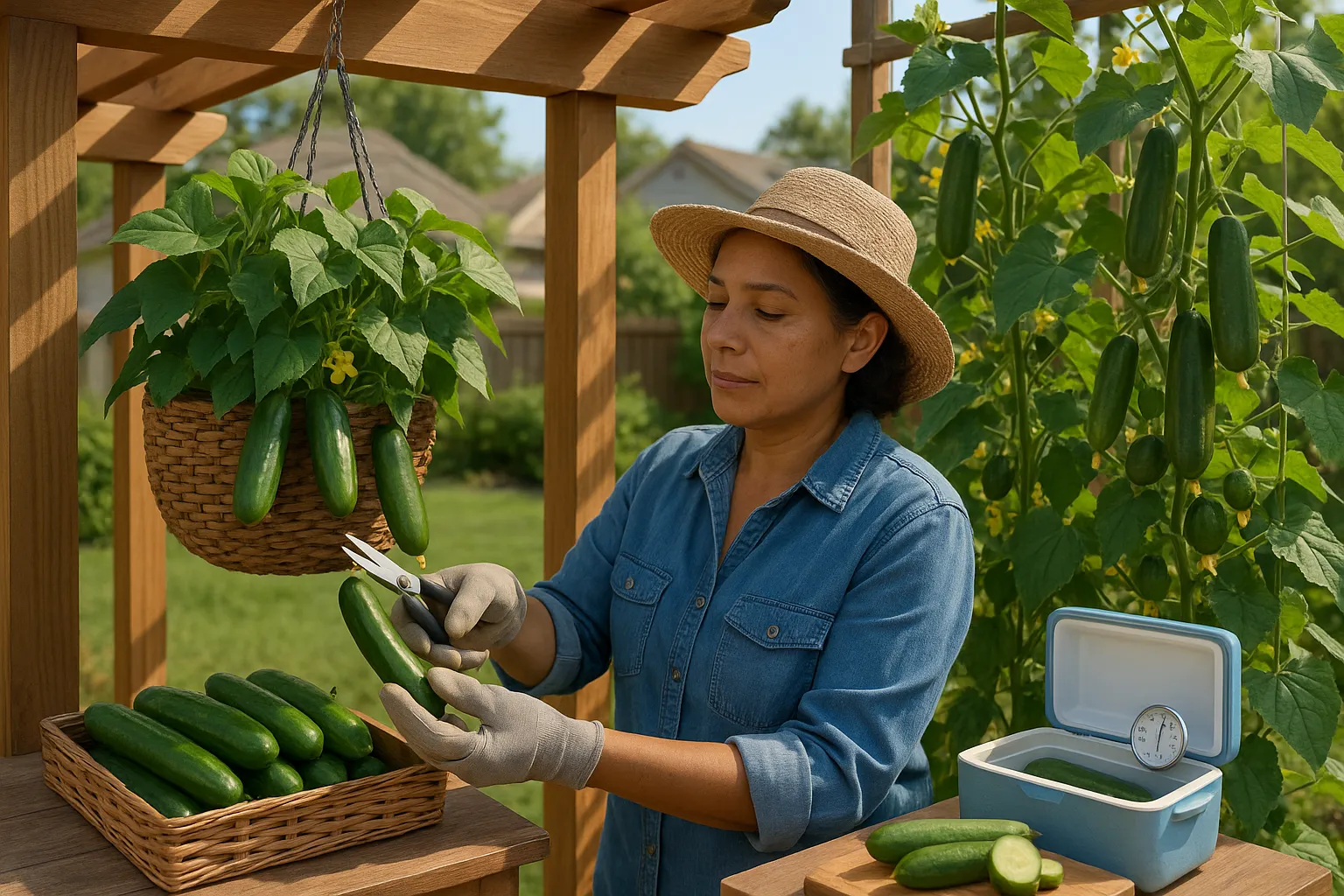
Harvesting technique: cut fruit with scissors or a knife: don’t pull. Cutting prevents stem damage and secondary infections. Handle fruit gently to avoid bruises and store at 50–55°F for best shelf life.
Timing And Frequency Of Harvest
Fact: Harvest frequently, every 1–3 days, for higher yields and better flavor.
Cucumbers grow fast. Pick small for sweeter flavor: larger often become seedy and less crisp. Check plants daily during peak summer. Frequent harvest signals the plant to set more fruit.
Common Flavor And Texture Differences
Fact: Basket cucumbers often taste milder and crisper: vine cucumbers range from buttery to firm and sometimes bitter.
Flavor depends on variety and heat stress. Bitter cucumbers often form under drought or high heat because cucurbitacin accumulates. To reduce bitterness, maintain steady water and harvest before cucumbers overmature. Many vining pickling types have thicker skins and firmer texture for processing.
Pest, Disease, And Troubleshooting Comparison
Fact: Hanging baskets reduce ground pests but still face powdery mildew and cucumber beetles: ground vines encounter slugs, soil pathogens, and more insect pressure.
Pests: cucumber beetles attack both types: use floating row covers early, and then remove during bloom to allow pollinators. Slugs and snails rarely climb into baskets, so baskets can cut slug damage significantly. Aphids and whiteflies target leaves on both types, especially when crowded.
Diseases: powdery mildew and downy mildew favor dense foliage. Baskets with good airflow suffer less, but powdery mildew can appear on any plant. Soil-borne wilt diseases (Fusarium, Verticillium) hit ground-grown vines more severely. Use disease-resistant cultivars, look for ‘V’ and ‘F’ resistance codes on seed packets.
Typical Problems For Hanging Plants Versus Ground Vines
Fact: Hanging plants typically show water stress and root crowding: ground vines show blight, slug holes, and heavy insect load.
Hanging issues: root binding, rapid drying, and nutrient depletion in small pots. Ground vine issues: fruit rot from soil contact, higher slug/snail damage, and greater chance of wilt.
Prevention And Organic Control Strategies
Fact: Prevent problems through cultural practices: use organic controls when pests appear.
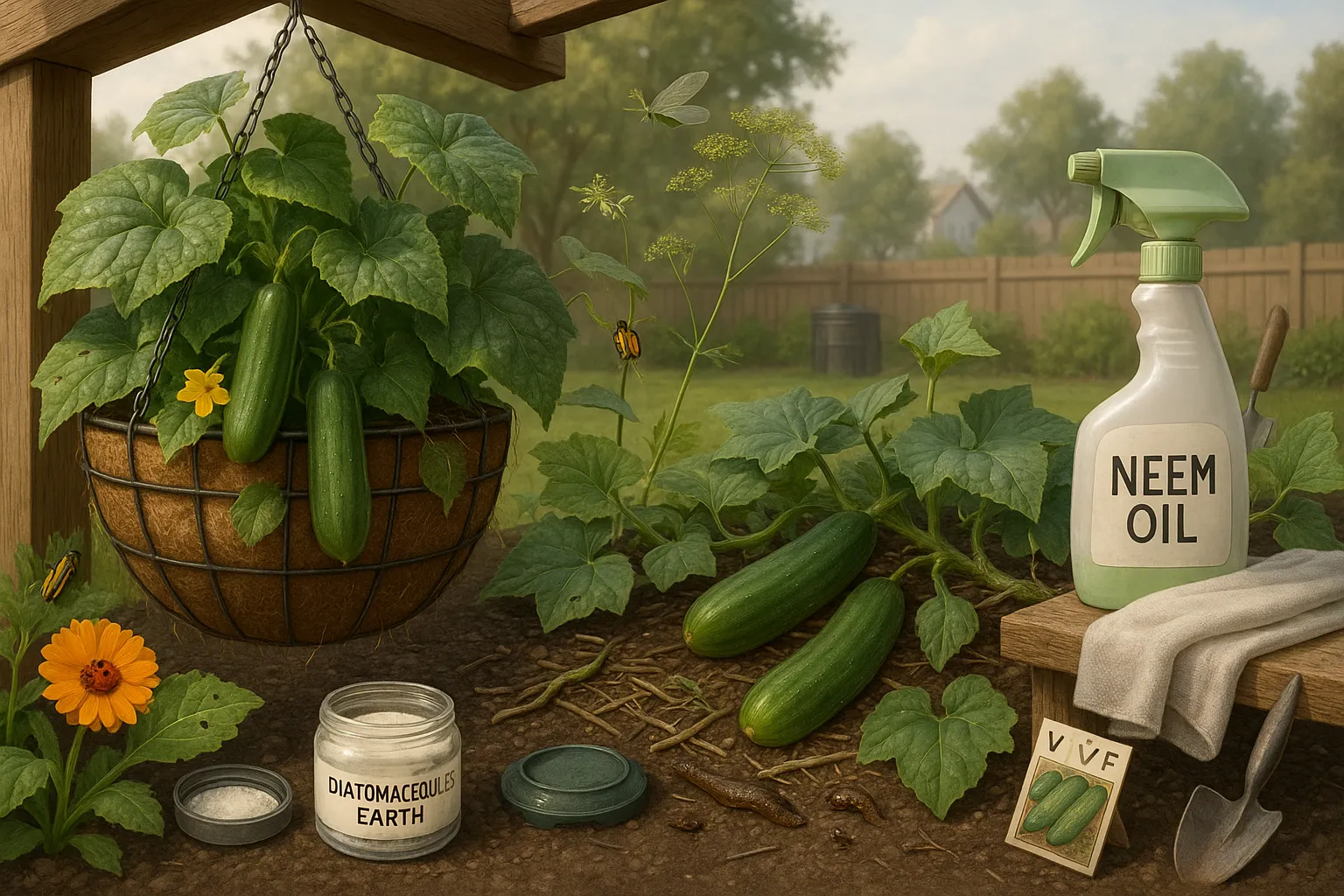
Prevention: rotate crops, sanitize tools, space plants for airflow, and maintain even moisture. Organic controls: neem oil for aphids, kaolin clay for beetles, and Bacillus thuringiensis (Bt) for certain caterpillars. For vine slugs, use iron phosphate baits or diatomaceous earth barriers. For fungal diseases, apply sulfur or copper early and prune infected leaves. Encourage predators, ladybugs, lacewings, and parasitic wasps, by planting native flowers like calendula and dill.
Pros, Cons, And Best Use Cases For Each Type
Fact: Choose baskets for space-limited, low-maintenance setups: choose vines for maximum yield and processing.
Pros of hanging basket cucumbers:
Save space on patios and balconies.
Reduce ground pests and soil-borne disease risk.
Offer easier, ergonomic harvesting at eye level.
Cons of hanging baskets:
Lower total yield per plant.
Require frequent watering and feeding.
Root crowding limits plant lifespan.
Pros of vining cucumbers:
Higher yield and larger fruit.
Better choice for pickling or bulk use.
Easier to control microclimate with trellises and shade cloth.
Cons of vining cucumbers:
Require more space and support.
More exposed to ground pests and soil diseases.
Which To Choose Based On Space, Climate, And Cooking Use
Fact: Match type to your constraints: pick baskets for small urban spaces and vines for gardens and canners.
If you live in an apartment with a sunny balcony, choose a hanging basket bush variety like ‘Patio Snacker’. If you have a backyard and want to preserve jars of pickles, plant vining types like ‘Boston Pickling’ on a strong trellis. In hot, dry climates, choose vines with afternoon shade or baskets with consistent irrigation. In rainy climates, hanging baskets drain quickly and keep fruit cleaner.
Practical tip: try one of each. Grow a basket plant near your door for immediate snacking, and train a vine on a trellis for bulk harvest. You’ll learn their rhythms quickly, and adapt your routine to what your kitchen needs most.
To provide the best experiences, we use technologies like cookies to store and/or access device information. Consenting to these technologies will allow us to process data such as browsing behaviour or unique IDs on this site. Not consenting or withdrawing consent, may adversely affect certain features and functions.
Functional
Always active
The technical storage or access is strictly necessary for the legitimate purpose of enabling the use of a specific service explicitly requested by the subscriber or user, or for the sole purpose of carrying out the transmission of a communication over an electronic communications network.
Preferences
The technical storage or access is necessary for the legitimate purpose of storing preferences that are not requested by the subscriber or user.
Statistics
The technical storage or access that is used exclusively for statistical purposes.The technical storage or access that is used exclusively for anonymous statistical purposes. Without a subpoena, voluntary compliance on the part of your Internet Service Provider, or additional records from a third party, information stored or retrieved for this purpose alone cannot usually be used to identify you.
Marketing
The technical storage or access is required to create user profiles to send advertising, or to track the user on a website or across several websites for similar marketing purposes.