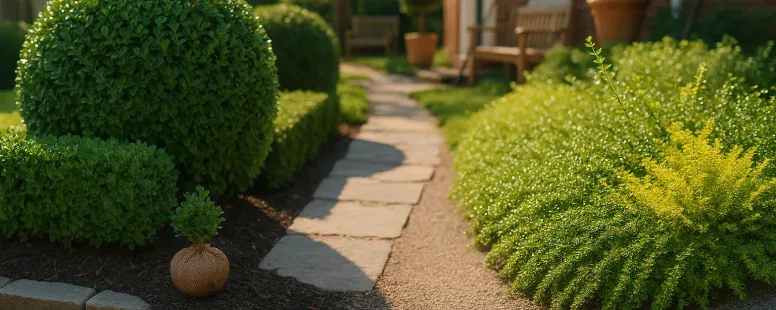
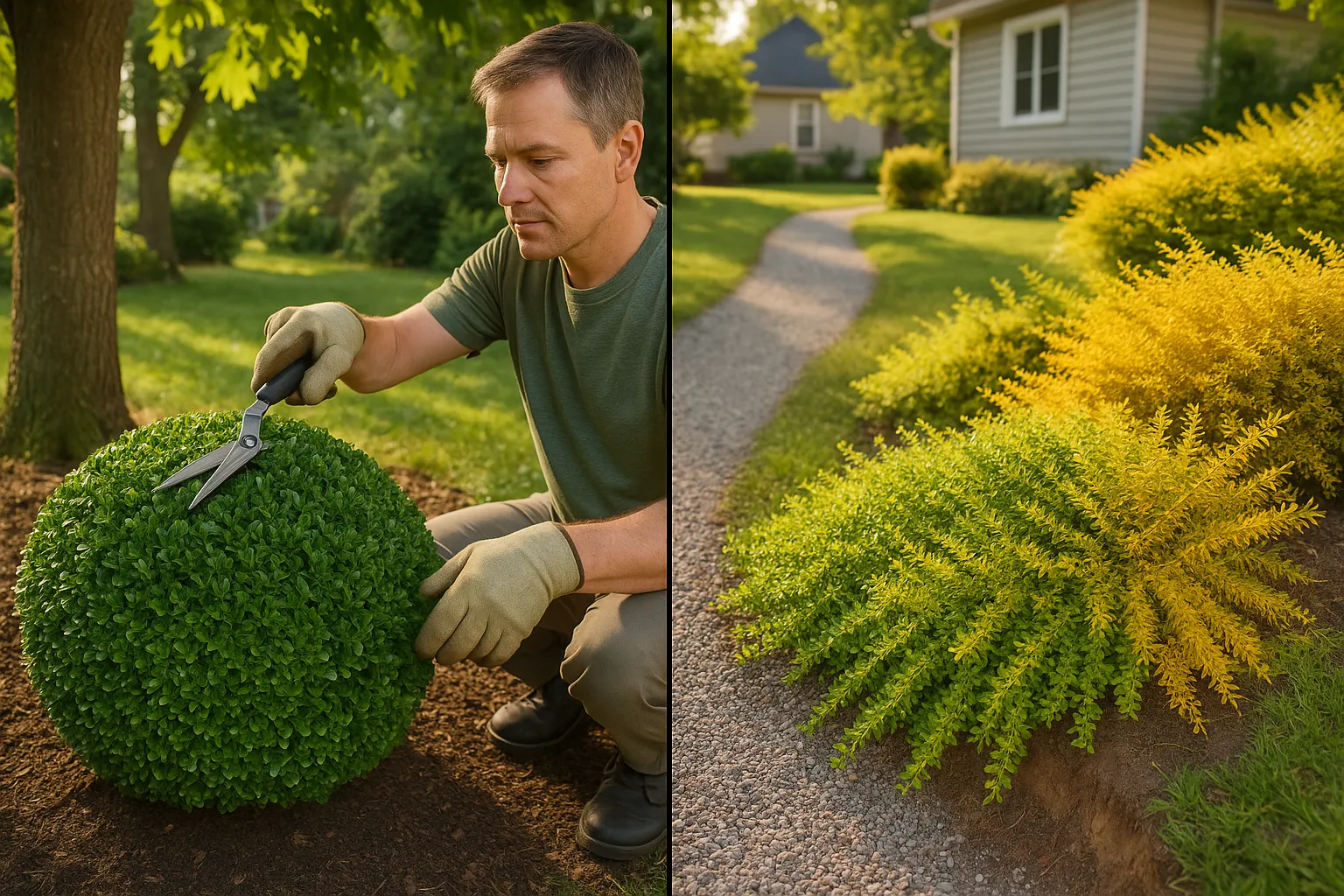
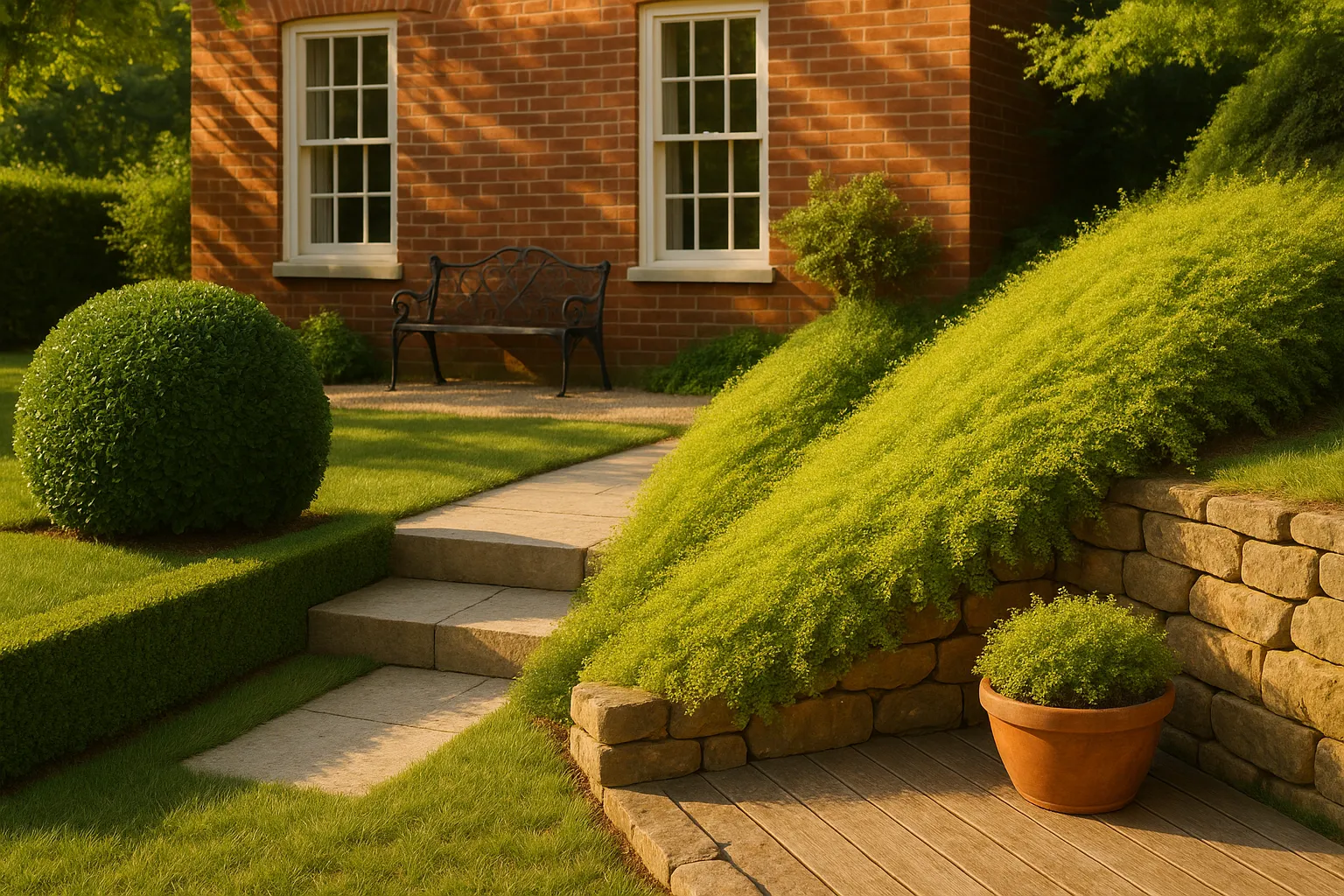
You face a common garden decision: a classic boxy hedge or a fast, glossy alternative. Both boxwood (Buxus spp.) and Lonicera nitida offer year-round green structure, but they behave differently in size, texture, and care. Picture a formal parterre with dense, slow-growing spheres beside a low, shimmering carpet of tiny leaves that bounces light across a path. Each shrub gives distinct benefits you might not expect: boxwood buys time with slow growth and precise shaping, while Lonicera nitida gives near-instant impact and erosion control. This article compares the two so you can choose the shrub that matches your site, schedule, and design goals.
Quick Comparison At A Glance
Fact: Boxwood is slower-growing and classic: Lonicera nitida is faster and more forgiving. Boxwood (Buxus sempervirens and related species) suits tight formal shapes and shaded sites. Lonicera nitida (also sold as L. nitida ‘Maigrün’ or ‘Baggesen’s Gold’) suits mass plantings, informal hedging, and sun to part-shade.
Use this short checklist to orient your choice:
If you want precise topiary, choose boxwood.
If you want quick coverage or erosion control, choose Lonicera nitida.
If you have very dry, hot summers, boxwood may struggle more than some Lonicera cultivars.
If root competition or poor drainage is an issue, Lonicera tolerates heavier soils better.
These are broad rules: later sections give the details and exceptions so you can make the right pick for your specific site.
Botanical Characteristics And Appearance
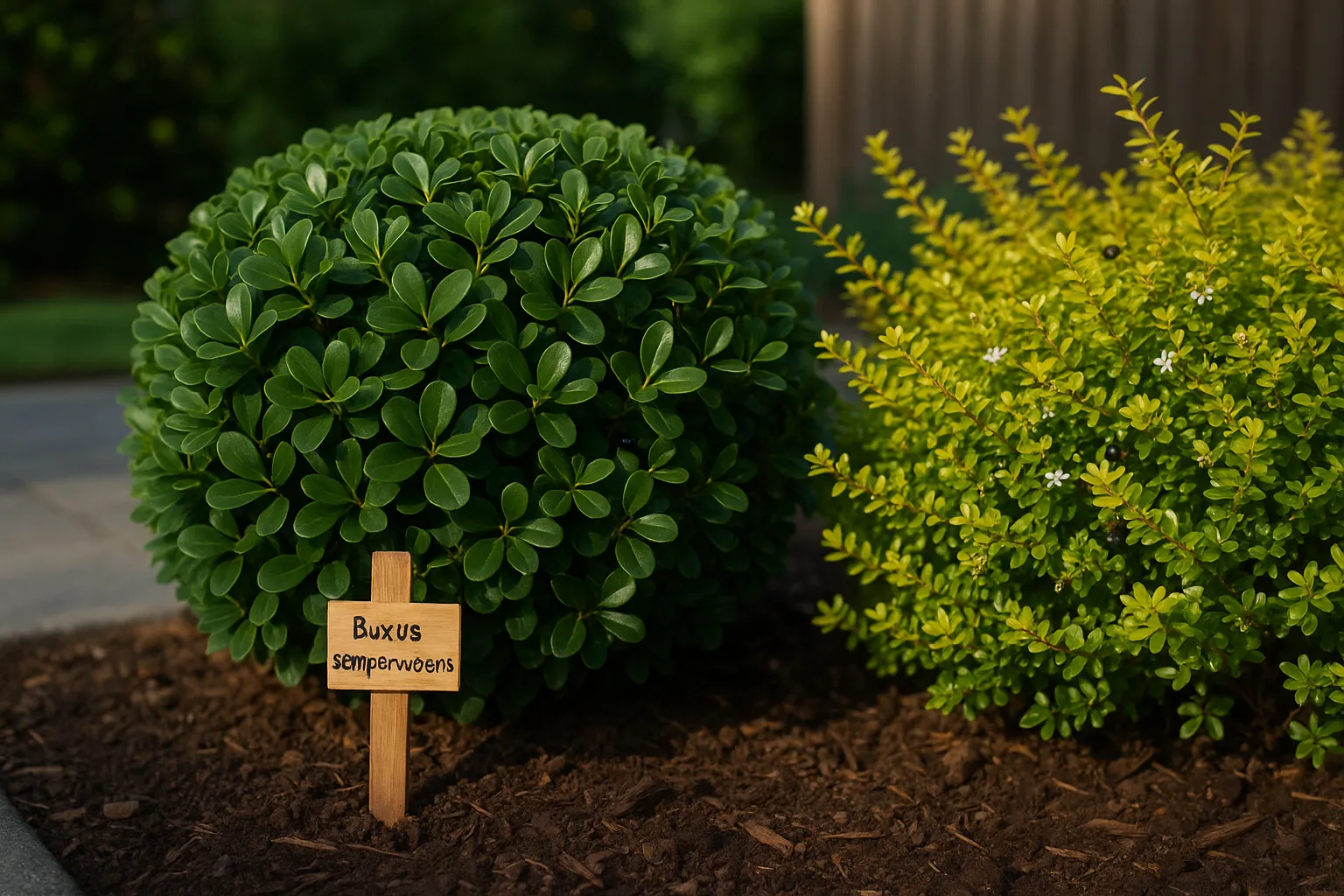
Fact: The two shrubs belong to different families and show distinct leaf and flower characters. Boxwood belongs to the family Buxaceae: Lonicera nitida sits in Caprifoliaceae. You will see boxwood leaves that are thicker and rounded, often a matte deep green. Lonicera leaves are tiny, glossy, and opposite, creating a fine-textured surface that reads as silk from a distance.
Taxonomy And Common Varieties
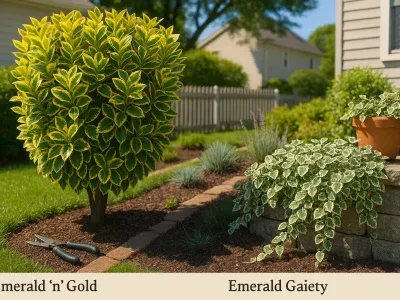
Fact: Boxwood includes species and cultivars like Buxus sempervirens, B. microphylla, and ‘Wintergreen’. Boxwood cultivars from companies like Proven Winners or Bailey Nurseries are common in trade. Lonicera nitida varieties include ‘Maigrün’ (dense green), ‘Baggesen’s Gold’ (chartreuse leaves), and ‘Silver Beauty’ (variegated). Both groups have sold cultivars bred for cold tolerance and disease resistance.
Foliage, Flowers, And Seasonal Interest
Fact: Both are evergreen in mild climates: their floral displays are modest. Boxwood produces small, inconspicuous yellow-green flowers in spring that most gardeners prune away. Lonicera nitida produces tiny tubular flowers that can attract pollinators and sporadic small berries on female plants. Lonicera often flashes brighter color in younger growth, especially gold cultivars, giving seasonal contrast. Boxwood’s main interest is foliage form and texture rather than blooms.
Growth Habit, Size, And Rate
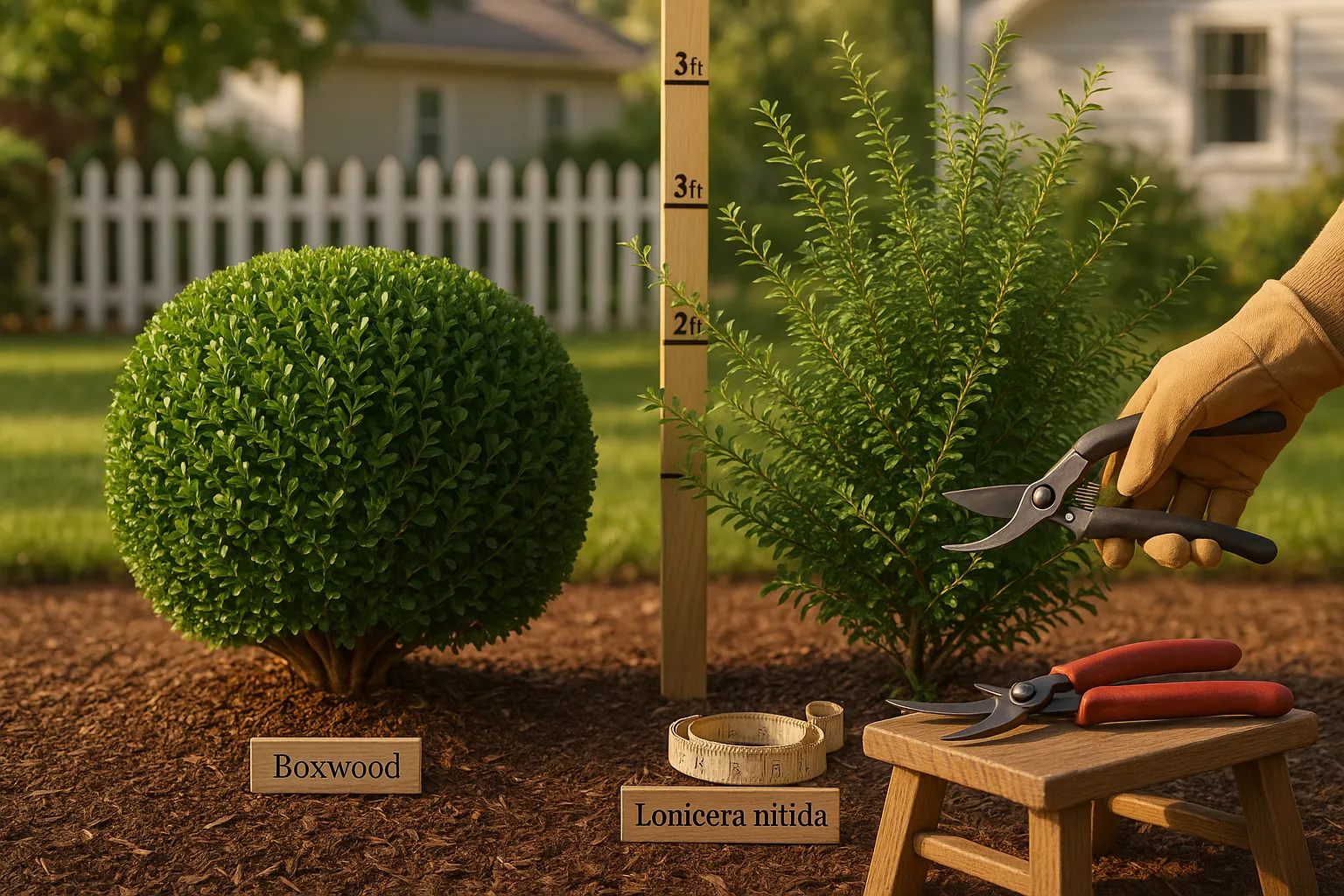
Fact: Growth rate and mature size differ enough to change landscape plans. Boxwood grows slowly: many cultivars add 2–6 inches per year. Lonicera nitida grows faster, often 6–12 inches per year under good conditions.
Typical Mature Size And Shape
Fact: Typical boxwood sizes range from low, 1-foot groundcovers (B. microphylla ‘Faulkner’) to large shrubs 8–15 feet tall for B. sempervirens if unpruned. Lonicera nitida usually matures at 2–6 feet tall and wide but can be trained taller with pruning. So if you need a low hedge under 2 feet, both can work: for taller screens, boxwood requires years, while Lonicera reaches height sooner.
Growth Rate And Lifespan
Fact: Boxwood can live many decades with proper care: Lonicera nitida tends to have shorter lifespan but establishes quickly. Boxwood longevity makes it a long-term investment in structured gardens. Lonicera will fill gaps fast but may need replacement sooner in heavy-use sites.
Pruning And Shaping Needs
Fact: Boxwood accepts close shearing and precise topiary: Lonicera tolerates harder pruning and rejuvenation. You should prune boxwood lightly and regularly to maintain crisp edges: heavy cuts to old wood may fail to resprout. Lonicera responds well to hard trims and can be cut back to 6–12 inches to renew growth.
Landscape Uses And Design Applications
Fact: Use boxwood for formal structure: use Lonicera for quick mass and contrast. Each plant fills specific roles in design.
Hedges, Formal Edging, And Topiary
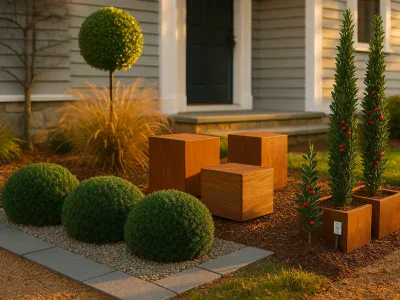
Fact: Boxwood is the traditional choice for clipped hedges and topiary. You will find it around Georgian homes and formal knot gardens because its dense leaf and slow growth produce clean lines. Lonicera can form informal hedges and is fine for low-maintenance borders where exact geometry is not required.
Mass Plantings, Groundcover, And Containers
Fact: Lonicera nitida excels in mass plantings and as groundcover: some varieties work well in containers. You can plant Lonicera on slopes for erosion control or as a fast screen around a patio. Boxwood can be grown in containers too, but expect slower fill-in.
Aesthetic Differences And When To Choose Each
Fact: The visual texture differs: boxwood reads as dense and sculpted: Lonicera reads as airy and fine-textured. Choose boxwood when you want formality, year-round silhouette, and slow maintenance cycles. Choose Lonicera when you want quick effect, light-reflecting foliage, or cost-effective coverage.
Care, Soil, Light, And Water Requirements
Fact: Soil drainage and light levels often decide which shrub will thrive. Boxwood prefers fertile, well-drained soil with neutral to slightly alkaline pH. Lonicera nitida tolerates heavier soils and a wider pH range.
Soil Type, Drainage, And pH Preferences
Fact: Boxwood suffers in poorly drained sites: root rot and dieback follow. Lonicera tolerates clay and moderate wetness. You should amend planting holes for boxwood with organic matter and ensure raised beds if drainage is poor.
Sunlight Exposure And Microclimate Tolerance
Fact: Boxwood does best in part shade to full shade, though some cultivars handle sun. Lonicera nitida fares well in full sun to part shade: gold cultivars need more sun to keep color. Urban heat and reflected heat from pavement stress boxwood more than Lonicera.
Watering, Fertilization, And Winter Care
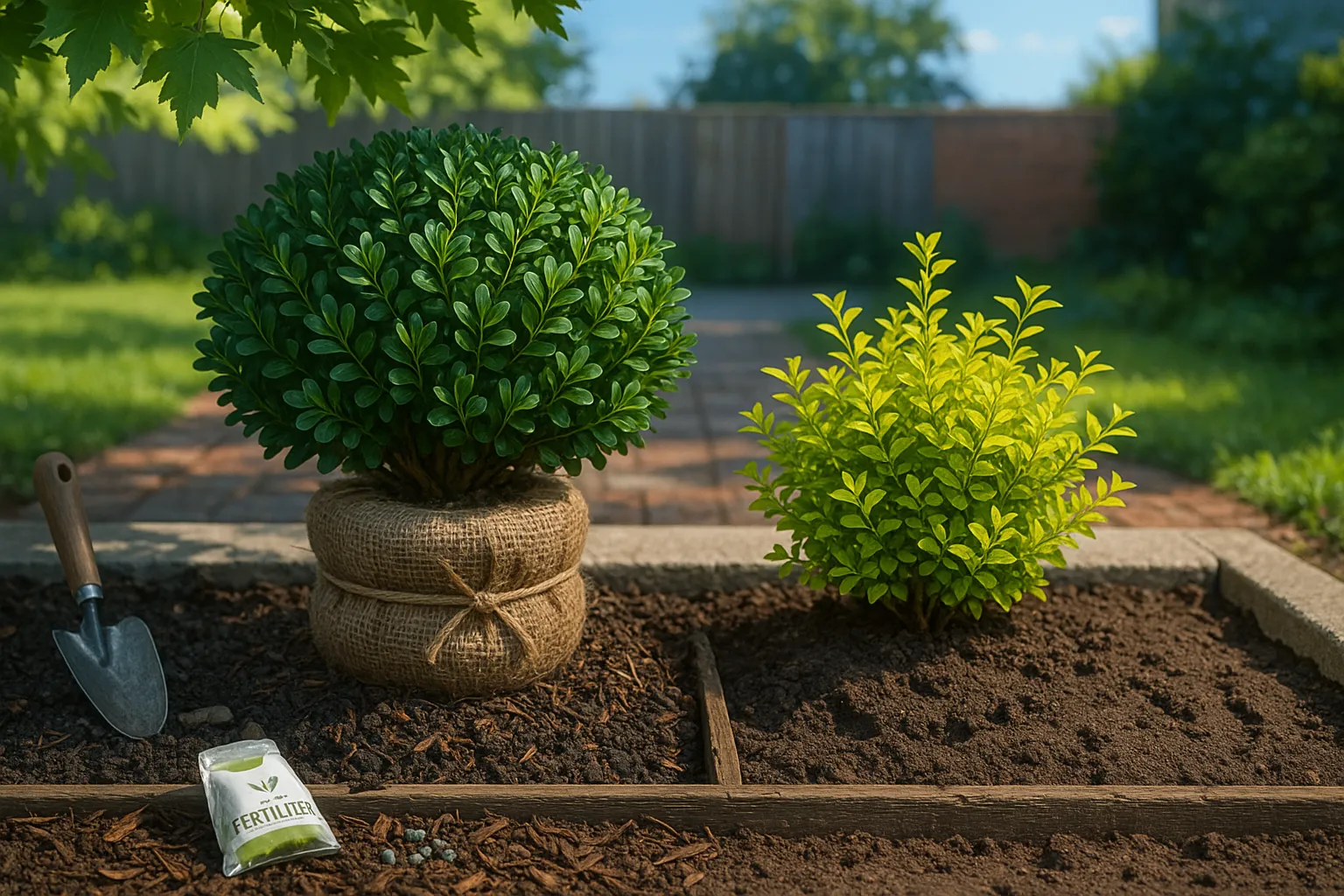
Fact: Both require regular watering during establishment. Boxwood favors consistent moisture without waterlogging: Lonicera is more drought-tolerant once established. Use a balanced fertilizer in spring for boxwood and light feeding for Lonicera. Protect overwintering boxwood from desiccating winds with burlap in colder zones: Lonicera usually weathers winter with fewer issues.
Pests, Diseases, And Common Problems
Fact: Boxwood faces unique pest and disease threats: Lonicera has its own but typically fewer severe pathogens. Understanding risks prevents costly losses.
Pests To Watch For And Prevention
Fact: Boxwood leafminer and boxwood blight (Calonectria pseudonaviculata) are major concerns in many regions. You should inspect new plants and source from reputable nurseries that test for blight. Lonicera nitida can attract aphids and scale: predators and soap sprays often control these.
Diseases, Diagnosis, And Treatment Options
Fact: Boxwood blight causes rapid defoliation and stem lesions: sanitation and removal of infected plants are often required. Fungicides can help but rarely cure advanced cases. Lonicera may show root rot in poorly drained soils: improving drainage and removing affected plants prevents spread.
Maintenance Challenges And Longevity Risks
Fact: Improper pruning and poor air circulation raise disease risk for boxwood. Lonicera may become leggy if left unpruned and can thin out in shaded inner branches. Regular inspection, proper pruning technique, and correct siting reduce these problems.
Practical Guidance For Planting And Early Care
Fact: Proper planting and early care set long-term success. Follow simple steps to establish either shrub well.
Site Preparation, Spacing, And Planting Steps
Fact: Prepare a generous planting hole twice the rootball diameter and amend native soil if compacted. For boxwood, set root collar level with surrounding soil and backfill lightly to avoid smothering roots. For formal hedges, space boxwood 12–24 inches apart depending on cultivar: space Lonicera 18–36 inches for faster fill.
Steps:
Test soil pH and drainage.
Amend hole with compost for boxwood: add minimal amendment for Lonicera in heavy clay.
Position plants, backfill, and firm soil gently.
Mulch 2–3 inches away from stems.
Establishment Care For The First Two Years
Fact: Water deeply and regularly the first two growing seasons. You must keep soil evenly moist for boxwood: Lonicera tolerates brief dry spells once roots take hold. Stake or temporary irrigation helps in summer heat. Prune lightly in the first year to encourage branching: avoid heavy shaping until year two or three.
Cost, Availability, And Where They Excel Economically
Fact: Lonicera nitida is often cheaper up-front: boxwood is a long-term value. Nursery prices vary by cultivar, size, and region, but expect higher per-plant cost for established boxwood balls or large specimens.
Relative Cost Of Plants And Long-Term Maintenance
Fact: Boxwood costs more per plant and may cost more in disease management. Lonicera starts cheaper and gives faster visual return, reducing early maintenance costs. Over decades, boxwood’s longevity can offset initial cost if you maintain it properly.
Nursery Availability And Sourcing Tips
Fact: Both plants are widely available at big-box stores, independent nurseries, and mail-order growers. Buy from local nurseries that label cultivars and offer disease-free guarantees when possible. Ask about provenance, some wholesalers specialize in boxwood that resist blight.
Deciding Which Is Best For Your Situation
Fact: Match the plant to your site, budget, and design goals, then proceed confidently. Ask whether you need formality, fast coverage, low upfront cost, or long-term investment.
Matching Plant Choice To Site Conditions And Design Goals
Fact: Choose boxwood for shaded, formal gardens where slow growth and precise shaping matter. Choose Lonicera nitida for sunny banks, quick hedges, erosion control, or when you want brighter leaf color. If disease pressure from boxwood blight exists locally, favor Lonicera.
Quick Decision Checklist (When To Pick Boxwood Vs. Lonicera Nitida)
Pick boxwood if: you want topiary, slow maintenance cycles, classic formal look, and you have well-drained soil.
Pick Lonicera nitida if: you want fast coverage, inexpensive massing, tolerance for clay or sun, or colored foliage like ‘Baggesen’s Gold’.
If you’re still unsure, buy a few small plants of each and trial them in similar microclimates in your yard for 12–24 months. You’ll see which adapts better: local conditions often decide more than generic rules. Now go measure your site, check soil, and choose the shrub that fits your schedule and style, you won’t regret the planning.
To provide the best experiences, we use technologies like cookies to store and/or access device information. Consenting to these technologies will allow us to process data such as browsing behaviour or unique IDs on this site. Not consenting or withdrawing consent, may adversely affect certain features and functions.
Functional
Always active
The technical storage or access is strictly necessary for the legitimate purpose of enabling the use of a specific service explicitly requested by the subscriber or user, or for the sole purpose of carrying out the transmission of a communication over an electronic communications network.
Preferences
The technical storage or access is necessary for the legitimate purpose of storing preferences that are not requested by the subscriber or user.
Statistics
The technical storage or access that is used exclusively for statistical purposes.The technical storage or access that is used exclusively for anonymous statistical purposes. Without a subpoena, voluntary compliance on the part of your Internet Service Provider, or additional records from a third party, information stored or retrieved for this purpose alone cannot usually be used to identify you.
Marketing
The technical storage or access is required to create user profiles to send advertising, or to track the user on a website or across several websites for similar marketing purposes.