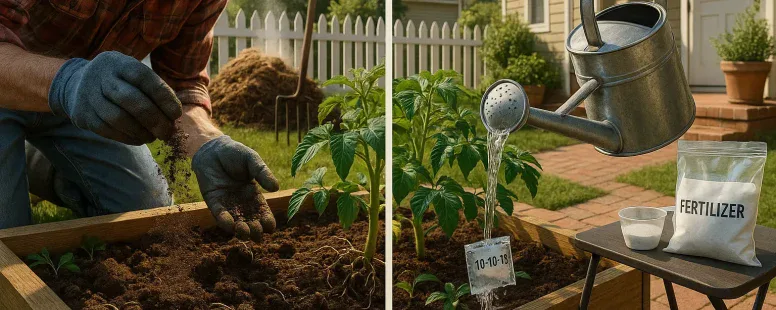
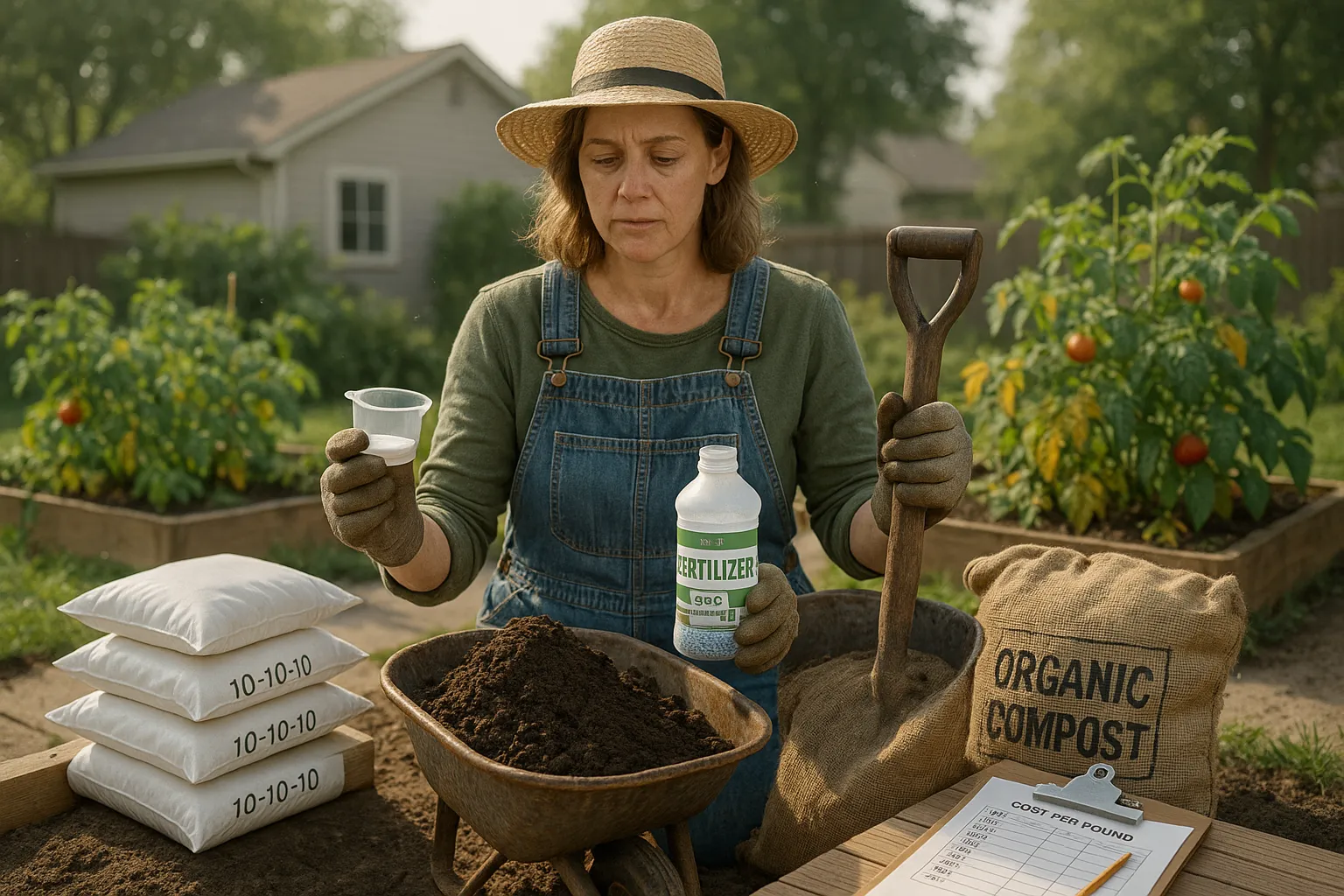
You can feed a garden in more than one way, and the choice you make shapes soil, plants, and seasons to come. Organic fertilizers vs. synthetic options is not just a debate about ingredients: it’s a story about time, trade-offs, and the life beneath your feet. Picture warm compost dust dusted over tomato roots versus the quick fizz of a water-soluble N-P-K packet, both give nutrients, but they speak different languages to soil microbes and plant roots. This article cuts through the jargon to give you clear, practical guidance on which type fits your goals, budget, and timeline, and how to mix strategies so your garden thrives without costly mistakes.
How Organic And Synthetic Fertilizers Differ
Fact: Organic fertilizers are derived from plant or animal matter: synthetic fertilizers are manufactured chemicals. Start with that simple contrast.
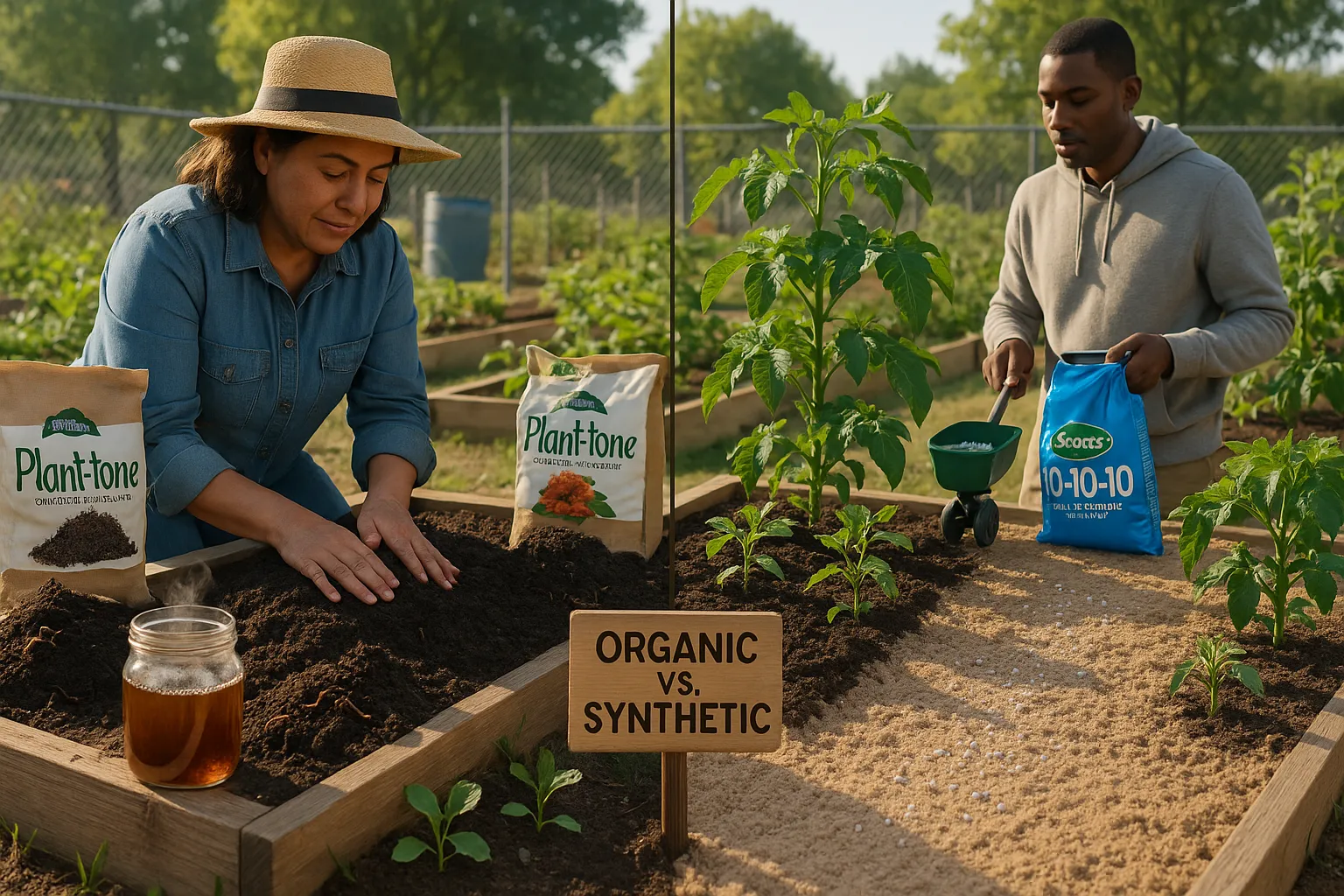
Organic fertilizers include compost, manure, bone meal, and commercial blends like Espoma Plant-tone. They contain complex organic molecules that microbes must break down to release nutrients. That means slower release, pulsing nutrient availability over weeks or months. Synthetic fertilizers, think ammonium nitrate, urea, or 10-10-10 blends from brands such as Scotts, deliver soluble nutrients immediately in plant-available forms.
Why this matters to you: if you want fast green-up or need to correct a specific deficiency before fruiting, synthetics work quickly. If you aim to build soil structure, water retention, and long-term fertility, organics pay dividends. Also note that organic materials add carbon and feed soil life: synthetics generally do not. But synthetics let you target exact nutrient ratios and apply measured doses with low labor.
A real-world note: a community gardener I know switched to compost tea and saw more earthworms and fewer foliar issues over two seasons, but the first year yields were uneven. That’s the trade-off in action.
(Question you might ask next: will organics ever supply enough N for heavy-feeding crops? We address that below.)
Nutrient Composition, Release Rates, And Availability
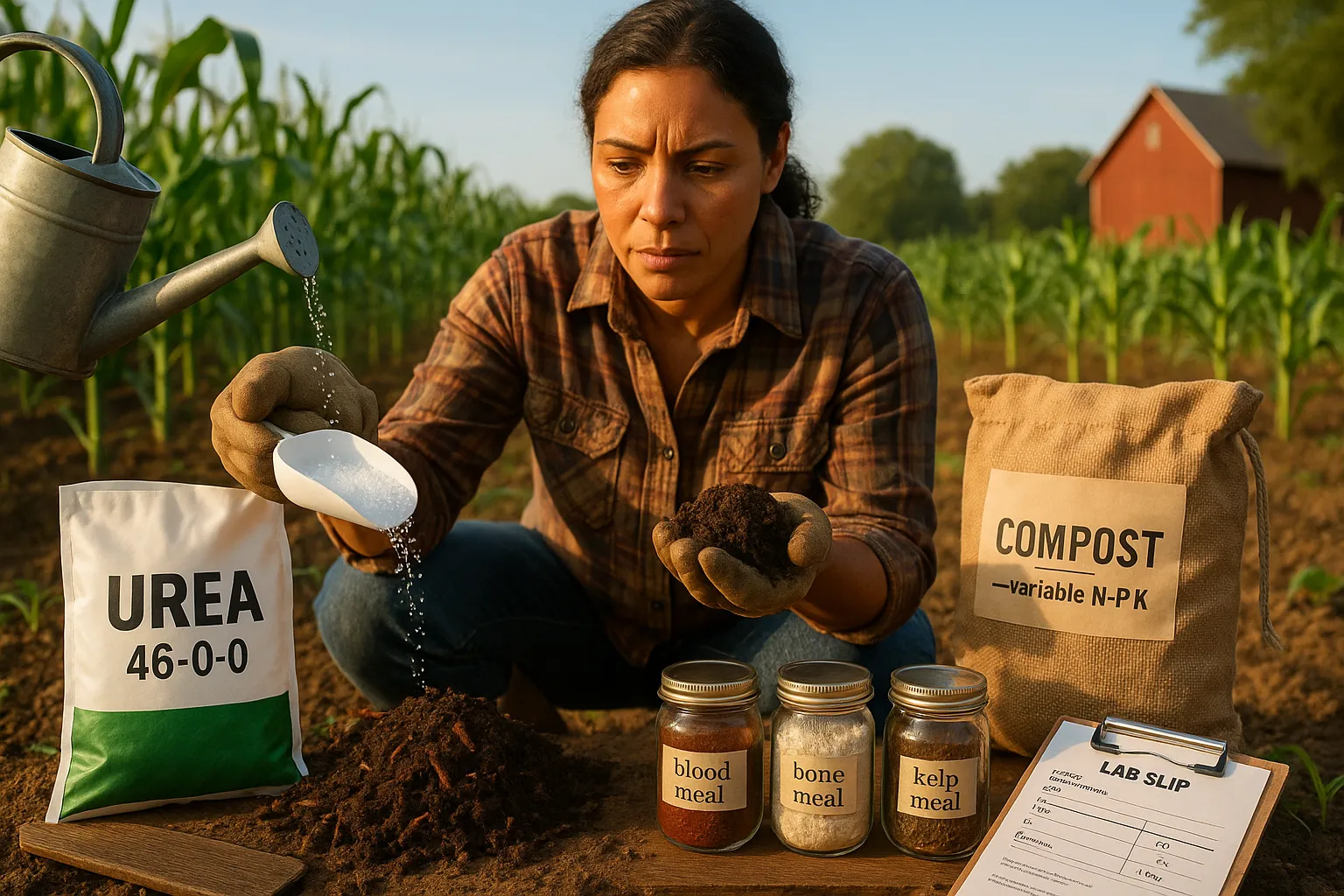
Synthetic: You get exact N-P-K figures on the bag, and water-soluble forms give immediate uptake. For instance, urea (46-0-0) supplies quick nitrogen. That predictability helps when you follow a feeding schedule or perform tissue tests.
Organic: Materials like blood meal, fish emulsion, or kelp meal have useful nutrients but variable concentrations. Microbial breakdown controls release, so temperature, moisture, and pH change availability. Compost typically reads low N-P-K on lab tests but improves nutrient cycling: microbes mineralize organics into plant-available forms gradually.
Practical example: If your soil test shows low phosphorus in a corn patch, a measured application of bone meal (organic) will slowly supply P over months. A triple-superphosphate (synthetic) will correct levels quickly and is more efficient for a single season yield boost.
Follow-up: To combine the best of both worlds, you can use a small synthetic top-dress during critical growth stages while maintaining a base layer of compost.
Environmental And Long-Term Soil Impacts
Fact: Organics build soil carbon and support biodiversity: repeated synthetic use can increase runoff risk and alter soil chemistry.
Organic amendments increase soil organic matter, improve structure, and support bacteria, fungi, and earthworms. That boosts water infiltration and nutrient retention. Long-term, this lowers irrigation needs and stabilizes yields. Commercial organic brands such as Dr. Earth advertise soil-building benefits backed by organic inputs.
Synthetic impacts depend on management. Responsible use minimizes harm. But overapplication or poor timing leads to nutrient runoff, especially nitrate leaching into groundwater. Large-scale fertilizer production also carries a carbon footprint: the Haber-Bosch process for nitrogen fixation uses substantial energy.
Case study: A municipal watershed affected by agricultural runoff had higher nitrate levels after decades of heavy synthetic N use. Switching portions of fields to cover crops and organic amendments reduced leaching, a clear, measurable change that you can replicate on small scales by keeping living roots in soil and adding organic matter.
Warning: Don’t assume “organic” equals zero impact. Manure can carry pathogens if not composted properly. Manage both types with care.
Effects On Plant Health, Yield, And Disease Resistance
Answer: Synthetic fertilizers often boost short-term growth and yield: organics support resilient plant health and may reduce some disease pressures over time.
Immediate yields: When you need fast vegetative growth or a quick recovery after frost, soluble synthetic feeds are effective. Commercial tomato growers sometimes use targeted synthetic feeds during fruit set to maximize output.
Resilience and disease: Organic practices favor mycorrhizal associations and diverse microbes that can suppress pathogens. A vegetable grower I spoke with noticed fewer root-rotting episodes after switching to regular compost and reduced synthetic N, plants showed stronger root systems and less stress.
But, synthetics can support high yields if you manage irrigation, pH, and balanced nutrients. But excessive N from synthetics may favor lush foliage at the expense of fruit set and increase susceptibility to pests and disease.
Practical balance: Use soil tests and tissue tests to guide applications. If your crop shows deficiency symptoms, correct them quickly: then apply organic amendments for long-term resilience.
Application, Timing, And Cost Considerations
Insight: Synthetics give fast results with less bulk: organics need more volume and planning but often lower long-term costs.
Application: Synthetic granular or water-soluble formulas let you apply exact doses per square foot or gallon. That saves labor on small plots. Organics like compost require hauling and spreading larger volumes: one cubic yard goes a long way, but you’ll lift it.
Timing: Apply organics in fall or early spring to allow decomposition. Synthetics fit in-season, timed to crop needs, for example, a sidedress of calcium nitrate during tomato fruiting.
Cost: Upfront cost per nutrient unit is often lower for synthetics. But organics reduce future fertilizer needs by building soil. If you factor in improved water retention and reduced pest inputs, organics can be economical over 3–5 years.
Practical tip: Compare cost per pound of nutrient, but also account for labor, equipment, and soil benefits. For small home gardens, bagged organics can be affordable and less risky.
Choosing The Right Fertilizer For Different Gardening Situations
Fact: Your choice depends on goals, scale, and time horizon.
Vegetable beds: If you want steady, flavorful harvests and long-term soil health, prioritize organics plus targeted synthetics when needed. Lawns: Fast greening usually comes from synthetics: if you want reduced inputs, use compost top-dress and slow-release organic lawn feeds like Milorganite.
Potted plants: Containers drain quickly. Use balanced synthetic feeds for consistent supply, or apply diluted fish emulsion weekly. Large-scale farms: Economies and yield targets often favor synthetics, but integrating cover crops and manure improves sustainability and reduces fertilizer dependence.
Decision checklist:
Short-term yield need? Consider synthetics.
Soil building and biodiversity? Choose organics.
Limited labor? Synthetics are lower effort.
Environmental priority? Favor organics and good management.
You can combine approaches to match each situation. That’s often the smartest route.
Practical Tips For Switching, Combining, And Using Fertilizers Safely
Fact: You can transition gradually and mix methods safely: start with soil tests and small trials.
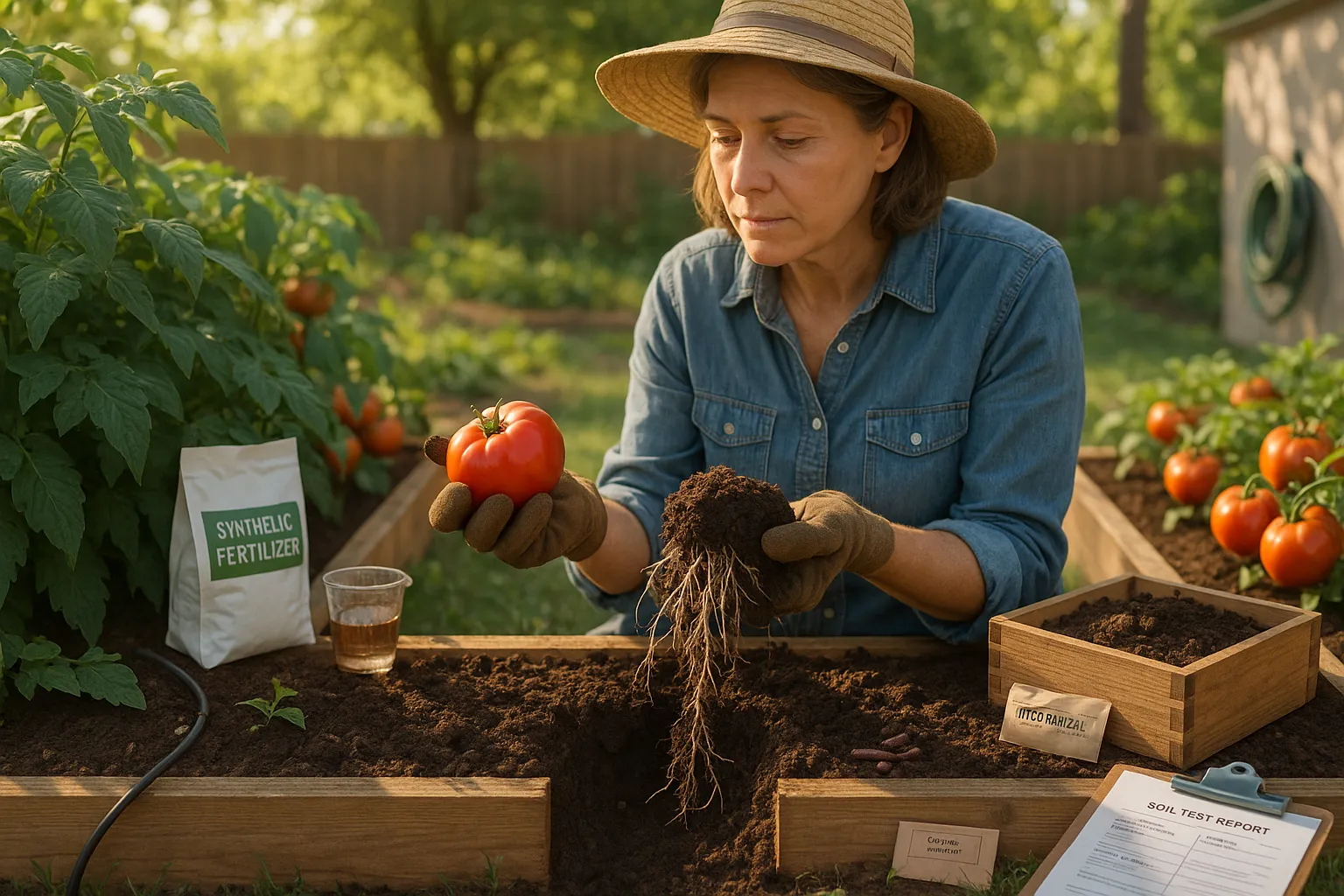
Start with a soil test to set a baseline. Then apply a program: spread compost in fall, use targeted synthetic corrections in spring if tests show acute deficits, and monitor plant response. Keep records, dates, rates, and crop reactions.
Safety: Store fertilizers in dry, labeled containers. Keep synthetic granules away from children and pets. Compost mature manure thoroughly to kill pathogens before use on vegetables.
Environmental best practices: Avoid applying before heavy rain. Use buffer strips to reduce runoff. Use nitrification inhibitors only when needed.
Call to action: Try a small experiment this season: split a bed, use organics on one half and a carefully measured synthetic program on the other. Observe yields, pest pressure, and soil life. You’ll learn faster that way.
To provide the best experiences, we use technologies like cookies to store and/or access device information. Consenting to these technologies will allow us to process data such as browsing behaviour or unique IDs on this site. Not consenting or withdrawing consent, may adversely affect certain features and functions.
Functional
Always active
The technical storage or access is strictly necessary for the legitimate purpose of enabling the use of a specific service explicitly requested by the subscriber or user, or for the sole purpose of carrying out the transmission of a communication over an electronic communications network.
Preferences
The technical storage or access is necessary for the legitimate purpose of storing preferences that are not requested by the subscriber or user.
Statistics
The technical storage or access that is used exclusively for statistical purposes.The technical storage or access that is used exclusively for anonymous statistical purposes. Without a subpoena, voluntary compliance on the part of your Internet Service Provider, or additional records from a third party, information stored or retrieved for this purpose alone cannot usually be used to identify you.
Marketing
The technical storage or access is required to create user profiles to send advertising, or to track the user on a website or across several websites for similar marketing purposes.