Photinia Red Robin Vs. Griselinia
You can create a bold, year-round screen with either Photinia ‘Red Robin’ or Griselinia, but they behave very differently in the garden. One greets spring with a flare of red new leaves and fragrant white clusters: the other offers glossy evergreen foliage and a tidy, wind-tolerant profile. Choosing between them affects maintenance, winter interest, and how fast you reach privacy. This guide compares identification, growth, site needs, problems, and design uses so you can pick the plant that fits your site, schedule, and design goals, not just a pretty picture on a tag.
Quick Comparison At A Glance
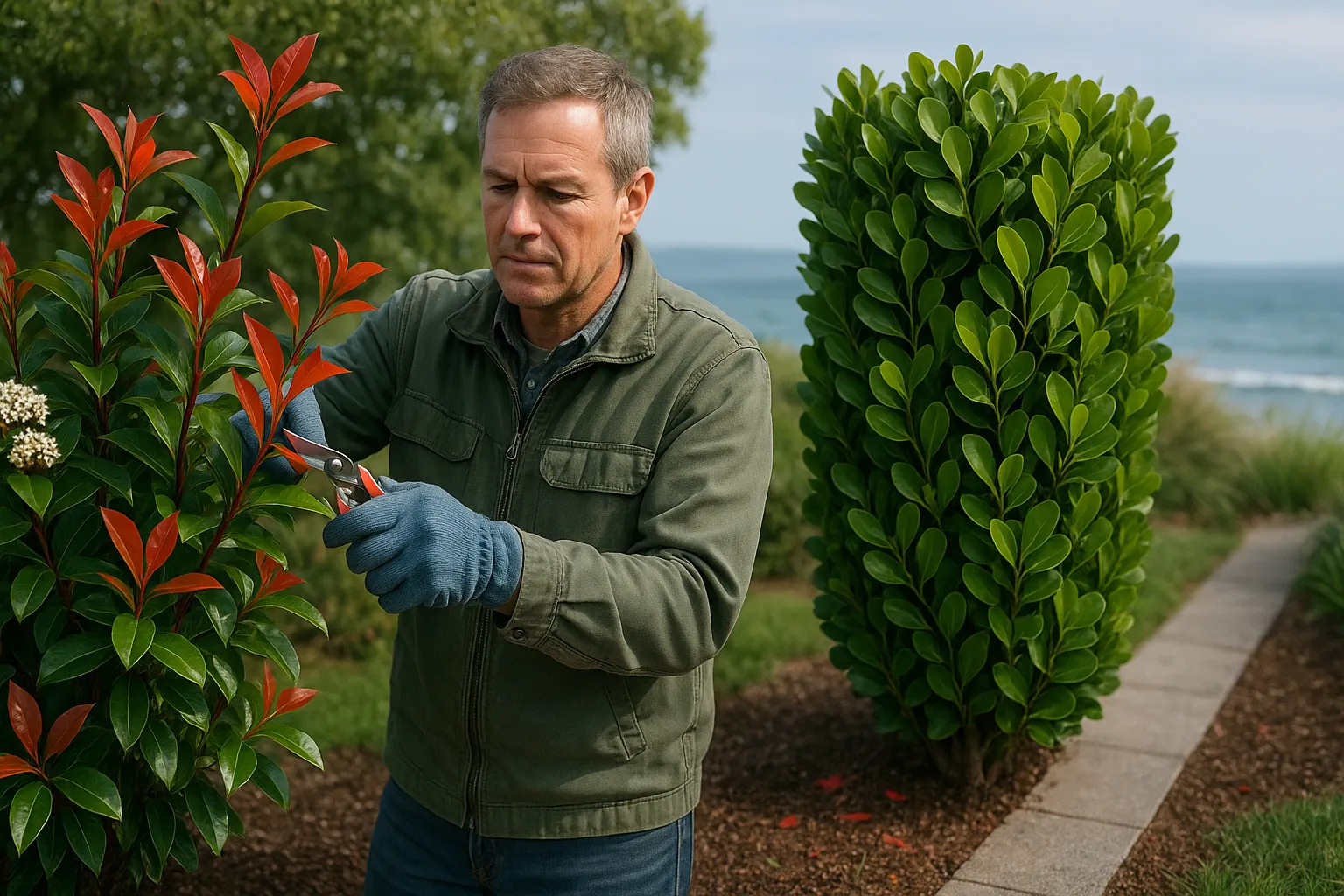
Photinia ‘Red Robin’ is an evergreen shrub favored for bright red new growth, fast initial height gain, and showy spring flowers. Griselinia littoralis (often sold simply as Griselinia) is a dense, glossy-leaved evergreen with excellent coastal tolerance and a neater habit.
- Appearance: Photinia gives seasonal color contrast: Griselinia stays uniformly green.
- Growth rate: Photinia is faster early on: Griselinia grows steady but slower over longer term.
- Maintenance: Photinia requires more pruning to control size and to reduce leaf spot: Griselinia needs less routine pruning.
- Hardiness and tolerance: Griselinia tolerates salt spray and wind better: Photinia tolerates pruning and shaping better.
If you need quick privacy and dramatic spring color, Photinia will serve you. If you want a low-fuss coastal screen with glossy leaves, choose Griselinia.
Key Identification Features
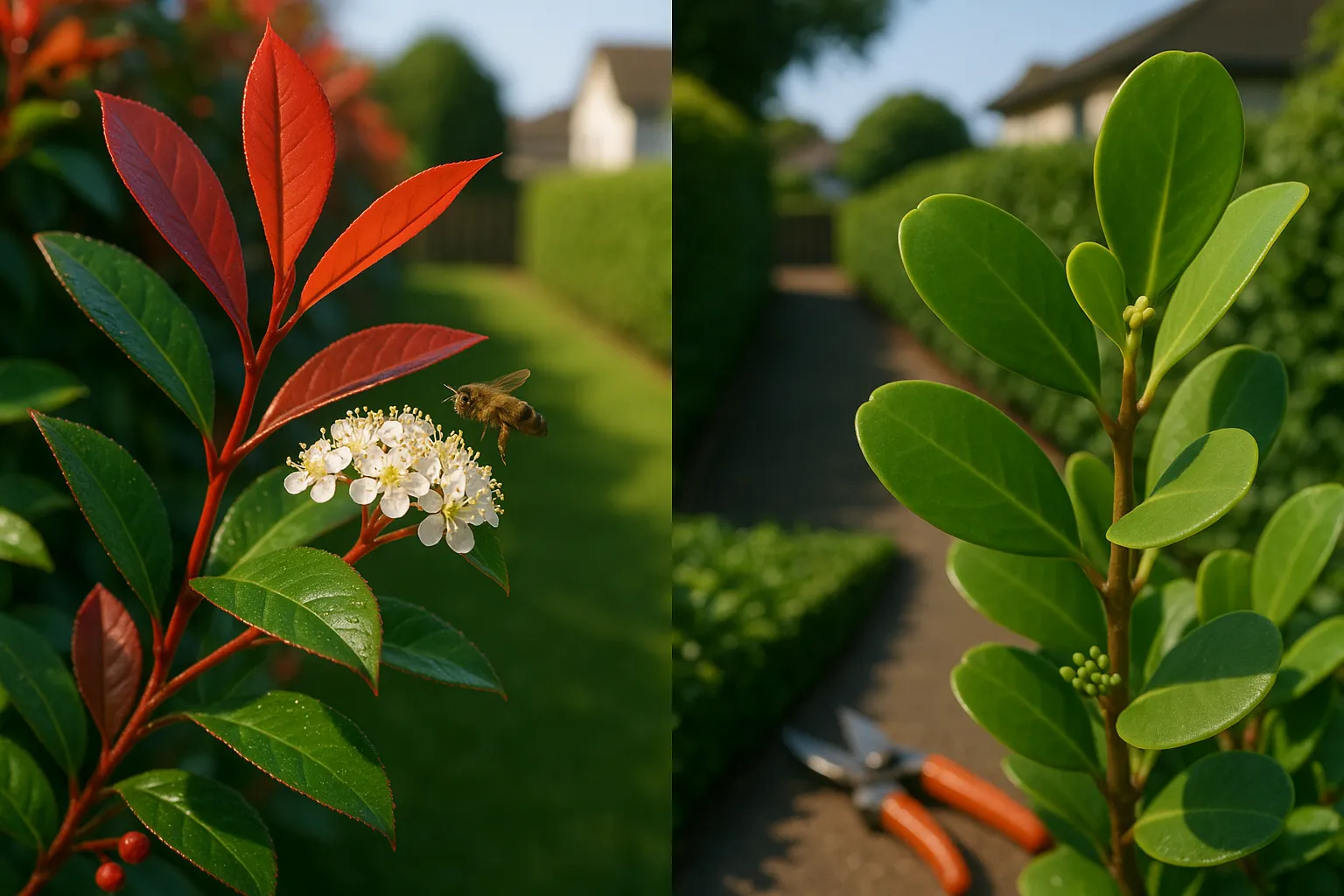
Photinia and Griselinia look similar at a glance because both are evergreen shrubs used for hedging. Start with leaf and growth cues to tell them apart quickly.
Leaf Shape, Color, And New Growth
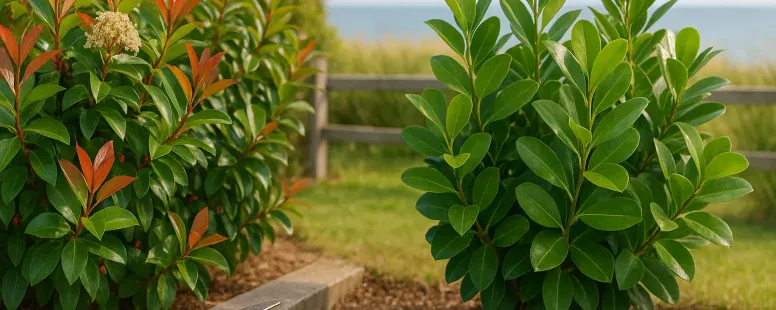
Photinia ‘Red Robin’ has oval leaves about 4–8 cm long. New leaves flush bright red to copper before maturing to glossy green. That red flush is the fastest identification clue in spring and after pruning. Griselinia littoralis has larger, oblong to rounded leaves, often 5–12 cm long, with a thick, leathery texture and uniform bright green color year-round. Griselinia lacks the dramatic red shoot color.
Flowers, Fruit, And Seasonal Interest
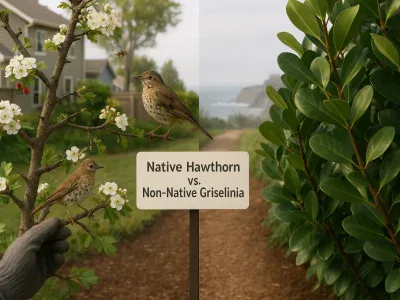
Photinia produces clusters of small white flowers in spring that attract pollinators: they may be followed by small red drupe-like fruit that birds eat. Griselinia flowers are small, greenish, and less showy: it rarely sets significant fruit in cooler climates. If you want floral display, Photinia wins: for simple evergreen structure, Griselinia wins.
Size, Habit, And Growth Rate
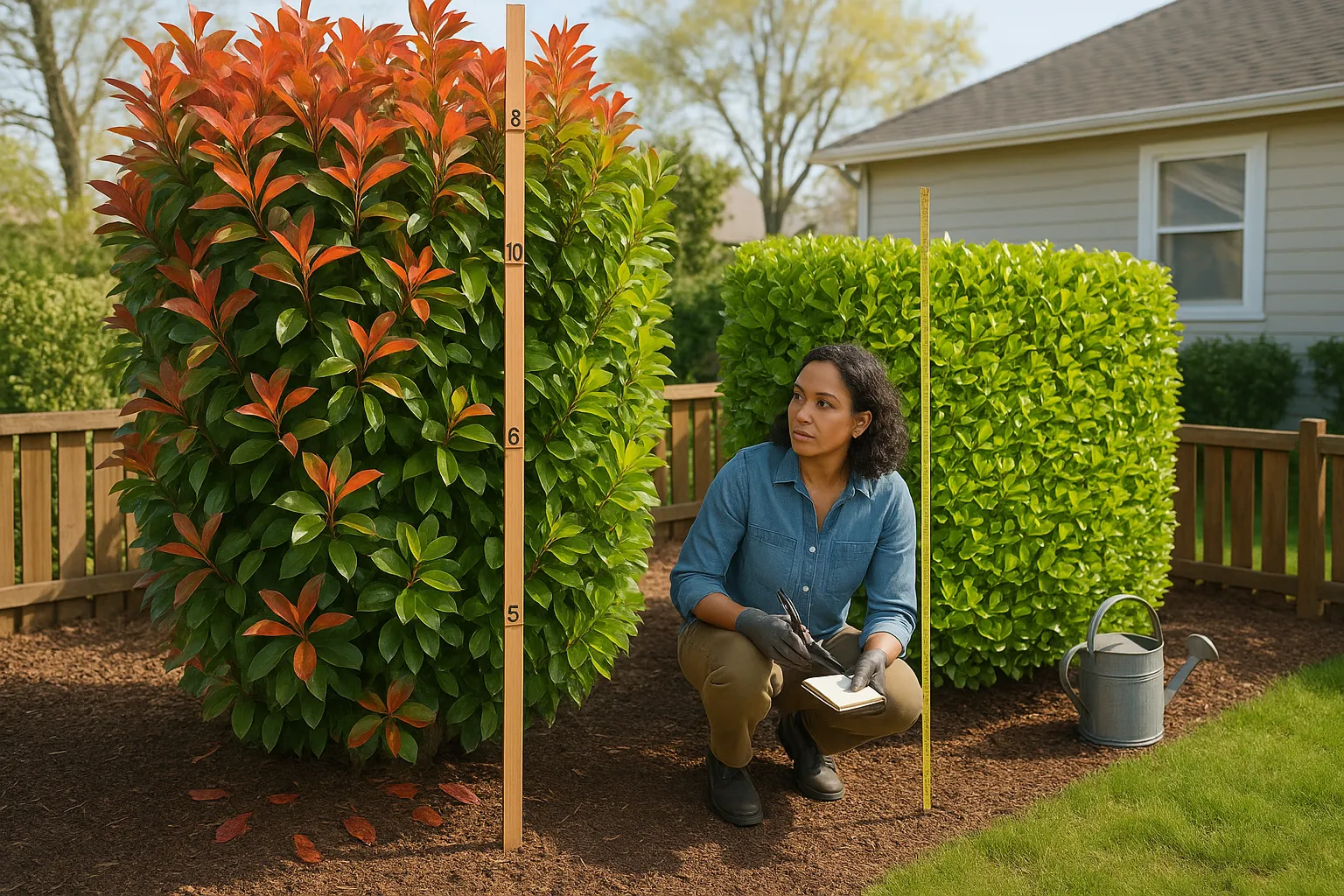
Choose based on the space you have and how fast you want coverage.
Mature Height And Width
Photinia ‘Red Robin’ typically reaches 8–15 feet tall (2.5–4.5 m) and 6–10 feet wide if left unpruned: it can be trained to a smaller hedge. Griselinia littoralis commonly reaches 6–12 feet tall (1.8–3.7 m) and similar width, though some specimens grow taller in mild climates.
Growth Rate And Lifespan
Photinia shows a faster juvenile growth rate, you often see a quick privacy screen within 2–4 years under favorable conditions. Griselinia grows steadier: expect slower but reliable gain over several seasons. Lifespan depends on site and care: both can live decades, but Photinia sometimes declines with chronic leaf spot issues: Griselinia is long-lived if not waterlogged. You may need to replace Photinia earlier in high-disease settings.
Site Requirements And Soil Preferences
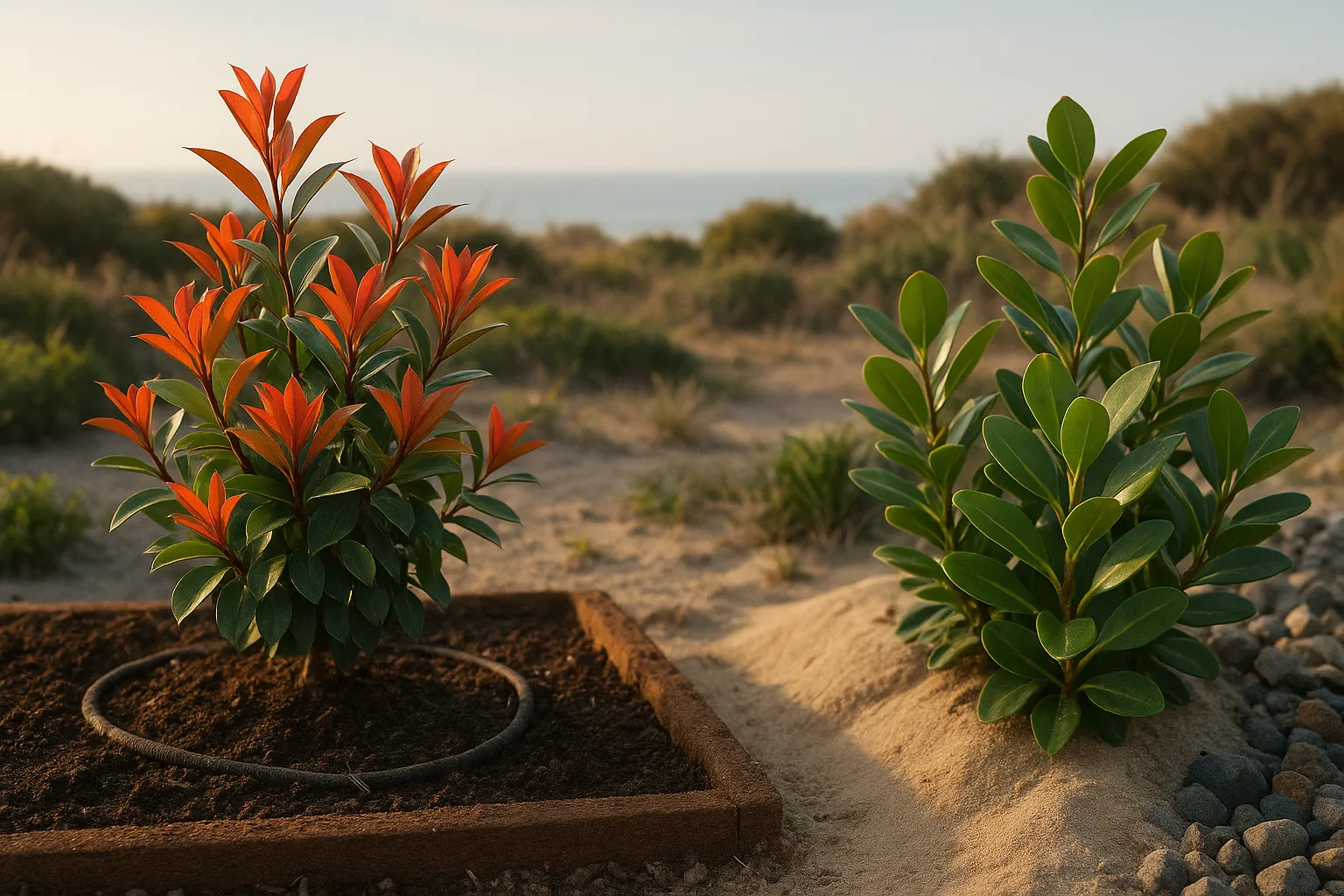
Both species prefer good drainage but differ in light, salt, and soil flexibility.
Light, Soil Type, And Drainage Needs
Photinia performs best in full sun to partial shade and prefers fertile, well-draining soil with moderate moisture. Too much shade reduces the red flush and can increase fungal problems. Griselinia tolerates full sun to full shade and often thrives in poorer, sandy soils, which is why you see it along coasts in New Zealand, California, and the U.K. Both dislike waterlogged soils: good drainage is essential.
Climate Tolerance And Hardiness Zones
Photinia ‘Red Robin’ is usually hardy from USDA zones 7–9, though microclimates and cultivar selection matter. Griselinia littoralis is hardy from about USDA zones 8–10 in many sources, but certain forms tolerate zone 7 with protection. Griselinia has superior wind and salt tolerance, making it common near oceans.
Watering And Fertility Needs
Photinia benefits from regular watering while establishing and from moderate feeding in spring to support flushes. Griselinia tolerates leaner soils and needs less fertility: regular water at planting then reduced supplementary irrigation suits it best. Over-fertilizing either plant can cause weak growth prone to pests.
Maintenance, Pruning, And Propagation
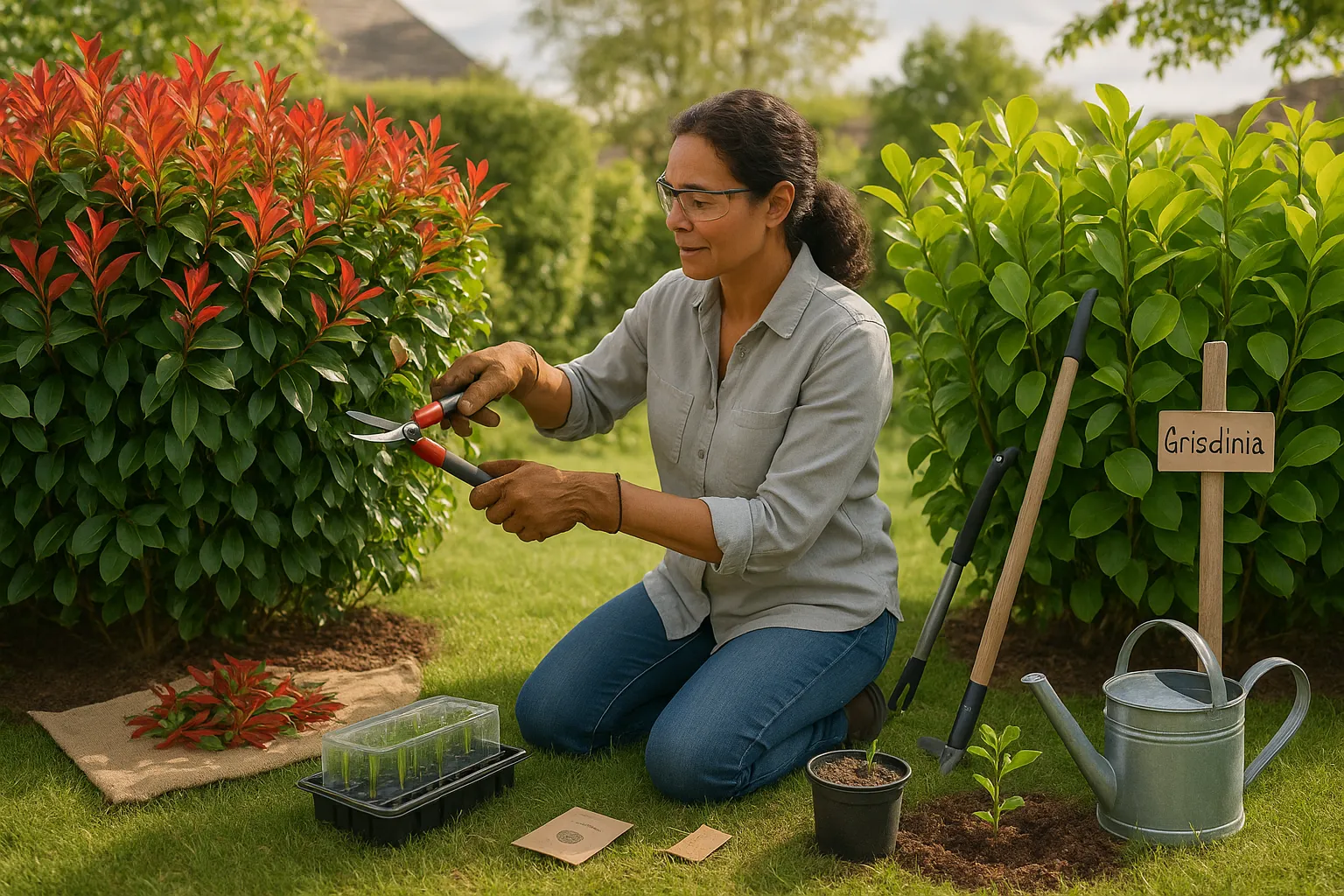
You must plan for different pruning cadences depending on your choice.
Pruning Timing And Techniques
Photinia responds well to formative pruning and regular trimming to maintain a hedge shape. Prune after the spring flush when new red leaves fade, that timing avoids cutting into fresh growth repeatedly. Remove weak, crossing, or diseased stems. Griselinia tolerates light shaping but does not handle hard, repeated shearing as gracefully: prune in late spring or early summer and avoid heavy cuts into old wood.
Propagation Methods And Establishment Tips
Photinia propagates easily from semi-ripe cuttings and from seed, though cultivars keep cutting propagation to maintain traits. Griselinia usually propagates from semi-ripe cuttings as well: it roots reliably under mist or in a well-drained mix. For both, plant in early autumn or spring, water deeply at planting, and mulch to conserve moisture. Give young Photinia some shelter from extreme wind while it establishes: Griselinia can tolerate wind sooner.
Pests, Diseases, And Common Problems
Start with the most likely problems so you can prepare preventive steps.
Typical Pests And Disease Issues For Photinia
Photinia commonly suffers from Entomosporium leaf spot, which causes red spots and defoliation in wet seasons. Aphids and scale may infest new shoots, reducing vigor. Good air circulation, selecting disease-resistant varieties, and removing infected leaves reduce impact. Fungicide sprays can help severe outbreaks but will not fix underlying site issues.
Typical Pests And Disease Issues For Griselinia
Griselinia faces fewer fungal problems but can suffer from scale insects and occasional leaf browning from salt burn or underwatering. Root rot can occur if soil is poorly drained. Inspect regularly for scale and treat early with horticultural oil. Griselinia’s stronger tolerance to coastal stress means you’ll see fewer disease-driven diebacks.
Landscape Uses And Design Considerations
Pick the plant that matches your design intent: drama or steady green structure.
Hedges, Screens, And Specimen Planting
Photinia ‘Red Robin’ makes a vibrant formal hedge or stand-alone specimen where seasonal color is desired. Use it where you can prune to keep the red tips visible. Griselinia makes a durable coastal screen, windbreak, or informal hedge that keeps a neat silhouette with minimal fuss. For mixed screens, combine Griselinia for the base and Photinia where you want vertical accents.
Companion Plants And Design Styles
Pair Photinia with early-flowering bulbs and perennials to echo spring color, think narcissus or lavender for contrast. Griselinia pairs well with ornamental grasses, succulents, and native coastal plants. Use Photinia in suburban or formal gardens where pruning is acceptable. Use Griselinia in cottage, coastal, or low-maintenance schemes.
Pros, Cons, And When To Choose Each
Decide by weighing strengths against site challenges and your willingness to maintain.
Advantages And Disadvantages Of Photinia Red Robin
Advantages: fast cover, dramatic red new growth, spring flowers that attract bees, easy to shape. Disadvantages: susceptibility to leaf spot in humid climates, higher pruning frequency, can look ragged if not maintained. Choose Photinia if you want quick privacy and seasonal color and you’re ready to prune.
Advantages And Disadvantages Of Griselinia
Advantages: glossy evergreen foliage, excellent wind and salt tolerance, lower disease pressure, low maintenance. Disadvantages: slower to reach full height, less seasonal interest in leaf color or flowers. Choose Griselinia if you want a reliable, low-fuss screen, especially near the coast.
Practical Buying And Planting Checklist
Start strong at purchase and you will avoid many future problems.
What To Look For At The Nursery
Choose healthy plants with no heavy leaf spot, lots of new shoots, and a well-developed rootball. For Photinia, inspect for Entomosporium signs, avoid plants with numerous red-brown spots. For Griselinia, check for scale insects under leaves and for consistent glossy color. Ask the nursery for the cultivar name and hardiness advice: named cultivars give predictable traits.
Planting Steps And Early Care Checklist
- Dig a hole twice the rootball width and no deeper than the root collar sits in the pot.
- Improve backfill with compost if soil is poor, but keep drainage high.
- Plant so the root flare sits at soil level: firm soil gently and water deeply.
- Mulch 2–3 inches but keep mulch away from the stem.
- Water regularly through the first season: taper irrigation after establishment.
- For Photinia, plan the first light prune after the spring flush: for Griselinia, wait until shape is needed.
If you follow these steps you’ll give either plant the best start, but your long-term success depends on matching plant choice to site conditions and how much pruning you can tolerate.

- Kia Seltos Competitors: Top Compact SUVs - October 14, 2026
- Free to Use Photoshop Alternatives - October 14, 2026
- Ajax Alternatives Mtg Reddit - October 13, 2026
by Ellie B, Site Owner / Publisher