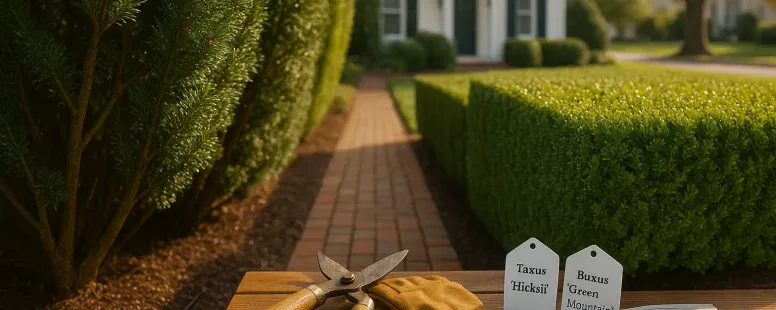
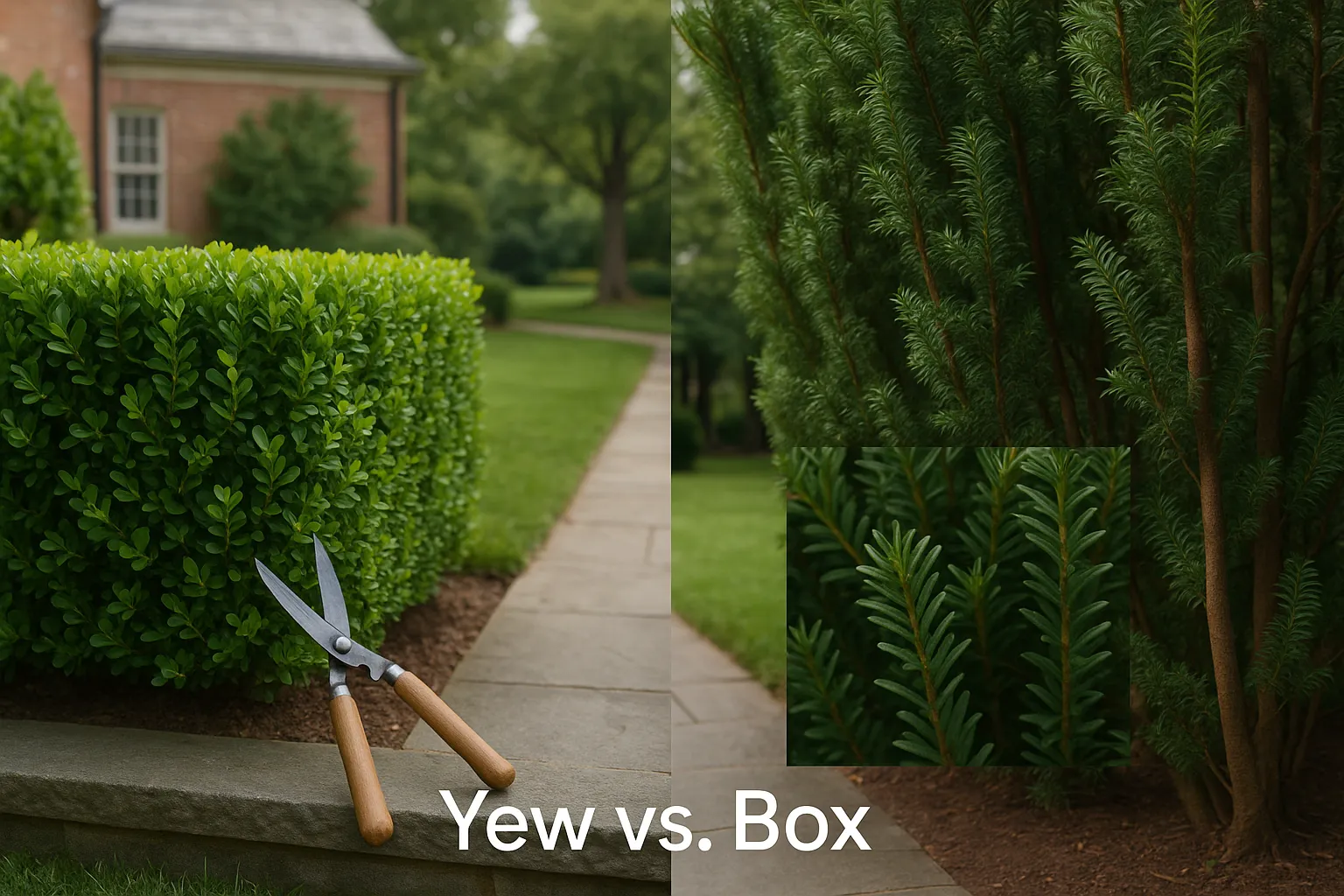
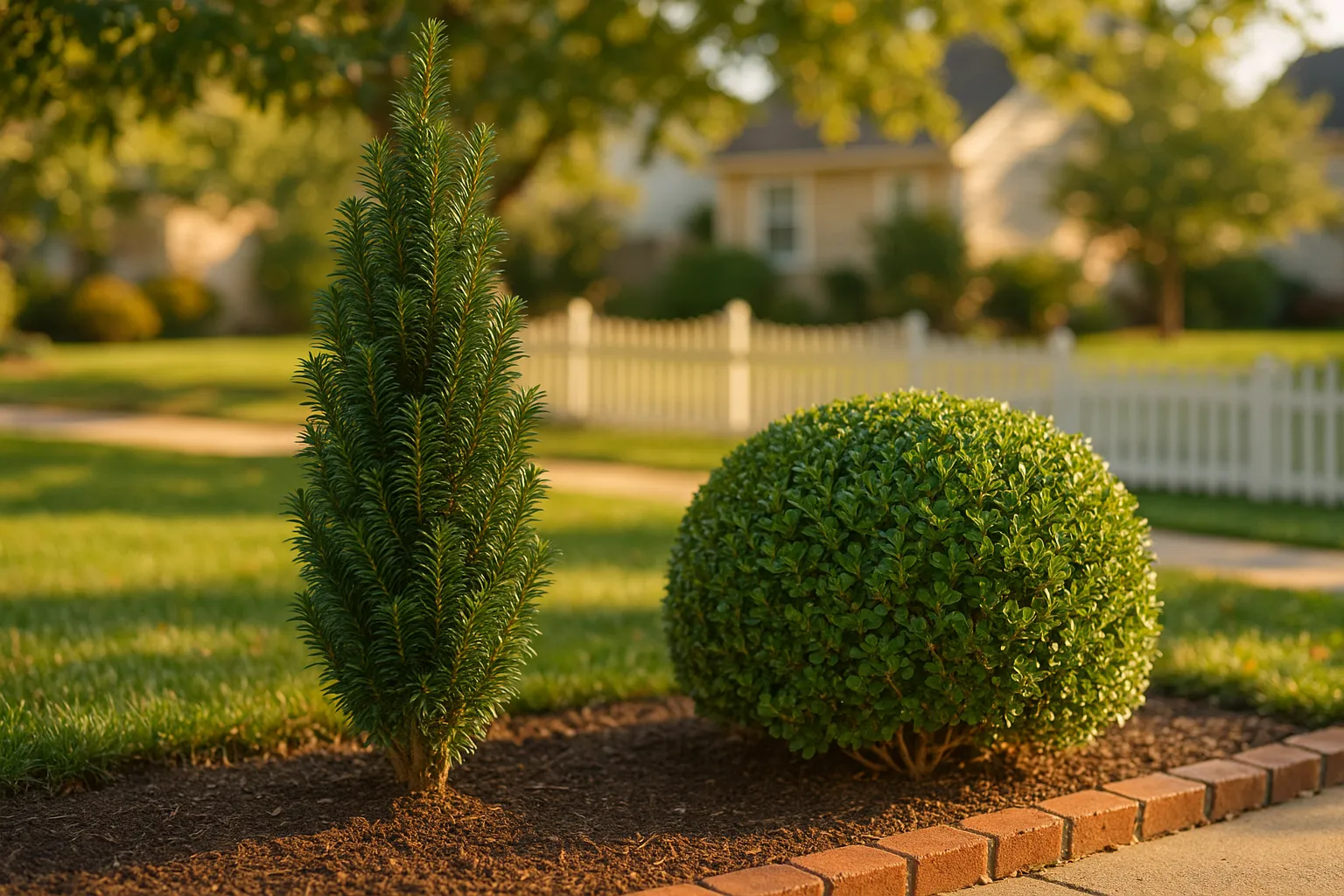
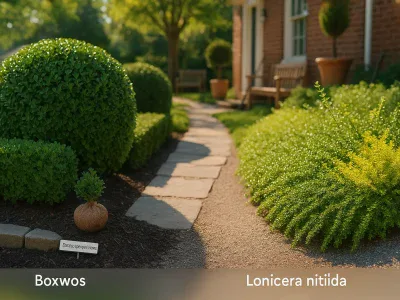
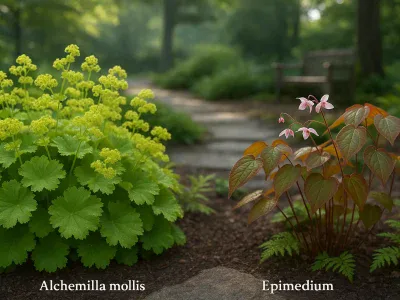
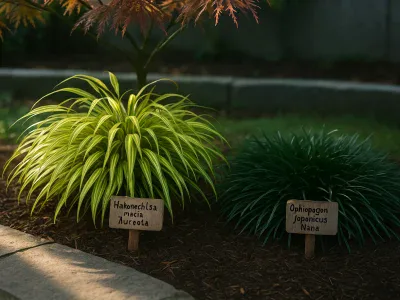
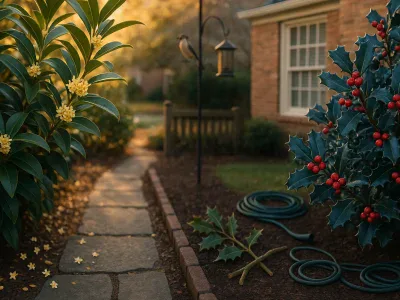
You can get a tidy, evergreen structure in your garden with either yew or boxwood, but they are very different tools. Picture a pair of classic hedges side by side: one holds deep, glossy needles and tolerates heavy shade: the other offers small, dense, rounded leaves that read as formal and refined. Choosing between Taxus (yew) and Buxus (box) changes the look, maintenance, and long‑term risk profile of your landscape. In this guide you’ll learn the practical differences, surprising benefits, and honest trade‑offs so you can pick the plant that fits your site, style, and schedule.
Quick Comparison: Key Differences At A Glance
Fact: Yew and boxwood differ in leaf type, growth habit, shade tolerance, toxicity, and disease risk.
Yew (Taxus) uses: Needle-like foliage, often taller, tolerates deep shade, durable in pruning, highly toxic to people and pets.
Boxwood (Buxus) uses: Small evergreen leaves, dense habit, classic for formal hedges and topiary, vulnerable to boxwood blight and leafminer.
If you want low formal hedges for a courtyard, boxwood often wins on style. If you need a shade-tolerant screen or a sculpted specimen that handles heavy shearing, yew often fits better. Consider also long-term disease pressure: boxwood populations face specific pathogens (Buxus blight) while yews face their own fungal and abiotic challenges.
Plant Characteristics And Growth Habits
Fact: Yews are generally coniferous evergreens with needles: boxwoods are broadleaf evergreens with small leathery leaves.
Yew growth habit: Taxus species often produce an upright to arching habit. You will see vertical leaders on younger plants that can be trained into screens or left to make specimen forms. Yews usually grow more slowly than many shrubs but can reach large sizes (15–60+ feet for species like Taxus baccata in ideal conditions). Many cultivars, like Taxus x media ‘Hicksii’, have a narrow, columnar habit suited for vertical accents.
Boxwood growth habit: Buxus species stay denser and more compact. Buxus sempervirens and Buxus microphylla cultivars often make tight, globular shapes with frequent branching close to the stem. Typical landscape sizes range from 1–8 feet depending on cultivar and pruning. Growth is steady but slow, which is why boxwood is prized where precision form matters.
Species And Popular Cultivars To Consider
Fact: Several species and named cultivars dominate landscapes: choose by size, cold hardiness, and form.
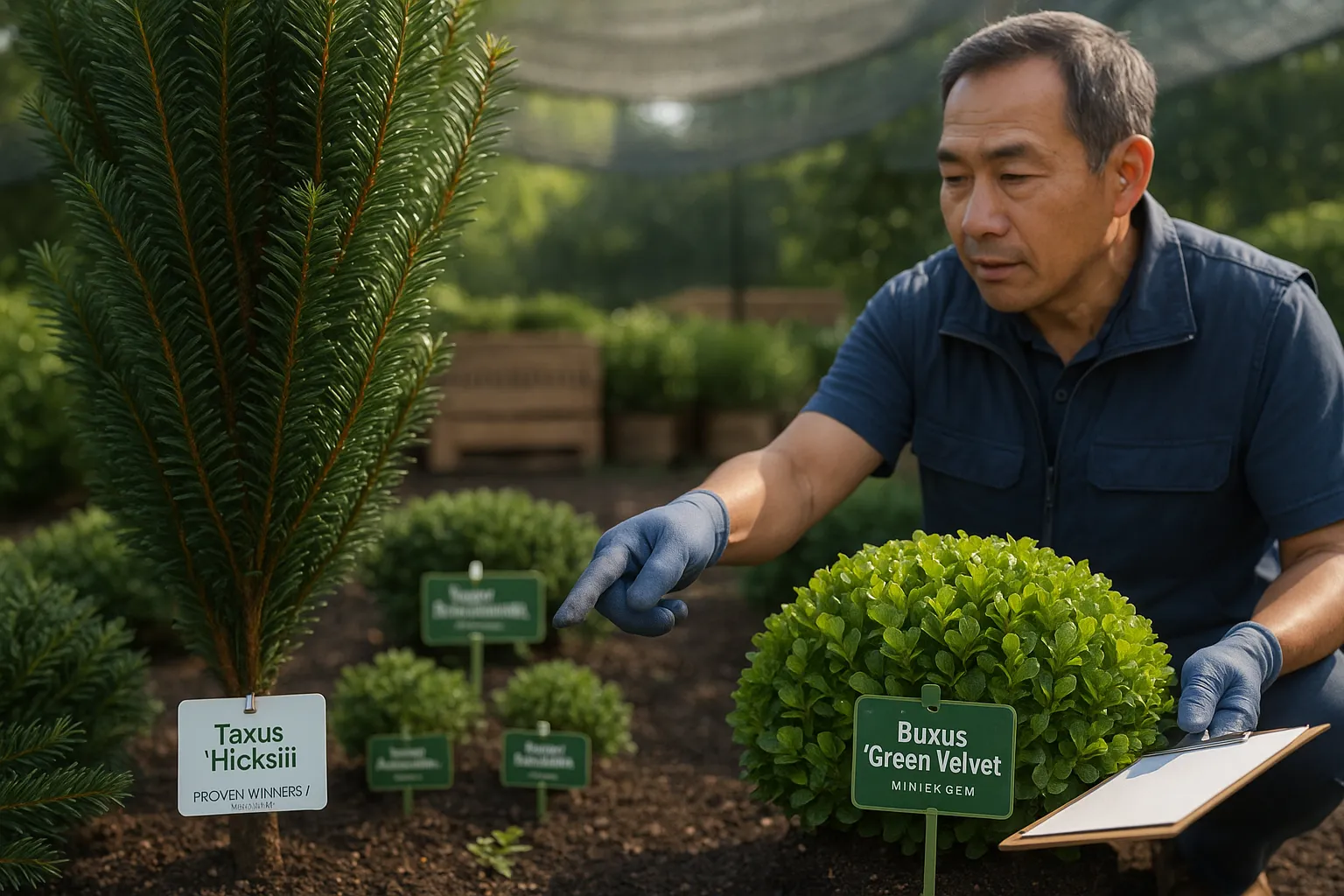
Yews to consider: Taxus baccata (English yew), long-lived, large: Taxus cuspidata (Japanese yew), cold hardy: Taxus x media hybrids, popular for hedges. Cultivars: ‘Hicksii’ (columnar), ‘Capitata’ (dense hedge), ‘Densiformis’ (low and spreading).
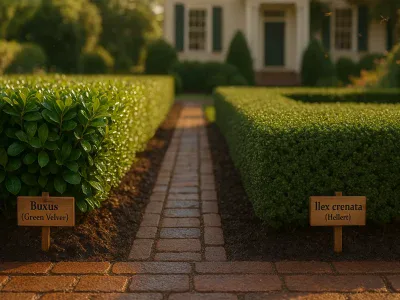
Boxwoods to consider: Buxus sempervirens (common box), classic formal hedges: Buxus microphylla (Japanese box), more heat tolerant: Buxus sinica var. insularis (Korean box), often used for small hedges. Cultivars: ‘Green Velvet’, ‘Winter Gem’, ‘Wintergreen’, ‘Green Mountain’, each varies in leaf size, cold tolerance, and habit.
Choose named cultivars from reputable nurseries such as Proven Winners or Monrovia when you need predictable size and disease resistance.
Landscape Uses, Forming, And Pruning
Fact: Use yew for tall screens and tolerant shade hedges: use boxwood for low formal edges and topiary.
Yew uses: Yews make strong vertical accents, clipped privacy screens, and foundation plantings. They accept hard pruning into older wood, so you can rejuvenate an overgrown yew by cutting back significantly (but do so cautiously). For formal hedges, prune two to three times per growing season for a tight silhouette.
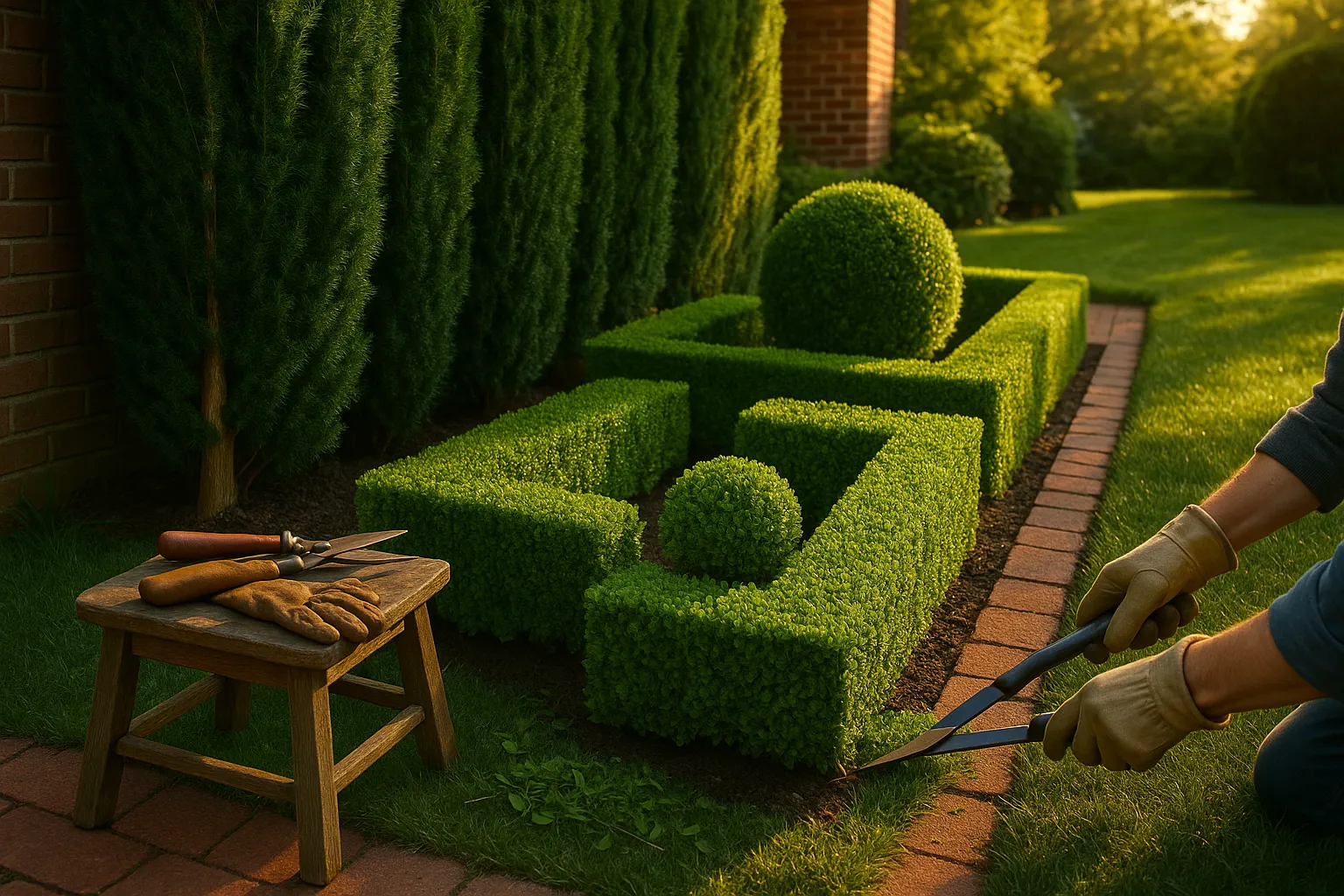
Boxwood uses: Boxwood excels at parterres, formal knot gardens, and small clipped hedges. Boxwood responds best to light, frequent shearing, think trimming once or twice per growing season to hold crisp edges. Avoid heavy pruning into old wood: boxwood often struggles to resprout from bare stems.
Practical note: Always remove no more than one-third of live foliage in a single pruning event for both genera to reduce stress and sunscald risk.
Care Requirements: Soil, Water, Light, And Fertilizer
Fact: Yews tolerate shade and a range of soils: boxwoods prefer well-drained soils and consistent moisture.
Soil and light: Plant yew in loamy to clay soils that drain moderately: they handle deep shade better than boxwood. Boxwood needs good drainage to avoid root rot: full sun to part shade suits most cultivars, but afternoon shade helps in hot climates.
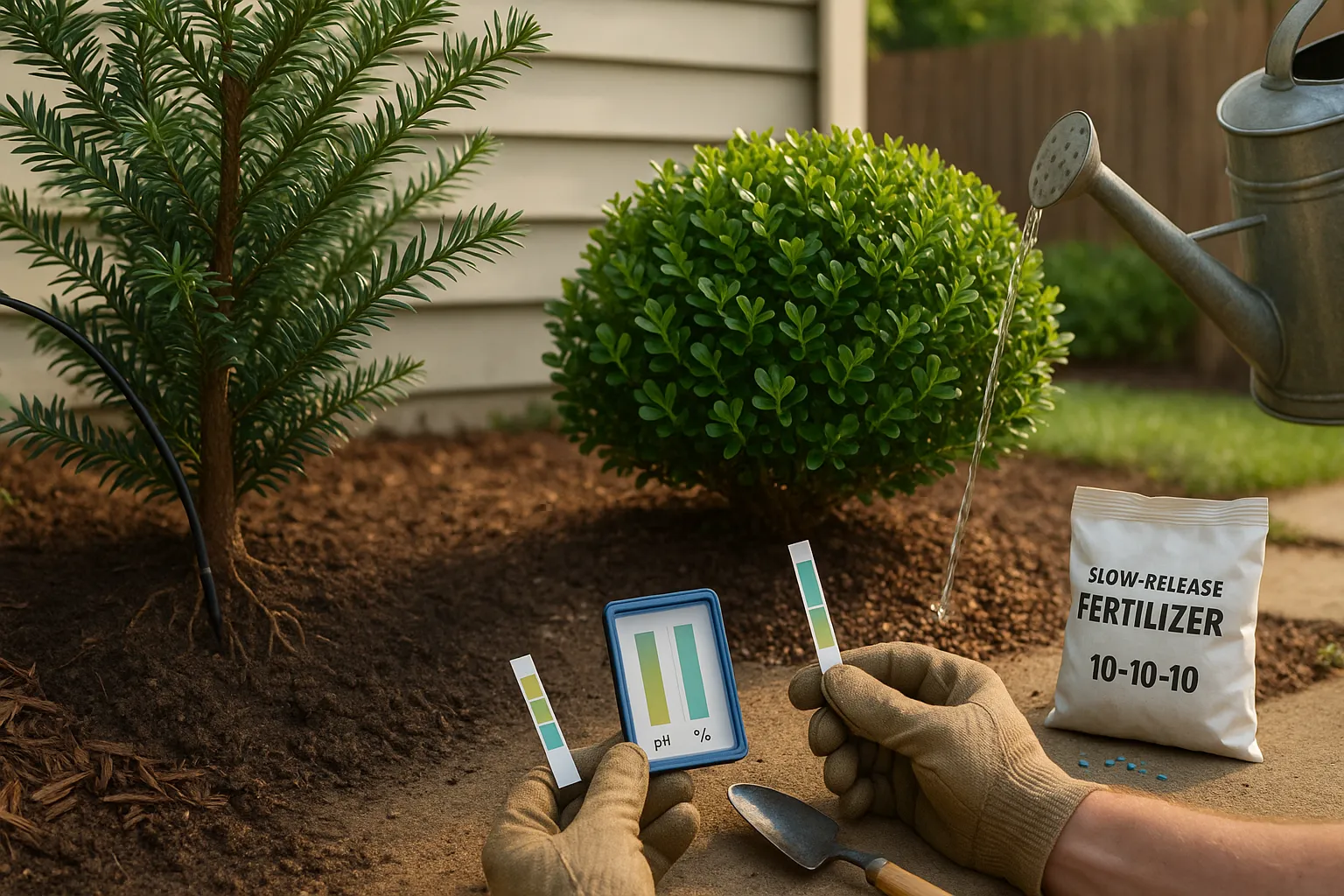
Water and fertilizer: Both plants perform with regular watering during establishment (first 1–2 years). Yews display more drought resilience once established: boxwoods show stress faster during dry spells. Use a balanced slow-release fertilizer in spring (e.g., 10-10-10 or a formula labeled for shrubs). Mulch 2–3 inches to retain moisture but keep mulch away from trunks to prevent crown rot.
pH sensitivity: Boxwoods prefer slightly alkaline to neutral soil: yews are tolerant of a wider pH range. Test soil if you see chlorosis or poor growth.
Pests, Diseases, And Long‑Term Maintenance
Fact: Boxwoods face unique pathogens: yews have different fungal and environmental vulnerabilities.
Boxwood pests/diseases: Major threats include boxwood leafminer (Liriomyza spp.), boxwood mites, scale insects, and boxwood blight (Calonectria pseudonaviculata). Management combines sanitation, resistant cultivars (like ‘Green Mountain’), insecticidal soaps, and targeted systemic insecticides for heavy infestations. For blight, remove infected material and avoid overhead irrigation: fungicide sprays may reduce spread but rarely eliminate outbreaks on large plantings.
Yew pests/diseases: Yews suffer from fungal root rots (Phytophthora), foliar needle blights, and sometimes scale. They are generally less impacted by a single devastating pathogen but can decline with poor drainage or repeated stress. Good drainage, proper spacing for air flow, and careful monitoring are key to long life.
Safety, Environmental Considerations, And Final Decision Guidance
Fact: Yew is highly toxic to humans and animals: boxwood toxicity is lower but not negligible. Use that fact in site planning.
Growth Rate, Size, And Habit (Yew vs. Box Detailed Comparison)
Fact: Yews often grow taller and can handle heavy pruning: boxwoods stay compact and require frequent light shearing. If you need a 10–15 ft screen in shade, pick yew. For 1–4 ft formal borders, pick boxwood.
Foliage, Texture, And Seasonal Interest
Fact: Yew shows needle texture and sometimes red arils on female plants: boxwood shows small glossy leaves that read as formal texture. Yew provides stronger seasonal contrast with berries (avoid planting female yews near children). Boxwood offers steady, understated green through the year.
Cold Hardiness And Zone Suitability
Fact: Many yews (Taxus cuspidata) tolerate USDA zones 4–7: some hybrids extend range. Boxwoods vary: Buxus sempervirens suits zones 6–9, while Buxus microphylla and ‘Wintergreen’ handle colder and warmer pockets. Match cultivar to your local zone (check university extension pages or nurseries like Bailey Nurseries).
Showcase Cultivars: Top Yews And Boxwoods For Different Uses
Fact: Use named cultivars to predict habit and disease tolerance. For yew: ‘Hicksii’, ‘Densiformis’, ‘Repandens’. For boxwood: ‘Green Velvet’ (good in heat), ‘Winter Gem’ (winter color), ‘Green Mountain’ (upright habit). Source plants from reputable suppliers to avoid mislabeled stock.
Shaping, Hedge Techniques, And Formal Topiary Tips
Fact: Boxwood benefits from frequent light shearing: yew tolerates heavier cuts into older wood. For topiary, start with boxwood for small, precise shapes: use yew when you need larger, architectural forms. Use sharp shears and disinfect tools between plants to reduce disease spread.
Planting: Site Preparation And Spacing Recommendations
Fact: Space plants by mature width: boxwoods 1–4 ft apart depending on cultivar: yews 3–6+ ft for screens. Dig a hole twice the root ball width, backfill with native soil, firm gently, and water thoroughly. Amend soil only if drainage or pH is an issue.
Watering Schedules, Mulching, And Drought Response
Fact: Water weekly during the first growing season: mulch to conserve moisture. Yews show better drought tolerance after establishment: boxwoods need more consistent moisture to avoid leaf drop. Reduce watering in late fall to harden plants off.
Pruning Timing, Tools, And Safety When Working With Yew
Fact: Prune boxwood in late spring or early summer: prune yew late winter to early spring before new growth. Wear gloves when handling yew, every part contains toxic alkaloids (taxine) that can be deadly if ingested. Use bypass pruners and keep cuts clean.
Common Pests: Boxwood Leafminer, Mites, Scale, And Treatment Options
Fact: Early detection improves control. For leafminer, remove infested twigs in winter and consider systemic insecticides in high-value plantings. Horticultural oils help with scale and mites when timed correctly.
Major Diseases: Boxwood Blight, Phytophthora, And Yew Dieback Management
Fact: Sanitation and resistant cultivars reduce disease risk. Avoid planting stressed boxwoods in dense, poorly drained sites. For Phytophthora on yew, improve drainage and consider root‑protectant fungicides for valuable specimens.
Toxicity To People, Pets, And Wildlife: Safe Handling Practices
Fact: Yew is highly toxic, ingesting any part (except the fleshy aril) can be fatal to humans and animals. Keep yew away from play areas, compost piles, and livestock feed. Boxwood has lower toxicity but can still cause stomach upset in pets. Always wear gloves, wash hands after pruning, and dispose of clippings responsibly.
Environmental Impact: Native/Non‑Native Considerations And Wildlife Value
Fact: English yew (Taxus baccata) is non‑native in many regions but supports limited wildlife value: some native yews in North America offer better ecological fit. Boxwood is non‑native in many U.S. landscapes and provides limited food for wildlife. If wildlife habitat is a priority, consider native alternatives or mix in native shrubs like Ilex (holly) or native evergreen oaks.
Deciding Factors: Site, Style, Maintenance Budget, And Disease Risk
Fact: Let your site guide your choice. If you have deep shade, a need for tall screens, and you can manage toxicity concerns, choose yew. If you want low formal hedges, small topiary, and are willing to monitor for boxwood blight and pests, choose boxwood.
Make the final call by listing your site conditions (sun, drainage, foot traffic), desired mature size, budget for maintenance (pruning frequency, disease management), and safety needs (children, pets). When in doubt, try a mixed planting, use yew for screening and boxwood for near‑entry formal elements. This approach balances aesthetics and risk, and it gives you options if one genus faces disease pressure in your area.
Call to action: Visit your local extension office or nursery and ask about cultivar performance in your county, local knowledge often beats broad recommendations, and you’ll avoid planting a susceptible cultivar by mistake.
To provide the best experiences, we use technologies like cookies to store and/or access device information. Consenting to these technologies will allow us to process data such as browsing behaviour or unique IDs on this site. Not consenting or withdrawing consent, may adversely affect certain features and functions.
Functional
Always active
The technical storage or access is strictly necessary for the legitimate purpose of enabling the use of a specific service explicitly requested by the subscriber or user, or for the sole purpose of carrying out the transmission of a communication over an electronic communications network.
Preferences
The technical storage or access is necessary for the legitimate purpose of storing preferences that are not requested by the subscriber or user.
Statistics
The technical storage or access that is used exclusively for statistical purposes.The technical storage or access that is used exclusively for anonymous statistical purposes. Without a subpoena, voluntary compliance on the part of your Internet Service Provider, or additional records from a third party, information stored or retrieved for this purpose alone cannot usually be used to identify you.
Marketing
The technical storage or access is required to create user profiles to send advertising, or to track the user on a website or across several websites for similar marketing purposes.