Sour cream gives a bright tang and smooth richness that many recipes depend on. But sometimes you don’t have it, you can’t eat it, or you want a lighter option. Knowing the best substitute for sour cream saves meals, from baked goods that need moisture to a taco topping that needs a cool bite. In this guide you’ll find practical swaps, exact ratios, and quick fixes that preserve flavor and texture. Read on to choose substitutes that match your cooking method, dietary needs, and taste preferences, and learn how small tweaks keep the final dish tasting intentional, not improvised.
When To Substitute Sour Cream And What To Consider
Fact: You should substitute sour cream when you lack it, when dietary restrictions block dairy, or when a recipe calls for a different texture or acidity.
Start by checking the role sour cream plays in the recipe. Does it add moisture, fat, acidity, or surface creaminess? In baking, sour cream often keeps crumb tender and adds acid for leavening. In sauces and dips, it adds cool tang and body. For toppings, it mainly adds texture and a bright finish. Once you identify the role, pick a substitute that matches that function.
Consider these concrete factors before swapping:
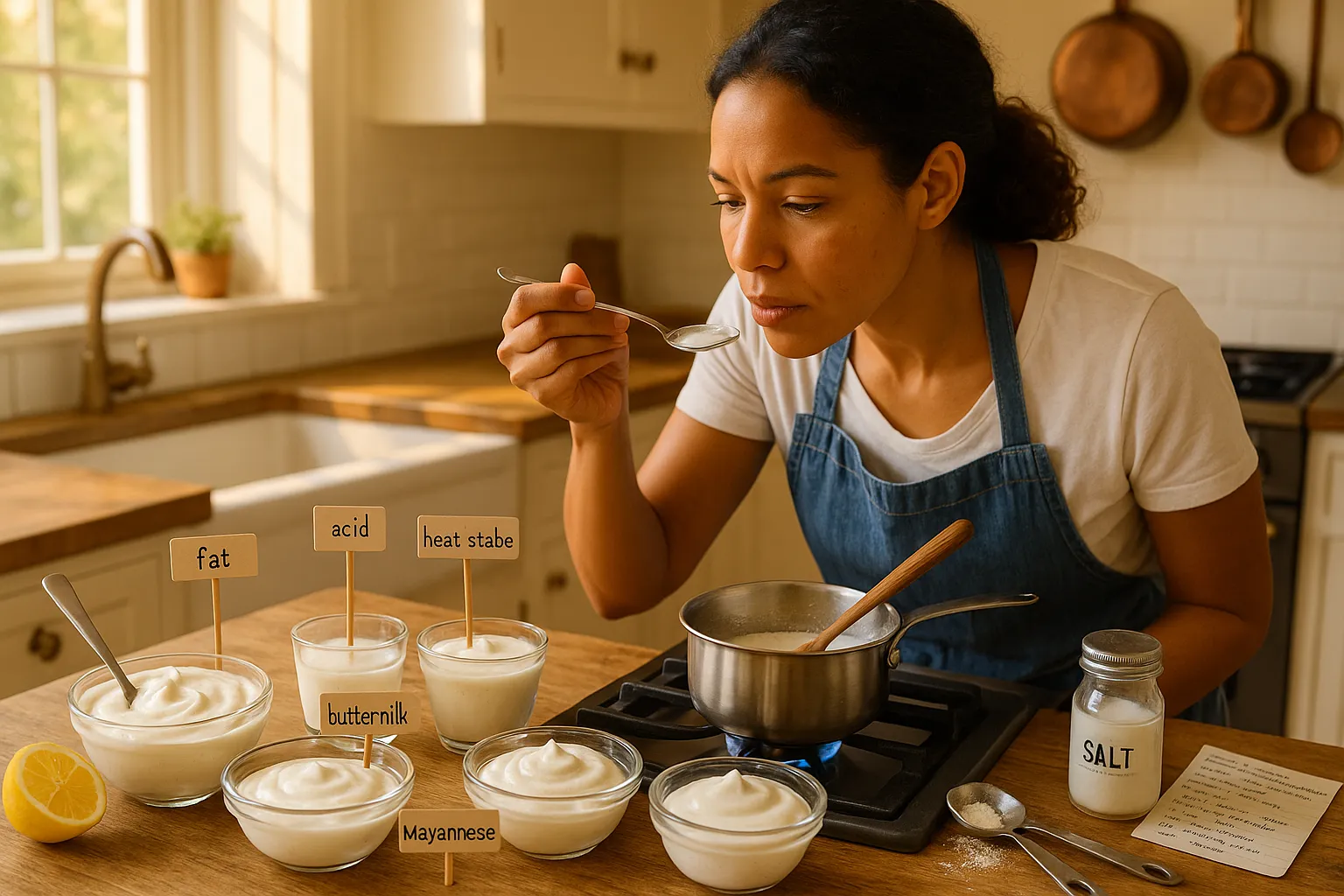
Heat stability: Will the substitute break or separate when heated? Use heat-stable options for hot soups and sauces.
Acidity and tang: If the recipe relies on sourness for flavor or chemical reaction, choose an acidic swap or add a bit of vinegar or lemon.
Flavor neutrality: Some substitutes bring their own flavors (cottage cheese, tofu, flavored vegan yogurts). Think about how they will pair with other ingredients.
Practical tip: When in doubt, test a small portion of the substitute in a pan with the main ingredients. You’ll see if it curdles, tastes flat, or works as intended. This step saves dinner.
Top Dairy Substitutes
Fact: Dairy substitutes often match sour cream’s taste and chemistry more closely than non-dairy options.
Greek Yogurt: Uses, Texture, And Flavor
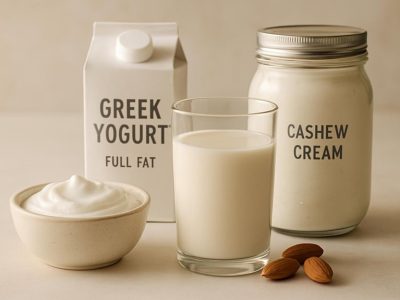
Greek yogurt gives tang, creaminess, and protein. Use plain full-fat Greek yogurt as a like-for-like swap in dips, dressings, and baking. It keeps structure in cooled dishes and provides a similar acid level for leavening. For hot sauces, temper Greek yogurt by whisking a little warm liquid into it before adding to the pan to prevent curdling.
Best uses: dips, dressings, cold salads, baking, garnishes.
Limitations: It’s thicker than sour cream: thin with a tablespoon of milk or water if needed.
Crème Frâiche: When To Use It Instead
Crème fraîche is richer and less tangy than sour cream. It resists curdling under heat and gives a silky mouthfeel. Use crème fraîche in hot sauces, stroganoffs, and creamy soups for a smoother result.
Best uses: simmered sauces, finishing soups, tossed pasta.
Limitations: Higher fat and subtle sweetness may change the final flavor slightly.
Cottage Cheese (Blended): Pros, Cons, And Preparation
Blended cottage cheese offers a high-protein, lower-fat substitute. It gives creaminess when processed until smooth. Use an immersion blender or food processor to reach a spreadable consistency. If the cottage cheese taste feels too pronounced, add a small squeeze of lemon or a pinch of salt to lift acidity.
Pros: protein-rich, lower calories, thick body.
Cons: slightly grainy if under-blended: distinct flavor that may not suit delicate desserts.
Preparation: Blend 1 cup cottage cheese with 1–2 tablespoons milk until smooth. Optionally add 1 teaspoon lemon juice for tang.
Top Non‑Dairy Substitutes
Fact: Non-dairy substitutes let you mimic texture and tang without lactose or animal products.
Silken Tofu: Texture Tricks And Best Uses
Silken tofu blends to a silky, neutral base. It holds well in baked goods and cold dips, and it adds protein without dairy. To mimic sour cream, blend silken tofu with 1–2 teaspoons lemon juice or white vinegar and a pinch of salt.
Best uses: dips, dressings, vegan baking, creamy soups.
Texture tricks: Use an immersion blender on high for a velvety result. Chill before using for a firmer mouthfeel.
Warning: Firm tofu will not achieve the same silkiness.
Vegan Yogurt: Choosing The Right Base And Flavor
Fact: Vegan yogurt based on coconut, almond, soy, or oat varies in tang and fat. Choose plain, unsweetened varieties to avoid off flavors.
Soy and coconut yogurts often give the richest texture: oat yogurt is mild and less fatty. Taste before using and add a little vinegar if the tang is weak.
Best uses: toppings, dips, dressings, baking when flavor fits.
Cashew Cream: How To Make And Use It
Cashew cream gives a rich, neutral canvas that thickens sauces and mimics creaminess. Soak 1 cup raw cashews in hot water for 20–30 minutes, drain, then blend with 1/2 to 3/4 cup fresh water and 1 teaspoon lemon juice until smooth.
Best uses: sauces, dollops for tacos, creamy soups.
Limitations: It adds nutty flavor and calories: not suitable for nut allergies.
Quick Kitchen Substitutes And Exact Ratios
Fact: Exact ratios help you swap sour cream without guessing.
Measuring Substitutes For 1 Cup Sour Cream
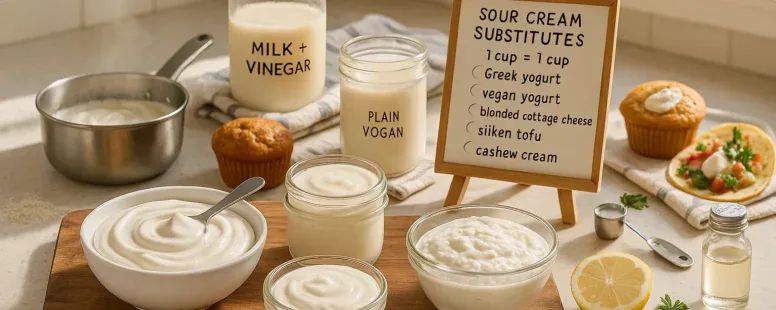
Greek yogurt (full-fat): use 1:1. It matches tang and texture closely.
Crème fraîche: use 1:1 for sauces and toppings.
Cottage cheese (blended): use 1 cup blended cottage cheese = 1 cup sour cream: strain or thin as needed.
Silken tofu (blended): blend 1 cup silken tofu + 1 tsp lemon juice = 1 cup sour cream.
Vegan yogurt: use 1:1: choose plain unsweetened.
Cashew cream: use 1 cup cashew cream for 1 cup sour cream: slightly reduce water for thicker texture.
How To Thicken Or Thin Substitutes (Simple Fixes)
To thin: add liquid in tablespoon increments, milk, plant milk, or water. Stir and test.
To thicken: add a tablespoon of instant dry milk (for dairy), a small amount of cream cheese, or strain yogurt through cheesecloth for 30–60 minutes to remove whey.
To mimic tang: add 1 teaspoon lemon juice or white vinegar per cup, then taste. You can add more but do so cautiously.
Practical kitchen note: If a substitute curdles in heat, remove the pan from heat and stir in a small knob of butter or a splash of cream to smooth it. This trick often rescues a sauce.
Flavor And Texture Considerations By Application
Fact: The right substitute depends on whether you’re baking, cooking, or topping.
Baking And Cooking: Heat Stability And Acid Balance
In baking, sour cream adds moisture and acid for leavening. Use Greek yogurt 1:1 for the same moisture. If the substitute is less acidic, add 1/2 teaspoon lemon juice or vinegar per cup to react with baking soda.
For cooked dishes, favor crème fraîche or tempered Greek yogurt to avoid split textures. Silken tofu also holds up under moderate heat when blended thoroughly.
Topping, Dips, And Dressings: Creaminess And Tang
For cold toppings and dips, Greek yogurt and vegan yogurt often perform best. For ultra-smooth sauces, use cashew cream or a well-blended silken tofu base. If you want a glossy finish, add a tablespoon of olive oil or a small amount of mayonnaise to mimic that sheen and mouth-coating richness.
Health, Dietary, And Allergy Notes
Fact: Substitutes differ widely in calories, fat, protein, and allergen risk.
Calories, Fat, And Protein Comparisons (Quick Guide)
Sour cream (full-fat, 1 cup): high in fat and calories: moderate protein.
Greek yogurt (full-fat, 1 cup): similar calories, higher protein.
Silken tofu (1 cup): lower calories, good protein for plant-based diets.
Cashew cream (1 cup): high calories from nuts: low protein compared to dairy.
Choose based on your priorities: cut calories with silken tofu or low-fat Greek yogurt: keep protein with Greek yogurt or cottage cheese.
Lactose, Dairy Sensitivity, And Vegan Considerations
If you are lactose-intolerant, lactose-free Greek yogurt or aged crème fraîche (some people tolerate it) may work, but plant-based options are safest. For vegan diets, use silken tofu, cashew cream, or vegan yogurt.
Allergy warning: Cashew cream is unsafe for nut allergies. Check labels for added sugars or stabilizers in vegan yogurts: these can alter flavor in delicate dishes.
How To Make A Simple Homemade Sour Cream Substitute
Fact: You can make a quick cultured substitute with common ingredients in minutes.
Quick Cultured Substitute With Yogurt Or Milk And Vinegar
Option A, Yogurt method:
Mix 3/4 cup plain full-fat yogurt with 1/4 cup heavy cream or milk. Stir until smooth. Add 1 teaspoon lemon juice if you want extra tang. Chill 30 minutes.
Option B, Milk + Vinegar method:
Pour 1 cup whole milk into a bowl. Add 1 tablespoon white vinegar or lemon juice. Stir and let sit 5–10 minutes until slightly thickened. Use immediately for baking or chilled dishes. This gives acidity but less body than cultured options.
Tips for success: Chill the mixture to let flavors meld. Taste and adjust acidity slowly. These homemade options work well in most recipes that call for sour cream and they is fast to make when you run out.
If you want a thicker result, strain yogurt in a cheesecloth-lined sieve over a bowl for 30 minutes. The strained yogurt will approximate sour cream more closely and hold up better when heated.
To provide the best experiences, we use technologies like cookies to store and/or access device information. Consenting to these technologies will allow us to process data such as browsing behaviour or unique IDs on this site. Not consenting or withdrawing consent, may adversely affect certain features and functions.
Functional
Always active
The technical storage or access is strictly necessary for the legitimate purpose of enabling the use of a specific service explicitly requested by the subscriber or user, or for the sole purpose of carrying out the transmission of a communication over an electronic communications network.
Preferences
The technical storage or access is necessary for the legitimate purpose of storing preferences that are not requested by the subscriber or user.
Statistics
The technical storage or access that is used exclusively for statistical purposes.The technical storage or access that is used exclusively for anonymous statistical purposes. Without a subpoena, voluntary compliance on the part of your Internet Service Provider, or additional records from a third party, information stored or retrieved for this purpose alone cannot usually be used to identify you.
Marketing
The technical storage or access is required to create user profiles to send advertising, or to track the user on a website or across several websites for similar marketing purposes.