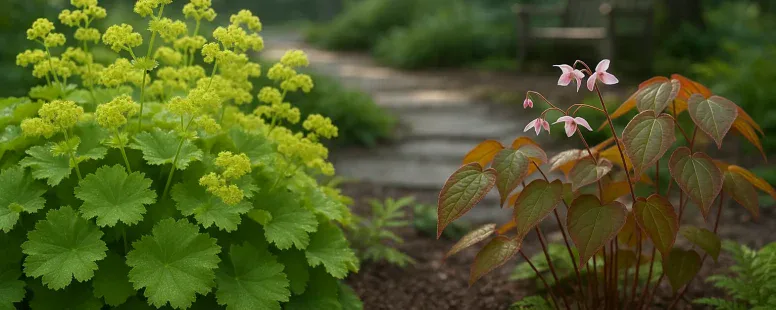
You can pick a soft carpet of lime-green leaves or a veil of delicate heart-shaped foliage, both can transform a shady border. Alchemilla mollis (lady’s mantle) and Epimedium (barrenwort) sit on many gardeners’ shortlists for low, reliable groundcover. At first glance they look similar: low-growing, shade-friendly, and forgiving. But their leaves, flowers, and habits deliver very different textures, seasons of interest, and maintenance needs. This guide gives clear, practical differences, with hands-on planting and care advice so you don’t waste time or bed space. Expect vivid examples, planting plans, and honest trade-offs to help you choose the right plant for your garden.
Quick Comparison: Key Differences At A Glance
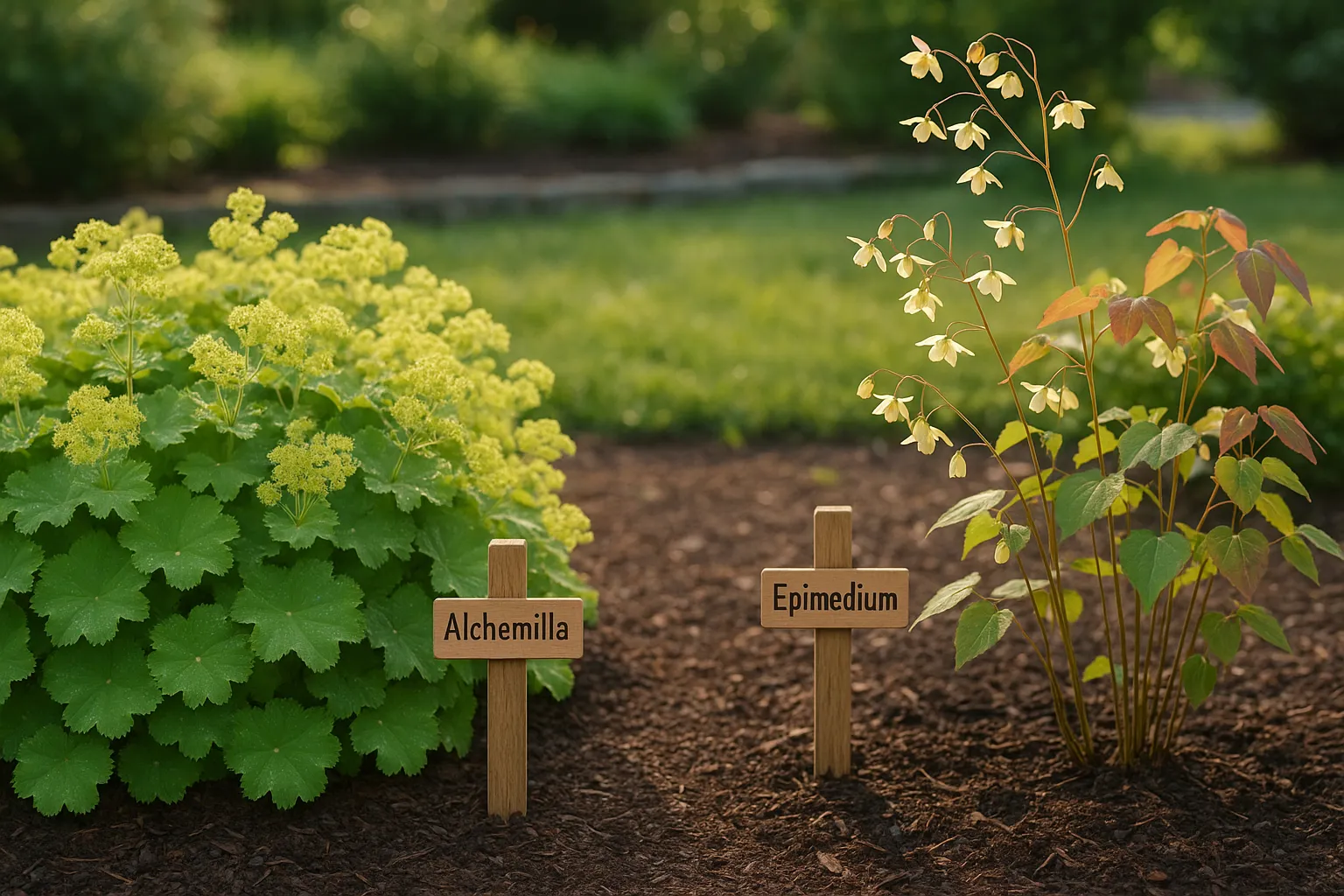
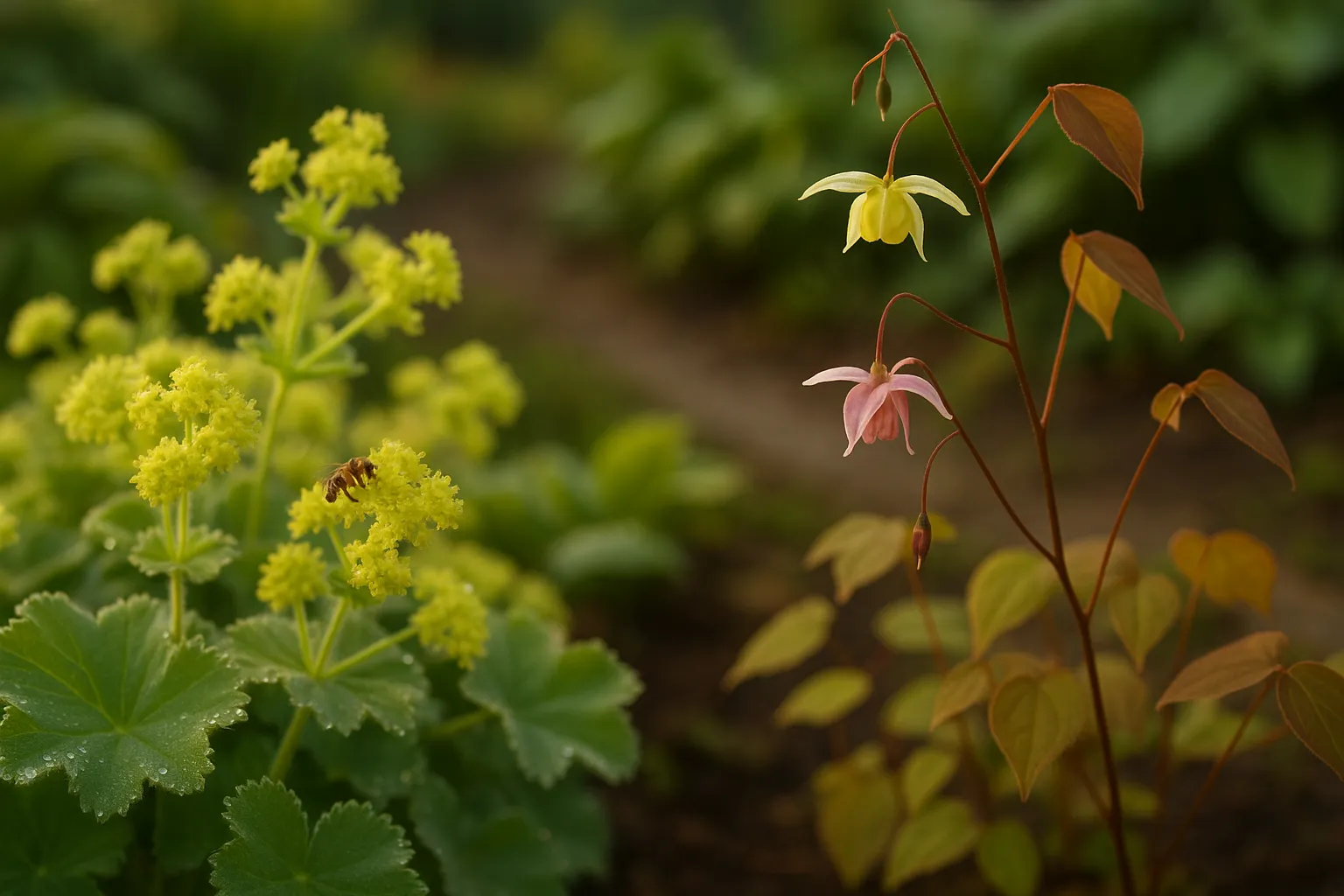
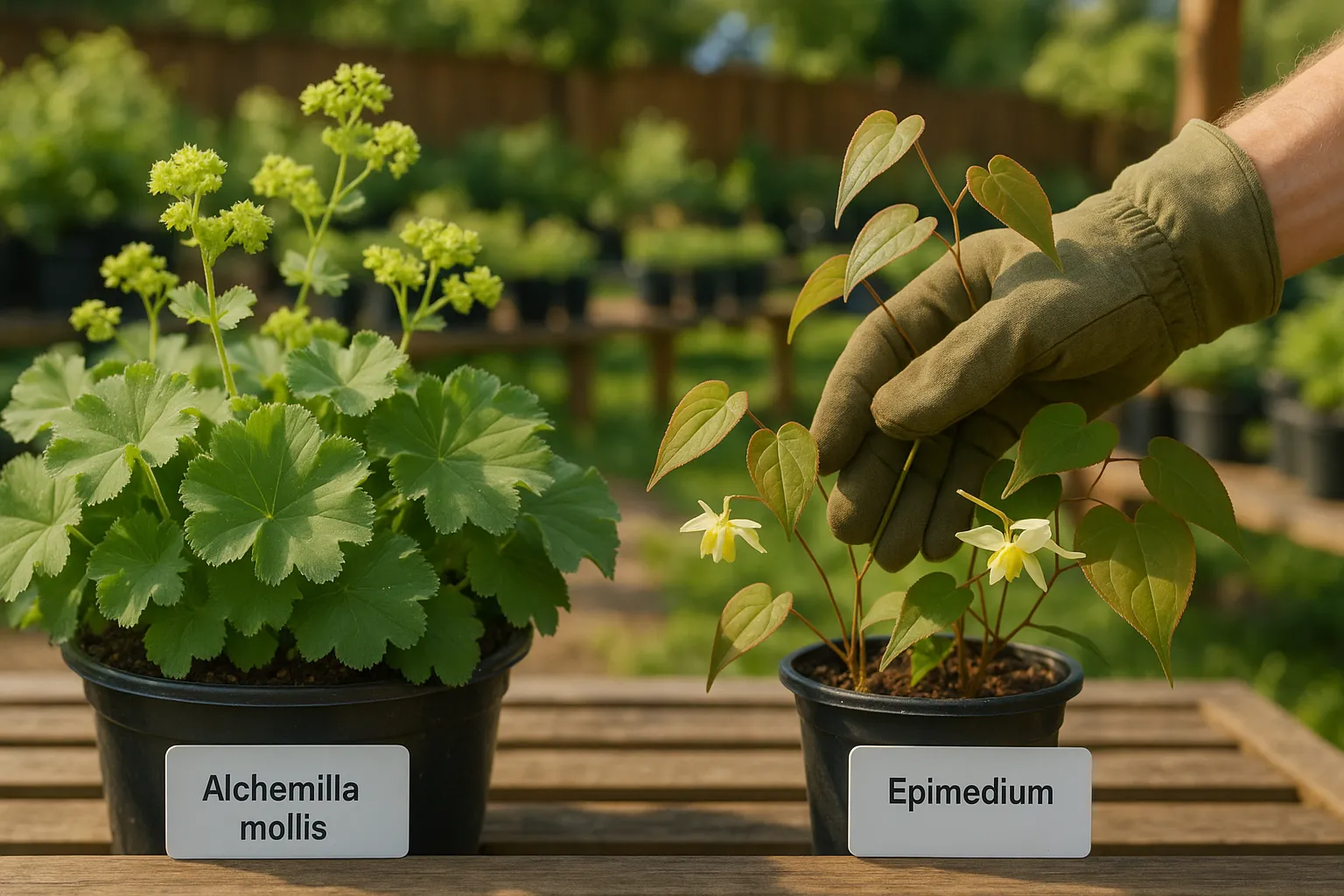
Fact: Alchemilla mollis has rounded, scalloped leaves and frothy yellow-green flowers: Epimedium has divided or heart-shaped leaves and airy spurs in pink, red, white, or yellow. Both are shade-tolerant perennials, but they serve different design roles.
Alchemilla mollis: Soft, mounded habit: 8–18 inches tall: bright chartreuse foliage: blooms late spring to early summer: self-seeds readily. Good for softening edges and creating luminous groundcover.
Epimedium (common species like E. rubrum, E. x versicolor): Arching, clump-forming: 6–24 inches tall depending on cultivar: evergreen or semi-evergreen foliage in mild climates: blooms in spring with more delicate, orchid-like flowers.
Why this matters for you: choose Alchemilla when you want bold, luminous groundcover and easy bulk: choose Epimedium when you prefer refined foliage and a tidy, long-season presence. Both reduce weeds and add texture, but they differ in flowering impact and long-term clumping behavior.
Identifying Features: How To Tell Them Apart
Fact: Leaf shape and flower form are the quickest visual clues. Below you’ll find exact features to check before you buy or plant.
Growing Requirements: Soil, Light, And Water
Fact: Both prefer well-drained soil and some shade, but they differ in their tolerance for dryness and pH. Read on for specifics that affect placement and long-term health.
Planting, Propagation, And Establishment
Fact: Both plants establish best with spring or fall planting and respond well to division. Details below help you plan planting and stock up new beds efficiently.
Landscape Uses And Design Ideas
Fact: Alchemilla and Epimedium perform distinct roles: one is luminous mass, the other is refined texture. Use them where those strengths matter most.
Maintenance And Seasonal Care
Fact: Both plants are low-maintenance but have distinct seasonal tasks. Alchemilla needs occasional grooming: Epimedium needs leaf management for tidy clumps.
Pests, Diseases, And Common Problems
Fact: Both species are generally resistant to major pests but each has its own weak points. Below are typical problems and simple fixes.
Choosing Between Alchemilla Mollis And Epimedium: A Practical Guide
Fact: Pick Alchemilla for luminous, easy groundcover and fast fill: pick Epimedium for refined shade planting and long-term, tidy clumps. Use the guidelines below to match plants to real garden situations.
To provide the best experiences, we use technologies like cookies to store and/or access device information. Consenting to these technologies will allow us to process data such as browsing behaviour or unique IDs on this site. Not consenting or withdrawing consent, may adversely affect certain features and functions.
Functional
Always active
The technical storage or access is strictly necessary for the legitimate purpose of enabling the use of a specific service explicitly requested by the subscriber or user, or for the sole purpose of carrying out the transmission of a communication over an electronic communications network.
Preferences
The technical storage or access is necessary for the legitimate purpose of storing preferences that are not requested by the subscriber or user.
Statistics
The technical storage or access that is used exclusively for statistical purposes.The technical storage or access that is used exclusively for anonymous statistical purposes. Without a subpoena, voluntary compliance on the part of your Internet Service Provider, or additional records from a third party, information stored or retrieved for this purpose alone cannot usually be used to identify you.
Marketing
The technical storage or access is required to create user profiles to send advertising, or to track the user on a website or across several websites for similar marketing purposes.