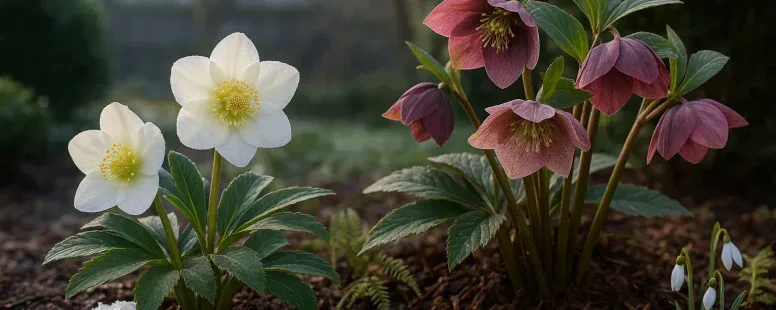
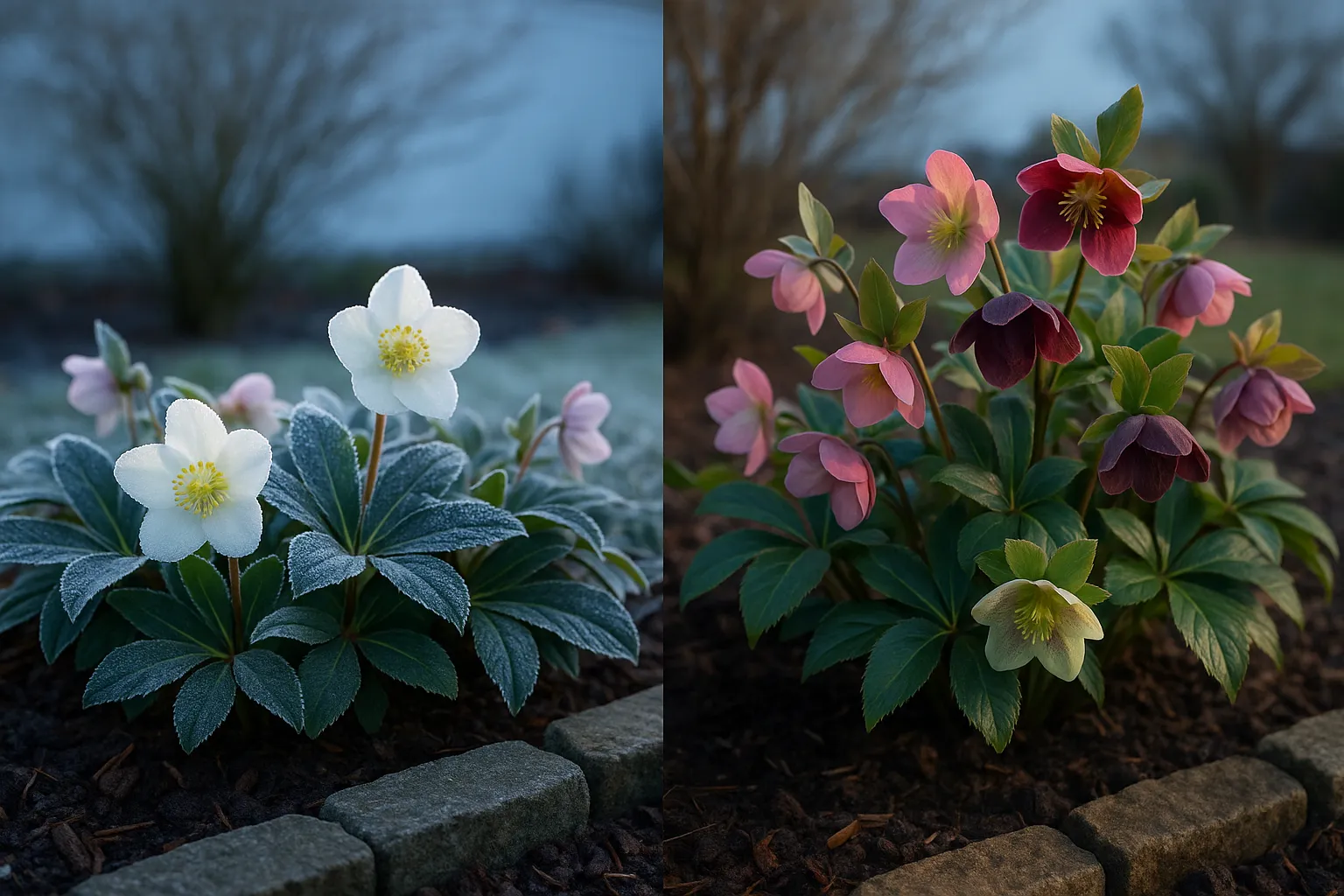
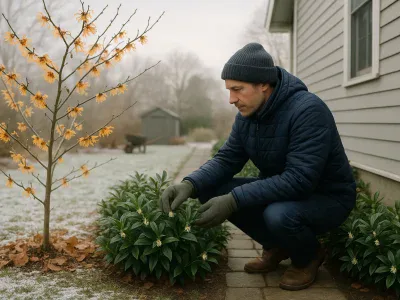
You can tell these two hellebores apart quickly once you know what to look for: Helleborus niger (Christmas rose) blooms in cold, often near-winter months with white, bowl-shaped flowers, while Helleborus × orientalis (commonly called the Lenten rose) delivers a wider palette of colors in early spring and forms clumps of leathery foliage. This comparison will give you crisp, usable differences so you can choose the right plant for your garden. Expect clear ID cues, practical care steps, and honest warnings about toxicity and maintenance, plus design ideas that let each species shine.
Quick Overview Of Each Species
Helleborus Niger: Key Traits At A Glance
Fact: Helleborus niger is a cold-season bloomer, historically prized for white winter flowers. The plant belongs to the genus Helleborus and native ranges include mountainous parts of central and southern Europe (notably the Alps). You’ll see single, round, white petals ( sepals) that can persist through frosts. Typical traits:
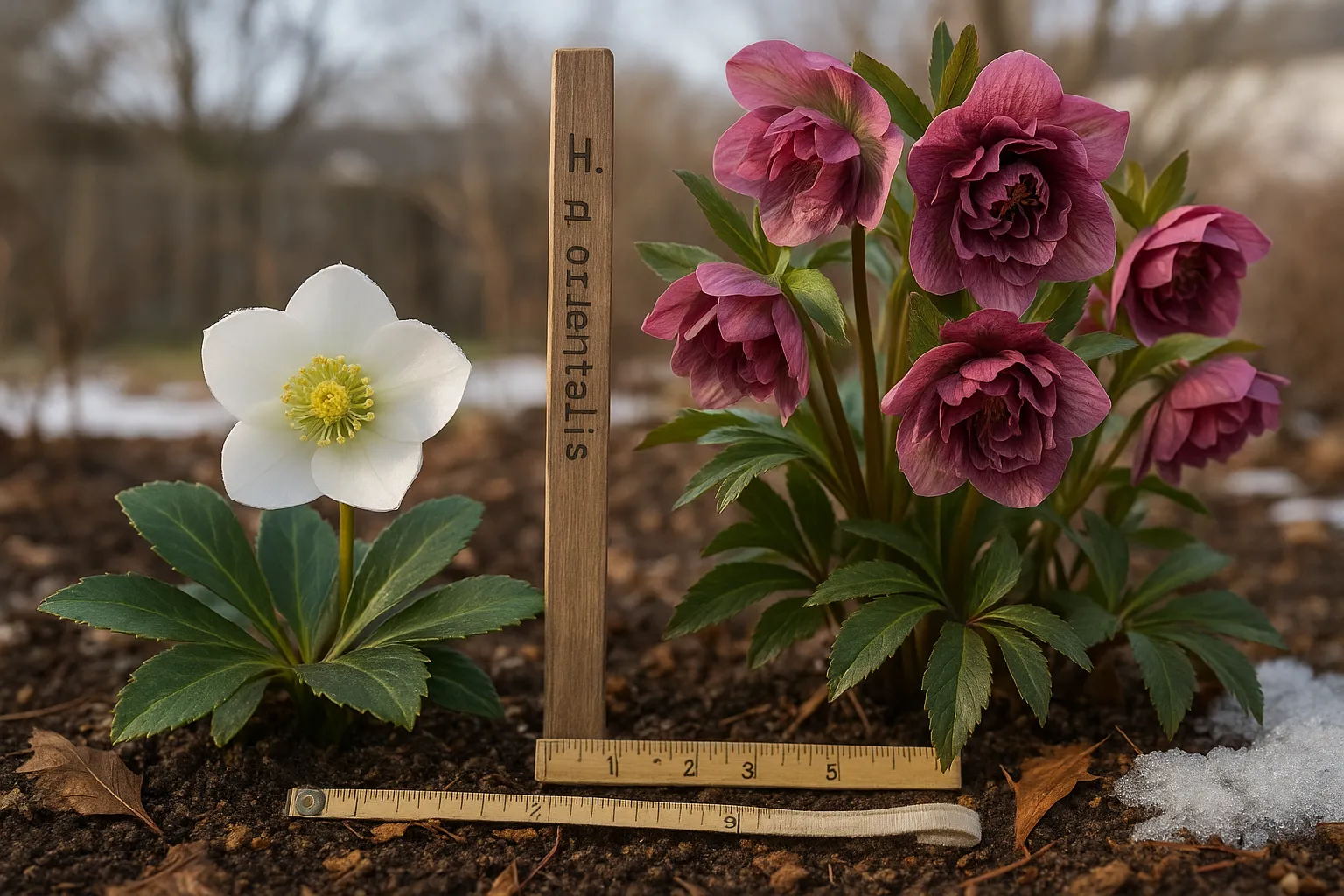
Height: 10–12 inches (25–30 cm).
Flower color: pure white in wild forms: some cultivars show a faint pink flush.
Bloom time: late winter to very early spring (often December–February in mild climates).
Foliage: evergreen in mild areas: leathery, divided leaves in a basal rosette.
Hardiness: USDA zones roughly 3–7, depending on cultivar and site.
Helleborus Orientalis (Lenten Rose): Key Traits At A Glance
Fact: H. × orientalis and its hybrids bloom later and show more color variety than H. niger. This group is a hybrid complex derived mainly from H. orientalis and related species. You’ll encounter many named cultivars sold simply as “Lenten rose.” Key points:
Bloom time: late winter into mid-spring (often January–April depending on climate).
Foliage: evergreen to semi-evergreen: larger, multi-lobed leaves that form clumps.
Hardiness: USDA zones 4–9 for many cultivars, though microclimate matters.
These overviews set the baseline. Keep reading for visual ID tips and care specifics you can apply right away.
Side‑By‑Side Identification: Visual Differences
Flower Characteristics: Shape, Color, And Bloom Time
Fact: H. niger flowers are usually white and bowl-shaped: H. × orientalis shows more variety in color and form. H. niger’s flowers often open singly or in small numbers and sit a little above the foliage. Lenten roses produce nodding or outward-facing flowers in clusters: petals (sepals) can be ruffled, double, or heavily veined. Bloom time differs: H. niger peaks in mid-winter, while H. × orientalis peaks around late winter to spring. If you see dark marbled petals or deep purples, you’re almost certainly looking at an orientalis group plant.
Foliage, Size, And Growth Habit
Fact: H. niger tends to form low, neat rosettes: H. × orientalis forms larger clumps. H. niger’s leaves are fewer and more compact: orientalis hybrids create taller, broader clumps with more leaves per crown. Measure height and note leaf division: orientalis often has 7–9 toothed leaflets: niger shows simpler, less pronounced division. Over seasons, orientalis will spread into noticeable clumps you can divide: niger remains more restrained.
Hardiness, Lifespan, And Seasonal Behavior
Fact: Both are long-lived perennials, but they differ in seasonal cues and winter resilience. H. niger tolerates colder winter flowering but can suffer in late freezes that follow a warm spell. H. × orientalis tolerates a wider range of garden microclimates and often re-blooms or carries flowers longer into spring. Lifespan for both exceeds 5–10 years with good siting: some clumps live for decades. Note: microclimate, snow cover, and soil drainage change outcomes dramatically.
Growing Conditions And Care Requirements
Soil, Light, And Water Preferences
Fact: Both species prefer rich, well-drained soil and partial shade. You should give them humus-rich soil with steady moisture but not waterlogged conditions. H. niger often prefers slightly cooler root zones and benefits from morning sun with afternoon shade. H. × orientalis tolerates a bit more sun if the soil stays cool. pH: slightly acidic to neutral (pH 6.0–7.5) suits both. If your soil is heavy clay, add compost and grit to improve drainage.
Planting, Mulch, And Winter Protection
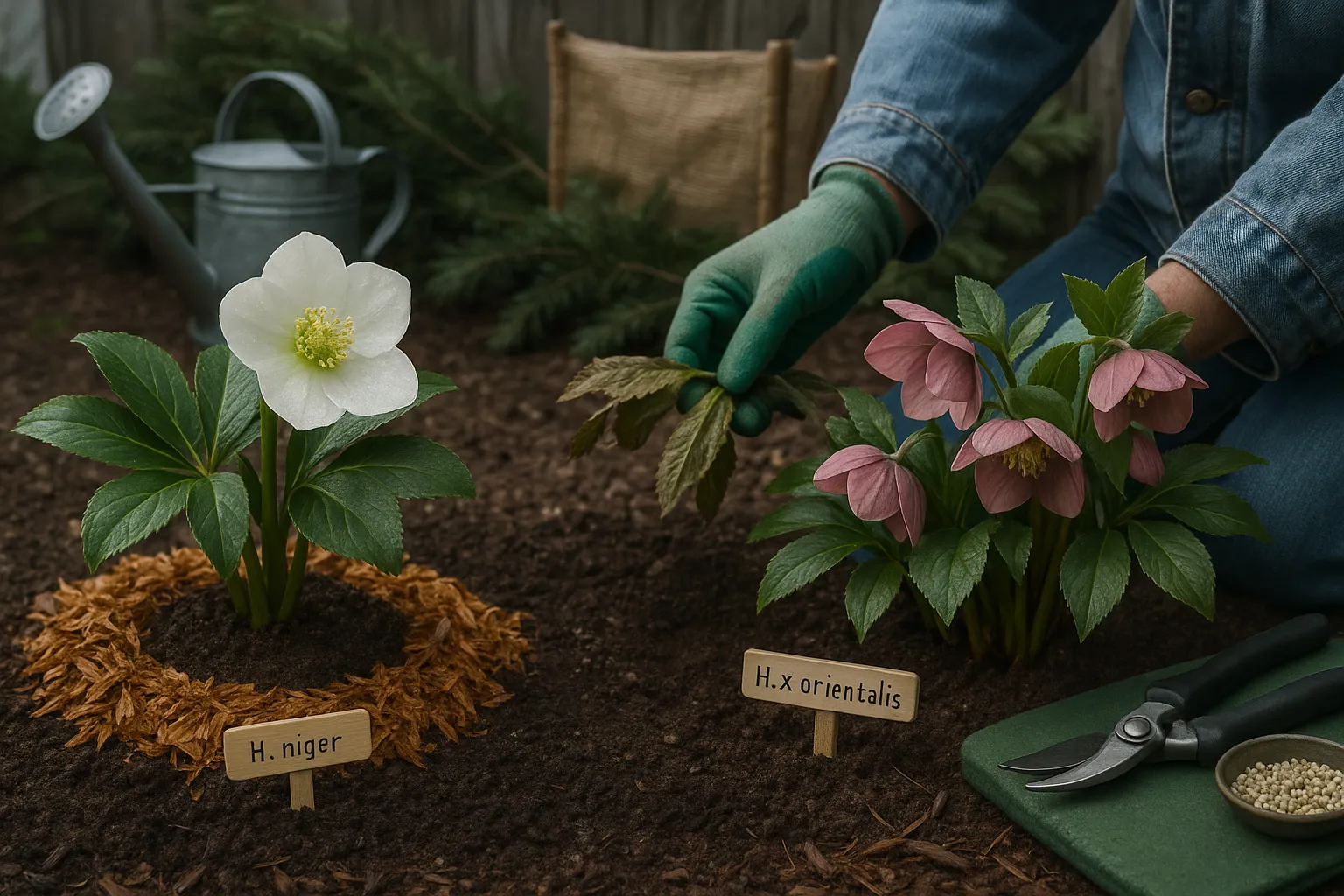
Fact: Plant crowns at the same depth they grew in the pot and mulch to protect roots. Use a 2–3 inch organic mulch layer in autumn to moderate freeze-thaw cycles, especially for H. niger, which flowers during cold spells. Remove heavy mulch in spring so crowns don’t rot. In very cold or exposed sites, a light burlap windscreen or evergreen boughs give extra protection. Don’t bury crowns deeply: that encourages rot.
Fertilizing, Pruning, And Routine Maintenance
Fact: Minimal feeding keeps hellebores healthy: pruning is simple. Apply a slow-release balanced fertilizer or a top-dressing of compost in early spring. Cut back old, tattered foliage in late winter or early spring to reveal fresh flowers and reduce disease risk. Deadhead spent flowers if you want fewer seedlings: leave some for natural reseeding. Routine tasks: clean up leaf litter, check drainage, and monitor for pests.
Propagation, Division, And Rejuvenation
Division Versus Seed: When And How To Propagate
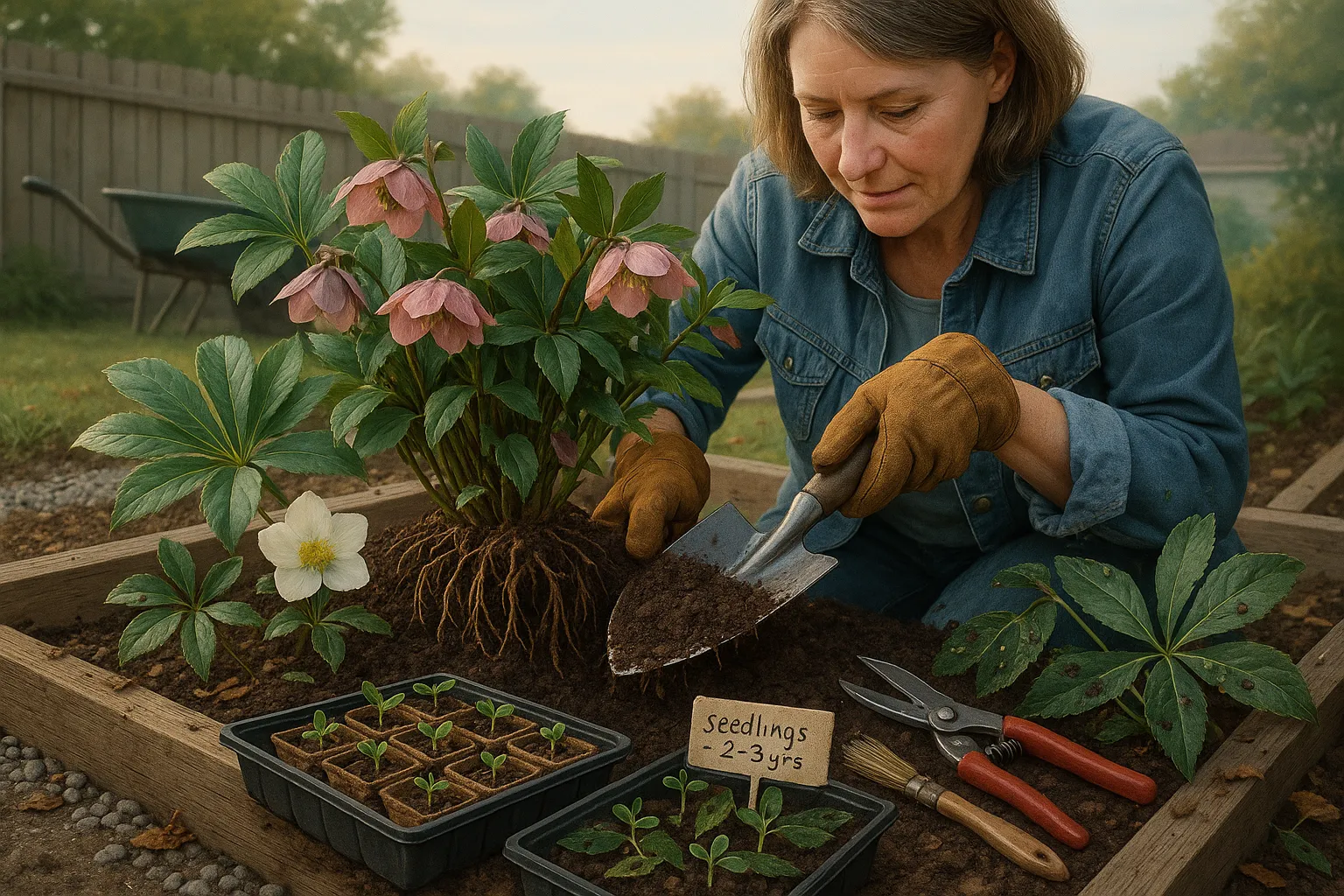
Fact: Division gives true-to-type clones: seed produces variable offspring. If you want exact copies of a named H. × orientalis cultivar, divide clumps in early fall or early spring when the plant is not in heavy bloom. Use a sharp spade to lift and separate crowns, keeping roots intact. For H. niger, division is possible but the plant resents frequent disturbance, divide only when crowns are large and healthy. Sowing seed gives genetic diversity and new color possibilities, but seedlings can take 2–3 years to flower and won’t match the parent if the parent is a hybrid.
Common Pests, Diseases, And Troubleshooting
Fact: Hellebores suffer from a few predictable pests and fungal issues. Look for black spot and hellebore leaf spot (Coniothyrium), which cause dark lesions: remove infected leaves and improve air circulation. Aphids and vine weevils nibble leaves: treat with targeted controls and soil barriers. Crown rot happens in poorly drained soil, improve drainage and avoid overwatering. If new leaves are distorted, check for viral symptoms: remove seriously affected plants. Honest warning: hellebores resist deer and rabbits but that doesn’t guarantee full protection, hungry wildlife may still sample them.
Landscape Uses, Design Tips, And Companion Plants
Placement Ideas: Woodland Borders, Containers, And Cut Flowers
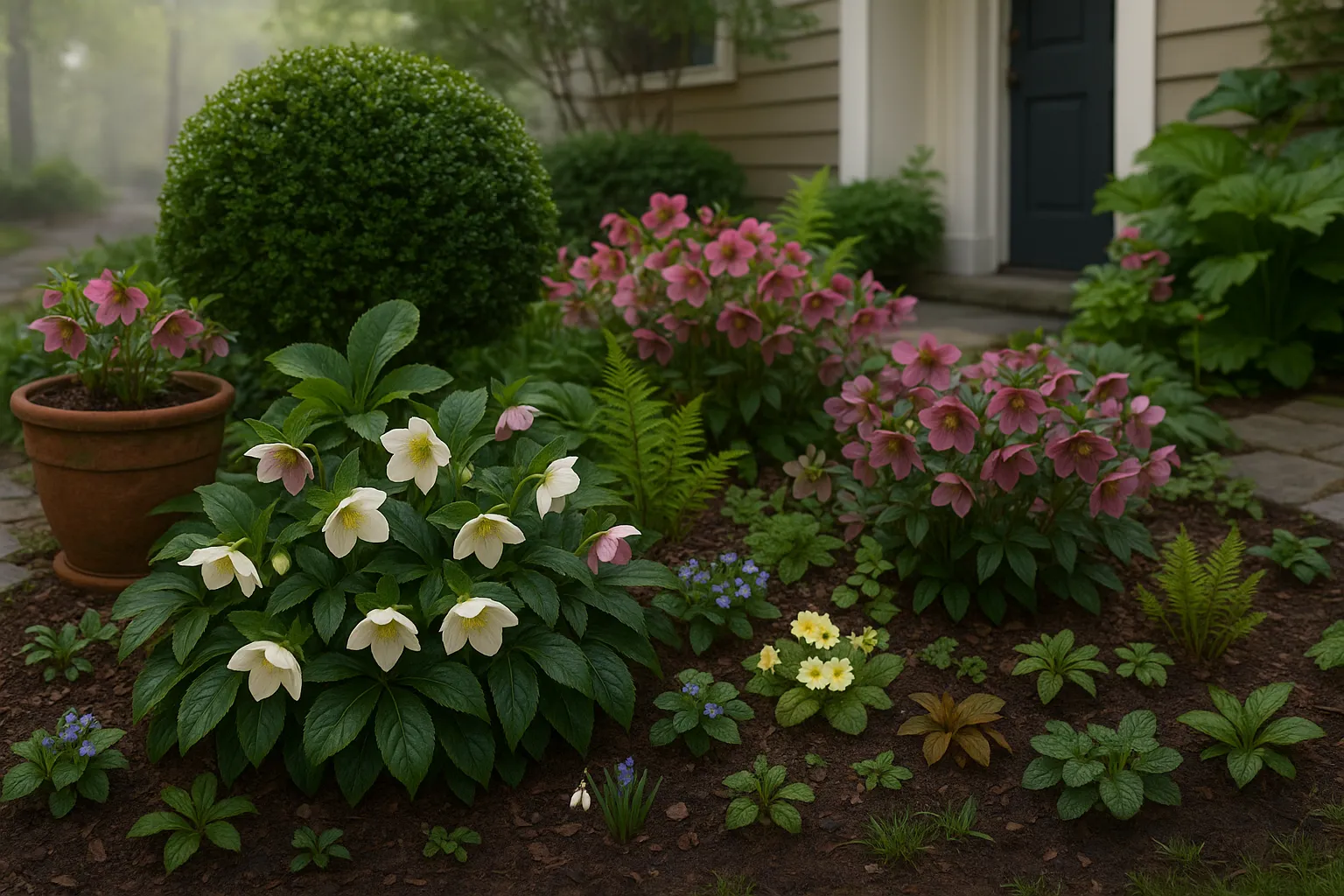
Fact: H. niger suits winter interest: H. × orientalis excels for spring color and massing. Plant H. niger near entryways or under evergreen shrubs where winter flowers can be admired against dark foliage. Use H. × orientalis in shaded borders, mixed perennial beds, or grouped en masse for color runs in early spring. Both work in containers if you use deep pots with good compost. Hellebore blooms make subtle, long-lasting cuts, trim stems close to the crown and condition in cool water.
Companion Plants And Seasonal Pairings
Fact: Pair hellebores with shade-loving spring bulbs and ferns for layered interest. Good companions include: pulmonaria (lungwort), epimedium, primula, snowdrops (Galanthus), and early crocus. For evergreen contrast, use boxwood or sarcococcas near H. niger. Combine with hostas later in the season as hellebore foliage fades. Think in seasons: hellebores start the show under a canopy, while later plants take over the middle and back of the border.
Practical Considerations: Purchasing, Handling, And Safety
Toxicity, Handling Precautions, And Pet Safety
Fact: Both species are toxic: handle with gloves. Helleborus species contain glycosides that can irritate skin and are poisonous if ingested. Wear gloves when dividing or pruning and wash hands after contact. Keep plants away from children and pets that might chew foliage. If ingestion occurs, contact poison control or your veterinarian quickly. Gardeners sometimes mistake hellebore sap reactions as mild, don’t assume it won’t blister sensitive skin.
Sourcing Plants, Cultivar Notes, And Conservation Considerations
Fact: Buy from reputable nurseries to ensure correct identification and disease-free stock. For H. niger, look for named cultivars like ‘Jacob’ or ‘Potter’s Wheel’ if you want reliable winter bloom. For H. × orientalis, note that many cultivar names indicate color patterns (e.g., ‘Anna’s Red’, ‘Pink Frost’): parentage often includes H. orientalis and H. lividus lines. If you want native or wild-type conservation, source seed from responsible suppliers, wild collecting harms local populations. The Royal Horticultural Society and local extension services list recommended cultivars and hardiness guidance that you can consult before purchase.
To provide the best experiences, we use technologies like cookies to store and/or access device information. Consenting to these technologies will allow us to process data such as browsing behaviour or unique IDs on this site. Not consenting or withdrawing consent, may adversely affect certain features and functions.
Functional
Always active
The technical storage or access is strictly necessary for the legitimate purpose of enabling the use of a specific service explicitly requested by the subscriber or user, or for the sole purpose of carrying out the transmission of a communication over an electronic communications network.
Preferences
The technical storage or access is necessary for the legitimate purpose of storing preferences that are not requested by the subscriber or user.
Statistics
The technical storage or access that is used exclusively for statistical purposes.The technical storage or access that is used exclusively for anonymous statistical purposes. Without a subpoena, voluntary compliance on the part of your Internet Service Provider, or additional records from a third party, information stored or retrieved for this purpose alone cannot usually be used to identify you.
Marketing
The technical storage or access is required to create user profiles to send advertising, or to track the user on a website or across several websites for similar marketing purposes.