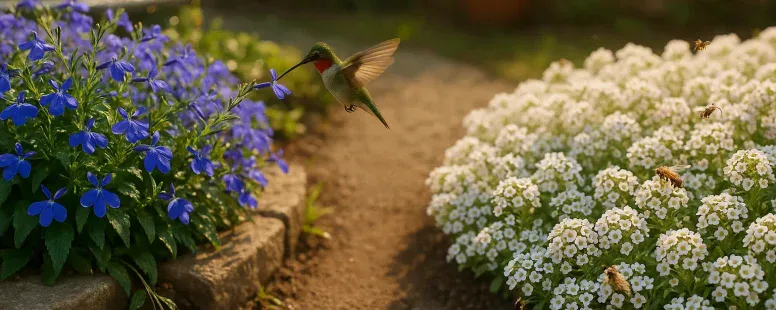
Lobelia Vs. Alyssum
You can choose flowers that make a bed whisper or shout. Lobelia vs. Alyssum is not just a garden debate, it’s a choice about texture, season, and how you want your outdoor space to feel. Both give you low-growing blooms that fill gaps, spill from containers, and draw pollinators, but they do so with different rhythms and personalities. Read on to learn the clear differences, the care each needs, and which one better fits your color plan, your schedule, and your climate.
Quick Comparison Snapshot
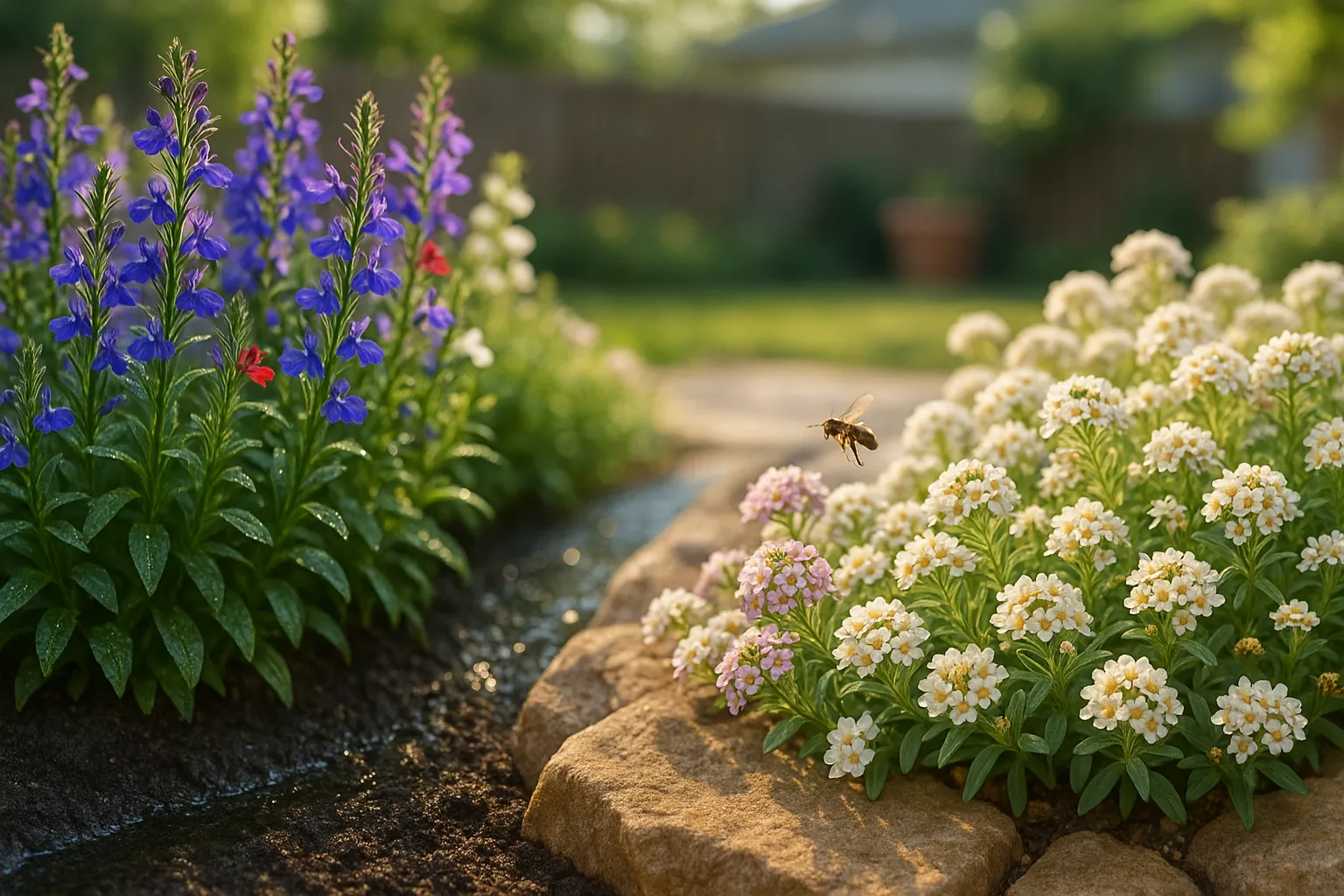
Fact: Lobelia produces showy spikes or mounds of blue, purple, white, or red: Alyssum offers dense clusters of tiny, fragrant flowers in white, pink, purple, and gold. Lobelia (Lobelia spp., commonly L. erinus and L. cardinalis) tends to favor cooler, moist sites and shows best in late spring through summer. Alyssum (Lobularia maritima and related species) tolerates heat better and often continues blooming into fall in mild climates.
Quick table of practical differences:
- Bloom habit: Lobelia, racemes or mounds: Alyssum, tight clusters (cymes).
- Fragrance: Lobelia, faint or none: Alyssum, typically sweet and honey-like.
- Height: Lobelia, 4–18 inches depending on type: Alyssum, 3–12 inches.
- Best use: Lobelia, edging, cool-season color, water-side plantings: Alyssum, mass planting, rock gardens, groundcover.
You should pick Lobelia when you want vivid blue or cool-toned accents and moist soil performance. Pick Alyssum when you want continuous fragrance, easy self-seeding, and a heat-tolerant filler. These are general rules: microclimates, cultivar choices, and care will change results.
Appearance And Growth Habit
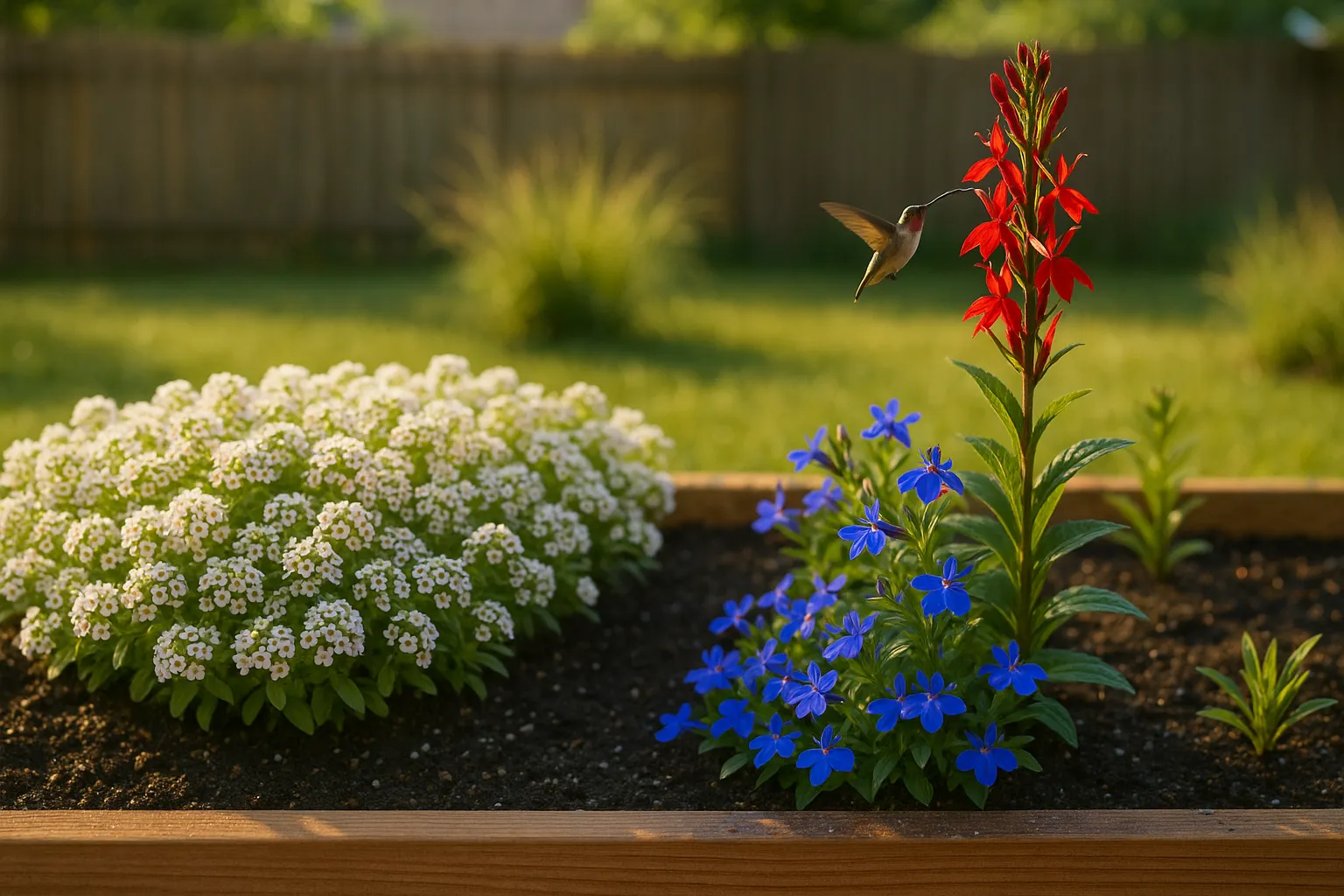
Fact: Appearance determines how you’ll use each plant in the garden. Below you’ll find the clear physical traits and growth patterns so you can visualize them in your beds or containers.
Lobelia: Form, Flowers, And Size
Lobelia shows as trailing mounds or upright spikes. Many garden lobelias (Lobelia erinus) form low, spreading mats with short stems and dozens of small tubular blooms. Cardinal flower (Lobelia cardinalis) is taller, with dramatic vertical spikes and red flowers that can reach 2–4 feet. Flower shape is tubular and often two-lipped, which suits hummingbirds and certain bees. You’ll see colors from cobalt blue to deep purple, plus white and scarlet in specific species. Size varies: trailing types sit 4–10 inches high: upright species reach 12–48 inches. Growth rate is moderate: lobelia prefers to keep its shape if you pinch back lightly early in the season.
Alyssum: Form, Flowers, And Size
Alyssum grows as a compact, mounded plant or a low mat. The tiny flowers cluster into rounded heads that give the plant a frothy or carpeted look. Flowers are typically 4–8 mm across but appear abundant, so the visual impact is larger than the single-flower size. Colors range from pure white and pale pink to deeper purple and golden yellow with newer cultivars. Height is usually 3–9 inches for annual sweet alyssum, though trailing and spreading forms reach 12 inches across. Growth is fast: alyssum fills gaps quickly and often reseeds itself in mild zones.
Growing Conditions And Basic Care
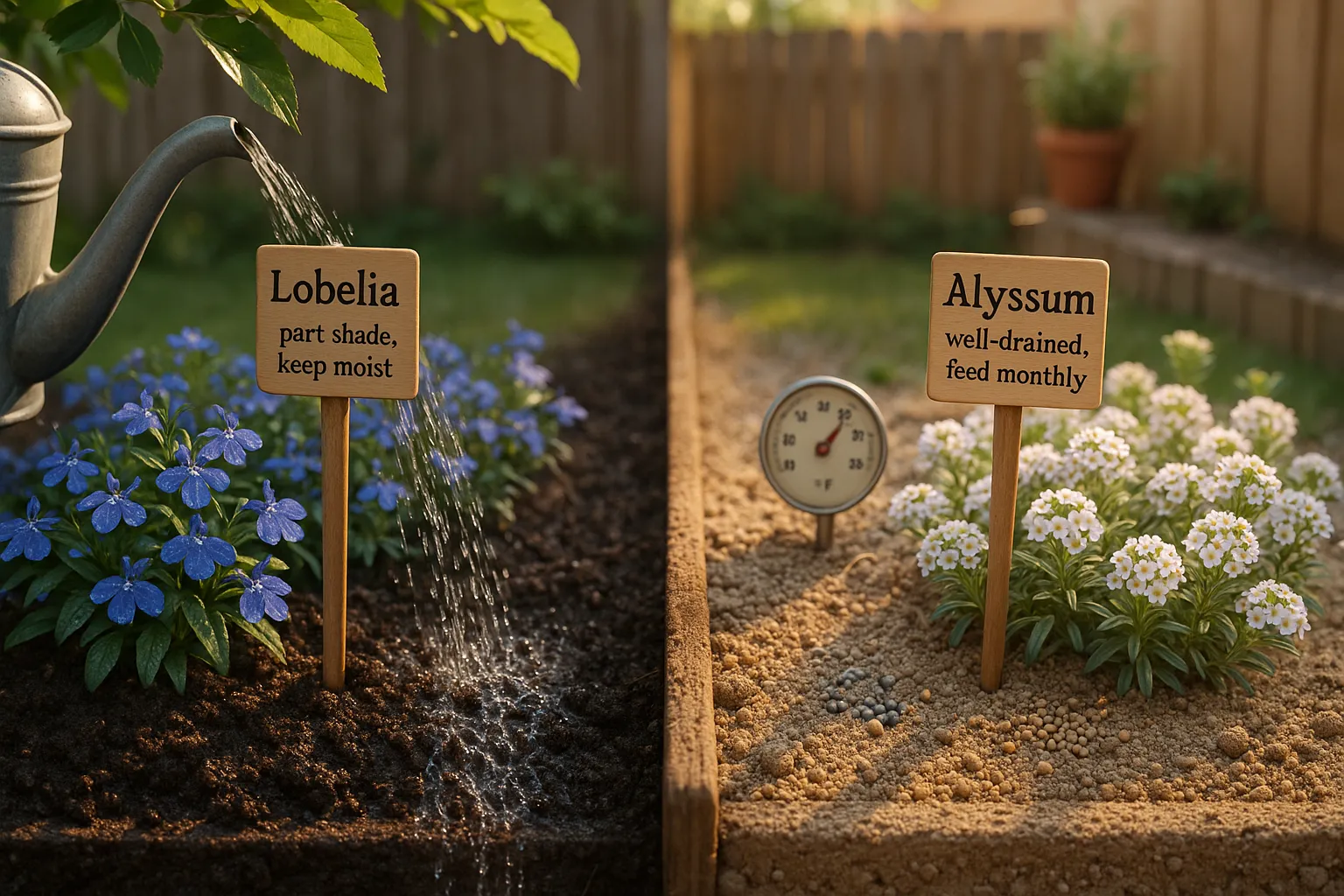
Fact: Both plants are forgiving but they have different stress triggers, keep lobelia cool and moist, keep alyssum well-drained and fed for long bloom.
Light And Temperature Requirements
Lobelia prefers part shade to full sun in cooler climates and morning sun with afternoon shade in hot regions. Optimal daytime temps are 60–75°F for peak flowering. Cardinal flower tolerates full sun where soil stays moist. Alyssum thrives in full sun to partial shade: it tolerates higher temps (up to mid 80s°F) if you keep it watered. In very hot, humid areas, give alyssum afternoon shade to prolong blooms.
Soil, Watering, And Drainage Needs
Lobelia prefers evenly moist, rich soil with good organic content. It will suffer in dry, compacted soil. Alyssum prefers well-drained soil and will rot if left in standing water: but it responds well to regular watering during drought. Both plants like neutral to slightly alkaline pH, though they’re adaptable.
Fertilizer And Feeding Schedule
Lobelia benefits from light feeding: a balanced, water-soluble fertilizer every 3–4 weeks supports steady blooms. Alyssum is not hungry, but a monthly light feed encourages repeat flowering. Avoid heavy nitrogen late in the season, you’ll invite lush foliage at the expense of flowers. Use slow-release granular or gentle liquid feed depending on container or bed planting.
Planting, Maintenance, And Seasonal Calendar
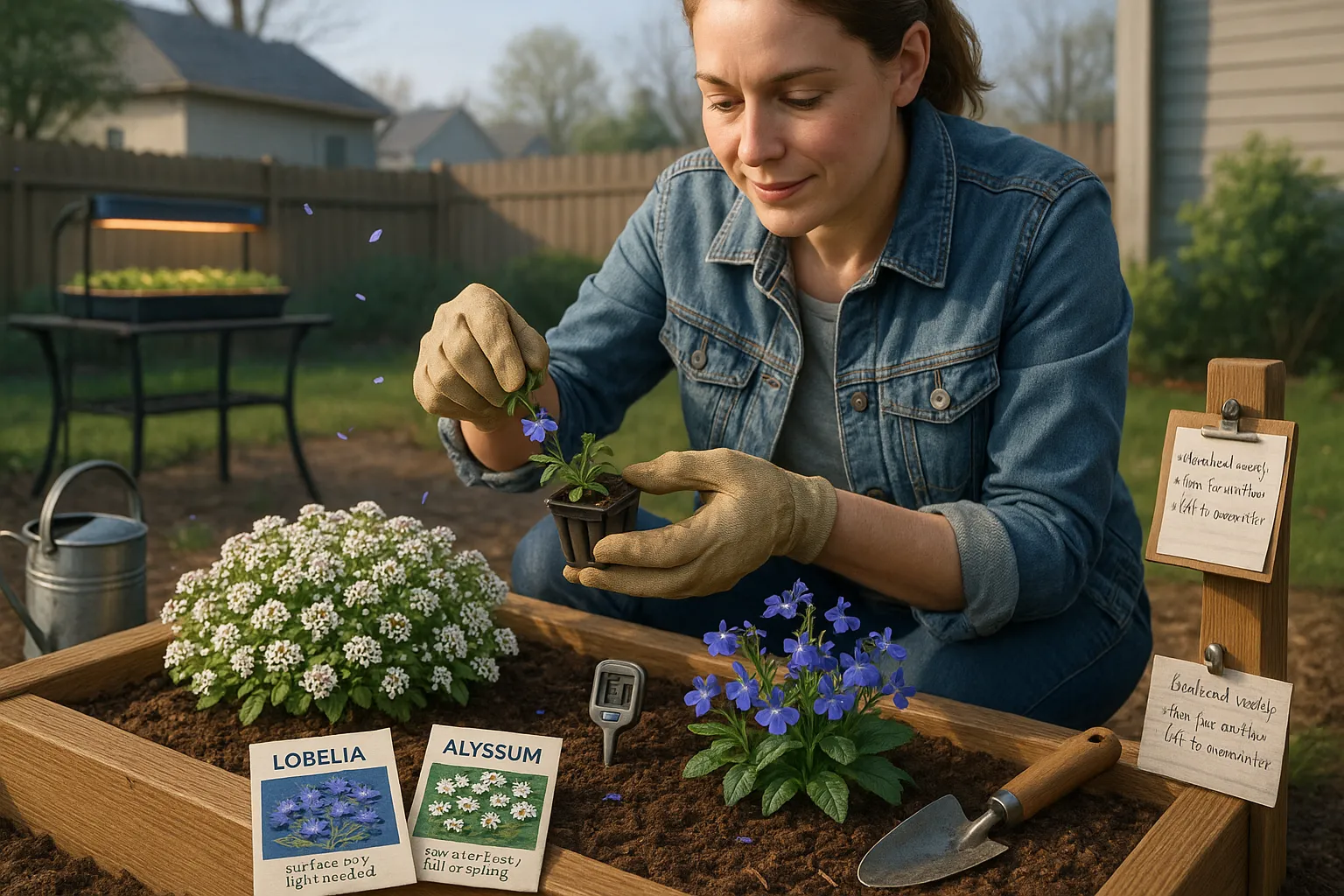
Fact: Timing matters, plant lobelia after the last frost (or use transplants), and plant alyssum in spring or fall for best performance.
When And How To Plant (Seeds Vs. Transplants)
Lobelia from seed requires light to germinate: sow on the surface and keep warm (65–70°F) and moist. Transplants give faster results and flower earlier. For spring displays, start seeds 8–10 weeks indoors. Alyssum seeds germinate easily at 60–70°F and tolerate direct sowing. Sow alyssum outdoors once risk of hard frost has passed. In mild climates you can sow alyssum in fall for an early spring show.
Deadheading, Pruning, And Overwintering Tips
Fact: Deadheading extends bloom for both plants. Pinch or shear lobelia lightly to encourage branching and delay leggy growth. For alyssum, removing spent clusters keeps the carpet fresh. Overwintering: annual varieties of both are usually treated as disposable in cold zones. In USDA zones 9–11, sweet alyssum may persist and self-seed: cardinal lobelia can reemerge from roots if mulched. You can take cuttings of lobelia or lift and pot plants for indoor overwintering.
Troubleshooting Common Problems
Fact: Heat stress and poor drainage are the common killers. Lobelia will brown and drop flowers in prolonged heat: remedy by moving to shade and increasing water. Alyssum may suffer root rot in wet soil, improve drainage or use raised beds. Both may show decline if planted too densely: thin to improve airflow. If blooms fade quickly after rain, check soil depth and fertility first.
Uses In Garden Design And Landscaping
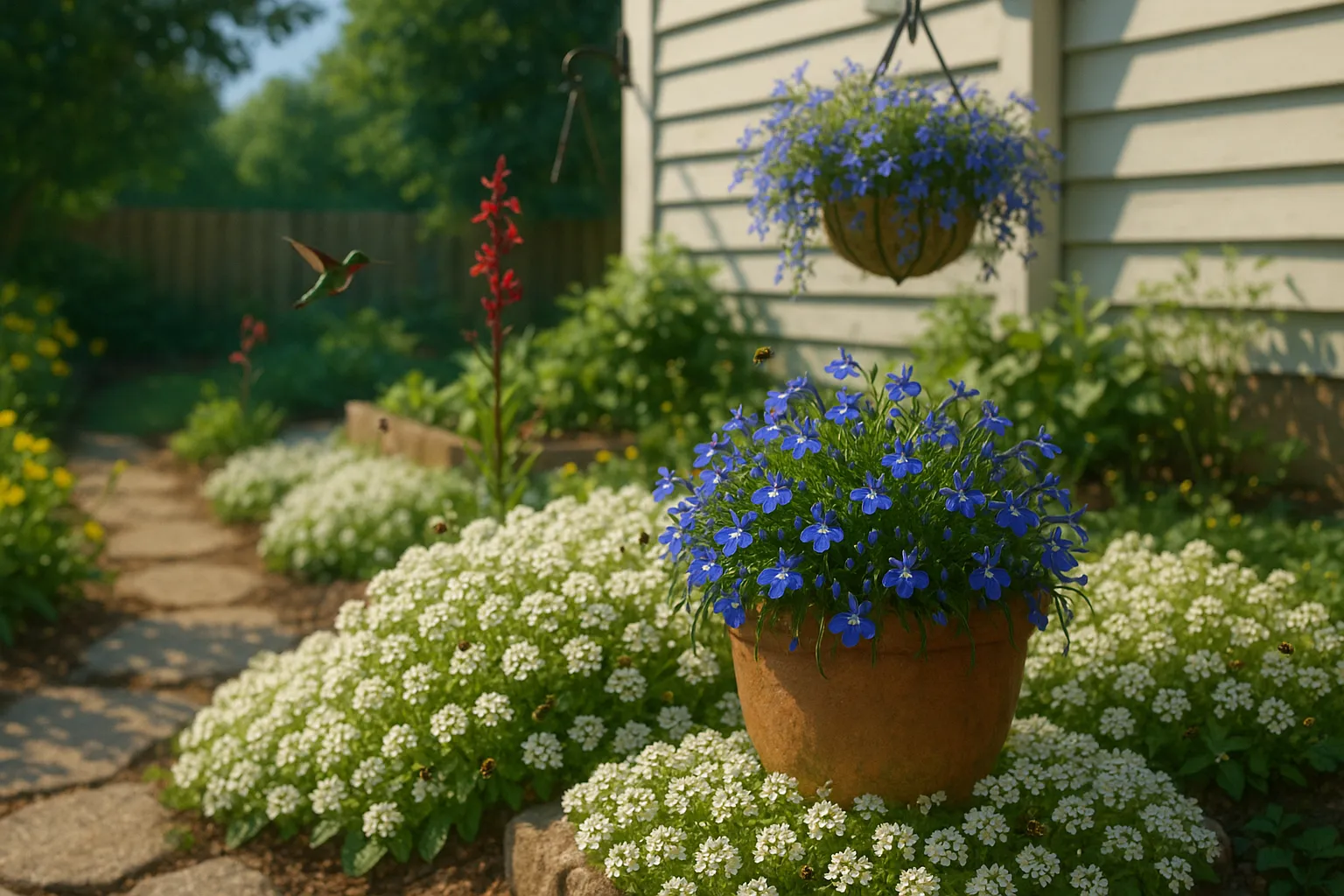
Fact: Lobelia and alyssum serve different design roles, lobelia for cool, jewel-toned accents: alyssum for fragrant mass and soft edges.
Beds, Borders, And Edging Uses
Use lobelia as a cooling blue border beside white or yellow perennials, or at the front of a layered bed to pull the eye. Alyssum excels as a soft edge that blurs hard lines and adds fragrance along walkways. Combine them: plant lobelia as the inner ribbon and alyssum along the path for contrast in texture and scent.
Containers, Hanging Baskets, And Groundcover Uses
Fact: Lobelia is outstanding in hanging baskets where its trailing forms spill dramatically. Alyssum is ideal for groundcover and low containers, where it forms a scented mat. In mixed containers, plant taller lobelia behind and alyssum at the rim to create depth and fragrance.
Attracting Pollinators And Beneficial Insects
Both plants attract beneficials. Lobelia, especially L. cardinalis, draws hummingbirds. Alyssum attracts hoverflies, bees, and predatory wasps that eat aphids. Plant alyssum near vegetable beds to encourage natural pest control: it acts as a living lure for helpful insects.
Pests, Diseases, And Prevention
Fact: Cultural care prevents most pest and disease issues, avoid overcrowding, maintain proper moisture, and monitor regularly.
Common Pests And Cultural Controls
Aphids, slugs, and snails favor both plants. Control aphids with a strong water spray or introduce lady beetles: use copper or iron phosphate bait for slugs and snails. Lacebugs can attack lobelia leaves: increase airflow and remove affected foliage. For heavy infestations, use insecticidal soap as directed. Rotate containers and refresh soil yearly to reduce pest carryover.
Fungal And Other Disease Issues
Root rot and gray mold (Botrytis) are the most common fungal problems. Prevent them by improving drainage, spacing plants for air circulation, and avoiding overhead watering late in the day. Powdery mildew may appear on alyssum in humid, shaded conditions, move to sunnier sites and prune to increase light. Fungicides help in severe cases, but proper cultural care usually solves the problem.
Choosing Between Lobelia And Alyssum
Fact: Choose by purpose, color and form for design, season and care for practicality, and scent for sensory effect.
Best Choice By Garden Purpose (Color, Season, Texture)
If you want cool blues or a hummingbird magnet, choose lobelia. If you want continuous fragrance, quick coverage, or a heat-tolerant filler, choose alyssum. For spring and early summer cool-tone displays, lobelia shines. For long-season blankets of sweet scent and pollinator support, alyssum is your pick.
Recommended Varieties And Cultivars To Try
Fact: Specific cultivars solve specific needs. Try Lobelia erinus ‘Crystal Palace’ for classic cobalt blue in baskets, and L. cardinalis ‘Queen Victoria’ for tall red spikes near water. For alyssum, try Lobularia maritima ‘White Carpet’ for a pure ground-hugging white, or ‘Snow Princess’ for a compact, floriferous bedding plant. Newer alyssum hybrids like ‘Carpet of Snow’ expand color choices and heat tolerance.
Companion Plants And Pairing Suggestions
Fact: Both plants pair well with many perennials and annuals. Pair lobelia with geraniums, petunias, and hostas (in shady beds). Pair alyssum with pansies, salvias, and low rosemary or thyme in rock gardens. Use alyssum near brassicas to attract beneficial hoverflies and reduce aphid pressure. Mix textures: lobelia’s tubular blooms contrast with the froth of alyssum for layered interest.
Vulnerable moment: I once planted lobelia in full afternoon sun and watched it fade within two weeks, lesson learned: match microclimate before buying many plants. Try a small test group first: you’ll save time and money, and avoid disappointment.

- Kia Seltos Competitors: Top Compact SUVs - October 14, 2026
- Free to Use Photoshop Alternatives - October 14, 2026
- Ajax Alternatives Mtg Reddit - October 13, 2026
by Ellie B, Site Owner / Publisher