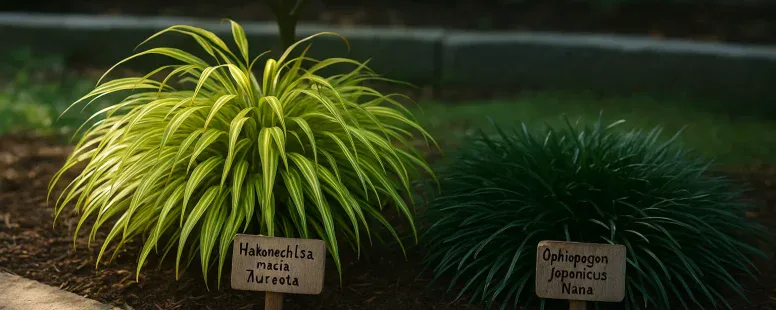
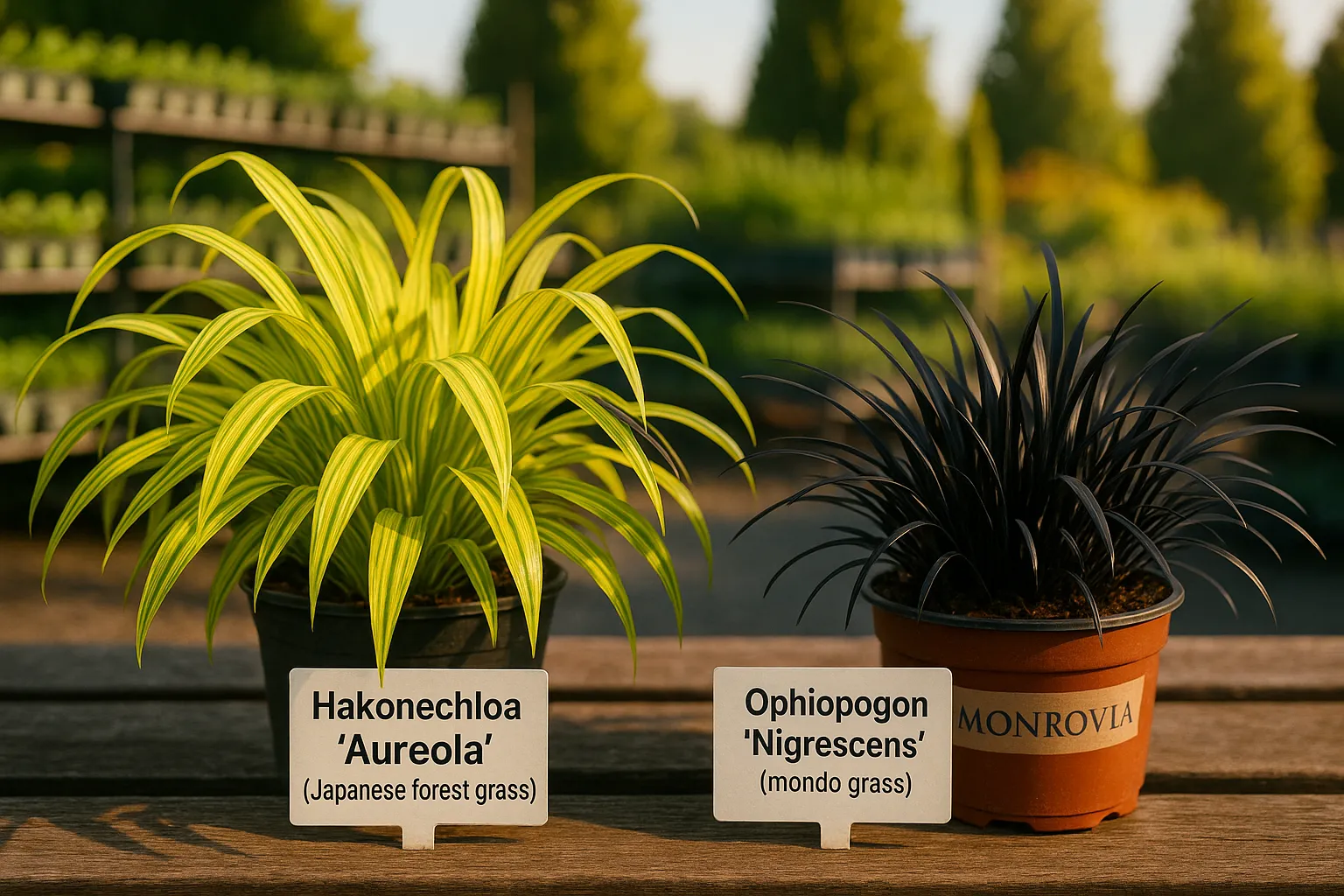
You can make a shady corner sing with the right groundcover grass. Hakonechloa macra and Ophiopogon japonicus share a quiet elegance, yet they offer different textures, colors, and habits that shape a garden’s mood. One moves like a soft waterfall: the other forms tidy, evergreen tufts. This comparison lays out clear differences and honest trade-offs so you can choose the plant that fits your light, soil, and design goals. Along the way you’ll find cultivar names like Hakonechloa ‘Aureola’ and Ophiopogon ‘Nana’, practical planting steps, and real-world tips that experienced gardeners use to get dependable results.
Quick Species Overview [rDU01OBRqL7yrjff_ed_d]
Fact: Hakonechloa and Ophiopogon come from different plant lineages and have distinct landscape roles. Use this section to anchor your choice.
Hakonechloa, Origins, Common Names, And Cultivars
Hakonechloa macra is a Japanese forest grass. Gardeners often call it Japanese forest grass or Hakone grass. The genus name signals its origin: Hakone, a mountainous area in Japan. Popular cultivars include ‘Aureola’ (gold-striped), ‘All Gold’ (solid chartreuse), and ‘Albostriata’ (white-striped). ‘Aureola’ gives bright, stripey color and a graceful arching habit that reads like low, flowing bamboo in the understory.
Ophiopogon, Origins, Common Names, And Cultivars
Fact: Ophiopogon is an evergreen lily relative from East Asia. You’ll see it sold as mondo grass or dwarf mondo grass. The common species is Ophiopogon japonicus. Cultivars include ‘Nana’ (dwarf, very compact), ‘Silver Mist’ (variegated), and ‘Nigrescens’ (near-black foliage). Ophiopogon often gets confused with Liriope but differs in clump form and finer foliage. Both genera include clear cultivar names you can ask for at nurseries like Monrovia or Proven Winners.
Appearance And Growth Habit [ioNRFnfiYRL5jsxs8OyPh]
Fact: Appearance and habit determine their best use in the garden. This section describes what each plant looks like and how it grows through the seasons.
Foliage Texture, Color, And Seasonal Interest
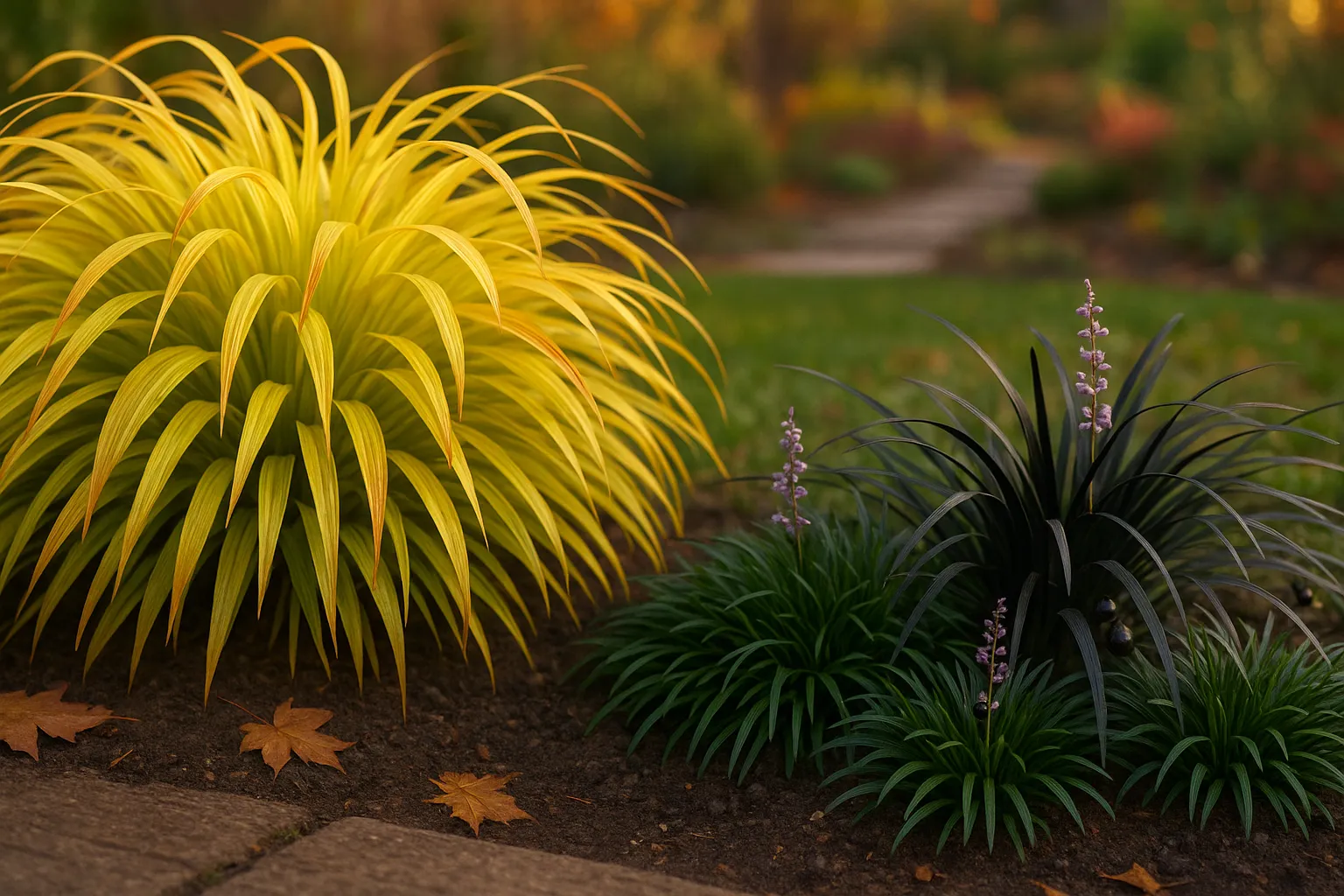
Hakonechloa presents flowing blades with a soft, layered texture. Colors range from lime-yellow in ‘All Gold’ to green with creamy stripes in ‘Aureola’. Leaves age to soft bronze in fall, giving seasonal interest beyond summer. Ophiopogon has a finer, more erect blade. Colors include deep green, variegated silver, and near-black in ‘Nigrescens’. It keeps color in winter in mild climates, so you get year-round structure.
Size, Spread, And Growth Rate
Hakonechloa typically reaches 12–18 inches tall with a similar spread. It forms mounds that arch outward, and it spreads slowly by short rhizomes, so it fills a space without becoming invasive in most gardens. Ophiopogon ‘Nana’ stays much shorter, 3–6 inches, and spreads in tight clumps to make dense mats. Growth rate: Hakonechloa establishes in a season or two: Ophiopogon takes a bit longer to fill in but then holds steady for years.
Flowering, Fruit, And Visual Impact Throughout The Year
Hakonechloa produces small, airy panicles in summer: they are understated but add light texture. Ophiopogon throws tiny purple or lilac flowers on short spikes in summer, followed by glossy black berries that persist into fall. If you want summer flowers and winter berries, Ophiopogon delivers: if you want movement and fall color, Hakonechloa does.
Cultural Requirements [peOb4A6rJpgGSBdqjWvkq]
Fact: Light, soil, and water needs differ and that will influence success. Read this before you plant.
Light Preferences And Shade Tolerance
Hakonechloa prefers dappled shade to part shade. It tolerates deeper shade but the best leaf color comes with morning sun and afternoon shade. Ophiopogon tolerates deeper, denser shade and also does fine in bright shade. If your site gets little to no sun, choose Ophiopogon. Where light varies through the day, Hakonechloa gives more visual payoff.
Soil Type, Drainage, And pH
Both prefer well-drained, humus-rich soils. Hakonechloa likes moist, fertile soil with good organic matter: it will suffer in heavy, waterlogged clay. Ophiopogon tolerates a wider range: sand to loam, slightly acidic to neutral pH (about 5.5–7.0). If your soil is heavy but drains poorly, amend with compost and raised beds or pick Ophiopogon for tolerance.
Watering Needs And Fertilization
Hakonechloa needs regular moisture, especially in summer, think weekly deep water during dry spells. Ophiopogon is more drought-tolerant once established: it will survive with less frequent watering. Fertilize both with a balanced slow-release fertilizer in spring: Hakonechloa benefits from a second light feeding midseason. Avoid over-fertilizing Ophiopogon because it can push soft growth that suffers in winter.
Hardiness, Climate Tolerance, And Performance [uLNAq13Iq_kXkOJCbulPJ]
Fact: USDA zone range and heat tolerance determine geographic suitability.
USDA Zones And Cold Hardiness
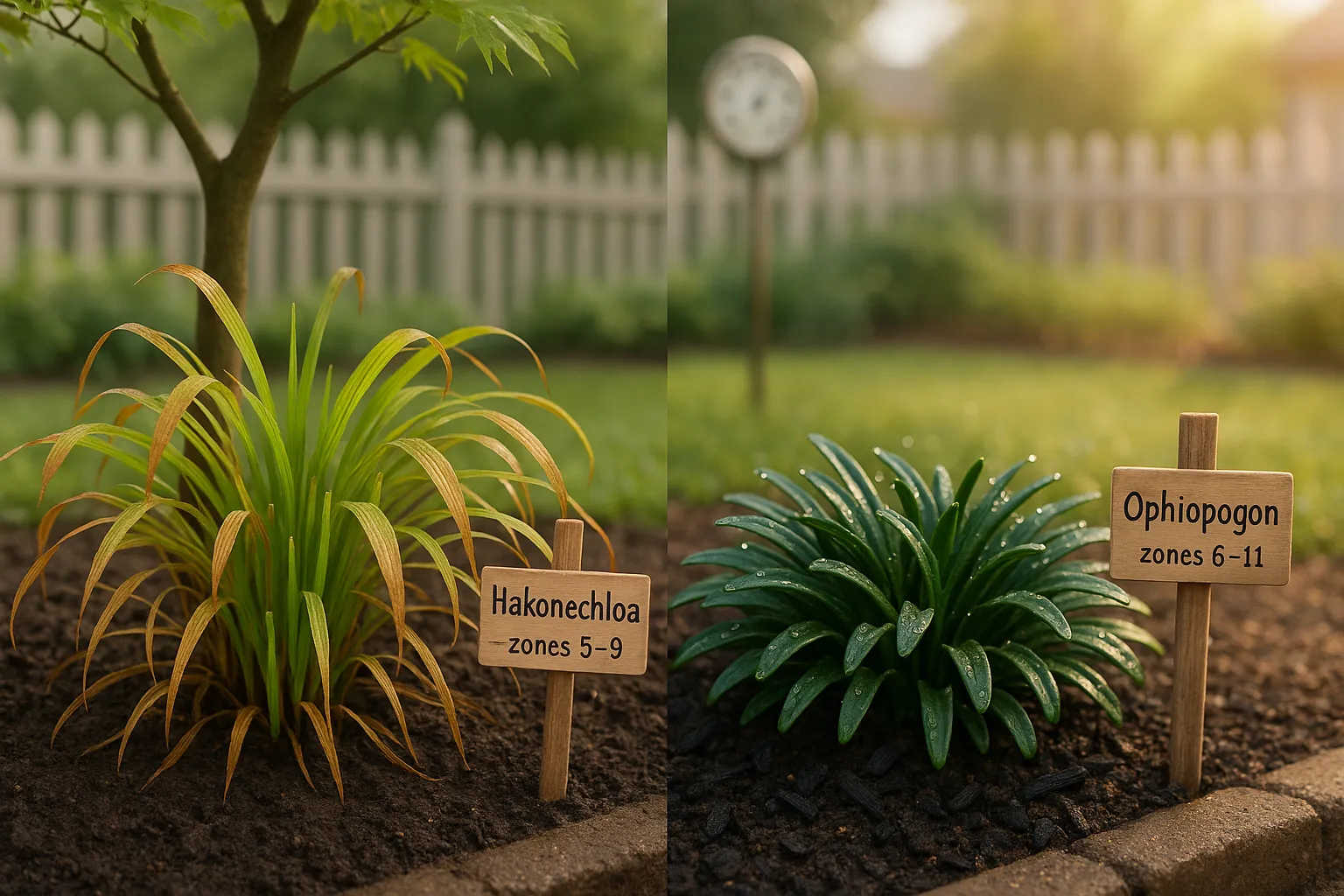
Hakonechloa macra is generally hardy in USDA zones 5–9. Some cultivars may be more tender: check plant tags. Ophiopogon japonicus handles a broader range, typically zones 6–11 for common cultivars like ‘Nana’, with some southern strains hardy to zone 5 in sheltered sites. If you are in zone 5, select cold-hardy Hakonechloa or protected Ophiopogon microclones.
Heat, Humidity, And Winter Behavior
Hakonechloa can struggle in high heat and humidity: leaves may scorch in hot, direct afternoon sun. Provide shade and extra moisture in hot climates. Ophiopogon tolerates heat and humidity better, and it resists leaf scorch. In cold winters, Hakonechloa dies back and then regenerates in spring: Ophiopogon often stays evergreen in milder winters and may retain dark foliage even under snow until thaw.
Maintenance, Propagation, And Longevity [8zl0ycQq_jSGTL1y7ZGRV]
Fact: Maintenance needs are low to moderate, but both respond well to occasional care.
Routine Care: Pruning, Grooming, And Division Frequency
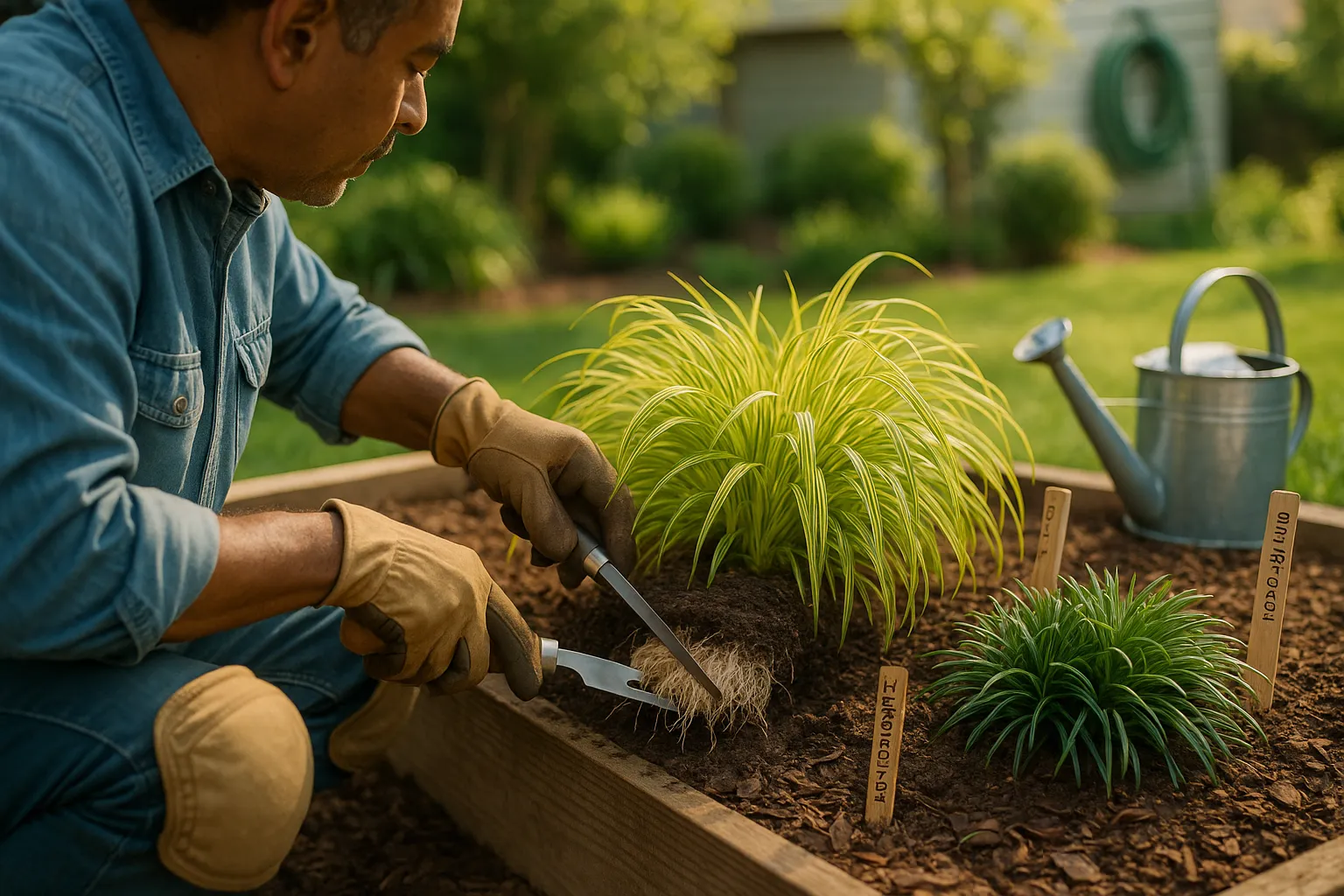
Hakonechloa benefits from a spring tidy: remove old foliage before new shoots appear. You may also trim back damaged leaves through summer. Divide clumps every 3–4 years to refresh vigor. Ophiopogon requires less pruning: remove dead foliage in spring and divide every 4–6 years or when clumps become congested. Both plants respond well to a light mulch to conserve moisture.
Propagation Methods And Planting Tips
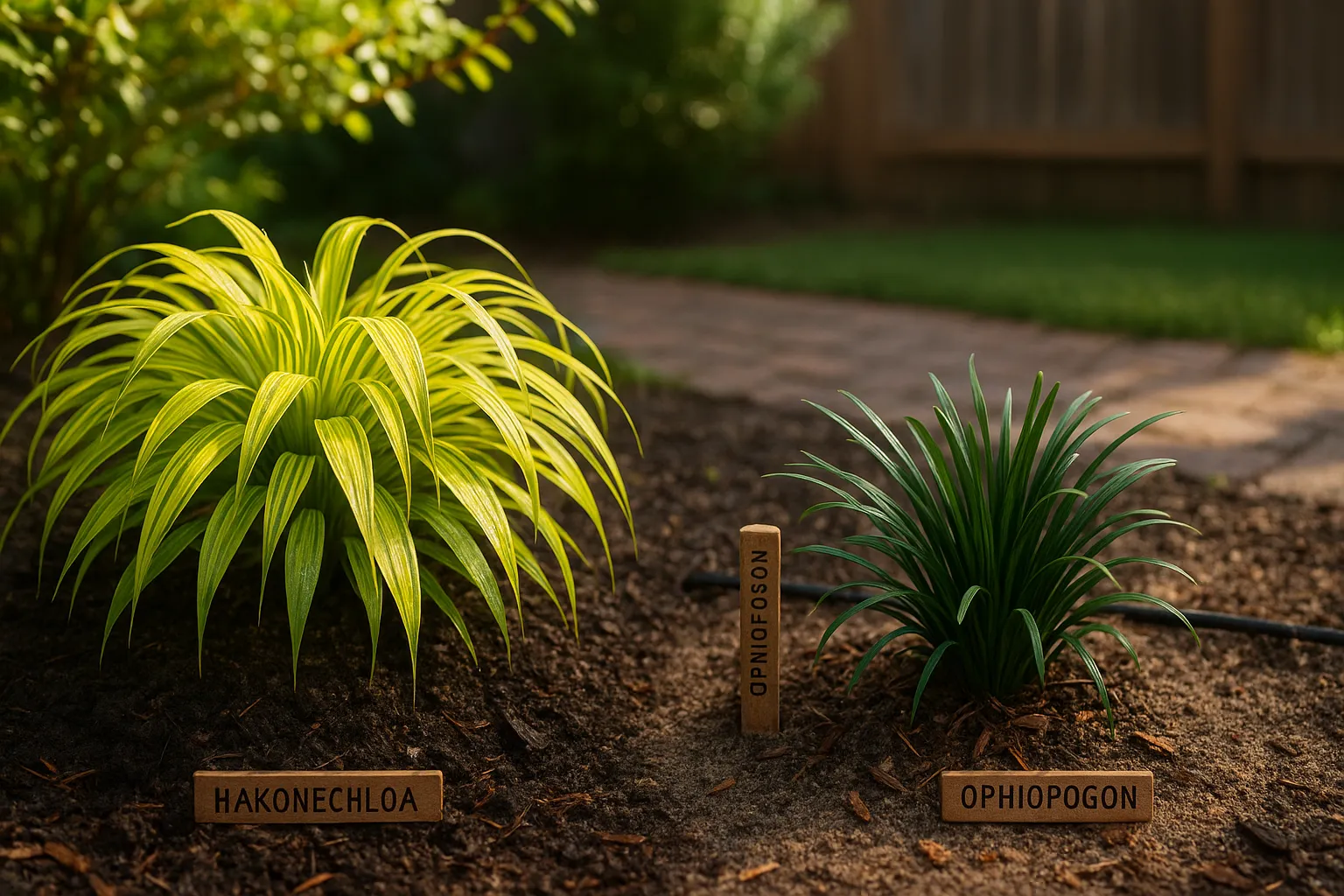
Both propagate by division. For Hakonechloa, divide in spring or early fall: take sections with several shoots and replant at the same crown depth. For Ophiopogon, divide in spring after growth resumes: plant crowns slightly above soil for good crown health. Plant spacing: Hakonechloa 12–18 inches apart to allow mounding: Ophiopogon 6–9 inches apart for a carpet effect. Use clean, sharp tools to limit disease spread.
Pests, Diseases, And Common Problems
Hakonechloa can suffer slug and snail damage in wet conditions and occasional crown rot in poorly drained soils. Ophiopogon resists many pests but can attract slugs too, and it may show fungal leaf spots in overly wet, shaded beds. Good air circulation, avoid overhead watering, and proper soil drainage cut risk. Honest note: I’ve lost ‘Aureola’ to rot in heavy clay, raised beds fixed that problem for me.
Landscape Uses, Design Tips, And Planting Combinations [AtRZpTu1heDalhz8krgFy]
Fact: Use each plant where its visual strengths matter most.
Best Applications: Groundcover, Edging, Containers, And Underplanting
Hakonechloa shines as a drift planting under Japanese maples, near ponds, or along shaded paths where its flowing habit softens hard edges. It also works in containers with spring bulbs. Ophiopogon excels as low edging, in rock gardens, and under evergreen shrubs where a tidy, evergreen carpet is desired. Ophiopogon is also great in narrow strips beside walkways.
Companion Plants And Design Pairings For Shade Gardens
Pair Hakonechloa with Acer palmatum (Japanese maple), Hosta ‘Sum and Substance’, Astilbe, and ferns like Athyrium. These plants match its softness and moisture needs. Pair Ophiopogon with boxwood, hellebore (Helleborus), Heuchera cultivars, and shade-tolerant hellebores: the contrast of small blades against broader leaves reads crisp and formal. Use plants from nurseries like White Flower Farm for reliable cultivar availability.
Site Preparation And Planting Layout Suggestions
Prepare the bed by adding 2–3 inches of compost and ensuring good drainage. For Hakonechloa, create small drifts of 3–5 plants to mimic natural clumps. For Ophiopogon, plant in staggered rows, 6–9 inches apart, for quick matting. Mulch lightly with shredded bark: avoid deep mulch at the crown to prevent rot. Water in well and mark rows so you don’t accidentally step on young crowns.
Quick Decision Guide: Which To Choose For Your Garden [-B_xu6eXZhR3x82GS8MHr]
Fact: Your site conditions and design goals decide the winner.
Choose Hakonechloa When… (Strengths And Ideal Conditions)
Choose Hakonechloa when you want flowing motion, bright variegation, and fall color in a shaded border. Ideal if your site has morning sun and afternoon shade, rich soil, and reliable moisture. It’s the pick for a natural, soft aesthetic under Japanese maples or near water features.
Choose Ophiopogon When… (Strengths And Ideal Conditions)
Choose Ophiopogon when you need an evergreen, low-maintenance carpet that tolerates deep shade, heat, and tighter spaces. It’s better for edging, massing in formal beds, or under evergreen shrubs where year-round structure matters. Ophiopogon ‘Nana’ is especially good for low profiles and pathways.
Practical Planting Checklist And Final Considerations
Test your soil and amend with compost if it’s poor.
Match plant to light: deeper shade = Ophiopogon: dappled/part sun = Hakonechloa.
Space plants appropriately: Hakonechloa 12–18″: Ophiopogon 6–9″.
Plan for moisture: add mulch and provide weekly water in dry spells for Hakonechloa.
Buy named cultivars from reputable nurseries (e.g., Monrovia, Proven Winners) to ensure true-to-type plants.
If you want movement and seasonal color, pick Hakonechloa. If you want evergreen structure and tough shade tolerance, pick Ophiopogon. Either choice will improve a shady bed when you plant thoughtfully and care for them in their preferred conditions.
To provide the best experiences, we use technologies like cookies to store and/or access device information. Consenting to these technologies will allow us to process data such as browsing behaviour or unique IDs on this site. Not consenting or withdrawing consent, may adversely affect certain features and functions.
Functional
Always active
The technical storage or access is strictly necessary for the legitimate purpose of enabling the use of a specific service explicitly requested by the subscriber or user, or for the sole purpose of carrying out the transmission of a communication over an electronic communications network.
Preferences
The technical storage or access is necessary for the legitimate purpose of storing preferences that are not requested by the subscriber or user.
Statistics
The technical storage or access that is used exclusively for statistical purposes.The technical storage or access that is used exclusively for anonymous statistical purposes. Without a subpoena, voluntary compliance on the part of your Internet Service Provider, or additional records from a third party, information stored or retrieved for this purpose alone cannot usually be used to identify you.
Marketing
The technical storage or access is required to create user profiles to send advertising, or to track the user on a website or across several websites for similar marketing purposes.