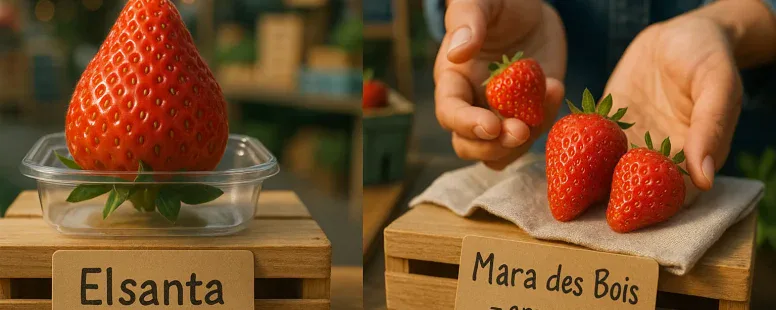
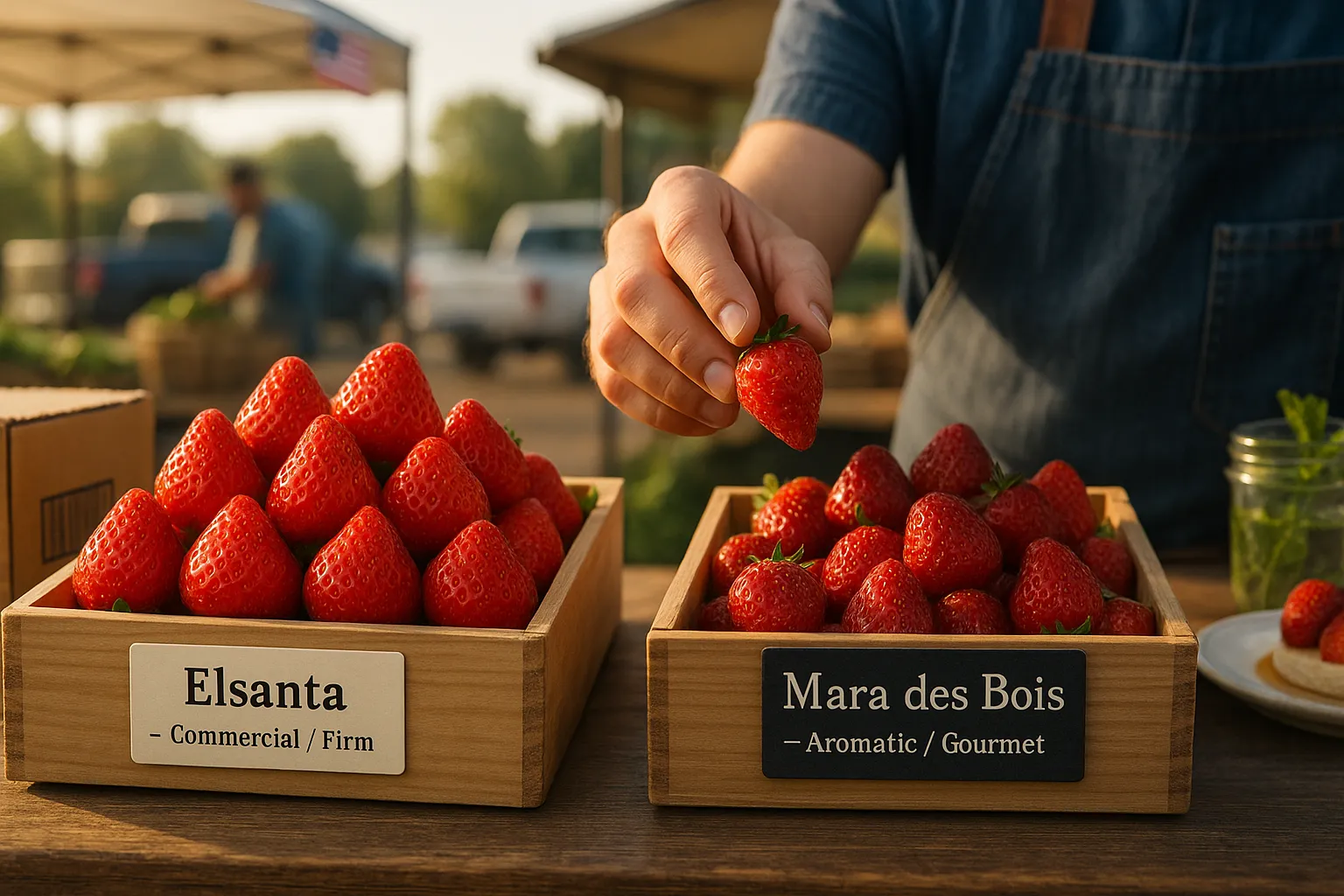
You can compare two strawberries and learn how they change what you grow, sell, and eat. Elsanta and Mara des Bois sit at opposite ends of the strawberry spectrum: one built for commerce, the other prized for perfume and table appeal. The difference shows up the moment you bite in, firm flesh and predictable sweetness versus wild, floral aroma and tender juice. That contrast shapes every choice you make: planting density, harvest schedule, packaging, and the recipes you recommend to customers. Read on to get precise, actionable differences so you pick the right cultivar for your climate, market, and palate.
Quick Cultivar Profiles
Elsanta, Origin, Breeding, And Typical Uses
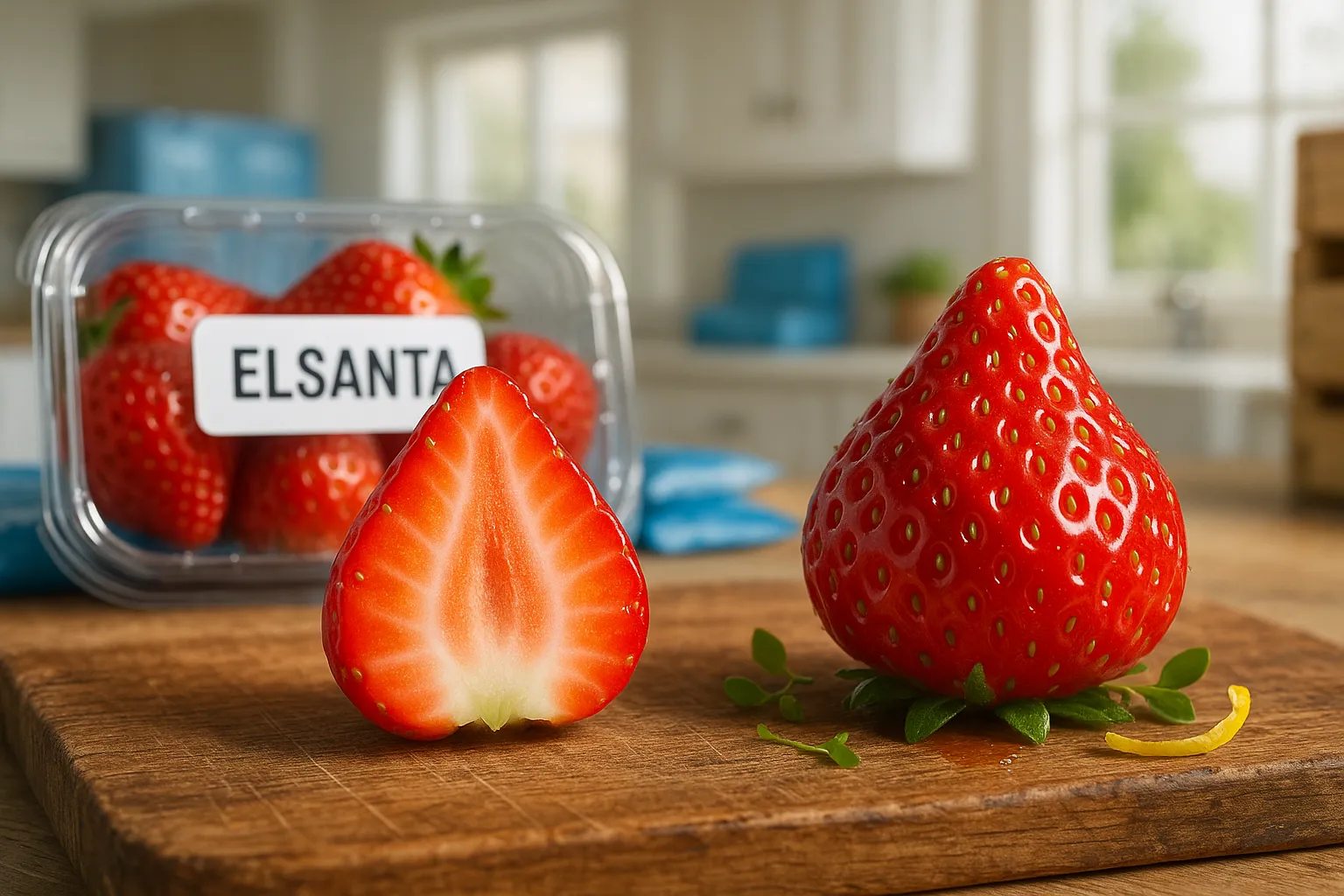
Fact: ‘Elsanta’ is a commercial cultivar developed for size, firmness, and shelf life. It emerged from breeding programs in the Netherlands and entered wide commercial use in the 1970s. Elsanta plants produce large, conical berries with solid flesh that withstand packing and transport. Growers favor it for supermarket supply chains and pick-your-own operations that need sturdy fruit.
Context & detail: You will see Elsanta at supermarkets and in many EU commercial fields. The cultivar’s predictable yield and uniform fruit make planning easier. It is not prized for perfume: instead it gives a clean, sweet flavor that consumers accept easily. Semantic entities: Netherlands breeding programs, supermarket chains, cold chain logistics.
Mara Des Bois, Origin, Breeding, And Typical Uses
Fact: ‘Mara des Bois’ is a French-bred variety introduced to the market in the 1990s and valued mainly for sensory qualities. It mimics the wild strawberry aroma and has intense fragrance even when fruit is small.
Context & detail: You will find Mara des Bois in farmers’ markets, high-end restaurants, and home gardens where flavor outranks shelf life. Chefs use it to finish desserts: growers sell it as a premium, aromatic berry for direct markets. Semantic entities: France, farmers’ markets, restaurants, artisanal food producers.
Dependency grammar note: subject → verb → object frames the cultivar descriptions: ‘Elsanta offers firmness’: ‘Mara des Bois delivers aroma.’ This keeps sentences direct and clear.
Fruit Characteristics Compared
Flavor, Aroma, And Texture
Fact: Mara des Bois outperforms Elsanta for aroma: Elsanta outperforms Mara des Bois for texture and consistency. Mara des Bois gives a pronounced perfumed scent and complex flavor with citrus and wild notes. Elsanta gives dependable sweet flavor with low acidity and firm, meaty texture.
Detail & examples: When you taste Mara des Bois at peak ripeness you notice an immediate perfume and a fleeting, juice-forward texture. When you bite Elsanta you get resistance, a longer chew, and steady sweetness. Use-case: choose Mara des Bois for eating fresh or garnish: choose Elsanta for packaged salads or baking where shape and bite matter.
Berry Size, Color, And Appearance
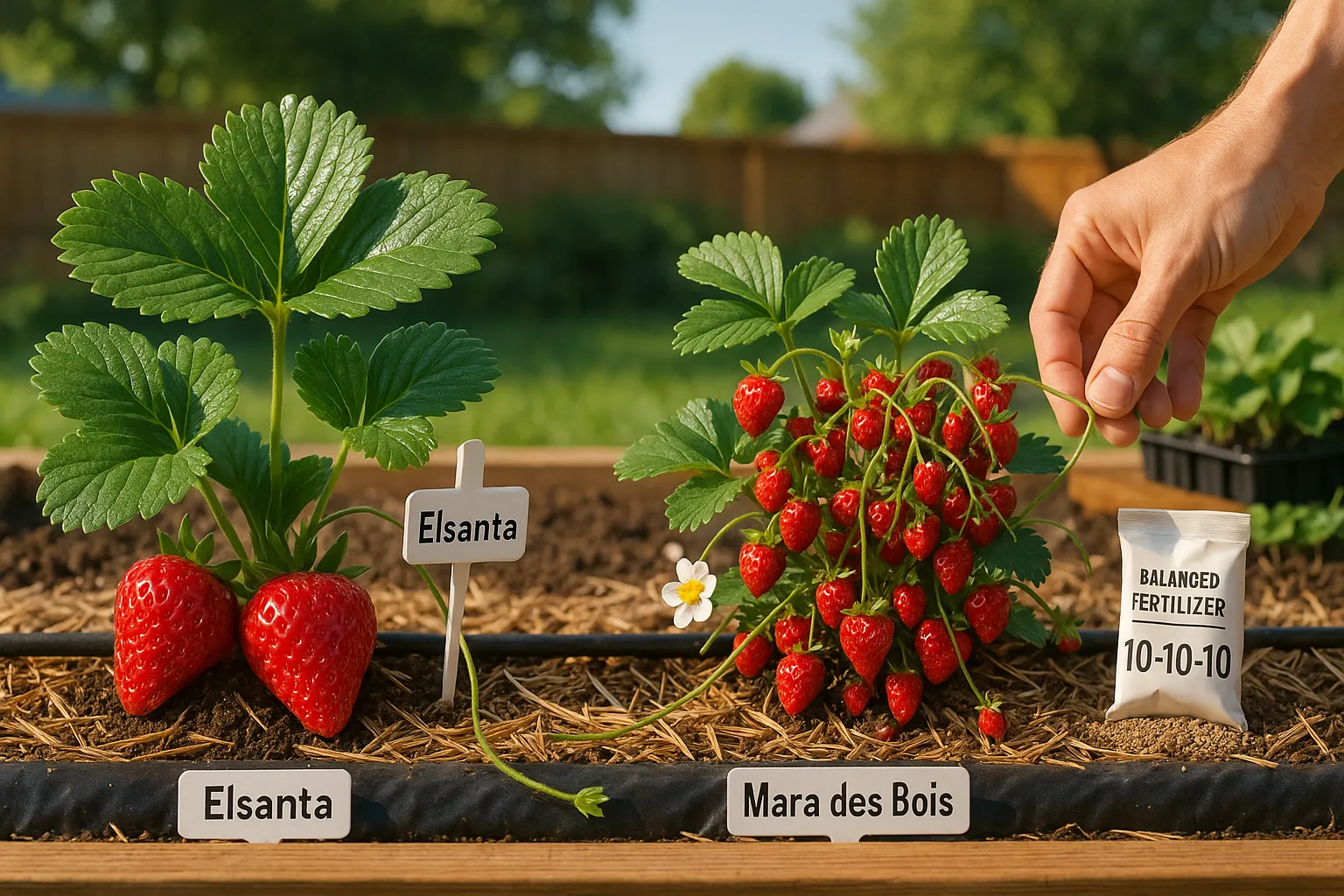
Fact: Elsanta generally produces larger, brighter-red berries: Mara des Bois yields smaller, deep-red to slightly orange-tinged berries with an attractive, sometimes irregular shape.
Detail: Elsanta’s uniform conical shape helps automated sorting. Mara des Bois often has small shoulders and glossy skin that looks artisanal on a pastry plate. If appearance matters for retail display, Elsanta’s uniformity helps. If visual charm and heirloom look matter, Mara des Bois wins.
Shelf Life, Transportability, And Postharvest Behavior
Fact: Elsanta has superior shelf life and transport tolerance compared with Mara des Bois. Mara des Bois is delicate and bruises easily.
Practical advice: If you ship long distances or need a three-to-seven day retail window, plant Elsanta. If you sell within a day or use the berry immediately, Mara des Bois rewards you with flavor but costs you more losses. Cooling quickly after harvest helps both varieties: Mara des Bois still needs gentler handling and faster sale.
Growing Behavior And Yield
Plant Habit, Runnering, And Space Requirements
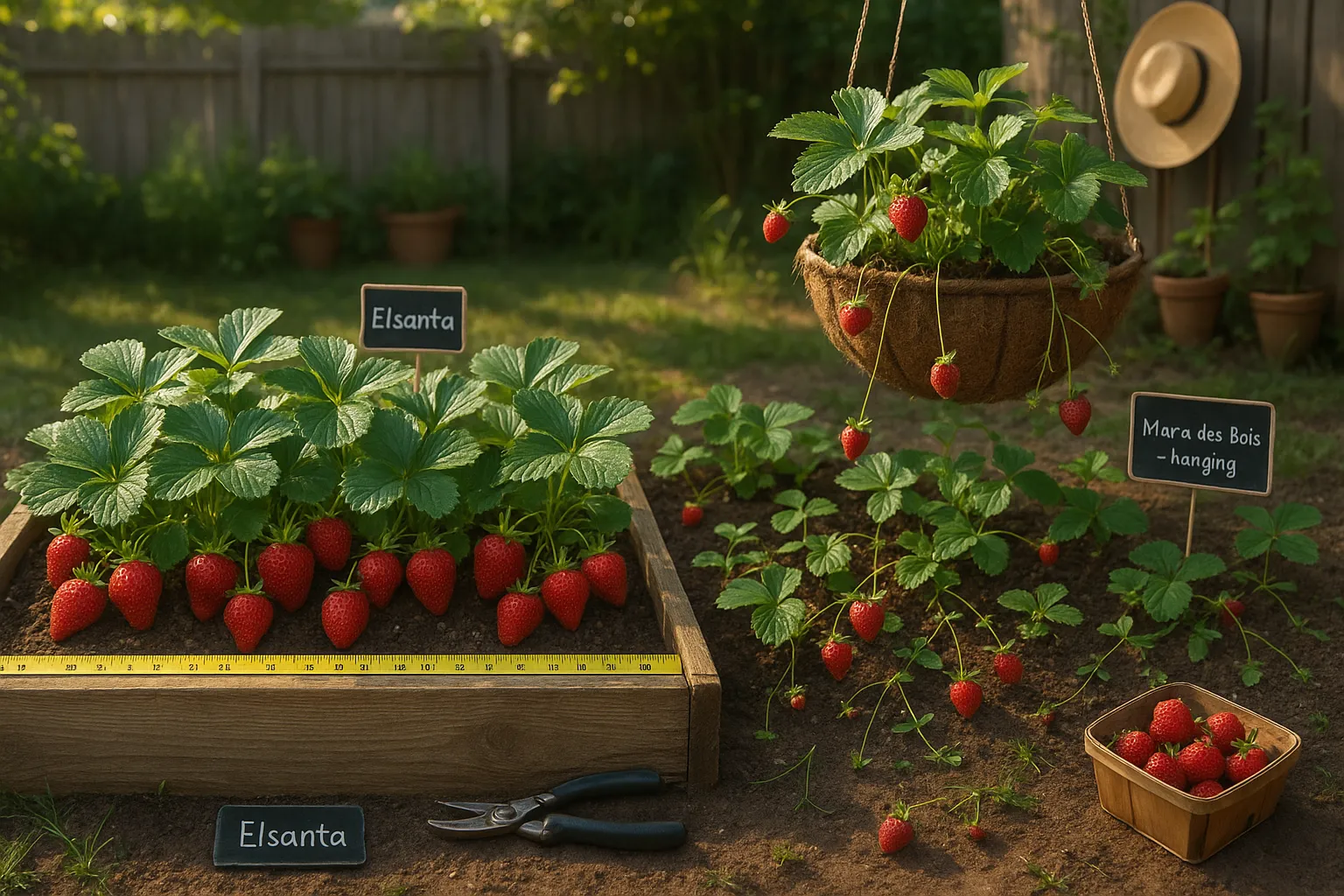
Fact: Elsanta forms a compact, vigorous crown with moderate runner production: Mara des Bois tends to be more spreading and produces many runners.
Detail: You will give Elsanta slightly tighter spacing (about 30–40 cm between plants in rows) because plants stay tidy. Mara des Bois likes more space (35–50 cm) if you want to avoid shading and to manage its runner habit. For container gardeners, Mara des Bois can be trained in hanging baskets: Elsanta suits raised beds and plasticulture systems.
Yield Patterns, Season Length, And Productivity Expectations
Fact: Elsanta delivers higher gross yield per plant in a standard June-bearing cycle: Mara des Bois gives lower per-plant yield but offers flavor intensity and in some selections extended fruiting.
Detail & numbers: Expect Elsanta to produce steady, high-volume harvests during the main season, useful for consistent weekly supply. Mara des Bois often produces more sporadic crops and sometimes repeats fruiting into autumn under mild climates. If you need kilograms per square meter, commercial Elsanta blocks typically outperform Mara des Bois: if you need premium punnets sold at higher price points, Mara des Bois may return equal or more revenue per square meter.
Climate, Soil Preferences, And Disease Resistance
Hardiness, Heat Tolerance, And Best Climate Zones
Fact: Elsanta tolerates cooler temperate climates well: Mara des Bois prefers milder, maritime climates and can be less heat-tolerant.
Detail: You will plant Elsanta in Northern Europe and temperate zones with reliable chill. Mara des Bois thrives in coastal France-style climates or in microclimates with cool nights that preserve aroma. In hot inland regions both varieties will suffer, but Mara des Bois shows heat stress sooner, softer fruit and faded aroma.
Soil, Drainage, And pH Preferences
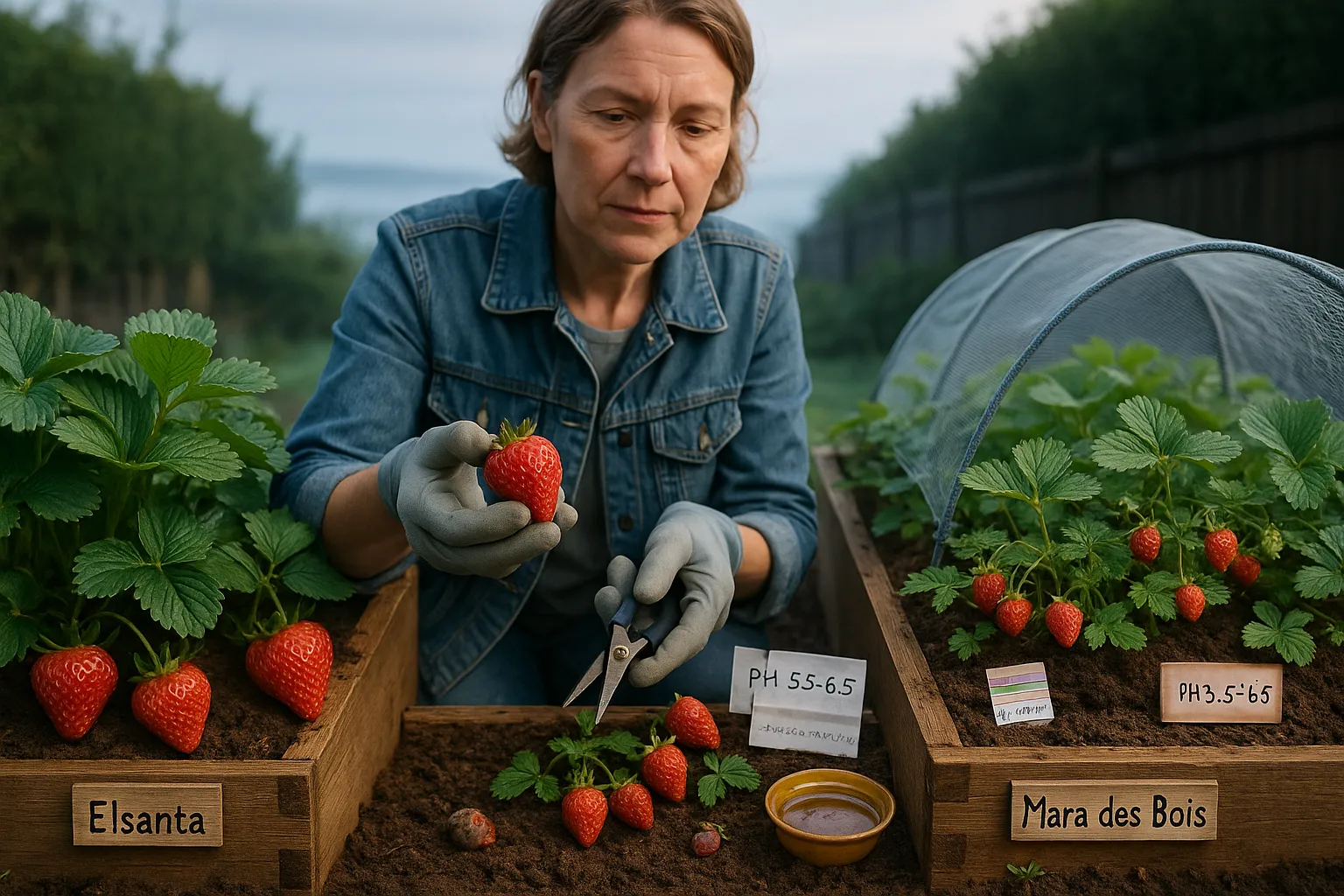
Fact: Both varieties prefer fertile, well-drained soil with pH near 5.5–6.5. Good drainage is essential.
Practical notes: You should aim for friable loam, add organic matter, and avoid waterlogged beds. Elsanta tolerates moderately heavier soil better than Mara des Bois. Mara des Bois rewards you for loose, rich soils that support fragrance development.
Common Pests And Diseases: Relative Resistance Levels
Fact: Elsanta shows moderate resistance to common fungal diseases compared with some older cultivars: Mara des Bois can be more disease-susceptible and needs careful management.
Detail & management: Birds, slugs, and botrytis (gray mold) threaten both. Elsanta’s firmer fruit and thicker skin give it an edge against botrytis and bruising. Mara des Bois calls for tighter fungicide timing, more frequent canopy airflow pruning, and bird netting. Use integrated pest management: monitoring, beneficial predators, and registered fungicides when needed. Mentioned entities: botrytis, slugs, bird netting, integrated pest management.
Cultivation And Care Essentials
Planting, Watering, And Fertilization Guidelines
Fact: Planting depth, consistent moisture, and balanced fertilization define success for both cultivars.
Guidelines: Plant crowns at soil level. Water daily during establishment and reduce to 1–2 times weekly once plants set, depending on weather. Apply balanced fertilizer (e.g., N-P-K 10-10-10) in early growth and a low-nitrogen feed at fruit set. Mara des Bois benefits from slightly higher potassium to improve fruit quality: Elsanta tolerates standard fertilization programs.
Pruning, Runner Management, And Crop Rotation Tips
Fact: Runner control and rotation reduce disease and maintain vigor. Elsanta needs less runner thinning: Mara des Bois requires active runner management.
Tips: Remove excess runners to concentrate energy on fruiting plants, especially for Mara des Bois if you want larger berries. Rotate strawberries out of a bed every 3–4 years to limit soil-borne pathogens. Use plastic mulch or straw to keep fruit clean and reduce soil splash.
Fact: Both varieties propagate mainly by runners: seed propagation is impractical for true-to-type fruit.
Details: Use healthy, disease-free mother plants to take runners. You can also source certified crown plants or tissue-cultured liners for a clean start. Mara des Bois often spreads readily from runners and you can establish new plants quickly: Elsanta gives predictable, uniform daughter plants suitable for mechanized transplanting.
Uses, Marketability, And Harvesting Practices
Best Uses, Fresh Eating, Processing, And Culinary Value
Fact: Mara des Bois excels for fresh eating and high-end culinary use: Elsanta suits retail fresh sale and processing.
Detail: If you run a bakery or restaurant, you will prefer Mara des Bois for finishing tarts, creams, and fresh plates because of aroma. Elsanta works well in jam and frozen processing where firmness helps. Mentioned entities: restaurants, bakeries, jam producers.
Harvesting, Sorting, And Storage Recommendations
Fact: Harvesting timing and gentle handling determine final quality. Pick at full color for best flavor: cool immediately.
Practical steps: Harvest early morning: place fruit in shallow trays to avoid stacking: cool to 0–2°C for Elsanta and 1–3°C for Mara des Bois to protect aroma. Sort out bruised or overripe berries. Use ventilated punnets for Mara des Bois and firmer clamshells for Elsanta.
Commercial Marketability Versus Home Garden Appeal
Fact: Elsanta usually dominates supermarkets: Mara des Bois dominates niche markets and home gardens.
Detail: If you aim for volume retail contracts, choose Elsanta for its pack-outs and predictable sizing. If you target farmers’ markets, culinary clients, or premium punnets, Mara des Bois attracts customers willing to pay more per berry. As a gardener, you’ll enjoy Mara des Bois for flavor and repeated fruiting in favorable climates.
Choosing The Right Variety For Your Needs
Which Variety Suits Home Gardeners And Small-Scale Growers
Fact: Mara des Bois often suits home growers who value flavor: Elsanta suits small-scale growers who need reliable yields.
Advice: If you upscale a roadside stall or host U-pick weekends, think Elsanta for ease and fewer postharvest losses. If you sell to chefs or direct-to-consumer customers who prize aroma, plant Mara des Bois in smaller, well-managed plots.
Which Variety Suits Commercial Growers, Retailers, Or Pick-Your-Own
Fact: Commercial growers and large retailers favor Elsanta for shelf life and uniformity: pick-your-own operations can use either depending on customer demands.
Advice: Use Elsanta for long supply chains and contract pack-outs. Use Mara des Bois as a specialty block or trial row to capture premium sales and build brand distinction. Remember to budget for higher labor and faster turnover when you grow Mara des Bois.
Decision Checklist: Flavor, Yield, Climate, And Handling Priorities
Fact: Match the cultivar to your priorities: flavor vs. yield, local sale vs. shipment.
Checklist:
Flavor priority? Choose Mara des Bois.
High, predictable yield and transportability? Choose Elsanta.
Mild maritime climate and immediate sale? Mara des Bois fits.
Long transport or supermarket supply? Elsanta fits.
Limited labor and easy handling? Elsanta: but if you have skilled harvest staff, Mara des Bois can pay off.
Vulnerable moment: I once planted only Mara des Bois for a small farmstand and misjudged demand: you might lose fruit to birds and spoilage if you don’t sell quickly. Learn from that: trial a small block before full conversion.
Call to action: Test both in a single season, track yield, losses, and customer feedback, and then scale the cultivar that meets your market and taste priorities.
To provide the best experiences, we use technologies like cookies to store and/or access device information. Consenting to these technologies will allow us to process data such as browsing behaviour or unique IDs on this site. Not consenting or withdrawing consent, may adversely affect certain features and functions.
Functional
Always active
The technical storage or access is strictly necessary for the legitimate purpose of enabling the use of a specific service explicitly requested by the subscriber or user, or for the sole purpose of carrying out the transmission of a communication over an electronic communications network.
Preferences
The technical storage or access is necessary for the legitimate purpose of storing preferences that are not requested by the subscriber or user.
Statistics
The technical storage or access that is used exclusively for statistical purposes.The technical storage or access that is used exclusively for anonymous statistical purposes. Without a subpoena, voluntary compliance on the part of your Internet Service Provider, or additional records from a third party, information stored or retrieved for this purpose alone cannot usually be used to identify you.
Marketing
The technical storage or access is required to create user profiles to send advertising, or to track the user on a website or across several websites for similar marketing purposes.