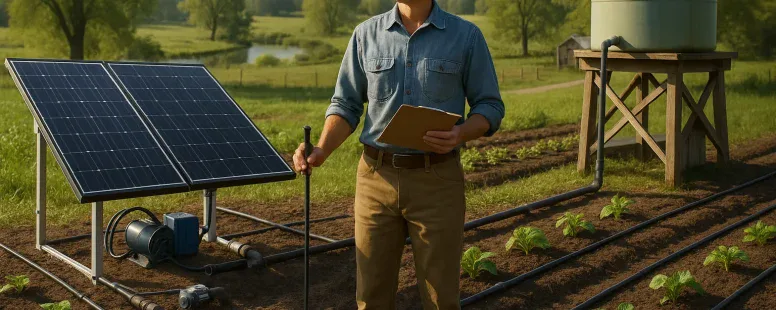
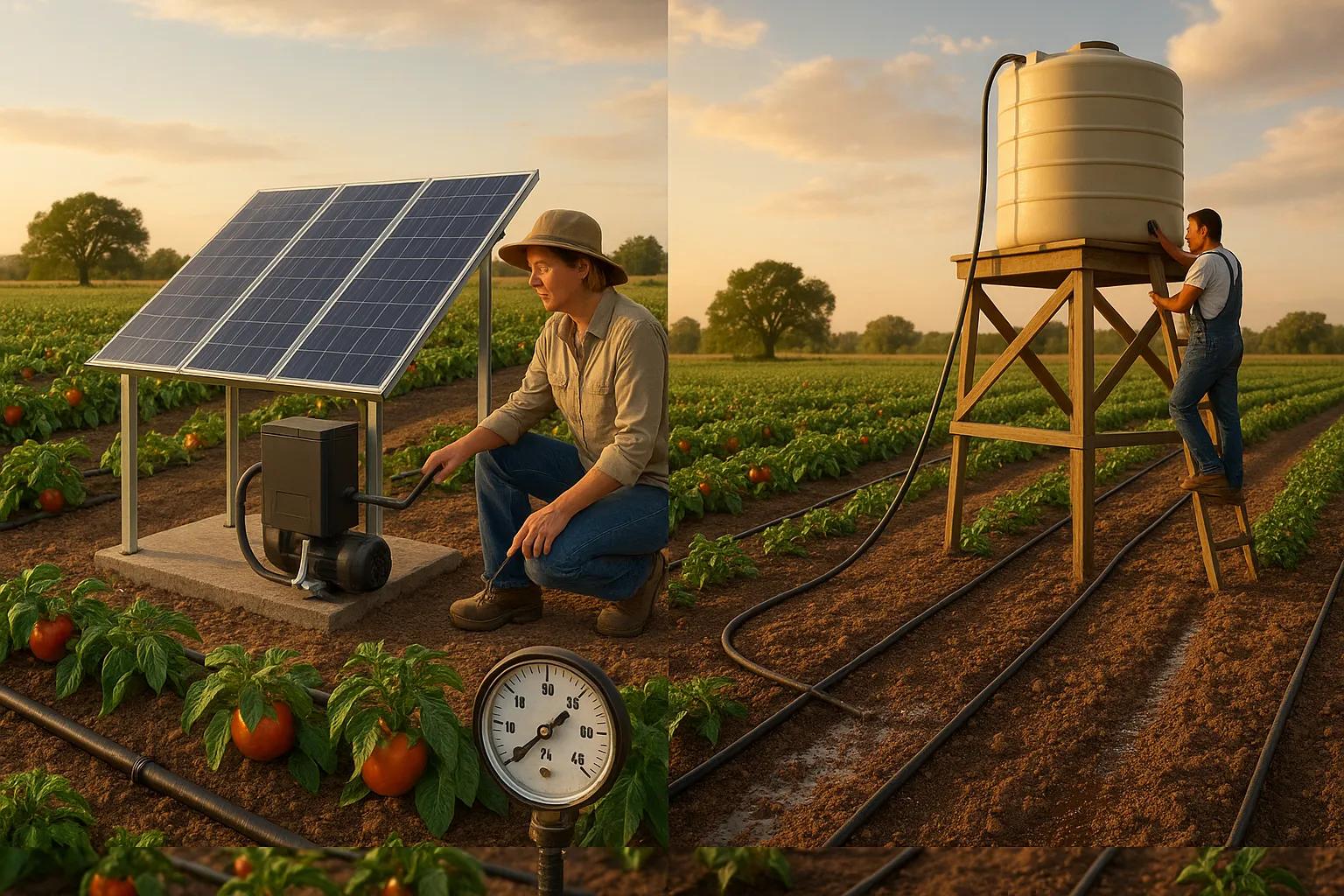
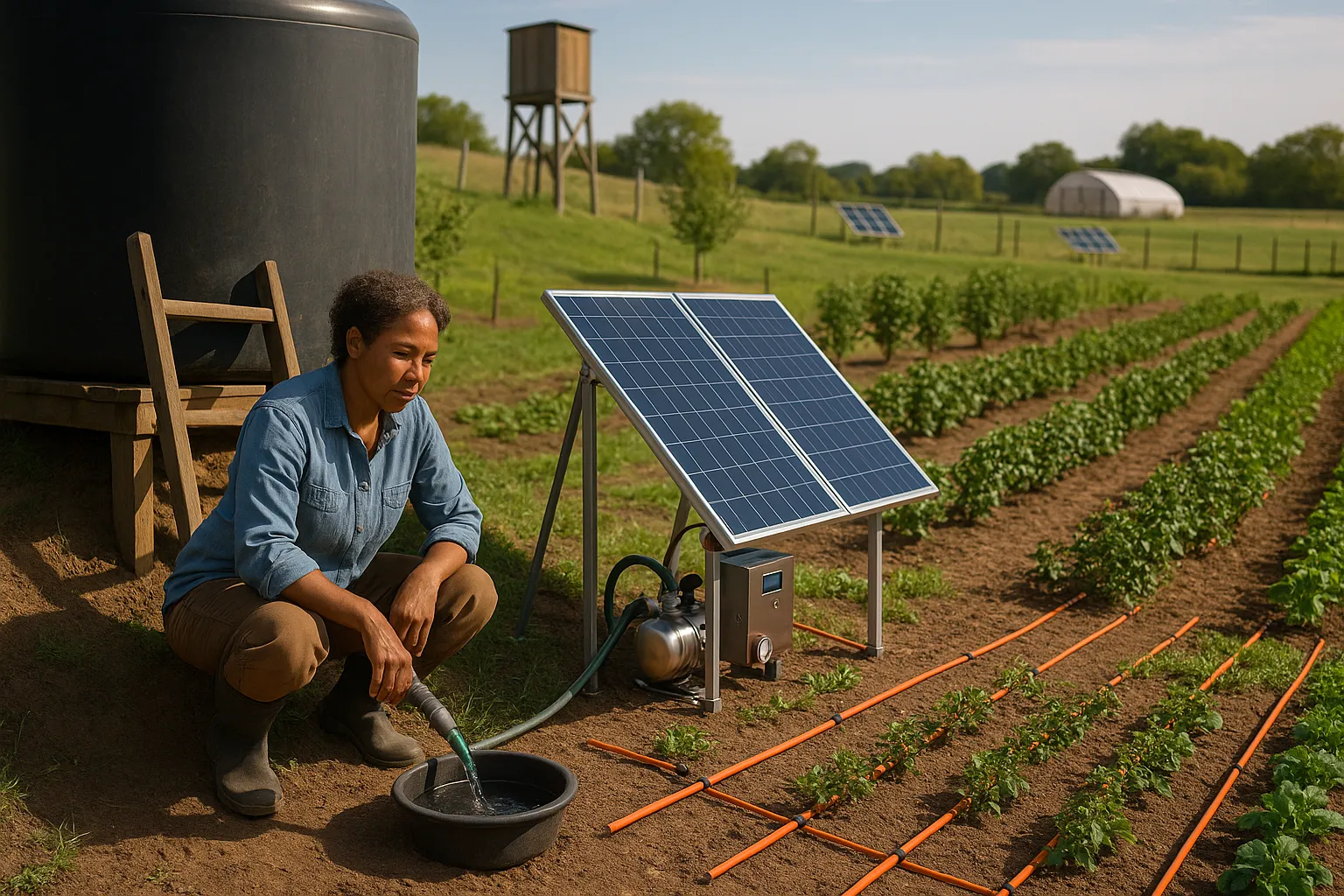
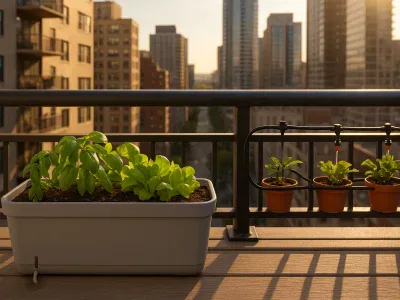
You can cut water waste and lower operating cost by choosing the right irrigation method for your land. Picture a sun-warmed panel humming quietly while a precise drip line feeds thirsty roots drop by drop, or picture a simple tank on a hill delivering steady flow without electricity. Both systems deliver water, but they do so with different mechanics, demands, and trade-offs. This article compares solar-powered drip and gravity feed irrigation in plain terms, shows where each shines, and gives practical steps so you can pick and carry out the option that fits your crops, terrain, and budget.
How Each System Works: Basic Mechanics
Solar-Powered Drip: Components And Operation
Fact: Solar-powered drip uses a photovoltaic array to run a pump that pressurizes drip lines and emitters.
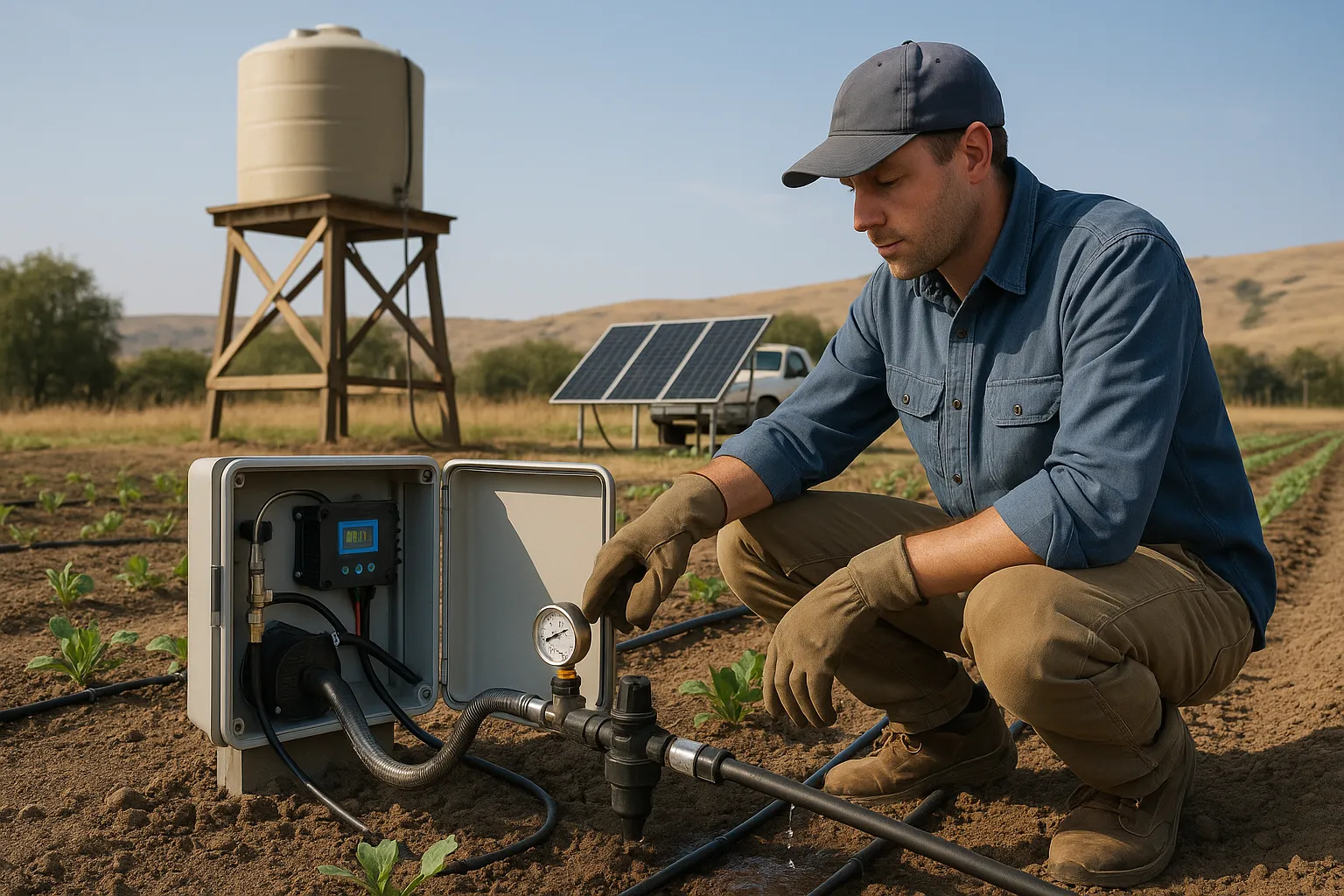
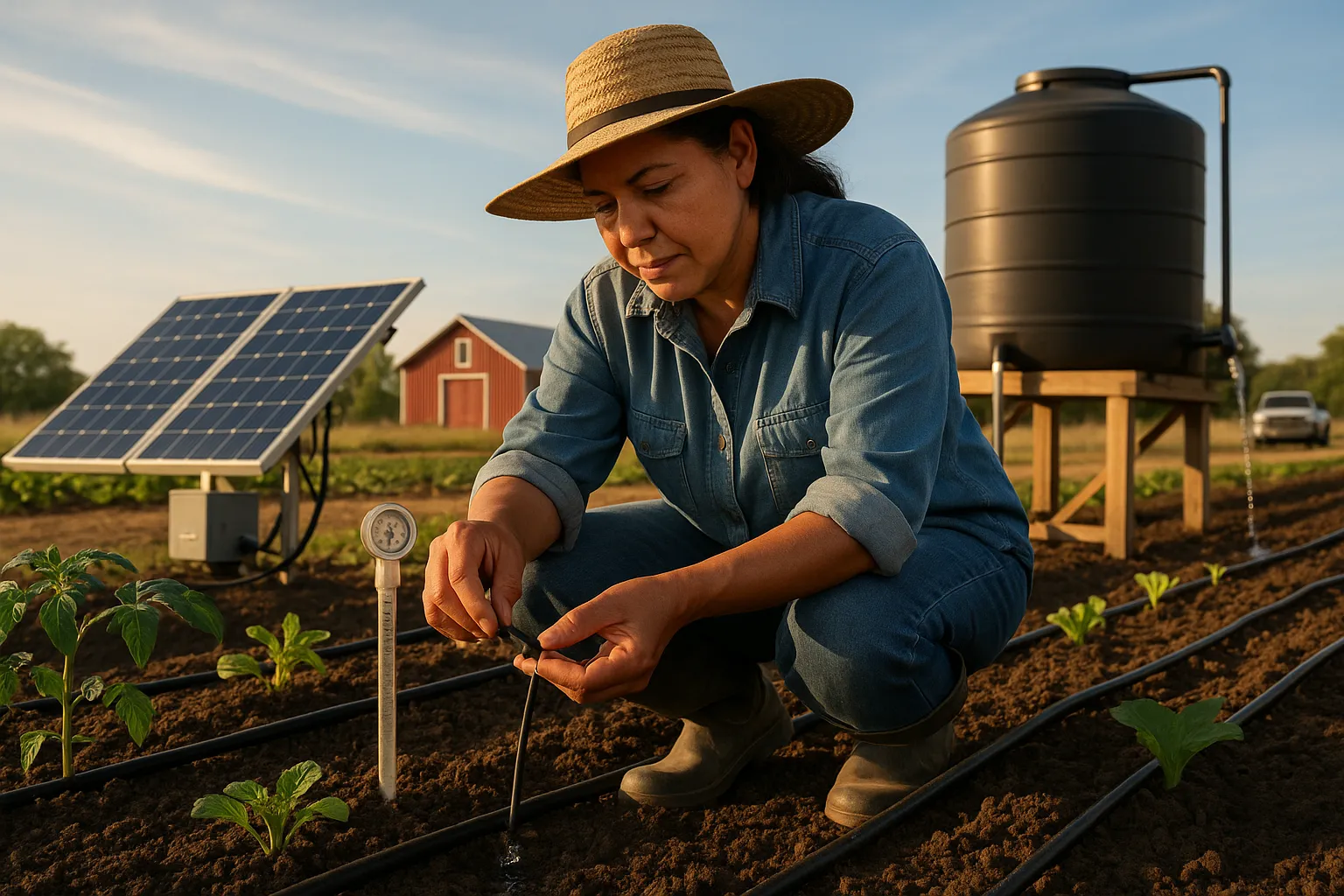
A typical solar-powered drip system includes solar panels (SunPower, Jinko, or similar), a DC pump (Shurflo, Grundfos, or Lorentz), a controller or MPPT, a pressure regulator, filters, mainlines, and drip tubing with emitters such as those from Rain Bird or Netafim. The panels convert sunlight to electricity. The controller matches panel output to the pump. The pump lifts and pressurizes water from a well, pond, or tank. Water passes through a screen or disc filter to remove particulates. A pressure regulator keeps emitter flow steady (commonly 10–30 psi). Emitters release precise volumes (0.5–4 GPH) near the root zone.
Operation is demand-driven. You run the pump on a schedule or with a soil moisture sensor. When the pump runs, emitters deliver water slowly, reducing runoff and evaporation. You can automate via a controller integrated with weather or moisture data, or operate manually. Solar arrays size to meet daily irrigation hours: battery backup is optional but adds cost and complexity.
Gravity Feed Irrigation: Components And Operation
Fact: Gravity feed relies on stored potential energy, water elevated above the field, to move water through pipes and outlets without a powered pump.
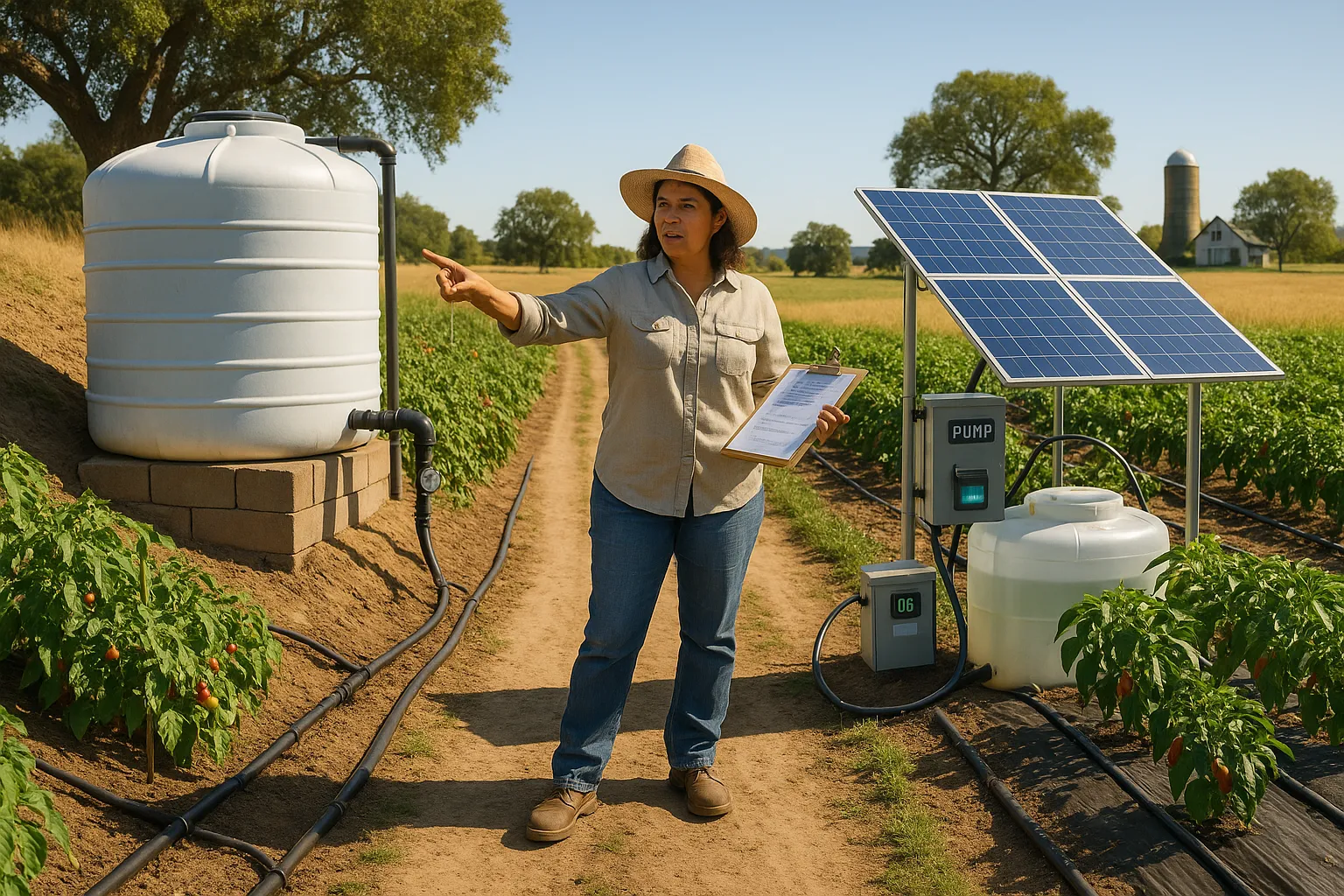
A gravity system includes a source tank (plastic, concrete, or steel), a raised support (tower, silo, or hill), supply piping, valves, filters, pressure compensating emitters, and distribution tubing. You fill the tank by truck, diversion, or with a small pump. The tank height creates hydraulic head: 1 foot of head equals about 0.43 psi. To reach common drip pressures you need substantial head, often 30–50 feet, or the use of low-pressure emitters and large-diameter tubing.
When you open a valve, water flows by gravity. You can zone the field using valves or float-controlled outlets. Gravity systems are simple and durable. They stop working when the tank empties or when source inflow doesn’t keep up with demand.
Performance Comparison: Key Criteria To Evaluate
Water Efficiency And Delivery Uniformity
Fact: Drip irrigation yields high water efficiency: solar pumps don’t change emitter precision.
Both systems use drip lines, so baseline emitter uniformity is similar. Solar-driven systems maintain pressure more consistently, which improves uniformity across long runs. Gravity systems often show pressure drop along a lateral unless you design for equal head or use pressure-compensating emitters. For water-limited farms, solar-plus-drip typically saves more water because you can run frequent short cycles tied to crop demand.
Energy Use, Reliability, And Weather Dependence
Fact: Solar systems need sunlight: gravity systems need a reliable fill source.
Solar pumps require sun: panels produce less on cloudy days. If you lack batteries, that reduces reliability during extended overcast periods. Brands like Lorentz make MPPT controllers to squeeze more output from weak sun. Gravity systems skip electricity but depend on source availability and tank fill logistics. Both are weather-dependent in different ways: solar on insolation, gravity on catchment and refill events (rain or upstream flow).
Cost Breakdown: Installation And Long-Term Expenses
Fact: Solar systems have higher upfront capital cost: gravity systems cost less up front but can carry hidden labor or water purchase costs.
Solar system costs include panels ($0.40–$0.80/W for modules as of 2026), DC pump ($500–$4,000 depending on capacity), controller ($200–$1,000), and installation. Gravity systems need a tank ($300–$5,000 depending on size and mounting), piping, and possibly an access road for truck fills. Long-term, solar has low marginal energy cost and predictable maintenance: gravity may need frequent manual fills or expensive infrastructure to keep tanks full, increasing labor costs.
Maintenance, Repair Needs, And Lifespan
Fact: Solar systems require occasional panel cleaning and pump service: gravity systems need less technical upkeep but more structural checks.
Solar panels last 20–30 years with minimal care. Pumps have moving parts and may need seals, bearings, or brush replacement every 3–7 years. Gravity tanks can last decades if properly installed, but supports, inlet screens, and valves require inspection. Both systems need filter maintenance to prevent emitter clogging. Expect a higher technical repair skillset for solar pumps compared with gravity valves and tanks.
Suitability By Farm Type, Crop, And Terrain
Small-Scale And Homestead Scenarios
Fact: For homesteads with limited budget and modest water needs, gravity feed often wins for simplicity.
If you have a hill, rainwater tank, or cheap fill access, gravity feed gives reliable low-tech irrigation for kitchen gardens and orchards. It fits crops tolerant of lower uniformity, like many fruit trees or pasture. Solar systems work well if you want precision for row crops or higher efficiency, but they cost more and need some technical comfort.
High-value crops, vines, berries, greenhouse vegetables, benefit from exact delivery, fertigation, and sensor integration. Solar systems let you run micro-irrigation in remote fields without grid power. Brands like Netafim and Toro offer fertigation-ready components. Gravity rarely meets the pressure or automation expectations of commercial producers unless you invest in tall head tanks and complex controls.
Sloped, Remote, Or Water-Limited Sites
Fact: Terrain and remoteness favor solar systems unless you can site a high tank.
On a slope, you might already have head for gravity systems, making them cheap and effective. But in remote flat sites, solar arrays and a pump bring water from wells or ponds without hauling. If water is scarce, solar systems let you apply small, frequent doses precisely, improving crop survival and yield.
Environmental And Resource Considerations
Water Conservation And Soil Health Impacts
Fact: Both systems reduce evaporation compared with sprinklers: drip lines protect soil structure.
Drip irrigation, whether solar or gravity-fed, places water at the root zone, reducing surface evaporation and limiting soil crusting. More precise water delivery lowers nutrient leaching and can improve microbial activity. But poor management, like overwatering even with drip, still harms soil. Sensors and simple tensiometers help you avoid that.
Carbon Footprint And Energy Sources
Fact: Solar systems emit very low operational carbon: gravity systems have near-zero operational carbon when refilled by rain.
Solar has embodied carbon from panels and pumps but virtually zero operational emissions once installed. If you replace a diesel pump with a solar pump, you cut recurring emissions and fuel cost. Gravity systems powered by rain or manual fill also have low operational emissions, though if you use trucks to refill tanks or run diesel pumps to top tanks, your carbon footprint can rise. Consider lifecycle impacts: reputable module manufacturers (SunPower, REC) publish lifecycle assessments you can consult.
Decision Framework: How To Choose Between Systems
Simple Checklist For Selecting The Best Option
Fact: Choose based on water source, head availability, budget, crop value, and technical capacity.
Do you have reliable sun? If yes, solar is attractive.
Is there a natural high point or cheap way to raise a tank? If yes, gravity is cost-efficient.
Do you grow high-value, water-sensitive crops? If yes, favor solar-powered precision.
Can you afford higher upfront cost for automation and reduced labor? If yes, evaluate solar.
Do you lack technical skills or service access? If yes, gravity reduces complexity.
Hybrid And Transition Strategies (Combining Both)
Fact: Combining systems gives resilience: use gravity for base flow and solar for peak demand.
You can fill a hillside tank with a small solar pump during the day and gravity-feed at night for steady pressure. Alternatively, use solar pumps to fill storage that feeds a low-pressure gravity network, letting you standardize emitters and reduce pump runtime. Hybrid designs smooth supply when weather, demand, or budgets fluctuate. Many farmers start with gravity and add solar later to increase precision.
Practical Implementation Tips And Common Pitfalls
Sizing, Pump And Solar Panel Selection (If Choosing Solar)
Fact: Size panels to match daily water volume and pump head: undersizing causes short cycles.
Calculate daily demand: area × crop factor × ET. Choose a pump with flow and head margin. Match panel wattage to pump input: use MPPT controllers to improve efficiency. Example: a 1,500 L/day demand at 30 m head might need a 1,200–1,800 W panel array and a 1–2 kW pump. Add a small battery or supercapacitor if you need early-morning runs. Test system performance before burying lines.
Designing Reliable Gravity Systems: Head, Filters, And Control
Fact: Achieve uniform flow by designing for consistent head, using pressure compensating emitters, and regular filter maintenance.
Ensure tank height gives adequate psi for your chosen emitters. Use large-diameter mains to reduce friction loss. Install a good sand or disc filter at the tank outlet. Put valves and simple float switches to protect against dry-run and overflow. Label zones and keep access points for flushing.
Maintenance Schedule, Winterizing, And Troubleshooting Basics
Clean filters weekly during heavy use, then monthly in slow seasons. Flush laterals quarterly. Winterize by draining lines or using blowout air in freezing climates. If you see pressure loss, check panels for shading, clean filters, inspect pump seals, and test for leaks. For gravity systems, inspect tank supports and inlet screens: replace failed valves promptly. Keep spare emitters, basic tools, and a simple multimeter on site.
To provide the best experiences, we use technologies like cookies to store and/or access device information. Consenting to these technologies will allow us to process data such as browsing behaviour or unique IDs on this site. Not consenting or withdrawing consent, may adversely affect certain features and functions.
Functional
Always active
The technical storage or access is strictly necessary for the legitimate purpose of enabling the use of a specific service explicitly requested by the subscriber or user, or for the sole purpose of carrying out the transmission of a communication over an electronic communications network.
Preferences
The technical storage or access is necessary for the legitimate purpose of storing preferences that are not requested by the subscriber or user.
Statistics
The technical storage or access that is used exclusively for statistical purposes.The technical storage or access that is used exclusively for anonymous statistical purposes. Without a subpoena, voluntary compliance on the part of your Internet Service Provider, or additional records from a third party, information stored or retrieved for this purpose alone cannot usually be used to identify you.
Marketing
The technical storage or access is required to create user profiles to send advertising, or to track the user on a website or across several websites for similar marketing purposes.