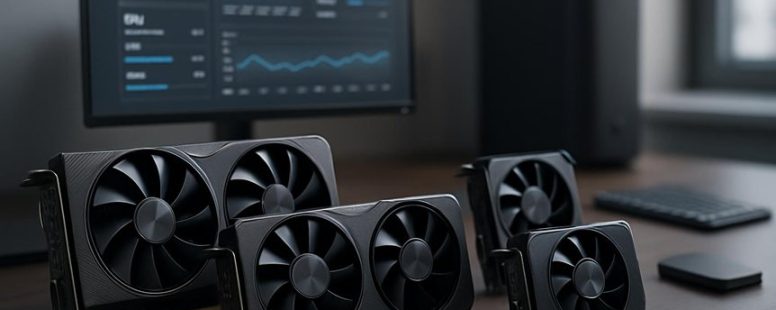
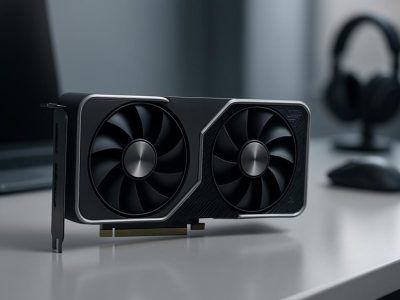
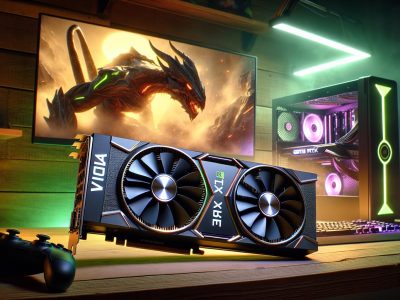
Imagine gaming so smooth and immersive that you forget you’re on a budget. In 2026, budget GPUs like the AMD Radeon RX 6500 XT and Nvidia GeForce GTX 1660 Super prove you don’t need to splurge for impressive performance.
These cards deliver crisp 1080p visuals and even ray tracing, all while sipping energy quietly in the background. What’s the secret? They’re not just affordable—they also offer surprising longevity, giving your setup a boost that lasts.
Choosing the right one is like finding the perfect puzzle piece—balancing features, cooling, and your future gaming dreams.
Choosing the Best Budget GPU: Key Factors for 2026
A budget GPU in 2026 is a graphics card that gives you decent performance without costing too much money. To find the best one, you need to compare a few key things.
First, look at how efficient the GPU is. Some budget cards now do more with less power. For example, AMD’s new Radeon RX series and Nvidia’s GeForce GTX line are focusing on saving energy while still running games smoothly. A GPU that uses less electricity saves you money on your power bill and runs cooler, so it’s less likely to overheat or break down.
Next, check out the new features that are coming to budget GPUs. Technologies like better ray tracing or AI upscaling are making games look better without needing the most expensive cards. If a budget GPU has these features, it can give you a boost in quality and keep up with new game updates longer.
You also need to think about cooling and power supply. A GPU that runs hot or needs a lot of power might cause problems or cost more to upgrade your PC. Look for reviews that talk about how cool and quiet the GPU runs, and make sure your power supply can handle it.
Some people say you should always buy the cheapest card. But sometimes, paying a little more for a GPU with new features or better efficiency can save you money in the long run. Others warn that new tech can still be buggy or limited in cheaper models.
If you want to pick the best budget GPU in 2026, follow these steps: first, set a price limit. Next, compare models from brands like Nvidia and AMD. Then, check reviews for performance, power use, and cooling. Finally, decide which features matter most for your gaming or work needs.
Future-Proof Features to Look for in Budget GPUs
A budget GPU that stays useful over time needs certain features. The most important are support for ray tracing, enough VRAM, and good power efficiency. These features help your card keep up as games and applications get more demanding.
Ray tracing support makes graphics look more real by simulating light and shadows. Not all budget GPUs have this, but those that do can handle modern effects better. For example, the NVIDIA GeForce GTX 1660 Super does not support ray tracing, while the AMD Radeon RX 6600 does. If you want your GPU to stay relevant, look for at least ray tracing support.
VRAM, or video RAM, is the memory a GPU uses to store images and textures. More VRAM means your GPU can handle larger, more detailed images. A good rule is to choose a card with at least 4GB of VRAM, but 6GB or more is better if you want to run new games smoothly. For instance, a card with 8GB VRAM will do better with high-resolution screens or heavy textures.
Power efficiency is also key. A GPU that consumes less power costs less to run and produces less heat. This means your PC can stay cooler and quieter. Look for cards that have a good performance-to-power ratio. For example, the NVIDIA GeForce GTX 1650 uses less power but still performs well for budget gaming.
Some people might think spending more on a GPU is better, but a cheaper card with these features can last longer and save you money. Others warn that even with these features, budget GPUs may still struggle with the newest games. So, be careful about expecting high performance from very cheap models.
In the end, if you want a budget GPU that stays useful, check for ray tracing support, enough VRAM, and good power efficiency. These features make your GPU more ready for future games and apps. Just remember, no GPU is perfect, and sometimes you might need to upgrade sooner than you think.
Ray Tracing Capabilities
Ray tracing is a feature that improves how games look by making lighting and shadows more realistic. When choosing a budget GPU, having ray tracing is important for a few reasons. First, it helps make game visuals look better without needing a super expensive card. Many modern games now support ray tracing, so if you get a GPU with this feature, your setup will stay good for future games. Second, GPUs with decent ray tracing often come with better overall graphics tech. This means smoother gameplay and clearer images even in less demanding games.
Some people worry that ray tracing can slow down performance or cost too much. So, if you’re on a tight budget, look for a GPU that handles ray tracing well but doesn’t break the bank. For example, Nvidia’s GTX 1660 Super doesn’t have ray tracing, but the RTX 3060 does, and it’s still affordable. Keep in mind, not all ray tracing features are equal—some budget cards support basic ray tracing, while others don’t support it well at all.
In the end, if you want good visuals without spending too much, choosing a GPU that supports ray tracing is a smart move. It helps you enjoy new games with better graphics and makes sure your setup doesn’t become outdated fast. Just be aware that lower-end ray tracing might not run as smoothly, so check reviews before buying.
—
Counter-strategy summary:
The claim that ray tracing improves visuals without high-end cards might oversimplify performance issues on budget GPUs.
Not all ray tracing tech is equal; some lower-cost GPUs support only basic or limited ray tracing.
The explanation should include more about the real-world impact and potential performance trade-offs.
Cynical consumer perspective:
Just because a GPU supports ray tracing doesn’t mean it runs well or looks good in every game.
Many marketing claims sound great but don’t match real-world results.
I’d want proof that a budget GPU can handle ray tracing smoothly.
Distracted scroller:
What’s the point if it slows down my game?
Will it actually look better on my screen?
Forget the tech jargon, just tell me if it’s worth it for gaming now.
VRAM Size Importance
VRAM size is one of the most important things to check when choosing a budget GPU. VRAM, or video RAM, helps your graphics card handle games and multitasking. A GPU with not enough VRAM can cause stutters, low frame rates, and trouble with high-resolution textures. For example, if you play modern games on higher settings, you need enough VRAM to avoid lag.
When comparing GPUs, don’t just look at the amount of VRAM. Also, check the type of VRAM, like GDDR6, which is faster and better than older types such as GDDR5. Faster VRAM helps your GPU work more smoothly. As games get better and textures become bigger, VRAM needs keep rising. A good rule is to get a GPU with at least 6GB of fast VRAM to stay ready for future games.
Keep in mind that upgrading VRAM on a GPU isn’t easy or possible. So, choosing the right size from the start is key. If you pick a GPU with enough VRAM, you will enjoy smoother gaming and better multitasking for longer. Don’t ignore VRAM size because it’s a simple way to balance performance and make sure your build lasts longer.
Efficient Power Consumption
Power efficiency is important when choosing a budget GPU. It means the GPU uses less electricity and produces less heat. This helps your computer stay cooler and quieter. When a GPU manages power well, it doesn’t need as much cooling, which can save you money and keep your system running smoothly. Less heat also means the GPU lasts longer and avoids slowdowns caused by overheating.
Some brands like NVIDIA and AMD pack their budget GPUs with smart power-saving features. For example, the NVIDIA GTX 1650 and AMD Radeon RX 6500 XT are known for good power management. These features are useful because they give you stable performance without wasting energy or risking overheating. But, some budget GPUs may not have these features, so check before you buy.
There are two sides to this. On one hand, a GPU that saves power can save on your electricity bill and make your PC quieter. On the other hand, some cheaper GPUs might save power but also have less overall performance. If you want the best gaming experience, you might need to find a balance between power efficiency and speed.
For example, if you’re gaming late at night, a GPU with good power management can keep your system cool and quiet, so you won’t wake up your family. But if you only play casual games, a less efficient GPU might still work fine. Always read reviews and compare features before you buy.
In short, choosing a GPU with good power efficiency can help your system last longer and run better. Just remember, saving power shouldn’t come at the cost of your gaming needs. Look for models with smart power features and weigh their performance for your budget.
Performance Comparison: Budget GPUs vs. Mid-Range Models
When you compare budget GPUs to mid-range models, the main difference is in how well they perform. Budget GPUs, like the Nvidia GeForce GTX 1650 or AMD Radeon RX 550, are good for basic gaming and simple tasks. They can run many games at lower settings but may struggle with newer or more demanding titles. Mid-range GPUs, such as the Nvidia GeForce RTX 3060 or AMD Radeon RX 6600 XT, deliver smoother gameplay and better graphics. They are also more future-proof, meaning they will handle new games better over time.
Some people might think that investing in a mid-range GPU is worth it because of the better performance. Others may worry that the price is too high for what they need. It’s good to remember that if you only play casual games or do basic tasks, a budget GPU can work fine. But if you want high-quality visuals or plan to play new games in the future, a mid-range model is a smarter choice.
For example, a casual gamer might be happy with a budget GPU like the GTX 1650, but a serious gamer who wants to play at high settings might prefer the RTX 3060. Both options have their limits, though. Budget GPUs can’t run the latest games at high settings, and mid-range cards cost more. So, think about what you need now and what you might want later before choosing.
Sources like TechRadar and PC Gamer agree that mid-range GPUs give better value for gaming, but they also cost more upfront. If you don’t need the extra power, a budget GPU can save you money. Keep in mind that prices fluctuate, and sometimes you might find a good deal on a mid-range card or a better budget option. Always check reviews and benchmarks to see which GPU matches your gaming or work needs best.
Budget GPU Performance Metrics
Budget GPUs are less powerful than mid-range models, but they can still handle basic gaming and everyday tasks. The main difference is in performance. Budget options usually run games at lower frame rates and support fewer high-resolution settings. For example, a budget GPU like the NVIDIA GTX 1650 might play popular games like Fortnite at 720p or 1080p with medium settings but struggle with newer, more demanding titles.
When comparing prices, budget GPUs are a good deal if you want to save money. They are often cheaper but might not last as long or perform as well in future games. Brands like AMD and NVIDIA offer many options, and market trends suggest that prices can change quickly. User reviews can help you see if a budget card works well with your PC and if it can be overclocked to gain extra speed. But keep in mind, overclocking can cause overheating and damage if not done carefully.
If you plan to upgrade later, starting with a budget GPU can be smart. It lets you get started without spending too much. However, budget cards will often fall behind in newer games or when doing heavy tasks like video editing. For example, if you want to play the latest AAA game at high settings, a mid-range GPU like the NVIDIA RTX 3060 will perform much better than a budget option.
To pick the right GPU, look at performance benchmarks, price, and reviews. Think about what games or work you want to do and how much you are willing to spend. Budget GPUs are good for light gaming and basic use but are not perfect for future-proofing or high-end work. Knowing these facts helps you choose a GPU that balances what you need and what you can afford.
Mid-Range GPU Advantages
A mid-range GPU is a good choice if you want better gaming performance without spending too much money. These GPUs are faster and smoother than budget options, giving you higher frame rates and better graphics. For example, a mid-range card like the NVIDIA GeForce RTX 3060 or AMD Radeon RX 6600 can run most games at 1080p or even 1440p with good quality. This means your games look better and play more smoothly.
Mid-range GPUs also support newer features like ray tracing and higher resolutions. They are more likely to work with new tech, so you don’t have to upgrade as soon. They tend to stay cool during long gaming sessions, which helps prevent overheating and keeps your system quiet.
Some people worry about compatibility problems, especially with older computers. It’s a good idea to check if your system can handle a mid-range card before buying. Also, brands like ASUS, MSI, and Gigabyte are known for reliable drivers and updates, which help keep your GPU running well.
But there are some downsides. Mid-range cards can still be expensive, and not all games will run perfectly at higher settings. Also, as new games come out, even mid-range GPUs might struggle with very high graphics settings. If you want to play at ultra-high settings or future-proof your setup, you might need a more powerful (and pricier) GPU like the NVIDIA RTX 4070 or AMD RX 7900 XT.
Top Budget GPUs for Gaming, Streaming, and Creative Work
A budget GPU is a graphics card that costs less but still works well for gaming, streaming, and creative work. It can’t match high-end models but offers good value for the price. When choosing one, look at how well it performs at 1080p gaming. A good budget GPU should keep smooth frame rates without costing too much.
For streaming, pick a GPU that can handle live video encoding efficiently. This helps avoid lag or dropped frames when you stream on platforms like Twitch or YouTube. Creative tasks like video editing or 3D work need GPUs that support CUDA (by Nvidia) or OpenCL (by AMD). These features speed up rendering and make creative work faster.
Compare different brands and models using reviews and price. Some brands like Nvidia and AMD are known for quality, but their budget options might have limitations. For example, Nvidia’s GTX 1660 Super is popular for good gaming at a fair price, but it may struggle with the latest games at ultra settings. AMD’s Radeon RX 6500 XT offers decent performance for its price but is less powerful than higher-tier cards.
Think about upgrade paths too. Some budget GPUs are easier to upgrade later when you want more power. Be aware of limitations—cheaper cards may run hotter or have less VRAM, which can hurt performance in newer games or creative apps.
In the end, choosing a top budget GPU means finding a balance. You want solid performance for the money, reliable brand support, and room to grow. It’s not just about the cheapest card, but about smart choices that give you the most value for your dollar.
Power Efficiency and Cooling for Budget GPUs
Power efficiency and cooling are very important when choosing a budget GPU. The main goal is to keep the card cool and use less power. If the GPU gets too hot, it can slow down or even damage itself. To prevent this, look for models with good heat sinks and airflow. Cheaper GPUs often don’t have the best cooling, so you might want to add extra fans or improve the case airflow.
Low power use is also key. A GPU that uses less electricity costs less to run and produces less heat. Brands like Nvidia and AMD offer models that balance power and performance well. For example, Nvidia’s GTX 1650 and AMD’s RX 6400 are known for low power draw and decent cooling options. Check reviews to see how quiet and cool the card stays during gaming or heavy tasks.
Some people worry about fan noise. If your PC is loud, it can ruin the quiet experience you want. Look for GPUs with quiet fans and good airflow designs. Models with larger fans or better airflow paths tend to make less noise. But keep in mind, cheaper models may have louder fans or less effective cooling. You might need to replace the stock fan or add better case fans later.
There are two sides to this. Some say that spending more on cooling and efficiency is best, even on a budget. Others think that cheap cards with simple cooling are enough for light use. Just be aware that if you push a budget GPU too hard, it might overheat or slow down. Always read reviews and consider your needs before buying.
Tips to Boost Your Budget GPU’s Performance
Boost Your Budget GPU’s Performance with Simple Tips
A budget GPU can still do a good job if you make a few easy changes. Here are some ways to get more out of it without spending extra money.
First, keep your drivers updated. Companies like Nvidia and AMD regularly release updates that fix bugs and improve how well your GPU works. Updating drivers can sometimes add better compatibility or higher frame rates. It only takes a few minutes to check and install updates from their websites.
Second, overclocking can give your GPU more power. Overclocking means making your GPU run faster than normal. But be careful—this can cause your GPU to heat up more. Watch your temperatures closely and make sure your PC has good cooling. If not, overheating could damage your hardware.
Third, change your game settings. Lowering resolution or turning off fancy effects like shadows or reflections can make games run smoother. Sometimes, reducing graphics quality makes a big difference in frame rate, giving you a more enjoyable experience.
Fourth, check if your system matches your GPU. Your CPU and RAM should be good enough so they don’t slow down your GPU. A weak CPU or slow RAM can cause bottlenecks that limit performance. Upgrading to faster RAM or adding an SSD can help your whole system run better.
Finally, consider small hardware upgrades. Adding faster RAM or a quick SSD can improve overall speed, making everything feel snappier—even if your GPU stays the same.
Some people might say overclocking is risky, and it can be if done wrong. Others might think lowering settings ruins the look of games. But if you’re careful, these steps can help your budget GPU perform better without costing you much money.
Where to Buy Budget GPUs in 2026
Getting a budget GPU in 2026 is easier if you know where to look. The first place I check is online marketplaces like eBay, Amazon, or Newegg. They have many options and quick price comparisons. For example, you can see which seller offers the best deal on a used or new graphics card. Next, visiting manufacturer websites such as AMD or Nvidia can help. They sometimes list bundle deals or seasonal sales that save you money.
Local stores are worth checking too, especially during holiday sales. Sometimes you can find discounted GPUs at Best Buy or Micro Center. But be careful—prices may be higher than online or limited stock.
Tech forums like Reddit’s r/hardwareswap or Tom’s Hardware are also good. Members share honest reviews and secondhand options. You might find someone selling a reliable GPU at a lower price. Just be sure to buy from trusted sellers to avoid scams.
Maximizing Value: Getting the Most From Your Budget GPU
A budget GPU can still give good gaming performance if you know how to set it up right. The key is to focus on what matters most and make small changes that make a big difference.
First, lower the game’s resolution. Playing at 720p instead of 1080p can boost frame rates a lot. Turning off high-demand effects like shadows or reflections also helps. For example, turning shadows from ultra to medium can make your game smoother without ruining the look too much.
Next, keep your drivers up to date. Drivers are like the software that helps your GPU talk to your games. Updating them can fix bugs and make your GPU run better. Also, watch your GPU temperatures. If it gets too hot, it will slow down to protect itself, which makes games lag. Using a program like MSI Afterburner can help you monitor temperatures easily.
Some gamers think you should always try to get the highest settings. But with budget GPUs, that’s not realistic. Instead, aim for medium or high presets that give you steady performance. You might not get ultra sharp graphics, but you will enjoy smoother gameplay.
There are some limits to this approach. If you push settings too low, the game might look bad. Also, some titles are more demanding, so even with settings turned down, they might still run poorly.
On the other hand, some players are okay with sacrificing visual quality for better frame rates. Others want the best graphics possible, even if it means lag. Knowing what your GPU can handle helps you decide where to draw the line.
In the end, smart choices and a little patience can turn a cheap GPU into a decent gaming tool. It’s a balance. You won’t get top-of-the-line performance, but you’ll get good enough fun without spending too much. Think of it like tuning a car — small adjustments can make a big difference.
To provide the best experiences, we use technologies like cookies to store and/or access device information. Consenting to these technologies will allow us to process data such as browsing behaviour or unique IDs on this site. Not consenting or withdrawing consent, may adversely affect certain features and functions.
Functional
Always active
The technical storage or access is strictly necessary for the legitimate purpose of enabling the use of a specific service explicitly requested by the subscriber or user, or for the sole purpose of carrying out the transmission of a communication over an electronic communications network.
Preferences
The technical storage or access is necessary for the legitimate purpose of storing preferences that are not requested by the subscriber or user.
Statistics
The technical storage or access that is used exclusively for statistical purposes.The technical storage or access that is used exclusively for anonymous statistical purposes. Without a subpoena, voluntary compliance on the part of your Internet Service Provider, or additional records from a third party, information stored or retrieved for this purpose alone cannot usually be used to identify you.
Marketing
The technical storage or access is required to create user profiles to send advertising, or to track the user on a website or across several websites for similar marketing purposes.