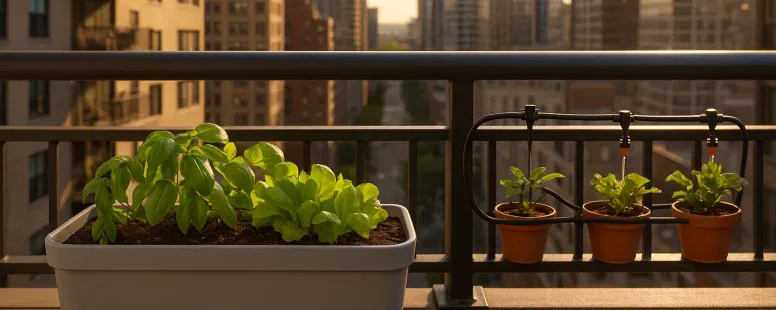
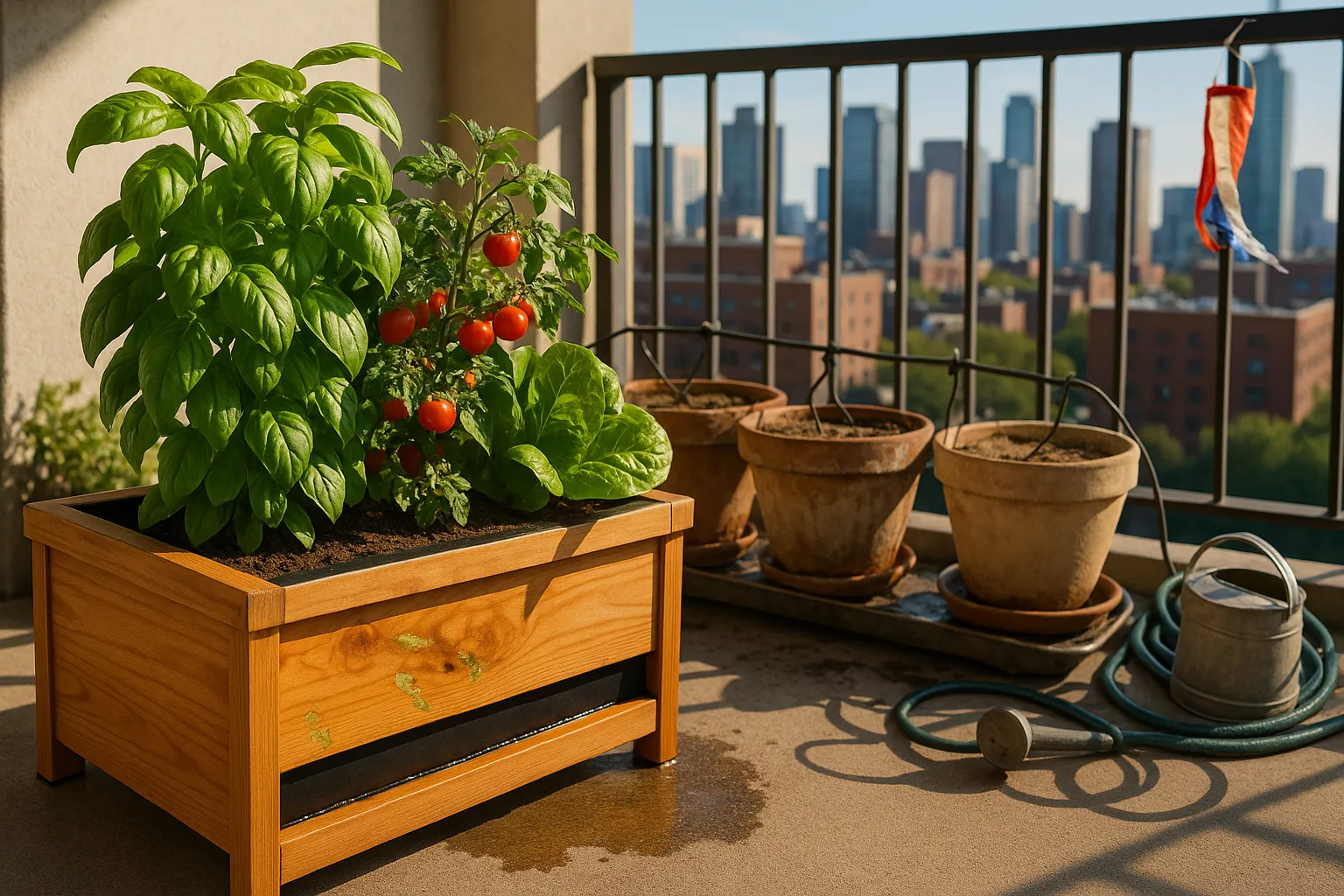
Balconies turn into micro-farms when you agree to water them reliably. Choosing between self-wicking beds and drip irrigation changes how often you climb stairs, how much water you waste, and whether your basil survives a weeklong trip. This comparison looks past marketing jargon and shows you practical, sensory-tested differences: the slow cool sip of a reservoir-fed pot versus the targeted bead of a drip emitter. Expect clear trade-offs, water efficiency, plant vigor, installation fuss, and the tiny structural risks every high-rise gardener ignores until wet footprints appear. Read on if you want a balcony that thrives whether you’re a weekend grower or a committed urban farmer.
Why Watering Choice Matters On High-Rise Balconies
Fact: The wrong watering system increases water use, plant stress, and the chance of water damage. On a high-rise balcony, every drip counts, literally. Wind, sun exposure, and limited soil volume amplify consequences. Choose poorly and you’ll face dry tops with soggy bottoms, or constant hand-watering that eats your free time.
Balconies have unique constraints: shallow containers, fast evaporation, and weight limits set by building codes. You sense wind gusts that steal moisture from leaves: you see pot rims salt-stained from repeated wet-dry cycles. A smart watering choice reduces those visible symptoms and improves yield.
Practical effect: the system you pick affects how often you must visit plants, what crops will reliably fruit, and whether water will pool where it shouldn’t. Think of the choice as an investment: some systems buy you time (less frequent checks), others buy precision (less waste).
How Self-Wicking Beds Work
Fact: Self-wicking beds deliver water from a reservoir to the root zone via capillary action. That simple mechanics gives steady moisture without surface irrigation.
Capillary Action And Reservoir Design
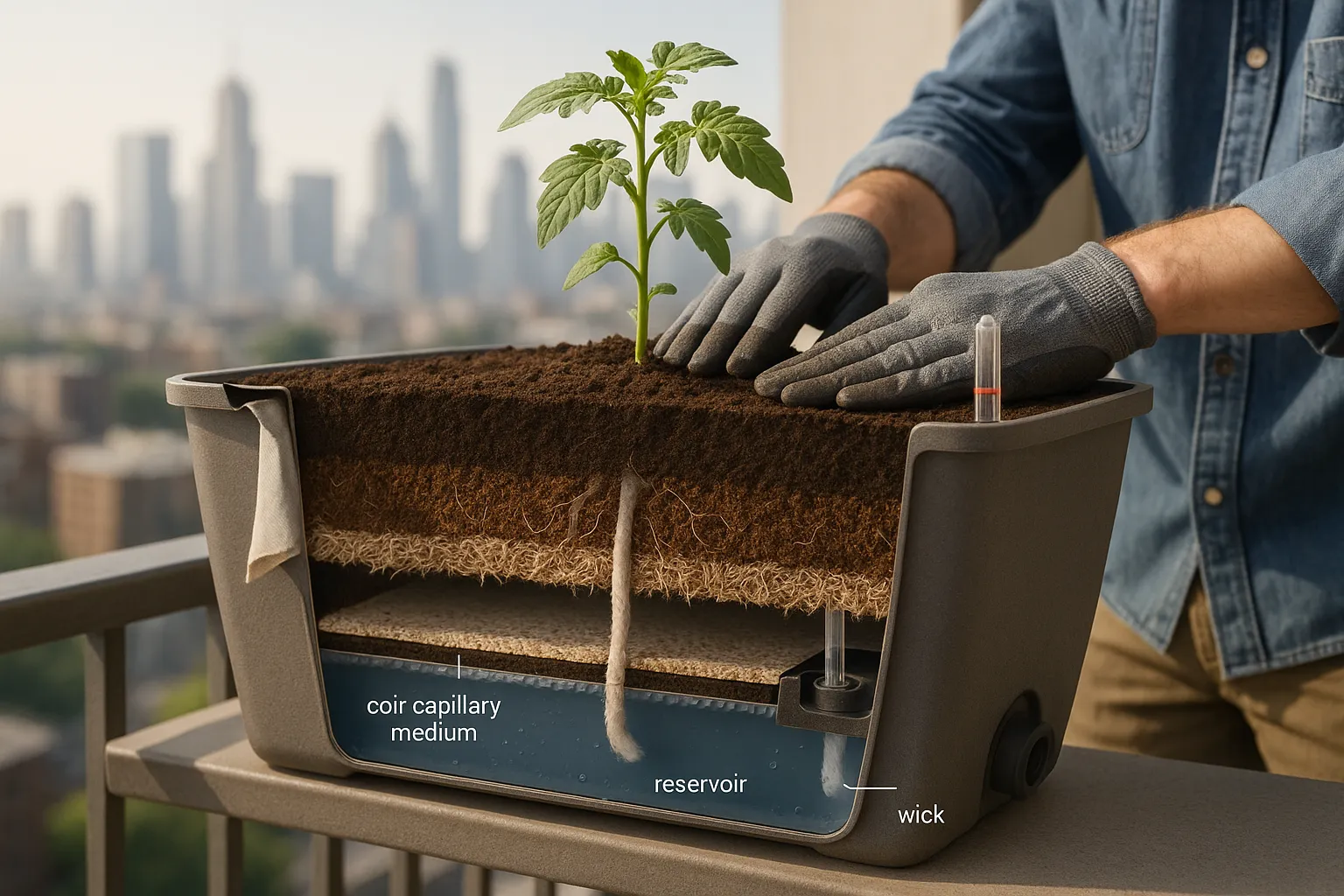
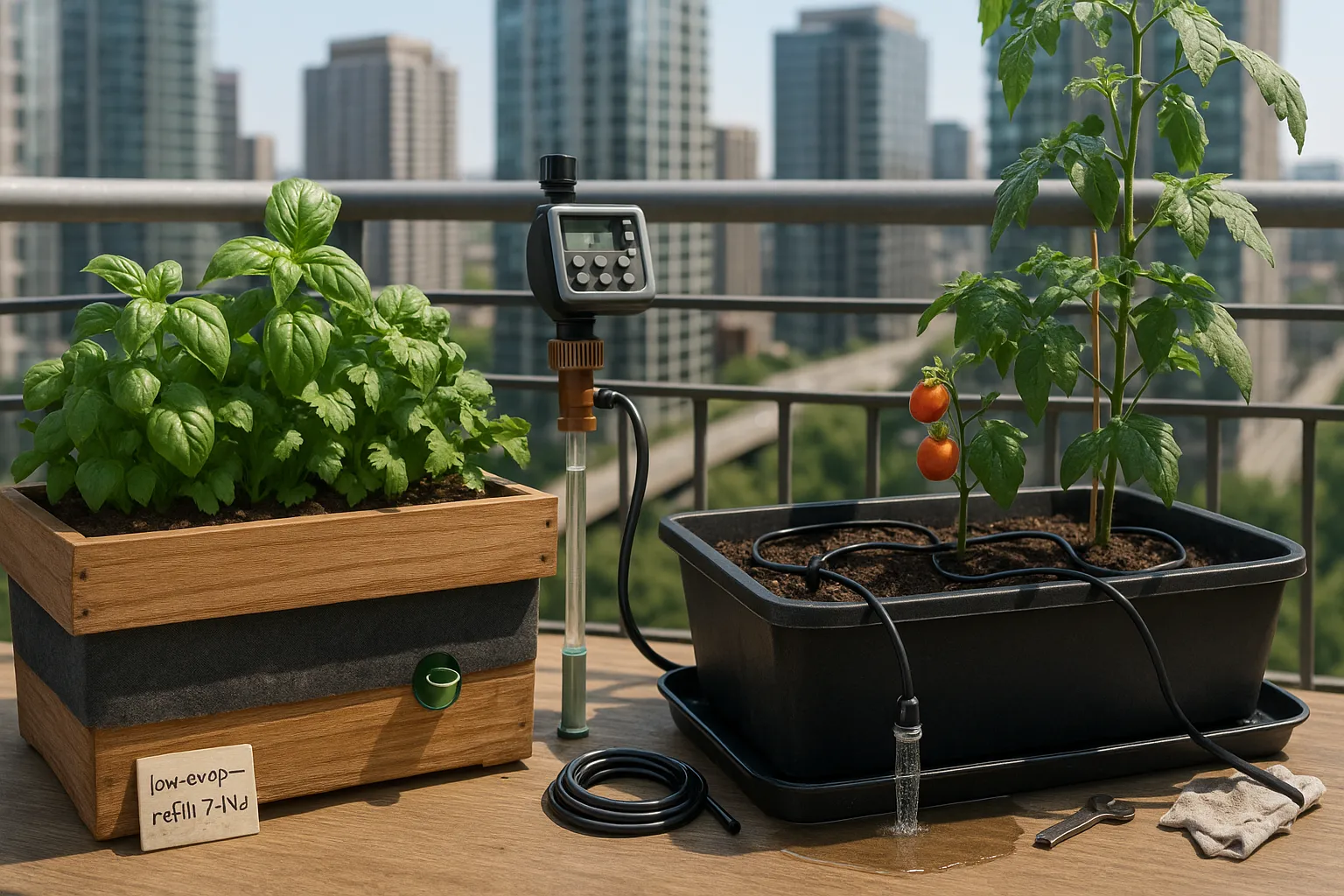
Capillary action moves water up through a medium (wick, soil, or fabric) into the root zone. A common design places a water reservoir beneath a separated soil chamber. Wicks made of cotton, felt, or specialized foam connect the two zones. Water rises on demand when the soil becomes drier: it stops when the soil reaches equilibrium. This prevents frequent surface wetting and reduces evaporation.
You feel the difference: soil that stays evenly damp at root depth, not a surface that turns brick-hard between waterings. Reservoir depth, wick length, and soil texture shape how fast the system responds. Typical reservoirs hold 1–6 liters for balcony planters. Too small and you still water weekly: too large and you add needless weight.
Typical Materials, Sizes, And Configuration For Balconies
Fact: Most balcony self-wicking systems use lightweight plastics, fabric liners, and inert media to lower weight and cost. Popular brands include EarthBox and GrowTainer: many DIY options repurpose storage totes.
Common sizes: 10–25 gallons for compact systems, 3–10 gallons for narrow railing planters. Materials: UV-stable polypropylene, geotextile wicks, and soilless mixes (peat-free coir blends).
Configuration tips you can act on:
Use a coarse capillary medium (coir or perlite mix) to prevent clogging.
Place an overflow outlet at a safe level to avoid leaks onto neighbors below.
Add a water-level indicator so you know reservoir status at a glance.
Weaknesses: wicks can sit with stale water if not cleaned: salts can concentrate and require periodic flushes. Still, for many balcony growers the low-touch reliability is a huge win.
How Drip Irrigation Works
Fact: Drip irrigation delivers measured volumes of water directly to the soil surface or root zone through emitters and tubing. The system gives precise control over timing and dose.
System Components And Delivery Methods
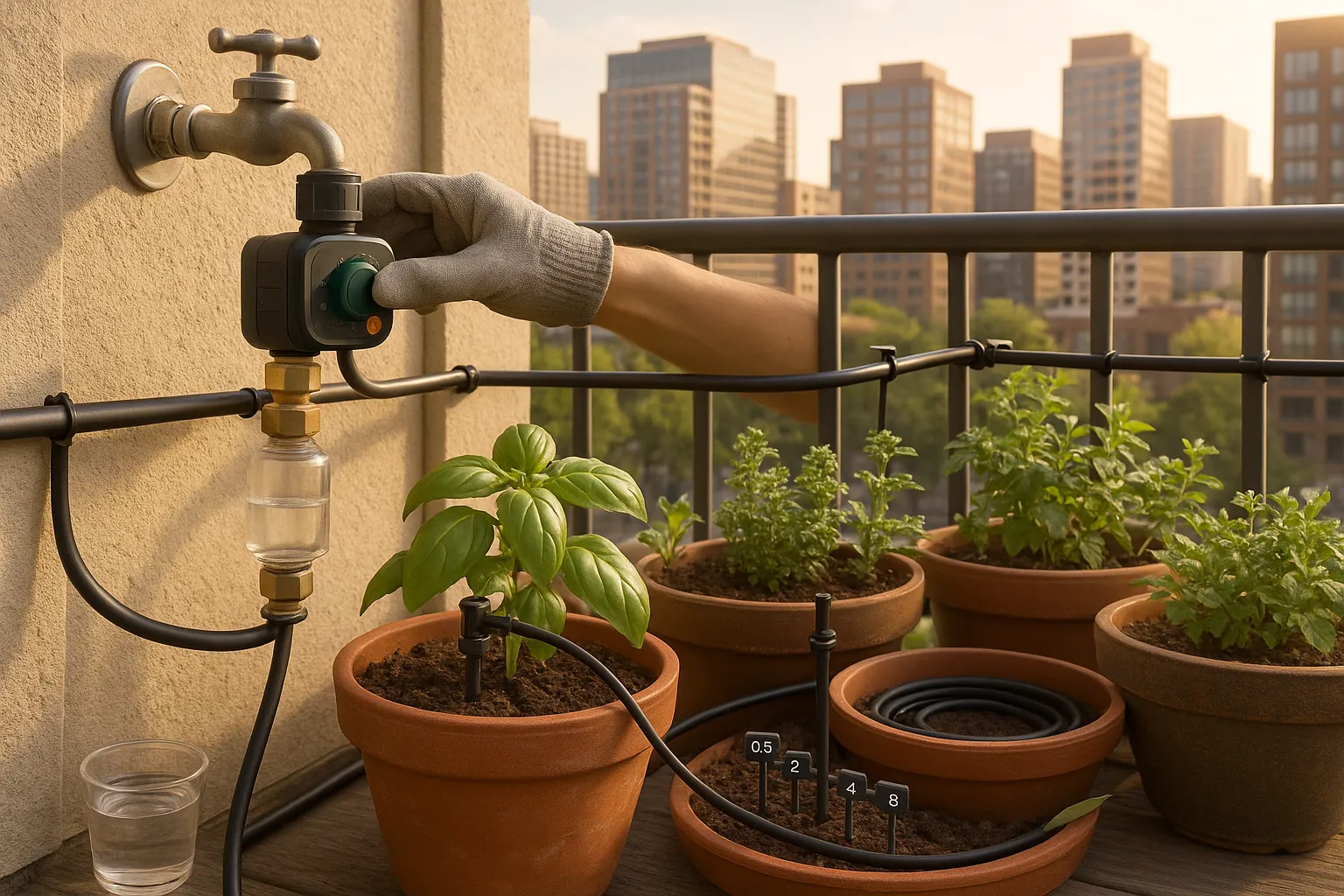
Core parts: a water source (tap or tank), a pressure regulator, filter, mainline tubing, microtubing, and emitters. Brands like Rain Bird and Netafim supply emitters sized by flow (0.5–8 liters/hour). Emitters can be inline, point-source, or adjustable, you pick based on plant needs.
Delivery methods vary: surface drips sit at the soil, subsurface drips bury emitters near roots, and soaker hoses create a continuous wet line. You choose based on container depth and root structure. Subsurface emitters reduce evaporation: surface emitters are easier to maintain.
Timers, Pressure Regulation, And Microtubing Layouts For Containers
Fact: Timers automate schedules and reduce human error. Low-voltage timers or simple mechanical ones both work.
Pressure matters: balcony faucets can spike pressure: a regulator stops emitters from spraying. Filters prevent clogging: a 130-micron filter is a common choice for municipal water. Layouts: run a mainline along the balcony rail, then branch with 1/4″ microtubing to each pot. Use tees and stakes to secure lines.
You’ll notice how controllable the system feels, you set run time and frequency: the emitters do the rest. But that control comes with chores: filter cleaning, emitter checks, and occasional re-routing after repotting.
Performance Comparison: Water Use, Plant Health, And Reliability
Fact: Drip systems typically use water more precisely: self-wicking systems reduce evaporation losses. The best choice depends on your goals.
Water Efficiency And Evaporation Losses
Drip: delivers targeted doses: it minimizes waste when emitters sit near the root. If properly tuned, drip can cut water use by 30–60% versus hand-watering. But exposed tubing and surface drips still lose water to wind and sun.
Self-wicking: keeps water below the surface. You lose less to evaporation, especially on windy, exposed balconies. A reservoir-fed planter can hold moisture for days to weeks, often using less water overall for small pots.
Numbers to expect: a 10-gallon self-wicking box might need refill once per 7–14 days in temperate summers: an equivalent drip setup with daily 10–20 minute cycles might consume the same or more water depending on emitter flow.
Effect On Root Zone Moisture Uniformity And Plant Growth
Self-wicking: creates vertical moisture uniformity near the bottom but can leave topsoil slightly drier. This suits shallow-rooted leafy greens and herbs: they prefer consistent sub-surface moisture.
Drip: gives horizontal control and can water at multiple depths with emitters placed strategically. This supports larger fruiting plants like tomatoes and peppers that develop deep root balls. You can tune emitter location and duration to encourage roots to search deeper.
Both systems support vigorous growth when matched to crop type. Your plants will tell you: yellowing lower leaves often mean over-saturation: curled leaf margins often indicate irregular surface moisture.
Reliability, Clogging Risk, And Winterizing Considerations
Fact: Drip systems require more active maintenance to stay reliable. Small particles and hard water minerals clog emitters: filters and periodic flushing reduce risk.
Self-wicking: fewer moving parts, fewer clogs, but reservoir algae and salt buildup can occur. Winterizing self-wicking planters is often simpler, drain reservoirs and store light parts indoors. Drip systems need lines purged to avoid freeze damage: failing that, cracked tubing is a likely outcome.
Installation, Maintenance, And Cost Comparison
Fact: Self-wicking systems cost less to install but may require medium-term replacements: drip systems cost more upfront and demand more maintenance.
Upfront Cost, Ongoing Expenses, And DIY Versus Professional Install
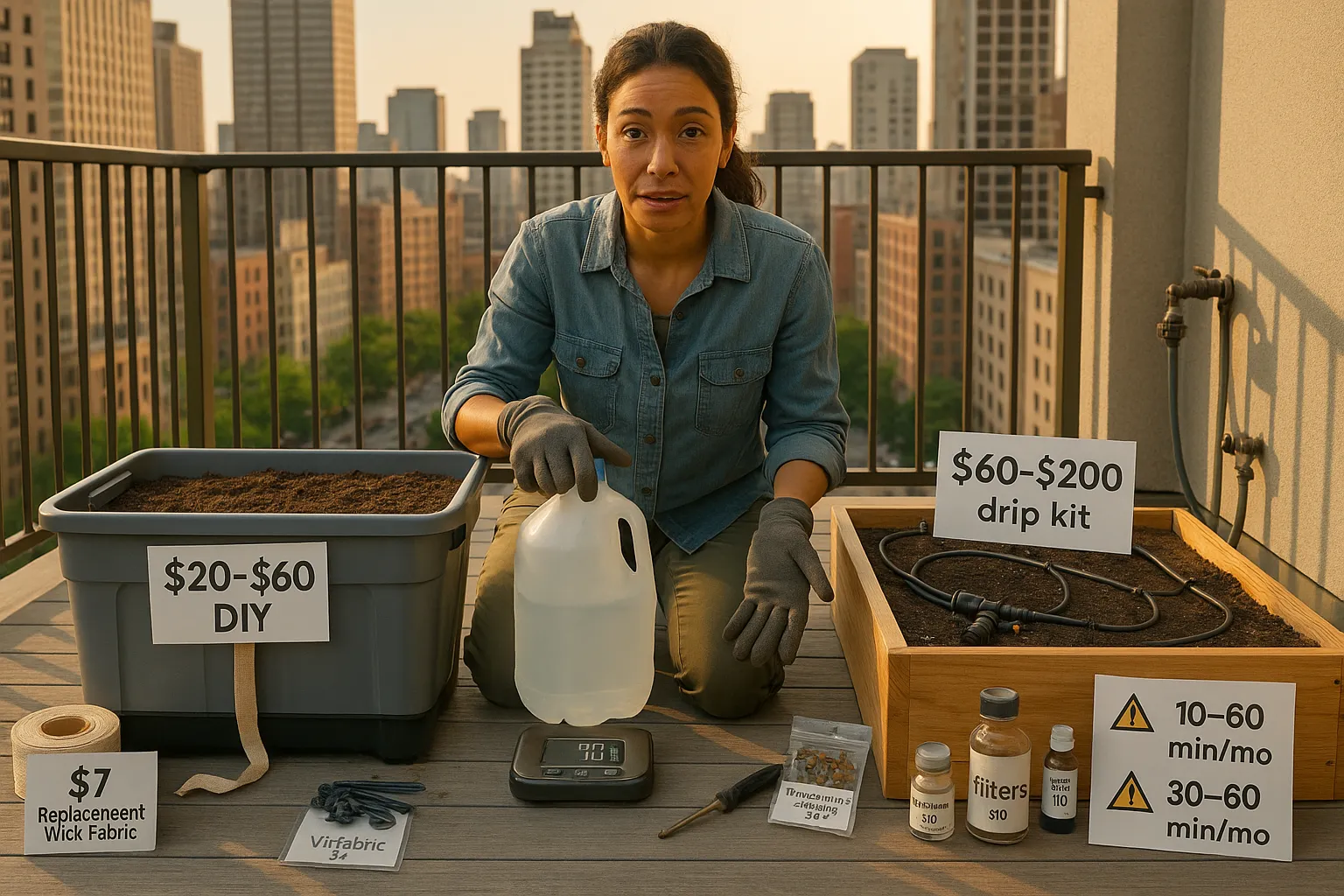
Upfront: a basic self-wicking tub (DIY) can cost $20–$60 in materials. Commercial units range $50–$150. Drip kits for a balcony often run $60–$200 depending on quality: professional installation adds labor.
Ongoing: drip systems need filters, replacement emitters, and occasional tubing swaps: budget $10–$30/year for supplies. Self-wicking upkeep focuses on media refreshes and wick replacement: budget similar amounts but less often.
DIY: both systems are DIY-friendly. You can convert a storage tote into a self-wicking bed with a plastic reservoir tray and wick fabric. Drip DIY needs basic plumbing hacks and patience with fittings. Professionals help when you have complex plumbing or timers tied to building water lines.
Maintenance Time, Troubleshooting, And Longevity
Fact: Expect 10–30 minutes per month for self-wicking maintenance: drip systems often require 30–60 minutes monthly.
Troubleshooting: for self-wicking, check water level and clean wicks: for drip, check emitters and clean filters. Longevity: quality plastics and UV-resistant tubing last 5–10 years: cheap emitters may fail sooner.
Weight, Space, And Structural Considerations For High-Rise Balconies
Fact: Water adds weight fast: a full 10-gallon reservoir adds about 83 pounds (38 kg). Always check your building’s load limit.
Space: self-wicking beds often require deeper boxes: drip tubing needs small space but adds clutter. Structural advice: keep heavy reservoirs nearer the building core, distribute weight evenly, and avoid stacking units on railings that weren’t designed to hold them.
Best Plants And Use Cases For Each System
Fact: Crop choice changes how well each system performs. Match plant root habits to irrigation method for best yield.
Ideal Crops For Self-Wicking Beds (Leafy Greens, Herbs, Trailing Plants)
Self-wicking beds favor plants with shallow or moderate roots and steady moisture needs. Good picks:
Leafy greens: lettuce, spinach, arugula, they thrive on consistent moisture.
Herbs: basil, parsley, chives, they prefer even sub-surface dampness.
Trailing plants: strawberries or nasturtiums, they benefit from a constant supply without wet foliage.
These crops reward you with less fuss and predictable harvests.
Drip suits larger, thirstier crops and dense arrays where precise distribution matters. Good picks:
Fruiting plants: tomatoes, peppers, eggplant, emitters placed near the root crown feed deep roots.
Cucumbers and beans in larger containers, you can run multiple emitters per pot.
Dense herb or flower beds on long balcony runs, drip lines give uniform coverage.
Drip makes scale and variety manageable when you want fruit or bulk flowering displays.
Hybrid Approaches And When To Combine Systems
Fact: Combining systems lets you get the best of both: reservoir-fed boxes for greens, and drip lines for fruiting pots.
Use a self-wicking bank for salad greens and herbs to minimize daily checks. Run a small, regulated drip line to a row of tomato pots. This hybrid approach saves water where it matters and gives precision where it pays off.
Tip: share a single timer between zones but set different run times and frequencies by using separate manifolds or valves.
Practical Decision Checklist For Urban Balcony Gardeners
Fact: Ask targeted questions before buying. Your answers should drive the system choice.
Questions To Ask About Water Access, Travel Frequency, And Plant Goals
How often will you be home to check plants? (frequent checks favor drip: infrequent favors self-wicking.)
What is your water source? (hard municipal water favors filtered drip or periodic flushing of reservoirs.)
What do you want to grow? (leafy greens and herbs → self-wicking: tomatoes and peppers → drip.)
Do building rules limit weight or attachments? (if yes, prefer lightweight self-wicking or low-profile drip.)
Answer these and you’ll narrow options quickly.
Stepwise Recommendation Matrix Based On Space, Budget, And Skills
Small space, low budget, low travel time: Choose a compact self-wicking box. Use coir mix and a water indicator.
Moderate space, medium budget, variable travel: Use a hybrid setup, self-wicking for salads, drip for fruiting pots on a timer.
Large balcony, desire for high yield, willing to invest: Install a quality drip system with timer, filter, and pressure regulator. Add subsurface emitters for big containers.
Final practical note: always install an overflow and monitor runoff after the first week. Plants show problems early: fix quickly. Start small, observe, and scale. Try one system on a few pots before converting the whole balcony so you can learn without risking your entire harvest.
To provide the best experiences, we use technologies like cookies to store and/or access device information. Consenting to these technologies will allow us to process data such as browsing behaviour or unique IDs on this site. Not consenting or withdrawing consent, may adversely affect certain features and functions.
Functional
Always active
The technical storage or access is strictly necessary for the legitimate purpose of enabling the use of a specific service explicitly requested by the subscriber or user, or for the sole purpose of carrying out the transmission of a communication over an electronic communications network.
Preferences
The technical storage or access is necessary for the legitimate purpose of storing preferences that are not requested by the subscriber or user.
Statistics
The technical storage or access that is used exclusively for statistical purposes.The technical storage or access that is used exclusively for anonymous statistical purposes. Without a subpoena, voluntary compliance on the part of your Internet Service Provider, or additional records from a third party, information stored or retrieved for this purpose alone cannot usually be used to identify you.
Marketing
The technical storage or access is required to create user profiles to send advertising, or to track the user on a website or across several websites for similar marketing purposes.