Snake Plant vs. ZZ Plant: Which Is Best For Your Space?
You can create a calm corner with almost no fuss, but choosing between a snake plant and a ZZ plant changes how that corner behaves. Both are praised for low upkeep and architectural looks, yet they differ in light tolerance, water needs, growth pace, and pet safety. This guide shows clear, practical differences so you can match the right plant to your room, schedule, and style. Expect vivid examples, actionable care steps, and real trade-offs, not vague praise, so you pick with confidence.
Quick Side-By-Side Comparison
Fact: Both plants thrive with minimal care, but they excel in different conditions.
Key Visual Differences
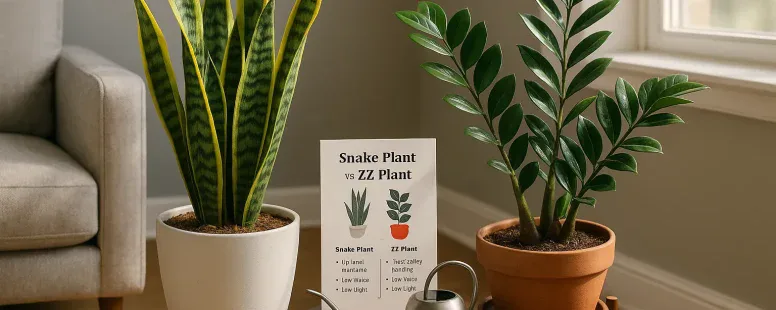
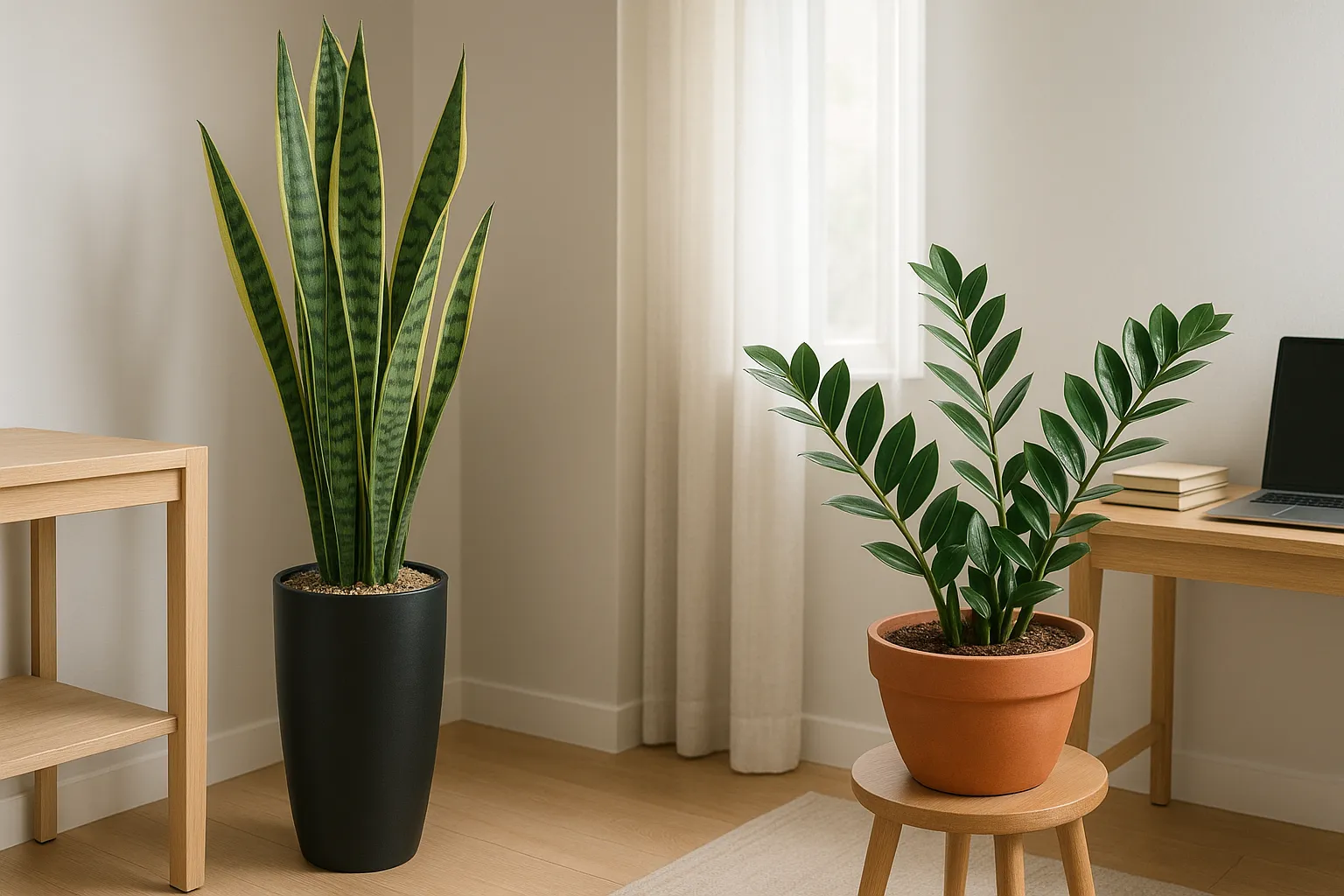
Snake plants (Sansevieria, now Dracaena trifasciata) show upright, sword-like leaves that range from thin and tubular to broad and flat. Variegation often creates yellow or cream margins. ZZ plants (Zamioculcas zamiifolia) present glossy, pinnate stems with paired leaflets that give a rounded, tropical silhouette. Put simply: snake plant reads architectural and vertical: ZZ reads glossy and sculptural.
Basic Care Summary (Light, Water, Soil)
Snake plant: tolerates bright indirect light to low light: water sparingly (every 3–6 weeks depending on season): use fast-draining soil. ZZ plant: tolerates low to bright indirect light but prefers moderate indirect: water even more sparingly (about every 2–8 weeks): use well-draining mix with good aeration. Both hate sitting in wet soil.
Best Uses And Typical Sizes
Use snake plants for narrow corners, hallways, or tall-planter accents, mature heights 1–4+ feet depending on cultivar. Use ZZ plants for tabletop groupings, desk corners, or medium floor pots, typically 1–3 feet tall. Choose snake plant for vertical drama, ZZ for glossy, compact presence.
Appearance, Varieties, And Growth Habit
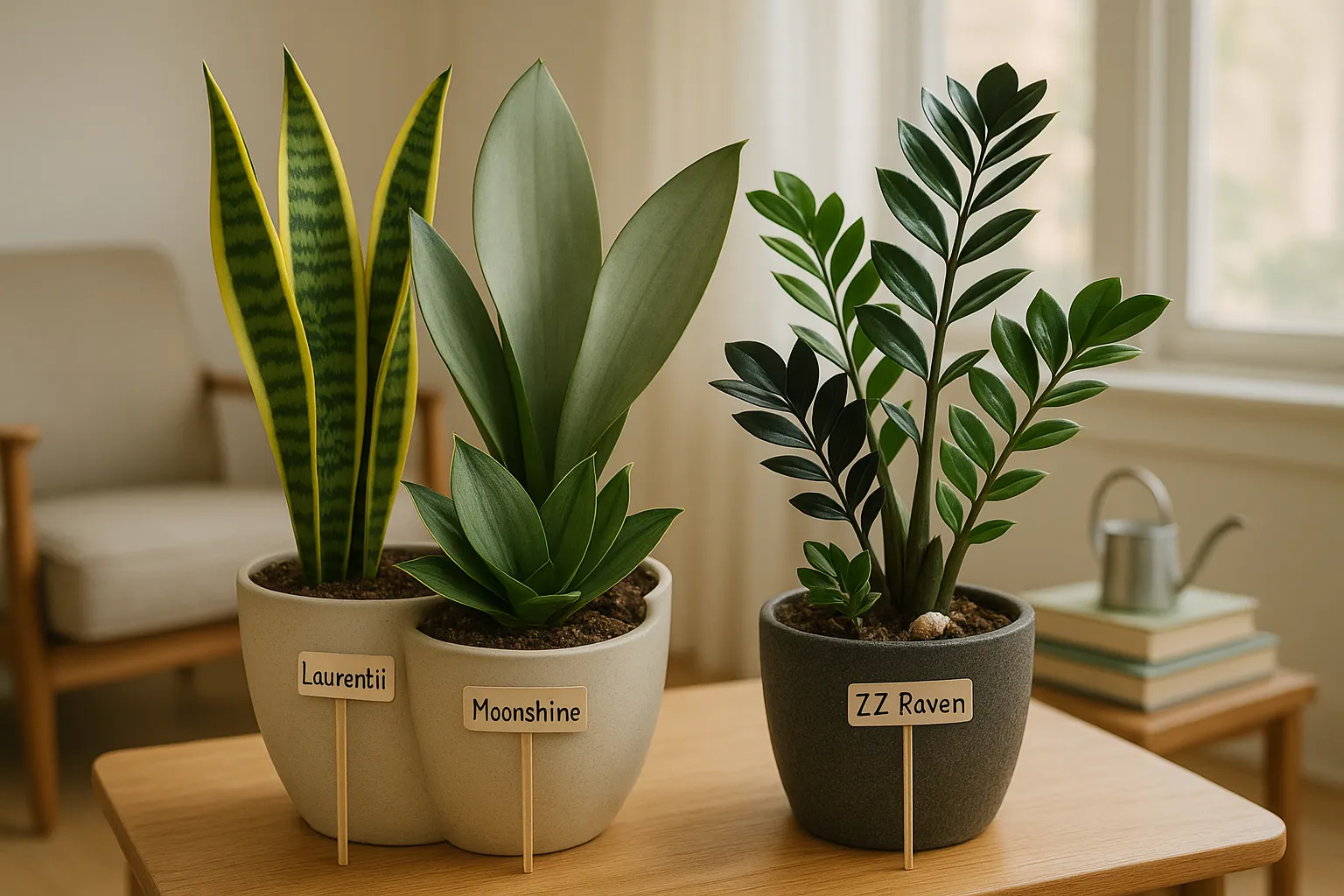
Fact: Variety choice strongly affects look and size, pick a cultivar to match your aesthetic.
Snake Plant: Leaf Shapes, Variegation, And Common Cultivars
Snake plants appear in several leaf forms. ‘Laurentii’ shows yellow-edged variegation: ‘Moonshine’ has silvery-green leaves and a modern feel: ‘Hahnii’ is a compact bird’s-nest form good for tabletops. Leaves may be upright, slightly arching, or cylindrical (Sansevieria cylindrica). Each cultivar shifts the plant’s mood from stark to soft. Many growers still use the Sansevieria name in shops, so watch labels.
ZZ Plant: Leaf Structure, Varieties, And Growth Rate
ZZ leaflets are thick and glossy because they store water in rhizomes. Varieties include standard green ZZ, ‘Raven’ (deep purple-black foliage that darkens new growth), and ‘Zenzi’ (a more compact cultivar). ZZ grows slowly compared with many houseplants: you can expect steady stem additions a few times each growing season rather than rapid leaps.
Growth Patterns And Mature Size Comparison
Snake plants often push new shoots from a rhizome base or produce tall singular leaves: growth can accelerate in spring/summer. ZZ expands through thick underground rhizomes that spawn new stems: growth remains patient and measured. If you want quick vertical fill, snake plant wins. If you want slow, steady spread with low repotting frequency, ZZ wins.
Care Requirements Compared
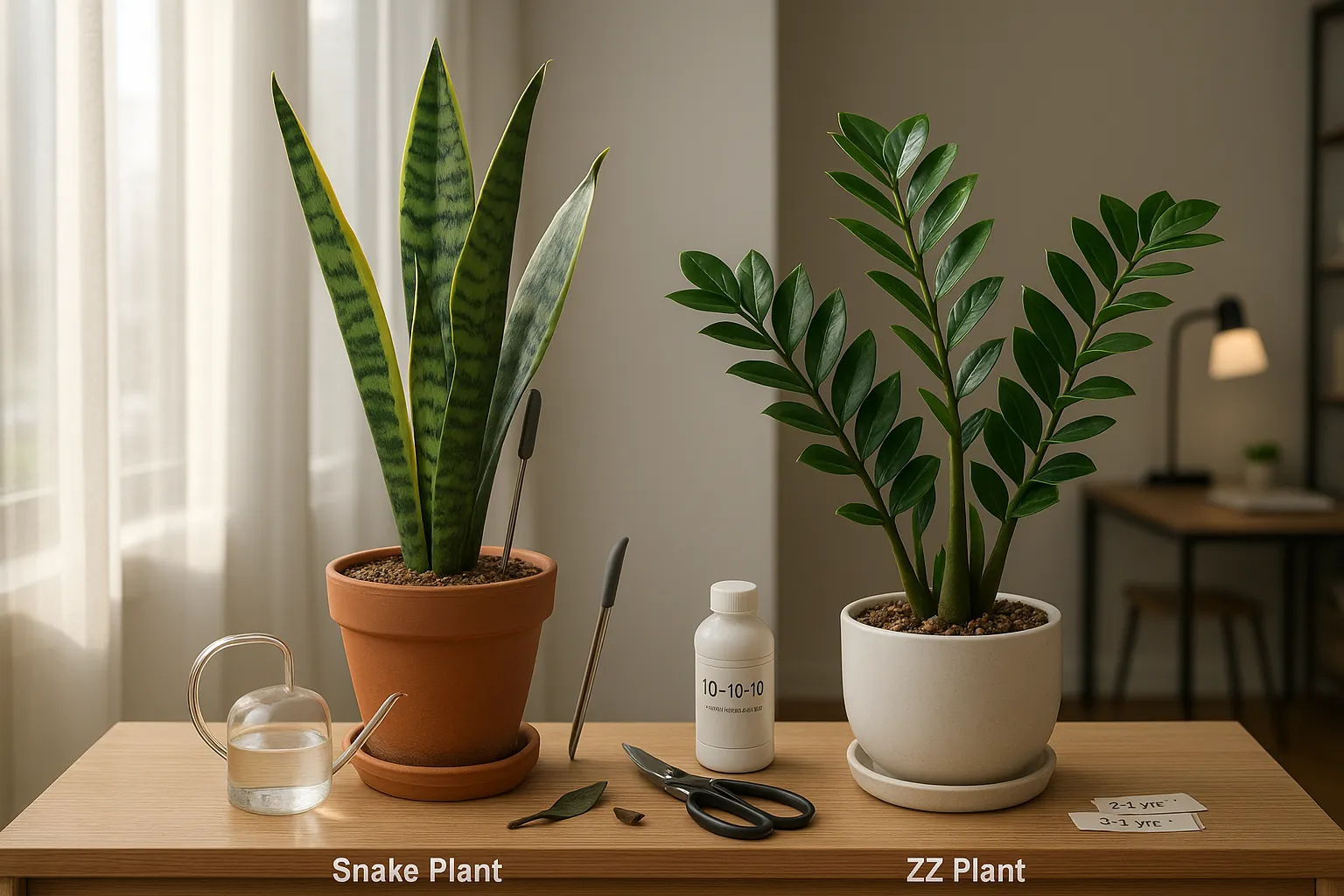
Fact: Light and water are the two care variables that determine success: soil and potting choices control the rest.
Light Needs And Placement Tips
Snake plant: place near a bright window for faster growth, but it tolerates dim corners. Avoid prolonged hot afternoon sun on variegated leaves to prevent bleaching. ZZ plant: thrives in moderate indirect light: it tolerates low light better than many plants but will slow growth. In offices with fluorescent light, ZZ often outperforms snake plant in appearance.
Watering Frequency And Signs Of Over/Underwatering
Snake plant: water when top 2 inches of soil are dry. Overwater causes soft, mushy leaves and black rot. Underwater leads to wrinkling and slow growth. ZZ plant: water less: allow soil to dry deeply between waterings. Overwater causes yellowing and collapse of stems: underwatering causes droop and dull leaf sheen. Both show subtle leaf decline before collapse, catch it early.
Soil, Drainage, And Pot Recommendations
Use a free-draining potting mix. A cactus mix or houseplant mix amended with perlite works well. Pick a pot with drainage holes: elevate it on a saucer if needed. For snake plant, a slightly sandy mix helps. For ZZ, a chunky mix that sheds water fast will protect rhizomes.
Fertilizing, Pruning, And Repotting Guidance
Fertilize lightly in spring and summer with a balanced 10-10-10 or 20-20-20 at half strength once a month. Prune damaged leaves at the base with clean shears. Repot when roots fill the container, snake plants may need repotting every 2–4 years: ZZ plants less frequently, often every 3–5 years. Divide snake plants during repotting if you want more plants.
Health Benefits And Environmental Performance
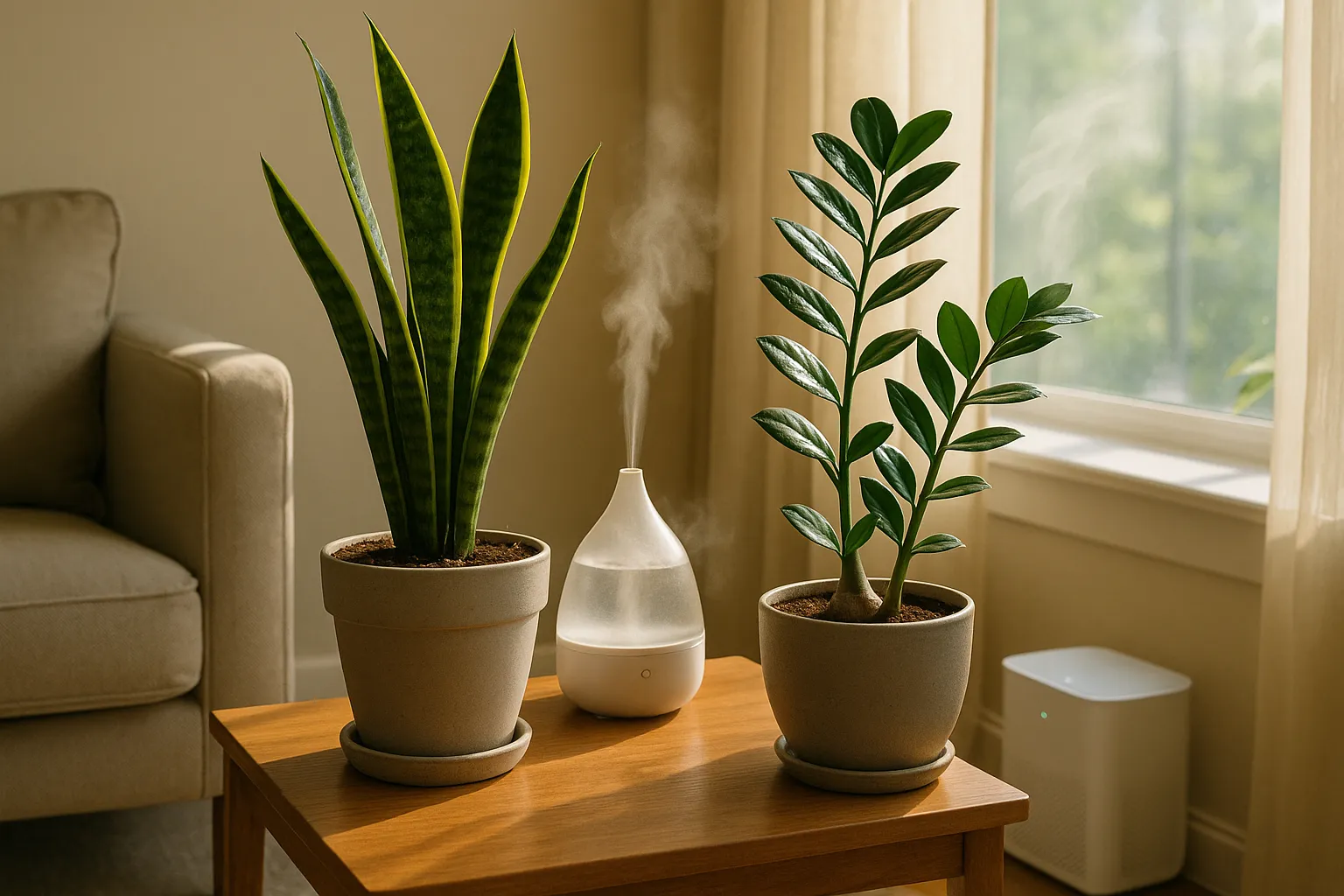
Fact: Both plants can improve indoor air quality modestly: they are not substitutes for ventilation.
Air-Purifying Claims And Realistic Expectations
NASA’s 1980s clean-air study listed many houseplants, including snake plants, as capable of removing certain VOCs in sealed chambers. That result does not equal dramatic air changes in homes. Use plants as part of a strategy: they add trace VOC uptake, raise relative humidity slightly, and boost wellbeing. Rely on ventilation and filtration for real pollutant control.
Humidity Tolerance And Indoor Climate Considerations
Both plants tolerate average indoor humidity (30–50%). ZZ tolerates drier air slightly better because of rhizome water reserves. In very dry winter homes, occasional misting for aesthetics helps snake leaves look fresh, but don’t overdo it, foliage that stays wet invites fungal spots. You can place either plant near humidifiers or bathrooms with indirect light for slightly better leaf quality.
Common Problems, Pests, And How To Fix Them
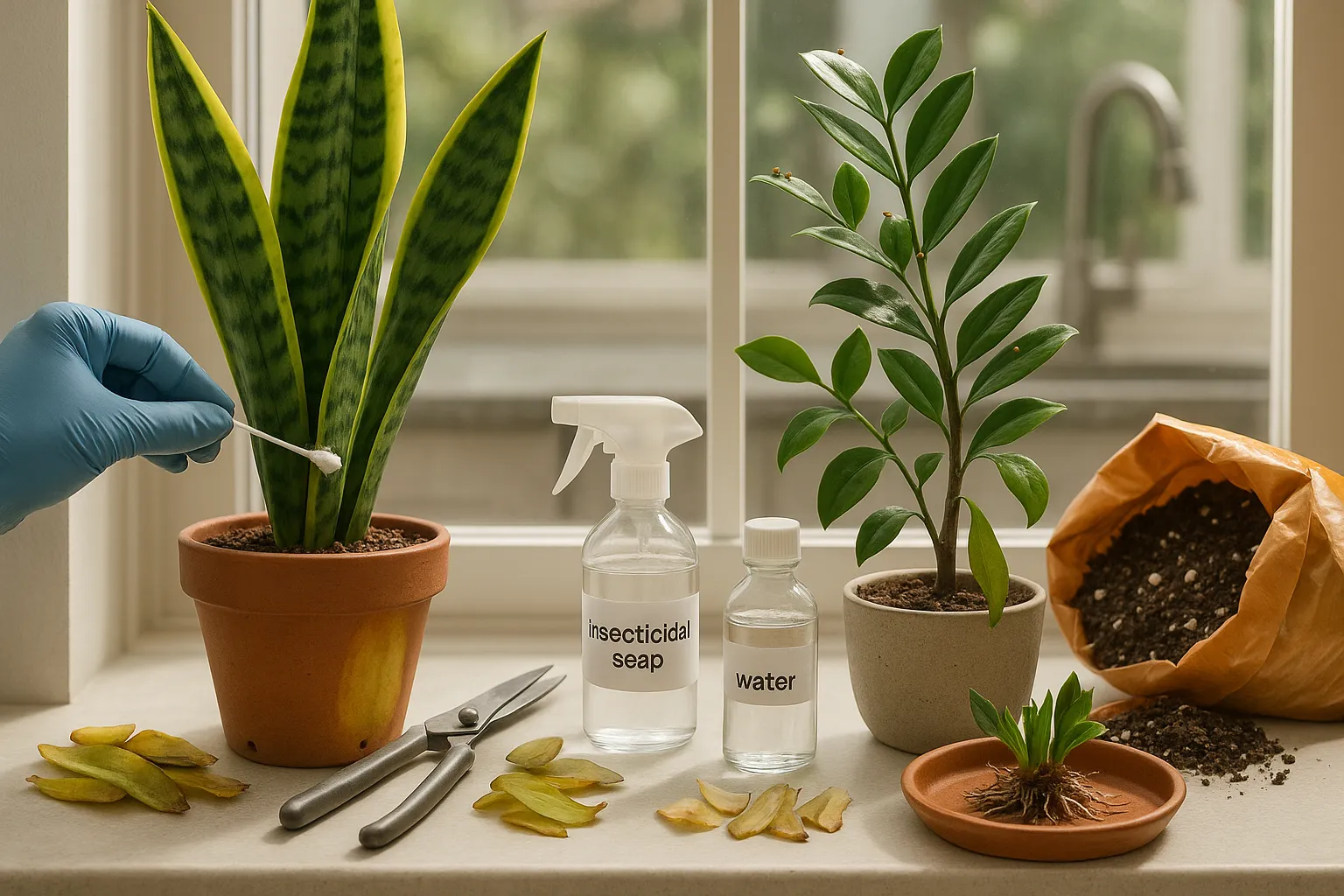
Fact: Most issues trace back to overwatering or poor light: pests are secondary but manageable.
Typical Pests (Mealybugs, Scale) And Treatment Steps
Mealybugs show as white cottony clusters in leaf axils. Scale appears as small brown or tan bumps. Treat by dabbing with isopropyl alcohol on a cotton swab, rinsing, or using insecticidal soap. For heavy infestations, apply a systemic insecticide per label instructions or isolate the plant.
Diseases And Root Rot Prevention
Root rot starts when roots sit in soggy soil. Prevent by using drainage, reducing water frequency, and selecting airy mixes. If rot occurs, remove the plant, cut away soft roots, let the crown dry for a day, and repot into fresh dry mix. You might lose leaves: that’s normal. Act quickly to save the plant.
Identifying And Treating Leaf Issues (Yellowing, Soft Leaves)
Yellowing across older leaves usually means overwatering: firm yellow leaves point to nutrient or light issues. Soft, translucent leaves indicate cellular collapse from rot or freeze damage. Remove affected leaves, correct watering, and improve light. Sometimes a stressed plant will drop outer leaves while the crown stays healthy, don’t panic, it can recover.
Choosing Based On Lifestyle And Location
Fact: Your schedule and room conditions should decide more than aesthetics.
Best Plant For Beginners And Low-Maintenance Spaces
ZZ plant is often the easiest for truly forgetful owners because its rhizomes store water and it tolerates low light and irregular watering. Snake plant is also beginner friendly but can suffer faster from persistent overwatering.
Which Is Better For Low Light Rooms Or Offices
For low-light offices, ZZ usually looks better longer. Snake plant tolerates low light but will grow slowly and might lean toward any available light source.
Pet And Child Safety Considerations
Both plants contain saponins that cause mild to moderate gastrointestinal upset if chewed. Keep them out of reach of curious pets and toddlers. If pet-safety is critical, research non-toxic alternatives like Boston fern or spider plant.
Aesthetic Choices: Modern, Tropical, Or Architectural Looks
Choose snake plant for clean, architectural lines that suit modern or minimalist decor. Choose ZZ for glossy, tropical vibes that soften a space without fuss.
Practical Buying, Propagation, And Long-Term Care Tips
Fact: Inspect plants closely at purchase: healthy starts save months of trouble.
What To Look For When Buying Healthy Specimens
Look for firm, glossy leaves free of spots or soft areas. Check the potting mix for proper drainage and avoid plants with persistent wet soil. Ask the retailer about recent watering and pest history. For variegated snake plants, make sure new growth shows consistent patterning.
Propagation Methods: Dividing Snake Plants And Propagating ZZ Rhizomes/Cuttings
Snake plant divisions: lift the root ball, separate rhizome sections with at least 2–3 leaves, and pot in fresh mix. ZZ propagation: divide rhizomes during repotting or root leaf cuttings in water or soil, leaf propagation is slow but rewarding. For stem cuttings, let ends callus briefly before planting.
Seasonal Care, Troubleshooting, And When To Repot
Both plants slow growth in winter: reduce water frequency and stop fertilizing. Repot in spring when roots push out of the pot or soil compacts. If a plant becomes root-bound, it will show slowed top growth and wrinkled leaves. When you repot, choose a pot only 1–2 inches larger to avoid excess wet soil. Keep an eye on light and rotate plants every few weeks so growth stays balanced.

by Ellie B, Site Owner / Publisher