Best Substitute For Milk In Coffee
You can get a great cup of coffee without dairy and still keep richness and mouthfeel. When you swap milk, you’re not just changing flavor, you change texture, caffeine perception, and how the drink behaves when hot or iced. This guide lays out the best substitute for milk in coffee by use case, taste, and technique. Expect clear recommendations, practical tips, and honest trade-offs so you can pick the right option for your brew and your life.
Quick Recommendations By Use Case

Fact: the best substitute depends on what you want from your cup. If you want cream and foam, choose oat or barista soy milk. If you want low calories, pick almond milk. If you need protein, choose soy or pea milk.
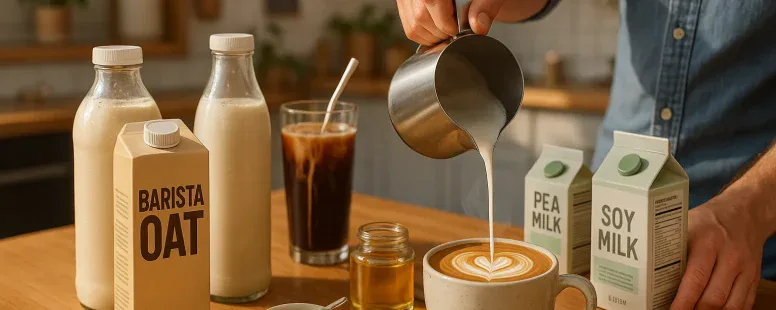
- For lattes and cappuccinos: oat milk (barista formula) or barista soy milk. They froth and blend well with espresso. Brands to try: Oatly Barista, Pacific Foods Barista.
- For black coffee with a light touch: almond milk or light oat. They thinly coat the palate and keep acidity visible.
- For cold brew and iced coffee: oat milk or pea protein milk. They resist separation better than almond.
- For keto or bulletproof coffee: unsalted butter, ghee, or MCT oil for a silky mouthfeel and stable emulsion.
- For nut-free, high protein: soy milk or pea protein milk (Ripple is a common brand).
Note the specific brew method. Espresso needs a milk that textures: pour-over needs a milk that keeps flavor balance. You’ll notice differences right away when you try a few.
Why You Might Want A Milk Substitute
Fact: people choose substitutes for health, taste, ethics, allergies, or convenience. You might pick a substitute because you’re lactose intolerant, following a plant-based diet, avoiding dairy price swings, or exploring flavor.
Health reasons: many people have lactose intolerance. You can avoid stomach upset by switching. Others avoid dairy for cholesterol or saturated fat reasons. Plant milks often have less saturated fat and sometimes fortified calcium and vitamin D.
Taste and texture: dairy gives a familiar creaminess. But some non-dairy milks add unique notes: oat gives cereal-like sweetness, almond gives a faint nutty finish, coconut gives tropical aromas. If your goal is new flavor, substitutes can refresh your ritual.
Ethics and environment: you might care about animal welfare or want a lower-carbon option. Plant milks can lower greenhouse gas emissions versus cow’s milk, though water use varies by crop.
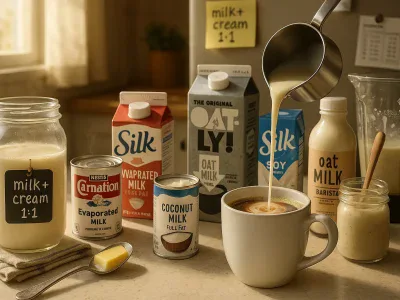
Practical reasons: shelf-stable creamers, evaporated plant milks, or powdered options can sit in the pantry. They last longer than fresh milk and save trips to the store.
Vulnerable moment: I once ordered a latte with almond milk and got a thin, separated drink. I learned to ask for a barista blend and specify steaming temperature. That small detail made the difference.
Top Plant-Based Substitutes And How They Taste
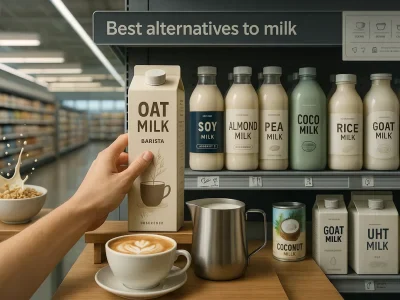
Fact: plant-based milks vary widely in taste, texture, and behavior with heat. Below are common options and how they act in coffee.
Other Non-Dairy Alternatives And Specialty Options
Fact: beyond common plant milks, you have specialty formats that solve storage, flavor, or dietary needs. These include shelf-stable creamers, evaporated plant milks, and fats for bulletproof coffee.
How To Choose A Substitute Based On Coffee Type And Preference
Fact: choose substitutes by matching milk behavior to brew method and flavor goals. Ask: do you need foam, low calories, or a neutral canvas? Then match the milk.
Consider roast and origin: light roasts show acidity, so choose a subtle milk (almond or light oat). Dark roasts are bold and pair well with richer milks (oat, pea, or full-fat coconut).
Consider diet: if you need nut-free, pick soy or pea. If you want low-calorie and plant-based, almond often fits. If you want protein, soy or pea is superior.
Preparation, Frothing, And Mixing Tips For Best Results
Fact: technique impacts final cup as much as the milk choice. Proper heat, agitation, and ratios prevent curdling and improve mouthfeel.
Health, Allergy, And Environmental Considerations
Fact: non-dairy milks differ nutritionally, allergenically, and environmentally. Know the trade-offs to pick what fits your priorities.

- Free to Use Photoshop Alternatives - October 14, 2026
- Ajax Alternatives Mtg Reddit - October 13, 2026
- Top VFLAT Alternatives for Document Scanning - October 13, 2026
by Ellie B, Site Owner / Publisher