Imagine a world without plants or animals—life as we know it would cease to exist. At the heart of these living beings lies a fascinating microscopic universe: their cells. While they may seem similar at first glance, plant and animal cells are like two sides of the same coin, each uniquely designed to support their distinct roles in nature.
Have you ever wondered what makes a plant’s leaves green or how animals move so effortlessly? The answers lie in the tiny structures within their cells. From the rigid cell walls of plants to the flexible membranes of animals, these differences shape everything from growth to survival. Understanding these contrasts not only deepens your appreciation for biology but also reveals the incredible diversity of life.
Get ready to explore the unseen details that set plant and animal cells apart, and uncover the secrets that make each one a marvel of nature.
Overview Of Plant Cells And Animal Cells
Plant and animal cells serve as fundamental units of life, each exhibiting distinct properties that support diverse forms of organisms. Your understanding of these cells reveals how their features align with their biological roles.
Structure And Function
Plant cells have a rigid cell wall, chloroplasts, and a large central vacuole. These structures enable photosynthesis, structural support, and water regulation. For instance, chloroplasts harness sunlight to create glucose for energy storage. The cell wall composed of cellulose provides protection and shape integrity.
Animal cells, in contrast, lack cell walls and chloroplasts but exhibit flexibility through a lipid-based plasma membrane. They often contain smaller vacuoles and organelles like lysosomes for waste digestion. Mitochondria, found in both cell types, produce ATP from nutrient molecules.
While plant cells favor autotrophic energy conversion, animal cells depend on heterotrophic energy intake. This functional divergence ensures ecosystem interdependence.
Importance In Biological Systems
Plant cells form the foundation of most terrestrial food chains by performing photosynthesis. They convert light energy into chemical energy, producing oxygen as a byproduct essential for respiration in other organisms. Forests exemplify this function by sustaining global oxygen levels.
Animal cells maintain complex tissues enabling movement, immune response, and sensory interactions. They’re integral to multicellular animal communication and reproduction processes. For example, nerves and muscle cells collaborate in rapid signal transmission for survival responses.
Your understanding of their complementary roles showcases their interconnectedness in maintaining ecological balance.
Key Differences Between Plant Cell And Animal Cell
Cell Wall Vs. Cell Membrane
Plant cells have a rigid cell wall composed of cellulose, giving them structural support and protection. This wall lies outside the cell membrane. In contrast, animal cells lack a cell wall and rely solely on a flexible, semi-permeable cell membrane to enclose their contents. This difference impacts how these cells maintain shape and interact with their environment.
Chloroplasts And Photosynthesis
Plant cells contain chloroplasts, organelles housing chlorophyll, which facilitates photosynthesis. This process converts light into glucose and oxygen, sustaining life cycles. Animal cells don’t have chloroplasts, as they obtain energy from consuming food rather than producing it themselves.
Vacuoles: Size And Function
Plant cells possess a single, large central vacuole that stores water, nutrients, and waste products while maintaining turgor pressure. Animal cells have smaller, sometimes multiple vacuoles that play roles in storage and waste disposal. The size and purpose of vacuoles vary significantly between these cell types.
Shape And Rigidity
A box-like shape characterizes most plant cells due to the structural cell wall. Animal cells exhibit a more irregular, round shape, as their membranes are flexible. The rigidity in plant cells supports them in forming stationary tissues, while animal cells enable dynamic, flexible tissue structures.
Similarities Between Plant Cell And Animal Cell
Plant and animal cells share fundamental features that highlight their common origin in eukaryotic cell evolution. Both contain a nucleus, storing genetic material in the form of DNA, which regulates cellular functions. This control center ensures growth, division, and response to environmental stimuli.
The cytoplasm in both cells serves as the medium where essential biochemical reactions occur. Set within a semi-permeable cell membrane, it maintains the internal environment and facilitates selective exchanges of substances, like nutrients and waste, with the external environment.
Mitochondria act as the powerhouses in both plant and animal cells, generating energy through cellular respiration. These organelles enable metabolic processes that convert glucose and oxygen into ATP—a vital energy currency across all living organisms.
Organelles like the endoplasmic reticulum (ER) and Golgi apparatus contribute to both cell types’ ability to synthesize and transport proteins and lipids. The ER aids in the production of proteins (via the rough ER) and lipids (via the smooth ER), while the Golgi apparatus modifies, sorts, and packages them for distribution. Ribosomes, either free-floating or attached to the ER, help protein synthesis in both plant and animal cells.
Both cell types contain lysosomes or equivalent structures for breaking down cellular waste. While lysosomes are more prominent in animal cells, vacuoles in plant cells can also perform similar storage and degradation functions under certain conditions.
Microtubules and filaments within the cytoskeleton give structural support and help intracellular transport for both cells. They enable movement of organelles, making these cells highly dynamic and adaptable.
Plant and animal cells also share similarities in how they communicate signals across multicellular contexts. Chemical messengers, such as hormones or neurotransmitters, interact with receptor proteins on the cell membrane, ensuring coordinated actions in tissues and organs.
Visual Comparison: Plant Cell Vs. Animal Cell
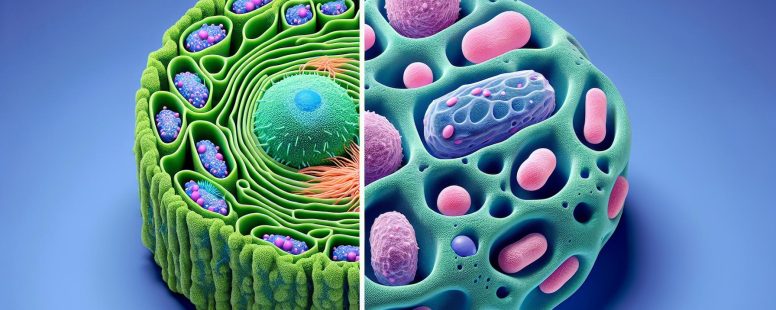
Visualizing the differences between plant and animal cells helps you grasp their unique structures and functions effectively. Their diagrams vividly showcase their distinct features and provide a clear understanding of their roles in living organisms.
Diagram Of Plant Cell
A labeled diagram of a plant cell highlights its rigid cell wall, chloroplasts, and large central vacuole. The cell wall surrounds the cell membrane, providing structure and protection. Chloroplasts appear as oval-shaped organelles, containing chlorophyll, essential for photosynthesis. The large central vacuole occupies the cell’s center, storing nutrients, water, and waste, and maintaining turgor pressure. Additional organelles like the nucleus, mitochondria, and Golgi apparatus coexist within the cytoplasm, signifying a typical eukaryotic cell structure.
For instance, the chloroplasts’ green pigmentation in the diagram emphasizes their role in capturing sunlight. The rectangular, box-like shape of the cell, outlined by the rigid cell wall, distinguishes plant cells from animal cells.
Diagram Of Animal Cell
A diagram of an animal cell emphasizes its flexible, irregular shape due to the absence of a cell wall. The cell membrane encases the cytoplasm, where organelles, such as the nucleus, mitochondria, and lysosomes, are dispersed. Smaller vacuoles are evident, scattered within the diagram, showing their role in temporary storage and transport.
The nucleus, prominently positioned, signifies command control within the cell, managing DNA and protein synthesis. The absence of chloroplasts in the diagram illustrates the animal cell’s dependence on external food sources for energy. The rounded shapes of lysosomes indicate their function in breaking down cellular waste and recycling materials. Unlike plant cells, the diagram’s unstructured boundaries highlight the animal cell’s adaptable nature.
Conclusion
Understanding the differences and similarities between plant and animal cells gives you a deeper appreciation for the complexity of life. Each cell type plays a distinct yet interconnected role in maintaining ecosystems and supporting biological functions.
By exploring their unique structures and purposes, you can better grasp how these cells contribute to the survival and diversity of living organisms. This knowledge not only enhances your understanding of biology but also highlights the intricate balance that sustains life on Earth.
To provide the best experiences, we use technologies like cookies to store and/or access device information. Consenting to these technologies will allow us to process data such as browsing behaviour or unique IDs on this site. Not consenting or withdrawing consent, may adversely affect certain features and functions.
Functional
Always active
The technical storage or access is strictly necessary for the legitimate purpose of enabling the use of a specific service explicitly requested by the subscriber or user, or for the sole purpose of carrying out the transmission of a communication over an electronic communications network.
Preferences
The technical storage or access is necessary for the legitimate purpose of storing preferences that are not requested by the subscriber or user.
Statistics
The technical storage or access that is used exclusively for statistical purposes.The technical storage or access that is used exclusively for anonymous statistical purposes. Without a subpoena, voluntary compliance on the part of your Internet Service Provider, or additional records from a third party, information stored or retrieved for this purpose alone cannot usually be used to identify you.
Marketing
The technical storage or access is required to create user profiles to send advertising, or to track the user on a website or across several websites for similar marketing purposes.