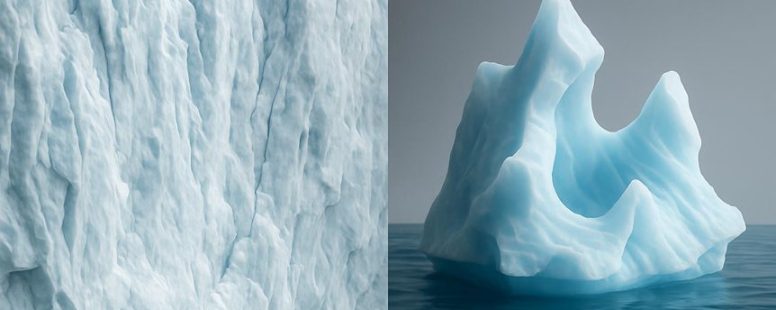
Imagine standing at the edge of a frozen world, where towering white giants drift silently and tiny shards shimmer like scattered glass. The challenge is knowing which is which—glacier or iceberg—can be surprisingly tricky.
These icy formations tell stories about our planet’s climate and history, but their differences go beyond size. Learning to tell them apart quickly is like unlocking a secret code that reveals nature’s hidden beauty.
Surprisingly, understanding these distinctions can also help predict climate change’s impact, turning curiosity into a powerful tool for conservation.
What Are Glaciers and Icebergs? An Overview
Glaciers are huge masses of ice that move very slowly over land. They form when snow builds up over many years and turns into ice. Glaciers shape the land by carving valleys and creating mountains. Some famous glaciers are in places like Alaska and Greenland. They are important because they store a lot of fresh water and help us understand Earth’s climate history through ice cores.
Icebergs are chunks of ice that break off from glaciers and float in the ocean. They are like floating ice islands. When glaciers melt, they send icebergs into the sea, which can be dangerous for ships. Icebergs also show how much glaciers are melting because more melting means more icebergs in the water. For example, the sinking of the Titanic was partly caused by hitting an iceberg.
Some people see glaciers and icebergs as signs of climate change. As temperatures go up, glaciers are melting faster, making sea levels rise. But others warn that natural changes in glaciers happen over many years. So, it’s helpful to watch these ice features to learn about Earth’s environment and how it is changing.
Understanding the difference between glaciers and icebergs helps us see how they affect our planet. Glaciers shape land and hold water, while icebergs float in the ocean and show signs of climate change. Both are important for studying Earth’s climate and weather patterns.
Visual Clues: How to Spot Glaciers and Icebergs
Glaciers and icebergs can look similar but are quite different. So, how can you tell them apart? Here are some clear clues to help you.
First, glaciers are large, slow-moving rivers of ice on land. They often look duller and less shiny because they are covered with snow and dirt. This makes their surface reflect less sunlight. Icebergs are chunks of ice that float in the water. Their surface is usually jagged or uneven and shinier because they are cleaner and fresher. When sunlight hits an iceberg, it reflects more, making them appear brighter.
Second, the density of the ice gives clues about what you see. Glaciers are very dense because the ice is compressed over many years. This makes them less see-through and more solid. Icebergs are less dense because they have air pockets, which makes them lighter and more buoyant. Sometimes, if you look closely, you may notice that glaciers are darker or dirtier from the ground and snow, while icebergs are cleaner-looking.
A good way to remember this is to think of glaciers as giant frozen rivers stuck on land, and icebergs as floating ice chunks breaking off from glaciers. If you’re near the water and see a floating chunk of ice, it is probably an iceberg. If you see a large, slow-moving mass on land, it is most likely a glacier.
Keep in mind, though, that weather and sunlight can change how these ice forms look. Glaciers can sometimes look shiny if the sun hits them just right, and icebergs can appear darker if they have dirt or mud on their surface. So, use all the clues together to make a good guess.
In short, glaciers are big, dull, and on land, while icebergs are bright, jagged, and float in water. Recognizing these differences helps you understand the icy world better.
Why Size and Movement Help You Tell Them Apart
Glaciers and icebergs are different in size and movement, and knowing these differences helps you tell them apart. A glacier is a huge mass of ice that covers many miles of land. It moves very slowly, inching forward over the land due to gravity. An iceberg, on the other hand, is a smaller chunk of ice that has broken off from a glacier. It floats in the ocean and drifts with the currents and tides.
One way to tell them apart is by their size. Glaciers are massive, covering large areas of land. Icebergs are smaller and float in the water. If you see a huge, slow-moving ice mass on land, it is likely a glacier. If you see a smaller piece of ice floating and moving with the ocean, it is probably an iceberg.
Movement is also a key difference. Glaciers move slowly over land, sometimes just a few inches each day. Icebergs drift with ocean currents, which can make them move faster and in different directions. Sometimes, people mistake small icebergs for floating chunks of ice from glaciers, but knowing how they move can help you tell which is which.
Some experts warn that size and movement alone might not be enough in all cases. For example, a large iceberg can stay still for a while, and a small glacier might move faster than expected. So, look at both size and how they move to be sure.
Knowing these differences can help you understand more about these icy features. Whether you’re looking at a giant glacier or a floating iceberg, paying attention to size and movement makes it easier to tell them apart.
How Glaciers Form and Move on Land
A glacier is a large mass of ice that forms on land when snow builds up over many years and turns into thick ice. The process starts when more snow falls in cold places than melts each year. Over time, the snow gets packed down and becomes dense ice. When the ice is thick enough, gravity pulls it downhill or outward slowly. The glacier moves because of the weight of the ice pressing down and because the ice can deform and slide at the bottom.
Understanding how glaciers move helps us see how they shape the land. For example, glaciers carve out valleys and leave behind debris called till. Sometimes, pieces of ice break off from the glacier and float away as icebergs. These icebergs often are linked to the glacier they came from, so studying glaciers helps us understand icebergs better too.
Glacier movement is very slow, often only a few inches or feet each day. But over many years, glaciers can travel miles. Some glaciers move more quickly than others, depending on their size and temperature. Keep in mind, glaciers can also melt or change with climate shifts, which affects how they flow.
Learning about glaciers shows us their power to change the land and transport debris. They are slow but mighty forces that shape our planet in ways we might not see every day.
Where Icebergs Come From: Breaking off From Glaciers
Icebergs are large chunks of ice that break off from glaciers and float in the ocean. This process is called calving. When glaciers reach the sea or a body of water, their outer edges can become unstable and crack. These cracks cause pieces of ice to fall into the water, forming icebergs.
Calving happens because glaciers are always melting and moving. When enough ice melts or cracks form, big pieces can break away suddenly. Sometimes, the icebergs are tiny, but others can be huge, weighing millions of tons. For example, the iceberg that sank the Titanic in 1912 was over 150 feet tall above the water and more than a mile long.
Scientists study calving to learn how glaciers lose ice and how climate change affects this process. Some experts say calving will increase as the Earth gets warmer, which could lead to more icebergs in the ocean. Others warn that not all glaciers calve the same way or at the same speed, so predicting ice loss is tricky.
In simple terms, icebergs come from glaciers losing chunks of ice. This natural process helps keep the cycle of ice in balance, but changing temperatures might make it happen more often. Have you ever seen an iceberg in a movie or a museum? It’s a reminder of how big and powerful glaciers can be.
Glacier Edge Calving
Glacier edge calving is when large pieces of ice break off from a glacier into the ocean. This process creates icebergs and is an important part of how glaciers lose ice. Here’s what happens during glacier edge calving:
Stress buildup: As the glacier moves forward, cracks form in the ice because of its weight and movement. Think of it like cracks appearing in a glass as you press on it.
Fracture formation: These cracks grow bigger over time. When they get large enough, they make the ice weaker at the glacier’s edge. It’s like peeling layers off an onion until it’s ready to split.
Breakage: When the stress from the cracks becomes stronger than the ice itself, big chunks suddenly break off. These chunks are what we call icebergs. Sometimes, this happens quickly, like a sudden snap.
Iceberg melting rates: After calving, the size of the iceberg depends on how warm the water is and how long the iceberg stays in the ocean. Warmer water melts ice faster, so icebergs might not last long in tropical waters but can stay longer in colder areas.
Understanding these steps helps scientists figure out how glaciers shrink and how icebergs form. Some people believe calving is a natural part of glacier life, while others worry about how climate change might make calving happen more often and faster. Both views are true because glaciers are sensitive to temperature changes, which can speed up or slow down calving.
Did you know that some glaciers, like those in Alaska and Greenland, are calving more often now? This can lead to rising sea levels. But remember, calving is a slow process overall, and scientists keep studying it to better predict how our planet will change.
Iceberg Formation Process
Icebergs are large chunks of ice that break off from glaciers and float in the ocean. This process is called calving. It happens when parts of the glacier’s front edge crack and fall into the water.
Glaciers are huge sheets of ice that slowly move toward the ocean. As they move, stresses from melting, cracks inside the ice, and the ocean’s warmth make pieces break off. When the ice reaches the water, it can suddenly crack and calve off, creating an iceberg. Sometimes, the glacier’s weight and movement make cracks form, especially in polar regions like Antarctica and Greenland.
A good way to think about calving is like a giant ice cube breaking off from a larger block. But not all glaciers produce icebergs. Some stay stable for many years. The process depends on how fast the glacier moves, how warm the climate is, and how the glacier’s front is held in place by land or water.
Some scientists say that calving is a natural part of a glacier’s life cycle. Others warn that as global temperatures rise, glaciers may calve more often and produce more icebergs. This can lead to faster melting of ice sheets and contribute to rising sea levels.
Examples of Glaciers and Icebergs Around the World
Glaciers and icebergs are some of the most impressive natural features on Earth. They are made of compacted snow and ice that slowly move or break off into the ocean. Here are some of the best places to see glaciers and icebergs and what makes them special.
First, the Perito Moreno Glacier in Argentina is famous for its large ice walls that often crack and calve. Visitors can watch huge chunks of ice fall into the water below, creating loud sounds and spray. It’s a great place to see the power of glaciers up close.
Second, the Lemaire Channel in Antarctica offers amazing views of big icebergs drifting through narrow water passages. These icebergs come from the melting and breaking of the continent’s glaciers. Many travelers say it looks like a giant icy corridor with towering ice walls on both sides.
Third, Baffin Bay in Canada is filled with massive icebergs that have calved from Greenland’s glaciers. These icebergs float in the cold water, sometimes for years. They can be as tall as buildings and are a sight to see for anyone interested in polar environments.
Lastly, the Ross Ice Shelf in Antarctica is one of the largest ice shelves in the world. It holds ancient ice that can be over a million years old. Scientists study this ice to learn about Earth’s past climate.
Each of these places shows how glaciers and icebergs are not just beautiful but also important for understanding Earth’s history. Whether you want to see the dramatic calving at Perito Moreno or the floating giants in Baffin Bay, these icy wonders remind us how incredible our planet can be.
Quick Tips to Identify Glaciers and Icebergs in Photos
Glaciers are large masses of ice that are attached to land, while icebergs are chunks of ice that float freely in the water. If you want to tell them apart in photos, start by looking at their size and shape. Glaciers are usually huge and long, stretching across the land like giant frozen rivers. Icebergs are smaller and often have irregular, jagged shapes, like broken glass floating in the sea.
Next, check the surface textures. Glaciers tend to have smooth, layered surfaces because they form slowly over time, building up in stripes. Icebergs, on the other hand, often look rough and jagged, with sharp edges and uneven surfaces.
Finally, look at where they are. Glaciers are connected to land and may be seen coming down from mountains or ice sheets. Icebergs float in the water away from land. Sometimes, you can spot a glacier calving, which is when a piece of ice breaks off and turns into an iceberg.
Remember, some icebergs can look big and solid, but they are still smaller than glaciers. Also, be careful because some glaciers might look like icebergs from a distance, especially in photos taken from far away.
Iceberg Size and Shape
Icebergs and glaciers can look similar but have some clear differences. Knowing these can help you tell them apart in photos.
First, size is a big clue. Icebergs are usually smaller than glaciers. They float in the water, and their edges are often sharp or jagged. Glaciers are much larger and stay connected to land. They flow slowly over the ground and look smoother and more stretched out.
Second, shape matters. Icebergs tend to be irregular or jagged. Think of a broken piece of glass floating in the water. Glaciers are big, sprawling masses that move slowly, creating smooth, elongated shapes.
Third, look at the edges. Icebergs have sharp, uneven edges because they break apart easily. Glaciers have rounded, smooth fronts because they move slowly and melt less sharply.
Lastly, check where they are. Icebergs float in the water by themselves, often far from land. Glaciers are attached to land and usually appear connected to mountains or landmasses.
Some people get confused because both are made of ice and can be found in cold places like Antarctica or Greenland. Remember, if you see a big, smooth, flowing mass connected to land, you’re probably looking at a glacier. If it’s small, jagged, and floating in the water, it’s an iceberg.
Knowing these tips can help you spot the difference quickly, whether you’re looking at photos or real life.
Surface Texture Clues
Surface textures can help you tell glaciers and icebergs apart in photos. Glaciers have rough, uneven surfaces with visible features like crevasses, ridges, and streaks. These patterns happen because glaciers move slowly over land and melt inside. They often look jagged and bumpy. Icebergs, on the other hand, usually have smoother surfaces. The parts above water tend to be polished and uniform, with fewer cracks or patterns. Sometimes, they have small surface cracks caused by melting. If you see a rough, textured surface, it is probably a glacier. If the surface looks smooth and shiny, it is likely an iceberg. Remember, glaciers are grounded on land, while icebergs float in water. Paying attention to surface textures helps you tell these two ice types apart. But keep in mind, some icebergs can be rough or cracked, and some glaciers can look smoother from a distance. So, look for other clues too, like size and location.
Context and Environment
Glaciers are large chunks of ice that sit on land. They move very slowly toward the ocean and have shaped many landforms over hundreds of years. If you see a big ice sheet on land, it’s probably a glacier. These glaciers often have rough, uneven surfaces and may show cracks or crevasses.
Icebergs are pieces of ice that break off from glaciers and float in the water. They are usually found in open water and are surrounded by waves and currents. If you see a lone chunk of ice floating in the sea, it’s likely an iceberg. Since they float, they often have smooth, rounded shapes on top and can be quite small or very large.
Looking at where the ice is can also tell you about recent climate changes. Glaciers slowly move toward the ocean, which shows they are part of natural climate cycles. But if you see many icebergs drifting away from land, it might mean the glacier is melting faster because of climate change. This is especially true in places like Greenland and Antarctica, where ice loss has increased in recent years.
Sometimes, you can tell if an iceberg recently broke off from a glacier. For example, if you see an iceberg far from land and there are no nearby glaciers, it probably calved recently. This kind of calving is happening more often because of rising global temperatures.
In short, spotting the environment around the ice helps you understand if you are looking at a glacier or an iceberg. Glaciers are big land-based ice sheets that move slowly, while icebergs are floating pieces from glaciers. Knowing these clues can help you see their role in shaping Earth and how climate change affects them.
Why Distinguishing Them Matters for Science and Travel
Glaciers and icebergs are different, and knowing how they differ is important for scientists and travelers. A glacier is a large sheet of ice that slowly moves over land, often covering mountains or valleys. An iceberg is a chunk of ice that breaks off from a glacier or ice sheet and floats in the ocean.
Understanding these differences helps with safety and research. For example, travelers in polar regions need to know that icebergs can be dangerous to ships because they are hard to see and can cause accidents. Scientists, on the other hand, study glaciers to learn how climate change affects sea levels. Glaciers melting faster than before show that global warming is speeding up. Icebergs can carry pollutants from the land into the ocean, which can harm sea animals.
Some people might think icebergs are just big blocks of ice, but they also have a lot of water and pollutants inside. Glaciers are like giant frozen rivers that hold a lot of information about Earth’s climate history. By studying them, scientists can see how much the planet is warming.
Both glaciers and icebergs play a role in marine life. When glaciers melt or break apart, it can change habitats for fish and seals. This can affect entire food chains.
Knowing the difference between glaciers and icebergs helps us protect the environment and stay safe. Travelers should be careful around icebergs, especially in cold waters. Scientists need to tell the difference too, so they get correct data on climate change.
In short, understanding what separates glaciers from icebergs helps us take better care of our planet and stay safe in icy waters.
What to Know Before Visiting Polar Regions
Before visiting polar regions like Antarctica or the Arctic, you should know some key facts to stay safe and help protect these delicate places. These areas are very cold and can change suddenly. Understanding the wildlife and how climate change is hurting these places is also very important. Here are four main things to keep in mind:
Dress in Layers: Wear warm, insulated clothing in layers. This helps trap heat and keeps you from getting frostbite. For example, a waterproof jacket, thermal underwear, and a warm hat are must-haves. Would you rather be cold and miserable or cozy and safe? The choice is clear.
Respect the Animals: Keep a safe distance from polar bears, penguins, and seals. Getting too close can scare them or make them act unpredictably. Remember, these animals are not used to humans and should not be disturbed. Some travelers have tried to get close for photos, but that can be dangerous for both people and animals.
Help Protect the Environment: Leave no trash behind and avoid disturbing the ice. Climate change is melting glaciers and icebergs, which harms the wildlife and the environment. Even small actions, like using eco-friendly gear, can make a big difference. Some explorers even wear reusable gear to cut down on waste.
Stay Safe: Weather and ice conditions can change fast. Always listen to guides and watch for signs of bad weather. If the ice gets thin or the wind picks up, it’s best to stay inside or wait for better conditions. Some travelers have gotten stranded when the weather turned suddenly, so caution is key.
Knowing these facts helps you enjoy your trip and protect these special places. Remember, polar regions are fragile and unique, and your care can make a difference. Are you ready to explore these icy wonders responsibly?
To provide the best experiences, we use technologies like cookies to store and/or access device information. Consenting to these technologies will allow us to process data such as browsing behaviour or unique IDs on this site. Not consenting or withdrawing consent, may adversely affect certain features and functions.
Functional
Always active
The technical storage or access is strictly necessary for the legitimate purpose of enabling the use of a specific service explicitly requested by the subscriber or user, or for the sole purpose of carrying out the transmission of a communication over an electronic communications network.
Preferences
The technical storage or access is necessary for the legitimate purpose of storing preferences that are not requested by the subscriber or user.
Statistics
The technical storage or access that is used exclusively for statistical purposes.The technical storage or access that is used exclusively for anonymous statistical purposes. Without a subpoena, voluntary compliance on the part of your Internet Service Provider, or additional records from a third party, information stored or retrieved for this purpose alone cannot usually be used to identify you.
Marketing
The technical storage or access is required to create user profiles to send advertising, or to track the user on a website or across several websites for similar marketing purposes.